
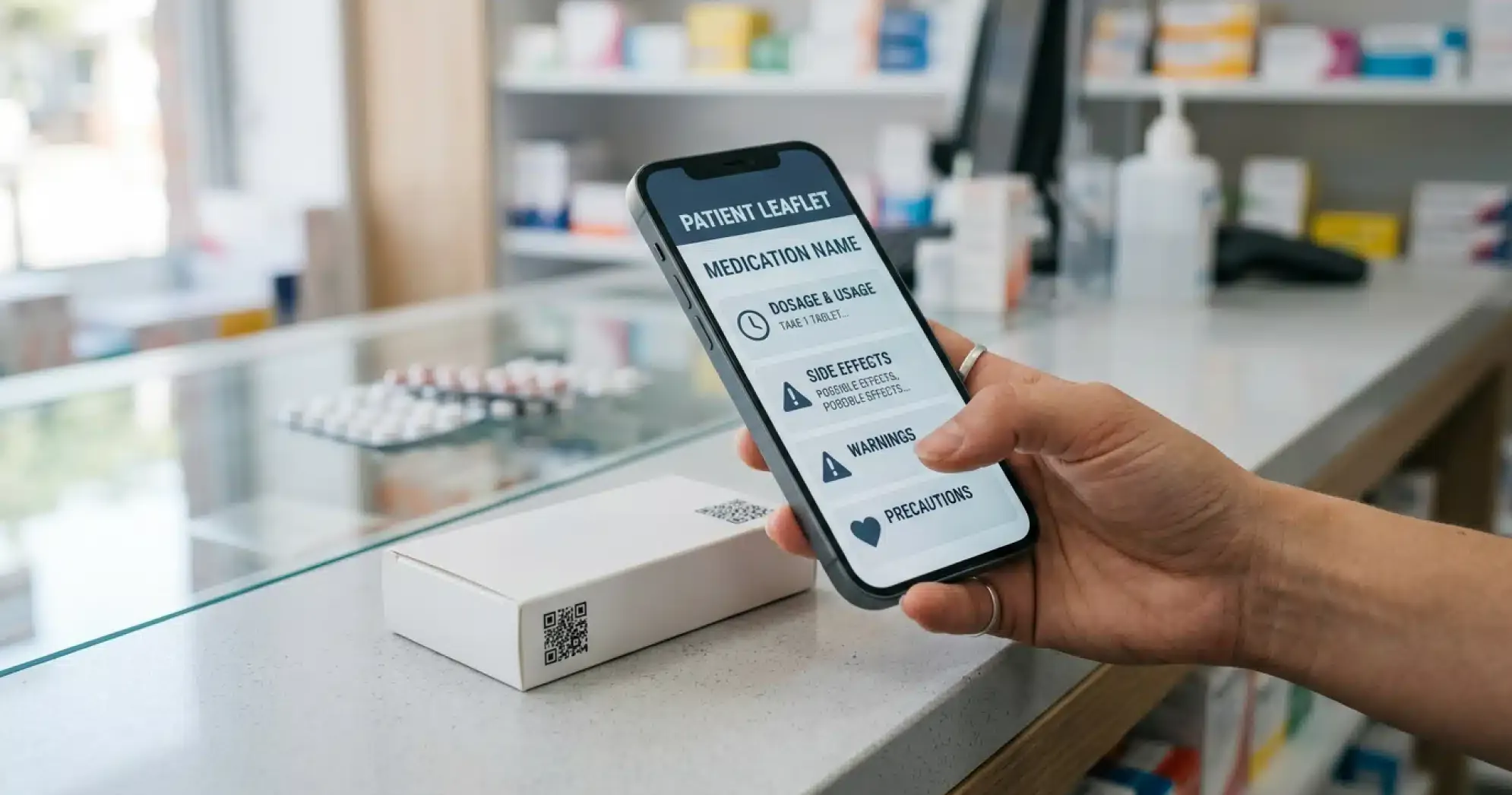
If you have ever unfolded a medicine leaflet the size of a road map, squinted at the tiny print, and thrown it away two minutes later, you already understand why the electronic patient information leaflet (ePI) exists. Instead of relying on a fragile piece of paper, patients scan a QR code on the medication packaging and instantly access the current, officially approved version of the leaflet on their phone.
What started as a pilot in a handful of markets is now becoming law. In June 2026, Argentina’s drug regulator ANMAT issued Disposición 2891/2026, requiring all medicinal products sold in the country, both prescription medication and over-the-counter drugs, to carry a QR code or Data Matrix linking to the current approved leaflet. Pharmaceutical companies have six months to generate the codes for their entire portfolio. Argentina joins a growing list of regulatory bodies, from the European Medicines Agency to authorities in Japan and Singapore, pushing the pharmaceutical industry toward digital leaflets.
In this guide, we look at what an electronic patient information leaflet is, why regulators are mandating QR codes on medicine packaging, and what pharmaceutical companies need to get the implementation right.
What is an electronic patient information leaflet?
An electronic patient information leaflet is the digital version of the paper insert that accompanies every medicine: indications, dosage, contraindications, side effects, storage conditions, and safety information. Instead of being printed and folded into the box, this essential information lives online, in a format approved and controlled by the relevant health authority.
The bridge between the physical product and the digital content is a two-dimensional barcode, usually a QR code, sometimes a Data Matrix, printed on the drug packaging. One quick scan with a smartphone camera takes the patient or healthcare provider straight to the leaflet. No app, no search, no outdated PDF: the scanned code always resolves to the version currently in force.
This matters more than it might seem. Safety information about specific drugs evolves constantly: new warnings, new interactions, updated dosing recommendations. With paper, packs printed months ago keep circulating with obsolete content until stock rotates out. With an ePI behind a QR code, the update is immediate for every unit already on pharmacy shelves.
Why regulators are mandating QR codes on medication
The paper leaflet has three structural problems that no amount of redesign can fix:
- It goes out of date the moment it is printed. Regulatory bodies approve label changes continuously, but printed packs can stay in the pharmaceutical supply chain for a year or more.
- It is hard to read. Tiny fonts, dense text, and technical language are a real barrier for older patients, people with visual impairments, and anyone with low health literacy.
- It gets thrown away. Studies consistently show a large share of patients discard the insert on opening the box, exactly when they may need it for the next dose or weeks into treatment.
The electronic health record has digitized the clinical side of healthcare; the ePI does the same for the information patients actually hold in their hands. Argentina’s new rule is explicit about the goals: the code must give both patients and healthcare professionals access to authorized content only, never promotional material, and must follow international standards for interoperability and traceability used across healthcare systems and supply chains.
The European Union is on a parallel path. The EMA and national agencies have been running ePI pilots since 2021, and the EU pharmaceutical reform currently under negotiation opens the door for member states to allow electronic-only leaflets for certain medicinal products. Meanwhile, serialized Data Matrix codes have been mandatory on prescription packs in Europe since 2019 under the Falsified Medicines Directive, so the pharmaceutical industry already prints two-dimensional barcodes at scale. The ePI simply asks those codes to do more.
The benefits: from patient safety to supply chain control
Enhancing patient safety with always-current information
Patient safety is the top priority behind every one of these regulations. A QR code that resolves dynamically means a newly discovered interaction or contraindication reaches patients the same day it is approved, not after months of stock rotation. For medical professionals, easy access to the latest prescribing information at the point of care reduces medication errors and supports better patient outcomes.

Better medication adherence and patient education
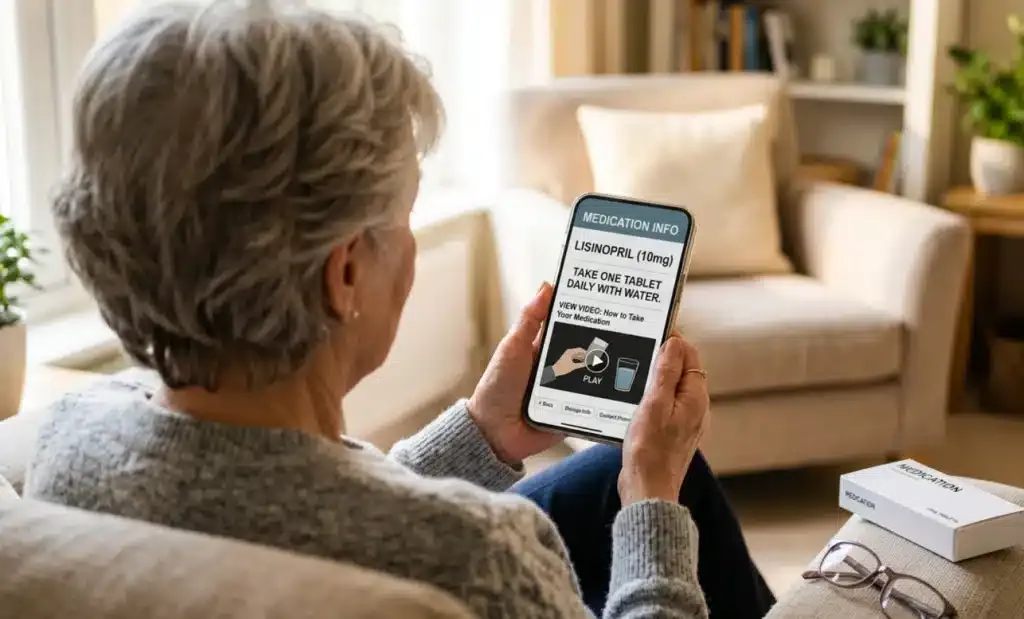
Medication adherence is the silent failure point of healthcare: treatments only work if people take them correctly. Digital leaflets transform patient education by going beyond static text. Because the QR code links to digital content rather than a printed page, pharmaceutical companies can add multimedia resources: video tutorials showing how to use an inhaler or an auto-injector, visual aids explaining dosing schedules, audio versions for visually impaired users, and translations into multiple languages. Some implementations even provide reminders for the next dose. A leaflet that patients can actually read, with adjustable font size on their own screen, is a leaflet that gets used.
Fighting counterfeit drugs
Counterfeit drugs are a multi-billion-dollar problem and a direct threat to patients. QR code technology built on GS1 standards encodes the product’s GTIN, batch number, and expiry date, allowing pharmacies, distributors, and even consumers to verify authenticity with a simple scan. Combined with real time tracking across the pharmaceutical supply chain, serialized codes make it dramatically harder for falsified products to reach patients.
Operational and environmental gains
For pharmaceutical packaging teams, removing or shrinking the paper insert frees up space, simplifies artwork management, and cuts the cost of reprinting every time a leaflet changes. The reduction in paper, printing, and transport also supports sustainability targets, a point ANMAT’s industry stakeholders highlighted explicitly when the Argentine rule was announced.
What about data security and patient data?
A common concern: does scanning a code on medication packaging expose patient data? It shouldn’t, and with a properly designed system, it doesn’t. The ePI model directs patients to public, regulator-approved medication information; no personal health data is collected to read a leaflet. That said, data security still matters on the publisher’s side. Pharmaceutical companies need a QR platform with enterprise-grade security certifications, controlled user permissions, and audit trails, because the destination content is regulated: a hijacked or misdirected link on a medicine pack is a compliance incident, not just a marketing problem.
This is also why regulators prohibit redirecting these codes to promotional content. The QR code on a medicine box is infrastructure for safety information, and it must be managed with the same rigor as the leaflet text itself.
How pharmaceutical companies can implement ePI QR codes
Technology advances fast, but a compliant rollout follows a clear sequence:
- Choose dynamic QR codes, not static ones. This is non-negotiable. A dynamic QR code keeps the printed code unchanged while letting you update the destination, which is exactly what “always link to the current approved leaflet” requires. A static code locked to one URL cannot meet the regulation.
- Align with GS1 standards. Regulations like Argentina’s explicitly require interoperability with international identification standards. The GS1 Digital Link standard is the natural fit: it embeds the product’s GTIN (plus batch number and expiry where serialization applies) in a single web-enabled code that serves regulators, pharmacies, POS scanners, and consumers alike.
- Build accessible, mobile-first leaflet pages. The destination should load instantly, support font scaling and screen readers, and present comprehensive information in a structure patients can navigate, not a scanned PDF of the paper insert.
- Generate and manage codes at portfolio scale. A mid-size pharma company may need codes for hundreds of SKUs within a six-month deadline. Bulk generation via API, centralized workspaces, and role-based permissions stop the project from drowning in spreadsheets.
- Track and audit. Scan analytics show which products, regions, and moments drive medication information lookups, valuable signals for pharmacovigilance teams and for improving the patient experience.
A simple scan, a critical role
The shift to the electronic patient information leaflet is one of those rare changes where compliance, patient outcomes, and operational efficiency all point the same way. Regulators get guaranteed delivery of up to date safety information. Patients get medication information they can actually read, in their language, with visual aids when words aren’t enough. Pharmaceutical companies get a direct, measurable channel to the people using their products, and an end to costly reprints.
Argentina has set a six-month clock, and other markets will follow. For the pharmaceutical industry, the question is no longer whether to put QR codes on medicine packaging, but whether the platform behind those codes can meet the bar regulators have set: dynamic, standards-based, secure, and always current.
Digital Link‘s QR codes are built for exactly this: standards-based codes you can generate in bulk from each product’s GTIN, resolve dynamically to the current approved leaflet, and manage with ISO-certified security and full scan analytics. Create your first GS1 Digital Link QR code free and see how easy digital transformation of your medication packaging can be.
If you have ever unfolded a medicine leaflet the size of a road map, squinted at the tiny print, and thrown it away two minutes later, you already understand why the electronic patient information leaflet (ePI) exists. Instead of relying on a fragile piece of paper, patients scan a QR code on the medication packaging and instantly access the current, officially approved version of the leaflet on their phone.
What started as a pilot in a handful of markets is now becoming law. In June 2026, Argentina’s drug regulator ANMAT issued Disposición 2891/2026, requiring all medicinal products sold in the country, both prescription medication and over-the-counter drugs, to carry a QR code or Data Matrix linking to the current approved leaflet. Pharmaceutical companies have six months to generate the codes for their entire portfolio. Argentina joins a growing list of regulatory bodies, from the European Medicines Agency to authorities in Japan and Singapore, pushing the pharmaceutical industry toward digital leaflets.
In this guide, we look at what an electronic patient information leaflet is, why regulators are mandating QR codes on medicine packaging, and what pharmaceutical companies need to get the implementation right.
What is an electronic patient information leaflet?
An electronic patient information leaflet is the digital version of the paper insert that accompanies every medicine: indications, dosage, contraindications, side effects, storage conditions, and safety information. Instead of being printed and folded into the box, this essential information lives online, in a format approved and controlled by the relevant health authority.
The bridge between the physical product and the digital content is a two-dimensional barcode, usually a QR code, sometimes a Data Matrix, printed on the drug packaging. One quick scan with a smartphone camera takes the patient or healthcare provider straight to the leaflet. No app, no search, no outdated PDF: the scanned code always resolves to the version currently in force.
This matters more than it might seem. Safety information about specific drugs evolves constantly: new warnings, new interactions, updated dosing recommendations. With paper, packs printed months ago keep circulating with obsolete content until stock rotates out. With an ePI behind a QR code, the update is immediate for every unit already on pharmacy shelves.
Why regulators are mandating QR codes on medication
The paper leaflet has three structural problems that no amount of redesign can fix:
- It goes out of date the moment it is printed. Regulatory bodies approve label changes continuously, but printed packs can stay in the pharmaceutical supply chain for a year or more.
- It is hard to read. Tiny fonts, dense text, and technical language are a real barrier for older patients, people with visual impairments, and anyone with low health literacy.
- It gets thrown away. Studies consistently show a large share of patients discard the insert on opening the box, exactly when they may need it for the next dose or weeks into treatment.
The electronic health record has digitized the clinical side of healthcare; the ePI does the same for the information patients actually hold in their hands. Argentina’s new rule is explicit about the goals: the code must give both patients and healthcare professionals access to authorized content only, never promotional material, and must follow international standards for interoperability and traceability used across healthcare systems and supply chains.
The European Union is on a parallel path. The EMA and national agencies have been running ePI pilots since 2021, and the EU pharmaceutical reform currently under negotiation opens the door for member states to allow electronic-only leaflets for certain medicinal products. Meanwhile, serialized Data Matrix codes have been mandatory on prescription packs in Europe since 2019 under the Falsified Medicines Directive, so the pharmaceutical industry already prints two-dimensional barcodes at scale. The ePI simply asks those codes to do more.
The benefits: from patient safety to supply chain control
Enhancing patient safety with always-current information
Patient safety is the top priority behind every one of these regulations. A QR code that resolves dynamically means a newly discovered interaction or contraindication reaches patients the same day it is approved, not after months of stock rotation. For medical professionals, easy access to the latest prescribing information at the point of care reduces medication errors and supports better patient outcomes.
Better medication adherence and patient education
Medication adherence is the silent failure point of healthcare: treatments only work if people take them correctly. Digital leaflets transform patient education by going beyond static text. Because the QR code links to digital content rather than a printed page, pharmaceutical companies can add multimedia resources: video tutorials showing how to use an inhaler or an auto-injector, visual aids explaining dosing schedules, audio versions for visually impaired users, and translations into multiple languages. Some implementations even provide reminders for the next dose. A leaflet that patients can actually read, with adjustable font size on their own screen, is a leaflet that gets used.
Fighting counterfeit drugs
Counterfeit drugs are a multi-billion-dollar problem and a direct threat to patients. QR code technology built on GS1 standards encodes the product’s GTIN, batch number, and expiry date, allowing pharmacies, distributors, and even consumers to verify authenticity with a simple scan. Combined with real time tracking across the pharmaceutical supply chain, serialized codes make it dramatically harder for falsified products to reach patients.
Operational and environmental gains
For pharmaceutical packaging teams, removing or shrinking the paper insert frees up space, simplifies artwork management, and cuts the cost of reprinting every time a leaflet changes. The reduction in paper, printing, and transport also supports sustainability targets, a point ANMAT’s industry stakeholders highlighted explicitly when the Argentine rule was announced.
What about data security and patient data?
A common concern: does scanning a code on medication packaging expose patient data? It shouldn’t, and with a properly designed system, it doesn’t. The ePI model directs patients to public, regulator-approved medication information; no personal health data is collected to read a leaflet. That said, data security still matters on the publisher’s side. Pharmaceutical companies need a QR platform with enterprise-grade security certifications, controlled user permissions, and audit trails, because the destination content is regulated: a hijacked or misdirected link on a medicine pack is a compliance incident, not just a marketing problem.
This is also why regulators prohibit redirecting these codes to promotional content. The QR code on a medicine box is infrastructure for safety information, and it must be managed with the same rigor as the leaflet text itself.
How pharmaceutical companies can implement ePI QR codes
Technology advances fast, but a compliant rollout follows a clear sequence:
- Choose dynamic QR codes, not static ones. This is non-negotiable. A dynamic QR code keeps the printed code unchanged while letting you update the destination, which is exactly what “always link to the current approved leaflet” requires. A static code locked to one URL cannot meet the regulation.
- Align with GS1 standards. Regulations like Argentina’s explicitly require interoperability with international identification standards. The GS1 Digital Link standard is the natural fit: it embeds the product’s GTIN (plus batch number and expiry where serialization applies) in a single web-enabled code that serves regulators, pharmacies, POS scanners, and consumers alike.
- Build accessible, mobile-first leaflet pages. The destination should load instantly, support font scaling and screen readers, and present comprehensive information in a structure patients can navigate, not a scanned PDF of the paper insert.
- Generate and manage codes at portfolio scale. A mid-size pharma company may need codes for hundreds of SKUs within a six-month deadline. Bulk generation via API, centralized workspaces, and role-based permissions stop the project from drowning in spreadsheets.
- Track and audit. Scan analytics show which products, regions, and moments drive medication information lookups, valuable signals for pharmacovigilance teams and for improving the patient experience.
A simple scan, a critical role
The shift to the electronic patient information leaflet is one of those rare changes where compliance, patient outcomes, and operational efficiency all point the same way. Regulators get guaranteed delivery of up to date safety information. Patients get medication information they can actually read, in their language, with visual aids when words aren’t enough. Pharmaceutical companies get a direct, measurable channel to the people using their products, and an end to costly reprints.
Argentina has set a six-month clock, and other markets will follow. For the pharmaceutical industry, the question is no longer whether to put QR codes on medicine packaging, but whether the platform behind those codes can meet the bar regulators have set: dynamic, standards-based, secure, and always current.
Digital Link’s QR codes are built for exactly this: standards-based codes you can generate in bulk from each product’s GTIN, resolve dynamically to the current approved leaflet, and manage with ISO-certified security and full scan analytics. Create your first GS1 Digital Link QR code free and see how easy digital transformation of your medication packaging can be.
All images and visual content in this article were created using RealityMAX.