
TL;DR
- From 18 February 2027, every LMT battery, every electric vehicle battery and every industrial battery over 2 kWh placed on the EU market needs a Battery Passport, reached through a QR code linked to a unique identifier. Portable batteries are not covered.
- The passport comes from the EU Battery Regulation, Regulation (EU) 2023/1542, Article 77, with its content set out in Annex XIII: some data is public, some is reserved for operators with a legitimate interest and for authorities.
- It is the first Digital Product Passport with a fixed date, so the data collection behind it has to start well before 2027.
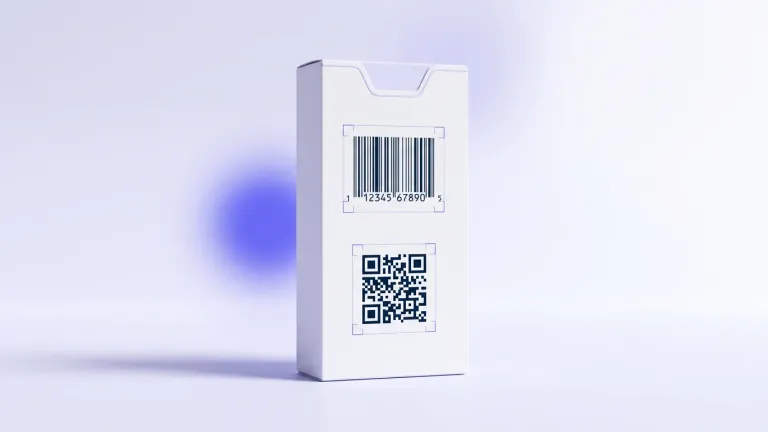
The Battery Passport is an electronic record for an individual battery, holding its identity, composition, carbon footprint, performance and end-of-life information. The economic operator that places the battery on the EU market creates it and keeps it accurate, and a QR code on the battery links to it through a unique identifier. It follows the same idea as the EU Digital Product Passport, but comes from its own law, with its own date.
The Battery Passport at a glance
| Legal basis | Regulation (EU) 2023/1542, the EU Battery Regulation, Article 77 and Annex XIII |
| Which batteries | LMT batteries, electric vehicle batteries, and industrial batteries over 2 kWh |
| From when | 18 February 2027, for batteries placed on the market or put into service |
| Who is responsible | The economic operator that places the battery on the market |
| How it is reached | A QR code on the battery, linked to the passport's unique identifier |
| Level | One passport per individual battery |
| EU registry | The battery identifiers are stored in the EU's central DPP registry |
Which batteries need a passport
| Battery category | Passport required from 18 February 2027 |
|---|---|
| Electric vehicle batteries | Yes |
| LMT batteries (e-bikes, e-scooters and other light means of transport) | Yes |
| Industrial batteries over 2 kWh | Yes |
| Industrial batteries of 2 kWh or less | No |
| Portable batteries | No |
| Starting, lighting and ignition (SLI) batteries | No |
The batteries outside the passport obligation are still covered by the rest of the Battery Regulation, including its labelling rules.
What the passport contains, and who sees it
Annex XIII sets out the information and splits it by audience. For example:
| Access | Examples of information |
|---|---|
| Everyone | Manufacturer, battery model and category, weight, capacity and voltage, chemistry, hazardous substances, carbon footprint, recycled content, expected lifetime, collection and end-of-life information |
| Operators with a legitimate interest, and the Commission | Detailed composition, part numbers, dismantling information, safety measures |
| Notified bodies, market surveillance authorities and the Commission | Test reports that prove compliance |
| Operators with a legitimate interest | State of health and the battery's current status, such as original, repurposed or remanufactured |
The carbon footprint declaration comes from Article 7, drawn up per battery model and manufacturing plant. For electric vehicle batteries it applies from 18 February 2025 or twelve months after the relevant delegated and implementing acts enter into force, whichever is later, with later dates for industrial and LMT batteries. Because those acts set the start, check their status before planning against a date.
Key dates
| Date | What happens |
|---|---|
| 12 July 2023 | The Battery Regulation is adopted |
| 18 February 2024 | The Regulation applies, with individual provisions phased in on their own dates |
| 19 July 2026 | Deadline for the Commission to set up the EU DPP registry, which stores battery identifiers |
| 18 February 2027 | The Battery Passport and its QR code apply to LMT, EV and industrial batteries over 2 kWh |
How to prepare for the Battery Passport: six steps
- Check which of your batteries are in scope. Classify each battery model against the table above. Only LMT, EV and industrial batteries over 2 kWh need a passport, but all of them need one each.
- Plan a unique identifier for every battery. Each passport belongs to one battery, so identifiers must be issued per unit, typically at the end of the production line. A GS1 Digital Link with the GTIN and a serial number gives every battery its own web address.
- Collect the Annex XIII data from your supply chain. Composition, recycled content, sourcing and carbon footprint data come largely from suppliers, so start the requests early and agree on formats.
- Set the access levels. Decide what is public and what is reserved for operators, notified bodies and authorities, following Annex XIII, and how each group will be given access.
- Publish the passports and put the QR code on each battery. Host the passports on a system that keeps them available and up to date, and print or engrave the code so it lasts as long as the battery. Test it before series production.
- Plan for the battery's second life. When a battery is repurposed or remanufactured, its status changes and a new passport is linked to the original one. Make sure your records can follow the battery through that change.
Where the QR code and GS1 Digital Link fit
The Regulation requires a QR code that links to the passport through a unique identifier. A GS1 Digital Link meets that with an identifier the battery industry's supply chain already uses:
- One identity per battery. The GTIN identifies the battery model and the serial number identifies the unit, in one web address.
- One code for every reader. A resolver sends the public to the public layer, and recognised operators and authorities to the data reserved for them.
- Updates without new labels. The passport changes as the battery is used, repaired or repurposed, while the printed code stays the same.
Industry pilots
Before the legal date, industry groups built and tested passport models. The Global Battery Alliance presented its Battery Passport proof of concept at the World Economic Forum in Davos in January 2023. In Germany, the Battery Pass consortium, a three-year government-funded project launched in 2022 with partners including acatech, worked on the content and technical design of the passport ahead of the Regulation.
Battery passports on the Digital Link platform
Digital Link, the platform behind this site, generates a serialised QR code per battery from your GTINs, in bulk or through ERP and PIM integrations, and hosts each passport with access levels for the public, operators and authorities. Each passport can be updated over the battery's life without changing its code.
Create your first Battery Passport
Frequently asked questions
When is the Battery Passport mandatory?
From 18 February 2027, for every LMT battery, electric vehicle battery and industrial battery over 2 kWh placed on the EU market or put into service, under Article 77 of Regulation (EU) 2023/1542.
Do portable batteries need a Battery Passport?
No. Portable batteries, industrial batteries of 2 kWh or less and SLI batteries are outside the passport obligation, though the rest of the Battery Regulation still applies to them.
Who creates the Battery Passport?
The economic operator that places the battery on the EU market. It enters the data, keeps it accurate and up to date, and is responsible for the passport being available.
What information does the Battery Passport contain?
The information in Annex XIII of the Battery Regulation: general battery information, composition, carbon footprint, recycled content, performance and durability, and end-of-life information. Some of it is public, and some is reserved for operators with a legitimate interest, notified bodies and authorities.
Does the Battery Passport have to use a QR code?
Yes. The Battery Regulation requires a QR code on the battery that links to the passport through its unique identifier.
Is the Battery Passport the same as the Digital Product Passport?
It is the first passport of the same kind, with a fixed date. It comes from the Battery Regulation rather than the ESPR, and its identifiers are stored in the same EU registry.