
Yes, 2D barcodes work offline. A QR code or a Data Matrix carries the product's identity inside the code itself, and the checkout scanner reads that identity locally, the same way it reads today's striped barcode. Ringing up a sale needs no internet connection at all. The worry that a shop will grind to a halt when the network drops comes from a misunderstanding of where the code does its work, and this guide clears it up.
The confusion is understandable. Because a 2D code can also open a web page on a shopper's phone, people assume the code is "online" and that the till depends on a server somewhere. It does not. The web page and the checkout are two separate jobs living in the same square, and only one of them ever touches the internet.
Do 2D barcodes work without the internet?
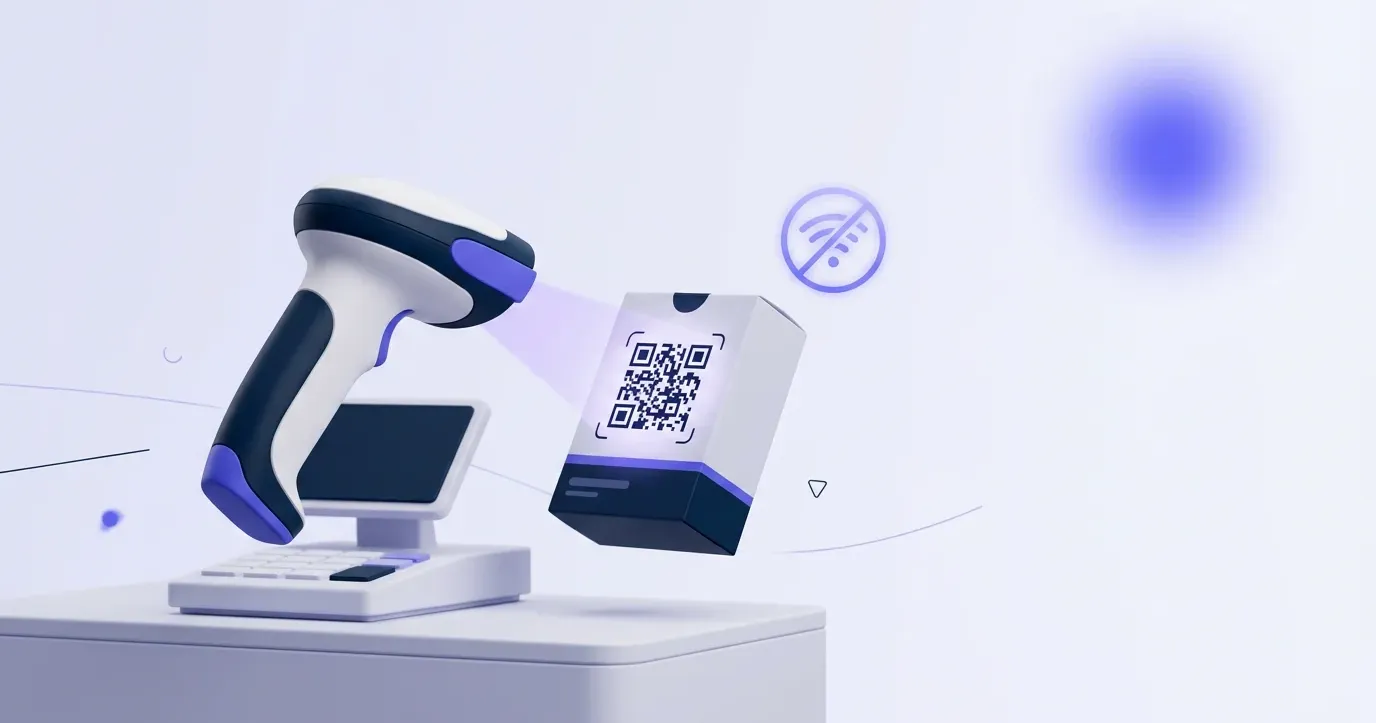
The direct answer is yes. The checkout does not look anything up on the web to complete a sale. The product's identity, a GTIN, the same global number the linear barcode has always carried, is encoded inside the 2D symbol. The scanner decodes it on the spot, matches it against the store's own local price list, and completes the transaction. No cloud, no live connection, no dependency on any website being up.
This is the same way the old striped barcode has worked for fifty years. A 2D code changes what the symbol can carry, not how the till reads an identity from it. If the shop's internet goes down, the checkout behaves exactly as it does today.
How a 2D code works at the checkout
When a cashier scans a pack, three things happen locally, none of which need a network:
- The scanner reads the pattern and decodes the GTIN held inside the code.
- The point-of-sale system matches that GTIN to the store's price file, which lives on the store's own systems.
- The sale is rung up and the receipt is printed.
The identity travels with the product, printed into the code. That is the whole point of a barcode, linear or 2D. The store does not phone a central server to ask "what is this and how much does it cost", because it already holds that answer locally.
What actually needs the internet, and what does not
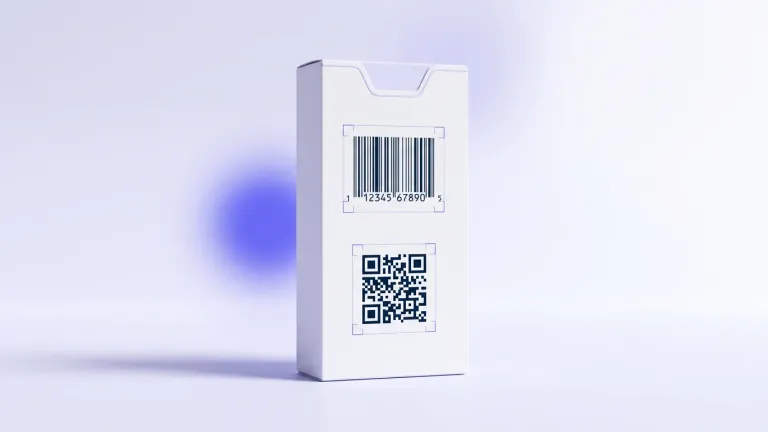
The clearest way to see it is to separate the two layers that share the code. One is the checkout layer, which is always offline-capable. The other is the optional web layer, which a shopper's phone can open, and which needs the internet the same way any web page does.
| Task | Who does it | Needs internet? |
|---|---|---|
| Ring up a sale at the till | The store's scanner and POS | No |
| Read the GTIN from the code | The scanner, locally | No |
| Open a product page on a phone | The shopper's phone | Yes |
| Show a recall, authenticity check or content | The web layer | Yes |
The checkout never touches the web layer. Selling you milk and showing you a product page are different jobs, and only the second one goes online.
What happens if the store's connection drops mid-shift?
Nothing changes at the till. Because the sale is completed from the code and the local price file, a network outage does not stop the queue moving. This is often better than people fear, and it is identical to how the store already copes with an outage today: the registers keep ringing up linear barcodes offline, and they will keep ringing up 2D codes offline in exactly the same way.
The only thing that pauses during an outage is the optional stuff that was already online anyway, such as a shopper opening the product's web page on their phone. The moment connectivity returns, that layer works again. The sale never waited for it.
Does a GS1 Digital Link code still scan offline?
Yes. This is the part that surprises people. A GS1 Digital Link code encodes the product identity as a web address, so the code is a real URL. Even so, the GTIN is still present inside that URL, and an industrial checkout scanner reads it locally without ever following the link. The web resolution only happens when a phone chooses to open the address. The register reads the identity and moves on.
So a Digital Link code gives you the optional web layer without giving up offline checkout. You get both: a code that rings up a sale with no connection, and a code that opens a page when someone points a phone at it.
The bottom line for brands
You do not need to worry that moving to a 2D code makes your product dependent on the internet at the point of sale. It does not. The transition, often discussed under the banner of Sunrise 2027, is about checkouts being able to read the richer 2D code, not about putting the till online. Your existing offline reliability is preserved, and you gain an optional web layer on top.
If you want to see how a single code can serve both the checkout and the shopper, you can create a free account and try it.
Frequently asked questions
Do QR codes need the internet to work at a checkout?
No. A QR code or Data Matrix used at a checkout carries the product's GTIN inside the code, and the scanner reads it locally and matches it to the store's own price list. No internet connection is involved in completing the sale. The internet is only needed if a shopper chooses to open a web page from the code on their phone.
Will the shop stop working if the internet goes down?
No. The checkout reads the product identity directly from the code and completes the sale offline, exactly as it does with today's striped barcode. A network outage does not stop the till ringing up 2D codes. Only the optional web page a phone might open depends on connectivity.
Is a 2D barcode slower than a linear barcode at the till?
No, not in a way a shopper would notice. A 2D scanner decodes the code locally in the same instant a linear scanner reads a stripe. Both read the identity from the symbol without a network round trip, so the checkout experience is the same speed.
Does a GS1 Digital Link code work offline even though it is a URL?
Yes. The product identity is held inside the URL and is read locally by the checkout scanner, with no need to follow the link. The web resolution only happens when a phone opens the address, so the till behaves exactly as it would with a plain GTIN.