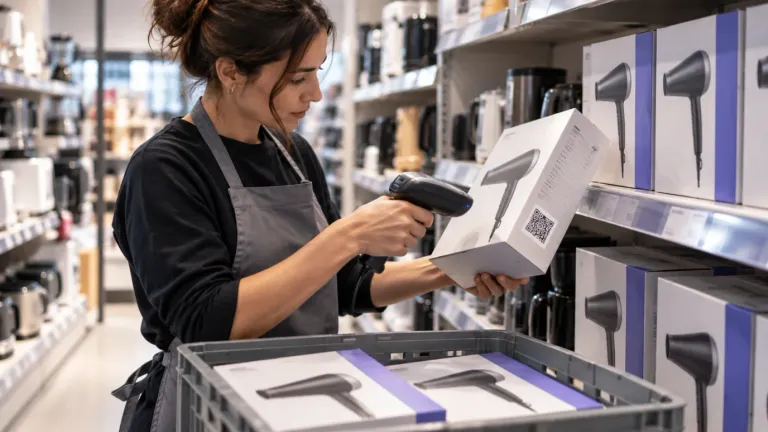


Sunrise 2027 does not make GS1 Digital Link mandatory. The initiative asks that retail checkouts can read 2D barcodes by the end of 2027, and a brand can meet that with a 2D code that carries only its product identity, the GTIN. GS1 Digital Link, which turns that code into a web address, is entirely optional.
That single distinction is the most misunderstood point in the whole 2D transition. Because the two ideas arrive together in the same conversation, brands often assume that preparing for Sunrise 2027 means putting a web link on every pack. It does not. One is plumbing the retail industry is upgrading anyway. The other is a choice about whether your product identity should also open a door to the web. This guide separates the two cleanly, so you can decide what you actually need and what you might want.
The two layers, side by side
The clearest way to see the relationship is that Sunrise 2027 is the mandatory-in-practice layer and GS1 Digital Link is the optional layer that can ride on top of it. Sunrise 2027 is an industry initiative, not a law, driven by retailers who want their checkouts to read 2D codes by the end of 2027. The identity that code needs to carry is the GTIN, the same product number that lives in today's linear barcode. A Data Matrix or a QR code holding that GTIN satisfies the transition, and it works offline at the till because the identity is read locally from the code itself.
GS1 Digital Link is a different thing entirely. It is a GS1 standard that encodes that same product identity as a web-resolvable address, so the code is a real URL. Scanned by an industrial reader it still rings up a sale; scanned by a phone it opens whatever you point it at. Nothing about Sunrise 2027 requires you to take this step. It is available to you if the web layer is worth having.
| Question | Sunrise 2027 (2D migration) | GS1 Digital Link |
|---|---|---|
| What is it? | Industry initiative so checkouts read 2D codes | A GS1 standard that encodes product identity as a web-resolvable address |
| Mandatory? | Not legally; driven commercially by retailers | No, entirely optional |
| Needs a URL in the code? | No, a GTIN in a Data Matrix or QR is enough | Yes, that is the point: the code is a URL |
| Works offline at checkout? | Yes, identity is read locally | Yes, the identity travels inside the URL and is read locally |
| What does it unlock? | Better data at the register: batch, expiry, recalls | A web layer: content, verification, compliance, one code for people and machines |
The mandatory piece is plumbing. It is invisible to the shopper, identical for every brand, and it delivers its value at the register through better data such as batch, expiry and recall handling. The optional piece is an owned channel. It is the difference between a code that only a scanner cares about and a code that a customer, a regulator and a machine can all read from the same square on the pack: recalls, authenticity checks, compliance data and product content, all reachable from one code.
Why optional is where the opportunity lives
Optional is where the opportunity lives because the brands that treat Sunrise 2027 as a pure compliance exercise pay the full cost of new artwork, new codes and new print runs, and capture none of the upside. They change every pack, coordinate with printers and retailers, and end up with a code that does exactly what the old barcode did. The money is spent either way. What differs is whether anything comes back.
A 2D code carrying only a GTIN is a closed loop. It talks to the checkout and to nobody else. A GS1 Digital Link code, built on the very same pack change, becomes a channel you own. The same scan that rings up a sale can, on a phone, resolve to a recall notice when there is one, an authenticity check that reassures a buyer of a premium product, the compliance and material data a regulator or a Digital Product Passport now expects, and marketing content the rest of the time. One code, many audiences, and the routing decided by you rather than fixed in the artwork.
Not every brand must build all of this on day one. The point is that the incremental effort to make the code web-resolvable, at the moment you are already redesigning the pack, is small compared to the option it buys you. Skip it now and adding it later means another artwork cycle and another print run. Include it now and the door is open whenever you decide to walk through it.
The three postures a brand can take
There are three sensible postures, and most brands should not choose the first one. Each is a legitimate response to the transition; they differ in how much of the option value you keep.
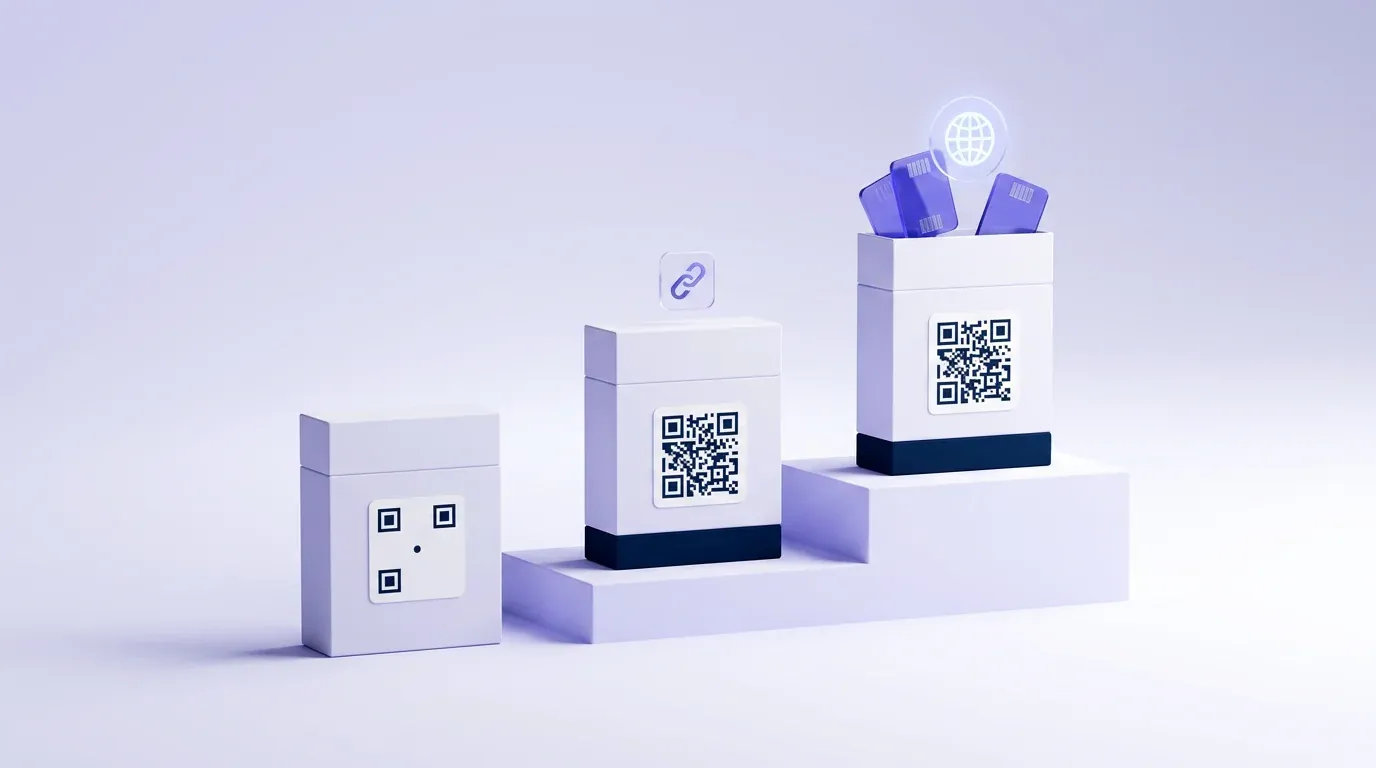
- Minimum. A 2D code carrying only the GTIN. This satisfies Sunrise 2027 and nothing more. The pack is reprinted, the checkout is happy, and the code does the same job the linear barcode did.
- Ready. A GS1 Digital Link code plus a basic product page. The code is now a real web address that resolves somewhere useful, even if that destination starts simple. You have paid the same pack cost as Minimum and kept the web layer open.
- Ahead. GS1 Digital Link used as a full product identity layer, with resolution routing different audiences to product content, authenticity, recalls and compliance or passport data from one code.
Very few brands should pick posture one. The marginal cost of moving from Minimum to Ready is small, because the expensive parts, the artwork change and the print run, are shared, while the option value of a web-resolvable code is large and grows as regulation such as the European Digital Product Passport makes a product web presence increasingly expected. Choosing Minimum saves very little today and forecloses a lot tomorrow. For most brands the honest recommendation is to land on Ready as a floor, and to move toward Ahead wherever the product justifies it.
If you want to understand the pieces underneath these choices in more depth, start with the pillar guide on whether QR codes on products are safe, then read what Sunrise 2027 is and how a QR code differs from a Data Matrix to see which 2D format fits your pack.
Where to start
Start by deciding your posture, not your technology. If you are reprinting packaging for the 2D transition anyway, making the code a GS1 Digital Link is the low-cost, high-option choice, and you can build the destination behind it at your own pace.
Create your first GS1 Digital Link
Frequently asked questions
Is GS1 Digital Link mandatory for Sunrise 2027?
No. Sunrise 2027 is an industry initiative asking that retail checkouts be able to read 2D barcodes by the end of 2027. You can meet it with a 2D code that carries only your GTIN. GS1 Digital Link, which turns the code into a web address, is optional and is never required by the transition itself.
What is the minimum to comply with Sunrise 2027?
The minimum is a 2D code, a QR code or a Data Matrix, carrying your product's GTIN. That gives the checkout the identity it needs and works offline at the till. No URL, no product page and no GS1 Digital Link are required to satisfy the transition.
Does a GS1 Digital Link code still scan at the till offline?
Yes. A GS1 Digital Link code carries the product identity inside the URL, and a checkout reads that identity locally from the code without any internet connection. The web resolution only happens when a phone follows the link, so the register behaves exactly as it would with a plain GTIN.
Why choose GS1 Digital Link if it is optional?
Because the pack change is the expensive part and you are making it anyway. A Digital Link code costs little more to produce yet turns a checkout-only code into an owned channel for recalls, authenticity, compliance data and content, all from one code that serves both people and machines.