
TL;DR
- Product identity for AI agents was the question Digital Link took to the W3C/GS1 workshop in Zurich: an agent can execute a purchase flawlessly and still buy the wrong item.
- Similarity is not identity. A description like "my usual shampoo" matches several products from the same brand; only an identifier names one of them.
- That identifier is already on the pack. GS1 Digital Link turns the GTIN into a web address any agent can resolve, controlled by the brand and owned by no platform.
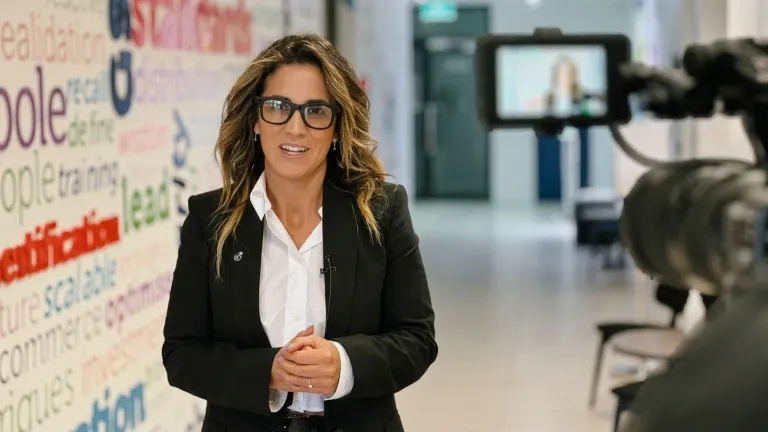
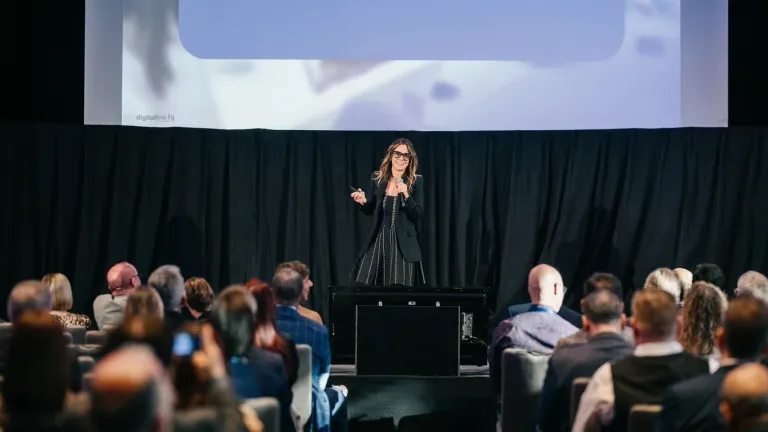
Product identity for AI agents is the question Digital Link brought to the W3C/GS1 Workshop on E-commerce for Humans and AI Agents. CEO Paula Rivero took the stage on day one to make the case for open, brand-controlled identity in agentic commerce, in a room that held the entire emerging stack. It left a question sharper than any answer: agents are learning to buy, but how do they know what they are buying?
A room where the whole stack met
It is not often that AI platforms, retailers, brands, payment networks and standards bodies sit in the same room and work on the same problem. That is what day one looked like on Tuesday 8 September, hosted at Google's Zurich offices: teams from Google, OpenAI, Shopify, Huawei, Samsung and Mars alongside the standards community of W3C and GS1, all circling one question. What does commerce look like when AI agents become part of it?
The direction of travel was set early. Commerce, as one speaker put it, is moving from "show me" to "help me": from browsing, comparing and clicking to simply asking an agent to get something done. But for that to work at scale, agents need more than intelligence. They need shared rules. Google's Amit Handa captured the interoperability challenge with an image that stuck with the room: without common protocols, we are building "a mall where the escalators don't connect."
Some of the most affecting perspectives had nothing to do with protocols. Accessibility expert Léonie Watson, who is blind, described buying six products online and returning five because the available information simply was not enough to decide. What agentic commerce could mean for her is not convenience but independence. Her caveat mattered too: sometimes she wants a conversation, sometimes she just wants to listen. The future interface should not force everything into a chat; it should adapt to what a person needs in the moment.
And then there was the tension that ran under the whole day, named perfectly in one of the breakouts: "an agent guesses when guessing is cheaper than knowing." The product data agents need often already exists. Brands maintain it, standards describe it, networks synchronise it. Yet agents still reconstruct product truth from retailer pages and whatever the open Web happens to offer. Day one's real homework, for everyone in the room: make knowing easier than guessing.
The last meter, and why it breaks
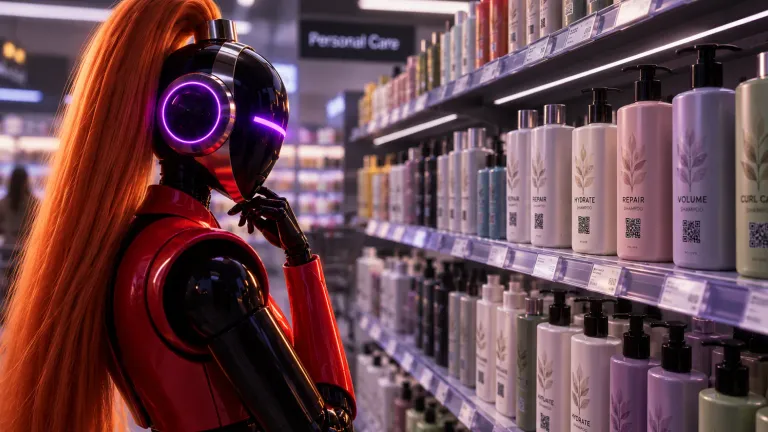
That is exactly the gap Digital Link came to Zurich to talk about. In her session, "Oops!… My Agent Bought It Again: Product identity at the last meter of agentic commerce," Paula Rivero started from a scene anyone can picture: you ask your agent to reorder your usual shampoo. No search, no card details, no checkout form. Done in seconds.
And the wrong product arrives.
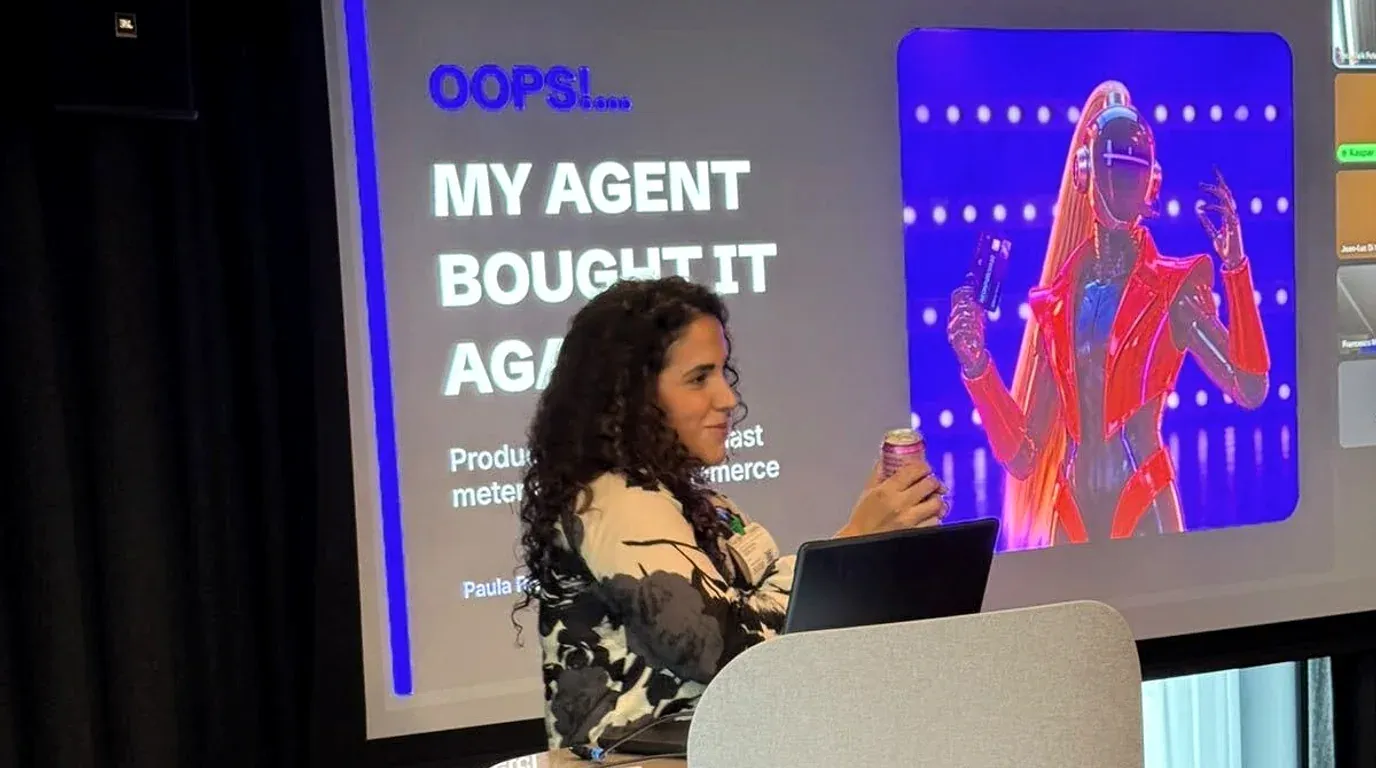
Not a failure of intelligence. The agent searched, compared, selected, paid and ordered flawlessly. It got every verb right. It got the noun wrong. A description like "my usual curly-hair shampoo" can match several products from the same brand, in the same category, for the same hair type. Similarity is not identity. As Paula put it on stage, in the line that travelled furthest afterwards:
Names describe. Identifiers identify.
The identifier has been on the pack for fifty years
Her argument: the exact identity agents need has been carried by the barcode for fifty years. One identifier for one exact product, formulation, variant and pack size. And that identifier is now evolving onto the Web.
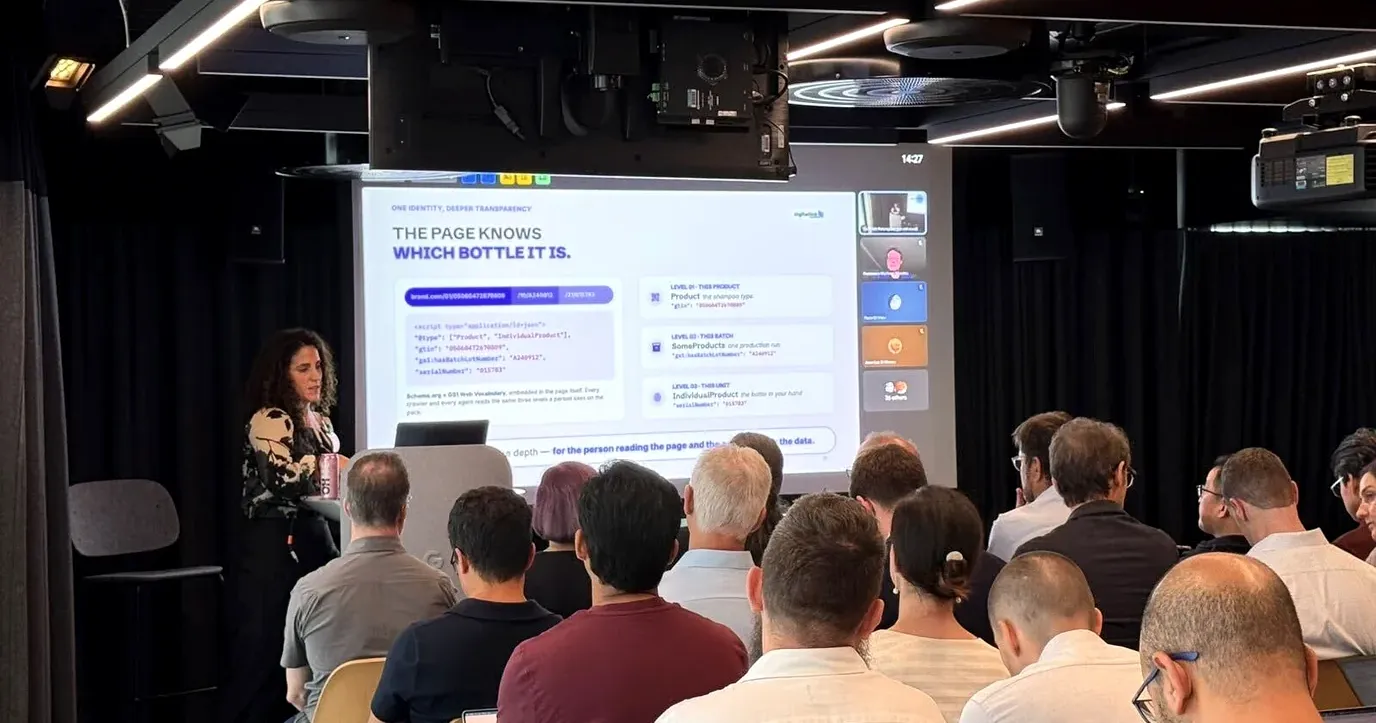
With GS1 Digital Link, the identity in the barcode becomes a Web address: one URI that anchors the product and connects people and machines to authoritative, brand-controlled information, from product data, instructions and certifications to recycling guidance and recall status. By design, it scales from the product level down to the individual batch and serial number.
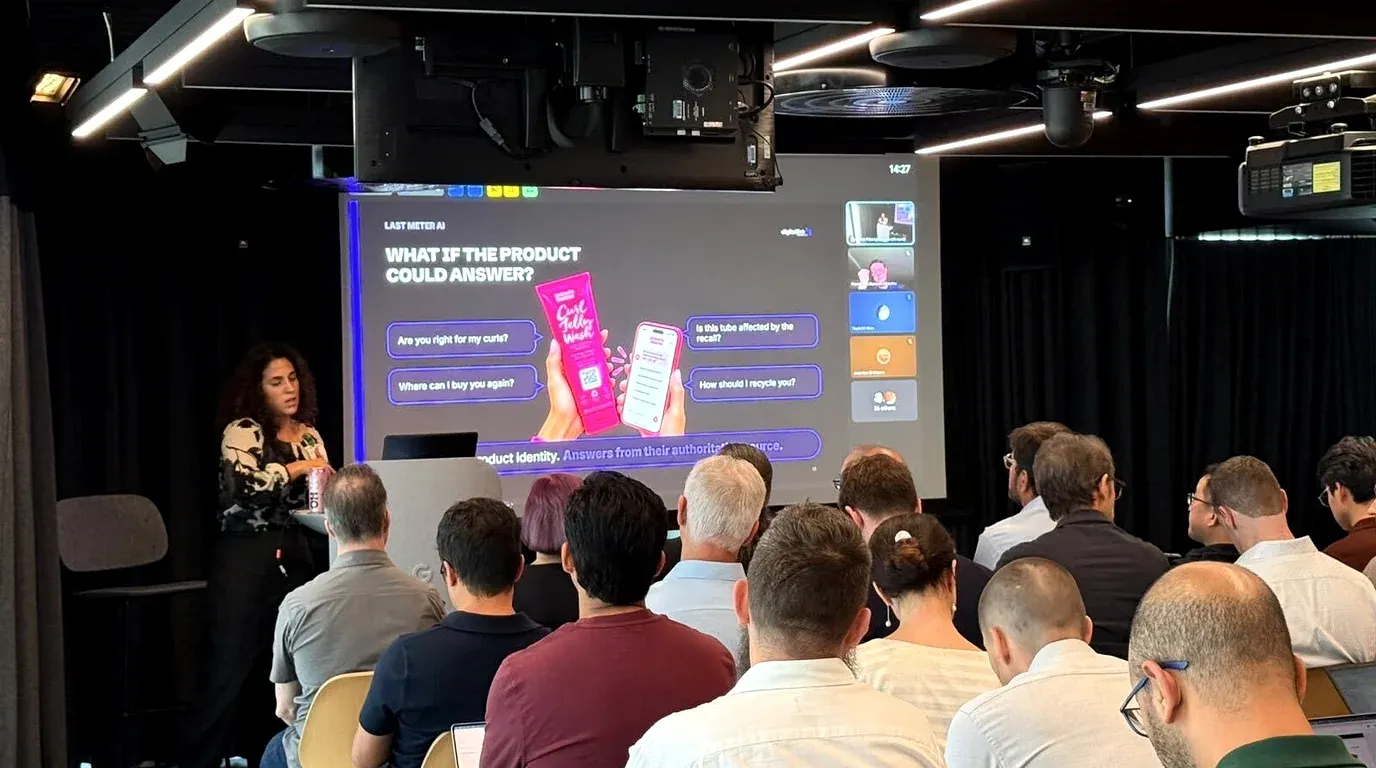
For agentic commerce, the order of operations matters: first establish identity, then optimise the offer. Price, availability and delivery are variables; product identity is the constraint. Protocols tell agents how to act. Identity tells them what they are acting on. The intelligence remains; the guess disappears.
And this is not a moonshot. Paula closed on a real deployment: a Dutch garden brand that turned every pack into a door to the Web, starting from a simple consumer use case on existing product pages. In doing so, it laid foundations that are ready for sustainability requirements, the EU Digital Product Passport, regulatory information and AI agents. "We didn't want to wait until we understood every future use case," as the brand put it. Start simple. Build for what comes next.
Product identity belongs on the open Web
If day one had a thread, it was openness. Billions of physical products are joining the Web, and the identities behind them should be brand-controlled, standards-based and agent-independent: readable by any agent, owned by no single platform. The future of commerce will not depend on AI that can buy. It will depend on AI that can buy the right product, and that future should not belong to whoever builds the biggest private catalogue.
Or, as the closing slide had it: 'Oops' belongs in the song. Product identity belongs on the open Web.
What's next
The workshop continues today with sessions on trust, payments, verifiable credentials and agent accountability. These themes sit directly downstream of the identity question: you can only trust, pay for and take responsibility for what you can precisely identify. Paula Rivero and Mauro Casula are in Zurich through the end of the workshop; if you are attending and want to talk product identity for agentic commerce, come find them.
For everyone else, this conversation does not end in Zurich. If your brand is thinking about how its products will be discovered, verified and repurchased in a world of AI agents, the groundwork starts with the identity you already own. Learn what GS1 Digital Link unlocks, or talk to our team.