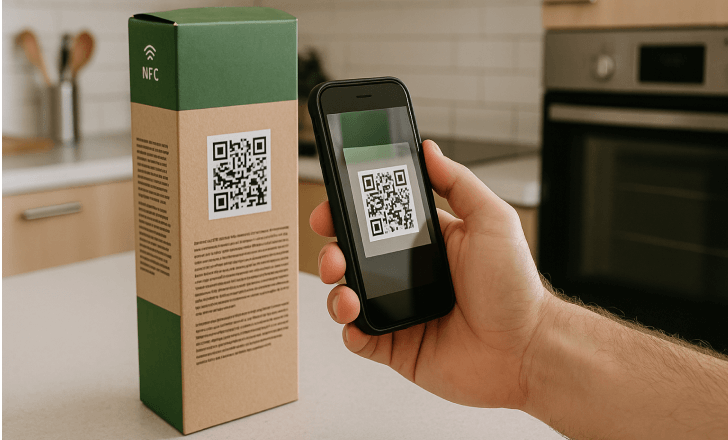
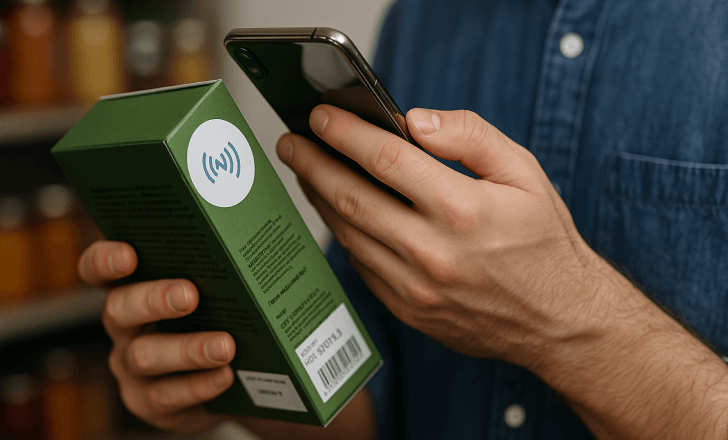
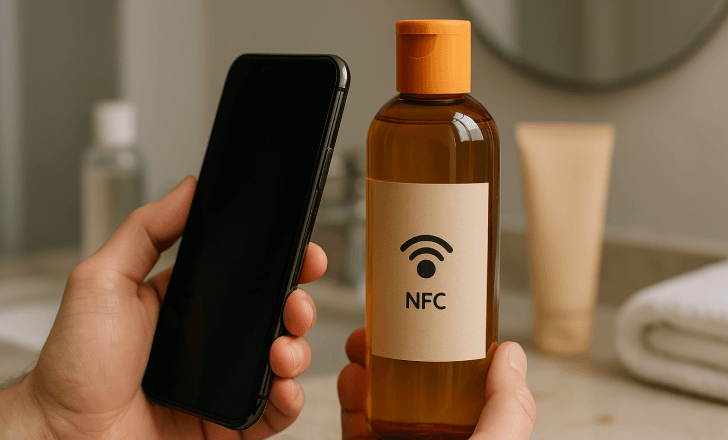
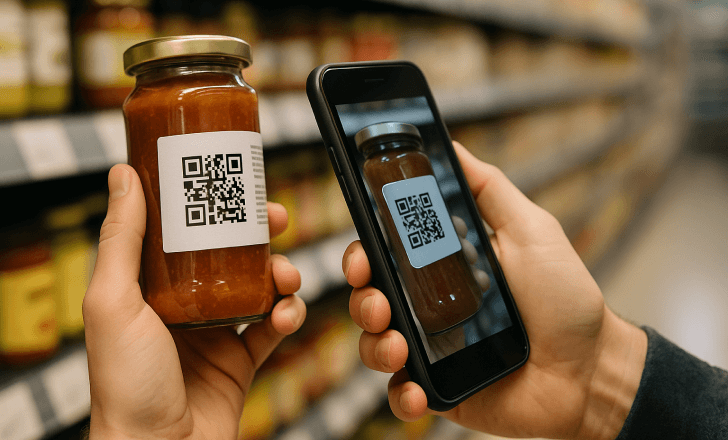
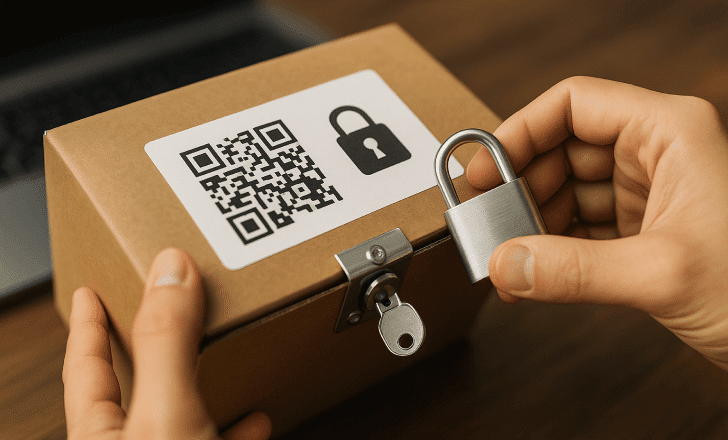
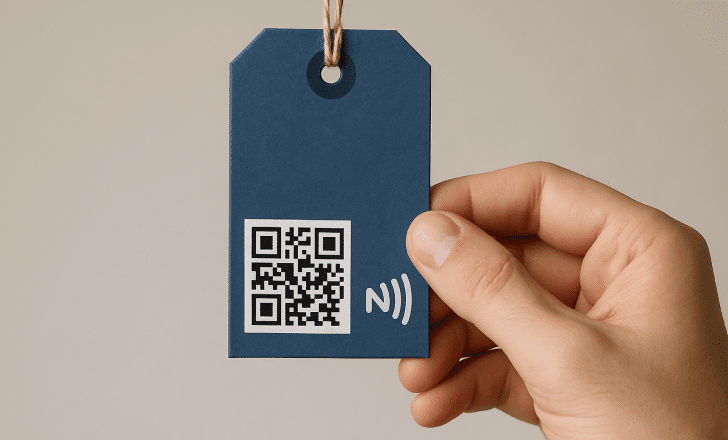
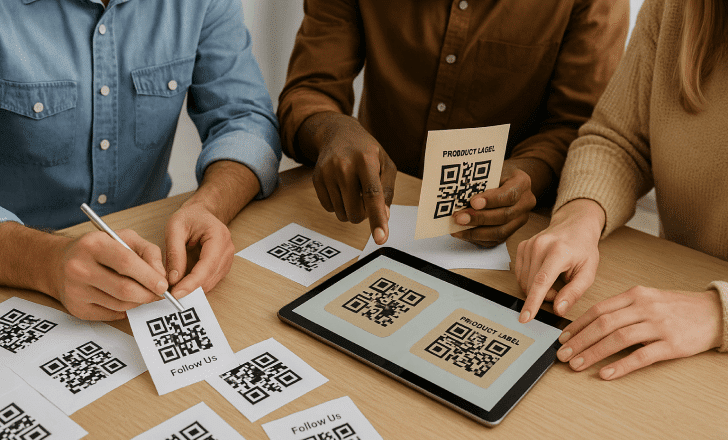
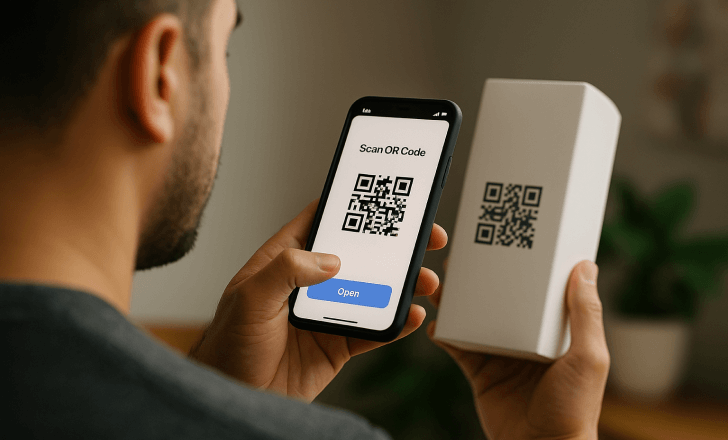
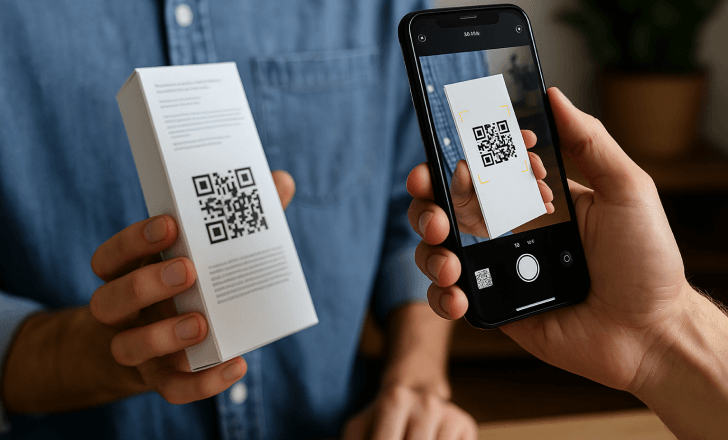
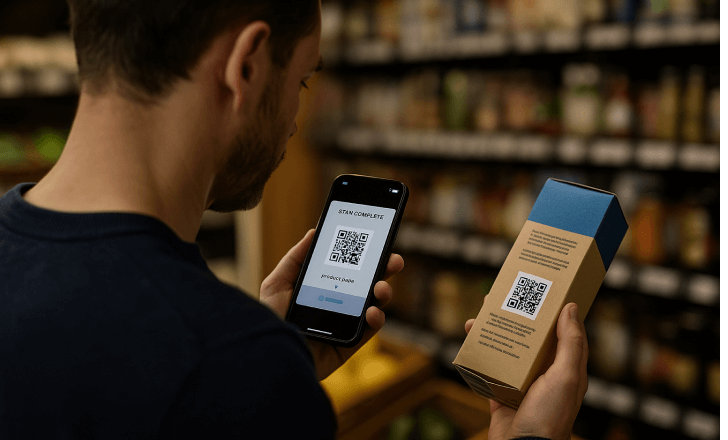
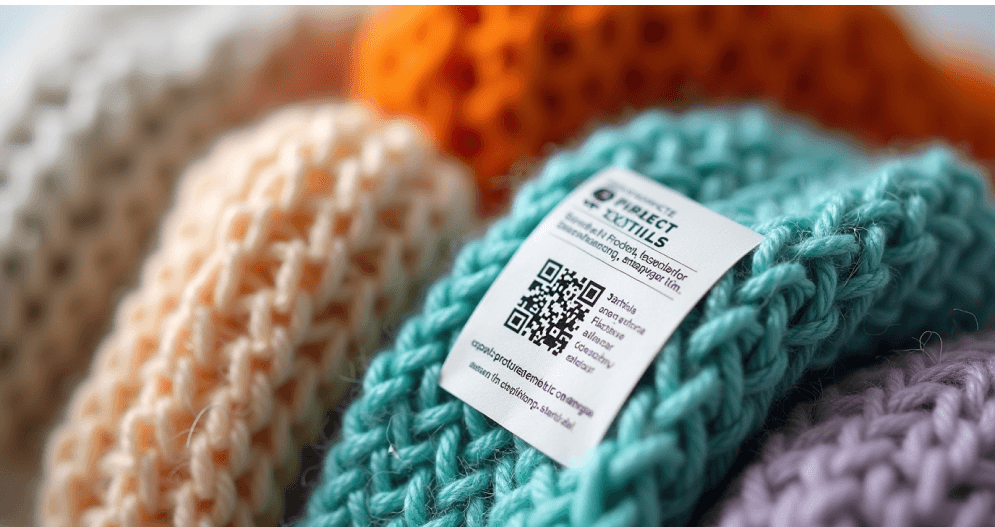
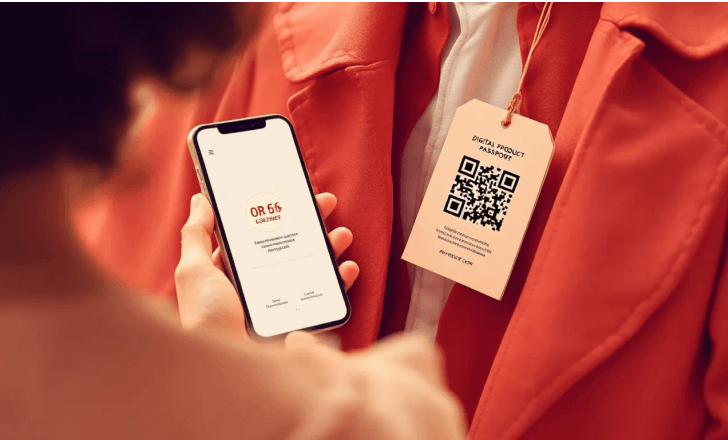
What does it mean for a product to answer customer questions?
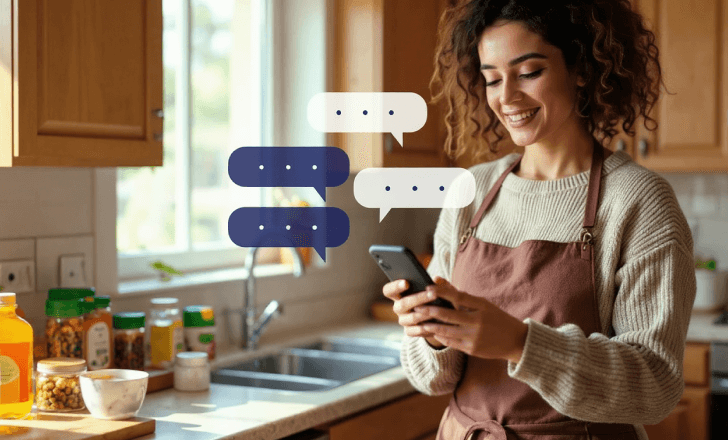
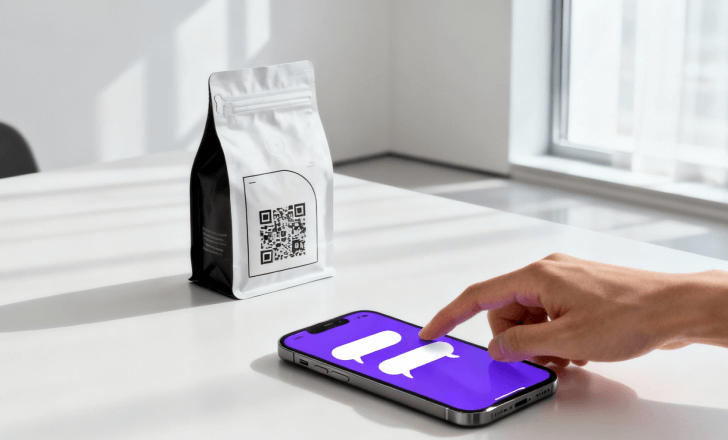
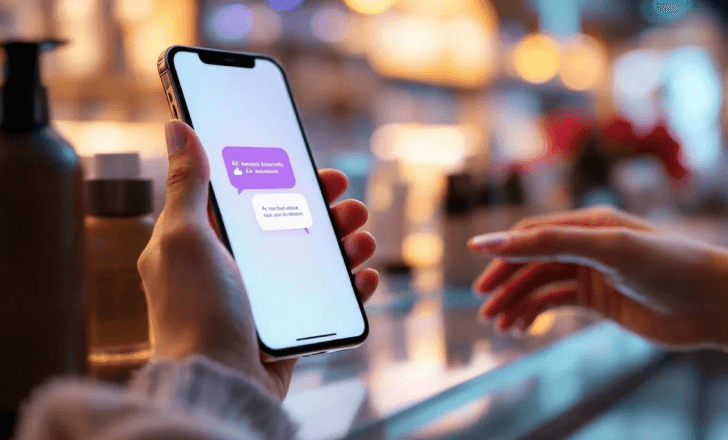
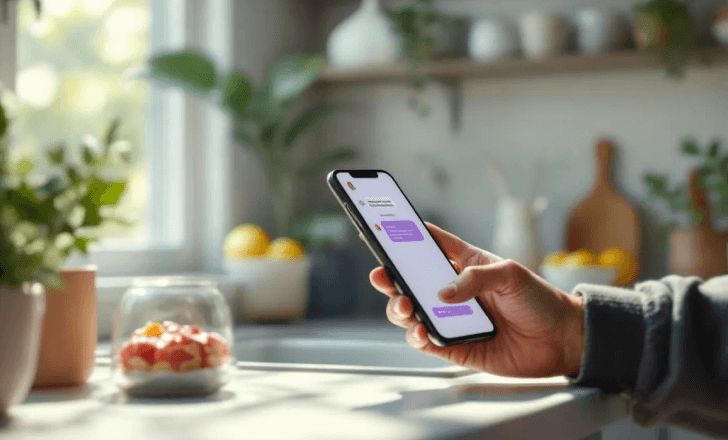
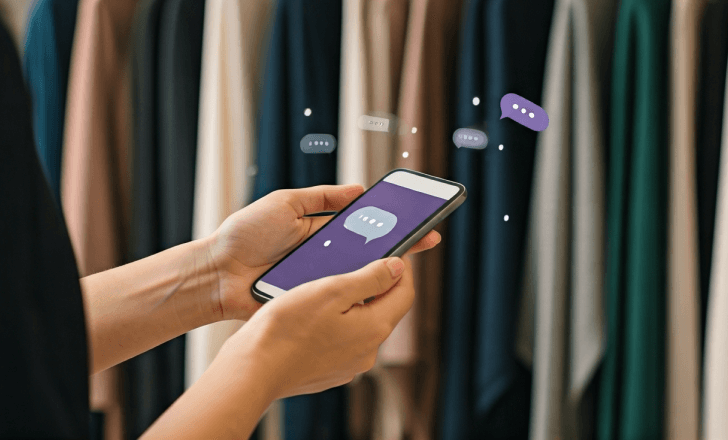
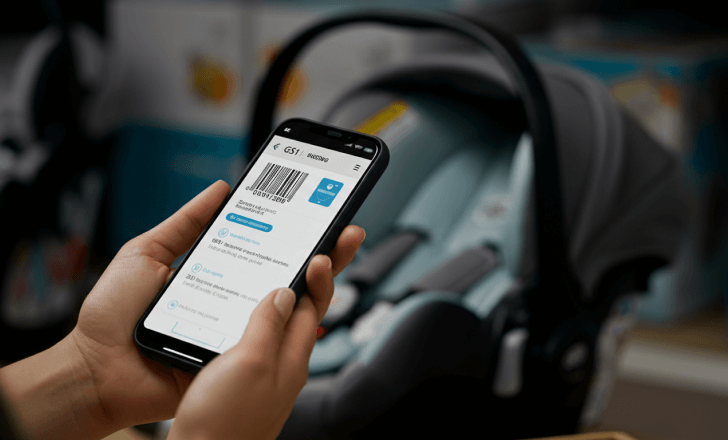
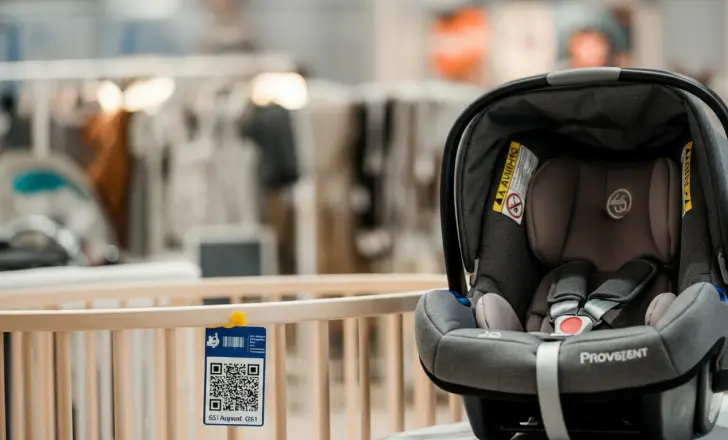
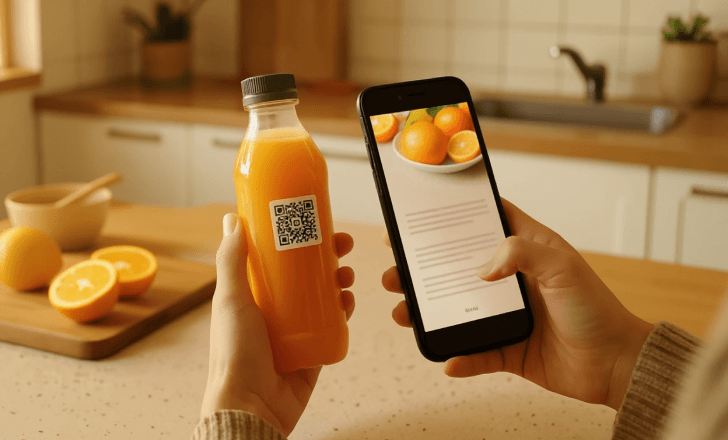
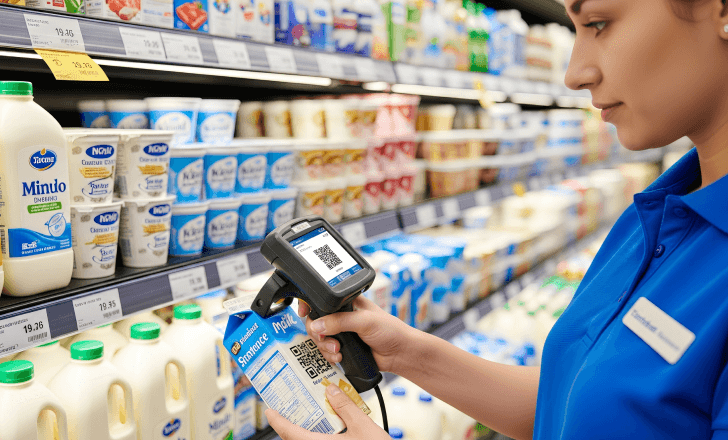
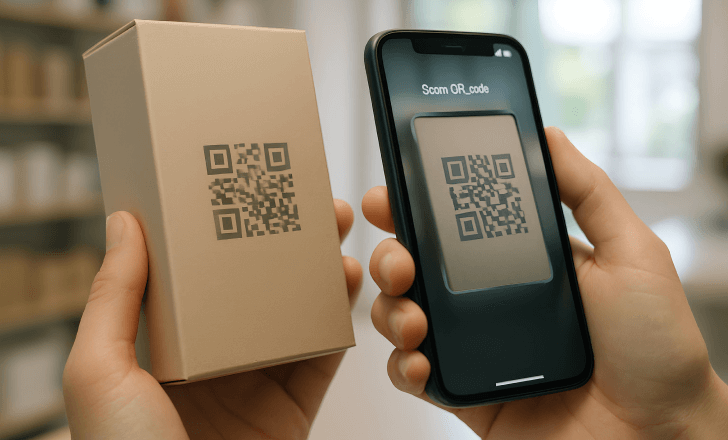
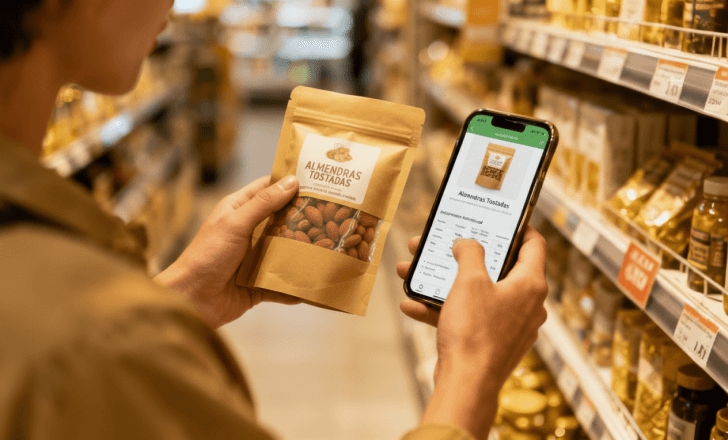
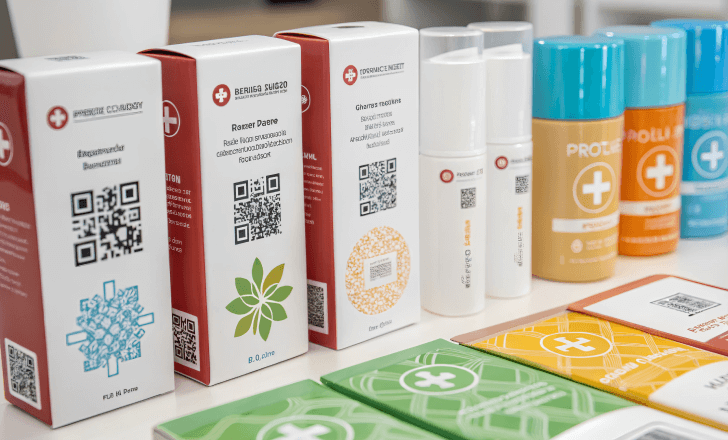
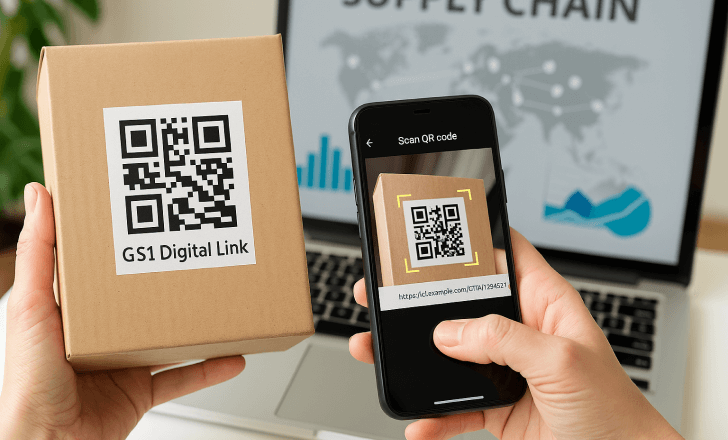
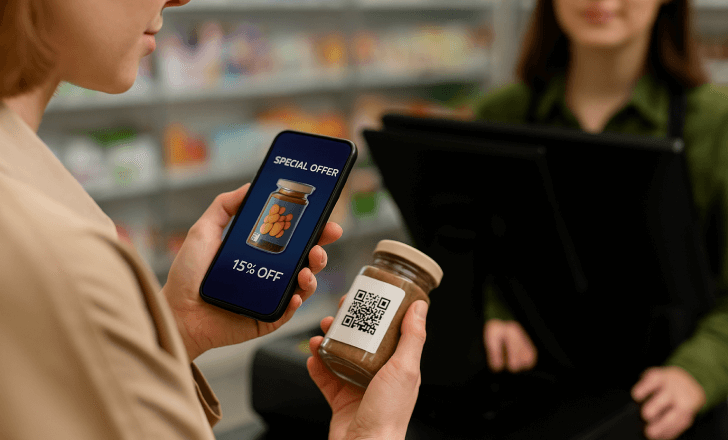
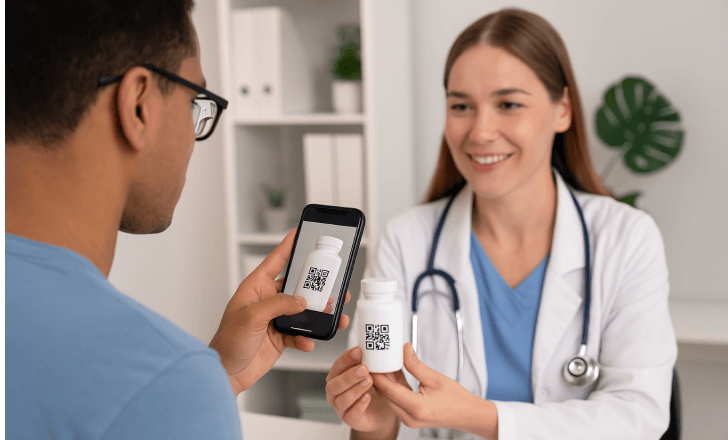
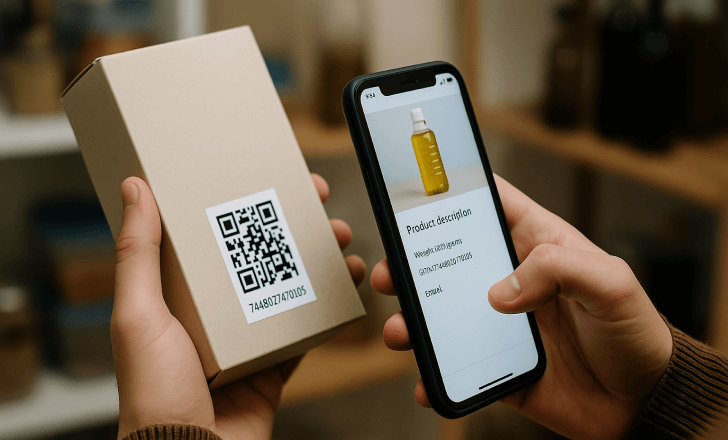
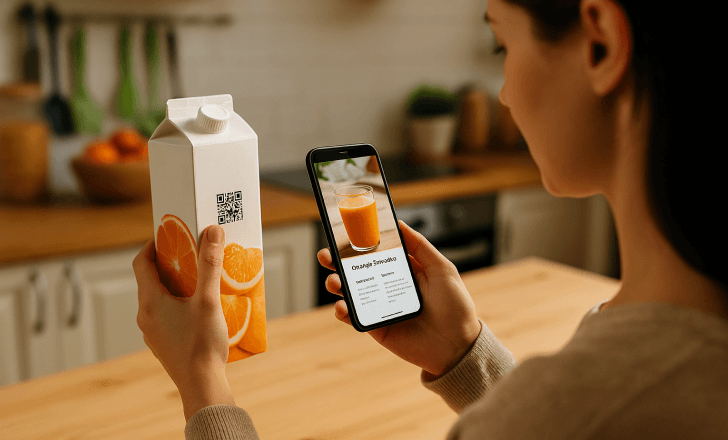
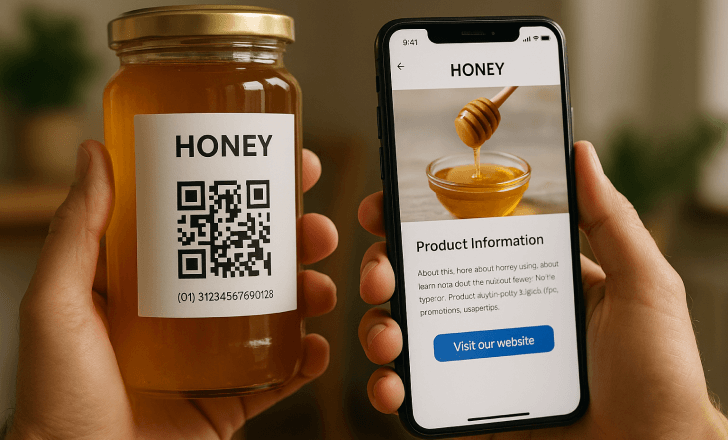
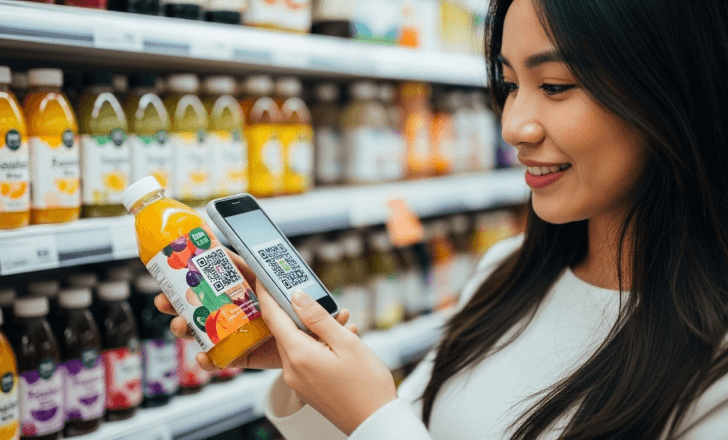
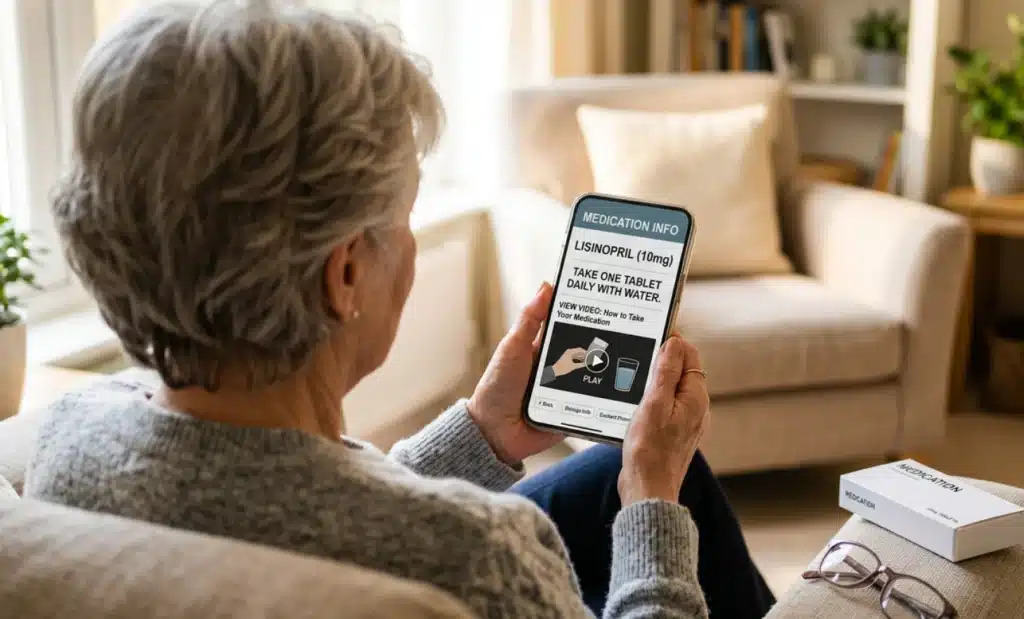
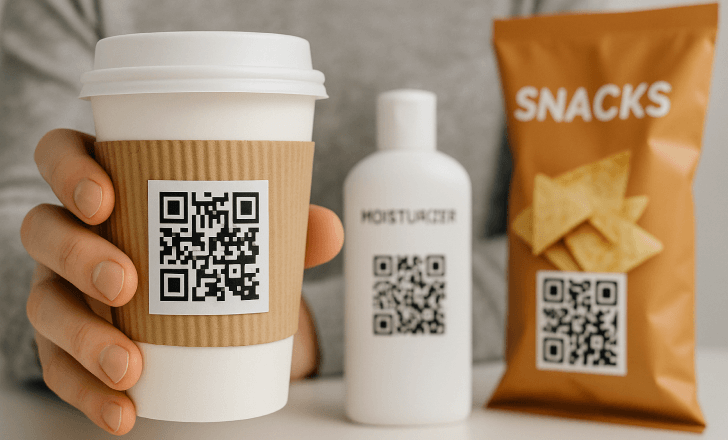
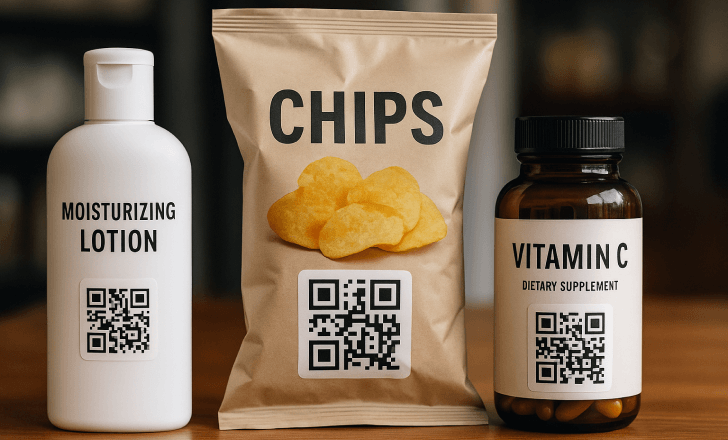
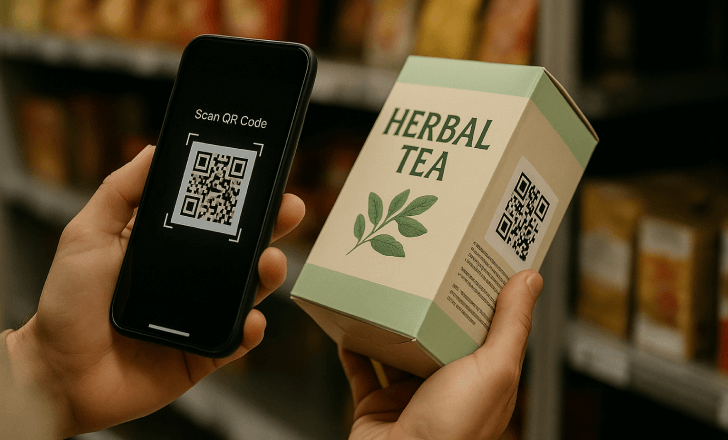
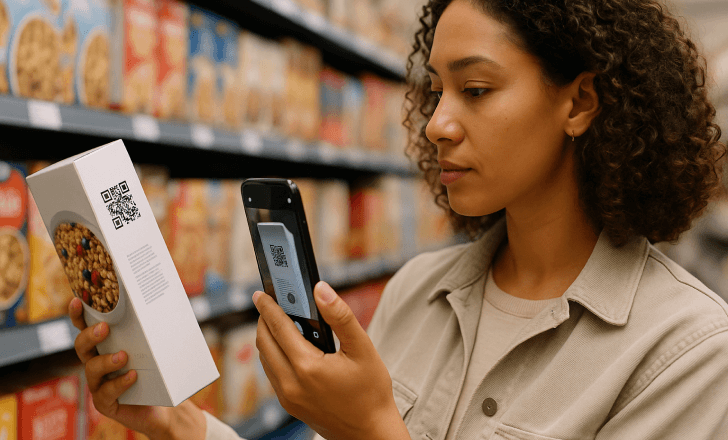
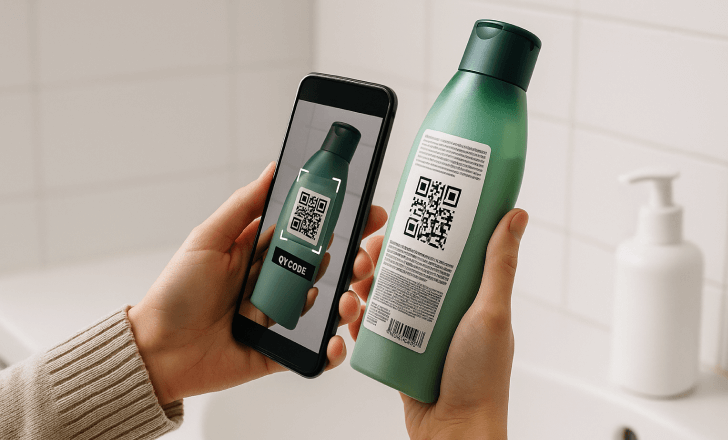
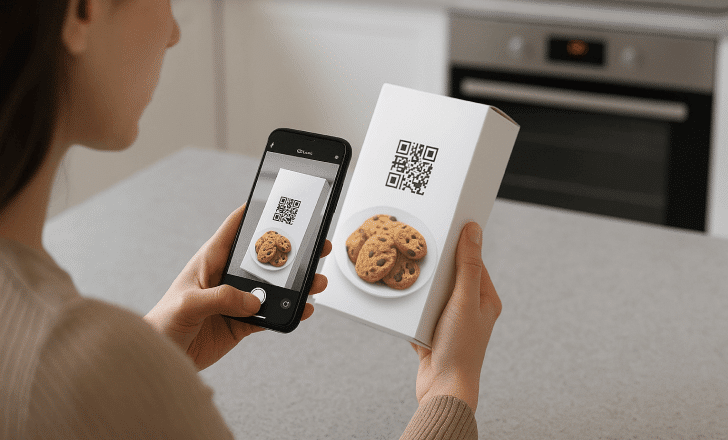
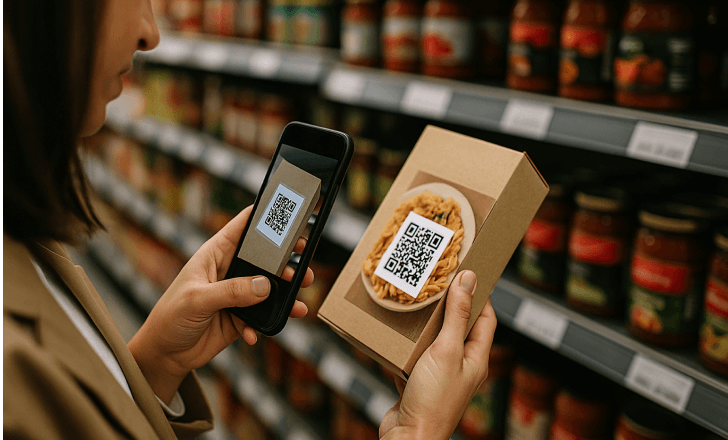
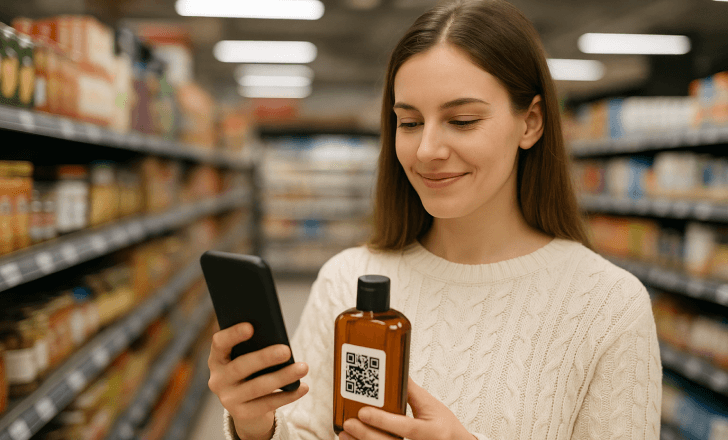
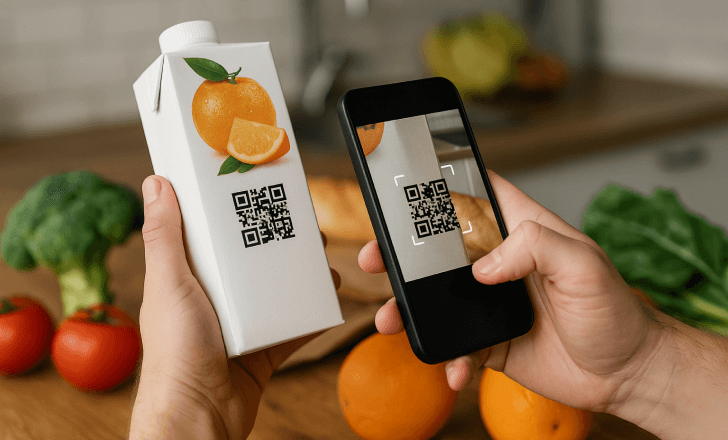
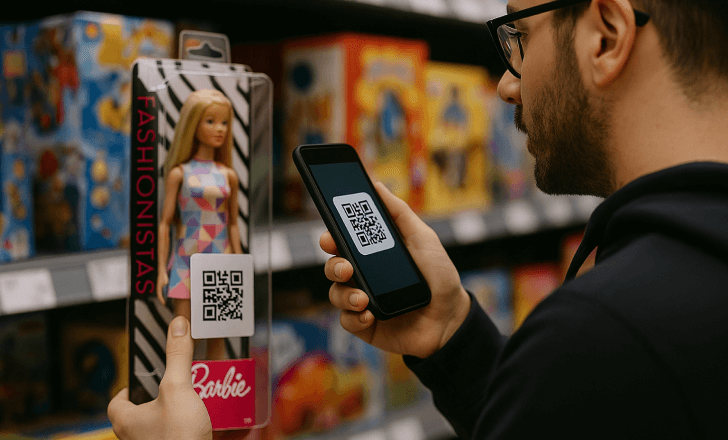
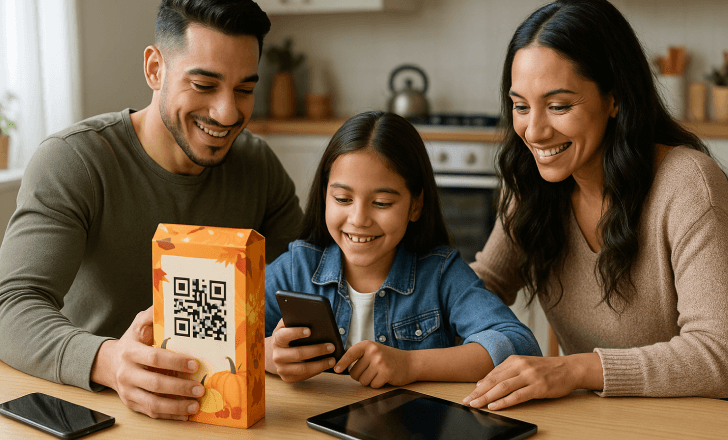
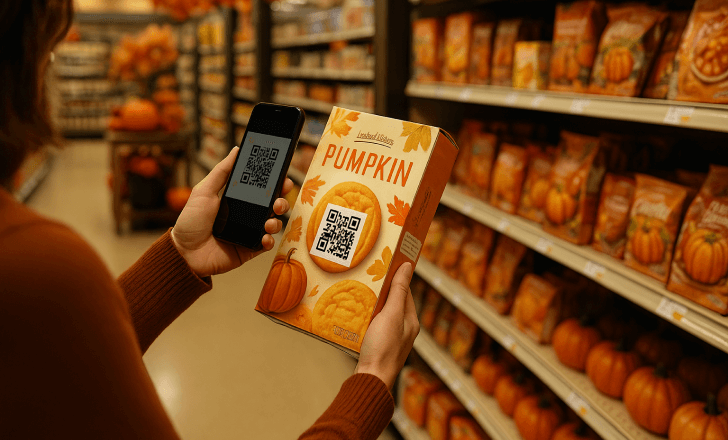
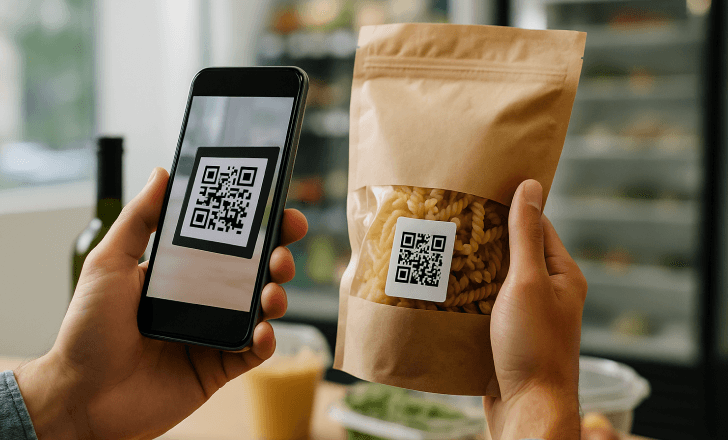
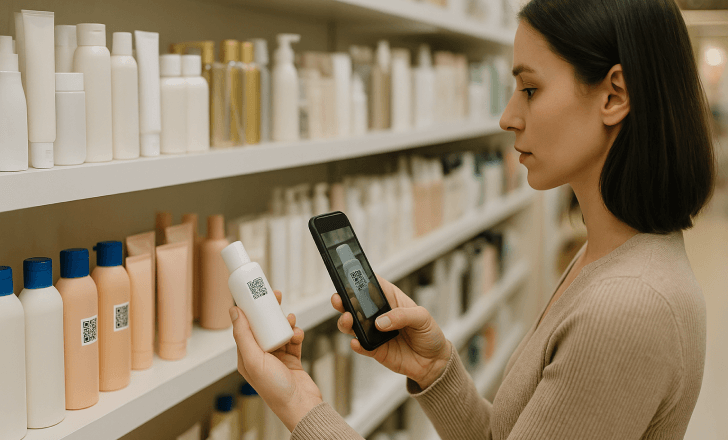
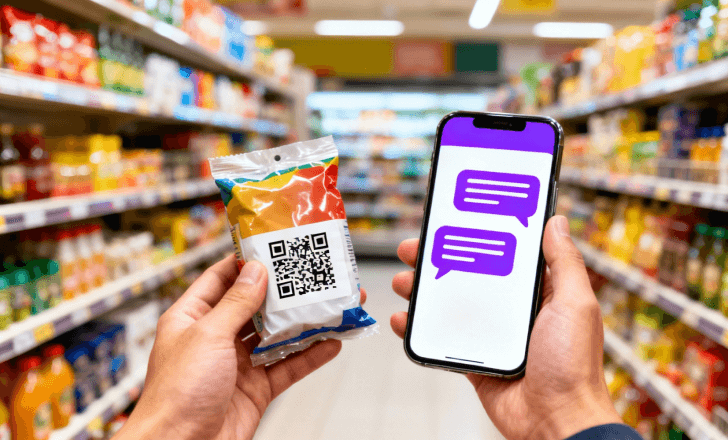
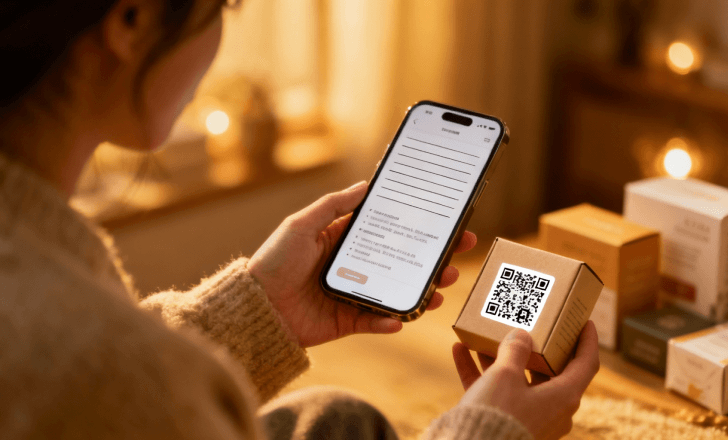
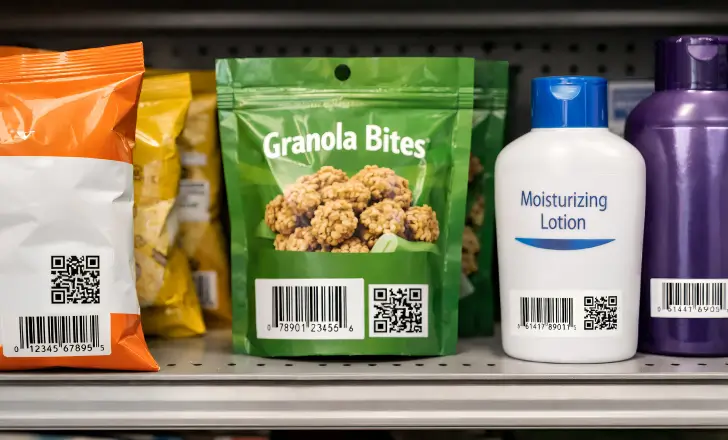
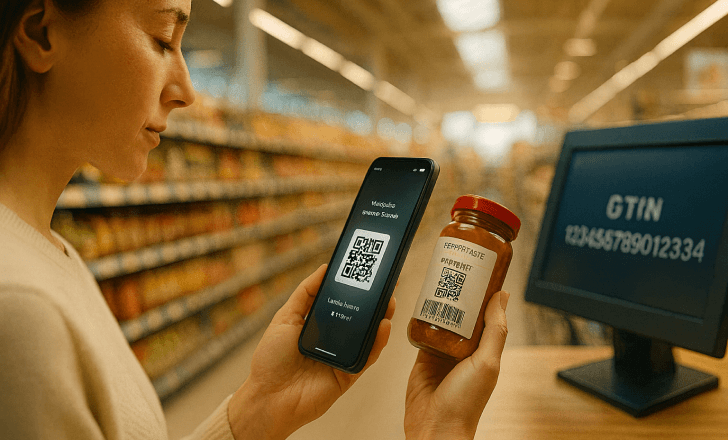
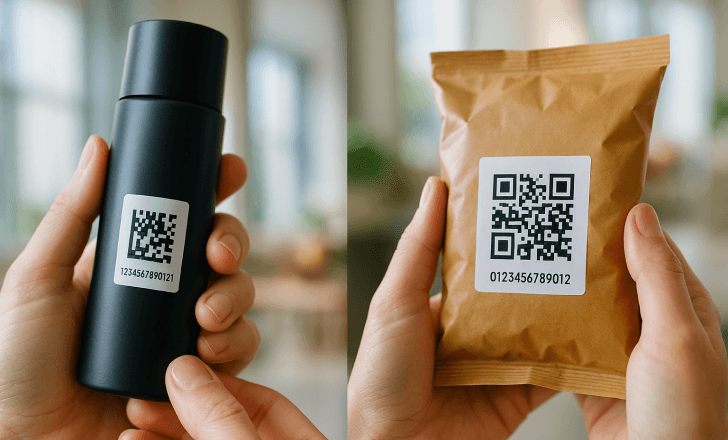
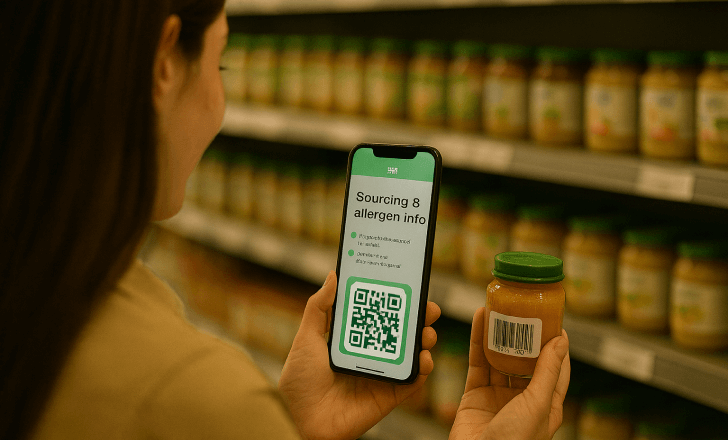
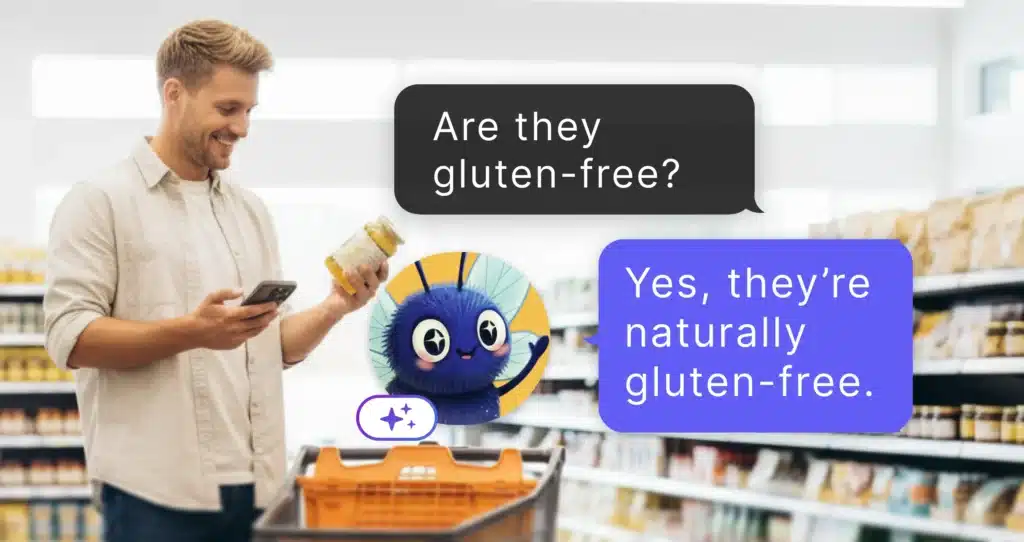
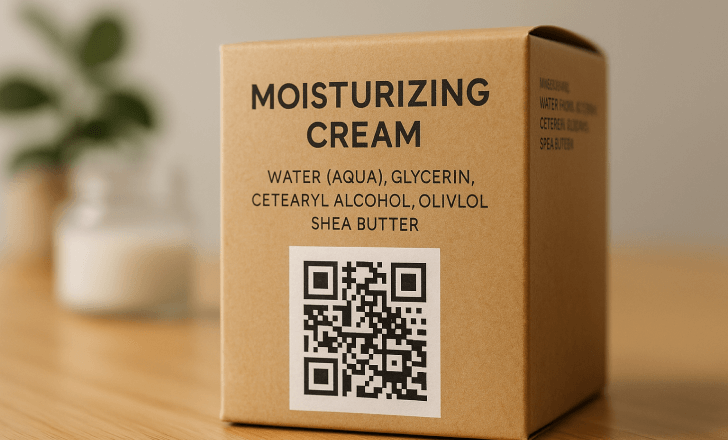
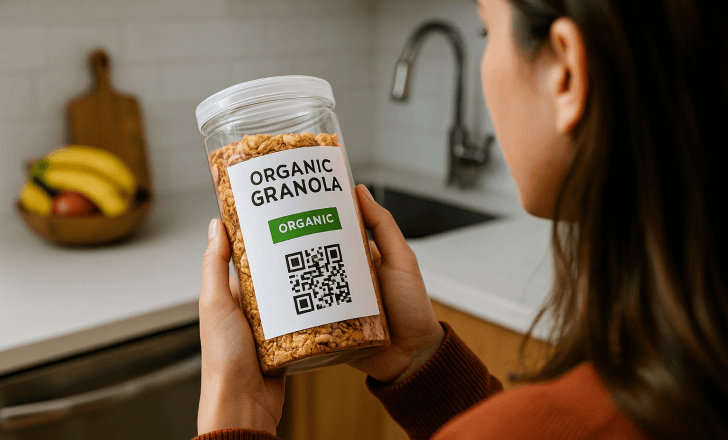
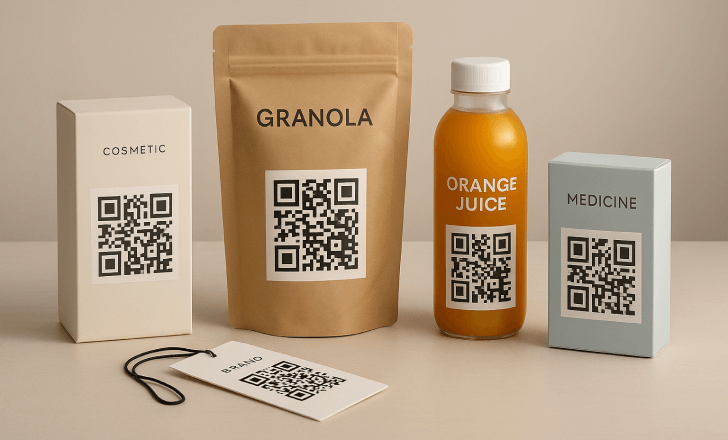
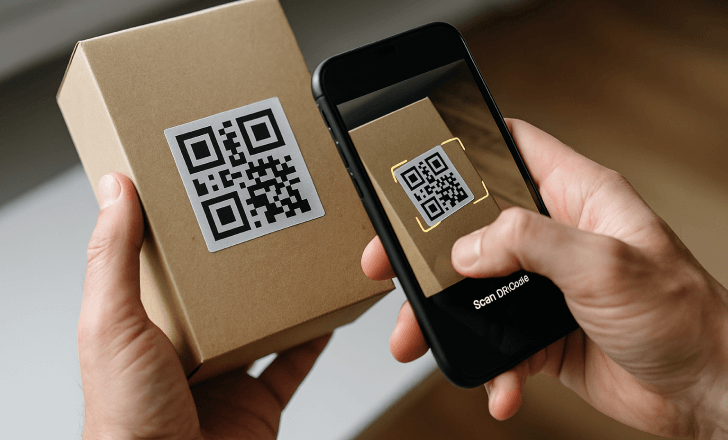
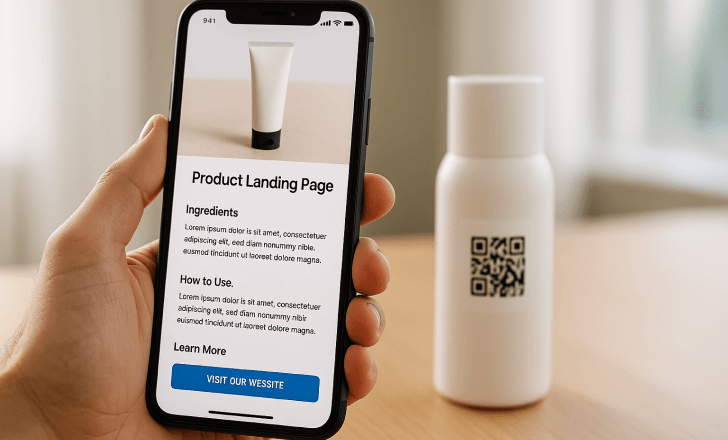
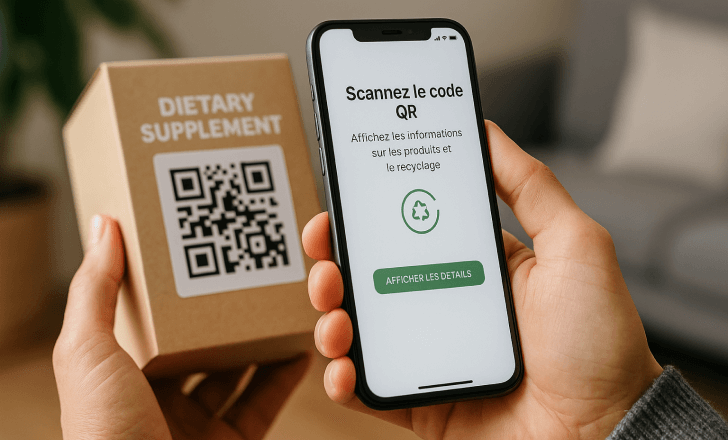
In the age of intelligent packaging and digital touchpoints, products are no longer silent. They can explain themselves, guide users, and even respond to follow-up questions. Making your product answer customer questions using AI is not science fiction, it is smart design. Through platforms like Digital Link, brands can integrate AI-powered assistants directly into their packaging or connected product pages. By scanning a code, customers can start a conversation and receive accurate, on-demand information in the same language they speak.
Why accurate responses build customer trust
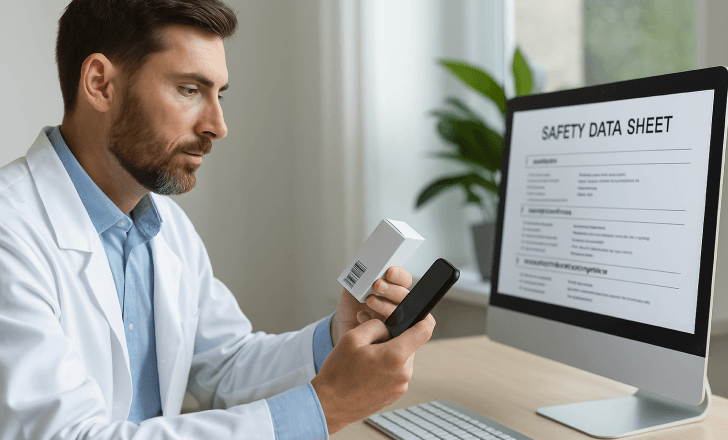
When customers ask a question, the way your brand answers defines their perception of your reliability. Whether it is “How do I recycle this bottle?” or “Is this product safe for babies?”, precise answers create confidence and loyalty. AI models trained with structured product data can deliver accurate answers instantly. They can access information such as ingredients, certifications, instructions, or troubleshooting tips. This reduces support requests, improves understanding, and minimizes human error, all while keeping your brand voice consistent.
How to design AI-powered answers for your product
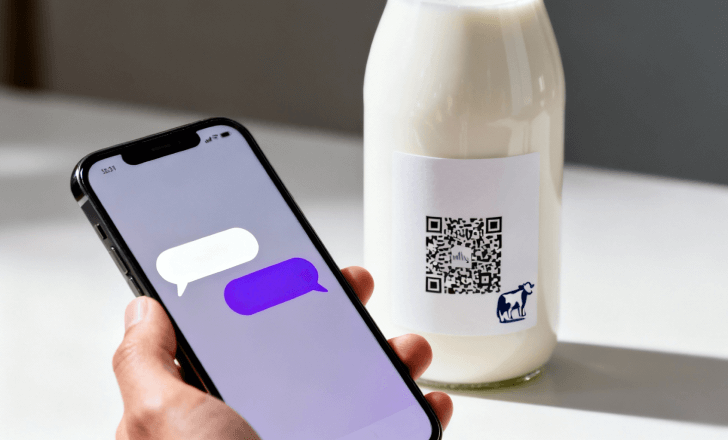
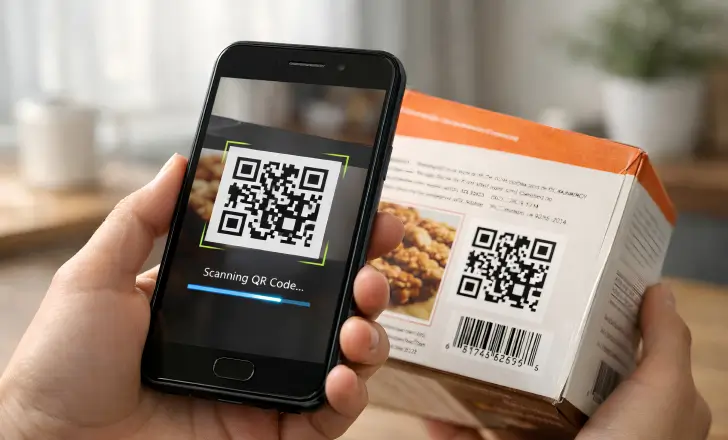
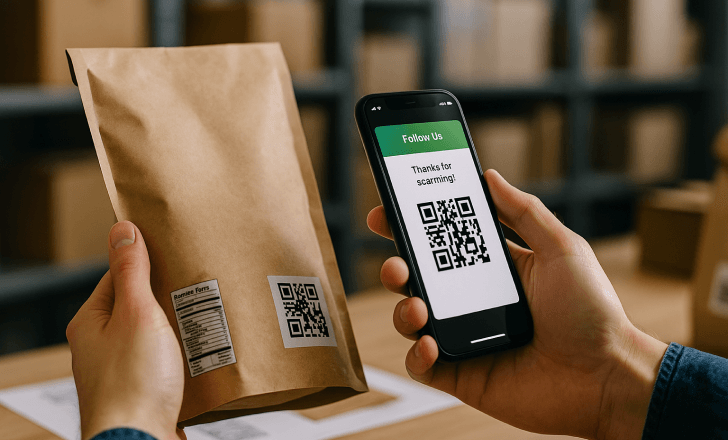
The process starts with clarity: what do your customers really want to know? Start by identifying the most common inquiries, your product’s “FAQ in motion.” Then, structure that information so an AI-powered assistant can process it and respond naturally. Digital Link’s conversational packaging framework turns this structure into experience. Once a user scans your product’s QR code, the AI assistant can chat in real time, generate contextual responses, and guide them through complex questions without leaving the product page. The assistant can even continue the conversation, offering follow-up questions or personalized advice.
How does AI understand and respond in the same language?
Natural language processing allows AI systems to interpret intent and respond in multiple languages with accuracy and nuance. If a customer in Spain asks a question in Spanish, the assistant replies in Spanish. If another user switches to English, it adjusts instantly. This multilingual ability makes global support seamless. It removes barriers for international users, improving both accessibility and engagement. The same structured data behind the product becomes the foundation for a fluid, human-like exchange across markets.
What makes answers from AI models precise?
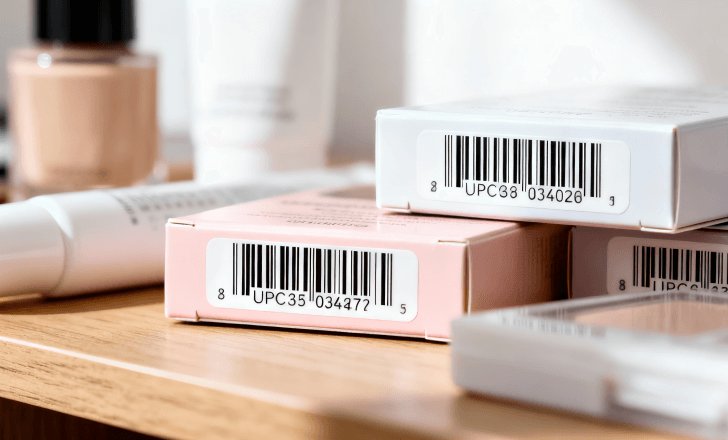
Precision depends on data depth and structure. AI models do not invent knowledge, they analyze product information and turn it into contextually relevant answers. The richer your dataset, the more accurate your AI becomes. By connecting verified product data, like GTIN, ingredients, or technical specs, to an AI engine, you ensure every response is traceable and fact-based. This approach eliminates guesswork and allows your assistant to provide reliable insights customers can trust.
How to deploy your AI assistant on packaging
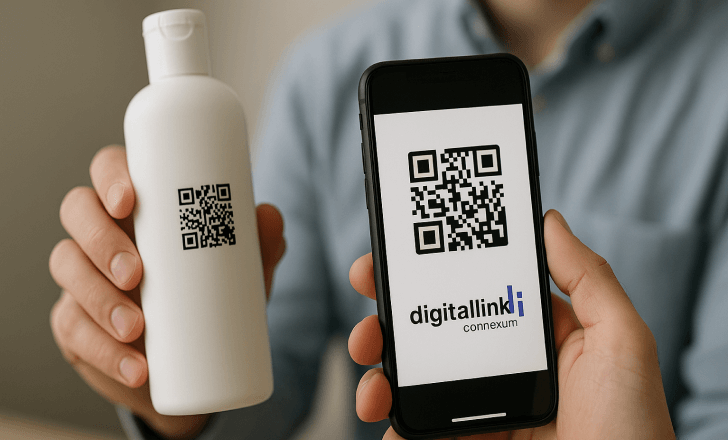
Turning a static QR code into an intelligent channel is simpler than it sounds. With Digital Link, you can create a smart QR code that connects to a digital product page equipped with an embedded AI assistant. Once deployed, it can:
Answer customer questions in real time
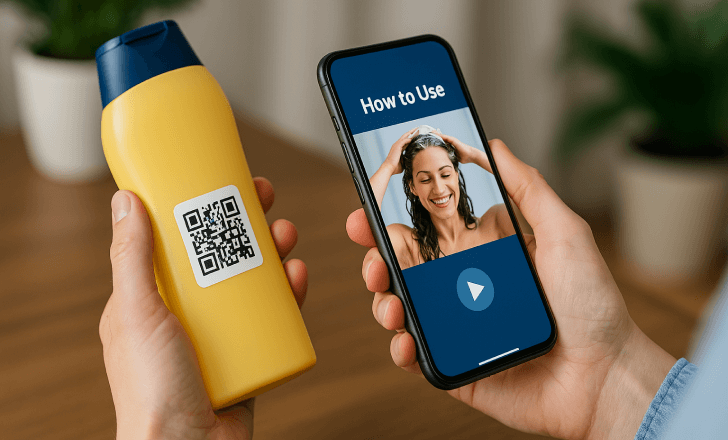
Provide product support and instructions
Generate personalized recommendations
Track insights from interactions to improve future responses These capabilities transform packaging from a passive surface into an active communication channel between brand and user.
What kind of questions can your AI answer?
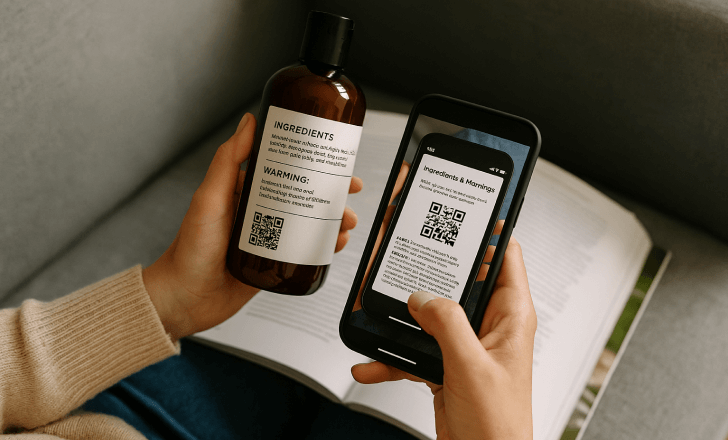
From “How do I install this?” to “Is it compatible with my phone?”, the range of possible questions is wide. AI can handle both structured and open-ended inquiries, analyzing the context to deliver complete, concise, and relevant responses. The system can even detect intent from partial input. If a customer types “battery,” it can anticipate the full question and suggest solutions, improving the conversation’s speed and efficiency.
How do you measure success when your product answers questions?
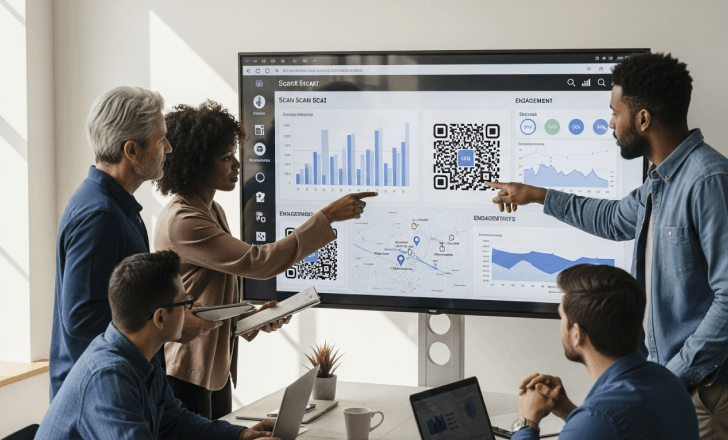
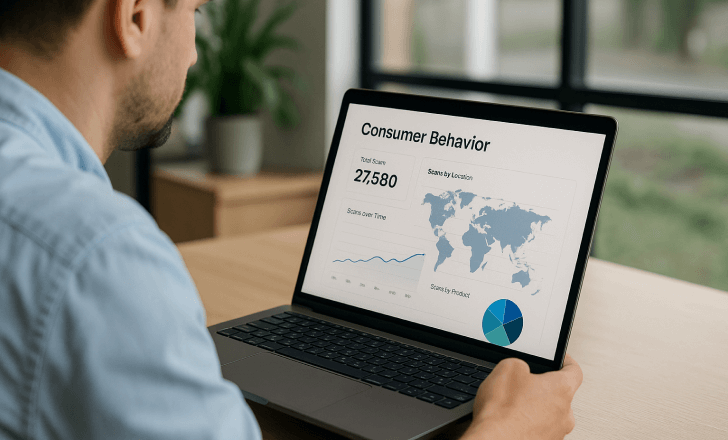
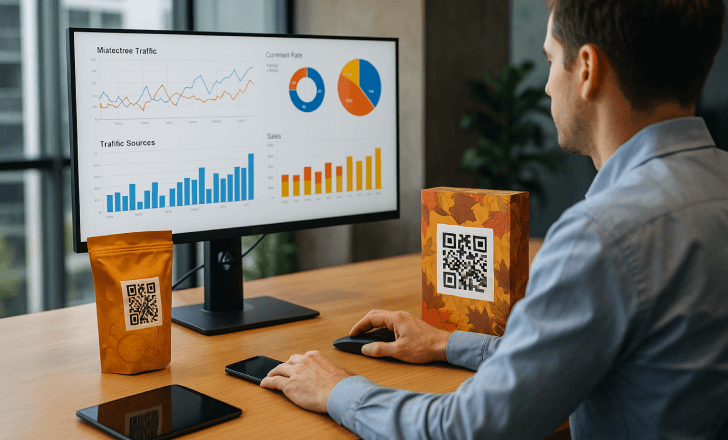
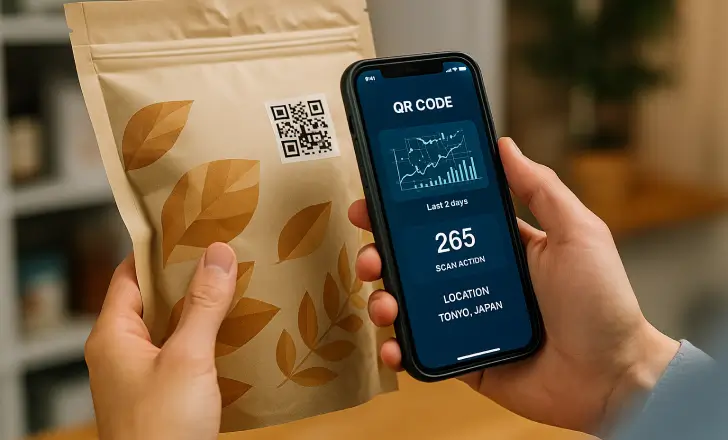
Beyond user satisfaction, the success of AI-powered product assistants can be tracked through engagement metrics. Brands can analyze which questions appear most often, how long conversations last, and what type of content leads to the highest user trust. These insights are gold for continuous improvement. They allow you to refine your product information, adapt your marketing messages, and predict emerging customer needs with precision.
What is next for AI in customer conversations?
AI product assistants are becoming the new interface between brands and customers. They merge precision, accessibility, and personalization, qualities that static FAQs or call centers cannot match. The next step is full integration: linking your AI assistant not only to your product data but also to your service ecosystem. Imagine a customer scanning a code and instantly accessing tutorials, warranty registration, or live support, all through a single intelligent conversation.
How to start building your own AI-powered product assistant
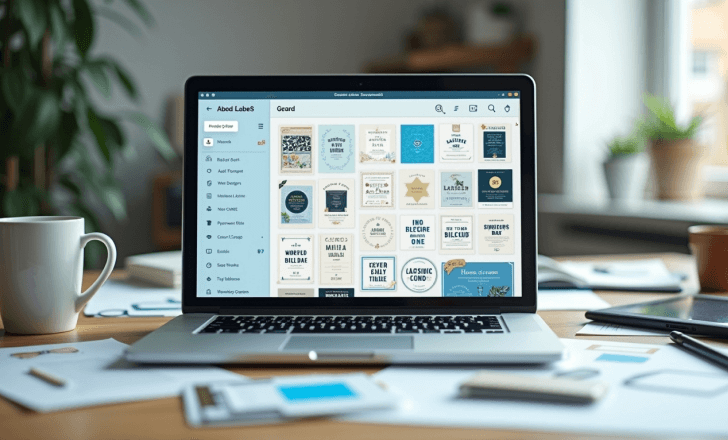
You do not need to build from scratch. Start small. Use a free plan to test your first product assistant and see how it performs. Integrate your structured product data, connect your FAQ content, and observe how users interact. Then, scale your deployment to more products, channels, and languages. With AI, every conversation becomes an opportunity to learn, improve, and build lasting trust, one precise answer at a time.
---
## Is the new 2D barcode safe? Honest answers to 7 big doubts
URL: https://digital-link.com/guides/are-qr-codes-on-products-safe/
The move to 2D barcodes has sparked many questions. We answer the 7 biggest fears about QR codes on products honestly: scams, privacy and what brands should do.
The video above, about the move from the striped barcode to the 2D barcode, drew a loud reaction online, louder than the video itself. Scroll through the comments and the same worries surface again and again. Would this be used to scam people? Would the shop grind to a halt when the internet went down? Would the new code follow them around?
Those are fair questions, and they deserve straight answers rather than marketing. So we went through the comments under that video, grouped the recurring fears, and set out to address the seven that come up most. No spin, no scare tactics. Where the honest answer is "it depends on how a brand builds it", we say so.
One note before we start, because it sits under almost every worry on the list. The industry shift people are reacting to is called Sunrise 2027. It is an industry initiative to make retail checkouts able to read 2D barcodes, not a law, not a hard switch-off date, and not something that forces any shopper to do anything differently. Our explainer on [what is Sunrise 2027](/guides/what-is-sunrise-2027/) covers the background in plain language.
## Can product QR codes be used to scam me?
A random QR code sticker can absolutely be used to scam you, but that is exactly the problem a GS1 Digital Link code is built to avoid. The scam people are describing has a name, quishing, and it works because most QR codes are anonymous. Anyone can generate one and slap it over a real one, and the code itself carries no proof of who made it or where it should lead.
A GS1 Digital Link code is a different animal. It is tied to a product's official identity in an accountable chain, issued against a real company that licensed that identity from GS1, and resolved through a known address rather than a mystery URL. A fraudulent sticker slapped on a shelf cannot fake that chain. It can only ever be a copy pointing somewhere it should not, which is the same risk that already exists with printed web addresses and phone numbers on packaging.
The practical advice does not change much either. Be wary of codes stuck on top of other codes, or codes taped to a lamppost or a parking meter. A code printed directly into the packaging by the brand, resolving to that brand's own domain, is the safe end of the spectrum, and that is precisely what the transition is standardising.

## What happens when the server is down and I cannot buy milk?
Nothing. You can still buy the milk, because the checkout does not need the internet to ring it up. This is one of the fears that comes up most, and it rests on a misunderstanding of how the code works at the till.
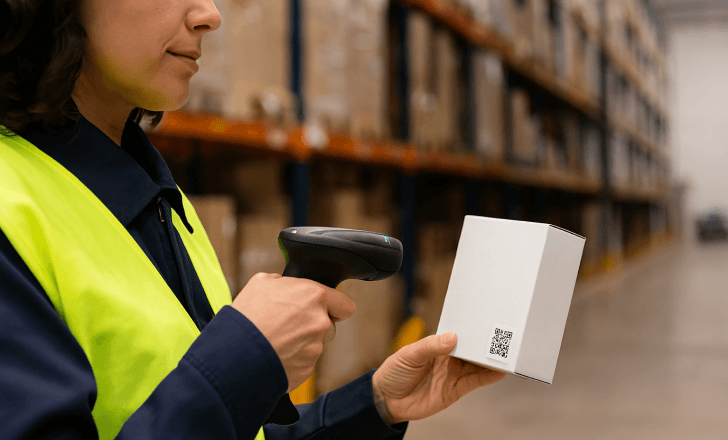
The product's identity, the same number the old striped barcode carries, is printed inside the 2D code itself and read locally by the scanner. The checkout reads that identity off the packaging in front of it, matches it to the store's local price list, and completes the sale. No cloud lookup, no live connection, no dependency on a website being up. If the shop's internet goes down, the till behaves exactly as it does today with the linear barcode.
The web link that a shopper's phone can open is a separate layer sitting in the same code. That layer needs the internet, the same way opening any web page does. But the checkout never touches it. Selling you milk and showing you a product page are two different jobs, and only one of them needs to be online.
## What if the code is damaged? Today the cashier can type the numbers
If the code is scratched or torn, it very often still scans, because 2D barcodes are built with error correction that a human typing digits cannot match. This one is a good instinct, because everyone has watched a cashier squint at a crumpled barcode and key in the numbers by hand.
Here is the part that is not obvious. 2D barcodes store redundant data across the whole grid, so a damaged code can reconstruct itself from what survives. Depending on the settings used when the code is generated, a QR code can tolerate a large share of its surface being lost, often up to roughly 30 percent, and still read correctly on the first try. That is why the little squares can survive a smudge, a fold, or a coffee ring.
And the fallback has not gone anywhere. The human-readable product number can still be printed next to the code, exactly as today, so a cashier can type it in on the rare occasion nothing scans at all. The transition removes a common failure, it does not remove the safety net.
## Will this make shopping more expensive?
Not because of the barcode itself, and the real cost risk is one most shoppers never see. Printing a 2D code costs a brand essentially the same as printing the old one. The expensive mistake happens behind the scenes.
Many companies are running their move to 2D barcodes and their work on the [European Digital Product Passport](/guides/european-digital-product-passport-dpp/) as two completely separate projects, with two teams, two budgets, and two sets of product data that say almost the same thing. Both efforts depend on the same underlying product information, so building that infrastructure twice is the cost leak, not the ink on the pack.
Brands that treat it as one job, cleaning the product data once and letting both the checkout code and the passport draw from it, spend less and ship sooner. Our breakdown of [Sunrise 2027 vs GS1 Digital Link](/guides/sunrise-2027-vs-gs1-digital-link/) explains why they are complementary rather than competing.
## Is the new barcode going to track me?
The code identifies the product, not the person holding it. This fear carries the most emotion, and it deserves a careful answer rather than a flat denial.
A 2D barcode on a jar of coffee says, in effect, "I am this coffee, from this brand, this batch". It says nothing about you. It has no idea who scanned it, and it cannot. Scanning a code with your own phone does not hand your identity to anyone, any more than reading a label does.
Tracking, when it happens, is a software choice a company makes on top of the code, the same choice they could already make with a website, a loyalty card, or a cookie. The symbol on the pack is not the thing that tracks you. The barcode is neutral, and the questions worth asking are about a brand's privacy practices and its app, exactly the questions you would ask of any company handling your data.
## Does Sunrise 2027 force brands to put URLs on everything?
No. Sunrise 2027 does not force a web link onto any product. This is a point of genuine confusion, even among people in the industry.
The mandatory piece of Sunrise 2027, to the extent anything is mandatory in an industry initiative, is on the retailer's side: checkouts becoming able to read 2D barcodes. What a brand chooses to encode in its code is a separate decision. A [GS1 Digital Link](/guides/gs1-digital-link-basics/), the format that lets a single code carry a web address alongside the product identity, is optional. A brand can move to a 2D code that carries nothing but the same identity the old barcode held, and still be ready for the till.
So the accurate statement is narrow. Retail is preparing its checkouts to read 2D codes. Brands decide whether their code also opens a web page. Nobody is compelled to put a URL on anything.
That said, not mandatory is not the same as no pressure. The real deadline is commercial rather than legal. As retailers move their checkouts to 2D, they increasingly expect the products they stock to be ready, and a brand that lags can quietly lose the shelf to one that is prepared. The law is not forcing the change. The market is.
## I am a brand. What should I actually do before 2027?
Start with your product data, because everything else depends on it being correct. The barcode is the easy part, and the data behind it is the work. Here is a sensible order of operations.
| Step | What it means | Why it matters |
| --- | --- | --- |
| Fix your product data first | Make sure your identifiers, attributes and content are accurate and consistent | Both the checkout code and any passport draw from this; errors here multiply everywhere else |
| Plan one transition, not two | Scope your 2D move and your Digital Product Passport work as a single programme | Building the same data infrastructure twice is the real cost, as covered above |
| Test a dual-code phase | Run the old linear code and the new 2D code together with retail partners | Lets checkouts and shoppers adapt without a risky overnight switch |
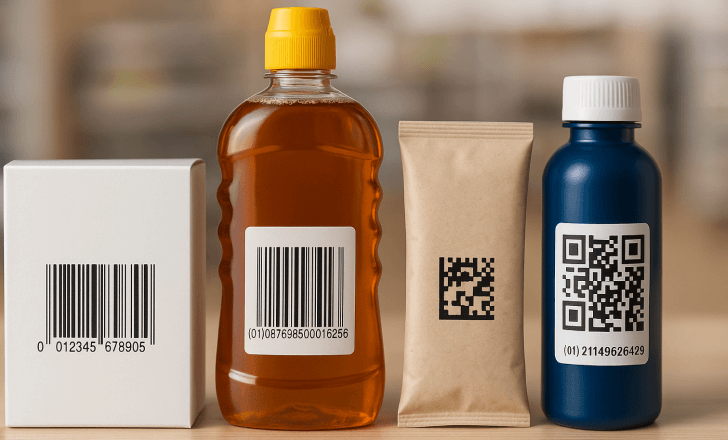
None of this requires panic buying or a rushed rollout. The 2D code you choose can be a [QR code or a Data Matrix](/guides/qr-code-vs-data-matrix/) depending on your product and surface, and the smart brands are using the runway to get the data right rather than racing to a deadline that, for Sunrise, does not legally exist.
If you want to see how a single Digital Link code can serve the checkout and the consumer at once, you can [create a free account and try it](https://app.digital-link.com/en/sign-up).
## Frequently asked questions
### Are QR codes on products safe?
Yes, when they are part of an accountable system. The risk people worry about, a fake sticker leading somewhere malicious, comes from anonymous codes anyone can print. A GS1 Digital Link code is tied to a product's official identity and resolves through a known address, which a fraudulent sticker cannot fake. As always, be cautious of codes stuck on top of other codes or in odd public places.
### Is Sunrise 2027 a legal mandate?
No. Sunrise 2027 is an industry initiative to make retail checkouts able to read 2D barcodes. It is not a law, and it is not a hard switch-off date for the old barcode. Do not confuse it with regulation such as the European Digital Product Passport, which is a separate legal framework and applies first to batteries from 18 February 2027.
### Do I need to put a URL on my product?
No. A GS1 Digital Link, the format that carries a web address, is optional. A 2D barcode can carry the same product identity the old linear barcode held and nothing more, and still work at a 2D-capable checkout. Adding a web link is a choice, not a requirement.
### Will the checkout stop working if the internet goes down?
No. The product identity is printed inside the 2D code and read locally by the scanner, matched against the store's own price list. Ringing up a sale needs no live connection. Only the optional web page a phone might open depends on the internet, and the checkout never touches that layer.
---
## How the Battery Passport is changing the battery industry
URL: https://digital-link.com/guides/battery-passport/
A detailed guide to the Battery Passport and the EU Battery Regulation. Everything you need to know to prepare for the next compliance challenge.
Batteries are undergoing a significant transformation, not just technologically but ethically. The European Digital Product Passport (DPP) initiative, with its emphasis on transparency and sustainability, is set to redefine the way we perceive, produce, and utilize batteries. This article explores the roots of the Battery Passport in the EU regulations and its potential to reshape the global battery industry. Discover the origins and the requirements of the Battery Passport, its implications, and the promise it holds for a sustainable future.
What is the European Digital Product Passport?
The European Digital Product Passport (DPP) is a tool proposed by the European Commission to create transparency and unlock circularity in product value chains. Technically, the DPP is a digital record system that enables the transfer of information between parties and shares product information across the entire value chain, including data on raw material extraction, production, recycling, etc.
The tool is designed to provide new business opportunities to economic actors through circular value retention and optimization, help consumers make sustainable choices, and allow authorities to verify compliance with legal obligations.
In order to achieve these goals, Digital Product Passports will be connected through a QR code to unique identifiers, and the trusted data will be accessible so that all parties, including customers, may better understand the products they use and their environmental impact.
The DPP is a key instrument for implementing a global vision of sustainable, more responsible sourcing, and circular product value chains based on data that is standardized, comparable, and auditable.
Why are Digital Product Passports relevant for batteries?
Digital Product Passports are relevant for the battery industry because batteries have been identified as the first product category to comply with Digital Product Passport reporting requirements. With great power comes great responsibility.
Under the EU Battery Regulation, Regulation (EU) 2023/1542, adopted in July 2023, electric vehicle batteries, light means of transport (LMT) batteries and industrial batteries with a capacity greater than 2 kWh must carry a unique Battery Passport, reachable through a QR code. Ordinary portable batteries are not covered by that obligation.
The responsibility of entering all essential data into the digital record and ensuring its accuracy and currency falls on the party introducing the battery to the market.
Furthermore, an external entity must validate the carbon footprint pertinent to the battery’s manufacturing location and batch, and this information should be readily available online.
The digital Battery Passport will contain a comprehensive set of information that needs to be made available through a QR code, including battery capacity, energy round trip efficiency, expected lifetime in cycles/calendar years, manufacturing history, provenance, sustainability and lifecycle requirements, material and component attributes, and maintenance history.
Traditional versus digital Battery Passport
The concept of a Battery Passport is not entirely new.
A traditional Battery Passport is a physical document that accompanies a battery throughout its life cycle and contains information about the battery’s specifications, performance, and maintenance history. However, it is a document that can be lost or damaged, leading to a loss of important information. And it can also be difficult to update and share with relevant parties.
In contrast, a digital Battery Passport is a digital record system that enables the transfer of information between parties and will ensure that recovery organizations can determine the best course of action for waste batteries based on their chemistry and use history. It can be updated at any time, while new information can be integrated if needed.
Here are some key advantages of digital Battery Passports:
Enable greater sustainability and circularity in battery value chains.
Can act as a valuable data source for battery management-related decision-making.
Will give every battery an identity, acting as a digital twin of the battery to record important information across its entire lifecycle.
Offer end-users essential information regarding the battery’s source of materials, its chemical composition, production history, and relevant ESG performance and lifecycle standards.
Are a key instrument for implementing a global vision of a sustainable, responsible, and circular global battery value chain based on data that is standardized, comparable, and auditable.
Germany is pioneering the transition to digital Battery Passports with the Battery Pass project launched in 2022. The Battery Pass is a three-year, government-funded R&D global project including world-class market German leaders like acatech, Germany’s National Academy of Science and Engineering. The project serves as a pilot for the broader Battery Passport outlined by the Battery Regulation.
What are the challenges and opportunities of the EU battery regulation?
There are several specific challenges and opportunities related to batteries that make Battery Passports particularly important.
Environmental, social, and governance (ESG) impacts
To manage the rapidly growing industry’s ESG impacts, transparency and collective multistakeholder are vitally important. The Battery Passport is a framework to increase transparency across the entire battery value chain and promote a circular economy, establishing a digital twin of the physical battery that conveys information about all applicable sustainability and lifecycle requirements based on a comprehensive definition of a sustainable battery.
Compliance with regulations
The EU Battery Regulation establishes a detailed set of guidelines aimed at safeguarding the environment by minimizing hazardous substances in batteries and enhancing their recycling frequency. Since it was introduced in 2006, it has had a significant impact on the battery industry. As a result, the need for Battery Passports and other forms of battery traceability has become increasingly important.
Circular battery value chain
Battery Passports will serve as a foundational instrument in fostering a circular battery value chain. This will facilitate collaboration among all stakeholders, sharing crucial information to enhance safety, optimize battery utilization, and guarantee efficient recycling.
Sustainable practices
The Battery Passport will incentivize manufacturers to adopt more sustainable practices by requiring them to provide information about the origin of raw materials and the environmental impact of production.
Proper recycling
The Battery Passport will help ensure that used industrial batteries are properly recycled, reducing the environmental impact of disposal.
Cost savings
The Digital Battery Passport can generate cost savings from streamlined purchasing and quality procedures. It can also improve communication across the supply chain, reducing the risk of errors and delays.
Informed decisions
The Battery Passport can provide detailed information on the battery’s composition and the processes used to manufacture it, which can help customers make informed decisions when purchasing batteries and increase transparency in the supply chain.
Digital Battery Passport implementation: timeline and requirements
Battery Passport timeline
The EU Battery Regulation, Regulation (EU) 2023/1542, was adopted on 12 July 2023 and has applied since 18 February 2024, with individual provisions phased in on their own dates.
From 18 February 2027, under Article 77 of the Regulation, every LMT battery, every electric vehicle battery and every industrial battery with a capacity greater than 2 kWh placed on the EU market or put into service must have a Battery Passport, accessible through a QR code that links to a unique identifier.
Article 7 introduces a carbon footprint declaration, drawn up for each battery model per manufacturing plant. For electric vehicle batteries it applies from 18 February 2025 or twelve months after the relevant delegated and implementing acts enter into force, whichever is the latest, with later dates for industrial and LMT batteries. Because the methodology acts govern that start date, the practical deadline moves with them: check the current status before planning against it.
In practice this leaves manufacturers and their suppliers until early 2027 to have the systems and processes in place to issue and manage these Digital Battery Passports, and the data collection behind them has to start well before that.
Battery Passport requirements
Annex XIII of the Regulation sets out the information that must be available in the Digital Battery Passport, separating what is public from what is reserved for authorities and for operators with a legitimate interest. It includes:
Battery Passport unique identifier: A unique code or number identifying the Battery Passport.
Manufacturer’s name and address: The name and address of the company that manufactured the battery.
Battery designation: The specific name or model number of the battery.
Electrochemical system: The chemical composition or type of the battery.
Battery type: The specific type or category of the battery (i.e., Lithium-ion, Nickel-Metal Hydride).
Nominal voltage: The standard voltage output of the battery.
Nominal capacity: The standard capacity or energy storage capability of the battery.
Weight: The weight of the battery.
Battery design life: The expected lifespan or operational duration of the battery under normal conditions.
Battery warranty: Details about the warranty or guarantee provided by the manufacturer.
Date of manufacture: The date when the battery was produced.
Battery end-of-life information: Specific details about how the battery should be disposed of or recycled once it reaches the end of its operational life.
Carbon footprint: Measurement of the total greenhouse gas emissions caused directly and indirectly by the battery.
Recycled content: Information regarding the materials in the battery that come from recycled sources.
Ethical sourcing details: Information about the sourcing practices for the materials used in the battery.
Safety information and certifications: Details about the safety standards the battery adheres to and any certifications it holds.
Performance metrics and testing results: Data related to the battery’s efficiency, performance under various conditions, and results from any tests conducted.
Expected degradation: Information about how the battery’s performance might decline over time and under what conditions.
Intended use: Specific applications or devices for which the battery is designed.
Reusability and repurposing information: Details about potential second-life applications for the battery.
Dismantling information: Guidance on how to safely dismantle the battery.
State of health metrics: Data providing insights into the current performance and health of the battery compared to its original specifications.
How companies can prepare for the Digital Battery Passport revolution
Understand the requirements
Battery manufacturers should familiarize themselves with the EU Battery Regulation and other related laws to understand the requirements for implementing Digital Battery Passports.
Collect data
The necessary data for the Battery Passport must be collected, including information about battery capacity, energy round trip efficiency, expected lifetime in cycles/calendar years, manufacturing history, provenance, sustainability and lifecycle requirements, material and component attributes, and maintenance history.
Use centralized systems
Players in the battery supply chain should use centralized ERP systems and centralized tools that communicate with suppliers to collect data from them.
Verify the battery’s carbon footprint
Manufacturers have to assess their emissions (direct, indirect, or related to the entire supply chain), calculate the carbon footprint, and convert it to CO2 equivalents using appropriate global warming potential (GWP) factors. Carbon footprints must then be validated by third-party certifiers. Stay tuned because we’re working on a game-changing solution for calculating and validating a battery’s carbon footprint.
Ensure accuracy and completeness
It’s vital to ensure that all the required data is entered into the digital record and that the information is correct and up to date.
Incentivize sustainable practices
Suppliers should be incentivized to adopt more sustainable production practices by requiring them to provide information about the origin of raw materials and the environmental impact of production.
Ensure proper recycling
Companies should help ensure that used batteries are properly recycled, reducing the social and environmental risks and impact of disposal.
Increase transparency
Companies should provide detailed information on the battery’s composition and the processes used to manufacture it, which can help customers make informed decisions when purchasing sustainable batteries and increase transparency in the supply chain.
Implement QR codes
Companies should implement QR codes to enable the transfer of information between parties and ensure that recovery organizations can determine the best course of action for waste batteries based on their chemistry and use history.
But which type of QRs is the most suitable for connecting individual batteries with their digital twins?
The role of QR codes and digital links in implementing the Battery Passport
The now ubiquitous QR codes are central to the implementation of the EU Battery Regulation.
QR codes must be used to provide a direct link to the Digital Battery Passport webpage. They will be connected to a unique identifier, and the data will be accessible so that all parties, including customers, may better understand the products they use and their environmental impact.
The combination of dynamic QR codes and digital links enables brands to deliver different information and content to different users with a single code, making it the ideal solution to comply with the new regulation.
Dynamic digital link QR codes can be easily updated without reprinting them. In addition, our digital link QR code solution allows brands to connect a smart product page in addition to the passport, opening new opportunities for marketing and customer engagement.
Real-life Battery Passport examples
Companies and organizations at the forefront of the Battery Passport revolution are already testing pilot projects and “proofs of concept” to accelerate its implementation. Among them, the Global Battery Alliance passport and the Ford passport are definitely worth taking a closer look at.
Global Battery Alliance
The Global Battery Alliance (GBA) is a partnership of 140+ businesses, governments, academics, industry actors, and international and non-governmental organizations, mobilizing to ensure that battery production supports green energy, safeguards human rights, and promotes health and environmental sustainability. Members of the Global Battery Alliance include Audi, BASF, CATL, Eurasian Resources Group, Glencore, LG Energy Solution, Umicore, Tesla, Volkswagen AG, and many more.
The GBA’s Battery Passport is the flagship initiative of the Alliance, establishing a framework for the circular battery economy. The passport has been developed over three years by the GBA’s members, and its proof of concept was launched at the World Economic Forum’s Annual Meeting in Davos in January 2023.
Ford
Ford Motor Company has launched a Battery Passport pilot to ensure responsible recycling of electric vehicle batteries in the automotive industry. The pilot leverages blockchain technology, IoT, and QR codes to track batteries throughout their lifecycle to ensure responsible management during use and recycling at the end of their useful life.
The pilot will run for six months and will allow Ford to gain visibility on out-of-warranty batteries, validate responsible battery lifecycle management, improve the battery’s sustainability performance, and gain access to data such as recycled critical minerals produced and associated CO2 savings.
Embracing the future of transparency and circularity
The European Digital Product Passport (DPP) initiative marks a pivotal moment in our journey towards a more sustainable and transparent global industry. As batteries power our world, from everyday devices to transformative technologies like electric vehicles, the need for a comprehensive, transparent system like the Battery Passport becomes clear.
The DPP is not merely a regulatory tool but a testament to the European Commission’s commitment to unlocking circularity in product value chains. It offers a digital record that encapsulates a product’s entire lifecycle, from raw material extraction to end-of-life recommendations. This transparency not only enables informed decisions by consumers but also fosters accountability within industries.
By adopting the Battery Passport and the broader DPP system, businesses can tap into new opportunities, optimize value retention, and position themselves as leaders in the green revolution.
For stakeholders and companies keen on navigating this evolving landscape, the recommendations are clear:
Early adoption: Don’t wait for regulatory mandates. Embrace the DPP and Battery Passport proactively, understanding its nuances and benefits.
Invest in technology: Utilize technologies like digital link QR codes to provide seamless access to product information, enhancing user experience and trust.
Engage & educate: Engage with partners in the supply chains, consumers, and stakeholders. Educate them about the benefits of transparent product value chains.
Foster collaboration: Work together with industry peers, regulatory bodies, and solution providers to ensure seamless implementation and standardization.
As we look towards the future, the DPP and Battery Passport initiatives are not just about compliance; they represent a paradigm shift towards a world where every product has a story, and every stakeholder has a role to play. We at digital-link.com are here to support you in this transformation.
---
## The six CEN DPP standards (EN 18216 to 18223) explained
URL: https://digital-link.com/guides/cen-dpp-standards/
The CEN/CENELEC Digital Product Passport standards, EN 18216 to 18223, in plain language: what each one covers and why they matter for your DPP.
The CEN and CENELEC Digital Product Passport standards are a family of six core European standards, numbered across the EN 18216 to 18223 range, that define how a Digital Product Passport works as a system. They are horizontal, which means they set the shared rules for identifiers, data carriers, storage and exchange that every DPP relies on, rather than deciding which data a textile or a battery must carry. The six core standards were published on 27 May 2026 and cited as harmonised standards in the Official Journal on 15 July 2026.
If the [European Digital Product Passport](/guides/european-digital-product-passport-dpp/) is the law, these standards are the engineering manual that makes it buildable. This guide explains what each one covers, in plain language, and what they mean for a brand getting ready.
## What are the CEN DPP standards?
The CEN DPP standards are the technical rulebook for the Digital Product Passport, developed by the joint committee CEN/CLC/JTC 24, Digital Product Passport, Framework and System, under European Commission mandate M/604. They translate the requirements of the Ecodesign for Sustainable Products Regulation (ESPR) into a concrete, testable system that every product sector can build on.
Two words explain why they matter. The first is horizontal. These standards define the framework, the plumbing shared by every passport, so a battery passport and a textile passport work the same way underneath even though they carry different data. The second is harmonised. Because the Commission has cited the core standards in the Official Journal, building to them gives a presumption of conformity with the relevant parts of the regulation. In plain terms, following the standard is the accepted way to prove you did it right.
## What does each of the six standards cover?
The six core standards each own one part of how a passport works, from the identifier that names a product to the way different systems talk to each other. Here is the family in plain language:
- EN 18216, data exchange. The protocols for moving passport data between systems, so a passport created in one platform can be read and updated by another.
- EN 18219, unique identifiers. How a product, and its passport, are uniquely named so a scan always resolves to the right item. This is the layer a [GS1 Digital Link](/guides/gs1-digital-link-basics/) identifier sits in.
- EN 18220, data carriers. The physical link on the product, such as a QR code, that a person or a scanner uses to open the passport.
- EN 18221, data storage. How passport data is stored, archived and kept available over a product's life, including after a company changes or disappears.
- EN 18222, APIs and lifecycle. The programming interfaces and the rules for how a passport is created, updated and retired as the product moves through its life.
- EN 18223, interoperability. The rules that let different passports and different systems work together across sectors and borders, so the whole thing behaves as one network rather than many silos.
Two further standards, on security and confidentiality and on data authentication and integrity, are being finalised and will complete the set. Together they cover keeping passport data safe and proving it has not been tampered with.
## Do the CEN standards tell me what data my product needs?
No. The CEN standards are horizontal, so they define how a passport works, not which data your product must carry. What a specific product has to disclose comes from its own sector rules, the delegated acts under the ESPR for product groups like textiles, batteries and electronics, not from EN 18216 to 18223.
This split is deliberate and useful. It means the framework is stable while the product requirements grow, so a system built to the standards today keeps working as new sectors are added. Our guides on the [product passport for textiles](/guides/product-passport-for-textiles/) and the [battery passport](/guides/battery-passport/) cover the sector data that sits on top of this framework.
## Why do the CEN standards matter for a brand?
The CEN standards matter because they turn the Digital Product Passport from a policy idea into something you can actually buy, build and trust. Before them, every vendor could interpret the rules differently. Now there is one shared definition of a compliant passport, which protects a brand in three ways.
- Presumption of conformity. Building to the harmonised standards is the recognised route to showing your passport meets the regulation, which reduces legal risk.
- No lock in. Because identifiers, carriers and interfaces are standardised, a passport is portable. You are not trapped in one vendor's private format.
- Future proofing. The framework is fixed while sector data expands, so the system you set up now does not need rebuilding each time a new rule arrives.
For a brand choosing how to comply, the practical takeaway is to pick tools that follow this family of standards rather than a private scheme. Our guide on [how to create a Digital Product Passport](/guides/how-to-create-a-digital-product-passport/) walks through the setup, and the [European DPP registry](/guides/european-dpp-registry/) guide covers where the identifiers are registered.
## How does GS1 Digital Link fit the CEN standards?
GS1 Digital Link fits directly into the identifier and data carrier layers of the CEN standards, EN 18219 and EN 18220. A GS1 Digital Link QR code is a standardised, globally unique way to name a product and carry the link to its passport, which is exactly what those two standards ask for.
That alignment is the point. Because the same GS1 Digital Link code is both a retail barcode and a passport carrier, a brand can meet the identifier and carrier requirements of the standards with one code on the pack, then let the passport data behind it grow as sector rules arrive. The code stays the same while the system around it fills in.
## Frequently asked questions
### How many CEN DPP standards are there?
Six core standards are published, numbered across the EN 18216 to 18223 range: EN 18216, EN 18219, EN 18220, EN 18221, EN 18222 and EN 18223. Two further standards on security and data authentication are being finalised.
### When were the CEN DPP standards published?
The six core standards were published on 27 May 2026 and cited as harmonised standards in the Official Journal of the European Union on 15 July 2026.
### Are the CEN standards mandatory?
The standards themselves are voluntary, but building to them gives a presumption of conformity with the Digital Product Passport requirements of the ESPR, which makes them the recognised way to show a passport is compliant.
### Do the CEN standards replace my sector's rules?
No. They define the shared framework for how a passport works. The data your specific product must carry still comes from the delegated act for your product group under the ESPR.
---
## Conversational packaging: Smart AI labels explained
URL: https://digital-link.com/guides/conversational-packaging/
Conversational packaging transforms labels into AI-powered channels for communication, sales, and customer engagement. Discover how it works.
A new chapter in packaging and communication
The way brands connect with customers is changing. Packaging, once a silent medium, is evolving into a system that can speak, listen, and respond. This is the essence of conversational packaging. Powered by AI for packaging and smart labels, it allows products to become active participants in commerce, answering questions and guiding decisions in the same way a trusted person would.
Packaging is now capable of true conversation instead of a static design that simply presents information. Customers can begin with a simple scan and immediately access relevant knowledge, whether they are shopping in a store, browsing an e-commerce page, or reviewing labels at home. The outcomes are more human, more engaging, and more effective for both sides.
What makes conversational packaging possible
With Digital Link, scanning a QR or 2D barcode will always take you to the product’s Digital Product Passport: a smart, fully customizable page built to meet global standards. This passport provides customers with structured, reliable information, from product details to safety notes and sustainability data.
What’s new is that this experience now comes with an extra layer of interaction. On the Digital Product Passport, customers will see a small bubble with a glowing firefly, Cleo. By tapping on it, they can open an AI-powered chat and ask anything they want about the product. Cleo listens, understands the context, and responds with accurate, brand-approved answers in natural language.
The reason this works so seamlessly is because of structured data. Digital Link already requires brands to upload and organize product information in order to create Digital Product Passports. That same structured data becomes the training ground for the assistant. It means Cleo is not improvising; she’s drawing from a verified, well-organized source of truth. Companies using Digital Link have a competitive advantage: their packaging is already powered by data designed for clarity, compliance, and AI-ready communication.
This simple addition transforms the Digital Product Passport from an information page into a real conversation. The QR no longer just points to static content. It opens the door to dialogue, making packaging a living channel between brands and customers.
Cleo: the AI voice inside packaging
To make conversational packaging real, Digital Link launched Cleo, an AI assistant trained specifically for smart labels. Cleo represents the change from passive packaging to interactive conversation. She listens, interprets language, and responds thoughtfully, always using the brand’s own voice.
When customers scan a code, Cleo is ready to begin the conversation. She can compare products, describe usage, highlight sustainability outcomes, or present a video that explains essential steps. She is capable of handling complex questions but responds in clear, simple terms that keep the customer engaged.
Cleo also ensures accuracy. Because her training comes from brand inputs, she represents the message faithfully. This makes her not just another chatbot but a trusted partner in product communication.
Why conversational packaging matters in commerce
Brands have always used packaging as a way to attract attention and convey essential information. But labels and text are limited by space and design. Conversational packaging breaks through those limits. It allows packaging to represent the full depth of a brand’s knowledge and values.
From a sales perspective, the impact is immediate. Customers who receive instant answers are more likely to trust the product and complete the purchase. In e-commerce, where attention is fragile, conversational packaging keeps customers engaged instead of losing them to endless research. In retail, it bridges the gap between physical products and digital communication.
For customers, the benefit is human clarity. Instead of reading fine print, they can simply ask. The process feels personal, like talking with a knowledgeable team member. The conversation creates a connection that traditional packaging cannot.
Opportunities for brands and customers
The opportunities of conversational packaging extend far beyond sales. By analyzing conversations, brands can learn what customers truly want to know, what confuses them, and what drives their decisions. This analysis is more insightful than traditional research because it reflects real questions asked in real contexts.
This knowledge helps teams refine product messaging, adjust communication strategies, and even guide product development. Brands can test different answers, review outcomes, and compare what resonates most with different audiences. The process turns packaging into both a sales tool and a learning system.
Customers benefit from thoughtful communication. They feel understood because the assistant responds with context, not generic messages. They gain confidence when making decisions, whether it’s choosing between two products, understanding ingredients, or verifying safety claims.
Conversational packaging in e-commerce
E-commerce is an area where conversational packaging shows its full potential. Customers browsing online expect instant answers. If they don’t find them, they move on. By integrating conversational labels into digital commerce, brands ensure customers remain engaged at the critical decision step.
For example, a customer considering a supplement can scan the code on the product page and begin a conversation. Cleo might explain the recommended usage, compare it with other options, and describe the outcomes they can expect. This process builds trust and increases conversion without requiring customers to leave the page.
In the same way, conversational packaging strengthens the link between online and offline. The same code used in a retail store can be scanned on an e-commerce site, creating consistent communication across channels.
The human dimension of smart labels
At the heart of conversational packaging is the idea of human connection. Technology alone is not enough. The system must be capable of listening, responding with a voice that feels human, and adapting to different contexts.
This is why training is essential. AI must learn the brand’s language, so that every response is aligned with how the brand wants to be perceived. Customers are sensitive to tone, and a well-trained assistant like Cleo ensures the conversation feels natural, trusted, and consistent.
The ability to represent complex information in a simple, conversational way is what makes this innovation stand out. Packaging is no longer just a surface; it becomes a medium for real communication.
From analysis to action: learning through packaging
One of the most valuable aspects of conversational packaging is the insight it generates. By reviewing the conversations customers have, brands can analyze patterns, identify opportunities, and understand the true impact of their communication.
This process is not abstract. It provides concrete outcomes. Brands can compare how different messages perform, test new approaches, and adjust their product strategy based on real conversations. It’s a continuous learning loop that makes packaging smarter over time.
The result is packaging that evolves. It listens, adapts, and improves, bringing new opportunities for both brands and customers.
The future of conversational packaging
Looking ahead, conversational packaging is set to change the structure of how products are presented and understood. Labels will no longer be limited by space or design. They will be entry points to dynamic systems capable of voice, chat, and even video responses.
AI assistants like Cleo show what is already possible. Packaging can now begin a conversation, respond with intelligence, and create outcomes that matter: higher sales, better decisions, and stronger connections.
As commerce continues to evolve, conversational packaging will become essential. It represents a shift in order and process, where packaging is ready to solve problems, describe details, and represent the brand in a human way.
Ready to begin
For brands interested in taking the next step, conversational packaging is a huge opportunity. With smart labels powered by AI, packaging becomes a trusted channel that listens and responds. Customers are ready for this change, and the technology is already here.
By adopting conversational packaging, brands can meet the expectations of modern commerce, bring products to life, and build lasting connections. This is the moment when packaging truly becomes a conversation and where every label has a voice.
---
## Digital Link for product traceability made simple
URL: https://digital-link.com/guides/digital-link-for-product-traceability/
Learn how Digital Link for product traceability boosts transparency, compliance, and trust across the supply chain with a single scan.
Introduction: Traceability meets transformation
In today’s global market (shaped by transparency, compliance, and rising customer demands), product traceability is no longer optional. Whether you’re safeguarding consumer safety, complying with strict regulatory requirements, or preventing counterfeits, your packaging must carry more than branding. It must deliver accurate product data, enable immediate access to digital information, and connect with your supply chain partners in real time.
That’s exactly what Digital Link for product traceability does. Built on the GS1 Digital Link standard, it transforms a traditional barcode into a dynamic QR code that connects physical products to brand-owned web pages, digital content, and online sources of trusted information. A simple scan with a mobile device can reveal everything from global trade item number (GTIN) details and serial numbers to expiry date, batch number, and quality control reports.
For brand owners, it’s a way to strengthen brand loyalty, protect brand integrity, and maintain regulatory compliance while delivering supply chain traceability information to both trading partners and consumers. The benefits span supply chain efficiency, improved safety, and future proofing your operations for evolving regulatory requirements.
What is Digital Link and how does it enable product traceability?
A Digital Link is a standards-based structure that encodes a brand-owned web address into a data carrier like a dynamic QR code. When applied to packaging or the product itself, it becomes a web-enabled bridge that connects physical products to online information.
The same code can redirect users to different link types depending on context:
A supply chain operations team may access inventory management records, product identifiers, and specific data for logistics.
Consumers can view product safety instructions, food safety details, and expiration date in their preferred language.
Retailers can check serial numbers, confirm regulatory compliance, or retrieve quality control results instantly.
This creates enhanced traceability and greater transparency across industries, ensuring digital experiences are adapted for every stakeholder.
How to create a Digital Product Passport with Digital Link
If you’re preparing for the EU Digital Product Passport (DPP) or want better traceability solutions, Digital Link makes the process straightforward:
Step 1: Enter your Global Trade Item Number to validate the product in GS1 systems. Step 2: Select the Digital Product Passport template, preloaded with compliance fields for regulatory requirements and product data. Step 3: Populate it with digital information like accurate product data, regulatory compliance documents, and quality control certificates. Step 4: Build a brand-owned web page to improve consumer engagement with digital content, product photos, web links, and videos. Step 5: Customize the design. Updates appear instantly without changing packaging.
By integrating into current systems, the DPP enhances supply chain traceability, improves efficiency, and delivers immediate access to product data for all supply chain partners.
Real-world use cases of Digital Link in product traceability
Traveling Pendants: Wearable storytelling with enhanced traceability Traveling Pendants turns QR codes into wearable narratives. Each pendant carries a GS1 Digital Link QR engraved on its surface, connecting a physical product to a brand-owned web page where users can read and add stories. This merges consumer engagement with digital content, proving that traceability solutions can strengthen brand loyalty even outside traditional supply chain operations.
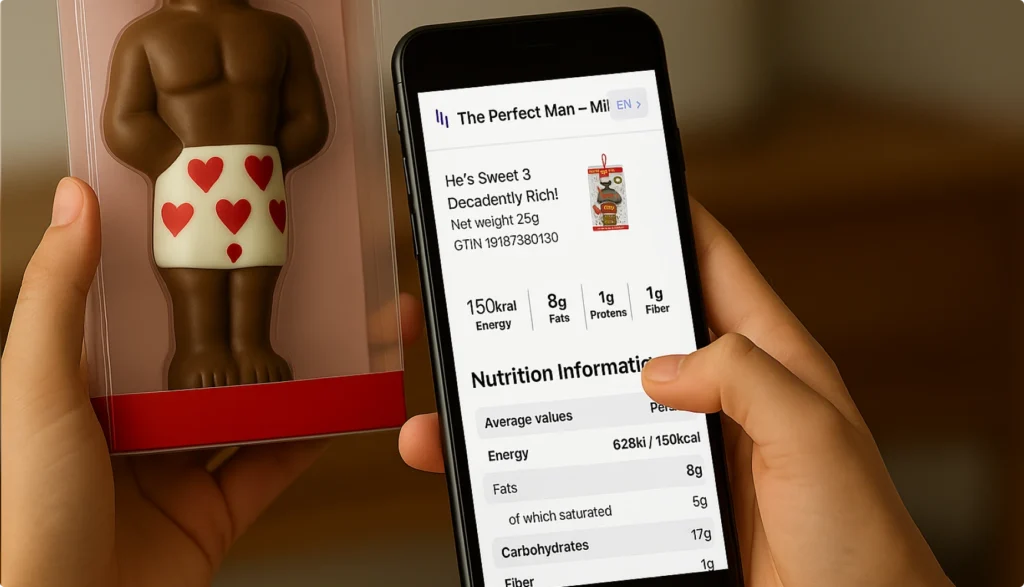
Treat Street: Humor and high engagement in seasonal campaigns Novelty confectionery brand Treat Street uses Digital Link to connect physical products to digital experiences that drive consumer interactions. Known for their “Perfect Man” chocolate, the brand adapts QR-linked campaigns for each season, meeting customer demands while maintaining regulatory compliance across multiple retail partners, boosting supply chain efficiency and brand integrity.
Good Ventures: Streamlined mass QR code creation and shopper engagement UK-based Good Ventures, makers of certified organic beauty products, integrated Digital Link to handle large-scale, accurate product data management. By linking every SKU to a brand-owned web page, they ensure immediate access to digital information for shoppers, retailers, and supply chain partners, improving quality control and inventory management without disrupting current systems.
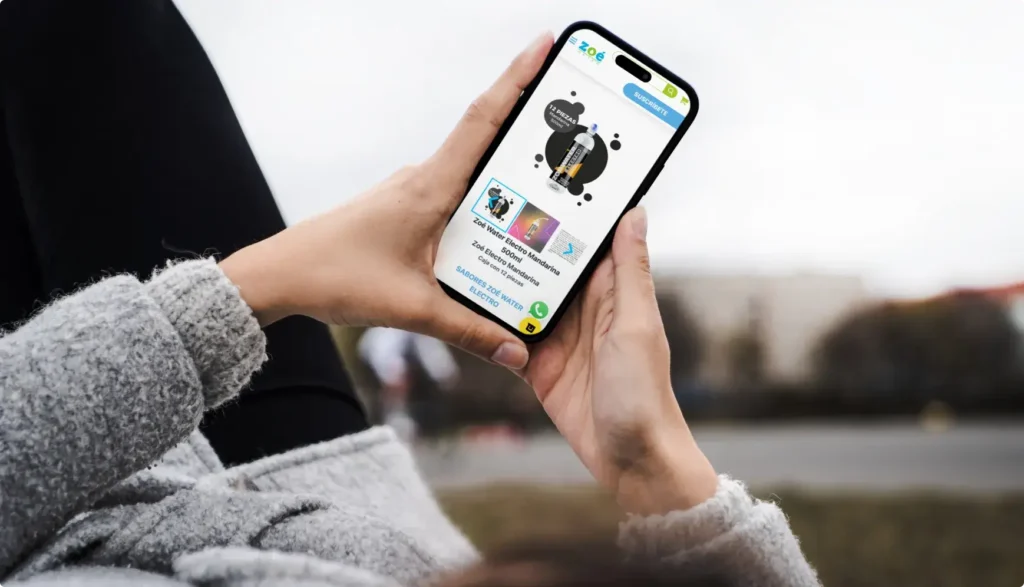
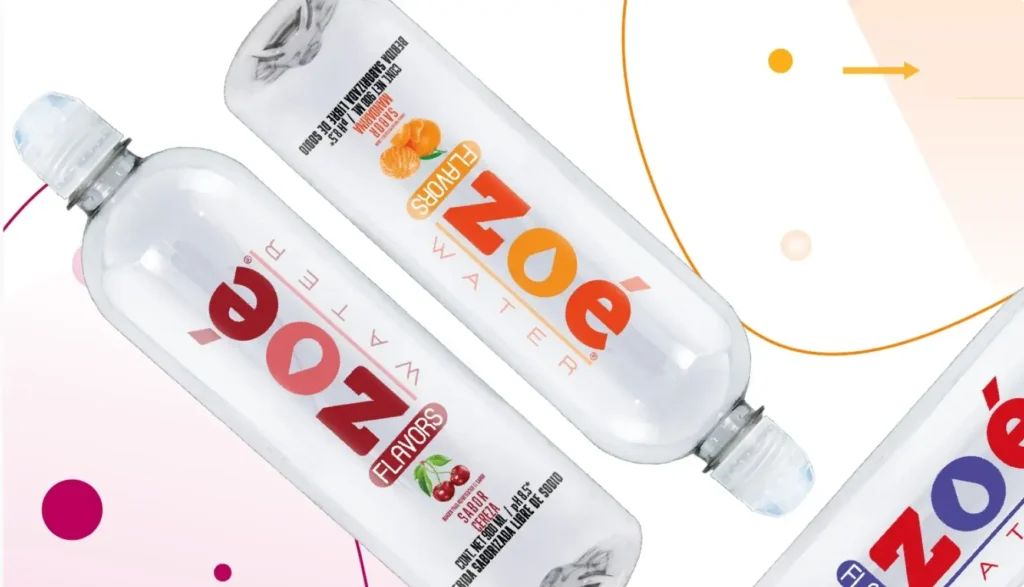
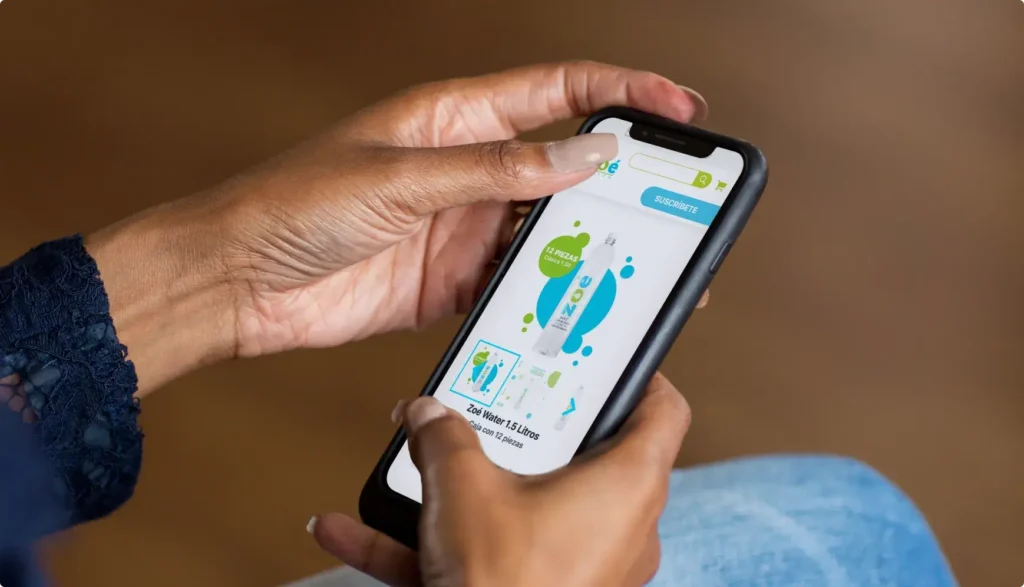
Zoé Water: Opening a direct-to-consumer channel Premium alkaline water brand Zoé Water leveraged Digital Link for product traceability to connect bottles directly to a brand-owned web address. A simple scan with a mobile device gives consumers accurate product data on filtration processes, expiry date, and health benefits, while giving the brand valuable consumer interactions data to strengthen brand loyalty.
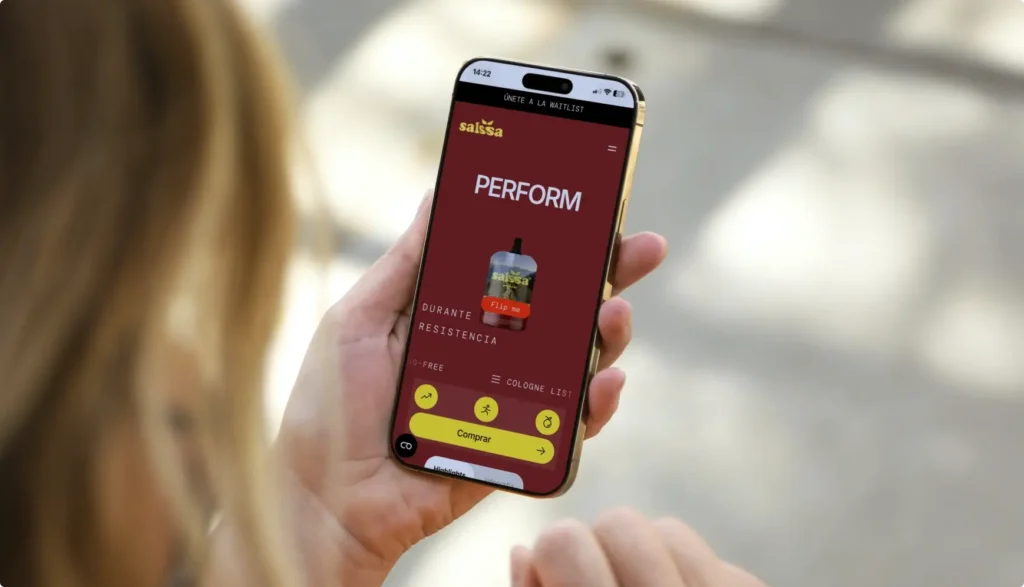
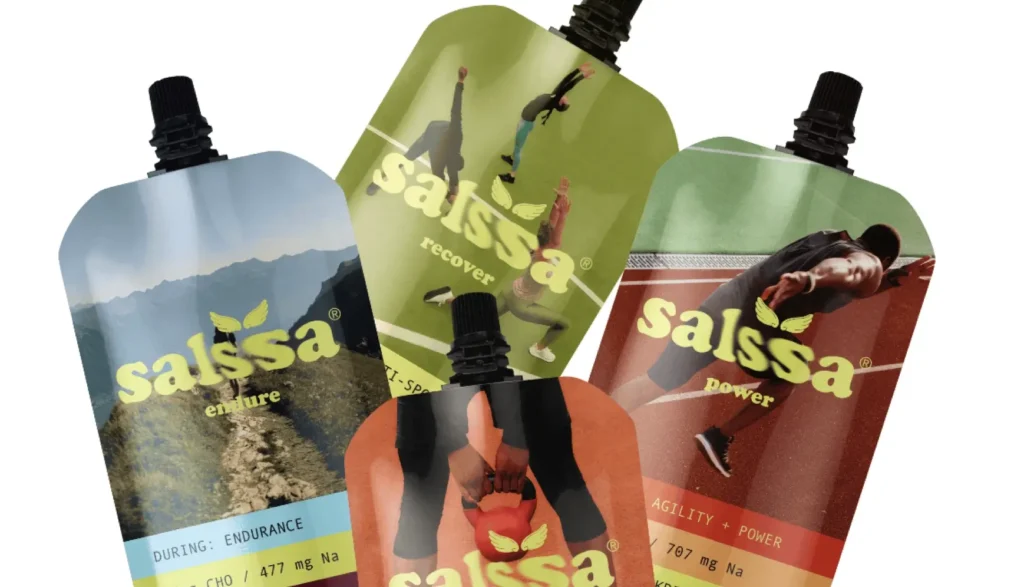
Salssa: Smart packaging for athletes Sports nutrition brand Salssa uses GS1 Digital Link to ensure product safety and consumer trust. Each product’s QR delivers specific data like ingredient sourcing, expiration date, and usage instructions, accessible on any mobile device. This enables enhanced traceability and supports regulatory compliance for patient safety in performance nutrition.
NIFA: Giving a voice to Ireland’s fishermen The National Inshore Fishermen’s Association connects physical products (fresh catches) to brand-owned web pages telling the story of each fisher. This builds consumer engagement, promotes greater transparency, and ensures accurate product data for food safety and regulatory compliance, benefiting both trading partners and local communities.
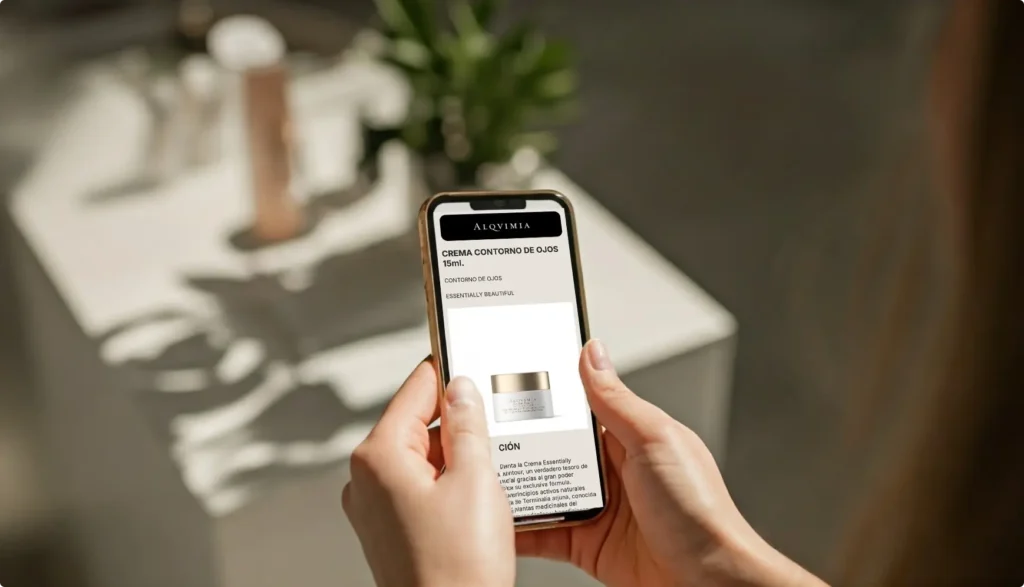
ALQVIMIA: Branding and digital transparency in luxury cosmetics Holistic cosmetics pioneer ALQVIMIA adopted Digital Link to connect every item to a brand-owned web portal with digital content on ingredients, sustainability practices, and certifications. This supports regulatory requirements and quality control while meeting customer demands for greater transparency and online information.
Canigooil: The first connected olive oil Premium olive oil producer Canigooil launched the first fully connected bottle using GS1 Digital Link. Each QR provides immediate access to origin details, product identifiers, and accurate product data on cultivation and quality checks. The result is strengthened brand loyalty, compliance with food safety regulations, and a future proofing approach to traceability solutions in a competitive market.
Beyond traceability: Added benefits of Digital Link
✔ Seamless integration Works with current systems (GTINs, PIMs, ERPs) without disrupting supply chain operations.
✔ Built-in marketing and analytics Track consumer interactions, scan location, language, and timing for data sharing and improving brand loyalty.
✔ Contextual content delivery Show specific data based on user role: compliance info for regulators, AR tutorials for customers, inventory management data for staff.
✔ Sustainability and packaging efficiency Reduce packaging waste with digital updates, meeting regulatory compliance goals while improving supply chain efficiency.
Conclusion: Build trust with every scan
Digital Link for product traceability unites physical products, digital information, and accurate product data under a standards-based structure. It enables greater transparency, immediate access to specific data, and ensures regulatory compliance while fostering consumer trust.
Whether you’re enhancing consumer engagement, streamlining supply chain operations, or ensuring product safety through quality control, the same code serves every purpose, from product identifiers and expiration date checks to rich digital experiences that strengthen brand integrity.
This is more than a traditional barcode upgrade. It’s a future proofing investment in traceability solutions that meet today’s customer demands and tomorrow’s regulations.
Start your journey now: one scan is all it takes.
---
## Best practices for Digital Link QR code legibility
URL: https://digital-link.com/guides/digital-link-qr-code-legibility/
Digital link QR code legibility is key for accessible, scannable packaging in food, pharma, cosmetics, and textiles, boosting consumer engagement.
As the use of digital links and 2D barcodes becomes standard on packaging for food, beverages, cosmetics, pharmaceuticals, and textiles, ensuring their legibility is more critical than ever. These codes not only bridge the gap between physical products and digital content but also offer a seamless way to share vital product information, promote sustainability, and enhance customer engagement.
However, the effectiveness of a digital link relies on how easily it can be scanned and understood. Poorly designed or illegible codes can lead to consumer frustration, missed opportunities, and a poor user experience. This guide will cover best practices for creating legible digital links, focusing on packaging applications.
Why digital link QR code legibility matters
A digital link acts as a gateway to a wealth of product information, from ingredient lists and usage instructions to traceability data and promotional content. For many industries, these links are a requirement to meet regulatory standards or improve digital accessibility.
When codes are difficult to scan, it results in missed engagement opportunities for consumers and inefficiencies within the supply chain. For instance:
A poorly placed digital link on a food package may prevent users from accessing further information about allergens.
Low-contrast codes on pharmaceutical labels could delay vital healthcare tasks.
Illegible codes on textiles may hinder the adoption of digital product passports, impacting efforts toward sustainability.
By following best practices, businesses can ensure that their digital links serve their purpose effectively.
Best practices for creating legible digital links
1. Ensure optimal size and placement
The size and position of a digital link directly affect its readability and user accessibility:
Size guidelines: The minimum recommended size for a digital link on packaging is 2 x 2 cm (0.8 x 0.8 inches). However, the size should increase for larger packaging or if the code is intended to be scanned from a greater distance.
Positioning: Place the link on a flat surface away from folds, seams, or textured areas. Ensure the digital link is prominently visible and not obstructed by other design elements.
For example, a digital link on a beverage can should avoid being placed near the curved edges where distortion could occur.
2. Maintain adequate quiet zone
A quiet zone is the blank space around a digital link that ensures scanners can easily differentiate it from surrounding text or graphics:
Best practice: The quiet zone should be at least four times the size of the smallest module (square) in the code.
Avoid crowding the link with additional information or design elements, as this can reduce readability.
In industries like cosmetics, where space is limited, maintaining this quiet zone is crucial for ensuring legibility despite compact designs.
3. Use high contrast and appropriate colors
The visual contrast between a digital link and its background is essential for improving readability:
Contrast: Always use dark colors (e.g., black, navy blue) for the code and light colors (e.g., white, light gray) for the background.
Avoid low-contrast combinations: For instance, yellow on white or red on orange can significantly reduce legibility.
Brand colors: If branding requires the use of specific colors, ensure you test the code’s scannability in various lighting conditions.
Example: A high-quality digital link on pharmaceutical packaging should remain scannable in low-light environments such as hospital settings.
4. Choose appropriate materials and surfaces
The material and finish of the packaging can affect the readability of digital links:
Matte finishes: Opt for matte surfaces rather than glossy ones to avoid glare that may interfere with scanning.
Surface types: Avoid placing digital links on curved or textured surfaces, as distortion can make them unreadable.
For textiles, printing digital links on woven labels can ensure durability and readability, even after multiple washes.
5. Test for scanning across conditions
Digital links on packaging must be scannable under various conditions:
Lighting: Test the code in natural light, low light, and direct sunlight to ensure readability.
Angles and distances: Ensure the code can be scanned from different angles and typical consumer distances.
Device compatibility: Test the code using multiple smartphones and scanning applications to confirm universal compatibility.
For instance, a digital link on a beverage bottle must be scannable in dimly lit bars as well as brightly lit retail environments.
6. Provide consumer-friendly instructions
Adding simple, clear instructions next to the digital link can improve user interaction:
Call-to-action: Include text like “Scan for product details” or “Learn more about this product.”
Purpose indication: Indicate what users can expect after scanning, such as recipes, instructions, or promotional offers.
Clear instructions are particularly important for industries like food and beverages, where consumers may not always know the purpose of the digital link.
7. Follow GS1 standards for digital links
Ensuring compliance with GS1 Digital Link standards is essential for consistency, interoperability, and compatibility across global supply chains. These standards provide a unified framework for encoding product information into digital links, enabling consumers and businesses to access critical data, such as:
Ingredients and allergens for food and beverage products
Traceability and provenance details for textiles and pharmaceuticals
Sustainability credentials and digital product passports
Thanks to our platform, Digital Link Connexum, meeting GS1 standards has never been easier. Our templates are pre-configured to include all the required fields, ensuring that your digital links are compliant by default. Whether it’s adding GTINs (Global Trade Item Numbers), batch numbers, or expiration dates, our platform simplifies the process, enabling seamless integration of essential data.
By leveraging these standardized templates, you save time and reduce the risk of errors, ensuring your digital links meet GS1 standards while maintaining their accessibility and usability.
8. Regular quality assurance and testing
To ensure consistent performance, implement regular quality checks during and after production:
Printing checks: Inspect digital links for smudging, distortion, or missing elements during production.
Batch testing: Test codes from each batch of packaging to confirm they meet legibility standards.
Industries like pharmaceuticals and cosmetics, where compliance with safety standards is critical, benefit greatly from these quality checks.
A food manufacturer can use digital links to provide descriptive link text on packaging, connecting consumers to further information about nutritional content, allergen risks, or sourcing practices.
Digital links on medicine labels can lead users to detailed usage instructions, side effects, and traceability data, ensuring digital accessibility for all patients.
A digital link on a clothing tag can serve as a breadcrumb trail for sustainability efforts, allowing consumers to trace the origin of materials and understand their environmental impact.
Conclusion: creating user-friendly digital links
Ensuring the legibility of digital links on packaging is a vital step toward improving digital accessibility, consumer engagement, and supply chain efficiency. By following these best practices (optimizing size, placement, and contrast, maintaining quiet zones, and adhering to GS1 standards) you can create digital links that are scannable, reliable, and user-friendly.
By prioritizing accessibility and usability, your digital links will not only meet industry standards but also foster trust and convenience for your consumers.
---
## How to transform your supply chain with digital links
URL: https://digital-link.com/guides/digital-link-supply-chain/
Everything a supply chain professional needs to know about how digital links can enhance product traceability, inventory management, etc.
Supply chain management is a complex and critical aspect of modern businesses, often challenged by inefficiencies and evolving consumer demands. Digital links offer innovative solutions to these pain points, enabling organizations to streamline operations and enhance product traceability. In this guide, we will explore various applications of digital link QR codes in supply chain management, addressing the specific needs of supply chain professionals.
Understanding Digital Links
What are Digital Links?
Digital links are a crucial component of digital marketing, enabling businesses to connect with their target audience and drive conversions. Essentially, a digital link is a URL or web address that directs users to a specific webpage, website, or online platform. These links can be utilized across various digital marketing channels, such as social media, email marketing, content marketing, and pay-per-click (PPC) advertising.
In the realm of digital marketing, digital links play a vital role in helping businesses achieve their marketing objectives. They allow businesses to track the performance of their digital marketing campaigns, measure the effectiveness of their marketing strategies, and make data-driven decisions to optimize their marketing efforts. For instance, by embedding digital links in email marketing campaigns, businesses can monitor click-through rates and engagement levels, providing valuable insights into consumer behavior.
Moreover, digital links enhance the user experience by providing seamless navigation to relevant content, thereby increasing the likelihood of conversions. Whether it’s directing users to a product page, a blog post, or a promotional offer, digital links ensure that the target audience can easily access the information they need. This not only improves customer satisfaction but also boosts the overall effectiveness of digital marketing campaigns.
Why are digital links revolutionizing supply chain management?
Digital links radically reshape how manufacturers source, produce, and move goods by introducing a small but game-changing innovation to the good old barcodes. Think GS1 QR codes that combine a product ID, like the ubiquitous GTIN, with a web address. Boom! Products can now go online.
Not only that: a single digital link QR code can serve several purposes because it behaves differently according to who or what is reading it, where, and with which device, providing different and contextual information, links, functionalities, and experiences.
It’s easy to see why digital links printed on items, parts, and packaging might be the most sustainable, flexible, and effective way to create smart products. And smart products are essential to optimize all supply chain stages, from integration to operations, purchasing, and distribution. And they don’t stop working when a product has reached its final destination: they go beyond order fulfillment and can keep transmitting once in the hands of consumers until they get disposed of.
Individual products can be closely monitored, and their info can be updated with every QR code scan. This comprehensive and dynamic view of items enhances traceability and transparency and provides numerous benefits for brands, business partners, service providers, and consumers.
By creating “living” digital twins of products, digital links unlock the potential for significant improvements in inventory management, waste reduction, and cost savings. Furthermore, they enable more effective management of product recalls and the implementation of fraud prevention measures.
This advanced level of supply chain oversight allows businesses to respond quickly to issues, take immediate corrective actions, and ultimately provide a higher level of service to their customers. Let’s look at how digital links can help businesses improve and streamline their supply chain management.
Digital link QR codes enhance collaboration and decision-making
Digital links can be pivotal in improving collaboration and decision-making across various aspects of supply chain management.
By providing real-time, accurate information and facilitating communication between stakeholders, digital links can help organizations optimize their operations, mitigate risks, and drive continuous improvement.
Cross-functional communication
Effective collaboration and communication between various stakeholders, suppliers, manufacturers, logistics providers, and retailers are essential to avoid supply chain issues.
Digital link QR codes can be a unified platform for sharing real-time information, ensuring all parties are aligned and can make informed decisions.
For instance, a pharmaceutical company could use digital links to share information about inventory levels, production schedules, and shipping timelines with its suppliers and logistics partners. This seamless flow of information can help prevent stockouts, reduce lead times, and improve overall global supply chain efficiency.
Strategic decision-making
Supply chain management often involves complex decision-making processes that require input from various stakeholders and access to accurate, up-to-date information. Digital link QR codes can provide real-time data on key performance indicators (KPIs) such as inventory levels, order status, and shipment tracking, helping supply chain professionals make more informed decisions.
Supplier performance evaluation
Evaluating the performance of suppliers is crucial for maintaining a reliable and efficient service without supply-chain disruptions.
Digital links can provide businesses with real-time data on supplier performance, such as lead times and quality metrics.
This information can help organizations identify high-performing suppliers, address potential issues, and drive continuous improvement. For instance, an automotive manufacturer could use digital links to monitor the delivery performance and quality of components from their suppliers, ensuring that production schedules are not disrupted due to supplier-related issues.
Digital link QR codes promote interoperability and global standardization
Digital link QR codes are based on the digital link protocol set up by GS1, which maintains barcode standards worldwide.
By embracing digital link QR codes and the global standardization they represent, businesses can unlock significant interoperability, efficiency, and collaboration benefits. Adopting digital links as a universal language for supply chain information can help companies navigate the complexities of the global market and drive lasting improvements in their supply chain operations.
Cross-border commerce
In an increasingly globalized market, businesses must be able to communicate and exchange information across borders and diverse supply chain ecosystems.
Digital link QR codes, built upon globally recognized GS1 standards, provide a universal language for supply chain information, enabling seamless communication and data exchange between various stakeholders. For example, an international fashion brand could use digital links to share product information, shipping details, and customs documentation with partners and regulators across multiple countries, streamlining cross-border commerce and reducing the risk of delays and disruptions.
Data integration
Adopting digital links can help businesses simplify data integration by providing a standardized format for product information and supply chain certifications. The CIRPASS organization’s work in the EU to establish the Digital Product Passport’s foundation is built around this concept.
This standardization can reduce the complexity of managing and sharing data across multiple systems, platforms, and partners. For instance, a global electronics retailer could use digital links to consolidate product data from various suppliers and manufacturers, simplifying product information management and ensuring consistent data across their entire supply chain network.
Interoperable technologies
Digital link QR codes can serve as a bridge between various supply chain technologies, such as Internet of Things (IoT) devices, blockchain platforms, and enterprise resource planning (ERP) systems. By providing a standardized method for encoding and sharing data, digital links can help businesses leverage the full potential of these technologies and drive greater supply chain efficiency.
Regulatory compliance
As supply chain disruptions become more frequent due to a more complex and globalized interconnection, businesses face increasing regulatory scrutiny and must comply with various international standards and requirements.
Digital links can help companies demonstrate compliance by providing a standardized, transparent, and traceable method for sharing product and supply chain data with regulators and auditors. This is the case with the EU Digital Product Passport we mentioned before, but governments and institutions worldwide are developing and enforcing more and more product regulations.
Digital link QR codes help companies advance inventory management
By leveraging digital link QR codes, businesses can significantly enhance their inventory management capabilities, leading to cost savings, increased efficiency, and improved customer satisfaction. Implementing digital links in inventory management can help organizations stay agile and responsive to changing market conditions and evolving consumer demands.
Inventory levels
One of the key challenges in supply chain management is maintaining optimal inventory levels to meet customer demands while minimizing carrying costs. Digital link QR codes can help businesses monitor stock levels and product movement in real-time, enabling them to make data-driven decisions and maintain the right inventory balance.
Product tracking and visibility
Digital links can improve product visibility throughout the supply chain, allowing businesses to track items from production to the point of sale and beyond.
This enhanced visibility can help identify bottlenecks and inefficiencies, enabling organizations to optimize inventory management processes. For instance, a food and beverage distributor could use digital links to track the movement of perishable items through the supply chain, ensuring that products are delivered on time and reducing the risk of spoilage or waste.
Inventory forecasting and demand planning
Accurate inventory forecasting and demand planning are essential for ensuring businesses have the right products available at the right time to meet customer needs. Digital links can provide valuable data on sales trends, seasonal fluctuations, and customer preferences, helping organizations develop more accurate forecasts and plan their inventory accordingly.
Returns management
Managing product returns can be a complex and costly process for businesses. Digital link QR codes can help streamline returns management by providing real-time information on product status, history, and location. This data can help businesses quickly identify and process returned items, minimizing the time and resources required to manage them.
Digital links foster supply chains that are actually smart
By adopting digital link QR codes in their supply chain management, businesses can create smart supply chains that are more efficient, responsive, and customer-focused.
Real-time data collection and analysis
By integrating digital link QR codes into their supply chains, businesses can gather real-time data on product location, condition, and usage patterns.
Stakeholders, such as logistics operators, warehouse managers, or retail associates, can scan the QR code on the packaging or product to update and share crucial information.
This wealth of data can help organizations optimize their supply chain analytics, reduce waste, and improve efficiency. For example, a logistics company could require its drivers to scan QR codes on packages when loading and unloading refrigerated trucks, ensuring that perishable goods are transported under optimal conditions and reducing the risk of spoilage.
Predictive and preventive maintenance
Digital links can provide insights into product performance and wear, allowing businesses to anticipate maintenance needs and prevent failures.
Businesses can identify potential issues before they escalate by gathering data from QR code scans by end-users or service technicians. This proactive approach can minimize downtime, reduce repair costs, and extend the lifespan of their products.
Digital links help maintain product safety and reduce waste.
Traceability and recall management
Digital link QR codes can facilitate rapid identification and removal of compromised or defective products, reducing the risk to consumers and the financial impact of recalls. Enhanced traceability can also help identify sources of issues, enabling businesses to address root causes and prevent future problems.
Dynamic pricing and waste reduction
Digital links can provide real-time data on product inventory levels, expiration dates, or other relevant information, allowing retailers to implement dynamic pricing strategies that encourage selling items before they become unusable. Businesses can improve their bottom line and minimize their environmental impact by reducing waste and ensuring that products are sold at their optimal condition.
Safety and handling information
Digital link QR codes can provide consumers and supply chain stakeholders with crucial information on product safety, handling, and disposal. This increased accessibility can lead to improved product management, reduced risk, and greater overall security.
For instance, an automotive parts manufacturer could use digital links to offer customers detailed information about installing, using, and disposing of parts containing hazardous materials, such as brake pads with asbestos. Similarly, a furniture retailer could use digital links to provide customers with information on safely assembling, maintaining, and disposing of their products, reducing the risk of accidents and ensuring proper recycling.
Digital link QR codes can combat counterfeiting
By integrating digital links into their anti-counterfeiting strategies, businesses can significantly enhance their ability to protect their products, customers, and brand reputation.
Next-level product authentication
Counterfeiting is a significant challenge for businesses across various industries, resulting in financial losses and damage to the brands themselves.
Digital link QR codes can help fight fake items by providing a secure and reliable means of product authentication. By embedding unique identifiers in the QR codes, businesses can verify the authenticity of their products at any stage of the supply chain.
Supply chain oversight
Supply chain monitoring through digital links ensures that products are sourced, produced, and distributed through authorized channels.
This oversight can help prevent counterfeit goods from entering the market and protect the integrity of the supply chain. For instance, a pharmaceutical company could use digital links to track the movement of their products from manufacturing facilities to authorized distributors, ensuring that counterfeit drugs do not reach consumers and compromise patient safety.
Legal enforcement and brand protection
Digital link QR codes can be an effective tool for law enforcement and brand protection teams to identify and track counterfeit products.
By providing a secure and tamper-proof means of product authentication, digital links can help authorities seize and remove counterfeit goods from the market, ultimately safeguarding both businesses and consumers. For instance, a global sports apparel brand could work with customs officials and law enforcement agencies to use digital links to identify and intercept shipments of counterfeit merchandise.
Embracing the circular economy with digital link QR codes
Beyond the linear model
The traditional linear model of supply chains, which emphasizes a one-way flow of materials and products from manufacturers to consumers, often leads to waste and inefficiency.
Conversely, the circular economy aims to minimize waste and maximize resource efficiency by promoting recycling, reusing, and repurposing materials.
Digital link QR codes enable businesses to track and trace products throughout their entire lifecycle, creating opportunities for circular supply chain models. By promoting circular practices, brands can reduce their environmental impact and demonstrate their commitment to sustainability while enabling unprecedented business models related to product maintenance and reselling.
Circular initiatives
Product lifecycle transparency: Digital links can provide detailed information about products’ origin, usage, and end-of-life options, encouraging responsible consumption and disposal. For instance, an electronics manufacturer could use QR codes to share information about recycling programs and proper disposal methods for their devices. By doing so, the company can help reduce electronic waste and promote environmentally responsible behavior among its customers.
Reverse logistics: Digital link QR codes facilitate the tracking and management of returned or recycled products, streamlining reverse logistics processes and promoting resource recovery. A furniture retailer, for example, could use digital links to track returned or damaged items, ensuring that they are appropriately refurbished, repurposed, or recycled. This reduces waste and enables the retailer to offer pre-loved products at a discounted price, catering to budget-conscious customers while promoting sustainability.
Digital links empower businesses with ethical and sustainable supply chains
Responsible sourcing
Digital link QR codes can provide detailed information about suppliers’ social and environmental practices, enabling businesses to make informed decisions about their partners.
For example, a coffee company could use digital links to share information about their coffee bean suppliers’ fair trade practices and environmental initiatives. By ensuring transparency and traceability in the supply chain, digital links can help businesses demonstrate compliance with ethical and sustainable sourcing standards.
Fair labor practices
Digital link QR codes can be used to track and verify labor conditions in the supply chain, ensuring that workers are treated fairly and ethically.
A fashion brand, for instance, could use digital link QR codes to provide information about the wages, working conditions, and labor rights of workers in their garment factories. By making this information accessible to consumers, the brand can raise awareness about fair labor practices and promote demand for ethically-produced products.
Digital link QR codes strengthen disaster response and humanitarian efforts
Relief supply chain management
In times of crisis, efficient management of relief supplies is crucial to saving lives and alleviating suffering.
Digital link QR codes can help streamline relief supply chain operations by providing real-time inventory levels, locations, and delivery status data.
For example, in the aftermath of a natural disaster, humanitarian organizations could use QR codes to track the distribution of food, medical supplies, and other essential items to affected areas. This real-time data can help ensure that aid reaches those in need more quickly and efficiently, preventing potential bottlenecks and misallocation of resources.
How to unlock the power of digital links for supply chain
Digital link QR codes can transform supply chain management in once unimaginable ways, bringing endless benefits to several business areas simultaneously.
The great news is that you can start implementing digital link-based processes right now, way ahead of the official deadline for the momentous switch from the traditional barcodes to the new digital link QR codes: the so-called “Sunrise 2027”.
All you have to do is create your account on digital-link.com and start digitizing your products right away. Just add the GTINs, and we will take care of creating the digital link, its dynamic QR code, and a smart product page that can be customized to serve many different purposes. And if you need advice about making the most of digital links for your supply chain, please contact our experts at info@digital-link.com or drop a message in our live chat.
---
## How to simplify product compliance • Digital Link
URL: https://digital-link.com/guides/digital-links-product-compliance/
Discover how to meet product compliance requirements more easy and, provide mandatory info via online channels with digital links and QR codes.
As product compliance regulations proliferate worldwide, consumer product manufacturers face mounting pressures to transparently demonstrate adherence to applicable regulatory requirements. Digital links provide an optimal solution, granting regulators and supply chain partners on-demand access to comprehensive product compliance data through online channels. This guide explores how brands can leverage digital links to meet regulatory compliance across diverse global markets.
What is product compliance?
Product compliance refers to the need for consumer products to adhere to all applicable laws, regulations, standards, and restrictions imposed by government authorities in the markets where those products are manufactured, distributed, and sold.
It encompasses meeting extensive labeling and information disclosure requirements, attaining necessary safety testing and certifications, and avoiding prohibited materials or processes.
Product compliance spans regulations for safety, quality, environmental impact, labor practices, and more. Essentially, product compliance entails strict conformity to the myriad regulatory requirements and restrictions impacting global commerce.
Adhering to product regulatory compliance demands requires significant effort and various due diligence measures from consumer product companies across all operations, from design to retail, as regulations continuously evolve worldwide. Robust compliance is mandatory for market access and avoiding costly penalties.
What are digital links, and how can they help with product regulatory compliance?
Digital links are a new type of barcode introduced by GS1 that combines product identifiers with the power of the Internet. GS1 digital linksconnect to online product information when scanned by a smartphone or other device, like a cashier scanner at a point of sale. They empower brands to furnish supplementary compliance data digitally without overcrowding packaging.
Digital links allow consumers, regulators, retailers, and other supply chain partners worldwide to easily access product compliance data on-demand by scanning a product’s digital link QR code. The links point to specified web URLs where companies can host expansive product compliance information to share openly with regulators and customers. Discover here some examples and use cases!
Whether meeting food labeling requirements, providing sustainability certifications, listing ingredients and allergens, or linking to other regulatory approvals, digital links will enable companies and brands to deliver this extra compliance data through online channels.
Key regulatory drivers for product compliance
Product manufacturers face proliferating regulatory demands worldwide as new product compliance regulations are introduced by market surveillance authorities. This necessitates that consumer product goods companies provide amplified transparency and accessible compliance data.
For instance, all wine producers selling in the EU must now label ingredients like added sulfites along with full nutrition facts, a significant change from the previous policy. These additions help consumers with allergies make informed choices but prove challenging for brands to squeeze on the packaging.
The European Digital Product Passport initiative also seeks to centralize product compliance data online in a digital format. This escalates pressures on consumer brands to provide EU regulators and supply chain partners with expanded digital access to comprehensive product compliance information.
Evolving U.S. FDA food labeling rules
In the United States, the FDA imposes strict regulatory product compliance requirements for nutritional and ingredient labeling on food products. These extensive FDA regulations obligate brands to list complete product data on packaging to satisfy compliance requirements.
For example, the FDA now requires that added sugars be quantified separately from total sugars per serving. Brands must also highlight major allergens like dairy in bold formatting. With limited label space, these amplified labeling rules pressure brands to find solutions for sharing mandatory compliance data.
Digital links offer a platform for sharing supplementary product details online to fulfill expanding FDA labeling regulations while maintaining packaging clarity.
Rising global regulatory compliance pressures
Beyond the EU and the U.S., global product compliance pressures continue escalating rapidly. Other Countries, including China, Brazil, India, and many more, have activated their own local product data regulations.
For instance, Brazil now requires warning labels on foods with high sugar, salt, and fat content to discourage unhealthy eating. China also enacted new laws requiring brands to provide detailed chemical composition data.
This multifaceted patchwork of requirements creates tremendous challenges for brands selling products worldwide to achieve full regulatory compliance on packaging alone. But digital links provide an efficient mechanism for consumer product companies to satisfy diverse regulatory compliance needs globally through online data sharing.
Benefits of digital links for product compliance
Implementing digital links offers numerous invaluable benefits for consumer product brands seeking to demonstrate regulatory compliance across global markets.
First and foremost, digital links provide a method to share mandatory product compliance data without cluttering or overwhelming packaging with dense regulatory text. This helps preserve appealing, consumer-friendly packaging designs instead of lengthy fine-print lists.
For example, a cereal brand could link to a separate webpage that lists any allergens, detailed ingredient profiles, and nutritional information per serving. This keeps packages free of multiple paragraphs of text while still providing access to important compliance data.
Additionally, digital links provide on-demand access to granular product regulatory compliance information for regulators and supply chain partners. Brands can grant authorities immediate access to in-depth compliance data through digital channels by simply sharing a link through a single QR.
Furthermore, digital links empower companies to rapidly adhere to new labeling rules and requirements as regulations change frequently. Brands can simply update the linked webpages instantly rather than redesigning packaging artwork each time.
If a government enacts a new requirement to list certain materials or chemical components, a manufacturer can add this info to the webpage connected to the digital link QR code right away to comply. This agility prevents regulatory non compliance events.
Digital links also mitigate risks related to product recalls and quality issues by increasing supply chain transparency. Brands can use links to swiftly notify retailers and consumers of problems to accelerate response times.
A food company could instantly update a link if an ingredient is recalled or a contamination issue emerges. Rapid digital notifications limit revenue losses and brand reputation damage.
Overall, digital links simplify product compliance processes, build consumer trust, and avert noncompliance issues by openly sharing product data online.
Use cases for compliance with relevant regulations
Many use cases exist for brands leveraging digital links to broadcast important product compliance information to regulators, retailers, and consumers:
Sharing ingredients and allergen data
Brands can employ digital links to publish complete lists of product ingredients along with allergen warnings to safeguard consumers.
For example, a chocolate bar could link to a list indicating it contains milk and soy for allergy protection.
Linking sustainability and ethics certifications
Brands can direct consumers to sustainability or ethical sourcing certifications via digital links to meet ecological demands.
An apparel maker could link to fair trade partner details or certify they use less harmful dyes.
Supply chain transparency
Sharing supply chain maps, audits, and product provenance data through digital links augments consumer trust.
A seafood company may link to catch records and processing facility audits, for instance.
Regulatory approvals
Manufacturers of medical devices can link to clinical trial outcomes and regulatory approval documents from health authorities to prove compliance.
Pharmaceutical brands could provide links to major study results and FDA approvals.
Product recall notifications
If a recall develops, brands can instantly update digital links to notify consumers and retailers for accelerated safety.
For example, an appliance maker could update a link with repair instructions if a defect emerges.
Expiration and disposal details
Instructions for verifying food expiration dates and proper disposal can be linked to help consumers reduce waste.
A milk brand could share fridge life guidance and recycling particulars through a digital link.
Recommendations for deploying digital links for regulatory requirements
When preparing to implement digital links, brands should follow some best practices to ensure compliance and optimize success.
First, dedicate time to identify high-value product compliance data to link based on target markets and categories. This ensures the links provide access to the most crucial compliance information needed to avoid penalties.
Next, thoroughly educate internal compliance teams company-wide on the benefits and use cases of digital links for compliance. Get all departments, including marketing, product development, regulatory affairs, and IT familiar with how to leverage links for regulatory needs. Cross-functional training enables smooth execution across groups.
Additionally, proactively comply with upcoming regulations and frequently refresh links to keep data current. Constantly monitor regulatory horizons and stay ahead of changing rules to avoid non compliance events. Links should be updated routinely to account for the evolving worldwide regulatory landscape.
Furthermore, prominently promote the digital links to consumers through marketing campaigns and packaging to drive engagement. Educate consumers on checking links for valuable compliance data through compelling branding and messaging. Increased visibility and education will improve link clickthroughs.
Finally, guarantee any linked compliance data complies fully with geographic privacy laws and security protocols. Keeping data usage protected and compliant is imperative, especially when dealing with compliance documentation with regulatory bodies.
In summary, the proper management of digital link deployment requires cross-functional coordination, promotion, and continuous performance optimization to maximize compliance benefits.
Conclusion
As product compliance regulations proliferate globally, digital links enable consumer product brands to seamlessly share mandatory compliance data through online channels. This prevents packaging from becoming dense unreadable regulatory checklists.
For consumers, digital links provide quick access to valuable product information on ingredients, certifications, recalls, and more. Regulators also obtain necessary compliance particulars swiftly by leveraging digital links.
With the power to instantaneously update linked data, brands can nimbly adapt as new product compliance regulations emerge worldwide.
Overall, digital links furnish global consumer product manufacturers with the capability to transparently demonstrate regulatory compliance while optimizing the product development process and packaging.
We at digital-link.com are committed to helping brands meet regulatory requirements more easily, mitigate risks, and reduce costs by effectively implementing digital link QR codes.
By simply entering a GTIN number, our platform creates a verified digital link, a dynamic QR code that carries the link, and a Smart page that is automatically populated with product info. This alone already simplifies compliance with most regulatory requirements.
The best thing is that you can easily create a richer landing page for your products with our intuitive page building tool, adding as much content as you need to fulfill the most diverse product compliance requirements.
Do not hesitate to get in touch with our experts at info@digital-link.com or via live chat. We will be happy to help you shape the perfect solution for your product compliance needs.
---
## How to augment your smart packaging with digital links
URL: https://digital-link.com/guides/digital-links-smart-packaging/
How to use digital link QR codes to take smart packaging further: sharper item tracking, real traceability and richer shopper interaction.
The evolution of traditional product packaging into smart packaging is at a tipping point, with businesses looking for the most accurate item tracking to streamline their supply chain and increase traceability and consumers who require transparency and in-depth product visibility to become the norm. This guide explains how to use digital link QR codes to bring smart packaging to the next level, providing brands, retailers, end users, and all stakeholders with the necessary information and interaction opportunities. The easy way.
What is smart packaging, and what have digital links got to do with it?
Smart packaging (also active packaging or intelligent packaging) is product packaging whose features are enhanced and expanded with the help of technology (from GS1 QR codes to sensors, tags, and other innovative systems).
Smart-packaged items can react to the environment, communicate with external devices or other items, and connect with the web to become part of the Internet of Things. The ongoing transition from traditional packaging to smart packaging is part of the broader process of digital transformation.
As more and more enterprises worldwide and across all sectors are reshaping their supply chain strategies entirely in the aftermath of the disruption brought by the COVID-19 pandemic to make them more resilient, sustainable, and open (as shown by recent research by Ernst & Young), smart packaging solutions are poised to become the new standard pretty soon.
Because smart packaging allows brands to track items at a granular level “from the cradle to the grave,” monitor and manage inventory and logistics much more efficiently, share product information with stakeholders easily, and collect a wealth of real-time actionable data in the process.
But sensors (not to mention chips with wi-fi capabilities) can be pricey, especially for low-margin product manufacturers. So adding, let’s say, a GPS tracker to a pack of sugar is not precisely cost-effective.
Enter the digital link QR code.
Digital link QR codes are the most affordable and flexible way to bring products online and create digital twins of items. By combining well-established product identifiers (like GTIN) with URLs, digital link QR codes enable two-way communication between the physical product and its virtual version.
This way, any actor in the supply chain, including consumers and end users, can retrieve the info they need and interact with the product with their smartphones, a dedicated app, or a scanning device. At the same time, all events are recorded, and the item status is updated centrally.
All this simply by printing a QR code on the product packaging, making it more intelligent, and more beautiful and tidy. Yes, because a single digital link QR code can redirect visitors to different platforms and types of content (professional, legal, marketing-oriented, etc.) depending on specific criteria set by the brand.
So, there’s no need to have multiple QRs, Datamatrix, and other codes on your packaging if you use digital link QR codes. And soon, you’ll be able to get rid of EAN codes, too, since digital link QR codes will be the standard for POS checkouts by the end of 2027. A lot of packaging real estate becomes available for design and branding again.
The potential of smart packaging with digital links is immense, and the applications are countless. Here below are a few examples of to what extent critical business functions can be improved by digital links, but get back here now and then because this guide is constantly updated!
Improve supply chain traceability with digital link-enabled packaging
Smart packaging with digital link QR codes enables real-time, granular tracking of items throughout the whole supply chain. Individual products can be followed from production to handling and distribution, retail, and also in the after-sale stage.
Every new piece of information collected with a scan of the QR code is synced online, adding to a complete, dynamic, and updated view of the item.
This is crucial to enhance traceability and transparency with several benefits for manufacturers (that can quickly identify issues and take immediate corrective actions), business partners, service providers, and consumers.
In addition to that, creating “living” digital twins of products makes it possible to:
Radically improve inventory management
reduce waste and related costs
track order fulfillment better
manage product recalls more effectively
Implement fraud prevention measures
Simplify compliance with packaging regulations through digital links
Digital link QR codes provide a safe and ready-to-use solution to comply with multiple laws without additional data carriers. The best thing, actually, is that global compliance can be achieved through the same code that tracks the product’s progress in the supply chain, collects consumers’ insights, and triggers marketing actions.
In a way, it seems that the term “smart packaging” itself was invented for digital link QR codes…
In practice, all you need to do is connect different online resources to the same digital link QR code: something that can be done easily with our product page editor.
When read by consumers with smartphones, the QR will present them with a link-in-bio type of page with basic info and links to quickly access all mandatory information. With our digital link platform, you can also populate these product pages automatically by inserting the product’s GTIN and then editing them for maximum security.
Digital link QR codes can also be instructed to show context-based content according to variables such as location, time of the day, type of device used to scan the QR, and many more.
So, for instance, someone in the UK reading a digital link QR on an olive oil bottle will be shown different info and links than someone else in India or in the U.S.
Engage consumers better through digital link QR codes
QR codes, in general, have been serving next-level customer experiences for at least a decade now. From instant rewards to video tutorials, dematerialized manuals, and the ubiquitous digital menus at restaurants and bars, QRs have become, in so many ways, the norm in brand-consumer interaction and unmediated relations.
So much so that Coca-Cola, to make an example, is deploying a 3-year plan to insert QR codes on all their products. QRs, said the company’s global chief marketing officer Manolo Arroyo, are the most underexploited media vehicle around.
Sumathi Manjunath, VP of Design to Delivery Digital Transformation at Danone, echoes Arroyo, saying that QR technology has rarely been leveraged to its full potential so far. There are plenty of business opportunities that still need to be unlocked through the advanced use of QR codes.
The added value of digital link QR codes is that the same code, always at hand on the product packaging, can provide access to a multitude of marketing-relevant experiences, from joining loyalty programs to connecting on social platforms, participating in competitions, uploading user-generated content, subscribing to automated replenishment services, making direct purchases on brand-owned shopping platforms, and many, many more.
What’s particularly exciting for marketers is that information and content influencing shopping behavior can be made available on the fly and directly off the shelves right when the purchase intent is about to turn into an actual transaction: at the point of sale.
Smart packaging with digital link QR codes transforms products into the most effective branded channel.
Unlock real-world analytics and otherworldly marketing with digital links
As we have mentioned above, when discussing the impact of smart packaging on the supply chain, digital links allow brands to follow their products even after an end-user has purchased them.
How many times a product has been interacted with in stores? Which information has been visited? How much time did consumers spend reading this page or watching that video? And where? By what types of buyer personas?
Extended product lifecycle data like these can be collected with the help of digital link QR codes, expanding an item’s story with all sorts of additional dimensions and valuable consumer insights.
Basically, any item on the market becomes a data point for next-gen business intelligence. Big data you say? The future is HUGE data.
And product tracking doesn’t stop at POS. QR code scans that happen at home or, in any case, after the purchase can be captured, provided that effective call-to-actions and engaging content and mechanics are implemented. This knowledge further enriches a brand’s view of its customers’ product usage. And may also inspire new circular business models.
In a scenario like this, it’s easy to imagine several context-based situations where specific content or tailored campaigns are triggered by date, time, location, language, behavior, weather, etc.
Easily authenticate items and fight counterfeiting with digital links
Counterfeit products are a major problem for companies around the world, costing them billions of dollars in lost revenue every year while disrupting brand reputation and customer trust.
While fake items are typically associated with apparel and accessories and luxury items at large, counterfeiting also affects pharmaceutical products, food (and early nutrition in particular) and consumer electronics, to name just a few.
Digital link QR codes help brands fight counterfeiting by providing a quick and easy way to verify a product’s authenticity by connecting the actual item to its unique digital twin.
Like any other actor in the value chain, consumers can access with a simple scan all the information they need about any given product, including its source of origin, manufacturing date, expiration date, etc., which helps them determine whether or not it is authentic.
If there is ever an authenticity issue with a particular batch of products, companies can quickly and easily pinpoint exactly where those products originated from and who sold them.
This makes it easier for them to identify potential troubles before they become significant problems and helps them take action faster when necessary.
Finally, smart packaging with digital links makes it easier for manufacturers to share product information with their customers to build trust and loyalty. Digital link QR codes can provide detailed product descriptions, images, videos, customer reviews, etc., which gives customers more confidence in their purchases and encourages repeat business.
Make smart packaging more accessible with digital links
There are more and more requests for improving access to product information for blind and visually impaired people. Because accessible packaging nowadays is not just the packaging that is easier to open. It’s packaging that is actually smart.
Disabled persons, but also senior citizens, have the same right as anybody else to access nutrition facts and lists of ingredients, disposal instructions, and any other detail that might help them make more informed purchase decisions. Not to mention product recalls critical warnings for hazardous materials or allergen disclaimers.
Digital link QR codes can provide barrier-free content by implementing audio-narrating labels. When read by devices set for visually impaired users or with dedicated mobile apps, the QRs can directly switch to the audio version of the information.
Pairing digital link QR codes with tactile markers that help users locate the code on the product might be the more straightforward and sustainable solution to remove barriers and include more people, establish a strong relationship with a key audience (there are around 40 million blind people worldwide, and almost 250 million people with moderate-to-severe visual impairment), and get prepared for accessibility requirements that may soon become mandatory.
Connect products with smart home systems via digital link QR codes
Finally, here are a few words about a use case for smart packaging with digital links that is set to become a real game changer in the near future.
Tapping into this fast-growing market might be the most promising opportunity for product manufacturers, but how?
Imagine that, by simply scanning a digital link QR code on a piece of cheese with the built-in camera of a smart fridge (or with a mobile app), all information about that dairy product was shared with the home automation ecosystem and automagically setting expiration date alerts, suggesting recipes, adding it to the weekly menus, instructing about proper storage, and so on. Well, it’s reality.
And this does not apply only to food. Any item, from printers to pieces of clothing, can be activated and connected to the larger smart home environment with the help of digital link QR codes. The business opportunities are endless.
So, are you eager to use digital links to improve your packaging and make it smart? Get in touch with our experts at info@digital-link.com to get started fast.
---
## How much does a Digital Product Passport cost?
URL: https://digital-link.com/guides/digital-product-passport-cost/
A clear breakdown of Digital Product Passport costs: GS1 identification, the technology layer, supply chain data, and a first-year budget example for a small brand.
A Digital Product Passport costs far less than most brands fear, because the largest expense is not technology. The QR code, the resolver and the hosting that carry a passport are a small, predictable line item. The real budget goes into gathering and verifying the product data behind the code. For a small brand starting with one product, a realistic first year lands in the low thousands of euros, most of it one time, and the cost of every product after the first falls sharply.
The honest answer to "how much does a DPP cost" is that it depends on your product and how much of its data you already hold. This guide breaks the number into its real parts so you can size your own budget rather than guess at a headline figure.
## What goes into the cost of a Digital Product Passport?
A Digital Product Passport cost has five parts: GS1 identification, the technology layer that carries the passport, supply chain data collection, environmental calculations where your product needs them, and printing. Four of these are modest and predictable. One of them, the data, is where most of the money goes.
The five components are:
- GS1 identification. A licence for the GS1 identifiers (GTINs) that name your products, paid to your national GS1 member organisation.
- The technology layer. The [GS1 Digital Link](/guides/gs1-digital-link-basics/) QR code, the resolver that routes each scan, and the hosted page that serves the passport. This is what a platform like Digital Link provides.
- Supply chain data. Collecting verified information from your suppliers about materials, origin, durability, repair and recycling.
- Environmental calculations. Where a regulation requires it, a life cycle assessment or product carbon footprint, usually bought from a specialist.
- Printing. Adding the code to your packaging artwork, which is effectively free per unit.
Here is the same split as rough numbers. Our plan prices are exact and billed in US dollars; every other figure is an illustrative euro range that varies by country, product and provider, so treat it as a starting point to verify, not a quote.
| Cost component | Typical cost | One-off or recurring |
|---|---|---|
| GS1 identification (GTIN licence) | Tens to a few hundred euros a year, by country and catalogue size | Recurring |
| Technology layer (QR, resolver, hosting) | $0 to a few hundred euros a year (see the plans below) | Recurring |
| Supply chain data (per product, first time) | A few hundred euros for a simple product to several thousand for a complex one | Mostly one-off |
| Environmental calculation (LCA or carbon footprint), where required | Roughly a few hundred to about 2,000 euros per product | Mostly one-off |
| Printing the code | Negligible, absorbed into the packaging artwork | Per unit |
Understanding this split matters because it tells you where to spend and where not to overpay. Teams that treat a DPP as a software purchase often buy far more platform than they need and still miss the real work, which is the data.

## How much does the technology layer cost?
The technology layer is the most predictable cost, because it is a fixed subscription rather than a per product estimate. On Digital Link, the plans that carry a passport are:
| Plan | Price | GS1 Digital Link QR codes | Good for |
|---|---|---|---|
| Free | $0 | 5 | A pilot or a single product test |
| Lite | $15 / month billed annually | 100 | A first small catalogue |
| Essential | $80 / month billed annually | 1,000 | Growing catalogues (adds API and single sign on) |
| Growth | $200 / month billed annually | 10,000 | Larger catalogues |
| Enterprise | From $3,000 / year | 10,000 and above | Tailored setup at scale |
Every plan includes unlimited scans, bulk creation and the resolver, so the cost does not rise with how often your passports are read. You can see the full comparison on our [pricing page](/pricing/). The point to take away is that carrying a passport for hundreds or thousands of products is a few tens to a few hundred euros a month, flat, no matter how much traffic those products attract.
## What does a first-year Digital Product Passport budget look like?
For a small brand launching its first passport on one product, a realistic first year sits in the low thousands of euros, dominated by one time data work. The figures below are illustrative, meant to show the shape of a budget rather than a quote, and the data lines vary widely by product.
| Budget line | Illustrative first-year cost | Notes |
|---|---|---|
| GS1 identification | Tens to a few hundred euros | National licence, scaled to how many identifiers you need |
| Technology layer | $0 to a few hundred euros | Free for a pilot, a paid Digital Link plan as you scale |
| Supply chain data (first product) | A few hundred to about 2,000 euros | The largest line, and the most variable |
| Environmental calculation | 0 to about 1,500 euros | Only where the product category requires it |
| Printing | About 0 | Absorbed into your existing packaging run |
| **Typical first-year total** | **Roughly 1,000 to 5,000 euros for a first simple product** | Most of it one-off; complex products and batteries run higher |
The pattern is consistent across brands. The technology and identification are small and fixed. The data is large and one time. That is why the first product feels expensive and the tenth barely registers.
## How do Digital Product Passport costs change over time?
DPP costs are front loaded. The heavy spending happens in the first year, when you set up identification, choose a platform and do the initial data collection, and it falls in every year after that. Once the supplier data for a product exists, keeping the passport live is mostly the flat platform subscription plus light maintenance when a regulation or a product detail changes.
The second and third products cost far less than the first, because your suppliers, your data templates and your platform are already in place. Brands that plan for this treat year one as the investment and later years as low, predictable running cost.
| Cost line | Year 1 | Year 2 and beyond |
|---|---|---|
| GS1 licence | Paid | Paid, recurring |
| Platform subscription | Paid | Paid, recurring |
| Supply chain data | High, one-off setup | Low, maintenance only |
| Each new similar product | A fraction of the first | A fraction of the first |
## Do costs differ by product category?
Yes. The cost of a Digital Product Passport rises with how much regulated data a product must carry, so a battery or a textile costs more to document than a simple homeware item. The category sets the depth of data, and the data sets the cost.

- Textiles and apparel carry material composition, durability and recycling data, which means supplier detail across a long chain.
- Batteries carry some of the most demanding requirements, including chemistry, capacity and carbon footprint, and are among the first products the EU requires to hold a passport.
- Electronics and construction products carry substance, energy and traceability data that grows with product complexity.
| Product category | Data depth | Relative cost of the first passport |
|---|---|---|
| General homeware and simple goods | Low | Lowest |
| Textiles and apparel | Medium to high | Higher |
| Electronics | Medium to high | Higher |
| Batteries | Highest | Highest |
Our guides on the [product passport for textiles](/guides/product-passport-for-textiles/) and the [battery passport](/guides/battery-passport/) go into what each category has to include, which is the real driver of its cost.
## What does it cost to not have a Digital Product Passport?
The cost of not having a Digital Product Passport is the one that should worry a brand most, because it is not a line item you control. When a passport becomes mandatory for your product group, a product without one cannot legally be placed on the EU market. That is not a penalty you pay once and forget. It is a shelf you lose, in the largest single market in the world, while a competitor who prepared keeps selling.
The exposure stacks up on more than one front:
- Lost market access. This is the big number, and it dwarfs the cost of compliance. A product that cannot ship into the bloc is not earning, and the loss runs for as long as the passport is missing.
- Penalties and withdrawal. National market surveillance authorities enforce the rules, and the penalties are set by each member state to be effective, proportionate and dissuasive. They can include fines and an order to withdraw the product from the market. Amounts vary by country, so the figure is national, not a single EU tariff, but the direction is clear: it is designed to hurt.
- Retailer and marketplace gates. Large buyers and platforms are already asking suppliers to be passport ready ahead of the legal deadlines. A brand that is not ready loses the listing to one that is, before any regulator is involved.
- Reputational cost. The whole point of a passport is transparency. A product that cannot show one, when its category is expected to, reads to buyers and partners as a product with something to hide.
Set against all of that, a first year in the low thousands of euros is not a cost. It is a small insurance premium against a much larger loss. The background to the rules and the timelines is in our guide on the [European Digital Product Passport](/guides/european-digital-product-passport-dpp/).
## What does it cost to wait?
Waiting is a cost of its own, and it is easy to underestimate. A Digital Product Passport is mostly a data project, and data takes time to pull together from suppliers. Brands that start late pay more for the same result, because they do the work under deadline pressure instead of on their own schedule.
Three things get more expensive the longer you wait:
- Supplier bandwidth. As deadlines approach, every brand asks its suppliers for the same material, origin and sustainability data at the same time. Early movers get answers. Latecomers get a queue, and a queue does not care about your launch date.
- Rushed reprints. A code chosen for speed rather than for the standard usually has to be replaced when the rules expand, which means reprinting packaging and paying twice. A single [GS1 Digital Link](/guides/gs1-digital-link-basics/) code avoids that, because the same code carries new data as requirements grow.
- The competitive gap. The brands that are ready first win the retailer conversations and the consumer trust that a scannable, transparent product earns. That head start is hard to buy back later.
So the real comparison is not the cost of a Digital Product Passport against zero. It is the cost of a passport, spread across years and products, against the cost of losing the market, absorbing a national penalty, and still having to do the data work in the end, later, and in a hurry.
## When does a Digital Product Passport pay for itself?
A DPP pays for itself in two ways: it protects the revenue that depends on EU market access, and it turns a compliance cost into a consumer touchpoint. The same QR code that carries regulatory data also links shoppers to product content, authenticity checks and reordering, so the spend does more than satisfy a regulator.
Because the technology layer is flat and the data is reused across a product's life, the return improves with every year the passport stays live and every product you add. The first product carries the setup; the rest ride on it.
## How to keep Digital Product Passport costs down
You keep DPP costs down by spending on data and not overspending on technology, and by choosing a data carrier you only pay for once. A few practical moves make the biggest difference:
- Use one GS1 Digital Link QR code per product. A single [GS1 Digital Link](/guides/gs1-digital-link-basics/) code can serve consumers today and regulators later, so you do not reprint packaging or pay for a second system when the rules expand. Our guide on [how to create a Digital Product Passport](/guides/how-to-create-a-digital-product-passport/) shows the setup.
- Start with the data a regulation actually requires, then add more later. The passport can grow behind the same code without a reprint.
- Reuse supplier data across similar products, so the cost of the first product is spread across the range.
- Pick a platform with a flat, scan independent price, so a popular product does not cost more to keep live than a quiet one.
The thread through all of these is that the code stays the same while the information behind it changes. That is what stops a Digital Product Passport from becoming a recurring redesign cost.
## Frequently asked questions
### Is a Digital Product Passport expensive for a small brand?
No. For a small brand starting with one product, the first year is typically in the low thousands of euros, most of it one time data work, and later products cost far less. The technology layer can start at $0 on a pilot.
### What is the most expensive part of a DPP?
The supply chain data. Gathering and verifying material, origin and sustainability information from suppliers, and any required environmental calculation, is the largest and most variable cost. The technology and GS1 identification are small and predictable by comparison.
### Does the cost go up as more people scan the passport?
No. On Digital Link every plan includes unlimited scans, so a passport costs the same to keep live whether it is scanned ten times or ten million.
### Do I pay again when the rules expand?
Not if you use a single GS1 Digital Link QR code. The same code can carry new data as regulations grow, so you avoid reprinting packaging or buying a second system.
### What happens if my product does not have a Digital Product Passport?
Once a passport is mandatory for your product group, a product without one cannot legally be placed on the EU market. National authorities can order it withdrawn and apply penalties set by each member state, and large retailers may drop it before the legal deadline. The revenue lost from being off the shelf is almost always larger than the cost of compliance itself.
---
## Do 2D barcodes work offline? What happens at the till
URL: https://digital-link.com/guides/do-2d-barcodes-work-offline/
Yes, 2D barcodes work offline. The checkout reads the product identity locally from the code, with no internet needed to ring up a sale. Here is how it works.
Yes, 2D barcodes work offline. A QR code or a Data Matrix carries the product's identity inside the code itself, and the checkout scanner reads that identity locally, the same way it reads today's striped barcode. Ringing up a sale needs no internet connection at all. The worry that a shop will grind to a halt when the network drops comes from a misunderstanding of where the code does its work, and this guide clears it up.
The confusion is understandable. Because a 2D code can also open a web page on a shopper's phone, people assume the code is "online" and that the till depends on a server somewhere. It does not. The web page and the checkout are two separate jobs living in the same square, and only one of them ever touches the internet.
## Do 2D barcodes work without the internet?
The direct answer is yes. The checkout does not look anything up on the web to complete a sale. The product's identity, a GTIN, the same global number the linear barcode has always carried, is encoded inside the 2D symbol. The scanner decodes it on the spot, matches it against the store's own local price list, and completes the transaction. No cloud, no live connection, no dependency on any website being up.
This is the same way the old striped barcode has worked for fifty years. A 2D code changes what the symbol *can* carry, not how the till reads an identity from it. If the shop's internet goes down, the checkout behaves exactly as it does today.
## How a 2D code works at the checkout
When a cashier scans a pack, three things happen locally, none of which need a network:
1. The scanner reads the pattern and decodes the GTIN held inside the code.
2. The point-of-sale system matches that GTIN to the store's price file, which lives on the store's own systems.
3. The sale is rung up and the receipt is printed.
The identity travels *with the product*, printed into the code. That is the whole point of a barcode, linear or 2D. The store does not phone a central server to ask "what is this and how much does it cost", because it already holds that answer locally.
## What actually needs the internet, and what does not
The clearest way to see it is to separate the two layers that share the code. One is the checkout layer, which is always offline-capable. The other is the optional web layer, which a shopper's phone can open, and which needs the internet the same way any web page does.
| Task | Who does it | Needs internet? |
|---|---|---|
| Ring up a sale at the till | The store's scanner and POS | No |
| Read the GTIN from the code | The scanner, locally | No |
| Open a product page on a phone | The shopper's phone | Yes |
| Show a recall, authenticity check or content | The web layer | Yes |
The checkout never touches the web layer. Selling you milk and showing you a product page are different jobs, and only the second one goes online.
## What happens if the store's connection drops mid-shift?
Nothing changes at the till. Because the sale is completed from the code and the local price file, a network outage does not stop the queue moving. This is often better than people fear, and it is identical to how the store already copes with an outage today: the registers keep ringing up linear barcodes offline, and they will keep ringing up 2D codes offline in exactly the same way.
The only thing that pauses during an outage is the optional stuff that was already online anyway, such as a shopper opening the product's web page on their phone. The moment connectivity returns, that layer works again. The sale never waited for it.
## Does a GS1 Digital Link code still scan offline?
Yes. This is the part that surprises people. A [GS1 Digital Link](/guides/sunrise-2027-vs-gs1-digital-link/) code encodes the product identity *as* a web address, so the code is a real URL. Even so, the GTIN is still present inside that URL, and an industrial checkout scanner reads it locally without ever following the link. The web resolution only happens when a phone chooses to open the address. The register reads the identity and moves on.
So a Digital Link code gives you the optional web layer without giving up offline checkout. You get both: a code that rings up a sale with no connection, and a code that opens a page when someone points a phone at it.
## The bottom line for brands
You do not need to worry that moving to a 2D code makes your product dependent on the internet at the point of sale. It does not. The transition, often discussed under the banner of [Sunrise 2027](/guides/what-is-sunrise-2027/), is about checkouts being *able* to read the richer 2D code, not about putting the till online. Your existing offline reliability is preserved, and you gain an optional web layer on top.
If you want to see how a single code can serve both the checkout and the shopper, you can [create a free account and try it](https://app.digital-link.com/en/sign-up).
## Frequently asked questions
### Do QR codes need the internet to work at a checkout?
No. A QR code or Data Matrix used at a checkout carries the product's GTIN inside the code, and the scanner reads it locally and matches it to the store's own price list. No internet connection is involved in completing the sale. The internet is only needed if a shopper chooses to open a web page from the code on their phone.
### Will the shop stop working if the internet goes down?
No. The checkout reads the product identity directly from the code and completes the sale offline, exactly as it does with today's striped barcode. A network outage does not stop the till ringing up 2D codes. Only the optional web page a phone might open depends on connectivity.
### Is a 2D barcode slower than a linear barcode at the till?
No, not in a way a shopper would notice. A 2D scanner decodes the code locally in the same instant a linear scanner reads a stripe. Both read the identity from the symbol without a network round trip, so the checkout experience is the same speed.
### Does a GS1 Digital Link code work offline even though it is a URL?
Yes. The product identity is held inside the URL and is read locally by the checkout scanner, with no need to follow the link. The web resolution only happens when a phone opens the address, so the till behaves exactly as it would with a plain GTIN.
---
## Dual barcode placement: linear and 2D codes on one pack
URL: https://digital-link.com/guides/dual-barcode-placement/
During the 2D transition many packs carry both the linear barcode and a 2D code. Where to place each one, the quiet zones to respect and the mistakes to avoid.
During the move to 2D, most packs will carry two codes for a while: the familiar linear barcode the checkout already reads, and a new 2D code (a QR code or a Data Matrix) that carries richer data. This dual-code period is deliberate, designed to make the change gradual rather than abrupt, and it raises a practical question for anyone laying out a label: where does each code go, and how do you stop them interfering with each other? This guide gives you the placement rules in plain terms.
The short version: keep the linear barcode where scanners already expect it, add the 2D code with its own clear space, respect each code's quiet zone, and test on the real substrate before you commit to a print run.
## Do I need both a linear barcode and a 2D code?
For most brands during the transition, yes, at least for now. Retail checkouts are still being upgraded to read 2D codes under [Sunrise 2027](/guides/what-is-sunrise-2027/), so until a given retailer's lanes can all read 2D, the linear barcode remains the guaranteed way to ring up a sale. Carrying both means the pack works at every till today and is ready for the 2D checkout of tomorrow.
Over time, as 2D reading becomes universal, the linear code will be retired progressively and a single 2D code will do the job. But that is a multi-year path, not a switch you throw. Plan for a dual-code pack as the normal state for the next few years.
## Where to place each code on the pack
The guiding principle is that the linear barcode keeps its established position and the 2D code earns its own space nearby, without crowding it.
- **Linear barcode**: keep it where retail operations expect it, typically on the base or back of the pack, oriented so a fixed or handheld scanner reads it easily. Do not move it just to make room for the 2D code.
- **2D code**: place it on the same panel where practical, or an adjacent one, with clear separation so a scanner never catches both in one frame in a way that confuses it. If the 2D code is the consumer-facing one, put it where a shopper naturally looks, and consider a short call to action beside it.
- **Separation**: leave a comfortable gap between the two codes. Touching or overlapping codes are the most common cause of misreads.
If you are deciding purely where a single QR code should sit on a pack, our guide on [where to place a QR code on packaging](/guides/where-should-i-place-a-qr-code-on-my-packaging/) covers the consumer-facing side in more detail.
## Quiet zones and minimum sizes
Every code needs a quiet zone, the empty margin around it that lets a scanner find its edges. Skimping on it is the quickest way to make a code that looks fine and scans badly.
| Code | Quiet zone (rule of thumb) | Notes |
|---|---|---|
| Linear (EAN or UPC) | At least 10x the module width on each side | Do not let artwork or the 2D code intrude into it |
| QR code | At least 4 modules of clear space on all sides | Keep it clear of text, seams and folds |
| Data Matrix | At least 1 module of clear space, but more is safer | Suits small or regulated items |
Size matters too. A code that is too small for the print process, the substrate or the scan distance will fail. When in doubt, go slightly larger and test. Which 2D symbol to use, QR or Data Matrix, depends on the surface and use case, and our [QR code vs Data Matrix](/guides/qr-code-vs-data-matrix/) guide walks through the trade-offs.
## Common placement mistakes
Most dual-code failures come from a handful of avoidable errors.
| Mistake | Why it fails | Fix |
|---|---|---|
| Codes too close or touching | Scanner reads both, or neither | Add clear separation and quiet zones |
| Quiet zone filled with artwork | Scanner cannot find the code edges | Keep the margin empty |
| Code across a fold or seam | Distortion breaks the read | Place on a flat area of the panel |
| Low contrast (colour on colour) | Scanner cannot resolve the pattern | Dark code on a light background |
| Never tested on the real material | Looks fine on screen, fails in store | Print and scan on the actual substrate |
## A checklist for dual-code artwork
Before a print run, walk this list:
1. Linear barcode is in its expected position and untouched.
2. The 2D code has its own space with a full quiet zone.
3. The two codes are clearly separated, never overlapping.
4. Both codes sit on a flat area, clear of folds and seams.
5. Contrast is high: a dark code on a light background.
6. Sizes suit the print process and scan distance.
7. You have printed a proof and scanned both codes on the real material.
8. The 2D code resolves to the destination you intend.
Getting the pack right once, during a redesign you were doing anyway, is far cheaper than a reprint. If you are treating this as part of a wider move to richer product data, our comparison of what is [mandatory versus optional](/guides/sunrise-2027-vs-gs1-digital-link/) will help you decide how far to take the 2D code.
Ready to generate a 2D code that is ready for both the checkout and the shopper? [Create a free account and try it](https://app.digital-link.com/en/sign-up).
## Frequently asked questions
### Do I need both a linear barcode and a QR code on my packaging?
For now, usually yes. Retail checkouts are still being upgraded to read 2D codes, so the linear barcode remains the guaranteed way to ring up a sale at every till, while the 2D code adds richer data and readiness for the future. Carrying both during the transition covers you today and prepares you for tomorrow.
### Where should the 2D code go relative to the linear barcode?
Keep the linear barcode in its established position and place the 2D code nearby with clear separation, ideally on the same or an adjacent panel. Never let the two codes overlap or share a quiet zone, as that is the most common cause of misreads.
### What quiet zone does a QR code need next to a barcode?
A QR code needs at least four modules of clear space on every side, and the linear barcode needs its own margin of roughly ten times its module width. Keep artwork, text and the other code out of both quiet zones so each scanner can find its code cleanly.
### When can I drop the linear barcode and keep only the 2D code?
Only once the retailers you sell through can reliably read 2D codes at every checkout. That is expected to happen progressively over several years, so treat the dual-code pack as the normal state for now and retire the linear code when your retail partners confirm they are ready.
---
## EU Construction Products Regulation 2024/3110
URL: https://digital-link.com/guides/eu-construction-products-regulation/
Understand EU Construction Products Regulation 2024/3110 and how the Digital Product Passport reshapes compliance for construction products.
The Digital Product Passport is now enforceable infrastructure
The EU Construction Products Regulation 2024/3110 marks a decisive shift in how product compliance is structured in the European Union. The Digital Product Passport (DPP) is no longer a future-facing policy idea. It is embedded in EU law through horizontal and sector-specific legislation, including CPR 2024, and is positioned as a standardized compliance interface across regulated product categories.
The core purpose of the DPP is clear: to make structured product information accessible across the value chain, strengthen regulatory compliance, improve sustainability reporting, and reinforce market surveillance. For construction products, 2026 represents the beginning of a structured implementation phase.
Understanding this regulation now is not about theory. It is about preparing for operational change.
What is Regulation (EU) 2024/3110?
Regulation (EU) 2024/3110, adopted on 27 November 2024, lays down harmonised rules for the marketing of construction products and repeals Regulation (EU) No 305/2011. Commonly referred to as CPR 2024, it modernises and recasts the EU framework governing construction products placed on the EU market.
While it replaces the previous regime, it preserves transitional continuity where necessary. The European Commission has described CPR 2024 as a major step toward digitalising the construction ecosystem.
A central element of that digitalisation is the construction Digital Product Passport, designed to carry regulated information such as:
Declarations of performance
Declarations of conformity
Safety information
Instructions for use
The legal message is twofold:
The Digital Product Passport now exists as a matter of EU law and is moving toward becoming a standard compliance interface across regulated sectors.
The detailed obligations will be staged through Commission delegated and implementing acts, which define datasets, access rules, technical standards, and mandatory timelines.
The regulation establishes the structure. The Commission will determine the operational details.
The EU DPP architecture under the ESPR
The horizontal legal backbone of the Digital Product Passport is Regulation (EU) 2024/1781, the Ecodesign for Sustainable Products Regulation (ESPR).
The ESPR introduces the DPP as a core mechanism to support sustainable products through standardized, shareable information. However, it operates as framework legislation. It defines the governance structure and legal architecture but leaves product-specific obligations to be specified progressively through subsequent Commission measures.
This “framework first, specificity next” model is deliberate.
Under the ESPR, DPP requirements become operational only when the Commission adopts delegated and implementing acts for a specific product group. These acts determine:
What information must be included in the passport
Which economic operators are responsible for providing it
How access rights are structured
What interoperability and technical standards apply
In practical terms, compliance is not triggered simply because the ESPR exists. It is triggered when the Commission activates product-group-specific rules that make the passport enforceable for that category.
When does CPR 2024 apply and why 2026 matters
CPR 2024 entered into force on 7 January 2025 and became generally applicable on 8 January 2026.
Its application is staged. Certain structural provisions apply earlier, while enforcement-related elements, including penalties under Article 96, apply later. This sequencing confirms that from January 2026, construction products are among the early sectors being reorganised around digital information flows.
The 2026 milestone is therefore not symbolic. It marks:
The start of general applicability of the new CPR framework
The beginning of implementation cycles driven by delegated and implementing acts
The convergence of technical specifications and market surveillance expectations
In December 2025, the Commission published the First CPR Working Plan for 2026 to 2029. The document explicitly identifies the Digital Product Passport as a central pillar of the new CPR system and outlines the progressive development of harmonised technical specifications and compliance infrastructure.
For manufacturers and supply chain actors, this signals that regulatory implementation is now in motion.
The construction Digital Product Passport under CPR 2024
CPR 2024 does not treat the DPP as optional supplementary information. It establishes a dedicated legal basis for a construction-specific DPP system.
Under Chapter X of CPR 2024, the Commission is empowered to adopt delegated acts to create and govern the “construction digital product passport system.” This includes defining:
Governance rules
Access rights design
Operational conditions
These delegated acts are the regulatory bridge between legislative intent and enforceable compliance.
The CPR’s logic is clear: the construction DPP will consolidate and transmit regulated product information in a structured, interoperable format across the value chain. It is designed to support sustainability assessments and performance evaluation at both product and building level.
The Commission’s communications align this with the broader ESPR objective of standardized product data serving sustainability and compliance goals.
In short:
CPR 2024 embeds the DPP in construction product law.
Delegated acts will define its operational dataset and mandatory status.
The moment of obligation will depend on product-group-specific activation.
A broader shift toward passport-based compliance in the EU
Construction products are not an isolated case.
The EU is moving toward a passport-based compliance model across multiple regulated sectors. A clear precedent is the Batteries Regulation (EU) 2023/1542, which requires certain batteries placed on the EU market to carry an electronic “battery passport” from 18 February 2027.
This demonstrates that the EU’s approach is consistent:
Establish the legal architecture.
Define sector-specific requirements.
Stage applicability with clear enforcement dates.
The Digital Product Passport is becoming compliance infrastructure, not optional transparency tooling.
What economic operators should do now
For manufacturers, authorised representatives, importers, distributors, and other supply chain actors, the question is no longer whether the DPP will apply.
The real questions are:
When will the Commission adopt product-group rules relevant to your portfolio?
What dataset will be required?
How will access rights be structured?
What interoperability standards will apply?
Companies active in the construction products value chain should treat 2026 as the start of sustained implementation.
Preparation should include:
Mapping required product data
Identifying declarations of performance and conformity datasets
Designing governance and access control structures
Ensuring systems can deliver structured, machine-readable information
Aligning internal digital architecture to passport-ready formats
One common mistake is waiting for the final delegated act before preparing. By the time technical specifications are finalised, companies without structured data architecture will face compressed implementation timelines.
Early preparation reduces compliance risk.
From policy discussion to enforceable digital infrastructure
The EU has moved from conceptual debate to enforceable regulatory infrastructure.
The Digital Product Passport is established in law through the ESPR and reinforced through sectoral legislation such as the EU Construction Products Regulation 2024/3110. CPR 2024 integrates the construction DPP directly into product compliance architecture.
What remains is staged operationalisation through delegated and implementing acts.
For the construction sector, 2026 marks the beginning of a structured implementation phase. Companies that treat the DPP as a future administrative burden may struggle. Those that treat it as a core element of digital compliance architecture will be positioned to adapt as product-group requirements crystallise.
The transition is not hypothetical. It is regulatory, staged, and underway.
---
## EU Detergents Regulation Digital Product Passport
URL: https://digital-link.com/guides/eu-detergents-regulation-digital-product-passport/
Regulation (EU) 2026/405 introduces a Digital Product Passport for detergents. Learn what it requires, how it works, and what readiness looks like.
The EU has a habit of announcing regulatory change well in advance and then watching companies scramble anyway. Regulation (EU) 2026/405 on detergents and surfactants is no exception. Signed on 11 February 2026, it replaces the 2004 framework and does something that goes well beyond updating ingredient lists or safety thresholds. It brings the detergents sector into the EU’s digital compliance era, anchored by a Digital Product Passport that is now a legal instrument, not a pilot or a recommendation.
The application date is 23 September 2029. That sounds distant. It is not. The period between now and then is an implementation phase, not a pause, and the infrastructure decisions made in 2026 and 2027 will determine how smooth or painful the final stretch is.
What the regulation actually changes
The 2004 detergents framework was built around physical labelling. Information lived on the pack. The new regulation keeps physical labelling but adds a structured digital channel on top of it, a Digital Product Passport (DPP) that must be accessible free of charge, without login, connected to a persistent unique product identifier, and available for ten years from the date the product is placed on the market.
This is not a label refresh. It is a shift in the fundamental model of how compliance information is stored, accessed, and verified. The DPP must be machine-readable, searchable, and transferable. It must be built on open standards. And it must be reachable through a data carrier that is physically present on the label or packaging, or on accompanying documents in bulk transport scenarios.
The regulation maps obligations across the supply chain. Manufacturers are the primary duty-holders, but importers and distributors also have defined responsibilities, including checks on labelling and digital information availability. For distance sales, the rules are explicit: online offers must display label information and provide either a copy of the data carrier or the unique product identifier, so the information is visible before purchase, not just after delivery.
How the Digital Product Passport works
Chapter V of the regulation creates the detergent-specific DPP framework. Before a detergent or end-user surfactant can be placed on the market, the responsible economic operator must create the passport, ensure it is accurate and up to date, and keep it accessible for the full ten-year period.
The passport is reached through a data carrier printed or otherwise physically present on the pack. That carrier links to a persistent, unique product identifier aligned with the ESPR rules on identifiers and data carriers. The logic here is deliberate: the detergent DPP is designed to be interoperable with the broader EU digital compliance architecture, including the Ecodesign for Sustainable Products Regulation and the EU’s central DPP registry.
Before placing a product on the market, the operator must upload the product’s unique product identifier and its unique operator identifier to that EU DPP registry. The registry returns a unique registration identifier. From 23 September 2029, or from the moment the interconnection with the EU Customs Single Window is operational (whichever comes later), customs authorities will use that registration identifier to verify products at the EU border. A scan at the border becomes a compliance check.
Where other EU law already requires a passport or data carrier access for the same product, the regulation expects a single DPP and a single data carrier. No duplication, no parallel systems running separately.
The digital label: related but not the same thing
Alongside the DPP, the regulation introduces a digital label. The two serve different purposes and it is worth keeping them clearly distinct.
The digital label governs how certain information is presented digitally to end-users. It must be accessible via the same data carrier as the DPP, searchable, compatible with widely used technologies, available across the EU, and maintained for ten years. If the digital label is temporarily unavailable, operators must be able to provide the information by other means on request.
The DPP, by contrast, is the structured dataset that supports regulatory transparency and enforcement. It is what authorities query. It is the layer that customs checks, that market surveillance uses, and that the Commission can access according to the rights defined in the regulation.
In a well-designed deployment, the two align: the consumer-facing content and the authority-facing data tell the same story, accessed through the same carrier, served from the same underlying source. Getting there requires deliberate architecture, not two separate workflows bolted together at the last minute.
Privacy, access rights, and what operators cannot do
The regulation includes privacy and security requirements that are easy to overlook in the compliance conversation but matter operationally. Operators must not track usage of the online passport beyond what is strictly necessary to provide it. Personal data cannot be stored in the passport without explicit consent.
Access rights are tiered. Consumers, economic operators, national authorities, customs, and the Commission each access the passport according to their respective permissions, but all of them do so free of charge and without registration requirements. Designing that access architecture correctly from the start is significantly easier than retrofitting it later.
The Commission will issue implementing acts that specify data carrier layout and positioning, the standards to be used, access rights in detail, and which actors may update which data fields. Tracking those acts as they emerge is part of the implementation work, not a post-2029 concern.
Transitional arrangements and what they do not excuse
The regulation enters into force twenty days after publication in the Official Journal. Most provisions apply from 23 September 2029. Transitional provisions allow certain products that comply with the old regime to remain on the market until 23 September 2030, providing a runway for conversion rather than an overnight cutoff.
What the transitional arrangements do not provide is a reason to delay planning. The registry must be populated before products are placed on the market. The data carrier must be present on physical packaging, which means it needs to be designed and integrated into packaging production well before the product ships. Formulation changes, safety updates, and classification changes must flow through to the DPP reliably and promptly, which means update workflows need to exist before the passport goes live, not after.
Companies that treat 2029 as the starting line will find themselves working backwards from a deadline with infrastructure gaps that take months to close.
Why this matters beyond the detergents sector
Detergents are not an isolated case. They join toys, construction products, and other sectors already moving toward passport-based compliance under EU product law. The explicit interoperability between the detergent DPP, the ESPR system, the central registry, and customs is a signal about where EU product regulation is heading as a whole.
The direction is a single, standardised, scannable entry point that works simultaneously for consumers reading ingredient information, for online marketplaces verifying listings before purchase, and for border authorities checking imports at speed. For any organisation managing product data across multiple categories or markets, the detergent DPP is a practical preview of the broader model.
What does operational readiness actually look like?
Getting ready for the detergent DPP is a data and infrastructure problem before it is a compliance problem. The practical steps follow a clear logic.
Assign ownership for the DPP dataset and map each required field to an authoritative source system. That source of truth needs to be maintained, not just populated once. Build update workflows that trigger automatically when formulations, safety classifications, or regulatory information change. Design the data carrier strategy early so it remains visible on pack and in distance sales environments throughout the product lifecycle.
Prepare to upload identifiers to the EU registry before placing products on the market, and to present the unique registration identifier at import from 2029 onwards. Align privacy and access control practices with the regulation’s requirements from the design phase, not as a late-stage review.
And track the Commission’s implementing acts. They will define the specifics: carrier positioning, technical standards, field-level update permissions. Those details matter for anyone building the underlying infrastructure.
Is the detergent DPP a preview of what comes next?
For organisations operating across EU product categories, it almost certainly is. The policy logic driving the detergent DPP is the same one shaping battery passports, textile passports, and the ESPR framework more broadly. Move critical information into a structured, interoperable digital channel. Make it checkable at speed. Make it available online and at the border.
Companies that invest now in passport-ready data architecture, persistent identifiers, and reliable data carrier design will not only be ready for detergents by 2029. They will be better positioned for the broader shift to digital compliance that is already underway across EU product law.
The regulation is signed. The date is set. What happens between now and September 2029 is a choice.
---
## EU Regulation 2021/2117: wine labeling innovations
URL: https://digital-link.com/guides/eu-regulation-2021-2117/
Learn everything about the EU regulation 2021/2117 and its implications for the definition, description, presentation, and labeling of products.
The EU regulation 2021/2117 is a key piece of legislation for the European Union's agricultural and food industry. Also known as EU regulation 2021/2117, it has significant implications for the definition, description, presentation, and labeling of products.
Introduction to the Regulation
The EU Regulation 2021/2117 modifies previous standards, adapting to the changing market needs and ensuring a common organization of markets. Specifically, this Regulation modifies previous EU Regulations related to the presentation, labeling, and protection of agricultural and food products.
Objectives and scope
One of the main goals of the EU Regulation 2021/2117 is to set specific measures for the agricultural sector in favor of the most vulnerable areas. This includes the outermost regions of the Union, ensuring a fair and equitable distribution of resources and opportunities.
Additionally, it aims to protect the geographical indications of products, ensuring that consumers receive authentic and transparent information about their origin and quality.
Implications for the agricultural sector
This legislation creates the common organization of product markets, with a special focus on flavored wine products and the EU. It also directly affects the quality of EU agricultural and food products, establishing quality regimes that producers must abide by.
The Regulation, promulgated on December 2, 2021, reinforces specific measures in the agricultural sector, especially regarding flavored wine products and those with geographical indications.
Wine labeling under Regulation 2021/2117
The EU Regulation 2021/2117 significantly impactswine product labeling, emphasizing transparency and authenticity. Here are some of the key guidelines:
Clear information: Labeling should provide clear and precise information about the wine’s origin, including the region and vineyard, if relevant. This ensures consumers can make informed decisions about their purchases.
Protection of geographical indications: The EU Regulation 2021/2117 strives to protect wine geographical indications. This means that only wines produced in a specific region, following traditional methods, can bear that denomination on their label.
Flavored wine products: For flavored wines, it’s essential that labeling clearly describes any added flavors and aromas, ensuring no confusion for the consumer.
Quality and certification: Wines that meet certain quality standards can receive certification seals, which should be prominently displayed on the label. These seals indicate that the wine has undergone rigorous controls and meets EU standards.
Allergen information: Following EU guidelines, any substance that may cause allergies or intolerances and is used in wine production must be clearly indicated on the label.
With the new Regulation, the European Union seeks to establish a uniform standard for wine labeling, ensuring consumers receive precise and transparent information. This not only protects consumers but also values and safeguards Europe’s rich winemaking tradition.
Conclusion and final thoughts
The 2117 of the European Parliament and Council has taken significant measures to protect and enhance the quality of EU agricultural products. It’s essential for producers, distributors, and consumers to be aware of these new regulations to ensure they are met and respected.
At the end of the day, the Regulation 2021/2117 of the parliament primarily aims to ensure European consumers have access to high-quality, protected, and well-labeled products.
With the introduction of the EU Regulation 2021/2117, businesses can turn to Digital Link as a streamlined solution. Using Digital Link simplifies adherence to these new standards and ensures products are transparently and accurately presented to consumers.
---
## Regulation (EU) 2024/1781 (ESPR): the DPP legal framework
URL: https://digital-link.com/guides/eu-regulation-2024-1781-espr/
What Regulation (EU) 2024/1781 actually requires: the ESPR articles that create the Digital Product Passport, the data carrier rule and who must do what.
**TL;DR**
- Regulation (EU) 2024/1781, the Ecodesign for Sustainable Products Regulation, creates the Digital Product Passport but does not by itself require your product to carry one.
- The obligation arrives product group by product group through delegated acts, so your real deadline is the one set in the act covering your products, not any date in the Regulation itself.
- Batteries are the exception today, under Regulation (EU) 2023/1542, with the battery passport required from 18 February 2027.
[Regulation (EU) 2024/1781](https://eur-lex.europa.eu/eli/reg/2024/1781/oj/eng), the Ecodesign for Sustainable Products Regulation (ESPR), is the framework law that creates the Digital Product Passport. It was adopted on 13 June 2024 and entered into force on 18 July 2024. On its own it obliges almost no one to do anything yet: it sets the machinery, and the actual product obligations arrive later, product group by product group, through delegated acts.
That distinction is the single most useful thing to understand about the ESPR, and the thing most summaries get wrong. This guide walks through what the Regulation says, which articles matter, what the data carrier obligation means in practice, and who carries which duty.
## What is Regulation (EU) 2024/1781?
Article 1 describes the subject matter plainly: the Regulation establishes a framework for setting ecodesign requirements that products must comply with to be placed on the EU market, and it "also establishes a digital product passport". It replaces the 2009 Ecodesign Directive, and it widens the scope enormously.
The old Directive covered energy-related products. The ESPR applies to **any physical good placed on the EU market, including components and intermediate products**, with a short list of exclusions in Article 1(2): food, feed, medicinal and veterinary medicinal products, living plants, animals and micro-organisms, products of human origin, products of plants and animals relating directly to their future reproduction, and vehicles in respect of those product aspects already covered by sector-specific Union law.
Two consequences follow. First, if you make or import a physical product for the EU and it is not on that exclusion list, the ESPR can eventually reach you. Second, "eventually" is doing real work in that sentence, because nothing in the Regulation sets a product requirement by itself.
## How the ESPR is structured
The Regulation runs to 80 articles across fourteen chapters. Four blocks matter for the Digital Product Passport:
| Chapter | Articles | What it does |
| --- | --- | --- |
| II. Ecodesign requirements | 4 to 8 | Empowers the Commission to adopt delegated acts, and defines performance and information requirements |
| III. Digital product passport | 9 to 15 | Creates the DPP, its essential requirements, unique identifiers, the registry, the web portal and customs controls |
| V. Prioritisation and planning | 18 to 22 | The working plan that decides which product groups come first |
| VII. Obligations of economic operators | 27 to 38 | Who along the chain has to do what |
Everything else follows the standard architecture of EU product law: conformity assessment, notified bodies, market surveillance, safeguard procedures and penalties.
## How the delegated acts work
Article 4 empowers the Commission to adopt delegated acts setting ecodesign requirements for specific product groups. Article 5 lists the product aspects those requirements can address, from durability and reparability to recycled content and carbon footprint. Article 6 covers performance requirements, Article 7 covers information requirements, and Article 8 sets out what each delegated act must contain.
This is why the ESPR reads as strangely non-committal to anyone expecting a compliance deadline. The framework says what a delegated act *may* require; the delegated act says what *you* must do, and from when. Your real deadline is the application date of the act covering your product group, not any date in the Regulation itself.
## The Digital Product Passport: Articles 9 to 15
### Article 9: what a passport is
Article 9(1) sets the core rule: where information requirements apply, products "can only be placed on the market or put into service if a digital product passport is available", and the data in it "shall be accurate, complete and up to date".
Article 9(2) then lists what each delegated act has to specify for its product group, and it is worth reading as a checklist of the decisions that are still open for most sectors:
- the data to be included, drawn from Annex III
- one or more **data carriers** to be used
- the layout in which the data carrier is presented, and its positioning
- whether the passport sits at model, batch or item level
- how the passport is made accessible to customers before they are bound by a contract, including in distance selling
- which actors may access which data
- which actors create or update the passport, and what they may change
- how long the passport must remain available, which is at least the expected lifetime of the product
### Article 10: the essential requirements, including the data carrier
Article 10 is where the technical obligation lives, and it is the article that matters most to anyone choosing a platform or a barcode strategy. A passport must:
- be **connected through a data carrier to a persistent unique product identifier**
- carry that data carrier **physically on the product, its packaging, or accompanying documentation**, as the delegated act specifies
- use a data carrier and unique product identifier that comply with the standards referred to in Annex III, or equivalent European or international standards, until harmonised standards are published
- hold data based on **open standards**, in an interoperable format, machine-readable, structured, searchable and transferable "through an open interoperable data exchange network without vendor lock-in"
- keep customer personal data out of the passport without explicit consent under the GDPR
- refer to the model, batch or item level set by the delegated act
- regulate access according to the access rights defined at product group level
The phrase "without vendor lock-in" is not decoration. It is a legal requirement on the design of whatever system you use.

### Articles 11 to 15: the rest of the chapter
**Article 11** governs technical design and operation. **Article 12** covers unique operator and facility identifiers, including the duty on whoever creates or updates a passport to request an identifier on behalf of an actor that does not yet have one. **Article 13** requires the Commission to set up the [DPP registry](/guides/european-dpp-registry/) by 19 July 2026, storing at least the unique identifiers, and explicitly storing the battery identifiers referred to in Article 77(3) of the Battery Regulation. **Article 14** provides for a public web portal to search and compare passport data. **Article 15** ties the passport into customs controls for goods released for free circulation.
## Who is obliged to do what
Chapter VII spreads duties across the whole chain, which is the part most often missed by companies assuming the manufacturer carries everything:
| Article | Who | In short |
| --- | --- | --- |
| 27 | Manufacturers | Ensure conformity, create and keep the passport accurate |
| 28 | Authorised representatives | Act on a mandate, hold documentation |
| 29 | Importers | Verify conformity before placing on the market |
| 30 | Distributors | Check that required passports and labels are present |
| 31 | Dealers | Make the passport accessible to customers |
| 33 | Fulfilment service providers | Handle, store and dispatch only conforming products |
| 35 | Online marketplaces and search engines | Cooperate on compliance and traceability |
| 36, 37 | All economic operators | Information, monitoring and reporting duties |
| 38 | Supply chain actors | Provide the manufacturer with information needed for compliance |

Article 34 adds the rule that catches private-label businesses: an importer or distributor that places a product on the market under its own name or trademark takes on the manufacturer's obligations.
## Which product groups come first
Article 18 requires the Commission to adopt a working plan listing prioritised product groups and estimated timelines. Article 18(5) names the priorities for the first working plan explicitly: iron and steel; aluminium; textiles, in particular garments and footwear; furniture, including mattresses; tyres; detergents; paints; lubricants; chemicals; energy-related products; and **information and communication technology products and other electronics**.
The [2025–2030 working plan](https://green-forum.ec.europa.eu/news/2025-2030-working-plan-2025-07-11_en), adopted in April 2025, took the first slice of that list: steel and aluminium, textiles with a focus on apparel, furniture, tyres and mattresses, plus a set of energy-related products. It also announced two horizontal measures: a repairability score, and requirements on the recyclability of electrical and electronic equipment.
Where that leaves each sector today:
| Product group | Instrument | Status |
| --- | --- | --- |
| [Batteries](/guides/battery-passport/) | Regulation (EU) 2023/1542, Article 77 | Battery passport required from 18 February 2027 for every LMT and EV battery, and for industrial batteries over 2 kWh |
| [Textiles and footwear](/guides/product-passport-for-textiles/) | ESPR delegated act | Prioritised in the 2025–2030 working plan; preparatory work underway, act pending |
| [Construction products](/guides/eu-construction-products-regulation/) | Regulation (EU) 2024/3110 | Separate regulation with its own product passport track |
| [Detergents](/guides/eu-detergents-regulation-digital-product-passport/) | Detergents Regulation | Named as an ESPR priority; own sectoral route |
| Iron, steel and aluminium | ESPR delegated act | Prioritised in the working plan as intermediate products |
| ICT and other electronics | ESPR delegated act | Named in Article 18(5)(k); horizontal EEE recyclability measures announced |

Batteries are the only category with a hard, near-term passport date. Everything else depends on an act that has not been adopted yet.
## What the data carrier requirement means in practice
Article 10(1)(a) requires a data carrier connected to a persistent unique product identifier, and Article 10(1)(c) requires both to follow recognised standards. In practice, for most consumer-facing goods, that means a 2D barcode on the pack that resolves to a web address.
[GS1 Digital Link](/guides/gs1-digital-link-basics/) is the widely used standard for exactly that: it encodes a product's GTIN and related identifiers into a web-resolvable URL, so a single QR code serves the consumer, the retailer's scanner and the compliance query. That structure matches what Articles 10 and 13 assume: an identifier that resolves, and a passport hosted by the operator rather than by the Commission. The [CEN and CENELEC DPP standards](/guides/cen-dpp-standards/) cover the interoperability layer above it.
None of this makes any particular technology legally mandatory. The delegated act for your product group specifies the carrier. But identifier and carrier work done now is not wasted, because the persistent-identifier requirement is in the framework itself, not in the sectoral act.
## What to do now
Read the framework once, then stop watching it and start watching your sector. Concretely:
1. Confirm whether your products fall inside Article 1(2)'s exclusions. Most do not.
2. Identify your role under Chapter VII, and check Article 34 if you sell under your own brand.
3. Track the delegated act for your product group, not the Regulation's own dates.
4. Start on identifiers and data carriers, since Article 10's requirements are already fixed.
5. Audit where your product data actually lives, because Article 9(1) requires it to be accurate, complete and up to date for the product's expected lifetime.
Points 4 and 5 are where a platform decision starts to matter. Digital Link is a GS1 solution partner, and our platform builds standards-based product passports across industries: a persistent identifier per product, a GS1 Digital Link QR code as the data carrier, and a page behind it that can be updated without reprinting anything. That is what Article 10 asks for, and what Article 9(1) keeps asking for over the product's whole life.
If you intend to keep selling in the EU, the harder question is usually not the technology but where exactly your products sit in the delegated-act queue and which Chapter VII role you carry. Our legal team can review where your products stand under the Regulation and map the implementation route that fits your product group: [get in touch](mailto:support@digital-link.com) and we will look at your case.
## Frequently asked questions
### Does Regulation (EU) 2024/1781 require a Digital Product Passport today?
No. The ESPR creates the passport and its essential requirements, but the obligation to carry one arrives through a delegated act for each product group. Batteries are the exception, and they are covered by a different instrument: Article 77 of Regulation (EU) 2023/1542, applying from 18 February 2027.
### Which articles of the ESPR cover the Digital Product Passport?
Chapter III, Articles 9 to 15. Article 9 creates the passport, Article 10 sets the essential requirements including the data carrier, Article 11 covers technical design and operation, Article 12 unique identifiers, Article 13 the registry, Article 14 the web portal and Article 15 customs controls.
### What does the ESPR say about data carriers?
Article 9(2)(b) requires each delegated act to specify one or more data carriers for its product group, plus the layout and positioning. Article 10(1) requires the passport to be connected through that carrier to a persistent unique product identifier, physically present on the product, its packaging or accompanying documentation, and compliant with the standards referred to in Annex III.
### Who has obligations under the ESPR?
Manufacturers, authorised representatives, importers, distributors, dealers, fulfilment service providers, online marketplaces and search engines, and supply chain actors, in Articles 27 to 38. Importers and distributors selling under their own name or trademark take on the manufacturer's obligations under Article 34.
### Does the ESPR apply to electronics?
Article 18(5)(k) names information and communication technology products and other electronics among the priorities for the first working plan. The 2025–2030 working plan announced horizontal requirements on the recyclability of electrical and electronic equipment. Specific DPP obligations for electronics still depend on a delegated act.
### When does the ESPR apply?
It entered into force on 18 July 2024 and applies as a framework now. Product-level obligations apply from the date set in each delegated act. The Commission must have the DPP registry in place by 19 July 2026 under Article 13.
---
## Introducing the European Digital Product Passport
URL: https://digital-link.com/guides/european-digital-product-passport-dpp/
All about the European Digital Product Passport, with actionable tips about the new regulations adopting GS1 digital link QR codes.
The European Digital Product Passport is about to happen, and it will change global trade forever. Learn how to prepare for it and why digital links are the solution.
Digital product passports impact multiple stakeholders across value chains and sectors, benefiting organizations, consumers, policymakers, and recyclers.
Introduction
Do you manufacture or distribute any physical goods or components of an end product that are or will be marketed in the EU? If so, the one thing you should focus on right now is understanding the European Digital Product Passport and how best to implement it in your organization’s processes.
Because the advent of the European Digital Product Passport (DPP) is THE trade event of the century, there’s no way of overestimating the magnitude of this coming planetary shift. The global impact of GDPR’s data protection requirements doesn’t even come close.
Imagine a world where basically any product available in Europe (manufactured locally or imported from elsewhere) must be accompanied by its digital twin: a “living” online version of an item always updated with relevant information and related content. Well, what you are looking at is nothing but reality a couple of years from now.
But before you rush to call an emergency board meeting, there are a few things that you need to know.
Read on to learn everything about the present and future of the European Digital Product Passport and how to prepare for mass product digitization.
What is a digital product passport?
A digital product passport (or DPP) is a collection of structured, updated, and reliable data storing information about an item’s origin, composition, manufacturing processes, characteristics, duration, maintenance and disassembly directions, recycling instructions, and virtually any relevant detail for different actors in the value chain. This wealth of information is made available to stakeholders through digital means, typically an online resource like a web page.
From cradle to grave
The concept of a product passport accompanying goods through their lifecycle to ensure traceability, transparency, and informed purchasing decisions (“cradle-to-grave” tracking) is not entirely new. Data collection is crucial in documenting materials, sourcing, assembly, sales, repairs, and part replacements throughout a product’s lifetime, providing transparency and insights into product supply chains for sustainable business practices.
The big news is that the European Union has put DPPs at the heart of its European Green Deal. What started as a March 2022 proposal is now binding law: the Ecodesign for Sustainable Products Regulation (ESPR), Regulation (EU) 2024/1781, was adopted on 13 June 2024 and entered into force on 18 July 2024. It makes the Digital Product Passport the norm in the EU, sector by sector, through delegated acts.
What is the European Digital Product Passport (DPP) under the Sustainable Products Regulation?
The European Digital Product Passport is the version of the DPP introduced by the ESPR as the key initiative to promote a circular economy and sustainability throughout Europe. Chapter III of the Regulation (Articles 9 to 15) sets out what a passport is, what it must contain, and how it must be connected to the product.
The overall goals of the European DPP are:
enabling the transition to a circular economy, increasing the efficiency in material and energy consumption, making product life longer, and supporting sustainable production in general
helping businesses of all types implement circular business models that create actual value based on reliable and widely accessible data, i.e., enhanced maintenance and repair services
empowering citizens of the EU to make more conscious purchasing decisions and better evaluate the environmental and social impact of their choices and behaviors
certify products’ compliance with regulations, standards, and all kinds of industry-specific requirements that can be easily verified by authorities, auditors, and consumers
Additionally, the DPP enables transparency in the product supply chain, laying the groundwork for a wide range of sustainable business models within the industry.
Available statistics show to what extent the impact of environmental measures can actually benefit the area’s overall health, making the European economy more resilient to different crises.
In fact, only in 2021 did eco-design initiatives covering more than 30 product categories help EU consumers save 120 billion euros in energy expenditures, reducing the annual power consumption by the related industries by 10%.
What is the CIRPASS?
CIRPASS is a cooperative initiative funded by the European Commission under the Digital Europe Programme. CIRPASS aims to improve traceability and transparency across the entire value chain by laying the groundwork for the gradual piloting and deployment of a standards-based Product Passport (DPP) aligned with the requirements of the Ecodesign for Sustainable Products Regulation (ESPR).
An alliance for the DPP
The project collaboration includes 31 partners from thousands of industrial, scientific, digital, international, standards, and other organizations in Europe and beyond. The 18-month project will address the European Commission’s need for a clear definition of the DPP, the definition of a cross-sectoral product data model and DPP system with proven advantages for the circular economy, and the development of deployment roadmaps.
In short, the CIRPASS is the lab where all the infrastructural components of the European Digital Product Passport and its operational mechanics are being defined. This is all while trying to prevent a battle for the prevailing standard.
The CIRPASS objectives include:
give a clear, cross-sectoral definition and summary of the DPP
create a cross-sectoral product data model with proven value for the Circular Economy
create an open DPP data exchange protocol
create use cases and roadmaps for deploying cross-sectoral DPPs
What information will need to be included in a Digital Product Passport?
The data requirements for Product Passports are not available yet. They will be established for each product category based on industry-wide stakeholder consultation.
However, some of the data specifications have already been defined. For instance, the general and technical specifications for producing, accessing, and exchanging Digital Product Passports are laid forth in Chapter III of the ESPR.
The general requirements for product passports include complying with the following conditions:
a DPP must be connected through a data carrier (i.e., a QR code) to a unique product identifier
the data carrier must be physically present on the physical product, packaging, or product documentation
the data carrier and the unique product identifier must comply with the standard ISO/IEC 15459:2015
all information included in the product passport must be based on open standards, developed with an interoperable format, and be machine-readable, structured, and searchable
the information included in the product passport must refer to the product model, batch, or single item
What’s especially important to know is that further details about DPP’s data requirements and implementation deadlines will be defined directly by EU member states with the so-called “delegated acts.” We will update this article as European Countries release new directives.
Which industries will be impacted by the European Digital Product Passport?
Over time, all product categories will be impacted by the introduction of the European DPP.
Implementing Product Passports will significantly impact supply chains by utilizing technologies like RAIN RFID for item-level tracking and traceability, thereby increasing transparency. This comprehensive, granular data across the entire product lifecycle can automate supply chains, combat counterfeiting, and support circular business models.
Anyway, the new requirements will be rolled out progressively according to different sector-specific regulations, starting with a few key industries in the circular economy paradigm: batteries**, textiles, and construction products.**
Let’s see them one by one, quickly.
Digital Product Passport for batteries
The foundations of the DPP for batteries were laid down in 2017 when the European Battery Alliance was launched.
As a result, the EU Battery Regulation, Regulation (EU) 2023/1542, was adopted. Article 77 requires that from 18 February 2027 every LMT battery, every industrial battery with a capacity greater than 2 kWh and every electric vehicle battery placed on the EU market carry a battery passport, accessible through a QR code linked to a unique identifier. Ordinary portable batteries fall outside that obligation.
Annex XIII of the Regulation defines the information the passport must carry, separating what is public from what is reserved for authorities and for operators with a legitimate interest. Basic data includes:
material sourcing
carbon footprint
share of recycled materials in the final product
durability
repurposing and recycling directions
The opportunities opened by the battery passport are enormous, with a plethora of services based on battery repurposing waiting to be envisioned and developed for businesses and end-users.
Digital Product Passport for textiles
The EU Strategy for Sustainable and Circular Textiles, published the same day as the ESPR, provides the framework for a complete reform of this industry in Europe, with a specific focus on fast fashion, considering that European consumption of textiles follows only food production, housing, and transportation for its effects on climate change.
The strategy’s objective is to ensure that by 2030 all textile products on the EU market are environmentally, socially, and ethically sustainable. The critical measure to reach this goal is the introduction of a Product Passport for textiles, together with a mandatory EU extended producer responsibility scheme.
Digital Product Passport for construction products
The beginnings of the DPP for construction products can be traced back to the Construction Products Regulation 305/2011 (CPR); however, the ESPR has also set forth the need for greener and safer construction products, with the inclusion of this sector in the first wave of Digital Product Passport industry pilots.
Detailed requirements and a roadmap for implementing the Product Passport for construction products are yet to be disclosed.
UPDATE! The EU Commission has launched a public consultation to select the product categories to address first from a list of 20 products:
What are the potential issues of the European Digital Product Passport?
The European Digital Product Passport has countless benefits for citizens, companies, and organizations, from unprecedented business models to more conscious and sustainable consumption habits and simplified compliance audits.
Optimizing the use and reuse of valuable resources and materials within the context of the circular economy and sustainability is crucial to minimize waste and extend the longevity of resources and products through approaches such as sharing, repairing, reusing, and recycling.
However, some observers have raised concerns about data protection and intellectual property issues.
The type of data shared through a product passport and who has access to which layer of data are crucial aspects to prevent, for instance, leaking of information that reveals how a company generates a competitive advantage.
Stefan Šipka (Policy Analyst at the European Policy Centre) described that the solution is to grant different levels of access to information stored in DPPs depending on the target group.
How to prepare for complying with the European Digital Product Passport?
If you’ve read this far, you should know that European Digital Product Passport standards are still in the works. We know that a revolution is gonna happen. What we don’t know is how exactly it will happen.
Digital product passports impact multiple stakeholders across value chains and sectors, benefiting organizations, consumers, policymakers, and recyclers.
One thing is sure, though. A flexible, sustainable, and proven solution to help you overcome the DPP’s challenges is already available and ready to use. We’re talking about the GS1 digital link protocol established by the global GS1 authority. And digital link QR codes and product pages, such as the ones we provide.
Let’s break down the DPP requirements available so far to see how digital links effortlessly meet them.
Digital Product Passport vs. digital link
Digital Product Passports must be connected to a unique product identifier
The GS1 digital link protocol embeds the most widely adopted and reliable product identifiers maintained by the GS1 authority (like the GTIN) in a web address. ✅
Digital Product Passports must be connected through a data carrier like a QR code
Digital links are typically encoded in GS1 QR codes that can be printed on product packaging, labels, manuals, and any product documentation. ✅
The added value here is that digital links connect visitors to different resources. The same QR code that redirects to the Digital Product Passport can work like a traditional barcode when read by a POS scanner.
This feature of digital links will also be crucial when tackling the intellectual property issues mentioned above: different access levels can be granted to different audiences taking advantage of digital links’ smart redirecting capabilities.
But there’s more. Digital link QR codes created on our platform are also dynamic (their content can be changed and updated without reprinting the codes) and come with a product page that can be edited to include more content and resources apart from the DPP itself: videos, e-shops, social media, tutorials, promotions, nutrition facts, environmental labels; the sky’s the limit.
The unique product identifier connected to a DPP must comply with the standard ISO/IEC 15459:2015
That’s an easy one: GS1 and ISO (the International Organization for Standardization) have been long-time partners, and GS1 standards are ISO-compliant.
All information included in the product passport must be based on open standards, machine-readable, structured, and searchable.
GS1 standards are open by definition, and the information whose distribution they enable is structured, machine-readable, and searchable. It’s not by chance that SEO gurus are looking at digital links as the next big thing. ✅
Existing standards and databases maintained or monitored by GS1 ensure the European Digital Product Passport project’s overall sustainability.
For example, a recent study by Deloitte highlighted how projected costs generated by implementing the DPP adopting global, open, and decentralized standards would be between EUR 3 billion and EUR 7 billion. At the same time, they would skyrocket to something between EUR 63 billion and EUR 152 billion (!!!) if competing proprietary standards and systems were considered.
The information included in the product passport must refer to the product model, batch, or single item.
The data model established for digital links allows producers to add granular information about the product inside the digital link itself using qualifiers and attributes. This way, a digital link can represent a model, a batch, a lot, and even a single item. ✅
Future considerations and implementation challenges
The implementation of the Digital Product Passport within the EU market offers significant benefits, particularly in enhancing material and energy efficiency. Driven by the Sustainable Products Regulation, this initiative aims to increase transparency across the supply chain, ensuring that critical product information is readily available and accessible.
A crucial aspect of this regulation is to ensure that products meet sustainability standards, optimizing the use of raw materials and providing detailed data on product lifecycle and impact. The effective management of these elements not only aids in regulatory compliance but also allows companies to showcase their commitment to sustainability.
Furthermore, businesses must understand the specific requirements related to the use of materials, ensuring that all relevant details are captured in the DPP. This includes, among other aspects, the efficiency of resource use and product traceability from origin to end-of-life.
In summary, as we prepare for this transition, it is vital for companies to adapt their processes to align with these new regulations, leveraging the opportunities they present to innovate and enhance operational efficiency. This will not only ensure compliance with European standards but also contribute to creating a more transparent and sustainable market within the European Union.
Digital link QR codes are the ideal Digital Product Passport enablers
We have just shown how digital link QR codes are 100% compliant with the EU requirements for DPPs. But it doesn’t end here. Digital links themselves will become basically mandatory in a short while.
So, by starting to implement digital link processes in your organization now, you would kill two birds with one stone, getting ready for both the EU Digital Product Passport and Sunrise 2027 in a single smart move.
Creating digital link QR codes for your product with our system is easy and fast. You can try it yourself with our digital link QR demo generator. Simply enter a product’s GTIN number to get a digital link, a QR code, and an automatically populated, editable product page.
Do you have any specific questions or special requests? Contact our experts at support@digital-link.com. We can create custom solutions.
---
## EU DPP registry explained: what it is and how to be ready
URL: https://digital-link.com/guides/european-dpp-registry/
The EU DPP registry must be set up by 19 July 2026. Learn what the registry is, who it affects first, and how to prepare before your sector's deadline.
The EU central DPP registry is a European Commission operated federated index for Digital Product Passports. It does not store the full passport data; it holds key registration data, unique identifiers, and the links or references required by the applicable legislation. The 19 July 2026 deadline set by Article 13 of the ESPR is an infrastructure obligation on the Commission, not a registration duty on manufacturers, so for most companies nothing changes on that day.
Plenty of vendor content treats 19 July as a compliance cliff for everyone. It is not. The honest picture is more useful: the Commission is required to establish the registry by that date, and product specific obligations follow later, sector by sector. This article explains what the registry actually is, who it affects first, and how to prepare without false urgency.
## What is the EU central DPP registry?
The EU central DPP registry is a European Commission operated federated index, established under Article 13 of the ESPR ([Regulation (EU) 2024/1781](https://eur-lex.europa.eu/legal-content/EN/TXT/?uri=CELEX:32024R1781)), that catalogues Digital Product Passports across regulated product categories. It does not store the full passport data. It holds key registration data, unique identifiers and links or references required by the applicable legislation, and it may hold additional information where a delegated act or other EU law requires it.
Think of it as a phone book, not the conversation. The registry tells an authorised party where to find a given product's passport. The passport itself, with all its sustainability, repair and material data, lives on the platform chosen by the manufacturer or its service provider.
The identifiers the registry resolves are expected to follow [established standards](/guides/cen-dpp-standards/). [GS1 Digital Link](/guides/gs1-digital-link-basics/) is a relevant and widely used standard for web resolvable product identifiers and can support DPP readiness. That matters for preparation, and we come back to it below.
## What is the registry not?
Most confusion around the registry comes from assuming it is a giant database of product data. It is not. Clearing up the misconceptions early saves compliance teams real time:
- It is not a central database holding all product data. The model is federated: data stays with manufacturers and their providers.
- It is not a system you upload passport contents to. You register the data the applicable legislation requires, such as identifiers and links to the hosted passport.
- It is not a mandate that starts registration on 19 July 2026 for all products. Registration duties arrive sector by sector through delegated acts.
- It is not the consumer facing passport page. What a shopper sees after scanning lives on the passport itself, not in the registry.
If a briefing or a sales pitch contradicts any of these points, ask for the legal source. Article 13 of the ESPR is short and unambiguous on the registry's function.
## What is the legal basis for the registry?
Article 13 of the Ecodesign for Sustainable Products Regulation, [Regulation (EU) 2024/1781](https://eur-lex.europa.eu/legal-content/EN/TXT/?uri=CELEX:32024R1781), in force since 18 July 2024, requires the European Commission to set up a digital registry for Digital Product Passports by 19 July 2026. The obligation sits with the Commission. Manufacturers are not addressed by that date.
The implementing acts defining the registry's technical specifications are still pending adoption as of mid 2026. This is normal sequencing in EU law: the framework regulation sets the deadline and the function, and implementing acts fill in the technical detail. The registry has to be operational before the first delegated acts imposing DPP requirements take effect, which is precisely why the Commission's deadline lands ahead of any sector obligation.
The European Commission has also published its first official [FAQ on the Digital Product Passport](https://single-market-economy.ec.europa.eu/single-market/digital-product-passport_en) under the ESPR, currently the most reliable public reference on how the Commission itself interprets the registry's role.
## Who does the 19 July 2026 deadline actually affect?
The 19 July 2026 deadline affects the European Commission, which must deliver the registry infrastructure by that date. For almost everyone else it changes nothing on that day. What it does is start the clock for the sectors that follow.
Battery manufacturers are first in line. LMT batteries, industrial batteries over 2 kWh, and EV batteries must carry a battery passport from 18 February 2027 under Article 77 of the EU Battery Regulation, [Regulation (EU) 2023/1542](https://eur-lex.europa.eu/legal-content/EN/TXT/?uri=CELEX:32023R1542). They will be the first category to use the registry at scale, and their preparation is already underway. Not all batteries are covered: ordinary portable batteries may carry QR and information obligations under the Battery Regulation, but the full [battery passport](/guides/battery-passport/) under Article 77 applies only to EV, LMT, and industrial batteries over 2 kWh.
Iron and steel come next as a prioritised sector. The ESPR Working Plan for 2025 to 2030, adopted on 16 April 2025, includes iron and steel as an intermediate product group, with preparatory work underway in 2026. Textiles are another prioritised sector, with preparatory work pointing to the 2027 to 2028 window. In both cases, binding obligations depend on future delegated acts and their application dates.
For every other category, the registry becoming operational is background news. There is no immediate duty. The practical task is watching the delegated act calendar for your sector, because that calendar, not 19 July, defines your real deadline.
## How does the registry work in practice?
When a scan happens, or when a market surveillance authority queries a product, the registry resolves the product identifier to the location where the passport is hosted. The contents are then served from the manufacturer's or provider's platform, with access tiers separating what a consumer sees, what an economic operator sees, and what a regulator sees.
Registration itself is expected to happen largely through the manufacturer's DPP platform rather than by hand. The economic operator submits the unique product identifier, the URL where the passport is hosted, its own operator identifier, and the identifier of a backup provider. The registry returns a unique registration identifier confirming the entry.
The cleanest way to hold the distinction in mind:
| | Registry | Digital Product Passport |
|---|---|---|
| Role | Phone book | The conversation |
| Holds | Key registration data, identifiers and references | The full product data |
| Operated by | European Commission | Manufacturer or its DPP provider |
That separation is the whole design. The Commission indexes; industry hosts.
## When does each product category need a DPP?
There is no single DPP deadline. Each sector gets its own date through a delegated act or, in the case of batteries, through its own regulation. The current public picture:
- Batteries (LMT, industrial over 2 kWh, EV): mandatory from 18 February 2027 under Regulation (EU) 2023/1542, Article 77.
- Iron and steel: prioritised sector under the ESPR Working Plan, with preparatory work in 2026 and a planning horizon around 2027.
- Textiles: prioritised sector, planning horizon 2027 to 2028.
- Tyres and aluminium: prioritised sectors, planning horizon 2027 to 2028.
- Furniture and mattresses: planning horizon 2028 to 2030 and beyond. Electronics remain an area to monitor under future ESPR developments, with no confirmed mandatory DPP deadline as a general category.
Beyond batteries, these are planning horizons, not confirmed legal deadlines. Binding obligations depend on future delegated acts and their application dates, so treat the calendar as preparatory guidance and verify it against the Official Journal when your sector's act publishes. Separately, other sector specific EU rules already include DPP obligations or DPP related regimes, including construction products, toys, and detergents and surfactants, each with its own timeline.
## Which other EU rules land in the same window?
Two separate obligations arrive in the same news cycle and are easy to confuse with the registry setup. Neither is a consequence of the registry becoming operational.
- The destruction ban on unsold apparel, clothing accessories and footwear applies to large companies from 19 July 2026, the same day as the registry setup deadline, but under a different ESPR provision with different obligations.
- The Right to Repair Directive, [Directive (EU) 2024/1799](https://eur-lex.europa.eu/legal-content/EN/TXT/?uri=CELEX:32024L1799), follows its own legal basis: member states must transpose and apply its rules by 31 July 2026, twelve days after the registry setup date.
If a headline this July mentions all three, remember they share a date range, not a mechanism.
## How can manufacturers prepare in 2026?
Preparation in 2026 is about data, not registration. Start by confirming whether your product category is in scope for a near term delegated act. If you make batteries or steel, your timeline is real. If you make furniture, you have years.
Then audit your identifiers. GS1 Digital Link is a relevant and widely used standard for web resolvable product identifiers and can support DPP readiness, so your GTINs need to be accurate, unique and consistently applied across your catalogue. Identifier hygiene is the single most transferable investment you can make now, because it pays off regardless of when your delegated act lands. Our guide on [how to create a Digital Product Passport](/guides/how-to-create-a-digital-product-passport/) covers the practical setup.
Choose a DPP platform that supports GS1 Digital Link and can integrate with the central registry once the implementing acts publish. Digital Link is one of the platforms built around this federated model: manufacturers keep control of their DPP data, the platform resolves identifiers under the GS1 Digital Link standard, and registry integration will be added when the implementing acts define the technical interface. Companies should also monitor the final registry rules on operator verification and access credentials, as these may affect onboarding.
One thing not to do: rush to register something on 19 July if your category is not yet in scope. There is nothing to register yet, and no advantage in trying.
## What could still change?
The implementing acts defining the registry's technical specifications are pending adoption as of mid 2026, and the Commission's timeline for implementing acts has slipped before. The registry setup deadline itself remains on track as of July 2026, with no publicly announced delay, but the technical detail may arrive close to or after the date itself.
Some delegated acts, notably textiles and iron and steel, may adjust their timelines during drafting. None of this changes the architecture described here: a federated index holding registration data, identifiers and references, with the full product data held by industry. The reliable places to follow developments are the [Official Journal of the EU](https://eur-lex.europa.eu/oj/direct-access.html), the Commission's ESPR pages, and the [Commission's DPP FAQ](https://single-market-economy.ec.europa.eu/single-market/digital-product-passport_en). If a date in this article changes, one of those three will say so first.
## Frequently asked questions
### Does 19 July 2026 mean I have to register my products?
No. The 19 July 2026 deadline in Article 13 of the ESPR obliges the European Commission to have the registry infrastructure set up. Registration duties for manufacturers begin later, sector by sector, when the relevant delegated act or regulation applies. For most products, no registration duty exists yet.
### Where does the DPP data actually live?
On the platform chosen by the manufacturer or its DPP service provider. The registry does not store the full passport data; it holds key registration data, unique identifiers and links or references required by the applicable legislation. This federated design keeps product data under the control of the economic operator, not the Commission.
### Which sector is affected first by the registry?
Batteries. LMT batteries, industrial batteries over 2 kWh, and EV batteries must carry a battery passport from 18 February 2027 under Article 77 of Regulation (EU) 2023/1542. They will be the first category registering identifiers at scale.
### What is the legal basis for the central DPP registry?
Article 13 of the Ecodesign for Sustainable Products Regulation, Regulation (EU) 2024/1781, in force since 18 July 2024. It mandates the Commission to establish the registry by 19 July 2026, with technical specifications defined through implementing acts.
### Do small businesses need to register their products?
Only when their product category falls under a delegated act that imposes DPP requirements, and from the date that act applies. Any SME specific measures will depend on the relevant sectoral act, so the answer depends on sector and timing rather than company size alone.
### How does GS1 Digital Link relate to the registry?
GS1 Digital Link is a relevant and widely used standard for web resolvable product identifiers and can support DPP readiness. It encodes a product's GTIN and related identifiers into a web resolvable link, which is what lets a scan resolve to the hosted passport. Platforms that implement the GS1 Digital Link standard are structurally aligned with how the registry is designed to work.
---
## GS1 digital link basics • Digital Link
URL: https://digital-link.com/guides/gs1-digital-link-basics/
What a GS1 digital link is, how it works and why to adopt it: the basics of moving from old barcodes to digital link QR codes, answered.
What is exactly a GS1 digital link? How does it work? And why should I use it? Is it mandatory? The transition from the old barcodes to digital link QR codes connecting physical products to the web and enabling more efficient product tracking and supply chain management, improved back store operations, and enhanced customer engagement raises a lot of questions. In this detailed guide, you will find all the answers you need.
What is the GS1 digital link?
In short, GS1 digital linktakes a barcode and turns it into a web address. This way, the information and additional data about the object become part of the wider Internet, allowing consumers, retailers, brand owners, and all others involved in the supply chain to access a wide range of updatable product information. It’s like the Internet of Things, minus the embedded sensors and microchips.
The digital link is then encoded in a 2D barcode, such as a QR code, that works as a data carrier and can be added to the product or printed on its pack. Once scanned, the digital link QR code will redirect users to a web resource in order to access the product information.
The most interesting thing is if a POS scanner is used to scan the digital link QR code at a store’s checkout, the code will behave like any other barcode, supplying info about the price, SKUs, etc. But if the same code on the product packaging is scanned by consumers’ mobile devices, it will redirect to relevant content or to a brand-owned web page.
Of course, FDA-approved nutrition facts and EU Digital Product Passports are the first landing page options that come to mind. But, in addition to that, products might connect to a landing page for a promotional campaign, drive online shopping, prompt the download of mobile apps, show a how-to video, or provide a list of web links to multiple resources and platforms, including social media accounts.
It’s every marketer and all operations managers’ wildest dreams realized by an optimized solution, bundling consumer information, brand loyalty, and supply chain efficiency.
There will be no need to have both a traditional barcode and a QR code (and maybe also an RFID label) on a water bottle or a smartphone box to provide different levels of information anymore. It’s one code to rule them all.
A single code that conveys standard product identifiers (like the GTIN) and, at the same time, enables a radically enhanced consumer experience. That’s GS1 digital link basics in a nutshell.
How GS1 digital link is changing the way we interact with products
The GS1 digital link standard allows real-time editing and maintenance of accurate product data. So, for example, if there is a product recall the landing page connected to the digital link can be changed so that anyone scanning the code might receive a notification.
The same rules can be applied to give more detailed product information to consumers. For instance, to improve supply chain visibility.
In several industries (like consumer electronics or pharmaceutical) product information is often multilingual; with the GS1 digital link, it is possible to make sure that users, once the code is scanned, are sent directly to a page with information in their preferred language.
GS1 digital link offers a vision of a future in which classic linear barcodes are replaced by information-rich GS1 QR codes that can be used by everyone to access information tailored to their needs.
Get ready For Sunrise 2027
A new era is approaching. The retail industry together with the GS1 authority has set 2027 as a milestone timeline for the transition from linear barcodes to data-rich digital link 2D codes on product packaging.
By that time, all retailers should be able to scan 2D codes at POS, including those encoded with digital links. As more and more manufacturers are already switching to the smarter GS1 digital link standard, winning a decisive competitive edge, retailers are working hard to update their POS systems in order to be able to process the new, enhanced codes.
A report by GS1 US found that 82% of retailers and 93% of manufacturing companies support the migration from linear barcodes to 2D codes within the next few years. GS1 itself has already conducted a “Test Kit” pilot with three major US retailers and their solution providers to assess readiness.
Even if after Sunrise 2027 digital link QR codes and traditional barcodes will coexist for a while, this shift will have a major impact on a number of industries.
Upgrading from laser scanners to 2D imager readers able to fully capture QR codes will be, for a starter, a major challenge for retailers, while the traditional package and label printing process might need to integrate digital printing technology.
What’s crucial is, for companies in all sectors involved, to start preparing now for the digital link revolution.
Why use GS1 digital link?
You should use GS1 digital link to future-proof your brand and products. Digital link is the product ID for the digital age. Early adopters of the new standard across all industries are building a competitive advantage for themselves, grabbing the opportunity to shape the market.
More and more brands are already implementing digital links in their own product packaging and testing innovative ideas and solutions for supply chain management, inventory tracking, and quality control before anyone else.
And this is happening way before the deadline of Sunrise 2027, the date that the GS1 authority and industry leaders have set for the migration from the good old barcodes to 2D codes and digital links.
Its built-in versatility makes the digital link ideal for use in a variety of applications, across multiple industries. A brand or a retailer can use digital link QR codes to improve supply chain visibility, provide mandatory or relevant consumer information, increase brand loyalty, and much more.
GS1 digital link makes compliance a breeze
GS1 digital link standard makes it easier for product manufacturers to provide mandatory information to customers.
In the US, the FDA requires that all food and beverage commodities have an updated nutrition facts sheet. In the EU, soon an official Digital Product Passport will be required for all goods circulating within the Union.
Digital links allow manufacturers to encode this information in a digital format, making it easy to share with customers via QR codes or other data carriers, like Data Matrix. This not only saves time and money but also helps to ensure compliance with regulations. As more and more governments adopt similar requirements, the digital link is poised to become an essential part of the global supply chain.
GS1 digital link frees up real estate on product packaging
The GS1 digital link framework allows product manufacturers to use a single code on their product packaging that can work as both a traditional barcode and a dynamic QR code.
This way, manufacturers won’t need to have multiple data carriers (a separate barcode, QR code, and maybe also RFID tags) on their products, freeing up space on the packaging and reducing informational noise.
This makes it ideal for use on products with limited real estate available, such as cosmetics and food items.
GS1 digital link helps businesses to operate in a more streamlined and efficient manner
By digitizing information about production and distribution, the digital link makes it easier for businesses to track and trace products, ensuring accurate product data, transparency, efficiency, and sustainability throughout the supply chains.
Especially when paired with blockchain technology, the GS1 digital link standard allows for simplified and integrated traceability, resulting in improved inventory and ordering. It’s a win-win scenario, with huge benefits for brands, retailers, solution providers, trading partners, and consumers.
GS1 digital link enables brand owners to connect more easily with their customers
Everyone’s familiar with the power of dynamic QR codes by now, and we all know how effective they are in sharing always updated digital content within the real world.
Think digital link as the next level in engaging with users and customers, through the most important brand-owned channel: the products themselves.
The GS1 digital link is a platform to completely reimagine the consumer experience. The sky’s the limit to what can be shared with just a scan of a code.
A web page with more product information, how-to’s, tutorials, or recipes. A dematerialized instruction manual in their preferred language, saving paper and printing costs. A series of videos. A quick link to download a mobile app. A marketing promo. An online shopping platform. All the branded social media accounts. A link-in-bio type of page, with a list of web links for all of the above and more.
Digital link adds a valuable digital layer to all physical objects.
GS1 digital link provides benefits to all industries
The impact of the GS1 digital link standard is not limited to a single sector or just a few industries. Here are just a few GS1 digital link examples of applications in different fields.
GS1 digital link for apparel
The GS1 digital link standard provides a way to guarantee authenticity for fashion and apparel products by creating a unique identifier for each item that can be used to track it throughout its lifecycle.
This enables stakeholders to verify that an item is genuine and has not been tampered with, ensuring that consumers receive the quality product they expect.
GS1 digital link for automotive
The new standard has the potential to revolutionize the automotive industry by allowing vehicles to be identified and tracked digitally throughout their lifecycle. This would enable new levels of transparency and traceability, as well as allow for more efficient recall procedures.
GS1 digital link for consumer goods
Digital links can be used to track inventory levels, reducing wastage and increasing efficiency.
For the consumer goods industry, digital link represents a major step forward in terms of cost-savings, sustainability, and customer satisfaction.
GS1 digital link for food & beverage
By replacing multiple barcodes with a single 2D code that can be read by any smartphone or device equipped with a camera, the GS1 digital link standard makes it easier for brands to track their products throughout the supply chain, and for consumers to access information about the products they’re buying.
This is, for instance, a real-life example of the application of digital links by the Brazilian dairy brand Tirolez. The company decided to move from barcodes to digital links early on, making it one of the first successful cases.
Before their barcodes held the EAN number only; now with their digital link QR code, cashiers can open the product’s info, while consumers scanning it with a smartphone can explore the brand selection of content. In this case, a customized web page with information about ingredients, purchasing options, customer support via WhatsApp, and social media profiles.
With digital links, patients and healthcare professionals can scan a single code on a medical product to access customized, detailed information that is specifically relevant to each one of them.
GS1 digital link for retail
Digital links help improve safety and efficiency within retailers’ operations, like flagging recalled or counterfeit products wherever they are, automatically discounting items about to expire, and improving B2B data-sharing processes.
GS1 digital link is a new and powerful SEO tool
Since Google moved from “search” to “knowledge” structured data have become more and more important for web page positioning and ranking; in a word, SEO.
The wealth of granular, clean, structured, and reliable information provided by digital links which connect essential product data with all sorts of additional content layers in an always-expanding Knowledge Graph, makes the digital link itself an incredible addition to the marketers’ toolbox.
Structured data provided by digital links, combined with branded content, will play a key role in delivering enhanced customer experiences and better, more relevant search results. All while enabling a radically new and more satisfactory approach to visual search whose impact on users’ behaviors is still to discover.
How does the GS1 digital link work?
GS1 digital link works by creating a bridge between standard product identification schemes and the Internet. In order to do that, enabling multiple linking and smart redirecting in the process, a few components are required:
a domain and an identifier
a web URI to contain both
a resolver to process the link
A standard to end all standards
Technically, the digital link is a standards-based structure that defines the syntax and architecture for links to connect data carriers (again, a QR code, a Data Matrix, etc.) to the web.
It all starts with the encoding of a domain and a product identifier in the digital link formatted URI, which will then be embedded in the data carriers. Are you wondering what a URI is? You should be familiar with the ubiquitous term URL (short for Uniform Resource Locator). Well, URL is nothing but a sub-type of URI (Uniform Resource Identifier). A URI is a string of characters that uniquely identifies something, according to a specific set of rules.
Once the digital link is read, the URI is interpreted by a resolver that redirects the visitor to the appropriate link or piece of content.
As a result, the same code containing a digital link might trigger different behaviors or drive to different online resources and additional data depending on who is scanning it, and with what software and device (mobile phone or otherwise).
The GS1 digital link standard consists of a set of detailed specifications enabling the evolution of traditional product identifiers (encoded in linear barcodes) into links between a physical product and its data available online.
These specifications describe in detail the valid structure and syntax of a digital link web URI, list all the types of identifiers, qualifiers, and attributes available for products, define how a server resolving digital links should behave, and in general includes all the policies and the resources required to implement digital links.
The GS1 digital link standard has been developed by GS1, the international organization that develops and maintains global standards for business communications. These standards, such as UPC, EAN, etc., are used by more than two million companies in 150 countries around the world, including some of the biggest names in retail.
The global standard connecting products to the digital world
Barcodes have come a long way since their invention in the late 1940s.
1D barcodes, the linear black-and-white barcodes found on most products in stores today, were first developed as a way to speed up the checkout process. These codes store information in a sequence of black bars and white spaces that can be read from left to right and that can hold up to 85 characters.
Starting in the 1980s, 2D codes were introduced. 2D codes use patterns, squares, dots, and other geometric shapes that, in the case of the ubiquitous QR codes, expand the available space for encoded information to 4,296 alphanumeric characters. And then, with the invention of dynamic QR codes at the beginning of the 2010s, all data storage limits virtually disappeared by embedding in QRs short URLs that can be redirected to any online resources.
The digital link is the next step in the evolution of barcodes. One that will completely change the way we experience products and physical objects.
GS1 digital link glossary
Even if the digital link technology is based on existing and well-established standards and protocols, the amount of technical jargon involved in every conversation around it can be overwhelming.
While virtually everybody knows what a QR code is, maybe not all marketing professionals or logistics managers at a manufacturer are versed in linktype parameters.
That’s why we’ve put together this comprehensive, constantly updated glossary to understand the basic concepts behind the GS1 digital link standard.
Application identifiers
Application identifiers are used to identify the applications that can be used to access a resource. They are often used to restrict access to a resource or to specify the authentication that is required for that.
Barcode
A machine-readable code that can be used to store information about an object or product. Barcodes are commonly used in retail settings to track inventory and pricing information. The rise of digital links is giving barcodes a completely new meaning and role.
Context parameter
A context parameter is an identifier that is passed as part of a URL that provides additional context information about the resource being linked to. It is used to identify the context in which an action should be performed.
Domain
The unique name that identifies a website on the internet. A domain typically consists of two or more parts, separated by periods. For example, the domain for GS1 US is “gs1us.org”. The domain is an essential part of the digital link structure.
Encode
To convert data into another format using an algorithm or cipher so that it can only be decoded by someone who knows the secret key. For example, a URL can be encoded in a QR code so that it can be read by any device with QR code-reading capabilities (like any smartphone with a camera) with a simple scan.
HTML page
An HTML page is a document that is written in HTML. It contains markup that defines the structure and layout of the page and can be used to create interactive pages with dynamic content.
HTTP link header
Used to specify the location of a resource. It is sent as part of an HTTP request and contains the URL of the resource.
Identifier
An identifier is a unique string assigned to a product or other entity for identification purposes. This string is used to identify the product both online and in person, and it’s more recognizable as the barcode number. The identifier helps a business keep track of its products and ensures that each item has a unique ID. The identifier is an essential concept in the GS1 digital link standard and a key part of its URI structure.
JSON Object
A JSON object is a piece of data that is represented in the JavaScript Object Notation (JSON) format. It is a way of representing data in a human-readable and machine-readable format.
Linear barcode
A linear barcode is a type of barcode that encodes data in a one-dimensional array, as opposed to two-dimensional codes like the QR code. It is the most common type of barcode and is used to encode information such as product IDs and tracking numbers. The digital link builds on the ubiquitous barcode standard to create a new framework.
Linktype parameter
The linktype (or link type) parameter is used to specify the link type that should be used to access a resource. It can be used to specify whether a URL should be accessed through an HTTP link header, or through an HTML page.
Media type
A media type is a type of file that can be used to represent data. It can be used to specify the format of a document or the encoding of a file. Media types are often used to indicate the content of a file or the purpose of a file and are crucial to the creation of structured data.
NFC tag
A type of radio-frequency identification (RFID) tag that uses near-field communication (NFC) technology to communicate with NFC-enabled devices such as smartphones. NFC tags can be used like QR codes to open digital pages on websites or apps when they are tapped with an NFC-enabled device. They are planned to be available as a type of data carrier for digital links.
Product information page
A product information page is a web page containing detailed information about a specific product or product category.
QR code
A type of two-dimensional barcode that can be read by smartphones and other devices equipped with a camera. Various types of data can be encoded in QRs, including URLs. When scanned, a QR code can automatically open digital pages on websites or apps. That’s what makes a QR the perfect data carrier for a digital link.
Query parameter
A query parameter is a piece of information that is passed as part of a query string. It is used to specify the criteria for a search, or the parameters for an action.
Redirect requests
A redirect request is a type of HTTP request that is used to request a redirect response from a server. A redirect is a response from a server that tells a client that it should go to another URL.
Resolver
A resolver is a computer system that converts numerical identifiers into more meaningful, human-readable labels, using a resolver description file. In the case of the GS1 digital link resolver, it validates and processes the URIs that it receives, redirecting visitors to the most appropriate destination.
RFID Tag
A type of tag that uses radio-frequency identification (RFID) technology to communicate with RFID-enabled devices such as smartphones. RFID tags can be used like QR codes and NFC tags to open digital pages on websites or apps when they are tapped with an RFID-enabled device.
Solution providers
Companies that provide software or services that help businesses to solve problems. They can be used to improve supply chain management, product development, and customer service. In the context of digital links, solution providers can operate as resolvers for a brand owner or retailer implementing the GS1 digital link standard.
Supply chains
Networks of businesses and organizations that are involved in the production and distribution of goods and services. They can be leveraged to improve the efficiency of operations and to reduce the cost of goods and services.
Target URL
The target URL is the destination URL for a redirect. When a client requests a URL that redirects to another URL, the original URL will be displayed in the browser’s history list.
URI
A Uniform Resource Identifier that can be used to identify physical products and locations. URIs are commonly used in web addresses, but the GS1 digital link standard goes a step further by using URIs as a way to link physical objects to digital information.
Web URI
A Web URI is a unique string of characters that identifies a specific webpage on the internet. Web URIs are often used in web addresses, but they can also be used to identify other types of digital content such as documents, images, and videos. The GS1 digital link standard builds on the existing Web URI standard by providing a way to link physical products with their corresponding digital content.
Digital links are the future of barcodes
Digital links are more efficient than traditional barcodes and can be used by any brand to add value for their marketing and logistics departments and consumers.
Adding a digital link QR code to your packaging can make your product more accessible and have more control over the accessed content. This will allow you to provide valuable information to your customers and build loyalty with them. Sharing your web or important information about a product’s line will be easier with a single code.
Overall, the GS1 digital link standard is an excellent choice for any business of all sizes due to its enormous flexibility and versatility. With all these advantages, it is hard to imagine not using digital links in some form or another!
Are you ready to start using digital links?
---
## GS1 digital link examples and use cases • Digital Link
URL: https://digital-link.com/guides/gs1-digital-link-examples-use-cases/
In this guide you'll learn about some real-life GS1 digital link examples on how other companies are already implementing their digital links.
Are you looking for actionable examples of how the new GS1 digital link standard can be applied to improve your business? Do you need inspiration and robust use cases showing the many benefits that digital links will provide across the table, to all sectors, processes, and stakeholders? You are in the right place, then. On this page, we will walk you through the most promising and exciting applications of digital links. Giving some real-life GS1 digital link examples.
GS1 digital link examples
GS1 digital link technology is set to change forever the way we interact with products: a single QR code that can be read by barcode scanners at stores and by any smartphone camera, providing different information and experiences depending on who’s reading it. We’re talking about a true revolution for supply chain management, retail, and marketing.
Yet, while the 2027 deadline set by global authorities for the transition from the old barcodes to digital links (looking at you, Sunrise 2027) is getting closer and closer, and companies are already implementing the new standard in their processes, actual examples of digital link in use are still hard to find online.
That’s why we have selected and collected here the best examples of digital link applications by businesses worldwide in different industries, as a source of inspiration for you to improve traceability, easily supply detailed product information, increase customer loyalty, guarantee item authenticity (counterfeit), and much more.
Let’s take a look at them.
FrieslandCampina digital link example
FrieslandCampina, one of the largest dairy companies in the world, has deployed digital links for the Asian market, using a QR code printed at the bottom of cans of Friso milk powder as a data carrier GS1 digital link technology.
By scanning the QR on the product, consumers end up on a website where the origin of the product is shown. Visitors can discover the origin of their Friso milk powder, see whether it really is Friso’s milk powder, and in the near future pay for the product directly.
“In this way,” FrieslandCampina’s Rob Van Stek has said, “we enable parents to make informed purchasing decisions based on transparent information.”
Datalink digital link example
Brazilian cable manufacturerDatalink improved their customers’ user experience by applying a digital link QR code to their products that, once scanned, redirects to that specific cable’s manuals and tutorials.
This is the first commercial product augmented by a digital link in Brazil.
Sondia digital link example
The Sonderegger brothers founded their face mask manufacturing start-upSondia in Switzerland at the beginning of the Covid-19 pandemic to address the bottlenecks in mask production and delivery, and safety is still the main concern for the company.
Sondia has addressed this issue by attaching a unique digital link to every single pack of masks. Provided with an expiry date and serial number, each individual dispenser box of 50 pieces is now individually marked. This precise marking is used both for traceability and internal quality control.
Digital links also help Sondia control the preparation of each order. Once the digital link is scanned, workers are provided with instructions related to that specific order, especially crucial since the company also operates as a private label provider for other brands.
And it doesn’t end here: when dedicated scanners read a digital link code at the end of the production line, the link is automatically switched to a customer view through a resolver.
Codigo Verde digital link example
Digital links can help automate environmental traceability, as the Codigo Verde (Green Code) project promoted by Legado das Águas in Brazil demonstrates.
Trees in the reserve of Atlantic Forest owned by Legado das Águas were tagged with labels containing a digital link QR code. The information available through the code included the exact location of each tree. Another green and beautiful GS1 digital link example.
The seeds from the trees are used to grow new plants. And a QR that traces them back to the original tree in the forest is attached to each plant before making them available to purchase.
This way, people who buy the plants can scan the QR to discover everything about their wild parent tree, including its geolocation. Amazing, isn’t it?
But this is just the tip of the iceberg. There are countless successful digital link use cases waiting to be unlocked. Here is a quick overview of some of them.
GS1 digital link for consumers
As most of the digital link examples above show very clearly, the benefits provided to consumers by the new standard are massive.
For instance, digital links can be used on product packaging to allow customers to scan items and access additional product info, nutrition labels, recipes, videos, reviews, and ratings, enabling much more informed (and happy) purchase decisions.
The granular item tracking allowed by digital links, in addition, helps consumers discover everything about the product they bought, increasing transparency and brands’ authority and trust. Also, safety warnings and product recalls can be easily managed through digital links, protecting people’s safety and health.
Quick access to rich content, dedicated promotions, and exclusive loyalty programs are, of course, further advantages for customers, that can be leveraged by marketers across all industries.
The flexibility ensured by digital links makes it possible to deliver different experiences to different audiences depending, for instance, on the tool they use to scan a digital link QR code: using the smartphone camera can bring visitors to an informational web page while reading the code with a dedicated mobile app can trigger an e-commerce platform.
GS1 digital link for brands
For brand owners, the GS1 digital link standard is a game-changer. It allows full visibility and control over every single item in circulation: across production, distribution, and consumer touchpoints. No more fragmented data or disconnected systems.
By linking each product to a structured digital identity, brands can unify information across their ecosystem. Everyone from suppliers to logistics providers to marketing teams works off the same source of truth. This reduces costly errors, improves fulfillment accuracy, and streamlines decision-making at scale.
Another key advantage is packaging simplification. A single digital link QR code can replace multiple barcodes, tags, and printed materials, freeing up valuable space and cutting production costs.
Combined with resolver technology, the same code can adapt dynamically to different audiences and use cases, whether it’s a consumer scanning at home or a warehouse operator checking status in the field.
For engagement use cases, inventory workflows, and direct-to-consumer strategies, check the dedicated sections below.
GS1 digital link for retailers
In an increasingly digital world, retailers are looking for ways to maximize their reach and optimize their processes. Digital links can help them achieve these goals and meet the ever-growing demand for an efficient and connected digital experience.
Implementing the GS1 digital link standard increases safety and efficiency within retailers’ operations:
recalled and expired products can be flagged at any point throughout the supply chain, up to the point of sale and beyond
dedicated discounts and promotions can be automagically triggered when the expiry date approaches
data sharing with partners and stakeholders is made easier and more reliable
And let’s not forget that digital links will reshape the checkout experience at physical stores, with the same QR code enabling both transactions at the cashier and all sorts of business-to-business and business-to-consumer experiences.
GS1 digital link for solution providers
All kinds of solution providers, from business consultancies to marketing agencies, software developers, printing companies, and logistics management specialists, can support brands and retailers by supplying added-value digital link services.
Areas for intervention include:
designing and implementing the online consumer-facing experiences triggered by the digital link (from product pages to dedicated content, marketing programs, trace and track solutions, and much more)
developing mobile apps that give access to specific experiences and services
providing digital link-ready printing services for QR codes and Data Matrix for labels, packaging, and all printed materials
processing data generated by connected products and making available analytics dashboards, statistics, and reports to enrich business intelligence
developing secure API services that enable specific digital link features (i.e. technical data sheets or product recalls)
supplying hardware and software POS solutions in order to handle digital links at stores
managing and maintaining a digital link resolver
GS1 digital link for Healthcare
In a sensitive field such as healthcare digital links provide a wealth of benefits, with a single code on a medical product delivering different, relevant information when a doctor reads it with a mobile app or a patient scans it with his smartphone.
While a healthcare professional may access technical details or up-to-date clinical studies, the patient might be redirected to trusted information about the product, explanatory videos, instructions, etc.
Additionally, all info can be provided in the language spoken by the visitor, which is automatically detected through the digital link.
Directions for safe item handling, transportation and disposal, storage conditions, and potential hazard can also be shared with stakeholders throughout the whole supply chain, increasing security for all actors involved and optimizing costs.
And, of course, transparency and traceability can be significantly improved by digital links in healthcare. Connecting every single medical product or device with digital data about manufacturing specifications, logistics, maintenance, expiration date, etc. makes it way easier to discover and analyze the whole lifecycle of any item.
GS1 digital link for supply chain
The impact of digital link on supply chain management is immense. The very concept of a web-enabled product identifier at item level, linking to information that can be updated in real time is revolutionary.
There are so many potential use cases for digital links in the supply chain field. For instance, it can be used to simplify product recall processes by quickly identifying affected batches or linking products with associated batch numbers for easy traceability.
Additionally, it can help with inventory management by providing real-time updates on product availability and delivery status throughout the entire process.
Other application examples include:
easier tracking of goods in transit
improved accuracy around order fulfillment processes
reduced costs related to manual data entry errors
better collaboration between trading partners
Furthermore, digital link can help companies meet sustainability goals by reducing waste due to inaccurate orders and eliminating redundant processes.
In summary, the GS1 digital link standard opens endless opportunities for companies and organizations to streamline and optimize operations, generate savings, and engage customers better.
Do you want to try it for yourself? Go to our home page and create your first digital link now!
---
## GS1 digital link resolver: Connect with ease · Digital Link
URL: https://digital-link.com/guides/gs1-digital-link-resolver/
The GS1 digital link resolver explained: link to different online resources from a single digital link QR code.
How can a digital link QR code serve not only a web address but many different purposes? What’s the magic that makes this code work with both professional scanners and consumer phones, redirecting users to the most appropriate resource? The answer is a resolver service. In this guide, you will discover what the GS1 digital link resolver is, how it works, and how to implement one for your business.
What is the GS1 digital link standard?
The GS1 digital link standard is a globally unified web-based identifier that enables products, documents, and other assets to be connected to the internet through QR codes.
Basically, it extends the power and flexibility of GS1 identifiers by making them web-enabled. This means that GS1 identifiers are now a gateway to various types of information that can strengthen brand loyalty, improve supply chain traceability information, provide business partner APIs, patient safety information, and more, accessible through a single scan.
It represents a significant evolution from traditional barcodes, providing a more dynamic, flexible, and comprehensive approach to accessing and managing product information in the digital age.
By enabling a single QR code to combine a product identifier and a link to online content, the GS1 digital link standard allows for greater flexibility and efficiency in managing product-related existing data, offering businesses and consumers a seamless bridge between physical items and their digital counterparts.
How do digital links work?
A GS1 digital link is a specific type of URL (technically, a URI, a close relative) that serves as a gateway to multiple sources of information, both human and machine-readable. It is designed to be used in the same way as any other URL, but it has the added capability of resolving to various information sources in a way that allows systems and applications to discover them automatically.
Digital links are important because they enable consistent representation of GS1 identification keys within web addresses to link to online information and services. This makes it easier for businesses and consumers to communicate and access information in a scalable manner without requiring all related assets to be aggregated in one place.
A digital link uses identifiers like GTINs, SSCCs, and GRAIs, which are commonly used in systems like scanners, point-of-sale terminals, product catalogs, and more.
Most importantly, the digital link is operationalized through resolvers. Resolvers are what make the standard work for the trade community and the industries it serves.
Resolving services take a digital link and resolve it to the relevant information sources. This can include redirecting the browser to a default URL, providing a full list of links available to the client, or redirecting to a specific type of link as requested.
In summary, the digital link is crucial for enabling seamless and efficient communication and information discovery on the web, particularly for businesses and consumers in industries that use GS1 identifiers.
What is the GS1 digital link resolver?
The GS1 resolver service acts as the backbone of this system, directing scans of digital link QR codes to relevant online content. This seamless integration between physical products and digital data strengthens brand loyalty and opens avenues for business partners to streamline data entry and access comprehensive product information, not to mention compliance with global labeling regulations.
GS1 Digital Link resolvers are web servers that, together with a collection of links, connect digital links to human or machine-readable information.
They function as a system that resolves GS1 identifiers to multiple sources of information about a product or item. This means they can link a GS1 identifier, such as a Global Trade Item Number (GTIN), to various types of business to business and business to consumer information.
When a resolver receives a digital link, it can redirect to online resources or APIs, provide data content directly (which should be the exception rather than the norm), or redirect to another resolver. This redirection is similar to how queries are made on the web, which are redirected multiple times before reaching their destination.
This allows different actors, such as brand owners, retailers, and consumers, to scan the same QR code and access a specific web page or trigger particular functions based on their needs.
For example, for food products, it can link to traceability additional data, nutritional information, and packaging recycling instructions For consumer electronics items, it can link to resources like instruction manuals and how-to videos.
The resolver can also link an identified item to information for business partners, such as recall status, master data, hazardous handling instructions, and more.
The resolver can be operated by GS1 member organizations, brand owners, retailers, and solution providers, like digital-link.com.
How does the GS1 resolver work?
The resolver uses link relation types, human language, and media types to annotate links to these resources in a way that can be accessed programmatically.
It can be queried in three ways: a default redirect, a request for a specific type of resource, and a request for all resources associated with a given GS1 identifier or set of identifiers.
By making sure that every resolver is sovereign and that applications may use any resolver they choose, there is no single point of failure.
The core functionality of a resolver includes decompression, validation, and the association of links with identified items. It also covers resolution and redirection, pattern-based redirection to alternative resolvers, and requesting the linkset in various formats.
Let’s take a look at them in detail.
Core resolver functionality
A resolver is a web server that operates according to the relevant industry standards defining HTTP 1.1 or higher for GET, HEAD, and OPTIONS requests. It also supports HTTP over TLS (HTTPS) and implements Cross-Origin Resource Sharing (CORS) to allow client-side JavaScript web applications to access the resolver across domains.
Decompression
The resolver decompresses the request URI if necessary and validates that the request URI is conformant with the GS1 digital link URI syntax standard, ensuring it contains syntactically valid GS1 elements.
The decompression process contains various elements and activities.
Compression algorithm
The document defines a compression/decompression algorithm that minimizes the length of digital links while retaining critical features, such as the compressed form being a URL on the same domain as the uncompressed form, and the ability to be decompressed without an online lookup.
Resolver’s role
A GS1 conformant resolver is required to recognize compressed digital link URIs and decompress them as a first processing step when responding to a compressed URI.
Decompression handling
When responding to a compressed URI, a GS1 conformant resolver should not redirect to the equivalent uncompressed URI but should expose it in the Link header with a linkType value of owl:sameAs.
The uncompressed URI should also be the subject of its linkset. If redirecting to another resolver, the resolver should redirect to the uncompressed URI.
Validation
A GS1 conformant resolver should validate the syntax of a digital link and differentiate between error conditions, responding with appropriate HTTP response codes and messages.
Validation detail
There are minimum validation steps that a conformant GS1 resolver should perform, including checking for syntactically valid GS1 identifiers, key qualifiers, and data attributes within the digital link.
Associated metadata
Each link stored in the resolver is required to be accompanied by standardized metadata, including the target URL, link relation type, and a title for the link. Additional attributes such as human language, media, file type, and context may also be applied to links stored in the resolver.
Providing links and/or content
The resolver provides links to or directly provides resources related specifically to the identified item.
One of the links is recognized as the default link, and the resolver redirects to that URL unless there is information to the contrary. If a link to such a resource is known to the resolver, it redirects to that resource immediately. The resolver may also return a full list of links available to the client in response to a request with linkType set to linkset.
Requirements for links stored in a resolver and associated metadata
Standardized metadata
Each link stored in the resolver is accompanied by standardized metadata. Three mandatory attributes are required:
The target URL itself.
The link relation type, which defines the relationship between the identified item and the linked resource.
A title for the link that can be displayed to end users.
Further attributes for the links may be applied to disambiguate links and be used by applications to follow links of most relevance to their users. The primary options for additional attributes are the resource’s human language, the content’s media type, and the “context” in which a link is most appropriate.
Target URL
The target URL is the link itself and must be provided. It should be the URL of a resource that is directly relevant to the identified item and not a general page such as a manufacturer’s homepage or a set of search results. The resource identified by the target URL is known as the target resource.
Link relation type
This defines the relationship between the identified item and the linked resource, such as a regulatory product information page, a warranty registration page, a related video, etc.
Title for the link
A human-readable title must be provided for use in applications that present links as options for an end user to follow. This is a natural language text string that can be in any language.
Human language of the resource
For human-readable resources, such as a user interface, web pages or data that contains text strings in a specific language, hints concerning the language used in that resource may be provided.
Media type for the content
This attribute specifies the media type for the content, such as text/html for HTML, application/json for JSON, application/ld+json for JSON-LD, etc.
Context
This attribute specifies the context in which a link is most appropriate, such as a particular territory or usage.
In other words, redirections might happen based on time, location, and other criteria crucial to contextual marketing.
Additional attributes
GS1 conformant resolvers may recognize further attributes, such as User Agent string or custom HTTP request headers from a brand owner’s own application.
These details provide a comprehensive understanding of the requirements for links stored in a resolver and the associated metadata, ensuring that each link is accompanied by standardized metadata to enable automatic navigation without presenting potentially confusing choices to end users.
Redirection
The resolver may redirect to another resolver and should expose the link to the linkset in the HTTP Link header. All key=value pairs in the query string of the original digital link to be resolved are passed on without modification by default
Here are the key details about redirection.
Redirection to another resolver
If the resolver does not have any information about the identified items, it may redirect to an alternative resolver with an HTTP response code of 307 Temporary Redirect. However, avoiding many redirections is important, as each can lead to a slow response time and a poor consumer experience.
404 Not Found response
If the resolver does not have any information about the identified items, it may also respond with a simple 404 Not Found response.
Other scenarios
There are other scenarios where the resolver is not able to provide any service for the identified item but does have information about why that is the case. In such cases, implementations may use the HTTP response code 303 (See Other) to provide an explanation.
Exposing links in the HTTP link header
Even when redirecting, a GS1 conformant resolver should expose the link to the linkset in the HTTP Link header. This allows for the exposure of links even during redirection.
Pattern-based redirection
The resolver supports pattern-based redirection to an alternative resolver and handles the query string by providing an explanation if necessary.
Supported link relation types
The resolver supports various link types and maintains them accordingly.
Examples of link types
Without getting into too many details, different link types can be used, such as “gs1:hasRetailers” (with a target URL that points to information about where the product can be purchased) and “gs1:hasAllergenInfo” (with a target URL that points to allergen information).
If the target URL points to a resource that fulfills multiple roles, such as a product information page that includes nutritional and allergen information, then more than one link type can describe the link.
Use of compact URIs (CURIEs)
The GS1 digital link standard allows the use of compact URIs (CURIEs), such as the gs1: prefix, for defining link types. It is not an error for resolvers to offer multiple links of the same type, even if the linked resources are in the same (human) language or machine-readable representation.
GS1 digital link QR code vs. standard QR code: understanding the difference
A pivotal distinction lies in the GS1 digital link QR code’s ability to embed standardized, globally recognized identifiers that link to a wealth of information sources. Unlike generic QR codes, GS1 QR codes ensure consistency and reliability in accessing product information, enhancing user experience and business efficiency.
Even if a single dynamic QR code can provide access to several different web pages, for instance, through a landing page, the real game-changer is the pairing of QR code capabilities with product identifiers, combined with the smart redirection capabilities of a resolver service.
GS1 digital link technological ecosystem: APIs and beyond
GS1 offers APIs that allow businesses to generate, manage, and resolve digital links, fostering an environment of connectivity and innovation.
These tools allow businesses and solution providers to integrate GS1 digital link into their existing systems and workflows, ensuring a smooth transition to this advanced digital platform.
In fact, it’s important to remember that the deadline set for the complete transition from traditional barcodes to digital link QR codes on product packaging is 2027: the so-called “Sunrise”.
Conclusion
The GS1 Digital Link standard and its resolver service herald a new era of digital engagement, offering businesses and consumers unparalleled access to information.
By embracing this technology, brands can fortify consumer trust and loyalty and achieve unprecedented levels of efficiency, transparency, and traceability information in their operations.
Practically anyone with sufficient human resources, time, and financial investment has the capability to construct a resolver. However, it’s important to note that a dependable and robust resolving service is more effectively delivered by specialized third-party providers such as Digital Link (yes, that’s us!) through a versatile Software-as-a-Service (SaaS) framework.
At Digital Link, our barcode resolver isn’t just a standalone tool; it’s part of a comprehensive, cutting-edge package. This includes a dynamic QR code generator, a visually intuitive QR editor, an easy-to-use product page creator, detailed analytics, and a host of other features designed to enhance your digital linking experience.
We also provide a white-label GS1 resolver integration, enabling organizations to act as a resolving service for their members.
Get in touch now to discover how we can help you create digital links for your entire catalog!
---
## GS1 digital link technology and main specs • Digital Link
URL: https://digital-link.com/guides/gs1-digital-link-technology/
A step-by-step introduction to GS1 digital link technology: every element of the standard behind the move from barcodes to QR codes.
In order to implement the new GS1 digital link standard effectively, ensuring a smooth and successful transition from the old barcodes to the digital link QR codes, a full understanding of all the elements of this groundbreaking technology is necessary. In this chapter, we will provide you with a detailed, step-by-step GS1 digital link technology introduction.
GS1 Digital Link is a groundbreaking standardized method for encoding identifiers such as GS1 GTINs, GLNs, and SSCCs, transforming the way businesses manage and share product information. By linking barcodes and other data carriers to web links, GS1 Digital Link extends the power and flexibility of traditional GS1 identifiers. This innovative technology not only enhances supply chain traceability information but also strengthens brand loyalty by providing consumers with immediate access to crucial details like allergens, recalls, and sourcing information. With GS1 Digital Link, businesses can seamlessly connect physical products to digital content, ensuring that accurate and comprehensive information is always at their fingertips.
What is GS1 digital link technology implementation?
GS1 digital link technology implementation is the process of deploying digital link technology as the new standard for product identification, linking every single physical product to accurate product data and content online.
The opportunities are mind-blowing: from hugely improved supply chain visibility and inventory tracking to radically transformed brand-consumer (and doctor-patient) relations, next-level business intelligence, and beyond. This is further enhanced by the growing collaboration with supply chain partners who are adopting GS1 Digital Link as a standard for product identification.
This innovation potential is enabled by an ingeniously designed infrastructure; a technology stack that can be helpfully described as a layer cake, where every additional layer adds to the previous ones to get the final result. Let’s see what ingredients you need.
GS1 digital link implementation overview
Even if the basic idea behind GS1 digital link is quite easy to grasp (and it’s genius exactly because it’s easy), the amount of technical jargon involved in any explanation of how digital link works might be overwhelming for the majority of us.
Enter the GS1 digital link layer cake model. This framework, first introduced by the GS1 authority to explain the digital link standard architecture in a simple way, also works as a digital link implementation blueprint. Everything you need to make a digital link infrastructure work for your company or organization is defined here. Or almost everything: we will cover a few more key elements at the end of this guide.
From bottom to top, the layers are:
GS1 digital link URI
GS1 digital link types
GS1 digital link resolver
GS1 digital link apps
GS1 digital link linked data
Let’s take a closer look at them, one layer at a time.
Benefits of GS1 Digital Link
The benefits of GS1 Digital Link are extensive and multifaceted, making it an invaluable tool for brand owners and businesses alike. For brand owners, it offers a single, standardized solution to meet both supply chain needs and consumer demands. By enabling business partner APIs and providing patient safety information, GS1 Digital Link enhances operational efficiency and safety. Additionally, it allows for the use of a single, multipurpose 2D barcode at the retail point of sale, simplifying the process for consumers to access digital content. This not only improves supply chain efficiency but also increases customer engagement and enhances product transparency. By adopting GS1 Digital Link, businesses can streamline their operations, foster stronger connections with consumers, and ensure that their products are easily traceable and transparent.
GS1 digital link URI syntax
What is a URI?
A URI is a Uniform Resource Identifier: a sequence of characters that uniquely identifies and/or locates a logical or physical entity. Everything can be identified by a URI: web resources of course, but also products, objects, places, or people. Think of the URI as the parent protocol of the much more widely known URL. Actually, URL (Uniform Resource Locator) is a subtype of the URI, providing the directions to reach the identified entity.
The URI syntax for digital links as defined by the GS1 digital link standard is the foundation of the whole technology.
Without a properly formatted digital link URI there’s no connection between a physical product and its digital version, including all the additional information and related content accessible through the web. In other words, without a valid digital link URI, there’s no cake at all.
GS1 digital link URI structure
Here’s an example of a link constructed according to the rules of digital link URI syntax:
Apart from the initial scheme defining the protocol, with HTTPS being the most recommended, the main elements of a valid digital link URI are:
the domain*
the primary identification key*
the identifier*
the key qualifiers
the qualifiers
the data attributes
the attributes
* These elements are mandatory to create a functioning digital link
Let’s see them one by one.
GS1 digital link domain
The digital link domain defines the place on the Internet where you are looking things up. It’s the website address where the digital information connected to the identified product is organized and stored.
This is the core part of any digital link, together with the product identifier, since the very nature of the digital link is the combination of a web address and a barcode, that brings products online. Web addresses can be embedded in barcodes, such as QR codes, to connect to destinations online, enhancing customer engagement and creating more interactive packaging solutions.
Businesses will make sure to use their own registered domains or subdomains to highlight their brand and provide the most reliable source of information about their items.
In addition, the domain is also a crucial part of the digital link URI because it determines which resolver will be contacted in order to retrieve the desired information or piece of content, depending on who is visiting the digital link and from where. More on the resolver in a short while.
GS1 digital link primary identification key
The digital link primary identification key is a code (either a numeric value or a lower-case short name, both indicated by the GS1 digital link standard) that defines the type of identifier attached to the product that the system should expect to receive through the digital link.
In the example URI above, the primary identification key “01” stands for GTIN. Accordingly, a proper GTIN number must be provided as a product identifier after “/01/”.
GS1 digital link identifier
The identifier is the string that provides the actual value of the product ID within the digital link, whose type is indicated by the primary identification key.
The identifier is the part of the digital link that will be read by scanners at points of sale, pulling the relevant information needed at the checkout.
The most common and widely adopted type of identifier is the GTIN (Global Trade Item Number), used in both physical retail and e-commerce worldwide.
The GTIN itself is actually a family of identifiers, including GTIN-12 (UPC-A), a 12-digit identification number mainly adopted in North America, GTIN-8 (EAN/UCC-8), and GTIN-13 (EAN/UCC-13), respectively an 8-digit and a 13-digit numbers adopted outside of the US, only to name the ones that are currently used at POS.
GS1 digital link key qualifiers
A key qualifier is a code that defines the type of product qualifier (like a batch reference or a serial number) added to the digital link. The qualifier is an optional part of the digital link, and multiple qualifiers can be included within the same URI if needed.
These are the key qualifiers allowed by the standard:
Consumer Product Variant
Batch/Lot identifier
GTIN Serial Number
CPID Serial Number
GLN extension
Payment Reference Number
Service Relation Instance Number
Third-party controlled serialized extension to GTIN
GS1 UIC with Extension 1 and Importer Index
The key qualifier “22” in the digital link URI syntax example above, for instance, tells the system that a value for a CPV (Customer Product Variant) should be expected after “/22/”.
GS1 digital link qualifiers
The qualifier is the string that provides the actual value of the product qualifier within the digital link, whose type is indicated by the key qualifier.
As mentioned above, one or more qualifiers can be included in a digital link. For example, the variant of a product, its serial number, and information about the production batch/lot.
GS1 digital link data attributes
A data attribute defines the type of value to be expected for secondary-level product information within a digital link, as opposed to identifiers and qualifiers.
Like qualifiers, attributes are not mandatory in the digital link URI syntax, and there might be one or more, all of them expressed by key=value pairs.
Data attributes suitable for use in a digital link include:
Net weight
Gross weight
Length
Width
Depth
Best before date
Expiry date
First freeze date
Harvest date and many, many more.
Even from this very short list, it’s easy to see how crucial digital link attributes can be for logistics management, inventory tracking, and granular supply chain visibility.
GS1 digital link attributes
The attribute is the actual value of the product attribute assigned via the data attribute key=value pairing. In other words, the attribute is the net or gross weight of the item, its measurements, or its expiration date, just to make a few examples.
In our model URI, the data attribute “17” signals an expiry date to follow after “17=”.
The formatting rules for the attributes are defined in the GS1 digital link standard specifications.
GS1 digital link types
What are GS1 digital link types?
Link types are to digital links as menu items are to websites: a series of available options for finding information and content related to a specific theme, topic, or category.
On a more practical level, you might need to make available through a digital link a plethora of additional resources, such as a page with more product information, the nutritional facts label for food items, the EU Digital Product Passport, the product recall status API, the hazardous material info, the inventory status, the user instructions, the clinical information for healthcare products, an e-commerce platform, or a loyalty program for customers. These, and many more, are link types in the digital link environment. The list of opportunities is actually endless.
The link types layer is where you start perceiving the actual order of magnitude of the digital link innovation. With a barcode, you can store and transmit only so many characters carrying simple information. With a digital link, you can provide business partners and consumers with a whole menu of options all at once.
But how do you put the right information in the right hands? The answer is at the next level up the stack: the resolver layer.
GS1 digital link resolver
What is GS1 digital link resolver?
A GS1 digital link resolver is a web-based system that works as an interpreter and a traffic controller. It decompresses, validates, and translates the information stored in a digital link URI, smart redirecting to the appropriate links or pieces of content.
The whole idea of “a single link for many different purposes“, which is essential to the digital link concept, would be a mere fantasy without the services provided by the resolver.
The resolver technology makes it possible that the same code works the same as a traditional linear barcode when scanned at POS, while if consumers read it with their smartphones, something entirely different can be shown, like a special offer or a video tutorial. The digital link behavior can be determined by the device used to read it, the software, or the location where it’s read.
Essentially, the resolver is what turns a digital link into a hub providing access to multiple, contextually relevant information sources, defined by the link types. Without a resolver, a digital link can only connect a product to one single resource at a time.
How to implement a GS1 digital link resolver
Technically, when a resolver receives a valid URI, a few things can happen:
The resolver redirects to online resources (such as a product information page) or also to an API.
The resolver directly delivers a piece of content.
The resolver redirects to another resolver if it doesn’t have the necessary info about the identified item.
While virtually anybody with enough human resources, time, and money to invest can build a resolver, in reality, solid and reliable resolving services can be supplied by third-party providers like Digital Link (it’s us!), with a flexible Software-as-a-Service (SaaS) model.
In our case, the digital link resolver comes bundled with a state-of-the-art, end-to-end solution that includes a dynamic QR code generator, a QR visual editor, an intuitive product page builder, advanced statistics, and much more.
GS1 digital link apps
What are GS1 digital link apps?
GS1 digital link apps are third-party software built on top of the GS1 digital link standard providing specific services to specific audiences.
Businesses, organizations, and solution providers are free to develop digital link-based applications that serve their individual purposes and put the standard’s capabilities to good use, from track & trace mobile applications for retailers to augmented reality experiences for end-users.
Tool kits and source code have been made available by the GS1 authority on an open license for developers to create digital link applications.
GS1 digital link linked data
What are linked data?
Linked data are structured data about the product provided by an authoritative, reliable source through a digital link and formatted in a way that makes them interpretable by machines.
This is essential in every situation in which an automated process needs to translate trusted data into human-readable meaningful information. For instance, when it comes to product traceability.
At the same time, linked data are structured data, and structured data are key to improving the findability of a product on the web. Yes, we’re talking SEO.
Through linked data, digital links feed an unprecedented amount of authentic, easily digestible, and extremely accurate product data to search engines’ algorithms, incredibly enriching a product’s knowledge graph, the ever-expanding network of entities and properties related to that product and interlinked with each other.
GS1 digital link implementation additional elements
URI, link types, resolver, apps, and linked data are the five layers of the digital link cake. But what about the topping?
Baking apart, we have mentioned at the beginning of this guide that maybe there’s something more to digital link implementation than the elements in the layer cake model.
GS1 Digital Link can strengthen brand loyalty by providing immediate access to essential product information, such as allergens and sourcing details, enhancing consumer engagement and fostering a stronger connection between brands and consumers.
First, to make the magic happen you need a solution to effectively attach a digital link to a product and redirect visitors. That solution is a data carrier: a QR code, for example, or a Data Matrix.
Second, manually constructing digital link URIs one by one is obviously not sustainable. Also because you want to make sure that there are neither syntax errors nor typos or wrong information in your digital link before proceeding to print a flawed digital link QR on hundreds of thousands of, say, soda cans. You need a reliable tool to generate and validate your digital links
Let’s get into details about these two important aspects of GS1 digital link implementation.
GS1 digital link data carriers
What is a data carrier?
Generally speaking, any medium that is capable of holding and conveying data, and especially machine-readable data, can be considered a data carrier. While this definition also applies to vinyl records, hard drives, and human DNA, we’re mostly interested in data carriers in which a digital link can be encoded, and that can be somehow added to the product itself, to its label or packaging.
There are currently two types of data carriers available for digital links, and both of them are 2D barcodes: QR codes and Data Matrix. Digital link QRs, in particular, are expected to replace in a few years the multiple barcodes (both 1D and 2D) and RFID or NFC tags often used on product packaging to connect consumers to relevant information and additional content. A single code will do all the heavy lifting.
But which type of data carrier should you choose? Here are some pros and cons.
Digital link QR code
Do we really need to explain what a QR is? They’re ubiquitous, with 75% of respondents to a survey in the US saying they are “eager to use more QRs” (Insider Intelligence, 2022). Basically, everything has a QR now, from commodities to restaurant menus, from business cards to car parts.
QR codes can be read by smartphone cameras, without any additional app, and they can store up to 4,296 alphanumeric characters.
Static QR codes contain information directly encoded in their pattern, while dynamic QR codes contain a short link redirecting to online resources, making it possible to change and update their linked content over time.
Digital link Data Matrix
Data Matrix is a type of 2D barcode that holds less data than a QR (max 2,335 alphanumeric characters) but is more easily readable by scanning devices even at a very small size (2-3 square mm) and with a low contrast ratio.
Data Matrix codes are mainly used in healthcare and electronic components.
All things considered, we strongly suggest you use QRs as data carriers for your digital links, especially if you want consumers to interact with them.
GS1 digital link generation and validation
GS1 digital link generation and validation is the machine-operated process of assembling correct and functioning digital link URIs, creating shortened links for them, encoding them in data carriers, and testing and validating both the URIs themselves and the 2D codes carrying the digital link to make sure they work properly.
Let’s say you did your homework and got all your domains, identifiers, qualifiers, and attributes ready to construct the digital link URIs for your products, and maybe you also decided you need QR codes as data carriers for your digital links.
What would you do next? Build the URIs yourself in a spreadsheet, one by one? And then? Maybe go to a QR code generator online and make a QR for each one of your links? That would be a nightmare and the furthest thing from a mistake-proof process. Definitely not a suitable solution for any company or organization.
Digital link generator
What you need is a tool that automates these tasks, and maybe also capable of pulling the necessary values to populate the URI from a database of product information, to bulk-create digital link QR codes for all the items in your catalog.
What you need is a digital link generator like Digital Link. With just a basic identifier such as a GTIN number as input, we create for you in real-time a digital link QR, the corresponding short URL, and a mobile-optimized product landing page showcasing your product information. Our system also checks for syntax errors and invalid data as it processes your input, ensuring that everything’s OK at this stage.
You can then conveniently customize both the product page (tweaking the design, adding more elements or links, updating the content, or enabling new behaviors) and the digital link QR itself (inserting your logo, changing its colors, or adjusting its shape). As you edit the QR appearance, the system will tell you if it’s still readable or if you need to, for example, resize an image that you have added that is blocking the data pattern, or improve the contrast between the foreground and the background.
Our digital link generator has detailed statistics about visits to your digital links, that will add a new dimension to your business intelligence.
We’ve got your digital link implementation and day-to-day operations covered!
Future of GS1 Digital Link
The future of GS1 Digital Link is poised for significant growth and impact. As the industry moves towards the adoption of 2D barcodes to meet evolving supply chain needs and consumer expectations, GS1 Digital Link is set to play a pivotal role. With the 2027 Sunrise Date on the horizon, retailers and brand owners are gearing up for the transition to 2D barcodes, and GS1 Digital Link is a key component of this shift. As more businesses embrace this technology, we can anticipate increased adoption of digital links, leading to improved supply chain efficiency and enhanced consumer engagement. By connecting physical products to digital information, GS1 Digital Link is revolutionizing the way businesses interact with consumers and manage their supply chains, setting the stage for a more connected and transparent future.
---
## GS1 Digital Link testing for packaging and compliance
URL: https://digital-link.com/guides/gs1-digital-link-testing/
Discover why GS1 Digital Link testing is vital for packaging and compliance. Ensure QR codes work reliably and build brand trust.
A new era for product identifiers
The barcode has been the universal product identifier for decades. But the retail world is entering a new era, and Digital Link is at the center of that transformation. Instead of a static set of lines carrying only a product number, the digital link QR code connects physical products to digital content. When scanned with consumers’ mobile devices, it opens a web address that can host everything from product details to sustainability reports.
For this system to work at scale, however, testing becomes essential. GS1 Digital Link testing ensures that encoded data is correctly formatted, accessible, and reliable across the supply chain. From manufacturers to retailers, every business needs to validate that their digital links deliver the right information, in the right structure, every time.
Why GS1 Digital Link testing is essential
Moving from linear barcodes to digital links isn’t just a packaging update. It’s a structural shift in how data flows through supply chains and how customers interact with products. Testing plays a crucial role in several areas:
Compliance: GS1 standards define how identifiers, batch numbers, and other encoded information must be structured. Testing confirms that packaging and systems comply before products reach retail shelves.
Supply chain visibility: Accurate digital links allow manufacturers, distributors, and retailers to track items across distribution channels, providing end-to-end transparency.
Consumer trust: When a customer scans a QR code, they expect consistent and useful digital information. Testing prevents broken links, missing resources, or confusing redirects that can damage brand loyalty.
System interoperability: Businesses rely on multiple software platforms, solution providers, and databases. Testing ensures identifiers and encoded data remain valid across all systems.
In short, testing is the bridge that connects GS1’s vision of a smarter supply chain with the practical realities of retail and consumer experience.
How GS1 Digital Link works in practice
At its core, a GS1 Digital Link turns the product identifier (such as a GTIN) into a structured web address. That address can carry parameters like batch numbers, expiration dates, or other essential data. When scanned, it directs users to a resolver or platform that provides the correct digital content.
For example, a single digital link QR code on a package can serve multiple audiences:
A customer scanning with a mobile phone might see recipes, product origin, or recycling tips.
A retailer might access inventory or pricing updates.
A healthcare professional might verify batch numbers or safety alerts.
Without proper testing, however, these experiences can break down. An incorrectly formatted identifier or missing parameter can lead to errors that affect both business operations and customer satisfaction.
The role of brand owners and manufacturers
Brand owners carry much of the responsibility for ensuring that digital links are validated before packaging goes into production. Testing at this stage avoids costly recalls or compliance issues later in the distribution chain.
Manufacturers also need to work with solution providers and software platforms to make sure encoded data is correctly implemented. Whether it’s a batch of healthcare products, food items, or consumer electronics, every code must meet GS1 standards to be considered compliant.
This process often involves:
Generating sample QR codes and scanning them across different mobile devices.
Confirming that the server and resolver deliver the intended digital content.
Validating that the structure of the web address supports both current identifiers and future updates.
By embedding GS1 Digital Link testing into product development, companies protect both their supply chain and their reputation.
What solution providers and retailers need to validate
Testing isn’t limited to manufacturers. Retailers and service providers also need assurance that digital link QR codes will integrate seamlessly into their systems. This includes:
Verifying that their point-of-sale systems recognize and process GS1 Digital Link barcodes.
Ensuring data captured from codes supports analytics, loyalty programs, and promotions.
Confirming that product identifiers and encoded parameters align with existing databases.
Without these validations, the promise of smarter packaging and connected retail experiences falls short. Testing becomes the shared responsibility of every stakeholder in the supply chain.
Common issues identified through testing
Like any new technology, GS1 Digital Link adoption comes with challenges. Testing helps businesses identify and correct issues before they become widespread. The most common include:
Incorrectly formatted identifiers that prevent systems from reading codes.
Unstable web domains leading to broken links.
Server configuration errors that block access to digital information.
Inconsistent user experiences across different mobile devices and browsers.
By addressing these issues early, companies can move forward with confidence and reduce friction in deployment.
The benefits of robust GS1 Digital Link testing
Investing in proper testing provides long-term benefits that go beyond compliance. Companies gain:
Brand positioning: Reliable digital experiences strengthen brand loyalty and increase customer trust.
Regulatory security: Meeting compliance requirements reduces the risk of penalties or product withdrawals.
Future readiness: A solid testing framework ensures adaptability as GS1 Digital standards evolve.
In other words, GS1 Digital Link testing is not just about avoiding problems. It’s about positioning companies for growth in a connected retail landscape.
Real-world applications across industries
The importance of testing becomes clearer when we look at specific sectors:
Retail: Large distribution networks rely on GS1 Digital Link to ensure consistent product identifiers across systems. Testing validates that customers scanning in stores always reach the correct product page.
Healthcare: Safety and compliance are paramount. Testing verifies that batch numbers and expiration dates are correctly encoded and accessible, helping professionals confirm product authenticity.
Food and beverage: From verifying sustainability claims to providing allergen information, testing ensures packaging delivers accurate and trustworthy digital content.
Manufacturing: For industrial products, testing confirms identifiers remain valid across multiple software systems, from production to sale.
Each sector depends on testing to deliver on the promise of smarter packaging and connected distribution.
The business case for testing frameworks
Companies that treat GS1 Digital Link testing as a one-time effort risk missing long-term benefits. Building a continuous framework allows businesses to keep pace with regulatory updates, evolving customer expectations, and new market opportunities.
This can involve:
Integrating automated validation tools into development.
Partnering with GS1 member organizations for compliance checks.
Collecting feedback from retailers, distributors, and customers to improve digital content.
Monitoring performance analytics to confirm codes are scanned and delivering value.
By treating testing as part of their digital transformation strategy, businesses not only comply with standards but also enhance their competitive positioning.
What does GS1 Digital Link testing mean for the future?
The transition from traditional barcodes to digital links represents one of the most significant shifts in retail and supply chain history. Testing will remain the foundation that makes this transformation possible.
As companies prepare for 2027 and beyond, Digital Link testing ensures that every product identifier connects reliably to digital content, every code supports supply chain visibility, and every scan builds consumer trust.
The future is one where physical products are permanently connected to digital information, and robust testing makes that future real.
---
## How to create a digital product passport for compliance
URL: https://digital-link.com/guides/how-to-create-a-digital-product-passport/
Learn how to create a digital product passport to meet EU regulations, boost transparency, and connect products to dynamic QR-based data.
What is a digital product passport, and why is it becoming essential?
The digital product passport (DPP) is set to become a core requirement for selling goods in Europe and beyond. But what exactly is it, what detailed information does it provide about products, and how to create a digital product passport that meets upcoming regulations?
In short, a digital product passport is a standardized way of making detailed data available to anyone who scans a code on the product. That includes consumers, regulators, retailers, and everyone else involved in the supply chain. It supports transparency, circularity, safety, and regulatory compliance across industries.
But here’s the twist: the official EU requirements are still being finalized. So, how can brands get ready?
Can I create a digital product passport before EU rules are finalized?
Yes, and in fact, you should. The direction is clear, and waiting until the last minute will only create stress and technical debt, making it harder to ensure compliance. That’s why Digital Link already offers a flexible, future-ready solution that businesses can use today.
Rather than guessing what the final DPP framework will look like, our platform offers customizable templates for different product categories. Whether you’re working in food and beverages, wine and spirits, baby products, cosmetics and skincare, supplements and sports nutrition, or apparel and textiles, there’s a tailored option ready for you. These templates already meet current global e-labeling requirements and are easily adaptable as new regulations come into play.
What should a digital product passport include?
While the specifics will vary by category and region, a solid digital product passport usually includes a core set of information to meet regulatory requirements and ensure transparency and compliance.
Product name and description
This is the foundation of the passport. It tells the user what the product is and outlines its key characteristics.
Ingredients or materials
Consumers and regulators need to know what the product is made of, whether it’s food, cosmetics, or textiles.
Country of origin
Clear visibility into where the product was produced or assembled supports both traceability and consumer trust.
Manufacturing and batch information
This helps with quality assurance and enables targeted recalls if needed.
Recycling or disposal instructions
Essential for meeting environmental labeling laws and promoting responsible consumer behavior through sustainable practices.
Certifications and sustainability data
Highlighting certifications or eco-friendly practices can support brand values and customer expectations.
Safety information and warnings
Any product that could present a risk must include relevant usage instructions or hazard symbols.
On Digital Link, all of this content is managed through a centralized dashboard. You can build landing pages, add media, and translate everything into multiple languages, all tied to one single, scannable code.
What is the Sustainable Products Regulation, and how is it connected to DPPs?
The EU’s upcoming Sustainable Products Regulation (ESPR) aims to make sustainable products the norm across the European market. It sets requirements for product durability, reusability, energy efficiency, and, most notably, information transparency through the Digital Product Passport.
The DPP acts as the delivery mechanism for many of these obligations. It allows brands to display repair instructions, sourcing details, environmental impact scores, and recycling options without overcrowding packaging. By embedding this data in a data carrier like a next-generation QR code, brands can stay ahead of sustainability rules while offering more value to consumers.
The regulation is broad in scope and will impact industries ranging from fashion and electronics to furniture and food. Getting started now allows you to align your DPPs with the ESPR roadmap before enforcement kicks in.
How does the QR code work with a digital product passport?
The QR code on your packaging is the entry point. When scanned, it reveals the DPP as a mobile-friendly landing page customized for the user’s language and location. One scan gives access to everything: ingredients, allergens, origin, sustainability details, usage tips, and even videos.
Unlike static codes, Digital Link’s dynamic QR codes can be updated anytime without changing the packaging. This lets brands react to new rules, correct errors, or run seasonal campaigns, even after the product is on the shelf.
How does Digital Link ensure data security?
When brands start linking product-level data to scannable codes, questions around data security and data transparency naturally arise. What happens to the information once it’s scanned? Who controls the content? How is it protected?
Digital Link was built with enterprise-grade security in mind for effective digital product passport implementation. Our infrastructure ensures that encryption, access controls, and GDPR-compliant privacy practices shield your digital product passports (and the information they carry).
From version tracking to user permissions, you have full control over who can edit or view your product pages. This protects your compliance strategy, customer relationships, and brand reputation.
What does DPP implementation involve?
Implementing digital product passports starts with organizing your product data: batch numbers, ingredients, certifications, and so on. Digital Link helps you manage this through easy integrations with your ERP or PIM systems, enabling secure and automated data collection.
As part of the DPP process, your brand must consider the product’s entire lifecycle, from raw material sourcing to end-of-life. Our platform supports this with item-level traceability, dynamic pricing capabilities, and real-time updates enabled through end-of-line integration with printing systems.
How does this impact the supply chain?
Digital product passports offer complete supply chain visibility. From manufacturing process to point of sale, every stakeholder in global supply chains can access the same reliable product information. This supports supply chain traceability, enhances resource efficiency, and allows for precise action in case of recalls or fraud.
Moreover, businesses can collect valuable insights and data points across the entire supply chain, improving planning, inventory control, and forecasting.
Can DPPs be used for electric vehicle batteries?
Yes, and they already are. The European Commission has made electric vehicle batteries one of the first product groups to require a Digital Product Passport under the new Battery Regulation.
Each EV battery must carry a unique, scannable code that links to a product passport detailing its materials, origin, repairability, expected lifespan, and carbon footprint. This helps regulators enforce sourcing rules and supports circular economy efforts like second-life reuse and recycling.
Digital Link’s system is flexible enough to handle high-complexity use cases like EV batteries. Our platform supports structured data fields, secure updates, and multilingual compliance, all essential for this sector.
What are the benefits beyond compliance?
Creating a digital product passport isn’t just about meeting EU regulations. It’s about building smarter, more transparent products that reflect ethical and sustainable practices and that consumers actually want to engage with.
Tell your brand story through video, text, and images
The DPP becomes a canvas for your narrative, letting you share what makes your product unique in richer formats.
Add interactive content like loyalty programs or reviews
These features create engagement loops and turn one-time buyers into repeat customers.
Measure engagement and scan locations
With built-in analytics, you can see exactly how people are interacting with your product, and where.
Localize product information by region
Show different content depending on where the QR is scanned, without needing multiple codes.
Reduce packaging clutter while adding more value
By moving data off the label and into the cloud, you can reduce visual noise and still meet all legal requirements.
How does DPP contribute to sustainability?
By highlighting material composition, environmental footprint, and the product’s carbon footprint, a digital passport enhances transparency and enables consumers to make more sustainable choices.
It also aligns with circular economy goals by making information about recycling, reuse, or return schemes easily accessible. This empowers consumers while reducing the environmental impact of waste and overproduction.
What role does the DPP play in product lifecycle management?
The digital product passport allows you to manage the product’s entire lifecycle digitally. From raw materials and production methods to usage and end of life, you can provide accurate data and updates without changing packaging. This supports more sustainable business practices and enhances product lifecycle management.
How does a DPP improve supply chain transparency?
One of the Digital Product Passport’s most powerful impacts is its ability to create supply chain transparency. With a single scan, downstream actors (retailers, consumers, and even recyclers) gain insight into how a product was made, where it traveled, and who handled it.
This transparency fosters trust and enables more efficient resource use and better risk management. For example, if a defect is discovered in a batch of components, the DPP makes it easier to trace those products and act quickly.
Digital Link’s resolver technology connects all this data through the GS1 Digital Link standard, ensuring that every stakeholder, from raw material supplier to end user, sees the right information at the right time.
Can this unlock new business models?
Absolutely. The digital product passport system enables circular business models such as reuse, resale, and subscription, supporting a sustainable future. It also supports new revenue streams based on services or digital experiences linked to each product.
By making the entire value chain more transparent, brands can identify ways to improve energy efficiency, track energy consumption, and optimize operations.
How do I start creating a digital product passport?
The easiest way to get started is to go to digital-link.com and create your first digital link. If your product already has a GTIN (barcode number), we can auto-generate a compliant DPP with just a few clicks.
Using our intuitive builder, you can customize the look, language, and layout. You can also add images, videos, links, documents, and anything your customer needs.
And if you’re a larger company, we offer integrations with your existing PIM or ERP so everything flows seamlessly.
What if I sell in multiple countries?
No problem. Digital Link supports automatic content localization. A user in France will see the page in French with France-specific recycling info, while a user in the US will get English and FDA-compliant labeling.
This makes global compliance easier without the need for different QR codes or packaging variations.
What should companies know about the EU market?
Selling in the EU market means more than translating a label. It means complying with region-specific sustainability, labeling, and transparency laws. The European Union is leading the global push for product traceability and digital labeling through initiatives like the Digital Product Passport and the ESPR.
Digital Link was designed to meet the expectations of the EU market from day one. That includes supporting multilingual product pages, country-specific recycling instructions, and regulatory fields that align with EU Green Deal targets.
Whether you’re based in the EU or exporting into it, having a DPP-ready system means fewer delays, lower risk of noncompliance, and a better experience for European consumers.
Will this work with physical packaging constraints?
Absolutely. That’s the whole point. Rather than printing every detail on the label, a single QR code unlocks the whole product story. This frees up space for design while meeting labeling rules in a smart, scannable way.
In fact, many companies use Digital Link to remove multiple codes (e.g., EAN, nutrition, recycling, regulatory) and replace them with a single next-gen barcode.
What if the rules change again?
Then, you simply update your pages in the dashboard. There is no need to reprint or relabel, and your QR code stays the same.
This flexibility is why our system is already being used in pilots for Digital Product Passports in Europe, including for wine, cosmetics, seafood, and baby goods.
What makes Digital Link a good solution for DPPs?
We’re not just a barcode provider. We offer:
Pre-built templates by industry
Smart landing page builder
Support for multiple data formats (text, video, PDF, API)
GTIN validation
Context-aware localization
Robust analytics and insights
We also offer world-class customer support to help you get started, stay compliant, and unlock your products’ marketing potential.
Is it too early to act?
Not at all. It’s the perfect time to build your foundation.
The EU Digital Product Passport may not be fully defined yet, but the direction is clear. Early movers will be ready before the deadlines hit to meet market demands, and they’ll benefit from better product data, improved traceability, and stronger customer relationships.
What comes next?
Whether you want to get ahead of regulations or make your products smarter, the first step is creating your digital link.
You can test it for free, with no commitment, and start building digital product passports today.
Let your packaging do more for compliance, for customers, and for your brand.
---
## How to prepare your packaging for AI interaction today
URL: https://digital-link.com/guides/how-to-prepare-your-packaging-for-ai/
Learn how to prepare your packaging for AI interaction using smart design ideas, AI tools, and generators that save time and boost creativity.
The shift toward AI-driven packaging design
Learning how to prepare your packaging for AI is now part of every modern brand’s creative strategy. Packaging no longer ends at print. It extends into the digital world, where artificial intelligence interprets design elements, recognizes product data, and enables smarter interactions with consumers. From layout optimization to interactive content, AI is redefining the role of packaging as a communication channel.
Preparing your packaging for this shift means ensuring it’s visually compelling, machine-readable, and structurally optimized for both human attention and digital understanding. AI tools now allow you to generate ideas, test materials, and visualize designs faster than ever, bringing innovation to the heart of your packaging design process.
How to prepare your packaging for AI from concept to production
Before AI can enhance your design, it needs structured creative input. Start by digitizing every part of your packaging: your dielines, logos, color palette, and font system. This allows AI tools to recognize your brand identity and suggest variations that stay visually consistent.
When using AI packaging design tools, provide detailed prompts describing your vision: tone, material, texture, and mood. The clearer your prompt, the closer the AI design results will be to your creative goals. As you iterate, evaluate how the generated visuals align with your packaging strategy, sustainability targets, and customer perception.
Using AI tools and image generators to create packaging faster
AI tools and image generators have revolutionized how designers create packaging. Instead of starting from a blank canvas, a single text prompt can produce multiple design ideas that match your brand’s style. You can explore colors, compositions, and materials instantly, something that used to take days of manual testing.
Generative systems like Adobe Express make it easy to combine branding, imagery, and layouts while maintaining structural integrity. They also allow you to experiment with different material types (metal, paper, or fabric) and see how they affect the overall aesthetic. For small businesses, these tools open professional-level possibilities without large design budgets.
How AI packaging design enhances creativity and saves time
Artificial intelligence doesn’t replace designers. It empowers them. By automating repetitive tasks such as resizing elements or balancing compositions, AI packaging design frees up more time for creative thinking. It lets you experiment with typography, photography, and messaging without redoing the technical setup each time.
Designers can use AI to quickly test how packaging will look under store lighting or in online product photos. These simulations save time and help refine the visual details that define consumer perception at first glance. With AI in your workflow, you can focus on storytelling while maintaining production efficiency.
Turning design ideas into custom packaging concepts
AI helps translate your design ideas into realistic custom packaging concepts. Once you have several generated options, review them through the lens of your target audience and product category. Look for balance between innovation and familiarity: the best packaging feels fresh yet trustworthy.
You can also test color contrast for accessibility, simulate how your final design appears in different lighting, or evaluate readability for printed labels. AI makes these refinements faster and more data-driven, improving both creative outcomes and production readiness.
Product packaging design that connects physical and digital worlds
Preparing your product packaging design for AI goes beyond visuals. It’s about connectivity. Embedding scannable elements such as GS1 Digital Link QR codes allows customers to access product data, authenticity checks, or storytelling experiences.
At Digital Link, this connection is enhanced by Cleo, our AI product assistant that turns static packaging into a conversational experience. Cleo can interpret product data, respond to customer questions, and deliver information instantly, making packaging not just attractive but truly intelligent.
How AI design shapes the final design outcome
AI assists in shaping the final design by analyzing user behavior and visual hierarchy. It can predict which areas of your packaging attract the most attention, recommend color harmonies, and optimize text placement for readability. This approach blends creativity with data, resulting in packaging that performs as well as it looks.
Testing early through AI simulations also reduces errors before printing. By comparing generated options side by side, you can select the best design confidently, knowing it’s supported by measurable insights.
Preparing your packaging strategy for the AI era
Your packaging strategy should now include AI-readiness as a core pillar. That means designing packaging that can be interpreted by machines, updated dynamically, and adapted to new retail environments. Think of your packaging as a digital asset, not just a physical one.
AI will continue to evolve, influencing how brands manage packaging creation, personalization, and compliance. By integrating AI tools and intelligent identifiers early, your brand ensures that every package is future-proof and ready for interaction, both on shelves and in smart systems.
Creating packaging that’s ready for intelligent interaction
AI-ready packaging combines creativity, clarity, and connectivity. It’s designed to be seen, scanned, and understood. From AI design iterations that refine visuals to digital identifiers that unlock content, every step brings your brand closer to the future of packaging communication.
If you start preparing now, your next product packaging design won’t just capture attention. It will hold a conversation. With Digital Link and solutions like Cleo guiding this transformation, the packaging of tomorrow begins with the smart decisions you make today.
---
## How to use QR codes on packaging: Your complete guide
URL: https://digital-link.com/guides/how-to-use-qr-codes-on-packaging/
Learn how to use QR codes on packaging to boost engagement, update content anytime, meet compliance, and connect with consumers directly.
Packaging isn’t just about protection or shelf appeal anymore. In today’s connected world, it’s also a channel for digital interaction. This article explores how to use QR codes on packaging to deliver dynamic content, ensure compliance, and build direct relationships with your customers.
What if your product packaging could talk?
Your product packaging is already doing a job of protecting, informing, and attracting. But what if it could also greet your customers, tell your story, and build a relationship right from the shelf?
That’s what happens when you add a next-generation QR code. Powered by a unique GTIN, it doesn’t just point to a web page; it turns each physical product into a digital touchpoint. For marketers, it’s a way to spark real customer engagement at the one place that’s guaranteed to get attention: your packaging.
What makes a next-generation QR code different?
Not all QR codes are created equal. Many are just simple redirect links. But next-generation QR codes, like the ones made with Digital Link, encode GTINs (the same product IDs behind retail barcodes) and connect each product unit to rich, dynamic content.
This means:
The same QR code works for consumers, retailers, and systems alike
You can update content without reprinting
The QR code automatically adapts based on region, language, or use case
You maintain one consistent identity across the supply chain, sales, and marketing
In short, it’s a more innovative way to use QR codes on packaging, and a future-proof one.
How does a next-generation QR code work?
At first glance, a next-generation QR code looks like any other square code you’ve seen before. But the technology behind it, and what happens after the scan, is entirely different.
Unlike traditional QR codes that redirect to a fixed URL, a next-generation QR code created with Digital Link is powered by a globally unique product identifier: the GTIN (Global Trade Item Number). That’s the same code retailers and supply chains use to identify your product worldwide. Here’s how it works in practice.
A GTIN + a URL = a Digital Link
Digital Link combines the GTIN with a structured web address. This turns your product’s ID into something readable by both machines and humans; a smart, scannable entry point to the product’s digital life.
The QR code is generated and embedded
Using the Digital Link platform, you generate a QR code that encodes this Digital Link. It’s still just one symbol printed on the pack, but what it unlocks is far more powerful.
A resolver decides where to send each scan
When someone scans the QR code, a “resolver” system checks the context of the scan (like the user’s location, device, language, or role) and delivers the most relevant version of the product page. Consumers see one thing, retailers another, and logistics teams something else entirely.
Content is dynamic and updatable
Because the information is online, you can change what’s shown at any time without touching the packaging. With the sameQR code, you can update a label, push a promotion, localize for a new market, or issue a recall.
Every scan generates insight
Each interaction creates a data point: where the QR code was scanned, which version was served, how long people engaged, what links they clicked, and more. You build a clear picture of how products are used in the real world.
In short, a next-generation QR code connects the physical and digital worlds in a contextual, traceable, and useful way.
Why is product packaging the perfect place for QR codes?
Because every customer touches it.
Unlike ads or social media posts, packaging has 100% visibility at the point of sale and in the moment of use. A QR code printed on your packaging doesn’t just get scanned. It gets remembered. Thanks to next-generation QR technology, it stays relevant long after the sale. Learn what are QR code packaging best practices here!
You can update what’s behind the QR code anytime: a tutorial today, a loyalty offer tomorrow, a recycling guide next year.
For brands in fast-moving markets, that kind of flexibility turns packaging from a cost into an always-on communication tool.
What can a next-generation QR code do for customer engagement?
A scan should feel like a handshake, not a dead end. When customers interact with your packaging, they’re open to learning more or taking the next step, if you offer something worth their time. That could be access to rewards, helpful product tips, or even a personal welcome message from your founder.
Some brands link to short-form video content, others direct users to join loyalty programs, register their product for warranty, or claim exclusive access to an event or community. The trick is making the experience feel personal and purposeful. If you consistently give value, you’re not just getting engagement but earning trust.
How do brands in consumer packaged goods use QR codes?
For consumer packaged goods (CPG) brands, it’s often difficult to build a direct connection with shoppers, especially when products are sold through distributors or retailers.
That’s where next-gen QR codes shine.
Take Zoé Water: a premium beverage brand that sells primarily through third-party channels. By adding a scannable Digital Link QR code to every bottle, they now connect directly with end consumers: sharing stories, collecting insights, and delivering updates without touching the shelf.
CPG brands like Salssa and ALQVIMIA use QR codes to educate, reassure, and inspire: from sports nutrition advice to holistic skincare tips. It’s product packaging that doesn’t just look good, it talks back.
How do you use a QR code generator for packaging?
Using a standard QR code generator won’t cut it if you want to build real product-level engagement. What you need is a platform designed specifically for packaging, and for scale.
With Digital Link, the process starts by entering your product’s GTIN. From there, our QR code generator automatically builds a Digital Link, generates a next-generation QR code, and creates a default product page that you can personalize with your branding, language settings, and interactive content.
The entire process is visual and intuitive. You can add your logo to the QR code, control how it looks, and decide what happens after the scan. Whether you’re launching a single item or managing thousands of SKUs, everything stays consistent, secure, and editable, without requiring any technical skills.
Once live, you can monitor and scan activity and continuously improve the experience. There is no dev work, no headaches, just smarter packaging.
How do QR codes improve transparency and compliance?
Packaging real estate is limited, but consumer expectations and regulatory demands are growing fast. With next-generation QR codes, you don’t have to choose between compliance and clarity. You get both.
When users scan QR codes, they can instantly access the complete list of ingredients, allergen disclosures, or nutritional data without squinting at a crowded label. If you operate across different markets, the content shown can adapt by country, automatically meeting regional requirements like France’s environmental labeling laws or California’s Prop 65.
You can also include product origin, third-party certifications, and recycling instructions that change based on the user’s location. This ensures your brand always delivers accurate, compliant, and transparent information while keeping the packaging design clean and user-friendly.
Where does the Digital Product Passport come in?
The Digital Product Passport (DPP) is an upcoming EU regulation that will require brands to disclose detailed product information digitally. This includes sourcing, composition, recyclability, and more.
Next-generation QR codes are the easiest way to comply.
You meet DPP requirements without redesigning packaging by embedding the product’s GTIN and linking to a structured landing page. You can update data anytime, keeping your product compliant, transparent, and credible.
Even if your region doesn’t require DPP yet, preparing now gives you a competitive edge, and makes your product more useful to consumers.
How do QR codes help you update product packaging without waste?
Product information changes constantly, whether it’s a new formula, an updated claim, or a short-term promotion. In traditional packaging workflows, every change means a new print run, a new label, or even new packaging inventory. That’s slow, costly, and wasteful.
With next-generation dynamic QR codes, you sidestep that problem entirely. The content lives online, and you can change it at any time. You can update your nutrition facts after a reformulation, adjust a marketing message, or add new sustainability info, all while keeping the same physical label.
Even better, you can customize content per region, per season, or campaign. One static QR code becomes a flexible, living entry point that keeps your packaging fresh without adding complexity to your logistics.
What’s the best way to ensure QR code readability?
No matter how smart your QR code is, it must be scannable in the real world: on shiny bottles, curved labels, and uneven lighting. Here’s what to keep in mind.
First, size matters. A good rule is to keep the QR at least 2 x 2 cm, or larger if the packaging will be scanned from a distance. Contrast is also key: use dark QR codes on light backgrounds, and avoid placing them over busy designs or reflective materials.
Ensure there’s a clear quiet zone, a bit of whitespace around the QR that helps scanners detect it correctly. On the print side, always test your QR code at scale using real materials, not just digital proofs. Test scans from multiple angles and under different lighting, if your product has unusual surfaces.
With Digital Link, every QR code is generated with packaging performance in mind, and you can preview, test, and adjust designs before they go to print.
A quick recap:
Size: Make sure the QR code is large enough to scan from a reasonable distance. As a rule of thumb, it should be at least 2 x 2 cm (0.8 x 0.8 in) for packaging.
Contrast: Use dark QR codes on light backgrounds. Avoid putting them on patterned or shiny surfaces.
Quiet zone: Leave enough white space around the QR code, at least four modules wide (the small black squares inside the QR).
Positioning: Place QR codes where they’re easy to see and scan, avoiding curved or folded surfaces.
Print quality: Use high-resolution vector formats and test on your packaging material.
Testing: Always test the final version under different lighting, distances, and angles using real devices.
Can a QR code serve different content based on who scans it?
Absolutely, and that’s one of the most powerful features of a next-generation QR code. Instead of every user seeing the same thing, the experience can be tailored in real time based on the context of the scan.
For example, a customer in Germany might see instructions and sustainability tips in German, while someone scanning the same product in the U.S. might see localized recycling info in English. A logistics operator scanning at a warehouse might instead be shown inventory details or shipping status.
You can even change content based on time (offering different promotions during a holiday season) or by device type, like showing a different version on mobile versus desktop. It all happens behind the scenes, powered by Digital Link’s resolver, without any changes to the QR code.
That’s what makes these QR codes truly dynamic, not just in the link but also in the experience they deliver.
How can QR codes help turn your product into a marketing channel?
Your product packaging is one of the only touchpoints that every customer interacts with. So why let it stay static?
With a next-generation QR code, every unit you ship becomes an active marketing channel. The QR code scans can invite users to explore your story, redeem a reward, or sign up for a loyalty program. It’s also a place to share brand values: like how your product is made, sourced, or recycled.
This kind of direct engagement means you’re not relying on paid ads or social media reach. You’re speaking to someone who already has your product in hand, right when their interest is highest. And every scan gives you data to learn from and act on.
That’s the real power: turning the passive label into a live connection between your brand and your customer.
What makes a great QR code experience across different products and devices?
To deliver an engaging experience, your QR code needs to be more than just functional, it has to be accessible, flexible, and tailored to your customers. That means ensuring the code is easily visible and easily scannable on your physical packaging, regardless of where or how it’s used. Whether it’s a food label, a cosmetics jar, or a restaurant menu, visibility and clarity matter.
You should also design with different devices in mind. A mobile friendly landing page ensures the experience works smoothly on smartphones, which is where most interactions happen. And by linking to relevant product details, product usage instructions, or expiration dates, you help users easily access what they need.
This level of care builds trust, not just with one product, but across your whole line of consumer products.
How do you design product QR codes that are easy to scan and drive results?
Creating a scannable code isn’t just about slapping a black-and-white square onto a box. Great product QR codes are designed intentionally to maximize visibility and performance. That means using the right size and contrast, but also choosing the ideal QR code design and placement. A well-positioned code ensures that customers can use their mobile devices to scan quickly, whether they’re in a store, at home, or on the go.
By carefully planning where to place QR codes, you make them part of the packaging, not an afterthought. This improves direct access to your content and supports stronger QR code campaign performance. Brands that add QR codes with clarity and context are more likely to see results like increased QR code leads and improved marketing efforts.
What’s the first step?
You don’t need to overhaul your packaging strategy overnight. Start small. Choose one product, generate your first next-generation QR code, and link it to something genuinely useful: a how-to guide, a brand story, or a regional recycling tip.
With Digital Link, it takes minutes. You enter your GTIN, customize the product experience, and generate a QR code ready for print. From there, you can test how customers interact, track scans, and refine what happens after each one.
You can expand to more products, markets, and use cases as you see results. It’s scalable, flexible, and entirely in your control.
If you’re ready to turn your packaging into a living, responsive part of your marketing strategy, your first scan starts here.
---
## ISO certifications for Digital Link: secure 2D barcoding
URL: https://digital-link.com/guides/iso-certifications/
ISO certifications confirms Digital Link’s secure, GS1-compliant barcoding with ISO 27001, 9001, 14001, and 18004:2024 standards.
In today’s rapidly changing retail and supply chain environments, businesses increasingly seek barcoding solutions that guarantee security, reliability, and adherence to global standards. At Digital Link, we are committed to providing top-notch, GS1-compliant 2D barcode solutions built on the GS1 Digital Link standard. To further establish our dedication to security, quality management, and environmental responsibility, we proudly hold several ISO certifications. These certifications are not just a badge of excellence but a testament to our role as a trusted partner for your business’s barcoding needs.
ISO certifications: our commitment to excellence
Our ISO certifications at Digital Link signify our adherence to internationally recognized standards, ensuring that our platform upholds security, quality, and sustainability. These certifications confirm that our processes are meticulously designed to provide a reliable, innovative, and ethical solution.
ISO/IEC 27001: information security management ISO/IEC 27001 is the global standard for information security management, validating that Digital Link has implemented a comprehensive information security management system (ISMS). This certification assures that we protect your data against unauthorized access, breaches, and other security threats, providing complete data security for your barcode information and digital links. With ISO 27001, we uphold the highest standards of data protection, so you can confidently use Digital Link for secure, GS1-compliant 2D barcode management, knowing that our platform prioritizes safeguarding your valuable data.
ISO 9001: quality management ISO 9001 certification emphasizes quality management and a dedication to continuous improvement. This certification reflects our goal to meet and surpass customer expectations consistently. Our adherence to ISO 9001 ensures that your experience with Digital Link is seamless, reliable, and aligned with your specific business requirements. With ISO 9001 as our foundation, we demonstrate our commitment to providing a barcoding solution that doesn’t just meet but exceeds quality standards, ensuring precision and reliability in every interaction.
ISO 14001: environmental management Our responsibility extends beyond high-quality barcoding solutions to include environmental stewardship. ISO 14001 certification highlights our commitment to minimizing environmental impact through sustainable operational practices. This certification confirms that we actively conserve resources, reduce waste, and maintain a strong focus on sustainable practices across our processes. For our clients, this means partnering with a platform that values sustainability as much as innovation, offering a barcoding solution that aligns with responsible environmental practices.
IEC ISO 18004:2024: QR code standard compliance The IEC ISO 18004:2024 standard governs QR code creation, ensuring the highest level of quality, consistency, and global compatibility. Our compliance with this standard means that the GS1-compliant QR codes generated by Digital Link are engineered to meet current industry requirements, providing reliable readability and security across multiple devices and platforms. By adhering to IEC ISO 18004:2024, Digital Link remains at the forefront of industry standards, delivering QR codes that perform flawlessly while staying ahead of emerging trends in the market.
What ISO certification means for you
Our ISO certifications reflect Digital Link’s dedication to providing secure, high-quality, and compliant solutions that add lasting value to your business. With each certification, we bring additional benefits to you:
Enhanced security: With ISO 27001, your data remains safe within our secure platform, guaranteeing full protection for all barcode data and digital links.
Consistent quality: ISO 9001 ensures that Digital Link maintains the highest level of service, consistently meeting your expectations with every interaction.
Sustainable practices: ISO 14001 reflects our commitment to responsible and sustainable operations, supporting your organization’s environmental values.
Standards-driven compliance: IEC ISO 18004:2024 provides assurance that our QR codes meet current industry standards, supporting GS1 compliance for all applications.
Digital Link: your partner in secure, standards-compliant barcode solutions
As the demand for GS1-compliant 2D barcodes grows, selecting a platform with a solid foundation in security, quality, and compliance is crucial. Our ISO certifications affirm that Digital Link operates on these core principles, providing you with a reliable, secure, and environmentally responsible platform for your 2D barcode requirements. Partner with Digital Link to experience a barcoding solution that prioritizes confidence, quality, and compliance, every time, for every code.
---
## Pharmaceutical packaging: global standards and local rules
URL: https://digital-link.com/guides/pharmaceutical-packaging/
How digital link QR codes support pharmaceutical packaging: product safety, efficacy and regulatory compliance in one code.
Pharmaceutical packaging plays a crucial role in the pharmaceutical industry, ensuring pharmaceutical products’ safety, efficacy, and compliance. It is not just about creating an appealing exterior but about incorporating vital elements that protect the medication, provide essential information to consumers, and meet stringent regulatory standards. The complexity of pharmaceutical packaging arises from the need to balance functionality with regulatory compliance, safety, and product integrity.
The pharmaceutical industry is heavily regulated, with packaging being a critical component of the drug delivery system. Every detail, from the type of materials used to the information displayed, must meet specific standards set by regulatory authorities worldwide. These standards ensure that the packaging protects the drug from environmental factors, provides clear instructions and warnings to patients and healthcare providers, and helps prevent counterfeiting and misuse.
Global standards in pharmaceutical packaging include guidelines from organizations like the Food and Drug Administration (FDA) in the United States, the European Medicines Agency (EMA) in the European Union, and other national regulatory bodies. These standards typically mandate information such as the drug’s name, dosage, active ingredients, batch number, expiry date, and storage conditions, all of which are crucial for ensuring safety and medication efficacy.
Local regulations add another layer of complexity. For instance, India’s requirement for QR codes on pharmaceutical packaging is a significant step towards enhancing drug traceability and preventing counterfeit products. These QR codes provide detailed information about the drug, including its manufacturing and expiry dates, batch number, and more, which can be easily accessed by scanning the code with a smartphone.
In addition to meeting regulatory requirements, modern pharmaceutical packaging must leverage technological advancements to improve the overall supply chain and patient experience. GS1 2D barcodes with digital links are a prime example of how technology can enhance pharmaceutical packaging.
By incorporating GS1 2D barcodes with digital links, pharmaceutical companies and packaging solution providers can significantly enhance the functionality and safety of their packaging. Solutions like those offered by Digital Link provide robust tools for implementing these advanced barcodes, ensuring seamless integration and comprehensive data management.
In summary, pharmaceutical packaging is a multifaceted discipline that requires a deep understanding of regulatory requirements, technological advancements, and market demands. This guide aims to provide a comprehensive overview of the essential aspects of pharmaceutical packaging, helping industry professionals navigate the complexities and ensure their products are safe, effective, and compliant.
What is pharmaceutical packaging?
Pharmaceutical packaging involves the processes, materials, and technologies used to contain and protect drug products from the point of manufacture to the end user.
It is a critical aspect of the pharmaceutical industry, ensuring that medications are safe, effective, and accessible to patients. Pharmaceutical packaging encompasses a range of components, each serving specific functions to meet regulatory requirements, maintain product integrity, and support patient adherence.
Functions of pharmaceutical packaging
Protection
The primary function of pharmaceutical packaging is to protect the drug product from physical damage and environmental factors such as light, moisture, oxygen, and contamination. This ensures that the medication remains effective and safe to use throughout its shelf life.
Information
Packaging is a key information source for patients, healthcare professionals, and regulatory authorities. It includes essential details such as the drug name, dosage instructions, active ingredients, batch number, expiry date, manufacturer information, and storage conditions. This information is crucial for the correct use of the medication and for ensuring safety.
Compliance and regulation
Pharmaceutical packaging must comply with stringent regulatory requirements set by authorities such as the FDA, EMA, and other national bodies. These regulations ensure that the packaging is tamper-evident, child-resistant where necessary, and properly labeled with all required information.
Convenience and adherence
Packaging can significantly impact patient adherence to medication regimens. Features such as easy-to-open containers, clear labeling, and convenient dosage forms (e.g., blister packs or pre-filled syringes) help patients take their medications correctly and consistently.
Marketing and branding
Packaging also plays a role in the marketing and branding of pharmaceutical products. It helps distinguish one product from another and can convey important aspects of the brand, such as quality and reliability.
Components of pharmaceutical packaging
Pharmaceutical packaging is typically divided into three main types.
Primary packaging
This is the packaging that comes into direct contact with the drug product. It includes items such as blister packs, bottles, vials, ampoules, and pre-filled syringes. Primary materials must be inert and not interact with the medication. They provide the first line of defense against contamination and degradation.
Secondary packaging
This is the packaging that contains the primary packaging. Examples include boxes, cartons, and outer wrappers. Secondary packaging provides additional protection during transportation and storage and often contains important information about the drug.
Tertiary Packaging
Tertiary includes crates, pallets, and large containers used for bulk handling and distribution. It ensures that large quantities of pharmaceutical products can be transported safely and efficiently.
Regulatory requirements in the pharmaceutical industry
Pharmaceutical packaging is subject to rigorous regulatory requirements designed to ensure the safety and efficacy of drug products. These requirements can vary by country but generally include the following ones.
Tamper-evident features
Packaging must have features that make it evident if it has been opened or altered. This helps prevent tampering and ensures that the medication is safe to use.
Child-resistant packaging
Certain medications must be packaged in a way that makes it difficult for children to open, thereby reducing the risk of accidental ingestion.
Clear labeling
Labels must provide comprehensive information about the medication, including its name, strength, dosage instructions, and warnings. This helps ensure that patients and healthcare professionals use the medication correctly.
Serialization and traceability
Regulatory bodies increasingly require pharmaceutical products to have unique identifiers (such as barcodes or QR codes) that allow tracking throughout the supply chain. This helps prevent counterfeit drugs from entering the market and facilitates efficient recalls if necessary.
Technology in the pharmaceutical packaging industry
The pharmaceutical packaging industry is continually evolving, with new technologies enhancing the functionality and safety of packaging. Some notable advancements include smart packaging solutions, GS1 2D barcodes or digital link QR codes, and more sustainable packaging materials.
Smart packaging
Incorporates electronic components such as sensors and indicators to monitor the condition of the drug product. For example, temperature-sensitive labels can indicate if a medication has been exposed to temperatures outside the recommended range.
GS1 2D barcodes
These barcodes can store more information than traditional barcodes and include digital links to comprehensive online data. This improves traceability and counterfeiting prevention and provides instant access to detailed product information.
Sustainable packaging
The drug packaging industry increasingly focuses on using environmentally friendly materials and reducing packaging waste. This includes using biodegradable materials and optimizing packaging designs to minimize excess material.
Mandatory information for pharmaceutical and packaging companies
Pharmaceutical packaging must include specific, detailed information to comply with regulatory requirements and ensure the safety and efficacy of the drug product. This mandatory information helps prevent medication errors, enhances traceability, and provides essential guidance for patients and healthcare professionals. Understanding these requirements is crucial for packaging manufacturers and companies in the pharmaceutical packaging market to meet regulatory standards and protect public health.
Key elements of mandatory information
Drug name
The packaging must clearly display the medication’s generic name and brand name. This helps avoid confusion, especially for patients who may be taking multiple medications.
Dosage instructions
Precise dosage instructions are vital for ensuring that patients take their medication correctly. This includes the recommended dose, frequency of administration, and route (e.g., oral, injectable).
Active ingredients
A list of active ingredients and their concentrations is required to inform patients and healthcare providers of the drug’s composition. This is particularly important for identifying potential allergens or interactions with other medications.
Batch number
Each package must include a unique batch number to facilitate traceability and recalls if necessary. The batch number allows manufacturers and regulatory authorities to track the production history.
Expiry date
The expiry date indicates the medication’s shelf life, ensuring that patients do not use products beyond their effective and safe period. This date is critical for maintaining drug efficacy and safety.
Manufacturer information
The packaging must provide details about the manufacturer, including the company’s name, address, and contact information. This ensures accountability and offers a point of contact for further information or in case of adverse events.
Storage conditions
Specific storage instructions help maintain the drug’s stability and efficacy. These may include temperature requirements, protection from light, and humidity controls.
Safety information
Safety information includes warnings about potential adverse drug reactions, contraindications, and precautions. This section helps patients and healthcare providers avoid harmful effects and use the medication safely.
Instructions for use
Clear instructions on how to use the medication, including any preparation or handling required before administration, are essential for ensuring correct usage.
Regulatory compliance marks
Packaging must display marks or symbols indicating compliance with regulatory standards, such as CE marking in the European Union or FDA approval in the United States. These marks assure users of the product’s safety and efficacy.
Importance of accurate labeling
Accurate labeling is a cornerstone of pharmaceutical packaging manufacturers, serving multiple critical purposes:
Prevention of medication errors: Clear and precise labeling helps prevent medication dispensing and administration errors, which can lead to serious health consequences.
Enhancement of patient safety: Labeling ensures that patients use the medication safely and effectively by providing all necessary information about the drug, its usage, and potential risks.
Facilitation of regulatory compliance: Meeting the labeling requirements set by regulatory bodies ensures that pharmaceutical companies comply with the law and avoid penalties or product recalls.
Local requirements and examples
Different countries have a different pharmaceutical market and additional specific requirements for prescription drugs and pharmaceutical packaging.
United States
The Food and Drug Administration (FDA) mandates child-resistant packaging for certain medications to prevent accidental ingestion by children and clear labeling systems for patient and healthcare professional guidance.
European Union
The EU requires tamper-evident packaging to ensure the integrity of medicinal products. This includes features like seals or bands that clearly indicate if the packaging has been opened or altered.
India
Indian regulations mandate the inclusion of QR codes on pharmaceutical packaging to enhance traceability and prevent counterfeit drugs.
These QR codes store essential information about the product, including its manufacturing and expiry dates, and batch number.
The role of GS1 2D barcodes in pharmaceutical packaging
GS1 2D barcodes with digital links are revolutionizing pharmaceutical packaging. These advanced barcodes can store more information than traditional linear barcodes and include digital links to comprehensive online data.
Benefits of GS1 2D barcodes
1. Enhanced traceability: This provides a detailed audit trail from manufacturing to the end-user, crucial for recalls and monitoring medication adherence.
2. Counterfeit prevention: It helps verify the authenticity of the product, reducing the risk of counterfeiting in the supply chain.
3. Improved safety: Patients and healthcare professionals can access up-to-date information about the medication, including usage instructions and potential side effects, by scanning the barcode.
Digital Link is a leading solution in this field, offering robust tools to implement GS1 2D barcodes effectively. It supports the pharmaceutical packaging market by providing seamless integration and comprehensive data management solutions.
Steps in pharmaceutical packaging
Pharmaceutical packaging is a complex process that involves several critical steps to ensure that drug products are safely and effectively delivered to patients. Each step in the packaging process is designed to maintain the medication’s integrity, comply with regulatory requirements, and support patient adherence. Here is a detailed look at the key steps involved in pharmaceutical packaging:
Design and development
The first step in pharmaceutical packaging is the design and development phase. This involves:
Conceptualization: Creating a packaging design that meets both functional and aesthetic requirements. This includes considering the type of medication, the target patient population, and the branding strategy.
Material selection: Appropriate materials must be chosen for primary, secondary, and tertiary packaging. The materials must be compatible with the drug product and provide adequate protection from environmental factors and contamination.
Regulatory compliance: Ensuring that the packaging design meets all regulatory standards and guidelines, such as those set by the FDA, EMA, and other relevant authorities.
Prototyping and testing
Once the initial design is completed, prototypes are created and subjected to rigorous testing.
Prototype development: Creating physical packaging samples based on the design specifications.
Stability testing: Assessing how the packaging performs under various environmental conditions, such as temperature, humidity, and light exposure. This ensures that the packaging can protect the medication throughout its shelf life.
Compatibility testing: Ensuring that the packaging materials do not interact negatively with the drug product, potentially affecting its safety or efficacy.
User testing: Evaluating the usability of the packaging with real patients and healthcare providers to ensure it meets their needs and is easy to use.
Manufacturing
After successful prototyping and testing, the packaging design moves into the manufacturing phase.
Material procurement: Sourcing the necessary materials for production, ensuring they meet quality standards and regulatory requirements.
Production line setup: Setting up the production line to manufacture the packaging components. This involves configuring machinery and processes to handle the specific materials and design features.
Quality control: Implementing strict quality control measures to ensure consistency and compliance with design specifications. This includes regular inspections and testing during the manufacturing process.
Filling and sealing
The filling and sealing step involves placing the drug product into its primary packaging and ensuring it is securely sealed.
Sterile environments: This step is carried out in cleanroom environments for medications requiring sterility to prevent contamination.
Automated filling: Utilizing automated machinery to accurately fill packaging units with the correct medication dosage. This ensures precision and consistency.
Sealing: Ensuring that the primary packaging is properly sealed to protect the medication from external factors. This may involve techniques such as heat sealing, ultrasonic sealing, or adhesive application.
Labeling
Accurate labeling is critical for compliance and patient safety.
Label creation: Designing labels that include all mandatory information, such as drug name, dosage instructions, active ingredients, batch number, expiry date, and manufacturer details.
Printing and application: Labels are printed with high-quality inks and materials to ensure durability and legibility. They are then applied to the primary and secondary packaging using automated or manual processes.
Verification: Conduct thorough checks to ensure all labels are accurate and correctly applied. This step is crucial for meeting regulatory requirements and ensuring safety.
Secondary and tertiary packaging
Once the primary packaging is filled, sealed, and labeled, it is placed into secondary and tertiary packaging for distribution.
Cartoning: Placing primary packaging units into secondary packaging such as cartons or boxes. This step may also include adding package inserts with additional information for patients and healthcare providers.
Aggregation: Grouping secondary packages into larger units for transportation. This may involve placing cartons into larger boxes or onto pallets.
Security features: Adding tamper-evident features and serialization codes to secondary and tertiary packaging to enhance security and traceability.
Quality Assurance
Quality assurance (QA) is a continuous process throughout the packaging stages.
In-process checks: Performing regular inspections and tests during each stage of the packaging process to identify and correct any issues immediately.
Final inspection: Conducting a comprehensive inspection of the finished product to ensure it meets all quality standards and regulatory requirements.
Documentation: Maintaining detailed records of the packaging process, including materials used, test results, and QA checks. This documentation is essential for regulatory compliance and traceability.
Distribution and logistics
The final step involves preparing the packaged products for distribution.
Storage: Ensuring that packaged products are stored in conditions that maintain integrity and stability, such as controlled temperature and humidity.
Transportation: Coordinating the logistics of transporting packaged products to distribution centers, pharmacies, and healthcare facilities. This includes ensuring that transportation conditions meet regulatory requirements and protect the products from damage.
Supply chain management: Implementing systems to track and manage the movement of packaged products throughout the supply chain, ensuring timely and efficient delivery.
Conclusion
Pharmaceutical packaging is a vital component of the pharmaceutical industry, encompassing a range of materials and processes to protect and inform.
Adhering to global standards and local regulations, such as India’s QR code requirement, ensures the safety and efficacy of a pharmaceutical company.
Advanced solutions like GS1 2D barcodes with digital links significantly enhance packaging, improving traceability, counterfeit prevention, and safety. The pharmaceutical packaging market continues to evolve, integrating innovative technologies to meet the growing demands of the global market.
---
## PPWR QR codes: what the rules require in 2026 and 2028
URL: https://digital-link.com/guides/ppwr-qr-codes/
PPWR QR codes explained: what the EU Packaging Regulation actually requires from 12 August 2026, and what the digital marking wave brings in 2028.
PPWR QR codes are not required yet. The EU Packaging and Packaging Waste Regulation, Regulation (EU) 2025/40, starts applying on 12 August 2026 with rules on restricted substances, conformity documentation, extended producer responsibility and packaging minimisation, and none of these mandates a QR code. The harmonised labelling and QR based data carriers arrive later, from 12 August 2028 at the earliest, with a mandatory data carrier for reusable packaging from February 2029.
PPWR is the European Union's single, directly applicable rulebook for all packaging placed on its market, setting requirements for how packaging is designed, documented, labelled and recovered across its full life cycle.
## What is PPWR, and why does it matter for packaging?
PPWR is the Packaging and Packaging Waste Regulation, Regulation (EU) 2025/40. It replaces the older Packaging Directive with one harmonised set of rules that apply the same way in every member state, with no national transposition. Because it is a regulation and not a directive, packaging placed on the EU market answers to a single standard.
It was published in the Official Journal in January 2025, entered into force on 11 February 2025, and generally applies from 12 August 2026 after an 18 month transition. On that date it repeals the old Packaging Directive (94/62/EC). PPWR is horizontal, which means it covers all packaging regardless of material or origin, so it reaches food, cosmetics, electronics, medical devices and every e-commerce parcel shipped into the bloc.
The detail that trips up most teams is timing. PPWR does not switch on as a single event. It stacks obligations across staggered dates that run for more than a decade, and several of the headline duties people worry about do not start in 2026 at all. If the standard itself is new to you, our [GS1 Digital Link basics](/guides/gs1-digital-link-basics/) guide covers the groundwork.
## What does PPWR actually require from 12 August 2026?
From 12 August 2026, PPWR requires restricted substances to stay within legal limits, a Declaration of Conformity backed by technical documentation, extended producer responsibility registration, and packaging minimisation. These are design and paperwork duties. None of them is a QR code obligation.
Here is what lands on that first application date:
- Restricted substances. PFAS in food-contact packaging is capped above defined limit values, and lead, cadmium, mercury and hexavalent chromium are limited to a cumulative 100 mg/kg across packaging components, including inks, dyes, coatings and adhesives.
- Declaration of Conformity. Each packaging type needs a conformity declaration with supporting technical documentation that proves it meets the applicable requirements, kept ready for market surveillance.
- Extended producer responsibility. Producers register and report in the markets where they place packaging, with national producer registers being set up across member states.
- Packaging minimisation. Grouped, transport and e-commerce packaging must respect material and space efficiency rules, with empty space kept within defined limits.
- Producer identification. Packaging carries an identification feature and the producer's contact details. This information can sit directly on the pack, in accompanying documents, or on a QR code where physical printing is not feasible.
That last point matters. A QR code is permitted as one way to carry producer information, but it is optional. The 2026 obligations are satisfied whether the data is printed, documented or linked. Nothing here forces a code onto the pack.
## Does PPWR require a QR code right now?
No. PPWR does not require a QR code on 12 August 2026. The belief that the regulation forces a scannable code onto every pack this year is the single most common misreading of the text. A QR code is allowed as one carrier for certain producer information, but none of the duties that start in 2026 make it mandatory.
The confusion has two roots. First, people collapse the whole regulation onto its first application date, assuming every labelling rule starts at once. It does not. Second, they blend PPWR with the Digital Product Passport, which is a separate framework with its own timeline. Both mistakes lead to the same wrong conclusion, that a PPWR QR code is due in 2026.
There is one nuance worth knowing. For very small packaging, where a physical label will not fit, a QR code or other digital data carrier can stand in for information that would otherwise be printed. That is a permission that helps you, not a mandate that binds you. If you are planning codes on packs regardless, our guide on [how to use QR codes on packaging](/guides/how-to-use-qr-codes-on-packaging/) walks through the practical choices.
## When do PPWR QR codes and digital marking arrive?
PPWR QR codes and harmonised digital marking arrive from 2028, not 2026. The harmonised label for material composition and sorting applies from 12 August 2028 at the earliest, and a digital data carrier such as a QR code becomes mandatory for reusable packaging from 12 February 2029. Until then, the digital layer is optional.
The important qualifier is that 2028 is a floor, not a fixed date. The labelling rule reads as 12 August 2028 or 24 months after the relevant Commission implementing acts enter into force, whichever is later. The implementing act that was due in August 2026 has not been adopted, so the real start can move later than 2028. A June 2026 Commission notice also signalled that the methodology for identifying material composition through digital means is not being prioritised, even as the physical harmonised label proceeds.
So the digital marking picture, as things stand, looks like this. An optional QR code or data carrier can accompany the material label from 2028, and a data carrier is mandatory only for reusable packaging from February 2029. Everything else digital remains voluntary and dependent on acts the Commission has still to publish. Treat any single headline date as provisional, and watch the implementing acts.
## How does GS1 Digital Link position a brand for the digital marking and DPP wave?
GS1 Digital Link lets one QR code on a pack resolve to different destinations for different audiences, from a consumer landing page to sorting instructions and regulatory data. Adopting it now means the same printed code can carry PPWR labelling data when 2028 arrives and connect to a digital product passport later, without redesigning the packaging or reprinting the code.
This is where the standard earns its place. A GS1 Digital Link QR is a single 2D barcode that is both machine readable and human usable. It can point a shopper to product content today, then serve structured compliance data to a regulator or a waste system tomorrow, because the code stays the same while the information behind it is updated.
It also helps to keep PPWR and the Digital Product Passport clearly apart, because they run on parallel tracks that share the same plumbing. The battery passport is the first passport in force, mandated under the EU Battery Regulation from 18 February 2027. Other categories, including textiles, electronics and furniture, follow under the Ecodesign for Sustainable Products Regulation through delegated acts between 2026 and 2030. Packaging gets its own digital layer under PPWR around 2028 to 2029. Different laws, different dates, one shared idea of a machine readable data carrier on the product.
Digital Link exists to make that carrier work across all of these. A brand that prints a GS1 Digital Link QR now, for producer information or consumer content, is already laying the rail that the 2028 labelling and any future passport will run on. For the passport side of the picture, see our guide to the [European Digital Product Passport](/guides/european-digital-product-passport-dpp/), and for a neighbouring sector already on this path, the [EU Construction Products Regulation](/guides/eu-construction-products-regulation/).
## What should packaging teams do now?
Focus on the 2026 duties first, then prepare the data layer for 2028. The substances, documentation, registration and minimisation rules are real obligations with a hard date. The digital marking is coming but still depends on acts that are not final, so the practical move is to get compliant now and build a QR approach that can absorb the 2028 requirements as a configuration change rather than a reprint.
A practical order of work:
1. Confirm restricted-substance compliance with your suppliers in writing, covering PFAS and heavy metals, and keep the Declaration of Conformity and technical file ready per packaging type.
2. Complete extended producer responsibility registration in every market where you place packaging.
3. Review your packaging against the minimisation and empty-space rules, starting with e-commerce parcels.
4. Decide what a QR code should carry: producer information now, and material and sorting data once the labelling acts land.
5. Adopt GS1 Digital Link so one code can serve consumers, regulators and a future passport from the same printed symbol.
6. Track the Commission implementing acts, because the 2028 dates are floors that shift with them.
For the design side of this, our [QR code packaging best practices](/guides/qr-code-packaging-best-practices/) guide covers placement, sizing and testing so a code printed today still scans and still complies later.
## Frequently asked questions
### Does PPWR require a QR code?
Not in 2026. The obligations that start on 12 August 2026 cover restricted substances, conformity documentation, extended producer responsibility and packaging minimisation, and a QR code is only an optional carrier for some producer information. A digital data carrier becomes mandatory for reusable packaging from 12 February 2029.
### What is the difference between PPWR and the Digital Product Passport?
PPWR governs how packaging is designed, documented and labelled. The Digital Product Passport is a structured digital record of a product's sustainability data, delivered first for batteries under the EU Battery Regulation from 18 February 2027 and extended to other categories under the Ecodesign for Sustainable Products Regulation. PPWR adds its own packaging digital layer later, using the same data-carrier infrastructure.
### When does PPWR digital marking start?
The harmonised material and sorting label applies from 12 August 2028 at the earliest, and that date depends on Commission implementing acts, so it can move later. A mandatory digital data carrier for reusable packaging follows from 12 February 2029.
### Which substances does PPWR restrict from 12 August 2026?
PPWR caps PFAS in food-contact packaging above defined limit values and limits lead, cadmium, mercury and hexavalent chromium to a cumulative 100 mg/kg across packaging components, including inks, coatings and adhesives. Written proof of compliance from suppliers is expected, not a verbal assurance.
## Check your packaging before 12 August 2026
The practical next step is to get your 2026 obligations in order and choose a QR approach that can absorb the 2028 rules without a reprint. Start with a GS1 Digital Link QR code today, one you can build on for 2028 and beyond, or explore how the platform supports EU compliance.
[Explore the GS1 Digital Link platform](/gs1-digital-link/) or [see plans and get started](/pricing/).
---
## Product authentication solutions with one GS1 QR code
URL: https://digital-link.com/guides/product-authentication/
Protect your brand from counterfeits. One GS1 Digital Link QR code authenticates every product, verifies it on a scan and opens a channel to your buyers.
Introduction
The importance of product authentication in today’s market
Counterfeit goods aren’t just a nuisance; they’re a direct threat to consumer trust, brand reputation, and even public safety. In today’s crowded, fast-moving market, product authentication is no longer optional. It’s essential.
Authenticity isn’t just about spotting fake products. It’s about protecting your brand, your customers, and everything your company stands for. When consumers trust they’re getting authentic products, they’re more likely to remain loyal, pay full price, and recommend your brand to others.
The right product authentication solutions do more than filter out counterfeits; they proactively protect your reputation, secure the supply chain, and ensure that what reaches the customer is exactly what you promised. In a world where one fake item can lead to lost sales, legal action, or even health risks, verifying authenticity is a frontline defense no brand can afford to ignore.
Understanding product authentication
What is product authentication?
Product authentication is the process of verifying that a product is genuine: not a cleverly disguised counterfeit. It plays a vital role in protecting consumers, upholding a brand’s reputation, and maintaining the integrity of the entire supply chain.
Authentication can take many forms. Sometimes it’s physical, like tamper-evident packaging or invisible ink. Other times, it’s digital: QR codes, blockchain records, or cloud-based verification systems. Whatever the form, the goal is the same: to ensure product authenticity and give consumers the confidence they need at the point of purchase.
The evolution of product authentication tools
Authentication tools have come a long way. What started with basic holograms and serial numbers has evolved into a powerful ecosystem of product authentication solutions. Today, brands use dynamic QR codes, secure NFC tags, and blockchain-backed certificates to outsmart counterfeiters and protect consumers in real time.
These innovations aren’t just high-tech bells and whistles; they’re a response to increasingly complex threats. As fake products get harder to spot, authentication tools must become more sophisticated, offering brands a way to proactively protect their customers, secure their products, and verify authenticity instantly.
In the sections ahead, we’ll break down how these tools work and why they’re essential for any brand serious about product integrity.
Counterfeit products: The global challenge
The prevalence of fake products and their impact on brands and consumers confidence
Counterfeit products flood nearly every market, from luxury items to life-saving medication. For brands, the result is clear: lost revenue, damaged reputation, and shaken consumer trust. For customers, buying a fake product often means wasted money, broken promises, or worse.
The health risks and decreased perceived value due to counterfeit goods
In sectors like healthcare, cosmetics, and food, counterfeit goods aren’t just bad for business; they can be life-threatening. Fake items may contain unsafe components or lack the performance consumers expect, putting their well-being at risk and eroding confidence in genuine products.
As the perceived value of authentic items drops, so does customer loyalty. The damage ripples across the entire supply chain, making strong product authentication solutions critical to protecting consumers, brands, and market integrity.
Product authentication in the supply chain
Why the supply chain matters
The supply chain is the frontline of product authentication. From factory floor to final purchase, every step needs to be traceable. Without transparency, counterfeit goods can slip in unnoticed, putting brand protection and consumer trust at risk.
Technologies like RFID, blockchain, and QR codes now power end-to-end traceability, giving companies the tools to verify authenticity at every stage and ensure product authenticity before the product ever reaches the customer.
Identifying weak spots
To stay ahead of counterfeiters, companies must identify vulnerabilities within the supply chain. Fake items often enter through third-party distributors, packaging swaps, or unverified components.
The solution? Product authentication tools that flag inconsistencies, secure distribution points, and offer instant verification. When brands proactively protect their supply chain, they protect consumers, and their own reputation.
Physical vs. digital product authentication solutions
Physical product authentication technologies
Physical product authentication relies on visible (and often tactile) features that help consumers and retailers identify genuine products. Holograms, watermarks, and unique packaging elements are classic examples of this approach. These features are hard to replicate, offering a basic layer of brand protection against counterfeit products.
Special inks, seals, and textures are especially useful for high-risk categories like luxury items and documents. However, even the most secure packaging can be copied, and physical authentication alone often depends on user awareness to be effective.
Digital product authentication tools
Digital product authentication tools add speed, scalability, and instant verification to the mix. QR codes, for example, let consumers scan a product to confirm authenticity and access secure data about its origin and supply chain journey.
NFC tags offer similar protection with a tap, while blockchain-based systems go even further, tracking each product across the entire supply chain with immutable, tamper-proof records.
By combining physical and digital authentication solutions, companies can stay ahead of counterfeiters while also boosting consumer confidence and delivering better post-purchase experiences.
The special case of luxury items and the need for high-standard authentication solutions
Luxury items aren’t just high-value; they’re high-risk. Their exclusivity and perceived value make them prime targets for sophisticated counterfeit operations. That’s why product authentication for luxury goods requires precision, innovation, and brand alignment.
High-standard authentication for premium brands
To protect luxury items, brands use bespoke holograms, custom inks, and unique digital identifiers, all designed to match the quality and image of the genuine product. Authentication must reflect craftsmanship and elevate the customer experience.
Beyond security: experience and trust
Digital product authentication tools like NFC and blockchain go beyond anti-counterfeiting. They offer instant verification, personalized content, and exclusive services, building consumer trust while protecting brand integrity.
For luxury brands, the best authentication solution is a tailored mix of physical and digital tools, backed by secure registration and post-purchase engagement. It’s about more than stopping counterfeit products; it’s about delivering authenticity that feels as premium as the product itself.
Consumer perspective on product authentication
Building consumer trust through authenticity
Consumers don’t just buy products; they buy trust. Brands that clearly verify authenticity through reliable product authentication tools earn that trust. Visible markers, QR codes, and transparent communication about authentication results help customers feel confident they’re getting a genuine product.
When companies educate consumers on how to spot fake items and verify product authenticity, they build stronger relationships and reinforce consumer trust from the very first scan.
The impact of product authentication on consumer well-being
In sectors like food, electronics, or healthcare, product authentication goes beyond brand protection. It protects lives. Fake products can pose serious health risks. Authentic products, backed by secure authentication solutions, help ensure consumer safety and well-being.
Confidence in product authenticity means peace of mind, and that emotional reassurance is what turns a first-time customer into a loyal one.
Brand protection strategies
The importance of brand protection in market performance
Strong brand protection isn’t just about stopping counterfeit products; it’s about protecting everything your company stands for. With effective product authentication in place, companies can ensure genuine product sales, defend their market position, and maintain consumer trust.
When consumers believe in the authenticity of what they buy, they’re more willing to pay full price and remain loyal. That confidence fuels brand equity, strengthens perceived value, and helps companies stay ahead in competitive markets.
Legal actions and anti-counterfeiting measures
Fighting counterfeits also requires legal muscle. Brands need airtight protection through patents and trademarks, giving them the power to take legal action when necessary.
Going after counterfeiters, whether through lawsuits or international enforcement, sends a clear message: this brand defends its products, its customers, and its integrity.
When legal protections and authentication solutions work hand-in-hand, companies can proactively protect their revenue, reputation, and consumer well-being.
Industry standards and best practices
Why industry standards matter
In product authentication, following industry standards isn’t optional; it’s what separates reliable solutions from guesswork. These standards define best practices, helping companies implement authentication tools that are trusted, consistent, and scalable.
Staying aligned and up to date
Aligning with current norms ensures product integrity and strengthens consumer trust. Standards also guide companies in choosing the right authentication solution, from physical features to advanced digital tools, especially when operating across international markets.
But standards evolve. As counterfeiters adapt and new technologies emerge, so must your strategy. Staying informed and flexible is key to protecting authentic products and staying a step ahead.
Implementing product authentication solutions
Choosing the right authentication solution
Not all product authentication tools are created equal, and not every solution fits every brand. The right choice depends on your product’s nature, the level of security required, and the risks in your target market.
For high-value items or sensitive categories, you may need a robust mix of physical and digital technologies. But effectiveness also depends on compatibility: your authentication solution must integrate with current systems and scale as your business grows. Customization is key: a tailored solution protects better and supports your brand identity.
Making authentication part of your system
Even the best authentication technology falls short if poorly implemented. Seamless integration into your existing infrastructure is essential for success.
That means planning ahead, from updating IT systems to training staff, and managing workflows so the rollout doesn’t disrupt operations. Whether it’s through phased deployment or parallel testing, a smooth integration ensures you can authenticate products, protect consumers, and maintain performance without missing a beat.
Enhancing authentication with digital link QR codes: Versatile and cost-effective solutions
Digital link QR codes are reshaping product authentication. They’re fast to implement, cost-effective, and incredibly versatile, making them a powerful tool for brands aiming to protect consumers and ensure product authenticity.
Why digital link QR codes work
These QR codes integrate easily into existing packaging and labeling, with no need for expensive upgrades. They’re affordable to produce, even at scale, and deliver more than just authentication: they double as advanced barcodes for inventory, compliance, and marketing.
With one scan, customers can access authentication results, product details, instructions, or even promotions, all while verifying they’ve purchased a genuine product. For companies, this means better traceability, end-to-end transparency, and full regulatory compliance.
A smart upgrade for brand protection
By combining authentication with direct consumer engagement, digital link QR codes help brands proactively protect their products and connect with customers, without breaking the bank. In a crowded market full of counterfeit threats, it’s a smart step forward.
Conclusion :The future of product authentication and brand protection
As counterfeit products grow more sophisticated, so must our response. The future of product authentication lies in smart, scalable technologies, from digital link QR codes to blockchain and biometrics, that can outpace evolving threats.
But authentication isn’t just a defensive tool anymore. It’s a strategic advantage. When done right, it protects consumers, builds trust, and strengthens brand integrity. Forward-thinking companies will treat authentication as part of the customer experience: not just a security layer, but a value-added feature.
Staying adaptable is key. Because in a world where counterfeits can pose life-threatening risks, the brands that proactively protect their customers will be the ones that earn their loyalty.
---
## Product page optimization with Smart Product Pages
URL: https://digital-link.com/guides/product-page/
Learn how a smart product page turns ecommerce best practices into real results with optimized visuals, descriptions, and customer engagement.
A well-designed product page is the heart of every ecommerce website. It’s where visitors become buyers, and where your brand’s promise is tested through images, words, and experience. A great product page combines high quality images, concise and informative descriptions, and social proof that builds trust and purchase confidence. Digital Link, an innovator in ecommerce and connected packaging technology, helps brands achieve all this with its Smart Product Pages, designed to optimize every step of the online shopping experience.
What makes a product page truly effective?
An optimized product page focuses on clarity, speed, and emotion. Visitors want detailed information, but they also expect simplicity. Each element, from product photos to technical details, should help potential customers make a decision quickly and confidently. Digital Link’s Smart Product Pages make this balance possible by combining dynamic design, easy content updates, and brand customization. With Smart Product Pages, you can create consistent, high performing experiences across your entire ecommerce website.
How important are high quality product images and videos?
Visuals sell. In ecommerce, high quality images and lifestyle photos are not decoration: they’re decision drivers. A potential buyer relies on them to imagine how a product fits their life. Digital Link’s Smart Product Pages make it easy to showcase product photography, 360° views, or embedded product video to enhance credibility and engagement. Brands using detailed product photography and dynamic visual content within Smart Product Pages often see higher conversion rates and greater buyer confidence.
Why does product page optimization matter?
Poorly designed product pages can lose customers in seconds. If product pages load quickly, provide key product details, and are mobile friendly, users stay longer and buy more. Smart Product Pages from Digital Link are optimized for speed and usability, ensuring that your online store performs smoothly across all devices. This optimization improves conversions, retention, and overall customer satisfaction.
How to write compelling product descriptions
Great product descriptions do more than list features. They tell stories. Use a clear brand voice that reflects your identity and values. Concise and informative descriptions should highlight the product’s benefits, not just its specs. With Smart Product Pages, brands can easily update or localize descriptions for multiple markets, ensuring consistency and clarity everywhere. Each page is structured to guide readers naturally through key product details, encouraging them to complete their purchase.
How can social proof influence purchasing decisions?
Customer feedback and testimonials are essential for buyer confidence. Positive reviews, customer photos, and product ratings help reassure visitors that the product delivers on its promise. Smart Product Pages simplify this process by integrating social proof directly into the layout. User generated content, reviews, and ratings appear seamlessly alongside product images and descriptions, giving visitors a transparent view of real customer experiences.
What role do interactive elements play?
Dynamic elements like image zoom, color selectors, and product comparison tools encourage shoppers to interact with your ecommerce site. They simulate an in store experience where users can explore before buying. Digital Link’s Smart Product Pages include interactive modules that make browsing intuitive and responsive. They’re built to engage customers through motion and interactivity while maintaining quick load times and consistent design.
How to showcase complementary products
Cross selling and upselling can raise your average order value. Displaying complementary products under each listing helps guide customers through the buying process. Smart Product Pages automatically connect related products or accessories, creating logical recommendations that feel personalized and relevant. This intelligent linking system helps increase conversions while improving the overall user experience.
How can product pages express brand values?
A product page is more than a catalog: it’s a statement of your brand’s identity. From the tone of your copy to the design examples and typography, every detail reflects who you are. Smart Product Pages are fully customizable, allowing brands to express their visual identity and brand voice consistently. With flexible templates and editable modules, businesses can maintain design coherence across their entire product catalog.
What are the best product page examples to follow?
The best product page examples balance aesthetics and usability. Shopify product pages are known for their clean layout and persuasive storytelling. Smart Product Pages by Digital Link bring that same philosophy to life, offering structure, flexibility, and data driven design that can adapt to different industries. Many ecommerce sites use them to simplify updates and maintain brand consistency across hundreds of SKUs.
How to include technical details without losing attention
Technical details like dimensions, materials, and product specs are essential, but they should never overwhelm the reader. Place them under expandable sections or use bullet points for quick scanning. Digital Link’s Smart Product Pages are designed for this: they provide structured layouts where detailed information stays accessible but never intrusive, helping users navigate specs without distraction.
How can product pages support customer journey and engagement?
A great product page doesn’t end at the “Add to Cart” button. It encourages shoppers to stay engaged with your brand. With Smart Product Pages, you can link educational resources, tutorials, or complementary items to keep the experience going. Digital Link also provides analytics tools that help brands monitor engagement and refine their product storytelling based on real data.
How to create product pages that convert visitors into happy customers
Creating optimized product pages requires collaboration between designers, copywriters, and sales reps. Each professional contributes to aligning visuals, tone, and technical accuracy. Digital Link’s Smart Product Pages streamline this collaboration with intuitive tools that simplify editing, content management, and updates. The result is a dedicated webpage for each product that informs, engages, and persuades.
What elements inspire purchase confidence?
Trust comes from transparency. Include visible product availability, shipping costs, return policies, and contact options. When potential buyers can easily find this information, it strengthens their decision making process. Smart Product Pages display this data clearly and dynamically, adjusting automatically based on location or availability. This reduces uncertainty and builds purchase confidence.
How does a strong product page boost long-term customer loyalty?
A compelling product page is not just about immediate sales. It’s about lasting relationships. When customers enjoy their online shopping experience and find clear, honest information, they return. Digital Link’s Smart Product Pages help brands achieve this by combining design, interactivity, and performance into a single, scalable solution. The result is an ecommerce experience that builds loyalty through trust and convenience.
By investing in product page optimization with Digital Link, you create a digital storefront that mirrors the warmth, trust, and guidance of an in store experience, one that converts visitors into loyal customers who keep coming back.
---
## All about Product Passport for textiles • Digital Link
URL: https://digital-link.com/guides/product-passport-for-textiles/
All about the EU Digital Product Passport for textiles and how digital link QR codes help fashion brands comply.
What is the EU Product Passport for textiles?
The EU Digital Product Passport (DPP) for textiles and apparel is a cutting-edge system developed to provide extensive information about a textile product’s sustainability and environmental impact. It goes far beyond traditional labels, offering details about the raw materials, product origin, and product durability, along with instructions for repair, maintenance, and recycling. The goal of the digital product passport is to reduce waste by ensuring products can be reused, repurposed, or recycled within the framework of a circular economy.
A data carrier, such as a QR code, links the digital product passport to a specific item, creating a digital twin of the physical product. This allows consumers, manufacturers, and other stakeholders to access real-time information easily. The implementation of these digital product passports in the fashion industry is part of the broader EU Strategy for Sustainable and Circular Textiles, spearheaded by the European Commission.
Historically, the fashion and textile industry operated on a linear model characterized by “take, make, use, and dispose.” However, the European Union is driving a shift towards a circular economy, where products are designed with longevity and recyclability in mind. By implementing digital product passports, the EU aims to promote sustainable products that minimize waste and environmental damage.
The textile sector is currently responsible for 10% of global greenhouse gas emissions. In Europe, it ranks as the fourth-largest contributor to environmental damage, just behind food, housing, and transportation. Recognizing this, the European Union has mandated that textiles, along with batteries and construction materials, will be among the first industries to comply with digital product passport regulations.
These digital product passports are designed to offer increased transparency across the entire textile supply chain. This includes compliance with technical standards and the tracking of key compliance requirements set by regulatory authorities. The European Parliament and European Commission have emphasized the importance of this shift, requiring brands and manufacturers to make the necessary adjustments to their production and data management processes. Companies will also need to monitor key dates for the rollout of these regulations.
By leveraging new digital product passport technologies, the fashion industry can provide consumers with access to detailed information about the products they purchase, empowering them to make environmentally responsible choices. As part of the sustainable products initiative, this system helps align with other regulations to reduce the industry’s environmental footprint.
Textiles and apparel sustainability
Consider a consumer who is looking to purchase a new pair of jeans. With a Digital Product Passport, they can access information about the materials used, such as organic cotton or recycled denim, and the manufacturing processes involved, such as water-saving techniques or ethical labor practices.
The passport may also provide details about the brand’s commitment to sustainability and certifications obtained, such as GOTS (Global Organic Textile Standard) or Fair Trade. By having access to this information, consumers can make more informed buying decisions that align with their values and support brands that prioritize sustainability.
Supply chain transparency
The benefits of digital product passports extend beyond consumer empowerment and environmental impacts. They also promote transparency throughout the supply chain, enabling stakeholders to identify sustainable practices and address potential issues.
These passports facilitate responsible sourcing and production by providing visibility into the origins of the raw materials and the manufacturing processes.
This transparency is crucial for building consumer trust and fostering a culture of accountability within the industry.
Importance of product traceability in the textile industry
Product traceability is important for several reasons. Firstly, it ensures transparency and accountability throughout the supply chain, enabling stakeholders to track the journey of a product from its origin to the end consumer and beyond.
This transparency helps build consumer trust and confidence in textile products, as they can verify the authenticity and sustainability claims made by brands.
For instance, let’s consider a consumer who is concerned about the environmental impact of the clothes they purchase. With the help of a Digital Product Passport, they can trace the entire supply chain of a garment and gather information about the materials used, the manufacturing processes involved, and even the certifications obtained.
Moreover, product traceability is crucial for verifying compliance with legal obligations and sustainability standards.
By using data protocol providing a record of the product’s journey, product passports enable authorities to monitor and enforce regulations related to environmental impact, labor practices, and product safety.
This protects consumers and ensures that textile products meet the required certifications and regulations.
In addition, product traceability enables the identification of sustainable practices, such as responsible sourcing and production.
By using transparency data and having visibility into the origins of materials and the manufacturing processes, stakeholders can assess textile products’ environmental and social impact. This information is invaluable for making informed decisions and driving positive change in the industry.
Benefits of using a Digital Product Passport
Product passports offer numerous benefits for both consumers and the industry as a whole. Firstly, they improve transparency throughout the supply and value chain.
Product passports enable stakeholders to identify sustainable practices and address potential issues such as unethical sourcing or environmental impact by providing detailed information about the product’s materials, manufacturing processes, carbon emissions, and supply and textile value chain partners.
For example, let’s consider a fashion brand that wants to promote transparency and sustainability in its supply chain.
By implementing the Digital Product Passport, the brand can provide consumers with detailed information about the materials used, the production methods employed, and even the certifications obtained. This level of transparency benefits consumers and supports brands that prioritize sustainability.
Secondly, product passports contribute to the reduction of waste. By promoting efficient recycling and upcycling processes, they facilitate the transition to a circular economy and help minimize the environmental footprint of the entire industry.
By providing information about a product’s recyclability and end-of-life options, product passports empower shoppers to make environmentally conscious and sustainable choices.
For instance, consider a consumer who wants to purchase a sustainable and eco-friendly sweater. With a digital product passport, they can access information about the materials used, such as organic wool or recycled fibers, and the end-of-life options, such as compostability or recycling.
Armed with this information, consumers can choose products that align with their values and contribute to a more sustainable future.
Additionally, product passports enhance product safety and quality by helping combat counterfeiting. The unique identifier linked to the passport ensures that customers are purchasing authentic items, strengthening brand trust and reputation.
Examples of Digital Product Passport initiatives in the textile industry
Several initiatives and pilot projects have been undertaken to implement the Digital Product Passport in the textile industry.
For example, the Trace4Value pilot project in Sweden is one such initiative that aims to promote sustainability and transparency in line with the EU’s strategy.
This project includes participation from institutions like the SIS Swedish Institute for Standards and fashion brands like Marimekko and Kappahl, who are testing product passports on select products. By participating in this pilot project, these brands are proactively promoting transparency and sustainability in their supply chains.
The implementation of product passports requires collaboration and coordination among various stakeholders, including national authorities, brands, manufacturers, and technology providers like Digital Link.
By working together, the industry can overcome the challenges associated with implementation and leverage the benefits of the Digital Product Passport to drive positive change in the textile industry.
Implementing product passports
Implementing product passports faces certain challenges. Standardizing data collection and recording methods across the industry is essential to ensure consistency and comparability of information.
Achieving industry-wide adoption and coordinating efforts are also key challenges that need to be addressed.
Furthermore, the implementation timeline for the passport is uncertain due to delays in the regulatory process and the need for a new data unified system. We will update this guide as new details are released.
Textile passport requirements and regulatory information
A link with a data carrier (i.e., a QR code) and a distinct identifier for the product.
The carrier should be visible on the product or its container.
Adherence to the ISO 15459:2015 standard for the data carrier.
All passport data should be based on open standards and be machine readable.
As we write, these are the main relevant information that will have to be made available through a product passport:
Product details: The passport will list key product specifics, with essential details like its unique tag, brand, model, and summary.
Supply chain info: The passport will map out the garment’s manufacturing process, listing all parties and their roles.
Material facts: The passport will outline the elements that make up the product, their nature, source, and environmental effects. This could also touch upon any eco-friendly components or potential hazards.
Energy consumption: The passport will list efficiency ratings, consumption data, and related environmental factors.
Product’s lifecycle details: The passport will provide a full account of the product’s journey, from creation to disposal, helping in environmental analysis.
Repair and longevity: The passport will offer insights into the product’s lifespan, repair options, and parts availability, aiding in assessing its durability.
Recycling instructions: The passport will guide the product’s recyclability, breaking down instructions for its disassembly and proper disposal supporting waste reduction.
Recognitions and badges: The passport will showcase any associated environmental or sustainability certifications that certify circular products and sustainable products.
Accessing and using product passports
Accessing and using product passports is a straightforward process for consumers.
For example, imagine a consumer who wants to purchase a new pair of sneakers. By scanning the digital link QR bar code on the product, they can access information about the materials used, such as recycled polyester or vegan leather, the manufacturing processes involved, such as water-saving techniques or ethical labor practices, and even the certifications obtained, such as bluesign® or OEKO-TEX®.
Armed with this information, consumers can make informed purchasing decisions based on the product’s environmental impact and sustainability credentials.
Adoption of product passports by fashion brands
Fashion companies are increasingly recognizing the importance of product passports to stay competitive in the EU market.
By bringing garments online through technologies such as digital link QR codes, brands can verify compliance with global regulations about sustainable and circular textiles. At the same time, the textile sector can unlock new business opportunities through stronger connections with shoppers.
In fact, the adoption of product passports goes beyond transparency and sustainability. Connected garments not only provide transparency but also allow brands to personalize the customer experience, collect feedback, and respond to changing consumer tastes.
By leveraging the data collected through the passports, apparel makers can gain insights into consumer preferences and tailor their offerings accordingly. This creates a more personalized and engaging experience for consumers, fostering brand loyalty and long-term relationships.
Product passports can become a competitive advantage for fashion companies to stay relevant and meet consumer expectations.
Conclusion
The introduction of digital product passports for apparel and textiles has the power to transform the industry and drive positive change.
The key to turning what might look like a big challenge into a huge opportunity is to start experimenting with digital links and product passport pages today.
Our team of market and legal experts can guide you and design the ideal roadmap to implementation for your business: do not hesitate to get in touch!
---
## QR code packaging best practices for better scans
URL: https://digital-link.com/guides/qr-code-packaging-best-practices/
Discover QR code packaging best practices to boost engagement, ensure scannability, and improve user experience across all devices.
QR code packaging best practices ensure your codes are scannable, secure, and effective across retail environments. These standards cover a range of essential elements: from the minimum QR code size and proper quiet zone spacing to optimal placement and high-contrast color usage.
By adhering to these practices, brands can ensure QR codes are not only functional but also mobile friendly and easily scannable by any smartphone camera. Whether you’re using static or dynamic QR codes, the goal is to make them work flawlessly across various devices, environments, and lighting conditions. Proper execution also ensures that your printed QR codes support data accuracy, enable tracking, and provide easy access to relevant digital experiences, whether it’s for marketing campaigns, product packaging, or providing additional product details through linked information.
Why should you use QR codes on packaging?
Using QR codes on product packaging enhances consumer engagement, provides instant access to digital content, and simplifies tracking and analytics for marketing campaigns. These codes serve as gateways to connected packaging experiences, allowing customers to scan QR codes with their smartphone camera and instantly access promotional offers, instructional videos, or digital product passports. By reducing the need for excess printed materials and linking directly to websites or product details, brands can ensure that their packaging remains sleek while still providing essential information. Additionally, incorporating dynamic QR codes into your packaging strategy enables you to track QR code scans, gather valuable insights, and fine-tune marketing efforts across different devices and user segments.
What is the minimum QR code size for packaging?
The minimum QR code size for packaging should be at least 2 x 2 cm (around 0.8 x 0.8 inches) to ensure it remains scannable on most smartphones and retail scanners. This simple square format works well across printed materials and different devices, maintaining legibility in various lighting conditions. While GS1 provides technical specifications for more precise sizing, a 2 cm square is a practical and easy-to-follow rule of thumb for most packaging applications. Avoid making the code too small, as it can lead to scan failures and reduce the overall user experience.
How much quiet zone is needed around a QR code?
For QR codes used in packaging, a quiet zone (the empty margin around the code) is essential. This clear space helps scanning devices clearly detect the edges of the code and improves scan success, especially in fast-paced retail settings. A good rule of thumb is to leave at least four modules of white space around the QR code. For example, if your QR code is 5 cm wide and each module is about 1.25 mm, the quiet zone should be at least 5 mm on each side. This ensures optimal compatibility with smartphone cameras, POS systems, and other devices.
If you’re unsure about how much space to leave, don’t worry: when you use Digital Link, we automatically include the optimal quiet zone when you download your QR code. Just make sure the code is printed clearly and placed properly on your packaging for best results.
What color combinations should be avoided when designing QR codes?
When it comes to printing QR codes, color contrast is critical to ensure scannability. You should avoid using red or orange for the foreground of the QR code, as many smartphone cameras and barcode scanners have difficulty detecting these hues. These low-contrast choices often result in scan errors, especially under poor lighting conditions or when viewed on certain devices.
In addition, inverted QR codes (those with light-colored modules on a dark background) should be avoided. Most smartphone cameras and scanning apps are optimized to read dark elements on light backgrounds. Using inverted colors can interfere with detection, particularly if the surface is glossy or if the code is printed on a non-uniform material.
For best results, stick to dark colors like black or navy blue on a white background. This combination not only enhances visibility but also ensures compatibility with various printing techniques and lighting environments. Maintaining a high-contrast design helps your QR codes perform reliably across all devices and improves the success rate of your QR code campaigns.
If you’re unsure whether your QR code meets the right contrast requirements, don’t worry, in our platform we help you get it right. Digital Link alerts you if your color combination may reduce readability and recommends adjustments as needed. This way, you can ensure your printed QR codes are always optimized for performance.
Can you use more than two colors in a QR code?
No, using more than two colors can interfere with QR code scanning and reduce the overall readability of the code. Excessive color variation may confuse scanners and compromise the functionality of the QR code, especially when viewed on different devices or under inconsistent lighting conditions. For best results, stick to a high-contrast combination (preferably black or navy blue on a white background) to ensure the code is easily scannable by a smartphone camera and compatible with various printing methods, including digital printing. Maintaining consistency in contrast and simplicity in design also contributes to more successful QR code campaigns and better scan rates across all environments.
What is the best placement for a QR code on packaging?
Place the QR code on the back or side of the packaging, ensuring it is within 50 mm of the linear barcode’s center if the QR code is intended for POS (Point of Sale) use. This positioning is essential for optimizing scanning speed and accuracy during checkout. By aligning the QR code in close proximity to the linear barcode, you help retail scanners process items faster and more efficiently, improving the overall IPM (items per minute) rate.
A well-placed QR code also ensures it remains easily visible and accessible to customers scanning with a mobile device, supporting a seamless experience across multiple devices.
With Digital Link, this is even easier: our QR codes are designed to work seamlessly with retail POS systems. You can place them next to your existing linear barcodes without creating scanning conflicts, now or in the future.
What should you link your QR code to?
Link your QR code to a mobile-friendly website or landing page that delivers relevant and engaging digital experiences. This can include additional product information, promotional offers, how-to videos, or even access to a digital product passport. Make sure the destination is optimized for fast loading, simple navigation, and compatibility across various devices, including smartphones and tablets. Doing so ensures users can easily access the linked information regardless of the platform they’re using, creating a consistent and seamless experience. This is especially important when using dynamic QR codes, which allow updates to the link and enable performance tracking across different marketing campaigns.
Should you use a static or dynamic QR code?
Dynamic QR codes are preferable because they offer far greater flexibility and marketing potential. They allow for tracking, analytics, and post-print updates, meaning you can change the destination URL without reprinting the packaging. This is especially valuable in long-term campaigns or when targeting different devices and customer segments. Dynamic codes enable brands to track scan performance, gather valuable insights, and optimize the user journey in real time. In contrast, static QR codes are limited in functionality, do not support data tracking, and lock in the linked content permanently.
How can dynamic QR codes improve marketing?
Dynamic QR codes allow marketers to track scans, test different links, and gather valuable insights into customer behavior across various devices. With the ability to edit destination URLs even after the packaging is printed, brands gain greater flexibility in adjusting their messaging or offers based on campaign performance. These codes provide critical data such as number of QR code scans, time of engagement, user location, and device type, helping businesses refine their marketing campaigns and enhance ROI without additional printing costs.
What quality specifications must be met for retail scanning?
According to GS1, QR codes for retail packaging should meet a minimum quality specification of 1.5/12/660, which defines the print quality, cell size, and scanning wavelength. Meeting this standard ensures optimal compatibility with retail scanners, POS systems, and mobile devices. Maintaining this level of quality is especially critical for dynamic QR codes used in high-speed environments, where scanning efficiency and reliability directly impact the performance of your marketing campaigns and the accessibility of your linked information.
How does QR code placement affect scanning speed?
Incorrect placement can reduce the efficiency of retail scanning and slow down the overall checkout process. Placing the QR code within 5 cm of the linear barcode helps scanners detect and process both codes quickly, supporting optimal retail IPM (Items Per Minute) performance. This proximity also improves the likelihood that the QR code will be captured during standard scanning motions, enhancing usability and functionality across POS systems and mobile device interactions alike.
What type of printing is best for QR codes?
High quality printing methods like digital printing are ideal for QR codes, especially when working with detailed designs or small-size codes. Digital printing provides the resolution and sharpness needed to preserve the integrity of each module, ensuring that the QR code remains functional and scannable across different lighting conditions and devices. Whether you’re using static or dynamic codes, consistent print quality helps reduce scan errors and supports seamless interaction on a smartphone camera or POS system. Additionally, digital printing is more adaptable to last-minute changes, making it a great match for dynamic QR code campaigns that require flexibility.
How can you test if your QR code works?
Test QR codes on multiple devices, including smartphones and tablets, under various lighting conditions and at different angles to ensure consistent readability. Pay special attention to how your code performs across different operating systems, screen resolutions, and scanning apps. Testing should also involve both static and dynamic QR codes to confirm functionality and reliability across use cases. Always perform thorough testing before mass printing to avoid costly reprints and ensure a seamless user experience for all customers.
Can a logo be placed inside a QR code?
Yes, but use caution. Logos can be embedded in QR codes to enhance branding, but they should never obscure key functional elements or reduce the required contrast for scanning. To maintain readability across devices, keep the logo small and centered, and avoid using inverted colors or busy backgrounds. Always test codes with logos using multiple devices and apps to ensure scan reliability and consistent performance across different lighting and viewing conditions.
How do lighting conditions affect QR code scans?
Low contrast or reflective packaging can interfere with QR code readability, leading to failed scans and frustrated users. Glossy or shiny surfaces often create glare, especially under artificial lighting, making it difficult for smartphone cameras and scanners to read the code accurately. To ensure your QR code remains functional in all environments, use matte finishes and maintain high contrast between the code and its background. This improves scan success rates across multiple devices and supports a seamless experience in both retail settings and home environments.
What data can you track with a dynamic QR code?
Dynamic QR codes let you track scans, geographic locations, types of devices used, operating systems, and even the time of access. This detailed data offers brands a clear picture of user engagement, helps identify trends across different devices, and supports decision-making for future marketing campaigns. With these insights, you can tailor experiences, improve campaign performance, and better understand how customers interact with your printed materials.
Are all QR code generators created equal?
No. Choose a QR code generator that offers dynamic code functionality, high-resolution and print-ready downloads, customizable design options, and built-in analytics tools. These features help ensure your QR codes are optimized for both visual appeal and functionality across printed materials, mobile devices, and retail environments. Not all generators provide the same level of control or tracking, so selecting the right tool is essential for successful QR code campaigns.
What are key takeaways for QR code packaging best practices?
Ensure your QR codes meet the minimum size and quiet zone standards to guarantee compatibility with scanning devices. Use high contrast (preferably dark codes on a white background) and avoid colors like red or orange that may reduce scannability. Test your codes extensively across various lighting conditions and devices, including smartphones and retail scanners, to ensure consistent performance. Always opt for dynamic QR codes whenever possible to enable post-print changes, track valuable data such as scan locations and devices used, and enhance the flexibility of your QR code campaigns.
How can QR codes enhance product packaging?
QR codes provide access to digital content, streamline customer interaction, reduce printing needs, and unlock new marketing opportunities, all while enhancing traceability and engagement. By allowing users to scan codes with a smartphone camera and easily access product details, promotional offers, or instructional materials, brands can deliver a more interactive and connected packaging experience. These digital touchpoints not only improve usability across various devices but also offer valuable insights for optimizing marketing strategies and product communication.
---
## QR code vs Data Matrix vs 2D barcode: what's the difference?
URL: https://digital-link.com/guides/qr-code-vs-data-matrix/
QR code, Data Matrix and 2D barcode are not rival codes: 2D barcode is the umbrella, QR and Data Matrix are two types. The difference, and when to use each.
The quickest way to end the confusion: "2D barcode" is not a third kind of code. It is the umbrella term, and a QR code and a Data Matrix are two types of 2D barcode that sit under it. So the real question is not QR versus Data Matrix versus 2D barcode, it is which type of 2D barcode you should use, and for what.
The short version: a QR code is the large, robust, phone-friendly 2D code you see on consumer packaging; a Data Matrix is the compact 2D code used on small or regulated items like medicines and components; and both are 2D barcodes, as opposed to the old linear barcode you have scanned at tills for fifty years.
## Is a QR code a 2D barcode?
Yes. A QR code is a type of 2D barcode. "2D barcode" describes any code that stores data in two dimensions, across a grid, rather than in the widths of parallel lines. QR codes and Data Matrix codes are both 2D barcodes; the striped UPC or EAN code on a can of beans is a 1D, or linear, barcode.
The reason people treat "2D barcode" as if it were its own code is that the retail industry uses the phrase as shorthand for the shift happening now: checkouts moving from 1D linear barcodes to 2D codes. When a GS1 document says a pack will carry a "2D barcode", it usually means a QR code or a Data Matrix, not some separate third format.
## What is the difference between a QR code and a Data Matrix?
The core difference is size and audience. A QR code is larger, carries strong built-in error correction so it still scans when scuffed or partly covered, and is designed to be read instantly by any smartphone camera, which makes it the natural choice for consumer engagement. A Data Matrix is far more compact and can hold a useful amount of data in a few millimetres, which makes it the choice where space is scarce or the reader is an industrial scanner rather than a shopper's phone.
| | Linear (1D) barcode | QR code | Data Matrix |
|---|---|---|---|
| Type | 1D | 2D | 2D |
| Shape | Parallel lines | Square grid with three corner squares | Square grid with an L-shaped finder |
| Read with | Laser scanner | Any phone camera | Phone camera or industrial imager |
| Size on pack | Medium | Larger, consumer-visible | Very small, down to a few millimetres |
| Typical use | Retail checkout | Consumer packaging, marketing, compliance | Small items, medicines, electronics, direct-part marking |
Both are 2D, both hold far more than a linear barcode, and both can carry a [GS1 Digital Link](/guides/gs1-digital-link-basics/). The choice between them is mostly about how small the code has to be and who is going to scan it.
## When should you use a QR code or a Data Matrix?
Use a QR code when a person will scan it and when you want the code to do more than compliance: consumer packaging, marketing, product passports, authenticity checks. Use a Data Matrix when the item is tiny or the scan is industrial: a medicine blister, a surgical instrument, a small electronic component, or a part marked directly onto metal.
- QR code: consumer goods, food and drink, cosmetics, anything where a shopper scans with a phone and you want engagement on top of identification.
- GS1 DataMatrix: pharmaceuticals and medical devices, small or curved surfaces, and regulated data that has to fit where a QR code physically will not.
For most brands preparing for retail's move to 2D and for the [European Digital Product Passport](/guides/european-digital-product-passport-dpp/), the answer is a QR code, because it is the one a customer can actually scan. For the full map of GS1 code formats beyond these two, see our guide on [GS1 barcode formats](/news/gs1-barcode-formats/).
## Why is retail moving to 2D barcodes at all?
Retail is moving to 2D because a single 2D code can do at the till what the linear barcode does, and carry a web link, batch, expiry and compliance data on top. This is the transition the industry calls Sunrise 2027: checkouts worldwide becoming able to read 2D codes by the end of 2027, so one code can serve the checkout and the consumer at once.
A [GS1 Digital Link](/guides/gs1-digital-link-basics/) QR code is what makes that dual role work. The same code rings up a sale like a barcode and, scanned by a phone, opens a product page, a passport or an authenticity check. That is why the consumer-facing side of the 2D transition is overwhelmingly QR, with Data Matrix staying in the places a phone was never going to scan.
## Frequently asked questions
### Is a 2D barcode the same as a QR code?
Not quite. "2D barcode" is the umbrella term for codes that store data in a grid; a QR code is one type of 2D barcode, and a Data Matrix is another. Every QR code is a 2D barcode, but not every 2D barcode is a QR code.
### Can a phone scan a Data Matrix code?
Modern phone cameras can read many Data Matrix codes, but Data Matrix is optimised for industrial imagers and very small surfaces, while QR codes are designed for effortless phone scanning. If the audience is consumers, a QR code is the safer choice.
### Which 2D barcode does GS1 recommend for retail?
For consumer retail and the shift to 2D at the point of sale, the consumer-facing code is a QR code carrying a GS1 Digital Link. GS1 DataMatrix remains common for healthcare and small regulated items.
### Is a linear barcode a 2D barcode?
No. A linear, or 1D, barcode such as UPC or EAN stores data in the widths of parallel lines. A 2D barcode stores data across a two-dimensional grid, which is why it holds much more.
---
## QR codes on cosmetics packaging: Engage, comply, convert
URL: https://digital-link.com/guides/qr-codes-on-cosmetics-packaging/
See how QR codes on cosmetics packaging drive engagement, meet compliance, and connect beauty shoppers to personalized digital experiences.
You’ve seen them. Maybe even scanned a few. QR codes now appear on serums, lipsticks, moisturizers, and luxury creams. What once felt experimental has now become a staple in the beauty aisle.
QR codes on cosmetics packaging are no longer just a convenience. In the cosmetics industry, they’ve evolved into digital bridges that connect packaging to rich, real-time digital experiences.
With just a scan, beauty consumers can access everything from ingredient breakdowns to video tutorials, loyalty rewards, and personalized offers. This shift is happening fast, driven by rising consumer expectations, increasing regulatory demands, and the industry-wide push for smarter, more interactive packaging.
For beauty brands, QR codes on packaging are a strategic necessity.
What do QR codes do for beauty brands?
For brands in the beauty industry, where differentiation, authenticity, and storytelling are crucial, QR codes offer a powerful new communication layer. A QR code isn’t just a tool for redirection. It’s a live channel that can deliver contextually relevant information, adapted to each consumer’s location, language, or product version.
They can show detailed ingredient lists, including allergens and sourcing information, which transparency-conscious customers increasingly demand. By dynamically displaying region-specific content, they help brands meet regulatory requirements across multiple countries with a single code.
For instance, a moisturizing cream sold in France and Japan can use the same packaging but display localized information, including usage instructions, sustainability claims, or disposal guidelines in the appropriate language and format.
QR codes also link packaging to digital brand content, from skin care tips to video tutorials. With every scan, they help gather consumer insights.
When integrated with platforms like Digital Link, they become augmented: You can update the destination content at any time without altering the packaging, which means no reprints, waste, and more agility in marketing.
What is the real advantage over a regular QR code?
The main difference lies in what the QR code understands and delivers. Traditional QR codes offer limited dynamic capabilities. They link to a single URL and cannot adapt to context or audience. Digital Link QR codes, by contrast, are GS1-compliant, meaning they are designed to work across supply chains, retail systems, and consumer environments.
This makes them especially effective for cosmetics, where compliance and consumer expectations vary widely between markets.
With Digital Link, a single code can detect scan location and user settings and then display the right landing page with the right information, from ingredient breakdowns to sustainability initiatives. It can even recognize whether the scan came from a mobile device or a retail scanner.
Moreover, next-generation QR codes will future-proof your packaging. Your code remains valid and valuable as regulations evolve and your campaigns change. You can update the content, integrate new technologies, and expand its functions without touching the physical product.
Why do beauty consumers actually scan these codes?
Modern beauty consumers demand transparency and empowerment because they want more than a pretty jar. They want to know what they are putting on their skin, where it came from, and how it fits with their values, whether it’s cruelty-free, vegan, sustainably sourced, or dermatologically tested.
A QR code gives them instant access to this information in a format they already trust: their smartphones. Instead of Googling ingredients or searching brand websites, they scan the product directly.
If the content is engaging, they stay longer, explore more, and become more likely to convert, either through a purchase, a sign-up, or a share.
This behavior has become especially common among Gen Z and millennial audiences, who value both authenticity and interactivity. They appreciate the ability to watch a how-to video or read customer reviews while standing in the aisle, right at the point of decision.
What are some smart ways to place QR codes on packaging?
Placement of the QR code plays a big role in whether consumers actually use it. Some brands treat it as an afterthought, squeezing it into unused corners or placing it under flaps. However, for beauty products, where visual appeal is everything, the code must be carefully integrated into the design while remaining scannable.
Common strategies include placing the QR near the barcode, on the back label near usage instructions, or inside the lid or outer carton, especially for high-end cosmetics where packaging unboxing is part of the experience.
What matters most is clarity and contrast. A light background and enough white space around the QR code help it scan properly. The call-to-action should be visible and clear: “Scan to learn more” works, but “Discover your skin’s perfect match” or “See it in action” can feel more engaging.
Can QR codes really help with regulations?
Yes, and this is where Digital Link QR codes shine. As beauty regulations grow more complex, from ingredient disclosures to environmental labeling, keeping your packaging compliant in every market can be a nightmare. Static labels can’t keep up.
Digital Link QR codes allow brands to embed regulatory content dynamically. That means you can serve country-specific compliance data without creating new packaging SKUs for each region. The same product scanned in Italy and the US can show completely different regulatory content, automatically and instantly.
This approach not only saves money on printing and logistics but also improves consumer trust. It signals that your brand takes compliance seriously and is willing to be transparent, which is a big win in a skeptical market.
What are digital product passports, and why do they matter in beauty?
Digital product passports (DPPs) are set to become a regulatory requirement across the EU and beyond, especially for industries like cosmetics that rely on complex sourcing, detailed labeling, and sustainability claims. These digital passports contain structured product data that covers everything from ingredients to environmental impact, and they are accessed through a scannable QR code on the packaging.
For beauty brands, Digital Link QR codes offer a seamless way to comply with these evolving regulations. By linking each product to a dynamically updated landing page, brands can provide the full DPP without redesigning packaging or squeezing in extra text.
This also reassures consumers, who increasingly demand transparency, by offering complete traceability and accountability with a single scan.
Digital Link provides a pre-built template solution specifically designed for cosmetics DPP compliance to make this even easier. This solution automatically adapts content based on the scan location and language using AI-powered localization, ensuring every consumer sees accurate, relevant information in real time.
The system integrates smoothly with existing ERPs and PIMs, allowing continuous update of product data without manual intervention or packaging changes.
What does a great QR code experience look like?
A good scan experience is fast, seamless, and helpful. A bad one is slow, confusing, or irrelevant, making consumers drop off and damaging brand perception.
Smart brands create branded, mobile-optimized landing pages that load quickly and offer clear, relevant information. This may include how-to videos, in-depth product information, sourcing transparency, or user testimonials.
Personalized elements, such as language detection or region-based content, show customers you understand them.
A beauty brand should also maintain aesthetic consistency. That means the design of the landing page should reflect the look and feel of the product packaging, creating a continuous brand experience. Platforms like Digital Link let brands create these experiences easily with drag-and-drop builders and branded URLs.
How do QR codes drive real customer engagement?
Customer engagement is about meaningful interactions that build a relationship over time. Smart QR codes enable these moments by turning static packaging into an interactive platform.
Whether it’s a scan at the store to learn more about a product or a post-purchase scan to leave a review, each interaction is a chance to engage customers with valuable, personalized content. Beauty brands can guide users through product routines, offer seasonal tips, or invite them to participate in surveys or giveaways from the product they’re already using.
This kind of engagement builds trust and familiarity. It also gives brands valuable feedback and insights that can be used to refine future offerings. And with every new interaction, the product evolves from something you use into something you experience.
What’s an example of a beauty brand using this well?
One standout example is ALQVIMIA, a luxury cosmetics brand known for its holistic and sustainable philosophy. ALQVIMIA uses Digital Link QR codes on their product packaging to provide rich, contextual information without cluttering the label.
When a consumer scans the code on an ALQVIMIA product, they are taken to a beautifully branded landing page. There, they can access usage tips, legal documentation, ingredients, recycling instructions, and contact information, all presented in their local language thanks to AI-powered localization.
What’s more, the content can be updated at any time, allowing the brand to respond to new regulations, launch new campaigns, or add seasonal content without reprinting the packaging.
It’s a flexible, scalable system that enhances both compliance and customer experience.
Can this also support marketing and loyalty?
Absolutely. One of the most exciting things about QR codes on cosmetics packaging is that they turn every product into a potential marketing channel. A customer who scans a code might discover a new product line, receive a discount for their next purchase, or join a loyalty program right from the packaging.
These codes can link to influencer campaigns, time-sensitive promotions, or user-generated content. They can also trigger post-purchase engagement, such as a follow-up email, a satisfaction survey, or a product care guide.
With the right incentives and call-to-actions, QR code campaigns can dramatically increase engagement and retention and influence purchase decisions.
And because Digital Link QR codes support real-time analytics, brands can measure the performance of each campaign in detail: how many people scanned, when, where, and what they interacted with.
How can beauty brands improve their marketing strategies with QR codes?
QR codes on packaging are a strategic asset in modern marketing strategies. By embedding dynamic QR codes into their packaging, beauty brands create always-on gateways to marketing campaigns that evolve with the brand.
Imagine a new product launch where a QR code links to exclusive behind-the-scenes footage, user-generated content, or an influencer’s unboxing experience. Later, that same code can switch to a limited-time promotion or holiday campaign, with no reprinting needed. Dynamic QR codes make marketing agile.
Because each scan can be tracked, brands gain a clearer picture of how their marketing campaigns perform across regions, customer segments, and retail environments. They can test messages, measure engagement, and optimize in real-time, transforming packaging into a dynamic marketing engine.
Why are loyalty programs more powerful when built into packaging?
Traditional loyalty programs often require app downloads or manual signups, which deter participation. But with QR codes, beauty brands can instantly onboard users into their loyalty programs, right from the product packaging. One scan is all it takes to join, collect points, or access member-only perks.
This low-friction entry point helps grow program participation, especially among new customers. The QR code becomes a gateway to deeper brand loyalty when linked to a smart, mobile-friendly landing page.
You can also personalize rewards based on scan behavior, purchase location, or product type, making customers feel seen and valued. And because it’s all hosted through a single Digital Link QR code, you can update the loyalty journey without altering your packaging or printing new materials.
What happens after the purchase?
The post-purchase phase is one of the most underutilized opportunities in cosmetics marketing. But it’s also when the customer is most engaged. They’re trying the product, forming opinions, and potentially becoming loyal fans or deciding never to buy again.
QR codes help extend the relationship beyond the shelf. After scanning, customers can access video tutorials, refill reminders, product registration forms, and feedback tools. They can learn how to recycle the container or discover other products that complement their purchase.
This is also the perfect moment to reinforce brand values. A page that explains your cruelty-free certification or sustainability program can build long-term loyalty. It turns a transactional moment into a relationship.
How do I create QR codes that actually work for cosmetics?
Generic QR code generators can’t offer the functionality, compliance, and brand polish needed in today’s beauty market. Instead, choose a platform built for the future of product packaging.
Digital Link offers everything you need to create cosmetics-ready QR codes: GS1 compliance, branded short URLs, AI-powered localization, and advanced analytics.
After the first setup, you can customize your landing pages, integrate with your product databases, and scale your QR deployment across entire product lines without lifting a finger.
The result? Packaging that works smarter, performs better, and keeps customers coming back.
What should beauty brands do next?
The future of beauty packaging is already here, and next-gen QR codes are leading the way. If you want to stay ahead, don’t treat QR codes as a last-minute add-on. Use them as strategic assets: transparency, engagement, and evolution tools.
Whether you’re launching a new product, navigating regulatory shifts, or trying to build deeper customer loyalty, smart QR code technology can help you get there faster, with less friction.
At Digital Link, we make it easy to create, manage, and scale QR codes for cosmetics packaging, so you can focus on creating beauty products your customers will love.
---
## QR codes on food packaging: Engage, inform, and comply
URL: https://digital-link.com/guides/qr-codes-on-food-packaging/
QR codes on food packaging offer traceability, ingredients, and recycling info, enhancing compliance, transparency, and customer engagement.
Why are QR codes showing up on food packaging everywhere?
You’ve probably seen them on chocolate bars, frozen meals, or bottles of olive oil, those little square QR codes printed right on the label. A quick scan with your phone, and suddenly you’re looking at ingredient lists, sourcing info, or even a recipe suggestion. But these aren’t just ordinary QR codes.
What you’re seeing is the rise of next-generation QR codes on food packaging, powered by the Digital Link standard. These codes do more than point to a website. They connect food products directly to live, updatable digital content, helping consumers make more intelligent choices while allowing brands to stay compliant, transparent, and competitive.
Let’s break down how these codes work, what they offer, and why they’re becoming the new standard in the food industry.
How do QR codes work on modern product packaging?
At their core, QR codes are just visual links, scannable shortcuts. But next-gen QR codes, like the ones created with the Digital Link standard, are built differently.
These codes embed a Global Trade Item Number (GTIN) within a structured URL. That link can lead to a dynamic landing page tailored by product, region, language, or time. When a consumer scans the code on a food package, the experience adapts instantly, showing, for example, nutritional information in English in the U.S., and recycling instructions in French in France.
Unlike static or basic dynamic QR codes, Digital Link-powered codes comply with GS1 standards and are ready for upcoming global regulations, including the EU Digital Product Passport.
What can QR codes on food packaging actually show?
When powered by the Digital Link standard, QR codes on food packaging unlock specific, meaningful information relevant to the product, the location, and the user.
Nutritional information
One of the most common uses is displaying real-time nutritional data. Unlike printed labels, the digital version can be expanded to include full macro and micronutrient breakdowns, allergen alerts, or dietary suitability (vegan, gluten-free, etc.), helping shoppers make informed decisions with clarity.
Ingredient lists and allergen warnings
Some consumers want to know exactly what’s in their food, and others need to know for health reasons. QR codes can display detailed ingredient information, highlight potential allergens in bold, and even link to databases of certified ingredients or sourcing standards.
Traceability and origin details
Next-gen QR codes can link directly to a product’s origin story: where it was harvested, caught, or produced. Whether it’s coffee beans from Colombia or seafood from the North Atlantic, this builds trust and supports growing demand for food traceability.
Region-specific recycling instructions
Packaging recyclability depends heavily on local regulations. A Digital Link QR code on food packaging can detect the scan location and automatically show recycling guidance tailored to the user’s country or region, reducing confusion and encouraging proper disposal.
Brand values and sustainability practices
Consumers increasingly want to buy from companies whose values align with their own. QR codes give brands a chance to showcase sustainability information, ethical sourcing, reduced carbon footprints and environmental impact, or zero-waste practices transparently and dynamically.
Cooking instructions and recipe suggestions
QR codes can link to video tutorials, step-by-step recipes, or pairing suggestions for prepared or raw foods. This adds value to the product and creates an engaging, branded experience that encourages repeat purchase by consumers.
Expiration alerts and batch recall info
When connected to batch-level data, QR codes can be used to warn consumers of upcoming expiration dates or notify them if a product has been recalled. This feature increases safety and reinforces the perception of brand responsibility.
How do QR codes help educate consumers about food?
Today’s consumers want to understand the food they buy: where it came from, what’s in it, and whether it fits their diet, values, or health goals. QR codes on food packaging are one of the most effective ways to educate consumers without cluttering the label.
By scanning a next-generation QR code powered by the Digital Link standard, shoppers can instantly access clear, up-to-date information about ingredients, sourcing, preparation, and storage. Instead of hunting for small print or making assumptions, consumers get a mobile-friendly page that presents the details they care about, organized in a sensible way.
This approach works especially well for products marketed as organic, gluten-free, fair trade, or non-GMO. It’s also valuable for brands with unique ingredients or preparation methods that require explanation. Whether you’re selling cold-pressed juice or wild-caught fish, using a QR code to educate consumers adds real value and builds confidence at the moment of purchase.
Why are food companies adopting Digital Link QR codes now?
There are a few reasons. First, the food industry is under pressure from regulators, retailers, and consumers to increase transparency and reduce food packaging clutter.
Adding more print to a label isn’t scalable. QR codes powered by Digital Link let brands store all the details online, update them in real time, and avoid printing costs when laws or ingredients change.
Second, major retailers are starting to require traceable, scannable labels. Brands that want to stay on shelves need codes that work across the supply chain and point-of-sale systems, while also serving the end consumer. Digital Link QR codes meet both needs.
And third, customer behavior is changing. People scan more often and expect more when they do. If your packaging can deliver valuable content with a single scan, you’re building trust, loyalty, and brand preference.
Are these just dynamic QR codes, or something more?
There’s a big difference.
Dynamic QR codes can be edited after printing. But Digital Link QR codes go further. They combine the flexibility of a dynamic link with the structure and compliance of a GS1-standard identifier. This means one code can:
Work at checkout like a UPC
Deliver custom content to shoppers
Track scan behavior
Feed into marketing campaigns
Support FDA regulations and food safety laws
In short, they work for everyone: logistics, marketing, compliance, and your customers. That’s why they’re considered next-generation barcodes.
How do QR codes boost consumer trust and brand transparency?
In an era where people care deeply about sustainability, ingredient transparency, and ethical sourcing, next-gen QR codes let you put proof on the pack. With Digital Link, every scan leads to the latest verified information, with no PDFs, no broken links, no confusion.
That level of visibility helps brands build brand loyalty and encourages customers to trust what they’re buying. Whether it’s showing how a fish was caught or what allergens might be present, transparency drives better purchase decisions.
How do brands use landing pages linked to QR codes?
Every QR code on food packaging needs a destination, and that destination is a landing page. When created through a platform like Digital Link, these pages are mobile-first, customizable, and built to deliver value instantly.
Product tutorials and videos
Brands can embed quick videos showing how to use the product, prepare it, or store it properly. Whether it’s slicing tips for a fruit brand or a prep demo for ready meals, these visuals create a richer consumer experience.
Certification and compliance details
QR-linked pages are ideal for displaying certifications such as organic, halal, or kosher. They also help brands comply with regional laws by showing detailed safety, allergen, and traceability info without overloading food packaging.
Smart links to e-commerce sites
Landing pages can include direct links to the brand’s e-commerce site, letting consumers reorder instantly or explore related products. It’s a frictionless way to drive conversions right from the label.
Limited-time offers and coupons
Instead of wasting space on packaging, brands can run time-sensitive promotions through their landing pages. This includes digital coupons, bundle deals, or loyalty rewards, all adjustable after the code is printed.
Loyalty programs and brand interaction
Customers scanning QR codes can be invited to join a loyalty program with just a few clicks, leave feedback, or connect on social platforms. This makes the packaging the entry point to a long-term relationship, not just a one-time purchase.
Can QR codes help with food traceability and recalls?
Yes, and that’s one of the biggest reasons they’re being adopted in food manufacturing.
Because the code includes the GTIN and can link to batch-specific data, tracking products from production to point of sale is possible. If a recall happens, affected codes can be reprogrammed to show an alert. That helps companies respond quickly, protect consumers, and avoid reputational damage.
This level of traceability also supports the growing demand for food safety transparency and supports compliance with evolving global rules.
Why are QR codes critical for consumer packaged goods?
For brands in the consumer packaged goods (CPG) space, packaging has always been both an opportunity and a limitation. You have only a few seconds to grab attention, and very little room to tell your story. QR codes change that.
Especially for brands sold through retailers or third-party distributors, QR codes help reestablish a direct connection with the customer. When a CPG product carries a Digital Link QR code, every scan becomes a chance to speak directly to the buyer, sharing product benefits, sustainability efforts, or even links to a loyalty program or e-commerce site.
More importantly, Digital Link-powered QR codes meet the technical and regulatory needs of the CPG industry. They’re scannable at checkout, compatible with traceability systems, and ready for upcoming compliance frameworks like the EU Digital Product Passport.
QR codes aren’t a nice-to-have; they’re a must for CPG companies that must reach diverse markets, manage shifting regulations, and stand out on crowded shelves.
What makes QR codes on food packaging a smart marketing tool?
Today, your food packaging can do more than grab attention. It can drive sales and create long-term value. QR codes let you reach customers directly, without relying on third-party channels.
And every scan tells you something. You get data on where, when, and how consumers engage, which helps refine your marketing strategies and personalize future campaigns.
Promote new product launches
After scanning, customers can learn about new products related to what they just bought. It’s a low-friction way to raise awareness and drive trial without a separate campaign.
Offer opt-ins for newsletters or content
Food brands can use QR codes to invite users to subscribe to a recipe newsletter, download a meal plan, or follow the brand’s journey. The key is to offer something genuinely useful.
Encourage user-generated content and reviews
Landing pages can prompt users to leave a review, upload a cooking photo, or tag the brand on social media. These interactions increase authenticity and help with organic visibility.
Reinforce mission-driven storytelling
The scan moment is a chance to deepen the emotional connection. Brands can highlight their sustainability goals, community programs, or supply chain practices, turning product buyers into brand believers.
Capture first-party data from every scan
Because each QR code interaction can be tracked, brands gain real-time insight into where, when, and how people engage. This data feeds directly into future campaigns, product launches, and segmentation strategies.
How can companies start using QR codes on food packaging?
Implementing QR codes the right way starts with choosing an advanced QR code generator platform built for scale and compliance, like Digital Link. Here’s what the onboarding process typically involves.
Start with your GTINs
If your products already use GTINs, you can build Digital Link QR codes directly from them. This ties the product’s digital identity to its existing barcode infrastructure, ensuring compatibility with retail systems.
Build a branded landing page
Use a drag-and-drop editor to create a product page that includes nutritional details, videos, recycling information, and region-specific messages. You can manage different versions by country or language under one code.
Print once, update forever
The beauty of next-gen QR codes is that the link doesn’t change. Once the code is printed on the package, you can still swap out content, update promotions, or change CTAs as needed.
Track engagement and optimize
Once live, your dashboard will show scan volume, location, time, and device type. You can A/B test landing pages, adjust content for different markets, and use real-world insights to improve customer engagement over time.
What will the future hold for QR codes on food?
More adoption, more data, and more personalization.
As consumer expectations shift and regulations tighten, food packaging will become a critical channel for real-time communication. QR codes will be the entry point to a product’s story, safety data, and entire lifecycle.
For companies using Digital Link, this isn’t a someday feature. It’s available right now and already powers food packaging across categories, from baby formula to seafood to snacks.
Make your packaging smarter now
Create your first Digital Link QR code and transform your food products into connected, data-driven, consumer-ready experiences.
---
## QR codes on packaging design best practices for brands
URL: https://digital-link.com/guides/qr-codes-on-packaging-design-best-practices/
Discover QR codes on packaging design best practices to improve scannability, compliance, and customer experience with every printed product.
Look around a supermarket shelf today and you’ll notice something interesting: more and more product packaging now includes QR codes.
From olive oil to cosmetics to protein bars, brands are turning to these small black-and-white squares to do a lot more than hold data.
Why are QR codes becoming standard in packaging design?
QR codes offer direct access to product details, tutorials, sustainability claims, loyalty programs, and much more. But just printing a code on your label isn’t enough.
It must be designed, placed, and linked correctly to deliver value and avoid user frustration.
In this article, we’ll cover everything you need to create scannable codes that enhance engagement, meet regulatory requirements, and look good while doing it.
What makes a QR code scannable on physical packaging?
The first rule of QR code design is that people must be able to scan it easily and without struggle. This depends on three things: size, contrast, and material.
Size
For small products, the minimum recommended is 1 x 1 cm, but larger is always better for reliability. Keep in mind that the more data you encode, the denser the code becomes, and the more space it will need to remain readable.
Contrast
Contrast is equally important. You need a dark foreground and a light background. That doesn’t mean you must stick to black and white: dark navy, green, or brown on white or light orange also works well.
GS1 digital link recommends aiming for a symbol contrast of at least 50% to ensure smooth scanning across point-of-sale and mobile devices.
Material
Avoid reflective or glossy packaging films, as these interfere with scanner light.
If you’re working with shiny or transparent substrates, consider printing a white matte layer underneath the code to boost readability.
How do you print QR codes correctly?
Design is only part of the equation. Even the best-looking dynamic QR codes can fail if they lack print quality. The choice of printer, ink, material, and finish can dramatically impact scan success.
Use high-resolution printing methods to maintain the integrity of the matrix pattern. Low-DPI prints can cause blurring or pixel drift, especially on curved or flexible surfaces. If your product uses flexographic printing, double-check tolerances for distortion (what looks square on screen may warp when wrapped around a bottle).
It’s also essential to choose the right ink contrast. Glossy black on matte white typically performs best, while metallic inks can interfere with readability. Run multiple test prints and scan them under different lighting conditions and with multiple smartphone models whenever possible.
Following QR code printing guidelines like those from GS1 ensures that your code will not only look good but also work reliably on every product.
Where should the QR code be placed on a package?
QR code placement is a strategic decision. A scannable code that no one sees or recognizes is wasted effort.
Ideally, place QR codes where consumers are likely to look: on the front label, on the back near product details, or in any area with high visual focus.
If your product is shelved vertically, think about eye-level positioning. If it’s handheld or used flat (like cosmetics or pouches), make sure the code isn’t bent or obscured during use.
Avoid placing your QR code near traditional barcodes or in areas with heavy visual clutter. Surround the code with a clear “quiet zone” (a margin of unprinted space) equivalent to four times the width of the smallest square in the matrix.
This space helps scanners identify the code’s edges and process the image correctly.
How can QR codes be customized without affecting functionality?
Customizing QR codes is a great way to bring them into your brand world, but go too far and you’ll sacrifice performance. The trick is to personalize with care.
You can add a frame, adjust the corners to be slightly rounded, or include subtle brand colors, as long as you maintain enough contrast between the matrix squares and the background.
For example, a dark green QR code on a light beige label could look elegant and still scan perfectly, as long as the contrast ratio is high enough.
Adding logos inside the code? Be cautious. According to GS1’s 2025 guidelines, logos placed over key matrix elements can block essential data and lead to scan failures, even if the error correction initially appears to compensate.
In short: keep customization subtle, avoid layering images over the core data zones, and always test your final design with multiple devices before printing.
What kind of content should a QR code link to?
Great QR code experiences start with smart destinations. Your code shouldn’t lead users to a generic homepage. It should take them directly to the most relevant content for their context.
For example, a food brand might link to allergen info or preparation videos. A cosmetics brand might offer a sustainability breakdown or skin-type recommendations. A consumer electronics brand might connect users to warranty activation, support, or quick-start tutorials.
It’s also worth considering the timing of the scan. Some consumers will scan in-store, others after purchase.
That’s why platforms like Digital Link offer auto-localized landing pages that adapt based on language, region, and time, providing customers with easy access to the right experience in any market.
The more helpful and intuitive the landing page, the better the chance of repeat engagement and customer trust.
What happens when a QR code leads to the wrong place?
We’ve all scanned QR codes that go nowhere helpful. Maybe it’s a dead link, or it opens a non-mobile page, or worse, it lands on something irrelevant.
If the destination of a QR code doesn’t match user expectations or needs, the result isn’t just a missed opportunity. It’s a broken interaction that can reduce trust in your brand.
Every QR code should direct users to intentional, purposeful, and valuable experiences. Whether it points to a product story, a video, or a how-to guide, it should feel like a logical next step in the customer journey.
Since scan context changes, dynamic QR platforms let you adjust leads in real time, so no scan ever feels outdated.
Think of every QR code as a handshake. The landing should follow through with a meaningful conversation.
Can you update the QR code’s destination after printing?
Yes, if you’re using dynamic QR codes. This is one of the most significant advantages over traditional QR codes.
With dynamic QR technology, the destination URL is managed remotely. That means you can change what the code points to without reprinting your packaging. You can A/B test offers, fix errors, swap product videos, or run time-based promotions without altering the physical label.
This flexibility also helps brands stay compliant with regulations that change over time.
Instead of updating packaging every time there’s a new labeling requirement, you can adjust the linked content directly, saving time and reducing waste.
Should you use multiple QR codes on packaging?
Adding separate QR codes for marketing, instructions, sustainability, and compliance might seem logical. However, multiple QR codes can confuse more than help unless they serve distinct and unavoidable purposes.
A cleaner option is to use a single next-generation QR code like the ones you can create on Digital Link to segment the content behind it. Our platform allows you to present a “link-in-bio” style landing page with straightforward navigation, guiding users to different types of content without crowding the packaging.
One well-placed, multifunctional QR code can do the work of many, while looking far more polished on the label.
How do QR codes support compliance and transparency?
Product packaging is under more scrutiny than ever. From France’s environmental labeling laws to the EU’s Digital Product Passport, global regulations increasingly require brands to share detailed, verifiable information with consumers.
But packaging space is limited. A bottle cap cannot accommodate a carbon footprint, ingredient breakdown, recycling instructions, or allergen disclaimers.
Next-generation QR codes solve this by connecting users to all the required details through a single scan.
One code can adapt based on location, showing recycling rules in one country and sourcing transparency in another. The best QR code platforms offer built-in support for this, letting you stay compliant without adding clutter to your design.
How do QR codes connect the physical and digital worlds?
Product packaging used to be the end of the conversation. Today, it’s just the beginning. Advanced QR codes connect the physical and digital worlds, turning objects into experiences and labels into launchpads for deeper engagement.
With one scan, a product can tell its story, show its impact, and respond to its environment. For consumers, this means more informed decisions and richer brand experiences. For brands, it means continuous interaction long after the sale.
This connection also creates a new layer of data. Physical products can now act as feedback loops, sending real-world usage information back to brands, fueling better decisions about marketing, sustainability, and design.
QR codes are the thread stitching the digital twin to the physical item, creating tangible, yet dynamic products.
How does using QR codes improve packaging aesthetics?
Ironically, adding a code to your packaging can actually free up design space. QR codes let your product breathe by moving dense text and mandatory information online.
Instead of printing legal disclaimers in five languages, you can link to a landing page that detects the user’s region and displays content accordingly.
Instead of a cluttered list of nutrition facts, show an elegant digital breakdown with visuals and allergen icons.
This is especially important for small-format products like serums, supplements, or premium condiments, where real estate is tight and visual appeal matters.
When used well, a QR code doesn’t disrupt your design. It enhances it.
Can QR codes support environmental responsibility?
Absolutely. Smart packaging is a powerful tool for sustainability.
QR codes can reduce label clutter, which means fewer multi-language print runs and less material waste. Instead of printing multiple versions of the same product packaging for different markets, you can use one universal design and customize the digital experience post-scan.
They also help eliminate the need for paper manuals, ingredient leaflets, and printed disclaimers. A single code can point to recycling instructions, carbon impact data, or return programs, making it easier for consumers to take action toward more responsible choices.
QR codes make your environmental responsibility more visible, accessible, and adaptable without sacrificing design or compliance.
What tools and platforms help brands manage QR codes effectively?
Creating a QR code, even a GS1-compliant 2D barcode, is not difficult. Managing them across thousands of products in dozens of markets? That’s where things get complex.
You’ll need a reliable QR code generator that can create dynamic QR codes, support branded URLs, track QR code scans, and integrate with your product information systems. Bonus points if it helps with localization, accessibility, and analytics.
Digital Link, for example, offers a suite of tools specifically for consumer packaged goods brands. Our features let you build interactive landing pages, automate digital product passports for compliance, connect content to product batches, and analyze scan performance over time.
Choose a platform that helps you scale, not just generate.
How do you measure the success of QR codes on packaging?
Tracking is what turns a QR code into a smart packaging element. Every scan is a data point, telling you when, where, and how consumers interact with your product.
You can track scan locations, device types, time of day, and which call-to-action users responded to.
This helps you understand which packaging designs drive engagement, what content resonates most, and where customers drop off.
You can compare performance and refine your marketing efforts accordingly if you’re running QR code campaigns across multiple regions.
All of this turns a passive package into a measurable, iterative marketing channel.
What’s the role of QR codes in customer engagement?
QR codes are a way to keep the conversation going after purchase.
When used strategically, they can invite customers to join loyalty programs, leave reviews, upload photos, participate in contests, or reorder products with one tap.
That’s why dynamic codes with personalized landing pages are at the heart of next-generation customer engagement.
By placing QR codes directly on the packaging, where they’re always visible and accessible, you reduce friction and increase the chance of repeat interaction.
This builds familiarity and brand trust, especially in categories where loyalty is hard to win.
What can go wrong with QR code design?
There are a few pitfalls to avoid:
Using a static QR code for a campaign that needs flexibility.
Printing a code that is too small or without a proper quiet zone.
Placing the code over glossy, reflective material.
Over-customizing the design to the point that it’s unreadable.
Linking to a slow, non-mobile-optimized page.
Each of these reduces the value of the QR code and can create negative user experiences.
Always test your QR codes on multiple devices and ensure that your landing pages are fast, responsive, and relevant to the scan context.
How do QR codes change over the product’s lifecycle?
The beauty of dynamic QR codes with Digital Link technology is that they’re not fixed in time. You can use the same printed code to tell different stories depending on when and where it’s scanned.
At launch, the code might lead to a campaign. Later, it might offer a discount or a survey. After a product is discontinued, it could be redirected to a replacement or notify users of an upgrade.
This agility supports circular economy models, product recalls, resale programs, and long-term engagement, even after the product leaves the shelf.
Final thoughts: Why QR code design is about more than just a square
QR codes are essential tools for connecting packaging with digital content, engaging customers, and staying ahead of regulatory change.
But to deliver results, they need to be designed, placed, and managed with care.
That means following proper QR code printing guidelines, using dynamic QR codes, and ensuring your product QR codes are always scannable and purposeful.
Whether you’re new to QR code technology or looking to optimize an existing setup, focus on simplicity, clarity, and value.
Your packaging is more than a container; it’s a channel. And with the right QR code design, it can become one of your most powerful.
---
## Sunrise 2027 vs GS1 Digital Link: mandatory vs optional
URL: https://digital-link.com/guides/sunrise-2027-vs-gs1-digital-link/
Sunrise 2027 does not require URLs on products. Here is what the 2D transition actually asks for, and what GS1 Digital Link adds on top when you choose it.
Sunrise 2027 does not make GS1 Digital Link mandatory. The initiative asks that retail checkouts can read 2D barcodes by the end of 2027, and a brand can meet that with a 2D code that carries only its product identity, the GTIN. GS1 Digital Link, which turns that code into a web address, is entirely optional.
That single distinction is the most misunderstood point in the whole 2D transition. Because the two ideas arrive together in the same conversation, brands often assume that preparing for Sunrise 2027 means putting a web link on every pack. It does not. One is plumbing the retail industry is upgrading anyway. The other is a choice about whether your product identity should also open a door to the web. This guide separates the two cleanly, so you can decide what you actually need and what you might want.
## The two layers, side by side
The clearest way to see the relationship is that Sunrise 2027 is the mandatory-in-practice layer and GS1 Digital Link is the optional layer that can ride on top of it. Sunrise 2027 is an industry initiative, not a law, driven by retailers who want their checkouts to read 2D codes by the end of 2027. The identity that code needs to carry is the GTIN, the same product number that lives in today's linear barcode. A Data Matrix or a QR code holding that GTIN satisfies the transition, and it works offline at the till because the identity is read locally from the code itself.
[GS1 Digital Link](/guides/gs1-digital-link-basics/) is a different thing entirely. It is a GS1 standard that encodes that same product identity as a web-resolvable address, so the code is a real URL. Scanned by an industrial reader it still rings up a sale; scanned by a phone it opens whatever you point it at. Nothing about Sunrise 2027 requires you to take this step. It is available to you if the web layer is worth having.
| Question | Sunrise 2027 (2D migration) | GS1 Digital Link |
|---|---|---|
| What is it? | Industry initiative so checkouts read 2D codes | A GS1 standard that encodes product identity as a web-resolvable address |
| Mandatory? | Not legally; driven commercially by retailers | No, entirely optional |
| Needs a URL in the code? | No, a GTIN in a Data Matrix or QR is enough | Yes, that is the point: the code is a URL |
| Works offline at checkout? | Yes, identity is read locally | Yes, the identity travels inside the URL and is read locally |
| What does it unlock? | Better data at the register: batch, expiry, recalls | A web layer: content, verification, compliance, one code for people and machines |
The mandatory piece is plumbing. It is invisible to the shopper, identical for every brand, and it delivers its value at the register through better data such as batch, expiry and recall handling. The optional piece is an owned channel. It is the difference between a code that only a scanner cares about and a code that a customer, a regulator and a machine can all read from the same square on the pack: recalls, authenticity checks, compliance data and product content, all reachable from one code.
## Why optional is where the opportunity lives
Optional is where the opportunity lives because the brands that treat Sunrise 2027 as a pure compliance exercise pay the full cost of new artwork, new codes and new print runs, and capture none of the upside. They change every pack, coordinate with printers and retailers, and end up with a code that does exactly what the old barcode did. The money is spent either way. What differs is whether anything comes back.
A 2D code carrying only a GTIN is a closed loop. It talks to the checkout and to nobody else. A [GS1 Digital Link](/guides/gs1-digital-link-basics/) code, built on the very same pack change, becomes a channel you own. The same scan that rings up a sale can, on a phone, resolve to a recall notice when there is one, an authenticity check that reassures a buyer of a premium product, the compliance and material data a regulator or a Digital Product Passport now expects, and marketing content the rest of the time. One code, many audiences, and the routing decided by you rather than fixed in the artwork.
Not every brand must build all of this on day one. The point is that the incremental effort to make the code web-resolvable, at the moment you are already redesigning the pack, is small compared to the option it buys you. Skip it now and adding it later means another artwork cycle and another print run. Include it now and the door is open whenever you decide to walk through it.
## The three postures a brand can take
There are three sensible postures, and most brands should not choose the first one. Each is a legitimate response to the transition; they differ in how much of the option value you keep.
1. **Minimum.** A 2D code carrying only the GTIN. This satisfies Sunrise 2027 and nothing more. The pack is reprinted, the checkout is happy, and the code does the same job the linear barcode did.
2. **Ready.** A GS1 Digital Link code plus a basic product page. The code is now a real web address that resolves somewhere useful, even if that destination starts simple. You have paid the same pack cost as Minimum and kept the web layer open.
3. **Ahead.** GS1 Digital Link used as a full product identity layer, with resolution routing different audiences to product content, authenticity, recalls and compliance or passport data from one code.
Very few brands should pick posture one. The marginal cost of moving from Minimum to Ready is small, because the expensive parts, the artwork change and the print run, are shared, while the option value of a web-resolvable code is large and grows as regulation such as the [European Digital Product Passport](/guides/european-digital-product-passport-dpp/) makes a product web presence increasingly expected. Choosing Minimum saves very little today and forecloses a lot tomorrow. For most brands the honest recommendation is to land on Ready as a floor, and to move toward Ahead wherever the product justifies it.

If you want to understand the pieces underneath these choices in more depth, start with [the pillar guide on whether QR codes on products are safe](/guides/are-qr-codes-on-products-safe/), then read [what Sunrise 2027 is](/guides/what-is-sunrise-2027/) and [how a QR code differs from a Data Matrix](/guides/qr-code-vs-data-matrix/) to see which 2D format fits your pack.
## Where to start
Start by deciding your posture, not your technology. If you are reprinting packaging for the 2D transition anyway, making the code a GS1 Digital Link is the low-cost, high-option choice, and you can build the destination behind it at your own pace.
[Create your first GS1 Digital Link](https://app.digital-link.com/en/sign-up)
## Frequently asked questions
### Is GS1 Digital Link mandatory for Sunrise 2027?
No. Sunrise 2027 is an industry initiative asking that retail checkouts be able to read 2D barcodes by the end of 2027. You can meet it with a 2D code that carries only your GTIN. GS1 Digital Link, which turns the code into a web address, is optional and is never required by the transition itself.
### What is the minimum to comply with Sunrise 2027?
The minimum is a 2D code, a QR code or a Data Matrix, carrying your product's GTIN. That gives the checkout the identity it needs and works offline at the till. No URL, no product page and no GS1 Digital Link are required to satisfy the transition.
### Does a GS1 Digital Link code still scan at the till offline?
Yes. A GS1 Digital Link code carries the product identity inside the URL, and a checkout reads that identity locally from the code without any internet connection. The web resolution only happens when a phone follows the link, so the register behaves exactly as it would with a plain GTIN.
### Why choose GS1 Digital Link if it is optional?
Because the pack change is the expensive part and you are making it anyway. A Digital Link code costs little more to produce yet turns a checkout-only code into an owned channel for recalls, authenticity, compliance data and content, all from one code that serves both people and machines.
---
## What is digital link and how to use it
URL: https://digital-link.com/guides/what-is-digital-link-and-how-to-use-it/
What is digital link and how to use it? Easily create digital link QR codes to boost customer engagement and improve supply chain efficiency.
The digital age has transformed how brands and businesses interact with consumers, and one of the technologies at the forefront of this digital transformation is the digital link. But what is digital link and how to use it? In this article, we will explore what digital link is, how it works, and why it is crucial for industries like healthcare, retail, and beyond. We’ll also dive into the GS1 digital link standard, its role in supply chain management, and how it strengthens brand loyalty through enhanced customer engagement.
Introduction to digital link
A digital link is a powerful tool that connects physical products to online sources of real-time information, enhancing the consumer experience and improving supply chain operations. Essentially, it is a web address embedded with a product identifier, such as the Global Trade Item Number (GTIN).
This allows consumers to access a wide range of product information, including allergen details, recall notices, and sourcing data, with a simple scan. Digital links are a key component of the digital transformation of the supply chain, enabling seamless consumer experiences and supply chain efficiencies. By bridging the gap between the physical and digital realms, digital links ensure that both consumers and businesses have access to accurate and up-to-date product information.
What is digital link?
A digital link is a technology that connects physical products with digital content via a scannable code, such as a QR code. Unlike traditional barcodes, which store limited information, digital links offer a gateway to a wide range of data, making them versatile and valuable across various sectors.
Digital link QR codes and other data carriers can provide instant access to product information, supply chain traceability, regulatory requirements, and more.
In essence, a digital link acts as a bridge between the physical and digital worlds, enabling consumers and businesses to access detailed information about a product with a simple scan of a code.
Benefits of digital link
Digital links have numerous and impactful benefits. For consumers, they enhance customer engagement by offering instant access to detailed product information, usage instructions, promotional offers, and personalized content.
This immediate access to relevant consumer information improves the shopping experience and fosters brand loyalty. On the supply chain side, digital links significantly improve supply chain traceability information. They enable brands to track products throughout their lifecycle, ensuring accurate product data, transparency, efficiency, and sustainability across the supply chain.
Additionally, digital links help brands strengthen their connection with customers by providing immediate access to product information and enabling interactions through digital channels.
How does a digital link work?
The core principle behind digital links is simple. When a consumer or a business scans a digital link QR code or another data carrier (such as a data matrix or linear barcodes), they are directed to a brand-owned web page that contains structured data about the product. This web address, also known as a URI (Uniform Resource Identifier), serves as the digital format for sharing information.
For instance, a consumer scanning a QR code on a food item’s packaging may be redirected to a brand-owned web page that details product availability, nutritional content, and potential allergens. On the other hand, businesses can use the same code for supply chain operations, tracking inventory, ensuring compliance with regulatory requirements, and much more.
The URI structure
The URI structure is a critical component of the digital link standard. It is a simple yet sophisticated system that integrates product identifiers and web addresses into a URI.
The URI structure is designed with several key elements, including domain, ID key, identifiers, qualifiers, and attributes. This structure is akin to a URL and is used to create a unique web address for each product.
By embedding essential product information within the URI, digital links ensure that consumers and businesses can access detailed and specific data about a product with ease. This structured approach not only enhances the accuracy of the information provided but also ensures consistency across various platforms and applications.
Encoding into data carriers
Digital links are encoded into data carriers, such as QR codes or Data Matrix, to provide a physical connection to the online information.
QR codes are particularly advantageous due to their widespread recognition and ease of scanning with consumer smartphones. These codes can be printed on product packaging, labels, or even promotional materials, making them highly versatile.
Advancements in printing technology have produced smaller, yet still readable, QR codes, making them ideal for use on product packaging where space is limited. By encoding digital links into these data carriers, brands can ensure that consumers have quick and easy access to a wealth of information with a simple scan.
What is Digital Link Connexum?
Digital Link is a comprehensive paid platform that allows businesses and brands to create and manage digital links. Unlike a standalone app, Digital Link offers an integrated solution for generating digital links that comply with the GS1 digital link standard.
With this platform, brand owners and businesses can easily create digital links that connect physical products with digital content, enhancing both customer engagement and supply chain management.
For businesses looking to get started, Digital Link offers a free version, which allows users to generate up to 5 digital links at no cost. This is an ideal option for small-scale projects or businesses wanting to explore the power of digital links before committing to a full-scale implementation.
However, for larger operations requiring more links, the paid version provides extensive tools and features to generate, track, and optimize digital links across supply chains and consumer interactions.
GS1 Digital Link in healthcare
GS1 is a globally recognized organization that sets standards for product identification, including the digital link. The GS1 digital link standard enables healthcare providers to access supply chain traceability information, improve efficiency in supply chains, and ensure compliance with regulatory requirements.
In healthcare, digital links play a crucial role in managing product recalls, tracking inventory, and providing in-depth analysis of product usage. By connecting physical products with digital information, healthcare professionals can monitor inventory levels, optimize operations, and ensure patient safety.
The importance of digital links in various industries
Enhanced customer engagement and brand loyalty
One of the primary benefits of digital links is their ability to enhance consumer engagement. By providing relevant consumer information instantly, such as product origin, ingredients, or sustainability practices, digital links strengthen brand loyalty.
This transparency is especially valued in industries like food and beverage, where consumers are increasingly concerned about the quality and source of their products.
For brand owners, implementing digital links also allows them to offer personalized content to their customers. By directing users to a brand-owned web page, businesses can tailor their digital content to specific demographics, improving customer satisfaction and encouraging repeat business.
Digital links in supply chain management
In supply chain management, digital links are invaluable tools for improving supply chain visibility. Supply chain partners can use digital links to share and access detailed information about products as they move through various stages of the supply chain. This transparency ensures that all stakeholders have accurate product data, enabling them to optimize operations and improve overall supply chain efficiency.
For example, digital links can help brand owners track product recalls more effectively by providing instant access to recall management systems. They can also use digital links to monitor quality control and track inventory levels in real-time.
Digital links vs. traditional barcodes
Digital links are often compared to traditional barcodes, and while they share some similarities, digital links offer a more versatile solution.
Traditional barcodes, such as linear barcodes, store limited information and are primarily used for tracking inventory. Digital links, however, can store much more data, including web links that redirect users to digital content or brand-owned web pages.
Additionally, digital links are future-proofing the supply chain by offering a standards-based structure that allows businesses to adapt to evolving consumer needs and regulatory requirements. By incorporating digital and physical elements, digital links offer a comprehensive product packaging and tracking solution.
Retail and consumer goods applications
Digital links have numerous applications in the retail and consumer goods industries. Retailers can use digital links on product packaging to give consumers instant access to detailed product information, such as ingredients, usage instructions, and sustainability practices.
Brands can leverage these links for marketing campaigns, offering promotions, loyalty program sign-ups, and interactive brand stories. Additionally, retailers can track inventory in real-time, streamlining stock management and reducing losses.
By integrating digital links into their operations, retailers can enhance the shopping experience, improve operational efficiency, and build stronger connections with their customers.
Food and beverage applications
Digital links are also widely used in the food and beverage industry. They provide farm-to-table traceability, offering consumers transparency about the origin and processing of food items.
This transparency is crucial for building trust with consumers, especially in an era where food safety and sustainability are top concerns. Manufacturers can quickly manage recalls if needed, ensuring consumer safety and maintaining brand integrity. Consumers can access detailed nutritional information and allergen warnings, helping them make informed choices.
Additionally, digital links enable brands to provide information on sustainability practices and ethical sourcing, helping to combat counterfeiting and build trust with consumers. By incorporating digital links, the food and beverage industry can enhance transparency, improve safety, and foster consumer trust.
How to use digital links in your business
Step 1: Choose your data carrier
To implement digital links, businesses must first select a data carrier, such as a QR code, data matrix, or linear barcode. Advancements in printing technology have produced smaller, yet still readable, QR codes, making them ideal for use on product packaging where space is limited.
QR codes are the most commonly used data carriers because of their versatility and ease of scanning. Other data carriers, like data matrices, may be preferred in industries with strict space constraints, such as healthcare or electronics.
Step 2: Create a digital link QR code
Once you’ve chosen your data carrier, use a digital link app to generate your digital link QR code. This code will contain a web address redirecting users to a brand-owned web page or a centralized database containing relevant product information.
Step 3: Implement the digital link
Next, implement the digital link on your product packaging or other physical product displays. Ensure that the digital link is easy to scan and visible to both consumers and B2B partners. This will allow all stakeholders in your supply chain to access vital information at any time.
Step 4: Monitor and optimize
After implementation, monitor how the digital link is performing. Track how many users scan the code, which digital content they access, and how you can improve the consumer experience. Use this information to adjust your digital content and ensure that the digital link continues to provide value to your customers.
The future of digital links
As businesses continue to look for ways to enhance customer satisfaction and optimize operations, digital links are becoming an essential part of the modern supply chain. By offering instant access to detailed product information, digital links provide a digital connection between consumers, businesses, and supply chain partners.
Moreover, the GS1 digital link standard ensures that digital links remain a reliable tool for data sharing and supply chain traceability across industries. From healthcare to retail to food and beverage, digital links are shaping the future of consumer engagement, product traceability, and regulatory compliance.
Conclusion
Digital links are transforming how businesses connect with consumers and manage their supply chains. By bridging the gap between physical products and digital content, digital links enable brand owners to offer relevant consumer information, strengthen brand loyalty, and optimize supply chain efficiency. Whether you’re in healthcare, retail, or any other industry, digital links are a versatile and essential tool for future-proofing your operations.
Now that you understand digital links and how to use them, you can start exploring how to implement this innovative solution in your business. With the right strategy, digital links can enhance consumer engagement, streamline supply chain operations, and provide your customers with the in-depth information they need to make informed purchasing decisions.
---
## What is quishing? QR code scams, and why brand codes differ
URL: https://digital-link.com/guides/what-is-quishing/
Quishing is phishing through QR codes. The risk is anonymous stickers anyone can print, not a brand's GS1 Digital Link code, which resolves to a known address.
Quishing is phishing carried out through a QR code. Someone points you at a malicious website using a code instead of a link, and because most QR codes are anonymous, you cannot tell where it leads until you scan it. It is a real risk, but it is worth being precise about where the risk actually lives: in random, anonymous codes anyone can generate and stick anywhere, not in a brand's code printed into its own packaging and resolving to its own domain.
That distinction matters, because the move to 2D barcodes on products has made some shoppers nervous that every code is now a trap. It is not. This guide explains how quishing works, why an accountable code like a GS1 Digital Link is built to avoid it, and how to tell a safe code from a suspicious one.
## What is quishing?
The direct answer: quishing, a blend of "QR" and "phishing", is a scam where an attacker uses a QR code to send you to a fraudulent website or to trigger a harmful action. The code is just the delivery method. It works for the same reason phishing links work, because it hides the destination, and it is arguably worse because a printed square gives you no hover preview and no visible address to inspect before you commit.
Attackers like QR codes because they are cheap, they look official, and they can be placed in the physical world where people trust their surroundings: a parking meter, a restaurant table, a poster, a letter.
## How a quishing scam actually works
A typical quishing attack has three moves. First, the attacker generates a QR code that points to a site they control, often a convincing clone of a real login or payment page. Second, they place that code where a victim expects a legitimate one, frequently as a sticker stuck on top of a genuine code. Third, the victim scans, lands on the fake page, and hands over a password or card details believing it is the real service.
The key enabler in almost every case is anonymity. The code carries no proof of who made it or where it should lead. Anyone can make one, and nothing about the symbol itself vouches for it.
## Why a GS1 Digital Link code is different
A brand's [GS1 Digital Link](/guides/sunrise-2027-vs-gs1-digital-link/) code is a different animal from a random sticker, because it is tied to an accountable chain. The identity in the code is licensed from GS1 by a real, registered company, and it resolves through a known address rather than a mystery URL. A fraudulent sticker cannot fake that chain. At best it can be a copy pointing somewhere it should not, which is exactly the same risk that already exists with a printed web address or a phone number on a package, and no worse.
In other words, the code printed into a product's artwork by its manufacturer, resolving to that manufacturer's own domain, sits at the safe end of the spectrum. The dangerous end is the anonymous sticker with no accountable owner. The transition to standardised, brand-owned codes pushes the whole ecosystem toward the safe end, not away from it.
## How to spot a fake QR code
You do not need to fear every code. You need the same street sense you already use with links and phone numbers. The signals below separate a code you can trust from one you should not.
| Signal | Trustworthy code | Suspicious code |
|---|---|---|
| Placement | Printed into the product or material itself | A sticker stuck on top of another code |
| Location | On a product, in official materials | Taped to a lamppost, parking meter or random surface |
| Destination | Resolves to the brand's own domain | Odd domain, link shortener, misspelled name |
| Request | Shows information | Immediately asks for a password or payment |
| Context | Matches where you are and what you expect | Arrives unsolicited, by letter or email, with urgency |
If a code is a sticker layered over another code, or it lands you on a page demanding credentials, stop. That is the pattern to distrust.
## What brands can do to protect their customers
Brands are not helpless here, and the choices that reduce quishing risk are the same choices that make a code more useful. Print the code directly into the artwork rather than applying it as a separate sticker, so tampering is harder and more visible. Resolve to your own domain so the destination is verifiable. Use an accountable, standards-based identity like GS1 Digital Link so the code is tied to your company rather than to an anonymous generator. For high-value goods, layer an authenticity check behind the scan so a shopper can confirm the product is genuine.
None of this is exotic. It is the difference between a code that only a scanner cares about and a code that a customer can trust, and it is covered in more depth in our pillar guide on whether [QR codes on products are safe](/guides/are-qr-codes-on-products-safe/).
Want to publish codes that resolve to your own domain through an accountable chain? [Create a free account and try it](https://app.digital-link.com/en/sign-up).
## Frequently asked questions
### What does quishing mean?
Quishing is phishing carried out through a QR code. An attacker uses a code, rather than a link, to send a victim to a fraudulent website or to prompt a harmful action. The code hides the destination, which is what makes the technique effective.
### Are QR codes on products dangerous?
Not when they are part of an accountable system. The risk people worry about comes from anonymous codes anyone can print and stick anywhere. A code printed into a product's packaging by the brand, resolving to the brand's own domain, sits at the safe end of the spectrum. Be cautious of codes stuck on top of other codes or placed in random public locations.
### How can I tell if a QR code is a scam?
Check placement, destination and intent. Distrust a code that is a sticker layered over another code, that resolves to an odd or misspelled domain or a link shortener, or that immediately asks for a password or payment. A trustworthy code is printed into the material itself and resolves to a domain that matches the brand.
### Does GS1 Digital Link prevent quishing?
It does not make fraud impossible, but it removes the anonymity that quishing relies on. A GS1 Digital Link code is licensed to a registered company and resolves through a known address, so a fraudulent sticker cannot impersonate that accountable chain. It reduces the attack to the same copy risk that already exists with any printed address.
---
## What is Sunrise 2027? The plain-English guide for brands
URL: https://digital-link.com/guides/what-is-sunrise-2027/
Sunrise 2027 is GS1's initiative for retail checkouts to read 2D barcodes (QR, Data Matrix) by end of 2027. Key dates and what brands should do now.
Sunrise 2027 is GS1's global initiative for retail checkouts to be able to read 2D barcodes, meaning QR codes and Data Matrix codes, by the end of 2027. It is not a new law and it is not a switch-off date for the barcode you already know. It is a coordinated push, agreed across the retail and manufacturing industry, to upgrade the checkout scanners in shops so they can read the richer 2D codes alongside the old striped barcode. The goal is a world where a single code on a pack can serve the till, the shopper and the regulator at once.
If you make or sell physical products, Sunrise 2027 matters because it changes what the code on your packaging can do. This guide covers what the initiative is, the dates that matter, what it is not, and what a brand can do now.
## Why replace a barcode that works?
The short answer is that the striped barcode does one job well and no others. The linear EAN or UPC barcode on the back of a product exists to do a single thing at the till: look up a price. It encodes a GTIN, the global number that identifies the product, and that is all the checkout needs to ring up the sale. It has done this reliably for fifty years.
What it cannot do is carry anything else. A linear barcode has no room for a batch number, an expiry date, a recall reference or a link to more information. That data has to live in separate systems, and often it does not travel with the product at all. When a shopper wants provenance, or a store needs to pull expired stock, the humble stripe has nothing to offer.
A 2D barcode changes that. A QR code or a Data Matrix stores data across a grid rather than in the widths of lines, so it holds far more in a smaller space. The same code can carry the GTIN for the till and, at the same time, a batch, an expiry, a serial number or a web address for the shopper. If you want to understand how the two 2D formats differ, see our guide on [QR code vs Data Matrix](/guides/qr-code-vs-data-matrix/). Sunrise 2027 is the industry agreeing to make checkouts ready for this richer code, so that one symbol can eventually do the work the stripe cannot.

## The key dates
The direct answer on timing: Sunrise 2027 targets the end of 2027 for checkouts to be able to read 2D codes, but the whole period from now until then is a gradual transition, not a single event. The table below sets out the milestones that matter, including the one genuine legal deadline that sits alongside the initiative.
| Date | What happens |
|---|---|
| Now to 2027 | Transition phase, a dual-code period |
| February 2027 | EU Digital Product Passport applies to batteries |
| End of 2027 | Sunrise 2027 target: checkouts able to read 2D codes |
| After 2027 | Progressive retirement of the striped barcode |
Two of these entries are worth separating clearly. The end of 2027 target is an industry goal set through GS1, the organisation that manages the global barcode standard. The February 2027 entry is different in kind: it is a legal deadline under the EU Digital Product Passport rules, and it applies specifically to batteries from 18 February 2027. The two are often mentioned together because they point the same way, toward richer product data, but only one of them is a law. You can read more in our guide to the [European Digital Product Passport](/guides/european-digital-product-passport-dpp/).
## What Sunrise 2027 is not
The direct answer: Sunrise 2027 is an industry initiative, not a legal mandate, and it does not force anyone to change their packaging overnight. Because the name sounds official and the date is fixed, it is easy to read more into it than is really there. Three clarifications save a lot of confusion.
First, it is not a legal mandate. No government has passed a Sunrise 2027 law. It is a target agreed across the GS1 community of retailers and manufacturers, and it commits scanner makers and stores to be ready, not brands to comply by a certain day.
Second, it is not a requirement to put URLs on your packs. A 2D code carrying only the GTIN is enough to satisfy the checkout, and adding a web link with GS1 Digital Link is optional. What is actually required versus what is simply worth doing is a topic in its own right, and we cover it in full in [Sunrise 2027 vs GS1 Digital Link](/guides/sunrise-2027-vs-gs1-digital-link/).
Third, it is not a hard switch-off date for the old barcode. Nothing stops working at the end of 2027. The striped barcode will be retired progressively, over years, as scanners and packaging catch up. The dual-code period is designed to make the change gentle, not abrupt.
None of this means there is no pressure to move. The mandate is commercial rather than legal. As retailers standardize on 2D at the checkout, they expect the products they stock to be ready, and a supplier that is not can lose the listing to one that is. Some large retailers are already asking their suppliers to prepare. So the honest reading is that no law forces the change, but the market increasingly will.
## What should a brand do now?
The direct answer: use the runway. There is no need to panic, but there is real value in preparing early, because the brands that move first turn a compliance chore into a marketing and operations advantage. Four steps make sense for almost any brand.
Audit your product data quality first. The richer code is only as good as the data behind it. Before you think about symbols on packs, check that your GTINs, batch records, expiry logic and product attributes are accurate and consistent. A 2D code that links to wrong or missing data is worse than no code at all.
Decide your level of ambition. There is a genuine choice here, from a plain 2D code that only carries the GTIN to a GS1 Digital Link code that turns the same pack into a channel for product information, provenance and engagement. What matters at this stage is simply deciding how far you want to go; we lay out the options, and which suits which brand, in [Sunrise 2027 vs GS1 Digital Link](/guides/sunrise-2027-vs-gs1-digital-link/).
Align packaging changes with your natural cycles. You almost never need a special print run for Sunrise 2027. The cheapest way to adopt a 2D code is to fold it into the packaging redesigns you were going to do anyway, when a label is refreshed, a range is relaunched or artwork is updated. Plan the transition around those moments and the cost approaches zero.
If you sell in Europe, synchronise Sunrise with the Digital Product Passport. For European brands the two efforts overlap heavily. The DPP will require a data carrier on regulated products, and a 2D code is the natural choice. Treating Sunrise 2027 and the DPP as one project, rather than two, avoids doing the same packaging work twice. Our pillar guide on [2D barcode doubts](/guides/are-qr-codes-on-products-safe/) is a good place to start if you are weighing the wider questions.
Ready to see what a 2D code can carry for your products? [Create a free account and try it](https://app.digital-link.com/en/sign-up).
## Frequently asked questions
### Is Sunrise 2027 a law?
No. Sunrise 2027 is an industry initiative coordinated through GS1, not legislation. It commits the retail sector to making checkouts able to read 2D barcodes by the end of 2027, but it does not oblige brands to comply by a legal deadline. The one legal deadline nearby is separate: the EU Digital Product Passport for batteries, which applies from 18 February 2027.
### Do I have to use QR codes?
No, not specifically. A 2D code that carries the GTIN is enough to meet the aim of Sunrise 2027, and that can be either a Data Matrix or a QR code. QR codes are popular on consumer packaging because they are large, robust and phone-friendly, while Data Matrix codes suit small or regulated items. The choice is yours. Adding a web link through GS1 Digital Link is also optional, not required.
### Will the old barcode stop working in 2027?
No. There is no hard switch-off. The striped linear barcode will be retired progressively over several years, well beyond 2027, during a dual-code transition period in which both the old and new codes are accepted. Your existing barcodes keep working while the industry gradually moves to 2D.
---
## Where should I place a QR code on my packaging?
URL: https://digital-link.com/guides/where-should-i-place-a-qr-code-on-my-packaging/
Wondering where should I place a QR code on my packaging? Discover strategic spots to boost visibility, engagement, and scan rates.
You’ve printed the perfect label. You’ve added your next-generation QR code. Now comes the part many brands overlook: Where should I place a QR code on my packaging?
QR code placement directly affects whether or not people scan. Too small, too hidden, or placed in an awkward spot, and even the best campaign won’t perform.
The good news is that, with the right strategy, you can boost scans and engagement just by placing your code in the right spot.
Let’s break down what makes a QR code placement effective and how smart packaging powered by Digital Link can take it even further.
Why does QR code placement matter so much?
It’s simple: if customers don’t see the QR code and it’s not easily visible , they won’t scan it.
Placement determines visibility, accessibility, and usability. On a crowded shelf or in a fast-moving retail environment, your QR code needs to catch the eye, not get lost in design clutter or squeezed into a corner.
This is especially true for mobile users, who make up the majority of QR code scans.
Effective QR code placement creates a clear invitation to interact, making it user friendly . It bridges physical and digital worlds by making the scan feel natural and easy.
What are the best places to put a QR code on product packaging?
There’s no one-size-fits-all answer, but here are some strategic spots that typically perform well.
Front panel
Ideal for promotional QR codes or loyalty programs. It puts the code right in front of the shopper’s eyes.
Back panel
Good for regulatory, ingredient, or sustainability information, providing more detail . Customers expect detail here.
Inside flaps or under lids
Great for post-purchase experiences like tutorials or surveys. Adds a surprise-and-delight moment.
Hang tags or outer wraps
Perfect for clothing or gift boxes. These are visible, removable, and versatile.
The best placement depends on your goal: product registration, customer feedback, brand story, or redirecting users to your online store or your social media accounts.
How do QR codes fit into packaging design?
Innovative QR code design means integrating the QR code into your packaging layout without disrupting the brand or usability.
Use adequate white space (called a “quiet zone”) around the QR code so it remains easily scannable. Avoid placing it over shiny surfaces or folds.
Consider contrast: a dark QR code on a light background is typically easier to scan.
You can also use branded product packaging QR codes to make them visually appealing and on-brand, without sacrificing function. Digital Link supports this kind of light customization and still ensures every QR code meets GS1 standards.
Can QR codes be used on any product packaging material?
Yes, but some materials require extra care.
Glossy finishes can reflect light, reducing scan accuracy. If the QR code is too wide, curved bottles can distort it. Flexible pouches might crinkle or stretch the code.
Test your QR codes under real conditions with different devices to make sure they’re readable.
With dynamic QR codes from Digital Link, you can update content without reprinting. This gives you the flexibility to test placements over time and optimize your packaging strategy based on real QR code scans.
How does QR code placement work with existing barcodes?
Packaging often includes multiple codes, such as UPC, EAN, and QR. These codes will live together on product packaging at least until the 2027 Sunrise, when next-generation QR codes will start replacing all the older ones. Placing them smartly ensures clarity for both machines and humans.
Avoid clustering the QR code directly next to traditional barcodes, especially if they’re used for retail scanning. This prevents confusion at the point of sale or during fulfillment. A clean layout helps both scanner types work properly.
You can test these configurations with Digital Link’s tools before committing to print.
What makes QR codes easier to scan?
Keep the QR code size large enough (typically at least 2 cm x 2 cm for packaging). Ensure high-resolution printing and maintain enough contrast between the code and background. Always leave a quiet zone.
Also, place the QR code somewhere flat and easy to frame in front of a camera. Avoid folds, seams, or corners. The simpler the scan, the higher the engagement.
Think of QR codes like call-to-actions. They need to be obvious, attractive, and easy to interact with.
How do you ensure QR codes are accessible to all?
Accessible QR codes are scannable by everyone, regardless of device, environment, or ability. This means making sure your code is large enough, high contrast, and not obscured by folds or design elements.
But accessibility also means thinking beyond the code itself. If your packaging appears in digital environments, consider adding alt text for screen readers.
Next to the code, use simple instructions (“Scan me for info”) and test it with common smartphones under different lighting conditions.
How does placement affect QR code campaigns?
A well-placed QR code can dramatically increase campaign performance.
If your QR code leads to a landing page, a loyalty signup, or a product tutorial, its placement determines how many people actually see and scan it.
Digital Link tracks scan behavior in real time, so you can see which product lines, regions, or packaging types are performing best.
This feedback lets you tweak your QR code placement across future batches to improve results.
It’s one of the easiest ways to make your marketing efforts smarter, without increasing spend.
How can QR codes unlock interactive content?
QR codes are a launchpad for rich, digital, and engaging experiences. When placed prominently and integrated well, they can lead to video tutorials, augmented reality filters, care instructions, or virtual product trials.
This interactivity boosts engagement and improves product understanding and customer satisfaction. A user scanning a skincare product might get a usage guide; a scan on a pair of shoes could link to styling tips.
Digital Link supports all of this through dynamic QR codes and flexible landing pages, making content delivery scalable and easy.
What role does QR code placement play in customer experience?
Smart packaging is about adding value to the product packaging through a simple scan. Where you place that code influences how natural and satisfying the customer interaction feels.
When done right, packaging becomes a tool for transparency and trust, allowing customers to access the information they want (product details, expiration dates, sustainability information, more tips) without having to search.
This is especially important for consumer packaged goods, where brand loyalty is shaped by how helpful and responsive the product feels.
Placement turns scanning into a habit, not a chore.
Can a QR code reveal a product’s origin?
Yes, and that’s one of its most powerful features. When placed correctly, a QR code can connect customers to the story behind the product: where it was made, how it was sourced, and who was involved.
This is especially valuable for food, fashion, and cosmetics brands aiming to prove traceability and ethical practices. Consumers today expect to know what’s behind the label.
With Digital Link, you can create dynamic digital product passports that allow customers access to product details, certifications, and even interactive content. It turns a scan into a moment of brand storytelling, right from the packaging.
How does Digital Link help you optimize QR code placement?
With Digital Link, your QR codes don’t just look good; they perform. We give you the tools to generate dynamic QR codes, run multi-product QR code campaigns, and monitor real-time data points across the entire supply chain.
You can test placement on different packaging designs, compare scan rates across formats, and iterate fast.
Our platform bridges physical and digital worlds, giving you full control over how, where, and when customers engage.
Whether you’re adding product discounts, sustainability information, or customer engagement tools, QR code placement is no longer a guess. It’s a strategy.
What should you look for in a QR code generator?
Choosing the right QR code generator is critical, especially regarding packaging. You need more than just a basic code; you need flexibility, reliability, and brand consistency.
Look for a generator that supports reliable dynamic QR codes, allows custom domains, and offers scan analytics. Bonus points if it integrates with your packaging workflow and lets you localize content without reprinting.
Digital Link goes a step further by ensuring full GS1-compliance, offering intuitive page builders, and tracking performance across regions and product lines. Plus, we are ISO-certified for quality and cybersecurity to guarantee the safest corporate experience for companies.
What should you do next?
Start by thinking about where customers will encounter your product: retail stores, online fulfillment, or unboxing videos. Match the QR code placement to the context.
Then use Digital Link to create dynamic, on-brand QR codes that are easy to update, localize, and scale.
A small shift in packaging design can make a big difference in engagement.
Where you put your QR code for the same product might seem like a detail. But with smart execution, it’s a detail that delivers results.
# Help Center
---
## Can I create my own content?
URL: https://digital-link.com/help-center/can-i-create-my-own-content/
Yes: you can build a custom page from scratch or add content to a product information page.
Yes. You can create a [custom page from scratch](/help-center/how-to-create-a-digital-link-to-show-a-custom-landing-page/) or add content to a [product information page](/help-center/how-to-create-a-digital-link-to-show-a-product-information-page/).
---
## Conversational Packaging: Make Your Products Talk
URL: https://digital-link.com/help-center/conversational-packaging-make-your-products-talk/
Turn every scan into a conversation between your product and your customer
### Overview
**Conversational Packaging** is a next-generation solution by **Digital Link** that transforms your product packaging into an intelligent communication channel. With the help of **Cleo**, our AI-powered assistant, your packaging can now answer consumer questions instantly, from care instructions to ingredient details, building trust and engagement at every scan.
### How It Works
Conversational Packaging uses a **Digital Link QR code** embedded on your product label. When scanned, consumers can:
- Ask questions about the product directly to **Cleo**.
- Receive clear, accurate, and brand-approved answers in real time.
- Access detailed information such as usage instructions, sustainability data, or safety notes.
Behind every response is the verified information you upload to your **Digital Link dashboard,** ensuring consistency, compliance, and control over your product’s digital voice.
### Key Benefits
#### ✅ Enhance Transparency
Empower consumers with instant, reliable answers about ingredients, materials, and care instructions, all verified by your brand.
#### ⚙️ Increase Efficiency
Reduce repetitive customer inquiries and lower support costs by automating responses to common questions through Cleo.
#### 🌍 Future-Proof Your Packaging
Stay ahead of global transparency requirements and digital product passport standards while turning compliance into engagement.
#### 💬 Strengthen Customer Relationships
Every interaction becomes a learning opportunity, helping you better understand your audience and refine your communication strategy.
### Industry Applications
Conversational Packaging can be implemented across multiple sectors:
- **Food & Beverage:** Display allergen warnings or ingredient origins.
- **Cosmetics:** Explain safe usage or sustainability claims.
- **Fashion:** Provide washing instructions or material traceability.
- **Consumer Goods:** Offer warranty, assembly, or recycling information.
### Getting Started
You don’t need to redesign your packaging. Simply integrate the **Digital Link QR code** and connect your verified data, Cleo does the rest.
📩 **Interested?**
Contact us via [chat](#hs-chat-open) or [email](mailto:support@digital-link.com). Our support team will be happy to guide you through setup and best practices.
---
## How to add links to a digital link
URL: https://digital-link.com/help-center/how-to-add-links-to-a-digital-link/
Add multiple links to your digital link
When a digital link is created, a second landing page (linkset) is created which you can use to display other links like GS1 compliant ones.
From your dashboard, click the digital link's **three-dot menu** and click **Link setup**.
Click **Add link**, enter the corresponding information and click **Add**.
If you want to edit or delete a link, click its **three-dot menu** and click **Edit** or **Delete** respectively. To access a digital link's linkset, click the **link** under "GS1 links configuration". Here is an example of a a digital link's linkset:
---
## How to bulk create digital links
URL: https://digital-link.com/help-center/how-to-bulk-create-digital-links/
Create multiple digital links via a CSV file
If you need to create multiple Digital Links at once, the **Bulk Create** option allows you to generate them quickly using a CSV file. Follow the steps below to create your Digital Links in bulk.
From the main dashboard, click on **Create a Digital Link**.
On the Digital Link creation screen, click **Create in bulk**. This option is designed for generating multiple Digital Links at the same time.
Download the provided CSV template. This file will be used to enter all the product information required to generate your Digital Links. Complete the CSV file with your product data, making sure all required fields are filled in correctly. Once ready, upload the completed CSV file to the platform.
Select the subdomain you want to use for your Digital Links.
- You can use a custom subdomain if you have already set one up, or
- Use the complimentary **dlink.is** subdomain.
Select the project where the Digital Links will be created.
Note: The project must be created beforehand in order to appear in the list.
Once the process is complete, you will receive an email containing a **ZIP file with all your generated QR codes**.
---
## How to change my billing details
URL: https://digital-link.com/help-center/how-to-change-my-billing-details/
Learn how to update your billing details from the Settings section of your dashboard.
From your dashboard, click **Settings** in the sidebar, click **Billing** and click **Edit** in the "Billing details" section. Any changes made to your billing details will be reflected in future invoices.
---
## How to change my payment method
URL: https://digital-link.com/help-center/how-to-change-my-payment-method/
Update the payment method on your account from your billing settings
From your dashboard, click **Settings** in the sidebar, click **Billing** and click **Edit** in the "Payment method" section.
---
## How to create a digital link to go to a website
URL: https://digital-link.com/help-center/how-to-create-a-digital-link-to-go-to-a-website/
Link your digital link to your website or any URL
From your dashboard, click **Create digital link**.
Enter the GTIN of your product and click **Continue**.
You can customize and download your digital link QR/Barcode during this step or after editing its content. If you want to proceed, click **Continue** at the bottom.
Select **Redirect to website** and click **Continue**.
Enter your URL and click **Finish**.
---
## How to create a digital link to show a custom landing page
URL: https://digital-link.com/help-center/how-to-create-a-digital-link-to-show-a-custom-landing-page/
Link your digital link to a fully customized page
From your dashboard, click **Create digital link**.
Enter the GTIN of your product and click **Continue**.
You can customize and download your digital link QR/Barcode during this step or after editing its content. If you want to proceed, click **Continue** at the bottom.
Select **Custom landing page** and click **Continue**.
You can add texts, link and file buttons, images, embedded contents, YouTube videos and social media profiles. You can also add use the **Carbon footprint component** to show specific information about your product.
You can also customize the look of your landing page by selecting a template or creating your own. When ready, click **Finish**.
---
## Create a digital link to a product information page
URL: https://digital-link.com/help-center/how-to-create-a-digital-link-to-show-a-product-information-page/
Link your digital link to a digital product passport that displays your product's information page
From your dashboard, click **Create digital link**.
Enter the GTIN of your product and click **Continue**.
You can customize and download your digital link QR/Barcode during this step or after editing its content. If you want to proceed, click **Continue** at the bottom.
Select **Digital product passport** and click **Continue**.
You can check your product's information in the preview. If it is not correct, click **Update**. You will be able to upload a file for us to add the correct information. Aside from showing the product's nutrition facts, ingredients and allergens, you can also create a company page by clicking **Landing page**.
You can add texts, link and file buttons, images, embedded contents, YouTube videos and social media profiles. You can also add use the **Carbon footprint component** to show specific information about your product. If you want to customize the look of your company page, click **Edit** under "Styles". When ready, click **Finish**.
---
## How to create variants of a digital link
URL: https://digital-link.com/help-center/how-to-create-variants-of-a-digital-link/
Add dynamic data to your digital links
If you have a digital link to show your product information, you can create variants of it by adding dynamic data such as batch or lot number, expiration date, serial number, net weight, country of origin, packaging date, and consumer product variant information.
From your dashboard, click the digital link's **three-dot menu** and click **Link setup**.
Click **Dynamic item data**, click **Add data**, enter the corresponding information and click **Add**.
After that, you can view, edit, delete, share and even [set up its own linkset](/help-center/how-to-add-links-to-a-digital-link/) by clicking the variant's **three-dot menu**.
---
## How to delete a digital link
URL: https://digital-link.com/help-center/how-to-delete-a-digital-link/
Erase a digital link with all its product information
From your dashboard, click the digital link's **three-dot menu** and click **Delete**.
---
## How to download my invoices
URL: https://digital-link.com/help-center/how-to-download-my-invoices/
Find and download your invoices from the Billing section of your dashboard settings.
From your dashboard, click **Settings** in the sidebar, click **Billing** and click **View invoice** in the "Billing history" section.
If you cannot see your invoices, click either **Add a billing address** in the "Billing history" section or **Add** in the "Billing details" section.
---
## How to edit the content of a digital link
URL: https://digital-link.com/help-center/how-to-edit-the-content-of-a-digital-link/
Update or change the content (URL, custom page or digital product passport) of your digital links
From your dashboard, click the digital link's **three-dot menu** and click **Edit page**.
---
## How to edit the QR/Barcode of a digital link
URL: https://digital-link.com/help-center/how-to-edit-the-qr-barcode-of-a-digital-link/
Customize your digital link QR/Barcode
From your dashboard, click the digital link's **three-dot menu** and click **Edit QR**.
---
## How to invite team members
URL: https://digital-link.com/help-center/how-to-invite-team-members/
Add people to your workspace to manage digital links together.
If you have a **Lite**, **Essential** or **Growth plan**, you can invite team members to your workspace. Check our [pricing plans](/pricing/) to know how many you can add per plan.
From your dashboard, click **Settings** in the sidebar, click **People** and click **Invite members**.
Enter the email address of the user you would like to invite and click **Add**. The user will receive an email to sign up or log in to access to your workspace.
All users are given Editor access by default which means they can edit and manage digital links in the shared workspace only. If you want to change their roles to Admins in order to access billing information as well, or remove them from the workspace, click the user's **three-dot menu** and click the **Admin checkbox** or **Remove from workspace** respectively.
As for invited users, once they sign up or log in via the email they received, they can switch to the shared workspace by clicking the **down arrow** in the top-left corner of the dashboard and selecting the corresponding workspace.
---
## How to organize digital links
URL: https://digital-link.com/help-center/how-to-organize-digital-links/
Create projects/folders to organize your digital links.
If you want to create a project, click **Create project** in the sidebar of your dashboard (or the **plus icon** if you have already created a project), name it and click **Create**.
If you want to move a digital link to a project, click its **three-dot menu**, click **Move to folder**, select the project where the scene will be moved to and click **Move**.
If you want to rename or delete a project, click it in the sidebar of your dashboard, click its **three-dot menu** and click **Rename** or **Delete** respectively.
---
## How to set up SSO (Single Sign-On)
URL: https://digital-link.com/help-center/how-to-set-up-sso-single-sign-on/
Improve login security for your company and employees.
You can provide an extra security measure, allowing all users in your organization to log into their accounts using unique credentials.
If you want to know how to use this feature, contact us via [chat](#hs-chat-open) or [email](mailto:support@digital-link.com).
---
## How to share and download a digital link
URL: https://digital-link.com/help-center/how-to-share-and-download-a-digital-link/
Share your digital link's URL or download its QR/Barcode.
From your dashboard, click the digital link's **three-dot menu** and click **Share and download**.
If you want to share your digital link's URL, click **Copy link**. If you want to download its QR/Barcode, select the file format (PNG, PDF, SVG) and click **Download QR**.
---
## How to use HTML to customize a landing page
URL: https://digital-link.com/help-center/how-to-use-html-to-customize-a-landing-page/
Use HTML to add dividers, call-to-actions and more to your digital link
You can fully customize your landing page by using the **HTML editor**.
Add one to your landing page.
Click its **three-dot menu** and click the ** icon** to switch to HTML view.
Here are some examples of what you can add:
#### Dividers
You can add lines or dividers between pieces of content.
Add the following string:
```html
```
With "border-top:" you can set how tall the line will be in pixels.
With "solid #" you can set its color in hex color codes.
#### Call phone number link
You can create a link to allow users to initiate a phone call directly from their devices.
Add a "href" attribute with the target phone number to the prompt (Call us) that will open the phone app. For example:
```html
Call us
```
Replace "+1234567890" with the corresponding phone number. The "+" sign indicates the international dialing code.
#### Send email link
You can create a link to allow users to send an email to a specific address directly from their devices.
Add a "href" attribute with the target address to the prompt (Send Email) that will open the email app. For example:
```html
Send Email
```
Replace "abc@example.com" with the corresponding email address.
#### Send message to WhatsApp link
You can create a link to allow users to send a message to a specific WhatsApp number directly from their devices.
Add a "href" attribute with the target WhatsApp number to the prompt (Contact us on WhatsApp) that will open the WhatsApp app. Optionally, you can add a message to send (This is a message) after "?text=". For example:
```html
Contact us on WhatsApp
```
Replace "+1234567890" with the corresponding WhatsApp number.
#### Link to a specific part
You can create a link to allow users to jump directly to a specific section on your landing page.
1) Add an "id" attribute to the target element (Section 1). We recommend that the name of the element is the same as the id (section1). For example:
```html
Section 1
```
2) Add a "href" attribute using the id created in step 1 (#section1) to the prompt that will go to the target element (Go to Section 1). For example:
```html
Go to Section 1
```
#### Embed a video
You can display videos from YouTube, Vimeo and other online video platforms on your landing page provided they have an embed option ("iframe" tag). After copying it, go to your landing page and paste the "iframe" tag. For example:
```html
```
#### Embed a Google map
You can display multiple Google maps by searching the addresses in Google Maps, clicking Share > Embed a map and copying the "iframe" tag. After that, go to your landing page and paste the "iframe" tag. For example:
```html
```
---
## How to use your subdomain for digital links
URL: https://digital-link.com/help-center/how-to-use-your-subdomain-for-digital-links/
Mask your digital link's URL with your brand
You can use your subdomain to mask your digital link's URL. Example: your.subdomain.com/01/...
First, you have to set up your subdomain with your DNS provider:
1. Log in to your DNS provider and navigate to the DNS Management page
1. Add a new record type "CNAME"
1. In the "Host", "Name" or "Subdomain" field, enter your subdomain. For example, if you want to create the subdomain "qrs.my-domain.com", your CNAME host would be "qrs". Root domains (my-domain.com) or "www" prefixes are not allowed
1. In the "Destination", "Target", "Points to" or "Value" field, enter "whitelabel.digitallink.ai"
1. Leave the TTL field as is
After setting up the subdomain, contact us via [chat](#hs-chat-open) or [email](mailto:support@digital-link.com) to continue with the process.
---
## How to view and edit my profile
URL: https://digital-link.com/help-center/how-to-view-and-edit-my-profile/
Change your account's name, password and language
Click **your user name** in the bottom-left corner of your dashboard and click **Account**.
---
## How to view the content of a digital link
URL: https://digital-link.com/help-center/how-to-view-the-content-of-a-digital-link/
View the content (custom page or digital product passport) of your digital link
From your dashboard, click the digital link's **three-dot menu** and click **View page**. The content will be displayed in a new tab.
---
## How to view the statistics of a digital link
URL: https://digital-link.com/help-center/how-to-view-the-statistics-of-a-digital-link/
View and download the stats of your digital link
From your dashboard, click the digital link's **three-dot menu** and click **Stats**.
The statistical data is comprised of scans made to the digital link's QR Code and clicks made to its short URL and its linkset. The report shows the number of unique and recurrent visits, operating systems, countries and cities. You can download it as a PDF or XLS file by clicking **Download**.
---
## What are Child QR Codes?
URL: https://digital-link.com/help-center/what-are-child-qr-codes/
Child QR Codes are variants of digital links which include dynamic data such as batch number or expiry date.
Child QR Codes are variants of digital links which include dynamic data such as batch number or expiry date.
If you want to create one, see [how to create variants of a digital link](/help-center/how-to-create-variants-of-a-digital-link/).
---
## What are QR Codes?
URL: https://digital-link.com/help-center/what-are-qr-codes/
QR Codes are physical links to digital contents.
QR Codes are physical links to digital contents.
Static QR Codes encode the content directly, meaning that it cannot be updated or changed.
Dynamic QR Codes encode a unique short URL which works as a link to the content. You can update or change their type of content as many times as you want without having to reprint them. They also include statistical data.
---
## What can I add to my page?
URL: https://digital-link.com/help-center/what-can-i-add-to-my-page/
The elements you can add to your page: text, link buttons, images, embedded content, YouTube videos and social profiles.
We offer different elements that you can add to your page like texts, link buttons, images, embedded contents, YouTube videos and social media profiles. More elements are coming soon!
---
## What is the GS1 Digital Link?
URL: https://digital-link.com/help-center/what-is-the-gs1-digital-link/
In short, GS1 Digital Link takes a barcode and turns it into a web address.
In short, GS1 Digital Link takes a barcode and turns it into a web address. This way, the information and additional data about the object become part of the wider Internet, allowing consumers, retailers, brand owners, and all others involved in the supply chain to access a wide range of updatable product information. It's like the Internet of Things, minus the embedded sensors and microchips.
The digital link is then encoded in a 2D barcode, such as a QR Code, that works as a data carrier and can be added to the product or printed on its pack. Once scanned, the digital link QR Code will redirect users to a web resource in order to access the product information.
The most interesting thing is if a POS scanner is used to scan the digital link QR Code at a store's checkout, the code will behave like any other barcode, supplying info about the price, SKUs, etc. But if the same code on the product packaging is scanned by consumers' mobile devices, it will redirect to relevant content or to a brand-owned web page.
Of course, FDA-approved nutrition facts and EU Digital Product Passports are the first landing page options that come to mind. But, in addition to that, products might connect to a landing page for a promotional campaign, drive online shopping, prompt the download of mobile apps, show a how-to video, or provide a list of web links to multiple resources and platforms, including social media accounts.
It's every marketer and all operations managers' wildest dreams realized by an optimized solution, bundling consumer information, brand loyalty, and supply chain efficiency.
There will be no need to have both a traditional barcode and a QR Code (and maybe also an RFID label) on a water bottle or a smartphone box to provide different levels of information anymore. It's one code to rule them all.
A single code that conveys standard product identifiers (like the GTIN) and, at the same time, enables a radically enhanced consumer experience. That's GS1 Digital Link in a nutshell.
# White papers
---
## Conversational packaging: Let print do the talking
URL: https://digital-link.com/white-papers/conversational-packaging-let-print-do-the-talking/
Download this white paper and see how your packaging can respond to every scan automatically, intelligently, and on brand.
**White paper**
### Conversational packaging: Let print do the talking
Consumers today expect brands to speak their language, literally. In this paper, you’ll learn how conversational packaging combines 2D barcodes with artificial intelligence to make every scan a meaningful exchange.
**White paper**
### This white paper explores:
**Free white paper**
### Get your copy
Download this white paper and see how your packaging can respond to every scan automatically, intelligently, and on brand.
---
## Digital transformation in consumer goods: a CPG guide
URL: https://digital-link.com/white-papers/digital-transformation-in-consumer-goods/
Stay competitive in an evolving market with connected packaging.
**White paper**
### Digital transformation in consumer goods: What every CPG brand needs to know
Stay competitive in an evolving market with connected packaging. The consumer goods industry is rapidly shifting toward digital-first strategies, and connected packaging is leading the way.
**White paper**
### This white paper examines:
**Free white paper**
### Get your copy
Download this white paper and explore the next generation of consumer engagement strategies.
---
## GS1 Digital Link QR code 101: a beginner's guide
URL: https://digital-link.com/white-papers/gs1-digital-link-qr-code-101/
Understand the fundamentals of GS1 Digital Link and how it’s shaping the future of product identification.
**White paper**
### GS1 Digital Link QR code 101: A beginner's guide to next-gen barcodes
Understand the fundamentals of GS1 Digital Link and how it’s shaping the future of product identification. The GS1 Digital Link standard is revolutionizing how brands connect physical products to the digital world. By embedding enriched data into a single scannable QR code, this next-generation barcode enables compliance, transparency, and seamless consumer experiences, all while working with existing systems like POS scanners and smartphones.
**White paper**
### This white paper explores:
**Free white paper**
### Get your copy
Download this white paper and start your journey into smarter, more connected product identification.
---
## How to anticipate the Digital Product Passport revolution
URL: https://digital-link.com/white-papers/how-to-anticipate-the-digital-product-passport-revolution/
Navigate regulatory changes with confidence and transparency.
**White paper**
### How to anticipate the Digital Product Passport revolution
Navigate regulatory changes with confidence and transparency. The EU Digital Product Passport is set to revolutionize compliance and traceability requirements, but what does this mean for your brand?
**White paper**
### This white paper provides actionable insights into:
**Free white paper**
### Get your copy
Download this guide to stay ahead of the curve and ensure your brand is ready for the future.
---
## Smarter, safer baby products: compliance and engagement
URL: https://digital-link.com/white-papers/safer-baby-products/
How next-generation QR codes help nursery brands comply with new regulations and meet modern parents’ expectations with safer baby products.
**White paper**
### Smarter, safer baby products: easier compliance, better engagement
Make baby products safer, smarter, and more trusted with one scan. As global safety standards evolve, nursery brands must find new ways to keep parents informed and compliant across markets. This white paper reveals how 2D barcodes powered by GS1 Digital Link are transforming product labeling for the next generation.
**White paper**
### This white paper explores:
**Free white paper**
### Get your copy
Download the white paper and see how your products can connect, protect, and inform, instantly.
---
## Superproducts and QR codes: smart product connectivity
URL: https://digital-link.com/white-papers/superproducts/
Discover how Digital Link QR Codes are transforming global trade, compliance, and customer engagement into smart, connected Superproducts.
**White paper**
### Superproducts & Digital Link QR codes: The future of smart product connectivity
The Digital Link revolution is here! Learn how Superproducts, enhanced by augmented QR codes, are redefining product transparency, supply chain management, and customer interactions. In this white paper, we explore how companies can leverage Digital Link QR codes to stay ahead in the new era of smart packaging and compliance.
**White paper**
### This white paper explores:
**Free white paper**
### Get your copy
Download this white paper and discover how to future-proof your products with the next generation of product identification and connectivity.
---
## The new era of packaging: smart labels & 2D barcodes
URL: https://digital-link.com/white-papers/the-new-era-of-packaging/
Discover how smart labels and 2D barcodes are transforming packaging into digital experiences. Step into the new era of packaging!
**White paper**
### The new era of packaging starts with a scan
Packaging is turning into a dynamic interface between brands and consumers. In this white paper, we explore how smart packaging powered by 2D barcodes is reshaping product communication, engagement, and compliance across industries.
**White paper**
### This white paper explores:
**Free white paper**
### Get your copy
Download the white paper and discover how smart packaging can engage, comply, and adapt, at every stage.
---
## Turning packaging into a marketing channel with 2D barcodes
URL: https://digital-link.com/white-papers/turning-packaging-into-a-marketing-channel/
Unlock the potential of your packaging to engage and connect with consumers.
**White paper**
### Turning packaging into a marketing channel with 2D barcodes
Unlock the potential of your packaging to engage and connect with consumers. Your packaging is no longer just a container: it’s your brand’s best opportunity to make a lasting impression. Learn how 2D barcodes powered by GS1 standards are transforming packaging into a dynamic marketing channel.
**White paper**
### This white paper explores
**Free white paper**
### Get your copy
Download this white paper and discover how to turn your product into a direct-to-consumer engagement tool.
# Success stories
---
## ALQVIMIA boosts branding and transparency with Digital Link
URL: https://digital-link.com/success-stories/digital-link-for-alqvimia/
ALQVIMIA partnered with Digital Link to implement GS1-compliant QR codes, enhancing transparency, identity, and supporting sustainability goals.
ALQVIMIA enhances branding and digital transparency with Digital Link
As a pioneer in holistic luxury cosmetics, ALQVIMIA has always been dedicated to blending natural ingredients with ethical practices. With a product range that spans high-quality skincare, body care, and aromatherapy, the brand caters to consumers who value transparency and sustainability as much as quality.
Navigating increasingly complex labeling requirements while maintaining its premium branding presented a unique challenge. ALQVIMIA needed a solution to share comprehensive product details, reinforce its identity through seamless consumer experiences, and prepare for upcoming regulations like the EU Digital Product Passport.
These demands required a sophisticated approach that would balance transparency with branding while providing flexibility for a global market.
Digital Link has turned our packaging into so much more than a container; it’s now a direct line of communication with our customers
Connecting with shoppers with branded links and AI-powered content localization
To address these challenges, ALQVIMIA partnered with Digital Link to implement GS1-compliant 2D barcodes that seamlessly integrate into their operations and enhance their connection with consumers.
Each Digital Link QR code provides access to detailed product data, including ingredients, allergens, usage instructions, and safety precautions. Additional information such as the Period After Opening (PAO), product origin, manufacturer details, and recycling instructions ensures that consumers have instant access to all relevant information at their fingertips.
The use of custom domain masking further strengthens ALQVIMIA’s brand identity with personalized URLs. Every scan feels like an extension of their premium experience, reinforcing trust and aligning perfectly with their commitment to excellence. This branding element transforms QR codes on packaging into a reflection of the ALQVIMIA ethos.
Translation flexibility plays a crucial role in reaching ALQVIMIA’s global audience. By combining AI-powered localization with manual translation options, the brand ensures that content is both linguistically accurate and culturally sensitive. This approach delivers a personalized experience for every consumer, enhancing their engagement and connection to the brand.
ALQVIMIA’s 2D barcodes also link to key areas of ALQVIMIA’s website, such as the sustainability page, legal notice, and contact form. This integration allows the brand to highlight its dedication to ethical practices and environmental responsibility while providing customers with easy access to essential resources.
Creating meaningful relationships with transparent packaging
By implementing Digital Link QR codes, ALQVIMIA has taken significant strides in enhancing transparency, building trust, and aligning with global consumer expectations.
Customers now have instant access to a wealth of product information, making their experience more informed and interactive. The seamless integration of 2D barcodes with ALQVIMIA’s brand identity further reinforces its premium positioning, creating a consistent and trustworthy impression.
The ability to highlight sustainability efforts and recycling instructions has strengthened ALQVIMIA’s commitment to ethical practices. At the same time, translation flexibility has expanded their reach, ensuring that their values and messaging resonate across diverse markets.
The next step: Preparing for the Digital Product Passport
ALQVIMIA’s adoption of Digital Link QR codes is the first step in a larger journey toward embracing the EU Digital Product Passport, providing complete transparency through initiatives such as the ALQVIMIA Digital Product Passport.
Through the Digital Product Passport, ALQVIMIA will centralize and manage product information easily, ensuring compliance while enhancing traceability and transparency. By embedding enriched data directly into its QR codes, the brand will enable consumers and stakeholders to access detailed insights about product origins, composition, and sustainability at any time.
This transition reflects ALQVIMIA’s forward-thinking mindset and its commitment to combining craftsmanship, innovation, and technology. As a leader in holistic beauty, ALQVIMIA continues to set a standard for how brands can evolve to meet the demands of a modern, informed, and global audience.
---
## Canigooil launches the first connected olive oil
URL: https://digital-link.com/success-stories/digital-link-for-canogooil/
Canigooil, a premium olive oil producer renowned for its dedication to quality and tradition, faced a growing challenge.
Canigooil launches the first connected olive oil with Digital Link
Canigooil, a premium olive oil producer renowned for its dedication to quality and tradition, faced a growing challenge: how to stand out in a competitive market while meeting modern consumer expectations.
Shoppers crave more and more for transparency, information, and meaningful interactions. Canigooil wanted to offer more than just premium olive oil, they wanted to connect directly with their consumers, tell the story of their product, and elevate the customer experience.
At the same time, regulatory requirements for product information, such as ingredients, nutrition facts, and allergen warnings, are becoming more complex. Canigooil needed a seamless solution that could ensure compliance while making their bottles a gateway to brand discovery.
“Working with Digital Link allowed us to transform our olive oil bottles into a direct communication channel with our customers.”
Jesus Mach, CEO @Canigooil
Innovating tradition with GS1 digital link and QRBARCODES®
To address these challenges, Canigooil partnered with Digital Link, leveraging the platform’s cutting-edge QRBARCODE® technology, which integrates a QR code and a traditional barcode into a single, next-generation 2D code.
On the bottles of Oli del Raig, their limited-edition first-pressing olive oil, these QRBARCODES® deliver a multi-purpose solution, addressing enhanced consumer engagement, regulatory compliance, and seamless retail integration.
Shoppers scanning the code with their smartphones are transported into a digital experience, including branded videos, social media links, interactive content, and additional product discoveries.
This turns each bottle into a storytelling platform, connecting consumers with the Canigooil brand in a way that goes far beyond the shelf.
The QRBARCODES® link directly to real-time product information organized in a Digital Product Passport, including ingredients, nutrition facts, and allergen warnings, ensuring full compliance with labeling requirements.
The QRBARCODES® are also fully compatible with existing point-of-sale systems, making them scannable with both 1D barcode readers and smartphones. This ensures smooth operations for retailers while unlocking new possibilities for consumer engagement.
This implementation was further supported by Digital Link’s robust platform, which allows Canigooil to manage and update product information instantly, ensuring accuracy and relevance across all touchpoints.
Redefining consumer interaction and market leadership
The collaboration between Canigooil and Digital Link set a new benchmark for innovation in the consumer goods sector. The launch of the first connected olive oil enhanced Canigooil’s competitive edge and delivered measurable benefits.
The QRBARCODES® created a direct communication channel between Canigooil and its customers. Consumers spent more time interacting with the brand’s digital content, learning about their story, and exploring related products.
With all necessary product details accessible via the QRBARCODES®, Canigooil saved time and resources while meeting regulatory requirements, while the compatibility with existing scanning systems ensured a smooth rollout across stores, eliminating adoption barriers for retailers.
Finally, by blending tradition with digital innovation, Canigooil positioned itself as a forward-thinking leader in the premium olive oil market, capturing attention and earning trust from tech-savvy and sustainability-conscious consumers alike.
---
## Good Ventures elevates shopper engagement • Digital Link
URL: https://digital-link.com/success-stories/digital-link-for-good-ventures/
Good Ventures enhances customer engagement with Digital Link, streamlining product info updates and boosting sustainability in beauty packaging.
Good Ventures streamlines mass QR code creation and shopper engagement with Digital Link
Good Ventures is a UK-based leader in certified organic and natural beauty products, operating from an eco-studio in Hertfordshire.
Committed to sustainability and ethical practices, the company handcrafts its premium beauty lines, including Evolve Organic Beauty and Adaptology, in small batches to ensure maximum freshness and quality.
As a company dedicated to transparency and responsible production, Good Ventures wanted to provide consumers with instant access to detailed product information while enhancing engagement and streamlining operations. With Digital Link’s 2D barcodes, they found the perfect solution.
Digital Link QR codes on our cartons are a simple way to deepen engagement without adding extra inserts or leaflets
Violaine Bargues, Head of Products @ Good Ventures
Ensuring product information stays current without disrupting production
Good Ventures faced the challenge of efficiently generating QR codes in bulk for their product packaging while ensuring the linked information remained flexible and up-to-date.
Good Ventures recently completed a major packaging overhaul, transitioning from plain boxes with white labels to fully printed cartons. For the first time, they integrated QR codes directly onto their packaging, marking a shift toward more connected and engaging experiences for customers receiving products at home.
Beyond operational efficiency, maintaining dynamic product information was essential. As formulations, certifications, and sustainability initiatives evolved, they required the ability to update product details in real time. Rather than reprinting packaging every time information changed, they sought a digital approach that would always provide consumers with the most accurate and relevant product insights.
Good Ventures also recognized an opportunity to enhance consumer engagement by transforming their packaging into an interactive experience. By directing consumers to their website via QR codes, they could offer in-depth product education, showcase their commitment to sustainability, and build a stronger connection between their brand and its customers.
A smart and sustainable next-gen QR code integration
To meet these needs, Good Ventures implemented Digital Link’s next generation QR codes, transforming product packaging into a versatile digital gateway.
With bulk 2D barcode generation, the company was able to quickly and efficiently create large volumes of codes for their products. Digital Link’s seamless bulk upload capability ensured that the Digital Link QR codes were integrated into their production workflow without delays, making it a scalable and future-proof solution.
The introduction of dynamic 2D barcodes meant that Good Ventures could now modify content linked to each code in real time. Whether they needed to update ingredient details, certifications, promotions, or sustainability initiatives, they could do so instantly, without touching physical packaging.
By embedding them on their product labels, Good Ventures also enhanced direct-to-consumer engagement. When scanned, customers are taken to dedicated product pages with in-depth information about ingredients, ethical sourcing, and the brand’s sustainability commitments. This approach boosted website traffic and strengthened consumer trust and loyalty.
The perfect match for a sustainability-driven brand
By implementing bulk 2D barcode management, Good Ventures was able to generate and oversee large-scale QR codes effortlessly, ensuring a smooth and scalable approach without adding complexity.
The dynamic nature of our QR codes allowed them to update product details in real time, giving consumers instant access to the most relevant and accurate information whenever they scanned a code.
This transformation also strengthened customer relationships, enabling deeper engagement through rich, educational content. Consumers could easily explore product ingredients, sustainability initiatives, and the brand’s ethical sourcing practices, reinforcing trust and loyalty.
Beyond consumer engagement, Digital Link’s technology played a crucial role in reducing reliance on printed materials, minimizing environmental impact, and making Good Ventures’ packaging both sustainable and future-proof.
By embracing smart labeling, the company ensured that its packaging remained interactive, adaptable, and aligned with its mission of creating a more responsible beauty industry.
---
## NIFA gives Irish fishermen a voice with Digital Link
URL: https://digital-link.com/success-stories/digital-link-for-nifa/
NIFA uses Digital Link QR codes to connect consumers with Irish fishermen, sharing authentic stories, sustainability, and traceability in seafood.
NIFA gives a voice to Irish fishermen and their stories with Digital Link
The National Inshore Fishermen’s Association (NIFA) was founded to represent and support Ireland’s small-scale fishing community, advocating for their interests and promoting sustainable fishing practices.
Unlike large food producers, NIFA’s primary mission is to protect the livelihoods of local fishermen, strengthen coastal communities, and preserve Ireland’s rich maritime traditions.
But in an increasingly competitive global seafood market, NIFA recognized a growing challenge: how to highlight the human stories behind Irish seafood products and create a direct connection between fishermen and consumers.
Consumers are no longer content with anonymous products. They want to know who caught their food, where it came from, and how it was sourced. Traditional packaging couldn’t deliver this level of transparency or storytelling.
NIFA saw this as an opportunity to elevate the voice of local fishermen and bring authentic, human stories to the forefront through innovative digital tools.
“Thanks to Digital Link, we can bring the stories of Irish fishermen directly to consumers, showcasing the care and tradition that go into every catch.”
Michael Desmond, Chairman of NIFA
Digital Link QR Codes as a bridge between sea and consumer
NIFA partnered with Digital Link to bring a new level of transparency and storytelling to Irish seafood.
By integrating next-generation QR codes on their packaging, NIFA created a seamless way for consumers to go beyond the label and discover the rich stories behind each product. QR codes serve as a gateway to detailed, dynamic landing pages, delivering essential product information in a way that feels personal and engaging.
When a customer scans a Digital Link QR code, they’re taken on a journey that connects them directly to the source of their food. They can access detailed nutritional information, allergen warnings, and usage instructions. But what truly sets this initiative apart is the storytelling element. The landing pages feature video content that highlights the fishermen themselves: their work, their environment, and the traditions they uphold. This human touch not only reinforces NIFA’s commitment to transparency but also brings a sense of authenticity and connection to every product.
The QR codes also provide information about the catch area, giving consumers a deeper understanding of where their seafood comes from and the sustainable practices behind it. The pages are fully adaptable, with content localization powered by AI that automatically adjusts language based on the consumer’s location. This means that whether someone is scanning a product in Ireland, Europe, or beyond, they receive the right content in the right language, fostering a personalized and seamless experience.
With this digital solution, NIFA has transformed their seafood packaging into a powerful communication channel. What was once a static label is now an interactive tool that strengthens trust, deepens consumer engagement, and reinforces the heritage of Irish fishing communities.
The partnership with Digital Link is enabling NIFA to showcase the story of each fisherman and ensure that the products they bring to market stand out for their authenticity, quality, and traceability.
Strengthening coastal communities through transparency and trust
For NIFA, this initiative is about more than just traceability: it’s about preserving and strengthening Ireland’s coastal communities.
By making seafood products fully traceable and highlighting the human stories behind each catch, NIFA is creating a powerful connection between consumers and the fishing community. Every scan of a QR code helps tell the story of Irish fishermen, fostering trust and appreciation for the people who bring fresh, sustainable seafood to the table.
Beyond consumer engagement, NIFA’s use of Digital Link QR codes also aligns with their broader mission to support the local economy and ensure the long-term sustainability of the fishing industry. These efforts help protect traditional ways of life while ensuring compliance with upcoming EU regulations, such as the Digital Product Passport.
Through this project, NIFA is paving the way for a future where fishing communities thrive, and the legacy of Irish seafood is preserved for generations to come.
---
## Salssa fuels athletes through smart packaging
URL: https://digital-link.com/success-stories/digital-link-for-salssa/
Discover how Salssa revolutionizes sports nutrition with smart packaging powered by Digital Link.
Salssa fuels athletes through smart packaging with Digital Link
For endurance athletes, nutrition isn’t just about energy: it’s about digestive health, sustained performance, and clean ingredients. Salssa, a pioneering sports nutrition brand, was founded by Savina (pilot & athlete), Anna (sports nutritionist), and Pau (PhD in Nanomedicine & entrepreneur) with the mission to redefine sports fuel by eliminating refined sugars and artificial additives.
With 15+ years of experience in athletic performance and nutrition, the Salssa team identified a major challenge in their industry: limited space on packaging prevented them from delivering the depth of information athletes needed to make informed choices. From explaining which product best supports different workout intensities to educating customers on digestive-friendly formulas, traditional labels were simply too restrictive.
Additionally, Salssa wanted to create a deeper, more personal connection with its audience by showcasing real athletes who embody their mission. Enter Jan Castillo, an elite trail runner and medical student balancing his studies with high-performance training. His story resonates with athletes who view endurance sports not just as competition, but as a lifelong passion.
To deliver all this information in a seamless, engaging way, Salssa needed a dynamic digital solution integrated into their packaging.
“Smart nutrition needs smart packaging. Digital Link’s QR codes give athletes instant access to the knowledge they need to perform at their best.”
Beyond product specifications, the QR codes serve as an educational hub, offering infographics that illustrate the science behind sustained energy release and the benefits of whole-food ingredients. This digital layer enhances transparency, allowing athletes to make informed choices about their nutrition.
Salssa’s smart packaging also strengthens its brand narrative by sharing real athlete experiences, such as the story of Jan Castillo. As an elite trail runner and medical student, Jan embodies the discipline and endurance that define the brand’s philosophy. Through Salssa’s digital content, consumers can follow his journey, learn from his training regimen, and connect with a broader community of athletes who share a passion for performance and well-being.
Jan Castillo - Trail Runner
Building a more engaged and future-proof brand
The introduction of smart packaging has fundamentally reshaped how Salssa connects with its customers. By integrating 2D barcodes, the brand now offers instant access to detailed product information, strengthening consumer trust through transparency. Athletes can easily explore ingredient breakdowns, usage recommendations, and real stories from elite competitors, reinforcing confidence in the brand’s commitment to performance-driven nutrition.
Beyond providing information, augmented QR codes have transformed Salssa’s packaging into an interactive experience, deepening consumer engagement and fostering brand loyalty. Instead of a static label, each product becomes a touchpoint for storytelling, allowing customers to immerse themselves in the journeys of real athletes like Jan Castillo, whose experience underscores the essential role of nutrition in endurance sports.
Salssa’s digital-first approach also ensures long-term scalability. Their smart packaging is fully compatible with point-of-sale (POS) systems, while also adapting to evolving regulatory requirements in European markets. By embracing 2D barcodes early, the brand has positioned itself at the forefront of athlete-driven engagement, ensuring its products remain as agile, adaptable, and high-performing as the athletes they fuel.
---
## Sayka: Innovation and Sustainability · Digital Link
URL: https://digital-link.com/success-stories/digital-link-for-sayka/
Sayka combines innovation, sustainability, and QR codes to deliver smarter solutions, enhance customer engagement, and reduce environmental impact.
Sayka deliver the right info at the right moment with dynamic QR codes
As a leader in workwear and safety gear, Sayka’s commitment to providing innovative, high-quality solutions for Australian businesses has always been a cornerstone of its operations. With a product range spanning personal protective equipment (PPE), industrial workwear, and branded safety products, Sayka faced a growing challenge: how to deliver essential product information, sustainability initiatives, and marketing materials directly to customers in a streamlined and accessible way.
In 2020, Sayka made a strategic pivot, shifting its focus from retail operations to becoming a dedicated distributor of workwear in Australia. This transition involved closing its physical stores and focusing exclusively on providing high-quality workwear brands to businesses and industries. The decision was driven by a need to adapt to market conditions and meet the growing demand for durable, compliant workwear in a niche B2B market.
This shift also underscored the importance of investing in technology to track and manage the distribution process efficiently. Sayka needed innovative tools to deliver real-time product information, ensure compliance, and streamline operations for its business clients. Traditional methods, such as printed brochures and static labels, were no longer sufficient for the pace and complexity of their new distribution model.
Dynamic QR codes have been an invaluable tool in enhancing our operations and customer engagement. Looking forward to how 2D Barcodes will further empower us.
Leveraging dynamic QR codes to empower customers
Sayka’s use of dynamic QR codes from our partners QR Code KIT focused on creating a seamless experience for customers across multiple touchpoints. Here’s how they utilized dynamic QR codes to tackle their challenges:
1. Product information at a glance
Sayka strategically placed QR codes on packaging and product materials, linking customers to detailed product pages. For example, QR codes on Spillfixr Absorbent Products’ refill sheets and rolls directed customers to comprehensive product information and purchase options, reducing the need for additional printed materials.
2. Sustainability messaging with SAYKA CYCLE
Sayka integrated QR codes into their SAYKA CYCLE Brochure, highlighting their commitment to sustainability. Customers could scan a single QR code to access a digital brochure detailing Sayka’s environmental initiatives, reducing the need for physical printouts and aligning with their eco-conscious values.
3. Business cards reimagined
Sayka transformed traditional business cards into interactive tools. Dynamic QR codes linked directly to booking tools enable potential clients to schedule meetings or calls with sales agents effortlessly. This innovative use streamlined the customer interaction process and fostered stronger connections.
4. Events and trade shows
Dynamic QR codes became a key feature of Sayka’s trade show booths at events like the WHS Show 2024 and Sydney Build Expo. These codes provided instant access to Sayka’s product catalog, sustainability initiatives, and company information, creating a memorable and engaging experience for visitors.
Sayka could easily update and manage their QR codes without reprinting materials, ensuring their campaigns remained relevant and cost-effective.
Next-level engagement
Dynamic QR codes have fundamentally transformed how Sayka engages with its customers.
By implementing them, Sayka made product details and sustainability initiatives instantly accessible, enabling customers to better understand the company’s offerings.
Dynamic QR codes also streamlined interactions, simplifying processes like meeting scheduling and enhancing experiences at trade shows. Additionally, the reduction in reliance on printed materials highlighted Sayka’s commitment to sustainability and eco-friendly operations.
While specific scan metrics are not disclosed, the overall impact is clear in the enhanced customer experience and improved operational efficiency these dynamic QR codes have delivered.
The next step: Embracing 2D Barcodes
Sayka is embracing the evolution of product identification by transitioning to GS1-powered 2D barcodes with the help of Digital Link. This move represents a strategic alignment with their focus on high-quality distribution and operational excellence.
For a distributor serving businesses and industries, traceability is paramount. With 2D barcodes, Sayka will gain an advanced tool to track every step of the product journey, from manufacturing to delivery. By embedding enriched data directly into the barcode, such as product origin, specifications, and safety certifications, Sayka is equipping customers and partners with the transparency needed to build trust and strengthen relationships.
Next-generation barcodes also simplify inventory management by integrating enriched data into a single scannable code, reducing reliance on manual systems and increasing accuracy across the supply chain. Furthermore, the dual compatibility of new QR codes with both POS scanners and smartphones ensures seamless functionality for their business clients.
Through this transition, Sayka not only sets a new standard for integrating cutting-edge technology into their operations but also reinforces their role as a forward-thinking leader in the workwear and safety gear sector, demonstrating how innovation can drive both operational excellence and customer satisfaction.
---
## Zoé Water opens a direct-to-consumer channel
URL: https://digital-link.com/success-stories/digital-link-for-zoe-water/
Zoé Water partners with Digital Link to launch a direct-to-consumer channel via next-gen QR codes, engagement, insights, and global brand loyalty.
Zoé Water opens a direct-to-consumer channel with Digital Link
Zoé Water is a premium alkaline water brand from Mexico, offering pH 8.5+ hydration with a meticulously refined 30-step filtration process.
Committed to health and wellness, the brand has expanded internationally, reaching markets in the United States and South America. But beyond premium hydration, Zoé Water is also at the forefront of digital innovation, leveraging QR codes on its bottles to engage with consumers in new and meaningful ways.
Co-founded by Héctor Cruzado, Zoé Water was born from a deeply personal journey. After his wife’s cancer diagnosis, Cruzado sought healthier alternatives for his family, which led him to develop an alkaline water brand focused on well-being, sustainability, and innovation.
His leadership has been instrumental in the brand’s expansion and strategic partnerships, ensuring Zoé Water remains a pioneer in digital consumer engagement within the beverage industry.
Digital Link allows us to provide real-time, relevant content to our consumers while gathering insights that help us better understand and serve them.
Reconnecting with brand lovers globally
As a brand that primarily distributes through third-party networks, Zoé Water faces a unique challenge: maintaining a strong and direct connection with its consumers despite not handling sales directly.
In a market where brands often lose visibility over their customers, Zoé Water needed a way to retain brand loyalty, personalize consumer engagement, and better understand purchasing behaviors.
The company’s focus on digital transformation made it clear that traditional marketing strategies wouldn’t be enough. To maintain brand-consumer relationships at scale, Zoé Water needed a seamless, data-driven solution that would strengthen engagement while collecting valuable consumer insights.
Giving water bottles a voice, and ears
To bridge the gap between distribution networks and direct consumer relationships, Zoé Water implemented Digital Link’s next-gen QR codes on its packaging, allowing the brand to turn every bottle into a dynamic communication channel, offering valuable content while gathering real-time consumer insights.
By scanning the QR code, consumers gain access to exclusive brand content, including sustainability initiatives, educational materials, and personalized experiences.
This strategy allows Zoé Water to engage consumers beyond the point of purchase, keeping them connected to the brand even when they buy through distributors or retailers.
The system also enables Zoé Water to track QR code scans, providing the company with valuable analytics on where, when, and how its products are being consumed. This data is critical for refining marketing strategies, optimizing distribution efforts, and tailoring content to different regions, languages, and consumer preferences.
A seamless and scalable consumer engagement platform
Zoé Water chose Digital Link for its ability to provide a scalable, multilingual, and fully customizable consumer engagement solution. The intuitive landing page builder allows the brand to tailor content for different markets, delivering an optimized experience in multiple languages.
Beyond AI-powered content customization, Digital Link’s dynamic 2D barcodes offer real-time updates, meaning Zoé Water can continuously enhance and personalize the consumer experience without modifying physical packaging. This level of flexibility ensures the brand remains agile in an ever-evolving digital landscape.
Zoé Water also valued Digital Link’s advanced analytics, which allow the brand to monitor consumer behavior and engagement metrics, helping them refine their marketing and sustainability messaging with data-driven precision.
By adopting Digital Link’s technology, Zoé Water has successfully:
✅ Strengthened brand-consumer relationships, even within a distributor-led sales model.
✅ Gained valuable data insights, refining marketing and sales strategies.
✅ Enhanced transparency and engagement, keeping consumers informed about sustainability and wellness initiatives.
✅ Created a seamless digital experience, adapting content for international markets.
---
## How Traveling Pendants turned QR codes into wearable stories
URL: https://digital-link.com/success-stories/traveling-pendants/
How Traveling Pendants used Digital Link to create scannable, story-driven jewelry with a minimalist QR solution.
Traveling Pendants turns QR codes into wearable storytelling with Digital Link
Traveling Pendants is a storytelling project disguised as a necklace. Each pendant carries a QR code engraved on its surface, inviting the wearer or finder to scan it, add their story, and read the stories left by others. Every piece becomes a shared artifact, evolving as it changes hands.
The project lives at the intersection of design, emotion, and digital connection. Whether it’s a gift, a memento, or a random discovery, the pendant sparks curiosity and reminds people that even strangers can leave meaningful marks on our lives.
The team behind Traveling Pendants is driven by a simple belief: objects become more valuable when they carry human stories. But embedding that belief into a physical product while keeping the experience elegant wasn’t as simple as it sounds.
We needed a QR code that felt like it belonged on a necklace. Digital Link made it possible.
Lesley Jones, Founder @ Traveling Pendants
The beauty and the barcode
The biggest challenge was in the pendant itself. To stay true to the minimalist aesthetic, the team needed a QR code that could be engraved cleanly on a small metal surface. Standard QR codes, with their dense patterns and complex shapes, simply didn’t work. They were too detailed, too noisy, and often unreadable after engraving.
That’s where Digital Link stepped in. By analyzing the root cause (QR density), we suggested an elegant fix: reduce the length of the underlying URL by using a custom short domain. The shorter the URL, the simpler the QR pattern.
This is how t.t-p.ai was born: a custom subdomain created specifically to minimize the visual complexity of the QR, without sacrificing functionality. The result was a clean, scannable code that could be laser-engraved onto jewelry without distorting its aesthetic.
Thanks to Digital Link’s platform, the QR codes remain dynamic, meaning the destination page can still be updated, refined, and personalized at any time, even after thousands of pendants have already been made.
How QR codes bring stories to life
Every Traveling Pendant now comes to life the moment it’s scanned. The engraved QR code leads to a dedicated storytelling platform at stories.travelingpendants.com, where the wearer can read previous entries, share their own, and follow the necklace’s journey through time.
No apps, no logins. Just a seamless moment of connection between people across geographies and experiences.
The QR code acts as both a unique identifier and a narrative gateway. Over time, each pendant becomes a living object, layered with sentiment, humor, memories, and fragments of the people who carried it.
The system is private by design but emotionally open. Contributors can leave anonymous notes, geotagged entries, or even embed photos, turning the simplest accessory into a rich narrative thread.
Keeping stories simple and scannable
For Traveling Pendants, working with Digital Link meant gaining flexibility without compromising simplicity. The team was able to:
Preserve the clean visual identity of the product thanks to minimal QR complexity
Create a long-term storytelling engine through dynamic, updateable links
Maintain universal scan compatibility across all mobile devices, even with tiny engravings
By leveraging the right tools behind the scenes, Traveling Pendants ensured that their product feels like magic when in reality, it’s powered by precision.
As more pendants are made, and more stories are told, each scan becomes a tiny act of connection. From silent objects to digital memories, Traveling Pendants proves that a QR code doesn’t just link to a website. It can link people.
---
## Treat Street turns playful packaging into digital engagement
URL: https://digital-link.com/success-stories/treat-street/
Discover how Treat Street uses Digital Link QR codes to connect humor, storytelling, and smart packaging, all from a seasonal box of chocolate.
Treat Street connects humor and high engagement with Digital Link
Treat Street is not your average candy company. Known for their novelty confections, they’re the creators of The Perfect Man, a solid milk chocolate figurine that blends cheeky design with nostalgic gifting.
It’s become a seasonal staple across major U.S. retailers, often spotted on Valentine’s Day shelves and other gifting occasions. But behind the playful branding is a team with serious retail know-how.
Founded by three professionals with deep roots in merchandising, logistics, and product development, Treat Street was born out of a simple insight: humor-driven gifting was underrepresented in the candy aisle. With The Perfect Man, they set out to change that, not just with a laugh, but with the operational muscle to scale. Their philosophy is clear: fun is a serious business. And now, they’re proving that smart packaging and digital tools can make even the funniest gift into a data-powered retail asset.
Our campaigns change all the time. Thanks to Digital Link, our packaging doesn’t have to.
Ashley Steinback, Social Media Manager @ Treat Street
Shelf life is short, engagement shouldn’t be
As demand for The Perfect Man grew, so did the complexity. Treat Street had to manage sales through multiple big-box retailers, each with their own compliance standards for packaging and labeling. A missing detail on a label or a misaligned pallet could result in expensive chargebacks.
At the same time, Treat Street wanted more than just shelf presence. They needed a way to connect with consumers beyond the initial laugh, something that could tell the story behind the product, highlight the humor and nostalgia, and turn each figurine into an ongoing conversation. With limited space on the box, and even less time to capture attention, the team was looking for a solution that could blend physical appeal with digital engagement.
The Perfect Man gets smarter
To meet these challenges, Treat Street implemented dynamic QR codes powered by Digital Link across all their Perfect Man packaging. These next-gen 2D codes opened the door to a fully flexible content strategy that could change with the seasons, support retailer compliance, and create richer experiences for consumers.
Scanning the QR on the box now leads shoppers to a curated mobile page featuring playful behind-the-scenes videos, like a “how it’s made” tour of the chocolate factory as well as gifting suggestions and special offers. The content adapts depending on the time of year, so a Valentine’s Day campaign can effortlessly give way to a Mother’s Day message or a holiday promo, all without touching the packaging.
Behind the scenes, the team also benefits from analytics and retargeting capabilities. Every scan provides insights into shopper behavior and helps Treat Street re-engage consumers online, while the codes remain fully compliant with retailer requirements, even if batch info, ingredients, or partner campaigns change. It’s a simple, scalable system that lets Treat Street act fast without losing control.
More than just chocolate
With Digital Link QR codes, The Perfect Man has evolved from a seasonal gag gift into a smart packaging success story. Each figurine now functions as a mini marketing funnel, drawing traffic to Treat Street’s site, personalizing offers by season, and delivering delight far beyond the shelf.
Their digital-first approach allows the team to pivot campaign messaging quickly, fine-tune content based on consumer behavior, and maintain full regulatory compliance without reprinting a single box. For a fast-moving, seasonal brand, that kind of agility is a game changer.
In short, Treat Street has transformed a light-hearted product into a strategic asset, one that brings laughter, loyalty, and measurable results with every scan.
# Webinars
---
## Cracking the code: how 2D barcode analytics work
URL: https://digital-link.com/webinars/cracking-the-code/
How 2D barcode analytics reveal the way consumers interact with your brand: track engagement, optimize campaigns and uncover new market opportunities.
**Webinar**
### Cracking the code: How 2D barcode analytics transform marketing
Your next-gen QR codes can do more than just link to content: they can reveal how consumers interact with your brand. This webinar dives into the power of 2D barcode analytics, showing how to track engagement, optimize campaigns, and uncover new opportunities in the market.
**Webinar**
### What you’ll learn:
**Free webinar**
### Register to watch
Register to watch it now!
---
## How digital packaging builds consumer trust
URL: https://digital-link.com/webinars/digital-packaging-builds-consumer/
Why transparent, interactive packaging powered by 2D barcodes is now expected in FMCG and retail, and how it builds trust for brands and retailers.
**Webinar**
### How digital packaging builds consumer trust for brands and retailers
In today’s FMCG and retail sectors, consumer trust is the ultimate differentiator. Transparent, interactive packaging is no longer optional: it’s expected. This webinar explores how digital packaging, powered by 2D barcodes, fosters trust by delivering real-time, consumer-focused content while simplifying supply chain operations.
**Webinar**
### What you’ll learn:
**Free webinar**
### Register to watch
Register to watch it now!
---
## Digital Product Passport 101: a new era of transparency
URL: https://digital-link.com/webinars/digital-product-passport-101/
The Digital Product Passport (DPP) is set to revolutionize the way businesses manage product data, compliance, and transparency. Designed to support
**Webinar**
### Digital Product Passport 101: Preparing for a new era of transparency
The Digital Product Passport (DPP) is set to revolutionize the way businesses manage product data, compliance, and transparency. Designed to support sustainability, traceability, and consumer engagement, the DPP is more than a regulatory requirement: it’s an opportunity to future-proof your operations. This webinar provides a comprehensive look at the DPP, its implications for global markets, and the steps your business can take to stay ahead of the curve.
**Webinar**
### What you’ll learn:
**Free webinar**
### Register to watch
Register to watch it now!
---
## Pharma and healthcare: compliance with next-gen QR codes
URL: https://digital-link.com/webinars/pharma-and-healthcare/
How next-gen QR codes help pharma and healthcare brands meet compliance requirements while improving consumer access to essential product information.
**Webinar**
### Pharma and healthcare: Meeting compliance and consumer needs with next-gen QR codes
In the pharmaceutical and healthcare industries, precision and transparency are critical. With next-gen QR technology, brands can seamlessly meet compliance requirements while improving consumer access to essential product information. This webinar reveals how 2D barcodes simplify complex regulations, build patient trust, and enhance supply chain visibility.
**Webinar**
### What you’ll learn:
**Free webinar**
### Register to watch
Register to watch it now!
---
## The new frontier: packaging as a marketing powerhouse
URL: https://digital-link.com/webinars/the-new-frontier/
How next-generation QR codes turn packaging into a marketing channel: brand storytelling, interactive consumer experiences and regulatory compliance.
**Webinar**
### The new frontier: Transforming packaging into a marketing powerhouse
Packaging is more than a container: it’s a powerful marketing channel. Join this webinar to discover how next-generation QR codes enhance brand storytelling, create interactive consumer experiences, and ensure regulatory compliance, all through innovative packaging strategies.
**Webinar**
### What you’ll learn:
**Free webinar**
### Register to watch
Register to watch it now!
---
## How 2D barcodes drive smart business decisions in 2025
URL: https://digital-link.com/webinars/unlocking-the-future/
What the most cutting-edge uses of 2D barcodes in 2024 taught us, and the marketing and regulatory technology trends set to define smart decisions in 2025.
**Webinar**
### Unlocking the future: How 2D barcodes drive smart business decisions in 2025
What can we learn from the most cutting-edge uses of 2D barcodes in 2024? This webinar explores the lessons that have shaped smart business decisions and dives into the marketing and regulatory technology trends set to define 2025.
**Webinar**
### What you’ll learn:
**Free webinar**
### Register to watch
Register to watch it now!
# News
---
## AI for packaging design vs packaging communication
URL: https://digital-link.com/news/ai-for-packaging-design-vs-packaging-communication/
Discover the difference between AI for packaging design vs packaging communication, and how each can transform your brand strategy.
In today’s packaging industry, design and communication are no longer separate worlds. Packaging is both a visual statement of brand identity and a smart medium for customer engagement, compliance, and sustainability. Thanks to artificial intelligence (AI), the boundary between how packaging looks and how it speaks to consumers is dissolving.
This article explores AI for packaging design vs packaging communication, two fast-evolving applications that are redefining how brands design, produce, and connect with their audiences. From generative AI tools that create packaging structures and visuals to intelligent systems that power conversational packaging (where QR codes and AI assistants turn labels into interactive experiences), AI is transforming every stage of the packaging process.
The question is: when it comes to business results, which brings more value: AI for packaging design or AI for packaging communication?
Digital Link’s AI for Packaging solution, featuring its assistant Cleo, is a leading example of how AI for packaging communication and conversational packaging converge. Instead of redesigning the box, it enhances what’s printed on it, turning a simple QR code into a conversational gateway that answers questions, shares verified product data, and builds long-term consumer trust.
Meanwhile, AI for packaging design focuses on the creative side. Generative design models and computer vision tools help packaging designers explore forms, materials, and color schemes that maximize shelf appeal, protect products during shipping, and reduce waste.
Let’s explore both sides of this transformation.
What is packaging design vs packaging communication?
Before comparing them, we need to define what each term means inside the modern packaging ecosystem.
Packaging design
This refers to the creative, structural, and visual elements that make a product recognizable on the shelf. It includes the form, color, typography, graphics, packaging structure, materials, and finishes, all essential for product protection and shelf appeal. AI packaging design focuses on how machine learning algorithms and generative AI models can enhance this creative process, helping designers test new packaging concepts and identify the most suitable materials faster.
AI systems can analyze consumer preferences, sustainability data, and cost constraints to propose optimal packaging solutions. For example, by using predictive maintenance models or computer vision, AI can suggest lighter, eco-friendly materials that still ensure durability and protection against rough handling.
Packaging communication
In contrast, packaging communication is about what the packaging says, and how it interacts with customers, retailers, and regulators. It includes everything from product information, usage instructions, and sustainability claims to QR codes, digital product passports, and AI chat assistants embedded in packaging.
AI for packaging communication relies on data-driven decisions and automation to ensure that messages remain accurate, up to date, and personalized for every user. Through smart packaging, brands can create two-way dialogues with consumers, collecting customer feedback, improving trust, and providing transparency on sourcing or recycling.
Strengths and weaknesses of AI in packaging design
Strengths
1. Accelerated creativity and iteration
Generative AI tools can create hundreds of packaging design ideas in minutes. Designers can instantly visualize different packaging elements, colors, or materials, enabling faster innovation and experimentation.
2. Personalized and adaptive design
By analyzing data on target audiences and market trends, AI systems can automatically adapt designs for specific demographics, regions, or seasonal campaigns. This level of personalization strengthens brand identity and enhances customer engagement.
3. Sustainable and cost-efficient solutions
AI packaging design helps select eco-friendly materials, reduce waste, and optimize shapes for logistics efficiency. Machine learning models can simulate how different packaging structures perform under stress, ensuring product protection while minimizing environmental impact.
4. Valuable insights and predictive performance
AI can measure shelf appeal, test color psychology, and even predict which packaging design concepts will perform best in real-world retail scenarios. This predictive capacity reduces trial-and-error costs and improves overall efficiency.
5. Integration with digital manufacturing
Many packaging manufacturers now integrate AI into CAD systems and automated design workflows, accelerating time to market and aligning creative outputs with production feasibility.
Weaknesses
1. Generic or artificial aesthetics
AI models trained on existing datasets can produce designs that feel repetitive or lack the emotional nuance of human creativity. Without human judgment, results may miss the essence of a brand’s storytelling.
2. Complexity of production
AI-generated packaging structures sometimes look stunning digitally but are hard to manufacture using existing equipment or materials. Packaging companies must validate each idea through prototyping.
3. Knowledge gap for small businesses
For smaller packaging companies or independent designers, the learning curve for using advanced AI tools and generative systems can be steep, especially when integrating them with existing design workflows.
4. Ethical and environmental blind spots
If AI systems aren’t trained with environmental data, their suggestions might not reflect true sustainability metrics, such as recyclability, carbon footprint, or end-of-life impact.
Strengths and weaknesses of AI in packaging communication
Strengths
1. Transparency and compliance
AI communication systems help brands maintain regulatory compliance across markets by centralizing data. Through smart packaging, consumers can scan QR codes to verify product origins, allergens, or sustainability certifications, creating trust through verified transparency.
2. Real-time engagement
Digital packaging powered by AI can talk back. Assistants like Cleo from Digital Link let consumers ask questions in natural language (about ingredients, instructions, or ethical sourcing) and receive personalized, verified answers instantly.
3. Dynamic updates
Unlike static print, digital packaging communication can evolve. Brands can update information, campaigns, or visuals remotely, reducing waste from reprints and avoiding supply-chain disruptions.
4. Rich analytics and customer feedback
Each scan or conversation generates valuable insights about what consumers care about most. This data can be used to fine-tune packaging design elements, messaging tone, or sustainability strategies.
5. Cost efficiency
Replacing printed inserts or multilingual packaging with digital communication saves money and shortens production cycles, making it an especially good fit for e-commerce and fast-moving consumer goods.
Weaknesses
1. Technology dependency
Smart packaging requires smartphone access, internet connectivity, and some digital literacy, which can limit engagement in certain demographics or regions.
2. Information overload
If brands don’t curate content effectively, digital packaging experiences can overwhelm users with excessive data or poor navigation.
3. Privacy and reliability concerns
AI must be transparent about how it handles user data. Inaccurate or inconsistent information can harm brand credibility.
4. Continuous maintenance
AI communication tools demand ongoing monitoring, updates, and content validation. Poor maintenance can quickly erode customer trust.
How AI tools transform packaging workflows
The most forward-thinking packaging companies no longer treat AI as an optional add-on. Instead, it’s becoming central to packaging design workflows, improving collaboration between designers, engineers, and marketers.
AI tools as creative partners: Generative design systems suggest structural variations that human designers can refine. This synergy between automation and human insight leads to original concepts that balance aesthetics with feasibility.
Machine learning for materials: By processing performance data, AI can recommend the most suitable materials for durability and sustainability.
Computer vision for quality control: AI vision systems detect printing errors, color deviations, or structural flaws during manufacturing, improving quality assurance.
Predictive analytics for logistics: AI anticipates supply chain issues, ensuring packaging materials are sourced efficiently and on time.
In essence, AI is not replacing human creativity; it’s amplifying it.
Case: Digital Link’s “AI for Packaging” and conversational packaging
Digital Link demonstrates the communication side of AI for packaging design vs packaging communication. Through its assistant Cleo, powered by AI and embedded in QR codes on packaging, consumers can interact directly with brands. Cleo answers questions about ingredients, sustainability, or care instructions, turning packaging into a dynamic, responsive medium.
This system is built on GS1 Digital Link standards, ensuring global interoperability and compliance. It provides brands with data-driven insights into consumer behavior, helping them optimize both their packaging communication and design decisions. By bridging human interaction and digital automation, Digital Link enables a new form of smart packaging that goes far beyond static labels.
Synergies: when design and communication work together
AI for packaging design and AI for packaging communication shouldn’t compete; they should coexist. Here’s how they amplify each other:
Design for interaction: Packaging design should make QR codes visible and intuitive to scan.
Align visuals with tone: The look and feel of packaging should reflect the personality of the AI assistant or brand voice.
Create a feedback loop: Insights from AI communication inform future design iterations, ensuring designs respond to consumer expectations.
Enhance sustainability: AI in design minimizes waste; AI in communication reduces reprints and enables paperless updates.
Together, these create packaging that’s not just beautiful but intelligent, sustainable, and engaging.
Which approach wins?
If the goal is instant shelf impact and brand differentiation, AI for packaging design leads the way. But if the objective is transparency, compliance, and long-term customer engagement, AI for packaging communication wins.
In practice, the future belongs to integration. Brands that embrace both sides gain a competitive edge, combining visually striking, eco-friendly designs with smart, interactive communication powered by generative AI systems.
Recommendations for brands
Audit your current packaging strategy. Identify whether your pain points are in design innovation, compliance, or engagement.
Integrate AI tools progressively. Start with generative AI for ideation or Digital Link for communication, then scale.
Use data to inform creativity. Let AI analyze customer feedback and sales performance to guide design decisions.
Collaborate with manufacturers early. Ensure AI-generated concepts align with practical production capabilities.
Measure success. Track both aesthetic appeal and user interaction metrics: scans, engagement rates, or AI chat usage.
Conclusion
The debate of AI for packaging design vs packaging communication isn’t about choosing one over the other; it’s about finding balance. AI packaging design revolutionizes how we create, visualize, and test packaging elements. AI packaging communication transforms how consumers perceive and interact with them.
When human creativity meets data-driven intelligence, brands achieve packaging that is beautiful, functional, and sustainable. Whether through generative AI tools that spark new ideas or smart packaging systems like Digital Link that keep conversations going, the future of packaging belongs to those who embrace both sides of innovation.
---
## AI for regulatory packaging compliance made simple
URL: https://digital-link.com/news/ai-for-regulatory-packaging/
Discover how AI for regulatory packaging streamlines compliance, reduces risk, and builds consumer trust with smart QR codes and real-time data.
Why AI for regulatory packaging matters now
Regulatory compliance in packaging is no longer just a box-ticking exercise. Across industries, from consumer goods to the pharma industry and life sciences, packaging has become the frontline for safety, transparency, and trust. Regulations change constantly, vary across multiple regions, and affect everything from allergen information and sustainability claims to traceability and product recalls.
Traditionally, packaging compliance has relied on manual checks, printed labels, and fragmented approval processes. This approach is time consuming, error prone, and expensive. Incorrect claims, label compliance failures, or outdated warnings can expose brand owners to costly errors, non compliance penalties, and serious reputational harm.
Artificial intelligence (AI) is changing that. With AI for regulatory packaging, companies can streamline packaging development, automate quality control, and ensure compliance with evolving regulatory requirements. Instead of reacting to problems, brands can take a proactive approach, mitigating compliance risks before they escalate and using packaging itself as a channel for communication.
The complexity of modern packaging compliance
The packaging industry faces increasing regulatory pressure. Some of the main drivers include:
Regulatory changes across multiple regions
What regulators require in Europe often differs from the U.S., Asia, or Latin America. Packaging and labeling laws around sustainability, allergen info, safety warnings, and environmental claims are inconsistent. New regulations emerge frequently, demanding constant updates.
Expanding data requirements
Regulatory bodies now expect vast amounts of structured product information: ingredient sourcing, life cycle data, certifications, disposal instructions, and traceability details. Managing this across packaging designs and different markets without AI systems is nearly impossible.
Operational inefficiencies
Maintaining different label versions, translations, and market-specific disclosures slows packaging development and increases error rates. Manual checks and static labels cannot keep up with regulatory updates.
Growing compliance risks
From allergen mislabeling to incorrect claims about sustainability, quality issues can lead to product recalls, financial penalties, and long-term damage to consumer trust and brand reputation.
How AI transforms packaging and labeling
AI-powered solutions like Digital Link’s Cleo represent a new category of AI driven regulatory intelligence. By combining GS1-compliant QR codes with AI technology, packaging becomes dynamic, able to provide real time data, respond to consumer behavior, and ensure compliance without reprinting physical labels.
Key capabilities include:
Automated compliance checks
AI systems use advanced algorithms and machine learning to cross-reference packaging content against regulatory standards. This reduces reliance on manual checks and lowers the risk of non compliance.
Real-time data and updates
When regulatory changes occur (for example, new allergen information or sustainability disclosures), product data can be updated instantly. Consumers scanning a QR code see the latest approved content, avoiding costly reprints and approval process delays.
Multi-language and localization
AI tools can seamlessly integrate translations and regulatory variants across different markets. This increases accuracy while reducing the burden of packaging operations for companies selling in multiple regions.
Data-driven insights
By analyzing historical data and consumer interactions, AI applications can identify common queries, predict potential quality issues, and flag compliance risks before they become liabilities.
Cleo: The AI-powered assistant for regulatory compliance
Digital Link’s Cleo is an AI powered assistant built directly into product packaging via QR codes. It represents the next step in conversational packaging, ensuring regulatory compliance while also improving consumer engagement.
Verified, brand-approved data
Cleo only pulls from structured product content uploaded by the brand (ingredient lists, safety data sheets, certifications, regulatory claims), ensuring accuracy and reducing error rates.
AI driven conversations
When consumers scan a package, Cleo answers questions in real time: “Does this product contain allergens?” “Is it safe during pregnancy?” “What is the recycling process in my city?” This level of transparency boosts consumer trust and customer satisfaction.
Auditability and traceability
Every answer provided by Cleo is logged, creating a transparent record for compliance checks and packaging quality control audits. This protects companies during investigations by regulatory bodies.
Cost savings and efficiency
By automating repetitive consumer queries and regulatory information requests, brands save on support costs, avoid costly errors, and reduce risk of product recalls.
Applications across industries
AI for regulatory packaging can be applied across the entire packaging industry. Some examples include:
Food and beverage
Allergen info is a leading compliance challenge. With Cleo, consumers can confirm allergen information instantly, ensuring compliance and reducing liability. Quality issues like incorrect claims on nutrition tables can be corrected dynamically.
Pharma industry and life sciences
In pharmaceuticals and supplements, compliance is mission critical. Cleo delivers regulatory intelligence by clarifying dosage, contraindications, and expiry dates. AI systems also support packaging quality by reducing mislabeling errors that can lead to recalls.
Cosmetics and personal care
Consumer trust depends on transparency. Cleo ensures compliance with regulatory requirements on safety disclosures, ingredient sourcing, and sustainability claims, while also reinforcing brand reputation.
Consumer goods and household products
From cleaners to apparel, packaging and labeling must meet different market requirements. AI solutions help mitigate compliance risks, provide region-specific recycling info, and ensure product quality standards are met.
AI-driven quality control and risk management
AI doesn’t just manage compliance; it actively strengthens packaging quality.
Predictive analytics can detect quality issues early, using historical data and real time data.
Automated workflows reduce approval process bottlenecks.
Integrated software and hardware solutions streamline packaging operations from design to labeling.
AI applications support packaging development for limited editions and multi-market launches, ensuring accuracy and speed to market.
By leveraging AI, companies can reduce risk, protect brand reputation, and meet compliance standards more effectively.
Turning compliance into competitive advantage
AI for regulatory packaging is more than a defensive move. For leading providers and global leaders in the packaging industry, it’s a way to build consumer trust and differentiate in competitive markets.
Proactive approach to compliance shows regulators and consumers that the brand is serious about safety and transparency.
Cost savings and efficiency mean packaging development cycles shorten, helping products reach the market faster.
Consumer trust and satisfaction grow when information is accurate, accessible, and easy to understand.
Brand reputation benefits from transparency, reducing backlash from incorrect claims or greenwashing accusations.
The future of AI-powered regulatory intelligence
As regulations expand and compliance risks grow, AI driven solutions will become the norm in packaging and labeling. Regulatory intelligence will increasingly rely on artificial intelligence, predictive analytics, and automated workflows to handle vast amounts of data.
Brand owners who adopt AI technology now can seamlessly integrate compliance into their packaging operations, reduce error rates, and future-proof against regulatory changes. With consumer behavior shifting toward transparency and accountability, this is not just about avoiding non compliance: it’s about creating smarter packaging that communicates, complies, and builds lasting trust.
Conclusion
AI for regulatory packaging is reshaping how companies ensure compliance, protect brand reputation, and engage consumers. By combining AI powered regulatory intelligence with dynamic QR codes, packaging becomes more than a label: it becomes a trusted source of real time data.
For companies across multiple regions and different markets, AI solutions like Digital Link’s Cleo streamline packaging development, mitigate compliance risks, and improve packaging quality control. The result is reduced risk, cost savings, increased accuracy, and stronger consumer trust.
The packaging industry is at a turning point: with AI applications, regulatory compliance can finally move from being a burden to becoming a strategic advantage.
---
## AI product assistant different from a chatbot
URL: https://digital-link.com/news/ai-product-assistant-different-from-a-chatbot/
See how an AI product assistant different from a chatbot enhances customer experience through NLP, automation, and smarter packaging.
Understanding what makes an AI product assistant different from a chatbot isn’t just technical. It’s strategic. For brands using Digital Link’s next-gen GS1 QR codes, this distinction defines how packaging speaks, how data flows, and how customers experience a brand beyond the shelf.
While both use artificial intelligence to interact with users, AI product assistants go far beyond scripted exchanges. They rely on natural language processing (NLP), machine learning, and contextual understanding to perform multi-step tasks, make data-driven decisions, and deliver human-like conversations.
At Digital Link, this difference directly shapes how brands connect their packaging to digital ecosystems. A simple chatbot might answer a few questions, but an AI product assistant can interpret product data, recall past interactions, and guide users through multi-step processes like verifying authenticity or completing a compliance check, all triggered by a single QR scan.
What is an AI product assistant?
An AI product assistant is a new generation of AI assistant: an intelligent, context-aware digital assistant powered by large language models, machine learning algorithms, and natural language processing (NLP). Unlike traditional chatbots that rely on predefined scripts, AI product assistants adapt to the user, learning from past interactions, understanding human language, and executing complex tasks autonomously.
They’re not designed just to “chat.” They act as autonomous AI agents capable of task automation, decision-making, and problem solving across various business operations. Whether it’s helping a customer navigate a smart packaging experience, providing compliance information, or assisting in lead qualification, the AI product assistant operates with human-like understanding and rapid responses that traditional systems can’t match.
For example, when embedded in Digital Link’s conversational packaging, an AI product assistant can instantly interpret a consumer’s user input after scanning a QR code, check purchase history, provide tailored guidance, and even connect to third-party tools for deeper automation.
What is a chatbot?
A chatbot is a conversational AI interface that interacts with users through text or voice commands, usually to automate simple tasks such as answering FAQs, providing links, or collecting basic customer data.
While AI chatbots represent an important step in customer engagement, their capabilities are still largely constrained by predefined scripts and limited contextual understanding. They can respond quickly to straightforward questions but often fail to interpret complex user intent, handle multi-step processes, or adapt when conversations deviate from expected patterns.
Many popular systems, like Google Assistant or basic virtual assistants in smart home devices, show how AI-powered chatbots simplify daily routines but remain dependent on human prompts or human intervention when tasks become ambiguous or layered.
AI product assistant vs chatbot: What’s the real difference?
The real difference lies in depth, complexity, and autonomy. While both belong to the broader field of conversational AI, an AI product assistant combines natural language understanding, contextual reasoning, and generative AI to perform multi-step tasks and deliver deeper automation, something that chatbots can’t achieve.
Task complexity
Chatbots handle routine tasks and basic interactions like responding to simple inquiries or guiding users to a webpage.
AI product assistants, however, can manage complex workflows, such as verifying product authenticity, analyzing customer data, or scheduling follow-ups, all without manual input.
Contextual understanding
Chatbots often miss context, leading to generic or inaccurate responses.
AI product assistants use NLP and machine learning to understand human conversation, detect emotional tone, and deliver personalized responses based on prior exchanges.
Task automation and scalability
Chatbots excel in repetitive task automation: they’re fast, reliable, and cost-effective.
AI product assistants go further by integrating with intelligent systems, automating multi-step processes, and managing project workflows that span multiple departments or platforms.
Human-like conversation
Chatbots simulate interaction but often feel mechanical.
AI product assistants rely on large language models and natural language processing (NLP) to produce human-like conversations, responding appropriately and empathetically, even across multiple languages.
How does natural language processing (NLP) enable smarter assistants?
Natural language processing is the engine behind AI product assistants. It enables systems to interpret human language, extract intent, and formulate responses that feel natural. With NLP and machine learning, assistants can:
Understand context from past interactions and apply it to current queries.
Break down multi-step tasks into logical sequences for seamless automation.
Recognize subtle nuances in user input to provide accurate, context-aware answers.
At Digital Link, NLP allows Cleo, the platform’s AI product assistant, to understand consumer questions about a scanned product, like “Is this bottle recyclable?”, and deliver relevant answers based on verified product data. This level of contextual understanding ensures accuracy, enhances customer satisfaction, and strengthens brand trust.
Task automation: chatbots vs AI product assistants
Both technologies support task automation, but their scope differs.
Chatbots are ideal for simple tasks such as answering FAQs, tracking orders, or confirming appointments.
AI product assistants manage complex automation: from data analysis and report generation to multi-channel customer support or project management.
By combining NLP, machine learning, and generative AI, AI product assistants can identify the right tool for each task, trigger third-party integrations, and perform multi-step processes that traditional bots can’t handle.
Within Digital Link, this means an assistant can pull product data, verify compliance, or even connect with smart devices to display tailored information instantly after a scan, no human intervention required.
How do AI product assistants improve customer support?
Customer support is one of the most visible areas where the gap between AI product assistants and chatbots becomes clear.
Chatbots handle basic interactions like answering simple questions, providing return instructions, or sharing contact details.
AI product assistants go much deeper: they can analyze customer behavior, use purchase history to make personalized recommendations, and guide users through complex troubleshooting.
For example, if a customer scans a QR code on product packaging, a Digital Link AI product assistant could recognize that the user has asked similar questions before, recall past interactions, and provide a tailored answer, or escalate intelligently to a human agent only if needed.
This combination of autonomy and contextual precision not only enhances operational efficiency but also elevates customer satisfaction.
AI product assistants and customer engagement
Unlike conversational AI chatbots, which rely on predefined responses, AI product assistants deliver engaging, human-like conversations that evolve naturally. They understand user intent, can handle multi-step dialogues, and keep context alive across interactions.
That’s particularly powerful in Digital Link’s ecosystem, where every scan connects to a dynamic product experience. Instead of offering static responses, the AI assistant can explain sustainability credentials, suggest related products, or answer follow-up questions, all in one continuous flow.
This level of personalization transforms passive product packaging into an active communication channel, enhancing brand loyalty and increasing the value of every interaction.
When should a business use an AI product assistant or a chatbot?
The choice depends on the task complexity, budget, and operational goals.
Choose chatbots when you need a cost-effective way to handle routine tasks, basic customer inquiries, or simple interactions.
Choose AI product assistants when your business requires complex workflows, multi-step automation, or context-aware, personalized engagement that scales.
In Digital Link’s case, both can coexist. A chatbot might greet users scanning a QR code and answer simple questions, while an AI product assistant takes over when a deeper, more complex interaction begins.
How AI product assistants enhance business operations
Beyond customer interaction, AI product assistants play a growing role in business operations. They drive operational efficiency, reduce manual workload, and enhance decision-making by analyzing large volumes of customer data and real-time interactions.
They can:
Automate multi-department workflows (e.g., linking marketing, support, and logistics).
Handle data analysis to uncover insights from product interactions.
Enable deeper automation across supply chains and packaging operations.
By integrating directly with Digital Link’s intelligent systems, AI product assistants become part of a seamless automation pipeline, connecting physical products to digital data while maintaining a human-like interface.
The future of AI product assistants
As generative AI, large language models, and autonomous AI agents evolve, AI product assistants will become even more capable. Expect:
Deeper contextual reasoning: understanding tone, intent, and behavior to anticipate user needs.
Full multi-language support: engaging naturally across regions and demographics.
Advanced integrations: seamless collaboration with third-party tools and smart devices.
Human-level adaptability: responding to complex tasks with empathy, accuracy, and speed.
For Digital Link, these advancements reinforce its mission to make packaging interactive, intelligent, and human. AI product assistants like Cleo are not just another chatbot: they’re the foundation of a new era of conversational packaging, where every product becomes an intelligent touchpoint between brands and consumers.
Conclusion: Choosing the right tool for intelligent interaction
In the debate of AI product assistant vs chatbot, the truth is that both serve valuable purposes, but they’re not created equal.
Chatbots are best for routine automation and basic customer engagement.
AI product assistants deliver deeper automation, complex decision-making, and human-like understanding across diverse business operations.
For brands using Digital Link, adopting an AI product assistant means transforming packaging into an interactive digital gateway, merging AI technology, contextual data, and human conversation into one seamless experience.
As AI systems continue to evolve, the businesses that understand this difference will gain the greatest competitive advantage: combining operational efficiency, personalized engagement, and smarter customer journeys powered by truly intelligent assistants.
---
## Baby product safety regulations in Australia explained
URL: https://digital-link.com/news/baby-product-safety-regulations-in-australia/
How new baby product safety regulations in Australia will transform infant product standards from 2026.
A new era for infant product safety in Australia
Australia is taking a significant step forward in baby product safety regulations, with a new mandatory information standard set to take effect on January 19, 2026. This regulation aims to enhance transparency and improve safety across a wide range of infant products such as car seats, strollers, high chairs, household cots, and infant sleep products.
For manufacturers and suppliers, this means a shift in compliance standards, ensuring that all product safety guidelines are met. For consumers, it guarantees access to important safety information before purchasing a product, reducing risks associated with unsafe designs, sharp edges, or gaps greater than the allowed limits.
At Digital Link, staying ahead of regulations has always been a priority. Working alongside INPAA and Joie on this project, I’ve seen firsthand how GS1 2D barcodes are transforming compliance, making mandatory safety information more accessible and enhancing consumer engagement. In this article, I’ll share key insights on what businesses need to do to adapt to these new standards and ensure they’re ready for the changes ahead.
Understanding the new Australian infant product safety regulations
The Consumer Goods (Infant Products) Information Standard is designed to improve safety requirements for baby products by ensuring clear labeling, improved safety markings, and better warnings on potential hazards such as:
Choking risks associated with toys and small detachable parts.
Suffocation risks in inclined non-sleep products that do not meet sleep safety standards.
Structural hazards in folding cots, collectable cots, and household cots, including dangerous gaps greater than the approved dimensions.
Improper mattress base support in cots that could pose risks to a child’s head or body.
This mandatory safety standard applies to a variety of infant products Australia imports and sells, reinforcing the need for businesses to comply with the latest testing requirements.
Key safety standards and mandatory requirements
The new standards ensure that infant products must adhere to strict guidelines, including:
✔ Clear labeling with essential safety information. ✔ Warnings on inclined non-sleep products that could pose suffocation risks. ✔ Stronger regulations on household cots, including required safety markings for safe assembly and use. ✔ Display purposes information to prevent improper usage of products not designed for regular consumer use. ✔ Contact information for consumers to report safety issues.
Failure to comply with the mandatory safety standard could result in product recalls, legal penalties, and potential risks to consumers.
Understanding the new Australian infant product safety regulations
Complying with these baby product safety regulations in Australia imposes can be complex. However, GS1 2D barcodes offer a scalable and efficient solution for suppliers looking to streamline safety requirements and enhance consumer engagement.
By integrating GS1 2D barcodes, manufacturers and retailers can:
📌 Provide consumers with real-time access to mandatory safety information via a simple scan. 📌 Include important messaging such as safety warnings, testing requirements, and usage guidelines. 📌 Ensure mandatory safety details, including information on sharp edges, car seats, and infant sleep products, are easily accessible. 📌 Improve recall efficiency by linking mandatory safety standard applies notices directly to affected products.
By embracing digital product safety solutions, businesses can comply with the new mandatory standards while providing a seamless, user-friendly experience for consumers.
The role of Digital Link in infant product safety compliance
At Digital Link, we understand that navigating product safety Australia regulations can be overwhelming. That’s why we work closely with manufacturers and suppliers to simplify the transition period and ensure compliance with the mandatory information standard applies.
Our partnership with Joie Australia is a prime example of how we help businesses comply with evolving safety standards. By integrating GS1 2D barcodes, Joie is enhancing transparency, providing better access to safety information, and ensuring their range of infant products Australia meets the new standards.
As an industry leader, Digital Link is actively involved in regulatory discussions and will be showcasing our product safety solutions at INPAA Baby Safety Week.
Why compliance with infant product safety standards matters
For suppliers, failing to meet safety requirements can lead to:
🚨 Product recalls and financial losses. 🚨 Consumer risks, including potential death or injury in unsafe cots, toys, or car seats. 🚨 Legal consequences for non-compliance with mandatory safety standard regulations.
For parents and caregivers, these new standards provide peace of mind, ensuring that all infant products meet stringent safety criteria. The inclusion of GS1 2D barcodes further strengthens consumer confidence by making safety markings and important messaging more accessible.
Join us at INPAA baby safety week
At Digital Link, we’re committed to transforming the way baby product safety regulations Australia are implemented. Join us at INPAA Baby Safety Week, where we’ll present our pilot project with Joie Australia, showcasing how 2D barcodes can revolutionize product safety and regulatory compliance.
By embracing new standards and leveraging GS1 2D barcodes, businesses can create a safer, more transparent market for infant products in Australia.
For more information on how Digital Link can help your company comply with the mandatory information standard, contact us today!
Final thoughts
The transition period before the mandatory standards take effect in 2026 presents a crucial opportunity for suppliers to adopt GS1 2D barcodes and ensure their infant products meet all safety requirements.
By staying ahead of these new standards, businesses can comply with regulations while also providing a safer and more informed experience for consumers.
🚀 Let’s shape the future of baby product safety together! 🚀
Written by:
Paula Rivero
CEO & Co-founder at Digital Link
---
## Barcode cosmetics: how they work and where they are heading
URL: https://digital-link.com/news/barcode-cosmetics/
Learn how barcode cosmetics work, which formats to use, and why beauty brands are shifting toward Digital Link for smarter, compliant packaging.
Barcode cosmetics are at the center of how retail stores manage, verify, and sell beauty products every day. From a quick scan at checkout to stock visibility across distributors, barcodes keep cosmetic products moving through the global supply chain. Yet the beauty industry is now facing a turning point. Retailers are asking for richer data, regulators are demanding more transparency, and brands want better ways to connect with consumers. Understanding how barcode cosmetics work today is essential to understanding where the industry is heading next. In this guide, we explore barcode format options like UPC and EAN, inventory management systems, barcode size and placement, common mistakes with smaller packaging, and the growing shift toward smarter packaging using the Digital Link standard.
What defines barcode cosmetics and why do they matter for retailers
Barcode cosmetics refers to any cosmetic products labeled with a machine readable code that identifies them across the retail ecosystem. The most common options are the UPC barcode in the United States and the EAN barcode, also known as the European Article Number, used widely in Europe and many global markets. These formats encode a unique number called the Global Trade Item Number, the GTIN, which identifies the product the moment it is scanned. Retail stores depend on this system. When a cashier or a self checkout station scans a cosmetic product, the barcode connects instantly to the inventory management system. That scan tells the system what the product is, the price, where it was stocked, whether it belongs to a specific product variation, and whether more units will be needed soon. Without barcode cosmetics, the speed and scale of the global beauty market would simply not function.
How do barcode cosmetics work inside inventory management systems
Most retailers work with inventory management systems that use the GTIN as the anchor for every product. When beauty brands create or purchase their own GTIN, they gain the ability to list the product with distributors, integrate with online marketplaces, and appear correctly in the retailer’s system. Once the code is assigned and printed on packaging, barcode scanners across stores and warehouses can read the code from different angles. The scan must work quickly and reliably. If the barcode depends on poor printing or incorrect placement, the scanner may fail to read it. This slows down checkout and limits the retailer’s confidence in stocking the product. When everything is set up properly, the barcode connects manufacturing, distribution, store shelves, and customer purchase in one coherent journey.
Which barcode format should cosmetic brands choose
Choosing the right barcode format depends on where the cosmetic products will be sold. A UPC barcode is the standard for the United States and Canada. The EAN barcode is required for most of Europe and many international markets. Both encode the GTIN, which is the unique number that identifies the item worldwide. Cosmetics brands sometimes try to reuse barcodes across more products. This is a mistake. Every product variation needs its own unique number, whether the difference is size, color, added ingredients, or packaging type. The GTIN is not just a sign that the product can be scanned. It is the foundation that retailers, distributors, and online marketplaces rely on to track, price, and verify items correctly.
Why does barcode size matter in cosmetics packaging
Barcode size plays a huge role in how well cosmetic products scan. The standard size is designed to guarantee readability by retail scanners from a safe scanning distance. If brands try to shrink the code to fit smaller packaging, the scanner may not recognize it. The problem is especially common in cosmetics because bottles, tubes, and jars often have limited space. When the barcode depends on a size that is too small or on poor contrast between bars and background, scanners struggle. The outcome is friction at checkout, slower handling in warehouses, and possible rejection by retail partners. To meet industry expectations, brands must follow the correct standard size and maintain high contrast between the black bars and the white background.
How do smaller packaging and curved surfaces affect barcode cosmetics
Many cosmetic products come in small or rounded containers, and this introduces new challenges for printing readable barcodes. When the packaging is curved, the bars can warp, making it difficult for a barcode scanner to interpret the data. Small products like lip balms, mini mascaras, travel size creams, and sample tubes are particularly tricky. Brands sometimes place the barcode on a part of the tube that bends, or they rotate the code in a way that makes scanning impossible from different angles. To avoid these problems, the barcode must be placed on the flattest area available, printed with the correct width, and tested repeatedly with retail scanners. The goal is that the code scans properly in stores, warehouses, and distribution centers. When working with curved surfaces, testing is the only way to guarantee reliability.
Why do retailers require unique GTINs for all cosmetic variations
Retailers and distributors need clarity. When a code corresponds to more products than it should, the inventory management system cannot identify the correct item. For example, a brand might offer a lotion in three sizes. If they use the same GTIN for all three, the system cannot track stock accurately. The same happens with shades, formulas, cruelty free versions, ingredients, and limited edition packaging. Each variation affects how the product is stocked, sold, and returned. The barcode depends on accuracy so every product must have its own unique number. Beauty brands that operate globally must maintain a consistent GS1 GTIN structure to keep retail partners aligned across markets like Europe, the United States, and Canada.
What are the most common mistakes brands make with barcode cosmetics
Some of the most frequent mistakes include printing the barcode too small, placing it near a fold or seam on the packaging, using a low contrast background color, and failing to test it with enough scanners. Another issue is using unofficial barcodes from low cost websites. These codes may not correspond to an official GS1 GTIN. Retailers like Walmart, large online marketplaces, and many distributors increasingly verify GTIN ownership as part of their onboarding. When a barcode incorrectly identifies the manufacturer or fails verification, the product may be rejected. Another common mistake is printing the code too close to other design elements, which can interfere with scanning. Even the best design must ensure a clean area around the code.
How do beauty brands integrate barcodes with packaging design
Cosmetic products rely heavily on design, branding, and small packaging formats. It can be difficult to balance aesthetics with the functional need for a readable barcode. Many brands place the barcode at the bottom or on a side panel to reduce visual disruption. Others use creative layouts, but it is critical to maintain the correct surroundings, minimum quiet zones, and a readable structure. Packaging teams must work closely with suppliers and printing partners to ensure the barcode is not distorted by the material. Glossy surfaces, metallic inks, and textured finishes may all affect how the barcode behaves under a scanner. Even sustainable materials can introduce reflectivity or uneven printing. Because the barcode depends on exact proportions, every change requires testing.
How does scanning work during distribution and checkout
Barcode scanners in warehouses and retail stores are designed to read codes at high speed. Scanners can read from different angles and distances, but only when the barcode is printed correctly. During distribution, the scan confirms the product has arrived, is stocked, and is ready for sale. At checkout, the scanner identifies the code and retrieves the price and product details. This process is instant, and it creates a chain of data that supports inventory, consumer demand forecasting, and store operations. If the barcode fails to scan, staff may manually enter the digits printed under the bars. This slows the checkout and introduces errors. Brands that want to be seen as reliable partners must ensure that their cosmetics scan quickly and consistently.
Why are online marketplaces strict about barcode accuracy
Cosmetic products sold online must meet specific requirements from marketplaces like Amazon and other global platforms. These marketplaces rely heavily on GTIN accuracy to avoid duplicate listings or counterfeit items. When a barcode incorrectly identifies a product, the listing may be removed or rejected. Brands that operate globally must ensure their GTINs match the manufacturer, the product variation, and the packaging version. Online platforms use automated systems to verify data and expect the barcode to match the product exactly. This is why using an official GS1 GTIN is essential for long term growth, visibility, and distribution.
How is the cosmetics industry shifting from barcodes to smarter packaging
Barcode cosmetics have supported the beauty industry for decades, but the landscape is changing. Retailers want more than identification. Consumers want access to ingredients, instructions, allergens, sustainability information, and cruelty free verification. Regulators around the world are moving toward more transparency and standardized data. This is where the GS1 Digital Link standard enters the picture. It takes the traditional GTIN and gives it a digital dimension. The same number that powers the barcode now powers a QR code that opens a web page. With Digital Link, brands can reuse the GTIN they already own, but instead of a static code, they present dynamic product information that can support retailers, distributors, and consumers.
How does Digital Link help cosmetics brands go beyond barcode limitations
Digital Link turns a single code into a multipurpose gateway. It maintains the GTIN that retailers need while offering a new layer of digital information. Cosmetic brands can publish ingredients, how to videos, certifications, origin details, variation specific attributes, recycling instructions, and new updates all on one smart page. Retail staff can verify the correct product. Distributors can access product sheets. Consumers can explore benefits and compliance information. Because the Digital Link standard is GS1 compliant, it integrates with existing inventory systems easily. For cosmetic products with smaller packaging, the QR code can be placed without compromising size or scanning reliability. Digital Link also helps brands expand globally by supporting region specific content. In a world where the beauty industry is increasingly regulated, this provides confidence, growth opportunities, and full control of product data.
What is the future role of barcode cosmetics in retail systems
Linear barcodes will remain essential for scanning workflows, but they will not remain the only code on packaging. The combination of a traditional barcode and a GS1 Digital Link QR code offers the best of both worlds. Retailers can process items through checkout, and consumers can access relevant information instantly. Cosmetics brands that adopt this hybrid model position themselves for the coming transition where packaging must carry more information, comply with evolving regulations, and support digital consumer journeys. Digital Link makes this shift simple by centralizing product data and integrating it with the GTIN already in use.
---
## Best GS1 Digital Link platform 2026 for Sunrise 2027
URL: https://digital-link.com/news/best-gs1-digital-link-platform/
Choose the best GS1 Digital Link platform before Sunrise 2027. Resolver first, DPP ready, AI powered. Start free, no credit card required.
Searching for the best GS1 Digital Link platform ahead of Sunrise 2027? You are not alone. The global retail industry’s 2D barcode deadline is less than two years away. The EU Digital Product Passport regulation enters its first compliance phase in 2026. Brands everywhere are evaluating their options.
The problem is simple. Not every platform marketed as a GS1 Digital Link solution is built the same way. Some are purpose built platforms with a proprietary resolver at their core. Others are QR code generators that added GS1 formatted URLs as a feature. The difference between the two decides whether your compliance actually works on a supermarket scanner, on a consumer’s phone, and on an auditor’s desk.
This guide walks through what genuinely separates a GS1 Digital Link platform from a QR code generator wearing the same label, and what to look for before committing to a vendor you will still be using in five years.
What makes a real GS1 Digital Link platform
A GS1 Digital Link encodes a product’s GS1 identifiers into a structured web URI. GTIN, batch number, serial number, expiry date. All inside one QR code.
When a barcode scanner reads it at checkout, it retrieves the GTIN data needed to process the sale. When a consumer’s phone scans the same code, it delivers a rich product experience. Ingredients. Sustainability information. Promotions. Manuals. On the most advanced platforms, a live conversation with the product itself.
That dual audience, dynamic delivery is the work of a GS1 Digital Link resolver. A resolver is a standards compliant server that interprets the scanned URI and routes each scan to the right destination based on who is scanning, where, on what device, and in what context.
Without a resolver, a GS1 formatted QR code can only redirect to a single fixed URL. It behaves like any standard marketing QR code. It will not route a POS scanner correctly. It cannot serve different content by country or language. It cannot be updated after print without reprinting.
Some platforms are transparent about this limitation. Others are not. Before choosing any GS1 Digital Link platform, ask one direct question. Do you operate a proprietary GS1 compliant resolver? The answer will tell you everything about whether the platform is genuinely built for GS1 Digital Link or simply formatted to look like it.
Why GS1 partnership signals matter more than marketing claims
Every platform in this space now claims to be GS1 compliant. Self declared compliance is the new baseline, and it means almost nothing on its own.
What carries weight is formal engagement with GS1 member organizations. Public partnerships, named alliances, and visible presence at official GS1 events. These are the signals retailers, regulators, and enterprise procurement teams actually check.
Digital Link is an official Business Alliance Partner of GS1 Australia. The company was also the official sponsor of the GS1 Global Forum 2025, the most important gathering of GS1 member organizations and implementation partners worldwide. These are publicly documented, verifiable, and rare in a market crowded with self-styled GS1 specialists.
By contrast, platforms that claim to have been developed in collaboration with a GS1 member organization, but have no corresponding public partnership announcement or named alliance behind them, are making claims their evidence does not support. Enterprise buyers notice. Auditors notice. The best GS1 Digital Link platform is not the one with the biggest marketing budget. It is the one whose GS1 relationships you can actually point to.
EU Digital Product Passport: the compliance layer most platforms are not ready for
The EU Digital Product Passport regulation requires manufacturers to make structured sustainability and traceability data accessible through a scannable data carrier, starting in 2026. GS1 Digital Link is the recommended standard for the DPP access mechanism. In practical terms your GS1 Digital Link QR code and your DPP are the same code.
That has a critical implication. The platform you choose for GS1 Digital Link must also be capable of managing DPP data. Not as a future roadmap item. Now.
Digital Link automatically populates product passports with the mandatory DPP data fields defined under the EU ESPR framework. Brands using the platform are building their DPP capability in parallel with their Sunrise 2027 compliance. One platform. One code. No migration later.
Most QR code generators that added GS1 Digital Link as a feature have no DPP support at all. Brands using those tools for Sunrise 2027 will face a second migration when DPP mandates reach their product category. That is an avoidable operational cost, and one most vendors are not warning their customers about.
When a product QR code becomes a conversation
Compliance is the threshold. The best GS1 Digital Link platform does not stop there.
In September 2025 Digital Link launched Cleo, an AI assistant activated by a packaging QR code. When a consumer scans a product powered by Cleo, they can ask questions directly inside the conversation bubble.
User: How should I wash this?
Cleo: Machine wash cold, inside out, with similar colors. Avoid bleach and tumble dry on low to keep the fabric soft.
Cleo draws on brand approved product documentation to deliver instant, accurate, context aware responses. Every scan becomes a dialogue. Every product becomes an active participant in the customer relationship. Allergen questions answered at the shelf. Recipe suggestions pulled from the ingredient in someone’s hand. Care instructions available at 2 a.m. without a staff member nearby.
No other GS1 Digital Link platform has built anything comparable. For brands looking to turn Sunrise 2027 into a consumer engagement advantage instead of a compliance cost line, Cleo changes what the category is for.
How should you choose the best GS1 Digital Link platform?
Before committing to any vendor for Sunrise 2027 or EU DPP compliance, work through five questions.
Does the platform operate a proprietary GS1 compliant resolver, or does it only generate GS1 formatted URLs?
Does the platform have a documented, named partnership with a GS1 member organization that you can verify publicly?
Does it support EU Digital Product Passport data fields natively, without a separate product or migration?
Can it route different content to different audiences, consumer, POS scanner, supply chain partner, from a single code?
Does the free tier include real GS1 Digital Links with unlimited scans and no credit card required?
Digital Link answers yes to every question. A proprietary resolver. A Business Alliance Partnership with GS1 Australia. Official sponsorship of the GS1 Global Forum 2025. Native DPP support. Multi context routing. A genuinely free entry tier.
What happens if you choose the wrong platform?
The 2027 deadline is real. The compliance gap between platforms is real. Brands that pick a QR generator dressed up as a GS1 Digital Link solution will discover the limits at the worst possible moment, usually the first time a retailer’s POS scanner rejects a code, or the first time an auditor asks for the resolver documentation.
Switching platforms after a product has shipped is not a light change. New codes. New print runs. New integrations. New training. The cost of choosing correctly the first time is measured in months of avoided pain.
Start with the platform built for GS1 Digital Link from the ground up. Visit digital-link.com. Free tier, no credit card required.
All images and visual content in this article were created using RealityMAX.
---
## Circular economy innovation for a sustainable future
URL: https://digital-link.com/news/circular-economy-innovation/
Discover how circular economy innovation turns waste into value, cuts greenhouse gas emissions, and drives a more sustainable future.
Why circular economy innovation matters
In recent years, the conversation around sustainability has shifted from being a niche concern to a global priority. Climate change, resource scarcity, and waste management challenges are pressing issues for businesses, governments, and society at large. At the center of this transition lies circular economy innovation, a framework that goes beyond traditional recycling to fundamentally change how we create, use, and reuse products. Unlike the linear model of take, make, and dispose, the circular economy is designed to maximize resources, extend the life cycle of materials, and reduce greenhouse gas emissions. For companies, it represents not just responsibility but opportunity: an innovative way to achieve growth while supporting a more sustainable future.
From waste to value: The principles behind circular innovation
The essence of circular economy principles is simple: nothing should be wasted. Materials, products, and resources should remain in circulation for as long as possible. Food waste can be converted into energy, small electronics can be refurbished for reuse, and raw materials can be recovered instead of ending up in landfill. Businesses that embrace circular business models see waste not as a burden but as a resource. By designing processes that prioritize durability, repairability, and recycling, they reduce their dependence on finite natural resources while cutting costs and improving efficiency. This shift from linear to circular use is accelerating as demand grows for products that minimize environmental impact without compromising quality of life.
Circular economy and the fight against climate change
Reducing greenhouse gas emissions is one of the biggest global challenges, and circular economy innovation is a powerful tool to achieve this. By designing efficient production systems that reuse materials instead of extracting new ones, businesses can drastically reduce their carbon footprint. The connection between circular innovation and climate change is direct: fewer emissions from manufacturing, lower energy consumption, and less waste ending up in landfill. In sectors like food, electronics, and packaging, the potential to cut emissions is immense. For example, smarter supply chain planning and better waste management can prevent tons of greenhouse gases from being released each year. This is why business leaders increasingly see circular transition as central to sustainable development strategies.
The role of businesses in driving the circular transition
Business leaders are at the forefront of making the circular transition a reality. A company’s commitment to innovation and sustainability can accelerate progress not only within its own operations but across entire industries. Developing circular business models requires collaboration between manufacturers, retailers, and technology providers, all working together to rethink how products are designed, distributed, and consumed. Digital tools such as next-generation barcodes and connected packaging are making it easier for businesses to track the life cycle of products, ensure proper recycling, and share accurate information with consumers. The result is a more transparent supply chain where sustainability becomes a competitive advantage.
Rethinking materials and processes
At the heart of circular economy innovation is a deep focus on materials and processes. Traditional production often relied on cheap raw materials, with little thought to what happened at the end of the product’s life. Today, that approach is no longer viable. Companies are exploring innovative ways to design for disassembly, making it easier to repair or recycle components. This is particularly relevant in small electronics, where rapid consumption patterns create mountains of waste. By creating circular use models, manufacturers can keep valuable materials like rare metals in circulation. The same principle applies to food systems, where better waste management practices can drastically reduce the loss of resources and energy. Each improvement adds up to accelerate a more sustainable economy.
Circular innovation and consumer demand
The shift toward circular business models is not driven by companies alone. Consumers are increasingly demanding products and services that align with sustainability values. From energy-efficient appliances to fashion designed for recycling, circular innovation is reshaping the market. This trend is especially visible among the next generation of consumers, who see sustainability as a baseline expectation rather than a luxury. Companies that fail to adapt risk falling behind, while those that embrace circular principles can strengthen their reputation as global leaders in innovation and responsibility. Meeting consumer expectations for a sustainable future is no longer optional; it is a necessity for growth and relevance.
Overcoming challenges in the circular transition
Transitioning to a circular economy is not without obstacles. Businesses must rethink established processes, invest in new technologies, and often redesign entire product lines. Supply chain coordination becomes more complex as companies develop frameworks for tracking materials across multiple life cycles. Achieving efficiency requires careful planning and collaboration. Despite these challenges, the benefits far outweigh the difficulties. Circular economy innovation not only reduces costs and greenhouse gas emissions but also opens up new market opportunities. With the right strategy, businesses can achieve both profitability and sustainability, proving that the two are not mutually exclusive.
The path forward: Circular economy as a model for sustainable development
The circular economy is more than just a concept; it is becoming a practical framework for sustainable development across industries. Governments are setting ambitious goals for reducing waste and improving energy efficiency, and businesses are responding with bold innovations. Whether through recycling initiatives, energy recovery from food waste, or digital tools that make product life cycles transparent, circular innovation is reshaping how society uses resources. Each company that embraces this model contributes to a broader circular transition, helping to build a future where growth and sustainability go hand in hand. The more businesses integrate circular principles into their models, the closer we get to creating a more sustainable and resilient global economy.
How can businesses accelerate circular economy innovation?
As we move toward a circular future, the question is no longer whether businesses should participate but how they can accelerate their efforts. What steps can companies take to achieve circular economy goals faster? How can they align supply chains, develop innovative processes, and engage consumers to embrace circular use? And most importantly, how can circular economy innovation help society achieve both sustainable development and improved quality of life? The answers lie in collaboration, technology, and the determination to rethink what is possible in the face of climate change and resource scarcity.
---
## Circular economy: Key concepts, benefits, and applications
URL: https://digital-link.com/news/circular-economy/
Discover how the circular economy reduces waste, regenerates natural systems, and promotes resource efficiency for sustainable growth.
The circular economy is gaining traction as a sustainable model for economic growth that prioritizes the efficient use of natural resources, minimizes waste, and regenerates natural systems. Unlike the traditional linear economy, where resources are extracted, used, and discarded, the circular economy aims to create closed-loop systems that reduce environmental impact and promote long-term sustainability. Technologies like GS1 QR codes and Digital Link are playing an essential role in this transition by enabling better traceability and more efficient management of products across their lifecycle. These tools help extend product usage and minimize waste by allowing consumers and businesses to access essential product information, such as recycling guidelines or sourcing details, directly through a QR code scan.
This article will explore the core concepts, principles, and aims of the circular economy, including circular business models and practical examples of its application across various industries.
What are the four main concepts of circular economy?
The circular economy is based on four fundamental concepts:
Design out waste and pollution
The first principle of the circular economy is to design products and systems in a way that reduces waste and pollution from the outset, incorporating effective waste management practices. This involves using materials that are either biodegradable or can be easily reused and ensuring that production processes are optimized for minimal environmental impact.
Keep products and materials in use
This concept emphasizes the importance of extending the life cycle of products and materials through reuse, repair, remanufacturing, and recycling. By maintaining the value of products and materials for as long as possible, we can reduce the need for primary material consumption and lessen the strain on natural resources.
Regenerate natural systems
A truly circular economy goes beyond reducing negative impacts; it aims to have a positive effect on the environment by restoring and regenerating natural systems. This can involve using agricultural practices that enhance soil health, increase biodiversity, and ensure that industrial systems support, rather than deplete, the natural environment.
Use renewable energy
To support circular economy initiatives, it is crucial to shift from fossil fuels to renewable energy sources. This reduces carbon dioxide emissions and supports the regeneration of natural systems by decreasing the reliance on finite resources.
In summary, these four key concepts are the foundation of the circular economy, helping businesses and societies reduce waste, enhance resource efficiency, and support sustainable development.
What is circular economy? Examples and applications
The circular economy is implemented across various sectors and industries. Here are some examples:
1. Fashion industry: Companies like Patagonia and Stella McCartney are leading the way by using recycled materials and designing products for durability and recyclability. Clothing take-back programs and the use of organic, biodegradable materials are becoming more common.
2. Technology sector: Electronics manufacturers are adopting modular designs that make it easier to repair and upgrade devices, thereby extending their life span and reducing e-waste. Dell, for instance, uses recycled plastics in its products and has a take-back program for old devices.
3. Food and agriculture: Initiatives such as composting organic waste and using regenerative agricultural practices help regenerate soil health and reduce food waste. Supermarkets and restaurants collaborate with food banks to redirect surplus food, minimizing waste.
4. Construction and building: The construction industry is incorporating circular economy principles by using recycled building materials, designing modular buildings that can be disassembled and reused, and implementing energy-efficient designs.
As a result, these examples demonstrate how circular business models can be successfully integrated into diverse sectors, leading to reduced waste and promoting more efficient use of resources.
What is the aim of circular economy?
The primary aim of the circular economy is to decouple economic growth from the consumption of finite resources. This is achieved by creating a system where products and materials are kept in use for as long as possible, waste and pollution are minimized, and natural systems are regenerated. The circular economy approach integrates sustainable practices at every stage of the product lifecycle, from design to end-of-life processes.
In summary, the circular economy seeks to create a sustainable model of economic development that supports both the environment and human well-being.
Key goals of circular economy:
Reduce waste: By designing products and systems that prevent waste from being generated in the first place. Effective waste management practices help divert materials from landfills and promote recycling and reuse.
Promote resource efficiency: Ensuring that resources are used more efficiently throughout their entire life cycle.
Regenerate natural systems: Supporting the restoration of natural systems and biodiversity through sustainable development practices.
Foster economic growth: Encouraging new business models and economic activities that are aligned with circular economy principles.
As a result, these goals align with creating a more sustainable economy that minimizes environmental impact and maximizes the value of materials and products.
What are the three principles of circular economy?
The circular economy approach is built on three core principles: designing out waste and pollution, keeping products and materials in use, and regenerating natural systems.
Design out waste and pollution
Products and processes are designed to minimize waste and avoid pollution. This involves rethinking product design, material selection, and production processes to ensure they have minimal environmental impact. The circular economy approach emphasizes integrating these practices throughout the product lifecycle.
Keep products and materials in use
Products are designed for durability, repairability, and recyclability. Business models such as leasing, sharing, and product-as-a-service help keep products in use longer. The circular economy approach supports these models to extend the life cycle of products and materials.
Regenerate natural systems
The circular economy aims not only to reduce negative impacts but also to create positive outcomes by enhancing the natural environment. This includes using agricultural practices that restore soil health and renewable resources. The circular economy approach promotes these practices to regenerate natural systems and transform waste into valuable resources.
Why is circular economy important?
The circular economy is crucial because it offers a sustainable alternative to the traditional linear economic model, which is unsustainable in the long term due to its reliance on finite resources and its contribution to environmental degradation.
Mitigates climate change: By reducing waste and pollution and promoting resource efficiency, the circular economy helps lower global greenhouse gas emissions.
Reduces pressure on natural resources: It minimizes the need for extracting new raw materials by keeping existing materials in use and implementing effective waste management practices.
Supports economic growth: The circular economy fosters innovation and creates new business opportunities, promoting sustainable economic growth and job creation.
Enhances supply chain resilience: By reducing dependency on finite resources and creating closed-loop systems, the circular economy helps build more resilient supply chains that are less vulnerable to disruptions.
Circular economy vs. linear economy
The traditional linear economy follows a “take, make, dispose” model, where resources are extracted, used to produce goods, and then discarded as waste. This model leads to environmental pollution, resource depletion, and unsustainable levels of waste.
In contrast, the circular economy aims to keep resources in use for as long as possible, extract maximum value from them, and then recover and regenerate products and materials at the end of their life. This approach not only reduces waste but also helps regenerate natural systems and create sustainable economic growth.
As a result, this approach not only reduces waste but also helps regenerate natural systems and create sustainable economic growth.
Circular business models and strategies
Businesses are adopting circular economy strategies to reduce environmental impact and create value:
1. Product-as-a-service: Companies like Rolls-Royce and Philips offer products as services, where customers pay for usage rather than ownership. This model ensures that products are well-maintained and can be reused or recycled.
2. Sharing economy: Platforms like Airbnb and Uber enable more efficient use of assets by allowing individuals to share resources.
3. Closed-loop recycling: Companies like Nike and H&M are implementing closed-loop recycling systems, where old products are collected, broken down, and used to create new products.
4. Take-back programs: Many electronics and fashion companies offer take-back programs to collect and recycle used products, reducing waste and promoting the use of existing materials.
In summary, these business models showcase how companies can align their operations with circular economy principles while reducing their environmental impact.
Circular economy and environmental impact
The circular economy has a significant positive impact on the environment by reducing waste, pollution, and greenhouse gas emissions. Some ways it contributes to environmental sustainability include:
Reducing carbon emissions: By promoting the use of renewable energy and reducing reliance on fossil fuels, the circular economy helps lower carbon emissions..
Minimizing waste and pollution: Circular business models focus on designing out waste and pollution from the outset.
Regenerating natural systems: Practices such as regenerative agriculture and the use of biodegradable materials support the regeneration of natural systems.
Enhancing resource efficiency: By keeping products and materials in use for longer, the circular economy reduces the need for new resource extraction, conserving natural resources.
As a result, the circular economy offers a sustainable path forward for addressing global environmental challenges.
Circular economy in policy and regulation
Governments and international organizations are increasingly recognizing the importance of the circular economy and are implementing policies to support its adoption. For example:
European green deal: The European Union has made the circular economy a central part of its strategy to achieve climate neutrality by 2050. The European Green Deal includes measures to promote sustainable product design, reduce waste, and increase recycling rates.
Circular economy action plan: The EU’s Circular Economy Action Plan aims to make sustainable products the norm in the EU, support circular business models, and empower consumers to make informed choices.
International labour organization (ILO): The ILO is working to ensure that the transition to a circular economy supports decent work and social inclusion, recognizing the potential for job creation in circular industries.
Design and engineering: Design for circularity
Design for circularity is a cornerstone of the circular economy, enabling the creation of products and systems that are inherently restorative and regenerative. This approach considers the entire lifecycle of a product, from raw material extraction to end-of-life disposal or reuse, ensuring that every stage contributes to a more sustainable system.
Critiques and limitations of circular economy
While the circular economy is widely regarded as a sustainable and regenerative approach to economic development, it is not without its critiques and limitations. Understanding these challenges is crucial for refining circular economy strategies and ensuring their successful implementation.
Challenges and opportunities in circular economy transition
The transition to a circular economy presents both challenges and opportunities. Some of the key challenges include:
Changing consumer behavior: Encouraging consumers to adopt circular practices, such as choosing sustainable products and participating in recycling programs, can be difficult.
Redesigning products and processes: Businesses need to invest in redesigning products and processes to align with circular economy principles, which can be costly and time-consuming.
Developing new business models: Traditional business models based on product sales may need to be replaced with new models, such as product-as-a-service or leasing, which require a different approach to value creation.
Despite these challenges, the circular economy offers significant opportunities:
Innovation and new business opportunities: The circular economy encourages innovation in product design, materials science, and business models, creating opportunities for new business ventures.
Economic and environmental benefits: By reducing waste and resource use, the circular economy can deliver cost savings, enhance resource security, and reduce environmental impact.
Job creation: The transition to a circular economy has the potential to create jobs in areas such as recycling, remanufacturing, and sustainable product design.
Conclusion
The circular economy offers a promising pathway to sustainable economic growth by decoupling growth from resource use and environmental impact. Through its focus on designing out waste, keeping products and materials in use, and regenerating natural systems, the circular economy provides a framework for a more sustainable and resilient future. By adopting circular business models, promoting resource efficiency, and supporting policies and initiatives that encourage circular practices, we can build a truly circular economy that benefits both people and the planet.
As we move towards a more circular economy, it is essential to continue exploring and implementing circular solutions across all sectors. From reducing plastic waste to promoting renewable energy and supporting sustainable development, the circular economy has the potential to transform our economic model and create a more sustainable and prosperous future for all.
Now is the time for each of us to take action, whether as businesses, policymakers, or consumers, to support this transition. The choices we make today will shape the future of our planet, so ask yourself: How can you contribute to a more circular economy?
---
## Conversational packaging vs smart packaging by Digital Link
URL: https://digital-link.com/news/conversational-packaging-vs-smart-packaging/
Conversational packaging vs smart packaging: How Digital Link pioneers connected, intelligent, and active packaging for food safety and quality.
Packaging has moved far beyond its traditional role. It no longer serves only to protect a product, but also to communicate, monitor, and build trust. The conversation around conversational packaging vs smart packaging defines the future of how physical products interact with the world. As the food industry evolves, so does the packaging that supports it, connecting brands, customers, and data in a continuous digital exchange. At the forefront of this transformation stands Digital Link, the pioneer of conversational packaging, where technology, intelligence, and communication come together to unlock the full potential of every product.
What does conversational packaging vs smart packaging mean today?
The term smart packaging refers to materials and packaging technologies designed to monitor or influence product conditions, ensuring food safety, quality, and longer shelf life. It includes active packaging, which interacts chemically with the product, and intelligent packaging, which collects and communicates data about freshness, storage, and temperature. Conversational packaging, introduced and developed by Digital Link, goes one step further. It uses QR codes, RFID tags, and AI to give every product a digital voice. Instead of only tracking freshness, conversational packaging allows consumers to ask questions, access real time information, and get personalized content through their smartphones.
This combination of connected packaging and AI interaction transforms a passive label into an active communication channel. Whether in supermarkets or e commerce, a single scan can reveal origin data, sustainability credentials, or preparation tips, bridging the gap between physical and digital experiences.
How active packaging changes the way we protect food
Active packaging is the foundation of the smart packaging ecosystem. It involves materials that respond directly to their external environment to extend shelf life and maintain product quality. For instance, oxygen absorbers and carbon dioxide regulators help slow microbial growth in packaged food, while moisture control systems prevent food spoilage in perishable foods. Some active packaging technologies even include antimicrobial films or coatings that stop bacteria from spreading across muscle based products such as fish or red meat.
Through active packaging, brands ensure that food products retain their texture, color, and nutritional value for longer periods. The impact on food waste is immediate, as better preservation reduces the number of items discarded before reaching consumers. This approach also decreases reliance on preservatives, aligning with the food sector’s shift toward cleaner, more sustainable materials.
How connected packaging brings brands and consumers closer
Digital Link’s expertise lies in transforming smart packaging into connected packaging. This approach focuses not just on data collection but on communication. By embedding QR codes, RFID chips, or radio frequency identification systems, Digital Link enables products to share verified relevant information in real time.
A bottle of juice, for example, can link customers directly to sustainability certifications, product details, or interactive videos explaining sourcing and production. This connection builds transparency and trust, especially as consumers increasingly demand accountability from brands about food safety, ethical sourcing, and carbon footprint.
Through connected packaging, each scan becomes a digital interaction, a moment of truth where consumers make better decisions based on accurate, brand-authenticated data. The technology also benefits the food supply chain, allowing companies to track temperature changes, transport conditions, and storage data seamlessly across global networks.
Intelligent packaging and freshness indicators
Within the ecosystem of active and smart packaging, intelligent packaging represents the analytical brain. It relies on sensors, microchips, and freshness indicators that react to temperature changes, humidity levels, and chemical signals. These indicators can alert both retailers and consumers when a food product is nearing spoilage or has been stored incorrectly.
A simple color change on the package can show when fish or meat is no longer fresh. This visible communication minimizes food waste, improves food safety, and enhances the overall quality of products. Intelligent packaging systems also feed this data back into the food industry, helping producers optimize transport, improve storage, and maintain consistent product conditions.
By linking these intelligent systems to Digital Link’s conversational layer, the value multiplies. The package not only detects a problem. It can explain it. Consumers scanning a product can see how freshness was maintained, when it was packaged, and how it should be stored after opening. That kind of interactive, transparent experience builds trust that traditional packaging cannot match.
Active and smart packaging: combining safety and communication
The true potential lies in integrating active and smart packaging into one unified system. When chemical control meets digital communication, packaging becomes more than protection. It becomes proof. An antimicrobial packaging solution might kill bacteria, but through a connected packaging interface, it can also show the consumer how this process works safely and naturally.
In a food industry that values both innovation and integrity, these dual systems ensure that products are not only safe but also informative. A yogurt container, for instance, could display real time information on its internal temperature, provide visual information about freshness, and explain how the active packaging technologies inside extend its shelf life. Each scan becomes an educational, interactive experience, what Digital Link defines as conversational packaging in action.
Why food quality and safety depend on smart communication
Maintaining food quality depends on precision, transparency, and data. Every degree of temperature, every fluctuation in humidity levels, and every microgram of oxygen can affect the taste, texture, and nutritional value of packaged food. Traditional packaging once left these factors invisible to the consumer, but the new generation of smart and conversational packaging makes them visible and understandable.
Through Digital Link’s system, each product tells its own story. It communicates product conditions, journey history, and compliance documentation. Retailers can act quickly if temperature changes are detected, and customers can make informed choices with full confidence in food safety and quality.
Food packaging and the evolution of consumer expectations
The role of food packaging has expanded from simply protecting goods to connecting people. In modern retail and e commerce, a product’s ability to communicate determines how customers perceive it. Static labels are being replaced by interactive experiences powered by QR codes and connected packaging systems.
Through Digital Link, packaging becomes an intelligent layer of the brand’s voice. A scan can trigger video storytelling, display allergen warnings, or link to customer feedback forms. For consumers, this makes each product encounter more personal. For brands, it generates invaluable insights into behavior, engagement, and satisfaction. The result is packaging that is not just a marketing asset but an operational and analytical tool.
How edible films and carbon dioxide regulation support sustainability
As packaging technologies evolve, edible films are emerging as a sustainable solution to complement active packaging. These biodegradable coatings protect perishable foods from oxygen and moisture, extending freshness without adding plastic waste. In parallel, carbon dioxide regulators manage gas balance inside packages, preventing bacterial growth and slowing fish spoilage or discoloration in red meat.
These food packaging technologies combine chemistry with sustainability. By pairing them with Digital Link’s digital traceability, brands can demonstrate eco-friendly innovation while ensuring maximum food safety and product quality. The transparency provided by conversational packaging allows customers to understand these innovations rather than simply trust them.
Reducing food waste through connected and intelligent solutions
Food waste remains one of the biggest challenges for the global food sector. Up to one-third of food produced is lost due to spoilage or mismanagement across the supply chain. Active packaging, intelligent packaging, and connected packaging systems work together to solve this problem.
By integrating freshness sensors, radio frequency identification tracking, and Digital Link’s QR code communication, brands can monitor conditions from factory to shelf and inform customers about the best ways to preserve their food products. Real time information helps distributors detect temperature changes or shipment delays that could compromise quality, while consumers receive accurate instructions to minimize waste at home.
Through conversational packaging, Digital Link adds the missing layer of education and awareness. It helps users understand how to store products correctly, when it is still safe to consume them, and how to recycle the package responsibly.
How food product data empowers consumers and brands
Each food product today generates data about ingredients, storage, distribution, and safety. Without proper systems, this data remains underused. Digital Link’s conversational packaging converts it into a transparent interface that benefits everyone in the food industry.
With one scan, consumers can view ingredient origins, product quality metrics, and sustainability certifications. Retailers access analytics to optimize packaging systems and reduce recalls. Manufacturers monitor the performance of packaging technologies like modified atmosphere packaging, antimicrobial packaging, or edible films across different regions. The result is an interconnected ecosystem where every actor benefits from better visibility, accuracy, and engagement.
E-Commerce and the digital future of packaging
The rise of eCommerce has made connected packaging essential. Unlike physical retail, online shopping lacks direct sensory interaction. Conversational packaging bridges that gap by giving consumers digital assurance. Before purchasing, they can scan a product’s QR code on the webpage, verify its authenticity, and explore interactive content that proves food safety and quality.
This transparency builds long-term trust between brands and their customers. It also enables better storytelling, turning every online listing into a living representation of the physical product. Through AI and analytics, Digital Link provides real time information on user engagement, allowing companies to refine communication and strengthen their sustainability commitments.
The future of smart and conversational packaging
The future of the food industry lies in collaboration between chemistry, data, and communication. Active packaging technologies will continue to advance, but their impact will be amplified through connected and conversational systems that share insights openly with consumers. Digital Link’s pioneering work ensures that every product can sense, speak, and connect.
As packaging technologies evolve, the differences between smart and conversational packaging will blur. A single package will soon be able to regulate gases, detect humidity levels, provide real time information, and answer questions about sourcing or allergens. The combination of active and smart packaging with conversational intelligence marks the arrival of truly next generationfood packaging: a system where technology serves both safety and communication seamlessly.
For brands, this means packaging becomes the most powerful communication tool in their marketing mix. For consumers, it means clarity, confidence, and connection. With Digital Link leading the transformation, the future of packaging is not only smart but truly conversational, where every product speaks with transparency, precision, and purpose.
---
## Digital connected packaging for smarter brands
URL: https://digital-link.com/news/digital-connected/
Digital connected packaging links products to real-time data, internet access, and better customer experiences for brands worldwide.
The idea of being digital connected is transforming how brands communicate, operate, and deliver value. In packaging, this means that every label, bottle, or box can now interact with the internet, giving users access to data, support, and services in real time. It’s not just a design evolution but a technological shift that connects companies, products, and consumers like never before.
What does “digital connected” mean for packaging?
When we talk about digital connected packaging, we refer to products that link the physical world to digital experiences. Using technologies like QR codes, NFC tags, and cloud-based data systems, companies can create interactive touchpoints that give customers instant access to product details, brand content, or after-sales support. This new connection enables better understanding of consumer behavior and creates significant benefits across the entire supply chain, from production to sales.
How does internet access enable smarter packaging?
Internet access is now embedded in packaging design. Through connected devices like smartphones or tablets, consumers can access product information, verify authenticity, or even contact a brand directly. For businesses, this connectivity opens doors to new data streams. Each scan or visit creates insights about user preferences, locations, and trends, helping brands adapt and respond in real time. It’s a two-way communication model that turns packaging into a digital interface.
The significant benefits of being connected
The benefits of digital connected packaging go far beyond marketing. It allows companies to:
Deliver real-time data and product support directly to the consumer
Improve transparency and trust by showing ingredients, origins, or certifications
Enable faster problem-solving through integrated digital tools
Support sustainability by reducing printed materials and waste
When implemented effectively, this technology can enhance customer experience, streamline operations, and even reduce costs.
Access to data: The new resource for growth
Access to accurate, structured data is becoming one of the most valuable resources for any organization. Through connected packaging, brands collect first-party data that helps them understand what people scan, when, and where. These insights can be used to optimize sales strategies, improve product quality, and measure campaign performance. In a world where privacy and compliance matter, having direct contact with users (without relying on third-party cookies) is a powerful advantage.
How do companies support this digital transformation?
Implementing a digital connected model requires more than just adding a QR code to a label. Companies need a clear strategy, supported by cloud infrastructure, analytics tools, and reliable partners. Platforms like Digital Link help organizations develop and deliver scalable solutions that integrate easily with existing systems. This support allows brands to enable new digital services without disrupting their operations.
How data and technology drive connected packaging innovation
Technology is the engine behind this transformation. Smart packaging solutions use cloud platforms to manage and deliver information in real time. This enables companies to provide product updates, promotions, or safety alerts instantly. For example, health brands can use connected labels to deliver dosage instructions or alerts directly to patients’ devices, improving safety and engagement.
Challenges of implementing digital connected packaging
Despite its potential, the transition to digital connected systems comes with challenges. Companies must address issues like:
Data management and privacy compliance
Cost of implementation and workforce training
Integration with existing production models
Ensuring stable internet access across markets
However, these challenges can be overcome through collaboration, funding support, and the right technology partners.
How does being connected impact company operations?
Connected packaging influences every part of an organization, from product design to sales and customer care. It helps employees react faster, adapt to market changes, and ensure that every touchpoint delivers consistent value. By implementing real-time data feedback loops, companies can reduce costs, improve product quality, and increase revenue. The result is a more agile, informed, and customer-centric workforce.
Why the world is embracing digitally connected packaging
Across industries, the trend is clear: the world is moving toward digital connected experiences. From food and cosmetics to health and finance, companies are using connected packaging to create value, improve transparency, and strengthen brand trust. This shift is not just about technology. It’s about building relationships that extend beyond the shelf.
How to create a digital connected future for your brand
To stay relevant, organizations must embrace this evolution. Start by enabling digital access on your packaging, using secure cloud-based tools to manage data and insights. Then, expand your strategy: connect each product to your website, partner network, and marketing systems. Whether your company operates in health, retail, or manufacturing, digital connected packaging can deliver new opportunities for engagement and growth.
What’s next for digital connected packaging?
As AI and IoT become more integrated into packaging design, the concept of digital connected will evolve further. Future packaging will not only provide data but also learn from it, adapting experiences in real time, predicting user needs, and connecting with other devices seamlessly. This transformation will make packaging more than a container: it will become a living, responsive part of the brand ecosystem.
Conclusion
Digital connected packaging represents the future of communication between brands and consumers. By bridging the physical and digital worlds, it enables access to data, supports smarter operations, and delivers measurable benefits across the value chain. For companies ready to adapt, the opportunity is clear: create packaging that doesn’t just hold a product but tells its story: online, in real time, and everywhere.
---
## Digital Link at INPAA baby safety week 2025
URL: https://digital-link.com/news/digital-link-at-inpaa-baby-safety-week/
Digital Link at INPAA Baby Safety Week 2025 is revolutionizing baby product safety with GS1 Digital Links and real-time access to safety data.
A safer world for families
At Digital Link, we believe that technology should empower consumers with access to clear, transparent, and verifiable product information. In the baby product industry, where safety is a top priority, this mission is more critical than ever. That is why we were honored to participate in INPAA Baby Safety Week 2025, hosted at GS1 Australia’s offices in Melbourne.
This event brought together industry leaders, regulators, and innovators to discuss and showcase the latest advancements in product safety, compliance, and consumer trust. Digital Link played a key role in demonstrating how GS1 Digital Links and Next Gen Barcodes are transforming the way safety information is accessed and utilized by parents and caregivers worldwide.
A commitment to safety
During the event, our CEO, Paula Rivero, opened her presentation with a clear and powerful statement:
“A better world is possible. A safer world is necessary.”
Her message underscored a fundamental truth: every decision matters when it comes to protecting children. At Digital Link, we work to provide families with the information they need to make informed, confident choices about the products they use daily.
This commitment led us to participate in INPAA Baby Safety Week, where technology providers, retailers, and manufacturers collaborated to enhance product safety. One of the key highlights was the demonstration of how GS1 Digital Links enable real-time access to safety data, improving transparency across the supply chain.
Collaboration for a safer future
One of the most exciting developments at the event was our partnership with Joie International and Nuna Baby. Together, we are launching a groundbreaking pilot project that is setting new standards for safety compliance and regulatory innovation.
This initiative is driven by a shared commitment to:
Global safety standards: Ensuring that all products meet the highest levels of safety certification.
Consumer trust: Providing parents with access to instant, verifiable product information.
Technological innovation: Using digital tools to create a more transparent and connected safety ecosystem.
By working together, Digital Link, Joie International, and Nuna Baby are leading the way towards a future where product safety is seamlessly integrated into everyday consumer interactions.
Introducing the safety manual of the future
One of the highlights of this collaboration is the introduction of a revolutionary way to deliver safety information to consumers.
“Every great product comes with an instruction manual. But what if that manual wasn’t just a booklet inside the box? What if it lived inside the product itself, ready to provide instant, up-to-date safety guidance in any language, anytime, anywhere?”
That’s exactly what Joie and Digital Link are launching: a pilot project that turns every product into its own source of truth. This initiative goes beyond adding a QR code. It’s about fundamentally changing how safety information is accessed and utilized:
✅ One scan, all safety instructions, no searching. ✅ Multilingual access for global consumers. ✅ GS1 Verified data, ensuring trust and compliance.
This new approach eliminates outdated paper manuals and replaces them with a fully digital, always-accessible safety system, allowing real-time updates and instant access to critical product information.
The first Joie products to implement this standard include:
This marks the first step toward full-scale integration across Joie’s product line, paving the way for the next generation of smart, connected safety solutions.
Recognizing excellence in baby product safety
INPAA Baby Safety Week also served as a platform to celebrate innovation and excellence in the industry. Several outstanding products were recognized for their contributions to safety and compliance, including:
Joie: Asset Spin Car Restraint (Winner: 2025 Innovation & Safety Award, Car Restraints)
These awards highlight the dedication of brands that prioritize safety, research, and technological advancements in child protection.
The Role of GS1 Australia and Digital Link in Compliance & Regulation
In addition to showcasing new technologies, the event provided valuable insights into Australia’s evolving regulatory landscape. With the recent introduction of mandatory baby product safety regulations in October 2024, companies are under increasing pressure to ensure compliance and consumer protection.
Our partnership with GS1 Australia reinforces the importance of standardized safety measures that benefit both businesses and consumers. By leveraging GS1 2D barcodes, companies can now:
Improve traceability across the supply chain.
Provide real-time safety updates to consumers.
Enhance regulatory compliance without adding complexity to product labeling.
As we look to the future, Digital Link remains committed to working alongside regulators and industry leaders to ensure that product safety measures are both effective and adaptable to technological advancements.
A special thanks to our partners
We would like to extend our gratitude to INPAA, GS1 Australia, Joie International, Nuna Baby, and all the incredible professionals who made this event a success. A special mention goes to Tim Wain (INPAA), Derek Wainohu, Carly Barsenbach, and Chau Duong (Nuna Baby) for their contributions to shaping the future of baby product safety.
The collaboration between technology providers, regulatory bodies, and manufacturers is more important than ever. Events like INPAA Baby Safety Week reinforce the power of collective action in driving meaningful change in product safety standards worldwide.
What’s Next?
For Digital Link, this is just the beginning. As we continue to expand our reach, we remain focused on delivering cutting-edge safety solutions that put families first. Stay tuned for more updates on our ongoing projects and collaborations in the connected safety ecosystem.
---
## Digital Link at Labelexpo Europe 2025: Packaging & AI
URL: https://digital-link.com/news/digital-link-at-labelexpo-europe-2025/
Digital Link at Labelexpo Europe 2025 shows how AI-powered smart packaging connects brands and consumers.
On 18 September 2025, at The Pulse, Fira Gran Via in Barcelona, Digital Link’s Co-founder & CEO Paula Rivero took the stage to deliver one of the most anticipated sessions of the event. Her talk, titled Connecting brands & consumers, showed how connected packaging is moving beyond compliance to become a direct, conversational bridge between people and products.
An industry leader setting the pace
Paula Rivero has long been recognized as one of the leading voices shaping the future of connected packaging. With years of experience driving innovation in the field, she has helped redefine packaging from a static container of information into a dynamic channel of communication.
At Labelexpo Europe 2025, she continued this trajectory with a session that was both insightful and surprising. Attendees walked away with a clear sense of how packaging is being reimagined in a digital-first world.
Packaging as a communication tool
Paula emphasized that in today’s economy, packaging is no longer limited to carrying nutrition facts or regulatory details. Instead, it has become a living, interactive platform capable of building trust, loyalty, and deeper consumer relationships.
Her presentation highlighted two driving forces behind this transformation:
The rise of next-generation QR codes, which unify compliance, marketing, and traceability in one standard.
The growing expectation from consumers for instant, accessible answers that integrate seamlessly into their daily routines.
By embracing these trends, brands can transform packaging into a gateway to connection, not just compliance.
The reveal: products that respond to questions
The highlight of Paula’s talk was the unveiling of Cleo, Digital Link’s new AI-powered assistant for packaging.This groundbreaking feature enables consumers to ask questions directly to a product after scanning its QR code, and get instant, accurate answers.
She illustrated this with live examples. In one case, a shopper scanned a clothing tag and asked: “How should I wash this fabric to keep it in good condition?” The product, powered by Cleo, immediately provided tailored care instructions. In another, a consumer scanned a food label and asked: “Does this dish contain ingredients unsuitable for children under three?” The product delivered an instant, reliable response.
This feature marked a turning point. It showed how packaging could move from being a passive information carrier to becoming an active conversational channel.
What this means for brands
The implications for businesses were clear. By embedding Cleo into packaging, brands can:
Build consumer trust by offering accurate, real-time answers at the point of need.
Strengthen loyalty through personalized, useful interactions.
Lower support costs by automating frequent queries without compromising quality.
Gain insights into customer behavior by tracking the questions people ask most often.
In Paula’s words, packaging has become an ambassador, not just a label, but a voice that represents the brand.
From regulation to innovation
While many companies initially viewed GS1 Digital Link as a compliance requirement, Paula reframed it as a powerful opportunity. She demonstrated how the same QR code that ensures regulatory alignment can also host product passports, marketing campaigns, personalized engagement, and now AI-driven conversations through Cleo.
By looking beyond minimum compliance, brands can turn a global mandate into a competitive advantage.
A session that stood out
The session Connecting brands & consumers was not simply another product update. It offered a compelling vision of the future of connected products. Paula’s combination of industry expertise, bold storytelling, and live demonstrations made it one of the standout moments of Labelexpo Europe 2025.
The audience saw firsthand how a QR code, combined with Cleo, could become a two-way communication channel, capable of transforming everyday interactions with products.
The future of connected packaging
As more aspects of life move online, consumers are demanding transparency and responsiveness. They want packaging to provide more than static information. They want it to guide, explain, and even solve problems.
Paula’s announcement showed how this vision is no longer theoretical. With Digital Link’s new AI feature, packaging can provide personalized guidance in real time. A question about food safety, fashion care, or appliance troubleshooting can be answered instantly, directly from the label.
For brands, this technology is more than convenience. It represents a way to create genuine relationships with consumers, meeting them in the exact moment of curiosity and need.
Looking ahead
Labelexpo Europe 2025 made it clear: the future of packaging is interactive, intelligent, and consumer-focused. Digital Link’s unveiling of Cleo AI-powered product conversations demonstrated how far the industry has come, and how much further it can go.
For those who attended Paula Rivero’s session, the message was unmistakable. Connected packaging is no longer an emerging idea; it is a transformative reality that will define how brands and consumers interact in the years ahead.
Ready to explore how connected packaging can elevate your brand? Contact us to learn more.
---
## Digital Link: what makes it different from QR codes
URL: https://digital-link.com/news/digital-link-what-makes-it-different/
Digital Link: what makes it different is its ability to connect products to real-time data, dynamic content, and global standards, all in one QR code.
What makes Digital Link different from traditional QR codes?
In today’s digital age, the way brands connect physical products to digital content is evolving rapidly. The question many solution providers and brand owners are now asking is: Digital Link: what makes it different from other QR-based solutions? The answer lies in its power to unify supply chain efficiency, consumer engagement, and regulatory compliance through a single, standards-based system.
Unlike traditional barcodes or standard QR codes, GS1 Digital Link transforms the Global Trade Item Number (GTIN) into a scannable web address (also known as a uniform resource identifier) that provides real-time access to relevant content. Whether customers scan the code with a mobile device at the point of sale, or healthcare professionals need accurate product data on medical devices, the digital link QR code delivers flexible, dynamic content using a machine-readable format.
From digital product passports to improved supply chain traceability, Digital Link is not just another data carrier; it’s a foundation for future-proofing physical products with digital information that updates as needed, without changing the printed code. This ensures the same code offers multiple resources depending on user context, geography, or use case.
How does Digital Link enhance supply chain efficiency?
Digital Link enables brands to drastically improve supply chain efficiency by offering real-time, web-based access to detailed product data. Unlike traditional barcodes or other data carriers, Digital Link allows for seamless integration into existing systems, offering traceability across every stage of the product journey.
By embedding a Digital Link QR code onto product packaging, companies can instantly retrieve information such as batch numbers, expiration dates, product origin, and location in the supply chain. This reduces human error, eliminates bottlenecks, and boosts visibility across supply chain operations.
Moreover, the ability to connect physical products to digital content ensures faster response during disruptions, supports smarter inventory management, and drives automation through accurate, standardized data, all essential components of a future-ready supply chain.
What role does GS1 Digital Link play in modern logistics?
The GS1 Digital Link standard reimagines the role of the Global Trade Item Number (GTIN) by embedding it into a Uniform Resource Identifier (URI), a scannable web address that provides immediate access to dynamic product information. This innovation transforms how companies handle supply chain traceability, inventory tracking, and consumer engagement.
By using a machine-readable format, GS1 Digital Link acts as a bridge between the physical and digital worlds, offering access to everything from product packaging details to warranty registration pages and user manuals. It standardizes how businesses deliver accurate product data, replacing static linear barcodes with a smarter, more scalable alternative.
In logistics, this means products are not just moved; they’re tracked with precision and enriched with digital information that updates over time, enhancing visibility, reducing risk, and optimizing workflows across the global supply chain.
Why is real-time access to product data important?
In today’s fast-paced and regulated markets, real-time access to product data is not just useful; it’s mission-critical. Digital Link ensures that customers scanning a QR code receive the latest information, whether it’s safety documentation, recall alerts, regulatory updates, or localized content.
This is especially vital for consumer electronics, healthcare professionals, and industries managing medical devices, where outdated data could mean compliance violations or serious safety issues. Real-time access to accurate data also empowers businesses to respond instantly to supply chain changes, reducing delays and improving service levels.
By linking products to dynamic, updatable web pages, Digital Link not only supports legal compliance but also enhances the overall consumer experience, giving buyers confidence that they are receiving the most current and relevant information available.
How does Digital Link support product packaging innovation?
Gone are the days of static labels. With Digital Link QR codes, brand owners can embed multiple layers of dynamic content, including videos, instructions, and sustainability info, all within the same code printed on the package.
What benefits does Digital Link bring to consumer engagement?
Consumers scanning Digital Link-enabled QR codes gain instant access to personalized digital experiences, including how-to guides, product origins, and loyalty programs, strengthening brand loyalty and trust.
How does Digital Link improve inventory management?
One of the biggest differentiators of Digital Link is its ability to improve supply chain efficiency by transforming how brands manage and track physical products. With Digital Link QR codes embedded on packaging, inventory systems gain access to real-time, contextual product data such as serial numbers, expiry dates, and lot codes, all linked to a landing page that updates dynamically.
Unlike traditional barcodes that carry fixed information, Digital Link supports a dynamic QR code model, allowing updates without redesigning the label. This is a game-changer for inventory management, where speed and precision are critical. When staff scan QR codes, the system instantly updates inventory levels, reducing manual entry errors and minimizing discrepancies between physical and digital records.
It also enables tighter integration with existing systems, including ERP, WMS, and POS platforms, without the need for custom infrastructure. The result? Lower costs, fewer errors, and significantly better visibility across global and local supply chain operations.
What makes Digital Link future-proof?
Digital Link isn’t just a QR code; it’s a gateway to multiple resources. Its URL-based structure supports updates and integrations with future systems without changing the physical code.
How is Digital Link different from other data carriers?
While data matrix and linear barcodes carry static information, Digital Link delivers dynamic digital content, making it ideal for real-time business communications and consumer-facing applications.
Why should brand owners adopt Digital Link?
Brand owners can use Digital Link to provide consumers with more than just a product ID: think promotional offers, social media engagement, and product registration, all accessible via one scan.
How does Digital Link aid regulatory compliance?
From healthcare to food safety, Digital Link can embed links to regulatory compliance information, safety sheets, and certification data, all updated in real time via the web address.
How can Digital Link reduce customer service inquiries?
With instant access to troubleshooting tips, setup videos, and warranty information, customers get the help they need without reaching out to support, reducing costs and enhancing satisfaction.
What is the impact of Digital Link on the point of sale?
At the point of sale, a Digital Link code can trigger specific landing pages, capture consumer preferences, and support promotions, all while still working with POS systems just like traditional barcodes.
How does Digital Link support digital product passports?
By linking to a web page that holds a product’s digital passport, Digital Link supports sustainability initiatives and transparency by providing lifecycle information and material sources.
What does Digital Link mean for supply chain traceability?
Each scan of a Digital Link QR code can generate data points that feed into traceability systems, making it easier to track products throughout their lifecycle and identify weak links.
What’s the role of Digital Link in business communications?
Whether sharing recall alerts or marketing content, businesses can use Digital Link as a unified communication tool that ensures everyone, from consumers to partners, gets accurate information.
What types of content can Digital Link deliver?
From usage instructions to video tutorials and promotional offers, Digital Link delivers relevant content directly to users, tailored to product type, location, or user behavior.
How can Digital Link improve consumer experience?
By enabling customers to scan one code and access everything from user guides to customer reviews, Digital Link reduces friction and enhances the overall consumer experience.
What industries benefit most from Digital Link?
Industries including healthcare, consumer electronics, and retail are rapidly adopting Digital Link to improve supply chain transparency, enable digital information delivery, and better engage users.
What tools are needed to generate Digital Link QR codes?
A QR code generator that supports GS1 Digital Link is all that’s needed. These tools allow brand owners to create QR codes that link to structured digital content, adaptable over time.
Conclusion
Digital Link is redefining how we connect the physical and digital worlds. From improving supply chain efficiency to enhancing consumer engagement, it empowers businesses to deliver more value with less effort. As the digital age evolves, solutions like Digital Link are not just innovations; they are essentials for future-proofing your operations.
---
## Ecodesign for Sustainable Product Regulation
URL: https://digital-link.com/news/ecodesign-for-sustainable-product-regulation/
Learn how the new Ecodesign for Sustainable Product Regulation impacts businesses, promotes sustainability, and drives innovation in the EU market.
Sustainability is no longer a choice; it’s a necessity. At Digital Link, we understand the importance of sustainable practices, which is why we support the Circular Economy Action Plan. This plan is a key element in the European Green Deal and the foundation for the Regulation (EU) 2024/1781, of 13 June 2024, establishing a framework for the setting of ecodesign requirements for sustainable products (ESPR). On June 28, the European Union published a groundbreaking regulation to make EU products more environmentally sustainable. This new Ecodesign for Sustainable Product Regulation (ESPR) is set to revolutionize how products are designed, manufactured, and disposed of, driving the EU towards a circular economy.
This article covers the publication of the Regulation in June 2024. For the current state of play, covering the articles that create the Digital Product Passport, the data carrier obligation and who is obliged to do what, see our guide to Regulation (EU) 2024/1781.
Why the ESPR matters
The Ecodesign Regulation is not just another piece of legislation; it’s a pivotal move towards reducing environmental impact and promoting sustainability in the framework of the European Green Deal. The Ecodesign for Sustainable Products Regulation (ESPR) aims to improve the environmental sustainability and circularity of products placed on the EU market, setting legislative requirements and obligations for manufacturers to enhance the environmental sustainability aspects of their products.
Overview of the new Sustainable Products Regulation
Published on June 28, the regulation mandates comprehensive eco-design requirements to reduce products’ environmental impact throughout their lifecycle. The primary goal is to create durable, repairable, reusable, and recyclable products.
As part of the European Commission’s measures, the Sustainable Products Initiative aims to make sustainable products the norm in the EU by increasing their durability, reusability, repairability, recyclability, and energy efficiency.
The primary objective is to ensure products are more durable, repairable, reusable, and recyclable. By implementing these requirements, the EU aims to create a more circular economy, reducing waste and conserving resources.
What the regulation consists of
Definition and scope
The Ecodesign Regulation establishes a framework for setting requirements that products must meet to be sold within the EU. It covers energy-related products, highlighting the need for the new Ecodesign for Sustainable Products Regulation (ESPR) to expand the scope and breadth of environmentally sustainable and circular products beyond just energy-related items. The regulation initially focused on energy-related products but is now expanding to include non-energy-related products as well. It covers a wide range of products, excluding only a few categories, such as motor vehicles and certain defense-related products.
Key components and requirements
Digital Product Passport (DPP)
Products must have a DPP, providing detailed information about their sustainability and environmental impact.
Prohibition of unsold consumer products destruction
Unsold textiles and footwear cannot be destroyed, promoting better resource use.
Specific product requirements
Detailed requirements for durability, energy efficiency, and material composition.
Recycled content as a potential horizontal requirement applicable across several product groups.
Resource efficiency recycled content is part of the 16 product aspects listed in Article 5(1).
The Digital Product Passport (DPP): A key component of the new Ecodesign Regulation
The Digital Product Passport (DPP) is one of the new Ecodesign Regulation’s most innovative and impactful aspects. It is a comprehensive digital document that provides detailed information about a product’s sustainability and environmental impact.
The Product Passport is a digital record that accompanies a product throughout its lifecycle. It includes essential information on various aspects of the product, from its origin and materials to its environmental footprint and end-of-life options. The DPP ensures transparency and traceability, helping consumers, businesses, and regulators make informed decisions about the products they use, sell, or regulate.
Key elements of the DPP
Product information:
Origin: Details about where and how the product was manufactured, including information on raw materials and production processes.
Materials: Comprehensive data on the materials used, their sources, and any certifications for sustainability or safety.
Manufacturing: Information on the manufacturing process, including energy consumption, emissions, and waste management practices.
Environmental impact:
Lifecycle assessment (LCA): Data on the product’s environmental impact throughout its lifecycle, from raw material extraction to disposal, including various environmental sustainability aspects.
Carbon footprint: Detailed information on the product’s carbon emissions during production, transportation, and use.
Resource efficiency: Insights into the product’s efficiency in using resources such as water, energy, and raw materials. The ESPR also aims to address other environmental sustainability aspects beyond just energy performance and circularity.
Durability and repairability:
Durability standards: Information on how long the product will last under normal usage conditions.
Repairability score: A rating that indicates how easy it is to repair the product, including availability of spare parts and repair instructions.
Recyclability and end-of-life options:
Recycling instructions: Guidelines on properly recycling the product, including information on which parts can be recycled and how.
End-of-life disposal: Information on safe and environmentally friendly disposal options for products at the end of their useful life.
Compliance and certifications:
Regulatory compliance: Confirmation that the product meets all relevant EU regulations and standards.
Sustainability certifications: Details of any certifications the product has received for meeting sustainability or environmental standards.
Implications of the regulation
Environmental impact
The regulation aims to significantly reduce products’ environmental footprints by improving product design, which will help decrease waste, lower energy consumption, and reduce greenhouse gas emissions.
Economic and market implications
For businesses, the regulation means adjusting product design and manufacturing processes. While this may involve initial costs, it also opens new market opportunities by aligning products with growing consumer demand for sustainability.
Affected products
List of product categories
The regulation affects a broad array of products, including:
Textiles (garments and footwear)
Furniture (including mattresses)
Tires
Detergents and lubricants
Chemicals and paints
Information and communication technology products
While the current list of affected products is extensive, it is not exhaustive. The range of products under the EU Ecodesign Regulation is expected to grow, addressing new environmental challenges and technological advancements.
Which of these categories carries an actual passport obligation today, and which is still waiting for its delegated act, is the part that keeps changing. We track it sector by sector in our guide to Regulation (EU) 2024/1781.
Obligations imposed by the regulation
Chapter VII of the Regulation spreads the duties across the whole chain: manufacturers, authorised representatives, importers, distributors, dealers, fulfilment service providers, online marketplaces and supply chain actors each carry their own, in Articles 27 to 38. Article 34 is the one that catches private-label businesses, since an importer or distributor selling under its own name or trademark takes on the manufacturer’s obligations. Our guide to Regulation (EU) 2024/1781 breaks down who has to do what, article by article.
Adaptation strategies for companies
Steps for compliance
Conduct a product audit to identify areas where current products do not meet the new requirements.
Revise design and manufacturing processes to incorporate sustainable practices.
Develop the Digital Product Passport with all required information.
Best practices for implementation
Engage with stakeholders, including suppliers, customers, and regulatory bodies.
Invest in training to ensure staff can implement the new requirements.
Use lifecycle assessments to evaluate the environmental impact of products and identify improvement opportunities.
Technical and administrative measures
Set up a compliance team to manage and oversee regulation implementation.
Develop documentation systems to maintain and update the DPP and other required records.
Consequences of non-compliance
Penalties and fines
Non-compliance can result in significant fines and penalties, impacting profitability.
Market restrictions and product recalls
Non-compliant products may be banned from the EU market, and companies may be required to recall them, leading to financial and reputational damage.
Legal and regulatory repercussions
Non-compliance can lead to legal actions from regulatory bodies and consumers, resulting in lengthy and costly legal disputes.
Complementary acts and delegated acts
Delegated acts are the specific rules the European Commission adopts for each product category, and they are what turns the framework into an actual obligation with an actual date. The Commission’s working plan sets the order in which the categories are taken up; the full explanation of how the delegated acts work, and of which sectors are in the queue, is in our guide to the Regulation.
Conclusion
The new Ecodesign Regulation represents a transformative shift in product design, manufacturing, and disposal, setting stringent requirements to improve product sustainability. While posing challenges such as compliance costs and administrative burdens, it also offers opportunities for market differentiation, innovation, and long-term savings.
By reducing environmental footprints and promoting a circular economy, the regulation protects the environment and fosters economic resilience. Businesses that proactively adapt will comply with the law and lead in the sustainable market, driving innovation and capturing consumer demand for environmentally responsible products.
In summary, while initially challenging, the Ecodesign Regulation aligns with global sustainability trends, benefiting both the environment and the economy.
Get in touch to discover how we can help you.
---
## Enhance product authentication · Digital Link
URL: https://digital-link.com/news/enhance-product-authentication/
Enhance product authentication: Leveraging QR codes and inventory management solutions for product verification.
The digital age has brought us amazing progress, but it’s also opened the door for increasingly sophisticated counterfeiters. This is a real headache for both brands and consumers. These fakes are getting harder and harder to spot, making robust product authentication more important than ever. So, how can businesses fight back and protect their customers? This article dives into how digital link QR codes and inventory management can work together to tackle this growing threat.
The counterfeit problem: A global headache
Counterfeiting isn’t just a nuisance; it’s a full-blown epidemic affecting everything from the clothes we wear and the phones we use to the medicines we rely on. And it’s getting worse. By 2030, the counterfeit trade is predicted to hit a mind-boggling $1.79 trillion (Corsearch, 2024). That’s not just a problem for big businesses; it’s a problem for all of us. Nearly half of all brands lose sales because of these fakes. But the damage goes much deeper than just lost profits.
Counterfeits erode our trust in the brands we love. They tarnish reputations and can even put us in danger. Think about it: fake medications could contain anything, and that’s a terrifying thought. This isn’t just a business issue, with governments losing out on vital tax revenue; it’s also a pervasive social risk.
QR codes: Small codes, big impact
We all know those little square barcodes: QR codes. They’re everywhere! These clever codes hold a surprising amount of information, and with a quick scan on your phone, you can unlock a whole world of data. Here’s how they can be used to verify authenticity:
Unique ID for Every Item: Each product gets its own unique QR code, like a digital fingerprint, linked to details about where it came from, when it was made, and its authenticity.
Ease of use: Anyone with a smartphone can scan a QR code. It’s quick, easy, and convenient for everyone.
Budget-Friendly: Compared to fancy holograms or RFID tags, QR codes are a cost-effective way to authenticate products.
Information at Your Fingertips: Scanning a QR code can take you to a website with all the product details you want, from certifications to supply chain information.
And there’s more! There are two types of QR codes: static (with fixed info) and dynamic (which can be updated). Dynamic codes are super handy because they can be changed without needing a new code. This means you can track products in real-time and make updates as needed.
Inventory management: Joining the dots
Inventory management systems are like the backbone of product tracking. They follow goods from the factory floor to the store shelf. By linking QR code data with these systems, businesses can create a super-secure authentication process that makes it much harder for fakes to slip through the cracks.
Here’s how this combo benefits businesses:
Real-Time Checks: Scan the QR code at any point in the supply chain and instantly verify if a product is genuine.
Clearer Picture: Improved tracking gives businesses a bird’s-eye view of their inventory, helping them spot potential problems before they arise.
Stopping Fakes: Accurate records and real-time tracking make it much harder for counterfeiters to sneak their products into the mix.
Think of it like this: traceability software allows manufacturers to give each batch of products a unique ID, making it possible to follow them throughout their entire journey. This is especially important for things like medicines and food where safety is paramount.
Putting it all together
Want to implement a QR code authentication system with inventory management? That is one of our main specialties at Digital Link. Here’s the game plan:
Create Unique Codes: Give each product its own special QR code linked to a secure database with all the essential product info. Make sure to implement digital link QR code legibility.
Connect the Systems: Make sure your QR code data talks to your inventory management system so everything is updated in real time.
Scan Everywhere: Put scanning procedures in place at every stage (from the factory to the shop floor) to verify authenticity and keep track of your products.
Choose the Right Tools: Pick inventory management software compatible with QR codes and offers real-time tracking. There are plenty of options out there to help streamline your operations and boost your authentication game.
Real-world examples
Lots of brands are already using this technology to fight back against fakes.
Pharmaceutical companies are putting QR codes on medicine packaging so you can check if your meds are the real deal before you even leave the pharmacy.
Luxury brands are using QR codes to give you the inside scoop on the products you buy, with detailed histories and authenticity checks. It’s a great way to connect with customers and fight fakes at the same time.
Food and drink companies are adding QR codes to their packaging so you can see exactly where your food came from and check its safety certifications.
Electronics companies are using QR codes to help you verify your new gadgets and access warranty information.
Cosmetics companies are getting in on the action too, using QR codes to give you detailed ingredient lists and authentication.
These examples show how QR codes are making a real difference in the fight against counterfeits, making the marketplace a safer and more transparent place for everyone.
Wrapping it up
QR codes and inventory management solutions are a powerful duo in the battle against fakes. They help businesses protect their brands, build trust with customers, and make sure the products we buy are the real deal. With counterfeiting on the rise, it’s time for companies to take action and embrace these technologies. It’s not just about protecting profits; it’s about protecting people.
---
## The environmental labels in France and Italy in 8 points
URL: https://digital-link.com/news/environmental-labels-france-italy/
A quick guide to understand environmental labels in France and Italy and comply with the help of digital link QR Codes, avoiding fines and penalties.
What are environmental labels? How to comply with the new packaging laws in France and Italy? Can digital links help? Find all the answers to these questions and more.
Haven’t you noticed? Since January 1, 2023, everything changed. On that day, the new environmental labels and packaging regulations introduced by the AGEC law, decree 2022-748, and decree 2020-116 for all products sold in France and Italy came into effect.
Basically, now all items available on the market in the third and fourth largest economies in the EU must provide environmental information and recycling instructions to consumers directly on product packaging. Other countries in Europe and all over the world will follow soon. It’s the beginning of a new age for transparency and sustainability.
Brands and manufacturers not complying are risking severe penalties, including imprisonment and fines of up to 10% of the company’s turnover.
So, how do you quickly adjust to the new directives and avoid undesirable consequences? We have put together a quick guide for you: everything you need to know about the new French and Italian environmental labeling regulations in eight key points. (Major spoiler: digital links are a big part of the solution.)
Are you ready? Let’s start!
1. What is the AGEC law?
Approved by the French parliament in 2020, the AGEC law (Anti Gaspillage pour une Economie Circulaire, in English: Anti-Waste for a Circular Economy) establishes a framework for encouraging recycling in the country and reducing unsorted waste, adopting more circular practices.
Among the key objectives of the law are:
eliminating single-use plastic packaging by 2040
providing consumers with more detailed information
promoting reuse, recycling, and repair
fighting planned obsolescence
enabling better resource management along the supply chain.
2. What is article 13 of the AGEC law?
The now-famous article 13 of the AGEC law provides the guidelines for the environmental claims of brands and manufacturers and for how information about the environmental characteristics of any product sold in France should be made available to consumers.
For instance, article 13 introduces a ban on using words such as “biodegradable” or “environmentally friendly” for products.
3. What is decree 2022-748?
Decree n° 2022-748 of April 29, 2022, implements article 13 of the AGEC law. One of its main effects is making environmental consumer information mandatory on all product packaging in France from January 1, 2023.
This information must be made available through a product sheet in dematerialized (digital) form, accessible at the time of the purchase.
“Dematerialized form” is crucial here, meaning detailed information about the product’s qualities and characteristics can be provided through a digital link QR code redirecting to a product page.
The obligations introduced by decree 2022-748 apply to manufacturers, importers, dealers, and all other marketers of consumer products that may generate waste, including those operating an online distribution channel (running a proprietary web shop or using e-commerce platforms).
4. What is the Triman logo?
The implementing decree of article 17 of the AGEC law (2021-835) requires all household products (including cosmetics), clothing textiles, tires, graphic papers, and furniture sold in France, to have the Triman pictograph for unified recycling signage and marking system.
The Triman logo needs to be applied to each inner and outer packaging element.
5. What is Info-Tri?
The same decree that made the Triman logo mandatory also requires products on the French market to include Info-Tri sorting instructionsclearly visible on their packaging.
Anyway, there are a couple of exceptions:
products without leaflets whose packaging’s biggest side measures between 10 square cm and 20 square cm or have cylindrical or spherical packaging whose biggest side is between 20 square cm and 40 cm must display the Triman logo. Still, they can provide the InfoTri sorting instructions digitally.
Products without leaflets whose packaging’s biggest side measures less than 10 square cm or have cylindrical or spherical packaging whose biggest side is less than 20 square cm can provide both the Triman logo and the Info-Tri sorting instructions digitally.
In short, smaller products could be eligible for using a digital link QR code to display the Triman logo and/or provide the sorting instructions as required by decree 2021-835.
6. What is decree 2020-116?
Italian decree (“decreto legislativo”) n° 2020-116 of September 3, 2020, adopting EU directives 2018-851 on waste and 2018-852 on packaging, produces similar effects to the French AGEC law.
As a result, environmental labeling is now mandatory for all packaged products in Italy. Manufacturers must include info about the packaging materials and detailed instructions for recycling and disposal. Information must be provided in Italian.
CONAI (the Italian national packaging consortium) has created an in-depth guide about the implementation of decree 2020-116 for businesses; in any case, one key takeaway here is that the information can be printed directly on the packaging or made available digitally, through a digital link QR code.
7. What businesses are impacted by the environmental labels regulations in France and Italy?
The requirements established for products on the French market by decree 2022-748 will be enforced progressively:
from January 1, 2023: companies with annual revenues >€50m and >25,000 units on the market
from January 1, 2024: companies with annual revenues >€20m and >10,000 units on the market plus all product in the categories Building products and materials, Toys, Passenger cars, Vans, Motor vehicles (with 2 or 3 wheels), and Motor quadricycles
from January 1, 2025: companies with annual revenues >€10m and >10,000 units on the market
The Triman logo and Info-Tri sorting instructions in France are mandatory since September 9, 2022. Products packaged before March 9, 2023, in packaging made before September 2022, can be sold until the stocks run out.
Packaging materials info and disposal instructions on product packaging in Italy, as per decree 2020-116, are mandatory since January 1, 2023.
8. What are the fines and penalties for not complying with the environmental labels regulations in France and Italy?
Brands not displaying the Triman logo and Info-Tri sorting instructions on their packaging in France will receive a warning issued by the surveillance authorities. Continuous non-compliance after the warning can result in fines of up to €100,000 and penalties of up to 2 years in prison.
Manufacturers, importers, and dealers of consumer packaged products in France not providing a dematerialized product sheet with all the environmental information as required by decree 2022-748 can face consequences such as a €15,000 fine per not-complying SKU or, in the future, up to 10% of their global turnover.
Companies able to demonstrate that they have started the process of updating packaging by January 2023 are believed to be tolerated for around 6 months.
In Italy, anyone who puts not properly labeled packaging on the market will be fined for an amount between €5,200 and €40,000. Keep in mind that fines are applied to every single unit, meaning that if a business had 10,000 non-compliant units out there, then the maximum fine would be €40,000 x 10,000 units = €400,000,000!
The European environmental labels regulations accelerate the adoption of digital link QR codes
The new labeling laws in France and Italy mean that more mandatory information needs to be displayed on a product’s pack, label, or wrap. Logos, pictographs, tables, writings, in addition to barcodes, other compulsory info or images, and maybe also a QR code or two for marketing purposes or video instructions. Basically, it’s packaging design meltdown.
As more and more legal requirements to inform and protect consumers are enforced (such as the FDA-approved nutrition facts in the US, or the upcoming Digital Product Passport (DPP) in the EU), the real estate on product packaging gets more and more cluttered, leaving little space for branding and captivating design.
Not to mention that more, smaller pieces of information and codes close to each other get difficult to read for both the human eye and scanning devices such as smartphone cameras.
The general feeling is that the behavioral change promoted by these and other laws will push manufacturers, brand, and retailers to switch to digital link QR codes way before the 2027 deadline for the migration from the old barcodes to these smart 2D codes.
Because digital link QR codes are the solution. A digital link QR code is a single code that works with both POS scanners and smartphones, and behaves differently based on who is reading it: consumers who scan a digital link QR code can access a link-in-bio type of product page connecting to all the mandatory information plus additional content, including product recall alerts, tutorials, promotions, loyalty programs, e-shops, and much, much more.
And if you connect your products to the Internet using a digital link QR code generator like ours, you can update the content and info behind the code how many times you need, without reprinting it. Like an endlessly recyclable product page.
In a nutshell:
digital link QR codes help companies comply with the environmental label regulations and any other present or future legal requirements for product packaging
digital link QR codes free up space on product packaging by combining all the functionalities of other barcodes, QRs, Data Matrix, and tags currently printed or attached to packs and labels
digital link QR codes provide new ways to establish and maintain brand-consumer relationships, improving the customer experience.
You can experience the power of digital link QR codes by yourself trying our digital link generator tool now, and sign up for free to unlock our advanced features.
Need more details? Reach out at info@digital-link-com, we will be happy to answer all your questions.
Don’t wait until you receive an official warning or get fined!
---
## European Article Number search: Best tools & guide
URL: https://digital-link.com/news/european-article-number-search/
Find the best European Article Number search tools to verify EAN codes, run bulk lookups, and access reliable product data worldwide.
In today’s interconnected retail, e-commerce, and logistics industries, speed and accuracy in product identification are no longer optional; they are the backbone of success. Whether you’re managing an online store with thousands of SKUs, overseeing inventory for a warehouse, or simply trying to verify if the product you’re about to buy is authentic, one small code can make all the difference: the EAN (European Article Number search), also known as the International Article Number or Global Trade Item Number (GTIN).
What is an EAN and why does it matter?
The European Article Number is a standardized barcode number that uniquely identifies products around the world. It usually appears as a 13-digit string (EAN-13), though some products use the shorter EAN-8 format. These identifiers are widely used by retailers, manufacturers, and distributors to connect a product with its official record in a database.
When you scan or type an EAN code into a barcode scanner or lookup tool, the search connects to a database that links the code to a product’s name, description, brand, company, and packaging details. Think of it as a universal article number: unique, consistent, and traceable across Europe, Asia, Canada, and beyond.
Why EANs are crucial for businesses
EANs are more than numbers. They are the foundation of business operations in retail and logistics. Companies use them to:
Identify products quickly: From a single product code, employees can access specifications, pricing, and stock levels.
Verify authenticity: By checking assigned and registered codes, businesses can ensure products are not counterfeit.
Ensure data consistency: When every retailer uses the same identifier, confusion disappears across borders.
Integrate with systems: EANs can connect with ERP, CRM, and e-commerce platforms via API integrations.
Large businesses often rely on bulk EAN lookups, importing an Excel sheet of product numbers into a search tool. This saves time when checking hundreds of items at once and prevents missing or duplicate entries.
Why EANs benefit consumers
Consumers also gain from the system:
Authenticity checks: Buyers can run a European Article Number search before making a purchase.
Price comparisons: Lookup tools show where the same EAN is sold, helping consumers find the best sale.
Detailed information: A quick scan may reveal reviews, origin country code, and technical components.
With the help of a smartphone, any shopper can use a barcode scanner app to identify products instantly. Whether buying books with an ISBN, electronics, or groceries, the experience becomes faster and easier.
What makes a great EAN search tool?
Not every EAN search service offers the same experience. The best tools combine reliability with powerful features.
Speed and reliability
A strong tool ensures results appear instantly. Retailers running thousands of daily searches can’t afford delays.
Comprehensive database
Coverage matters. A good tool includes millions of products, from books to industrial components, and is updated frequently to reflect new items added by manufacturers.
User-friendly interface
Shoppers want quick answers on their smartphone, while business users may prefer an Excel sheet upload or bulk search page. Both should be intuitive.
Accuracy and verification
Incorrect data can create major issues. Tools that leverage official GS1 sources provide verified, registered information, ensuring compliance and accuracy.
Integration capabilities
For developers and enterprises, API access is key. It allows them to leverage lookups automatically in online stores, warehouses, or retail systems.
Extra features
Top services often add:
Batch search: Run multiple product codes at once.
Custom reporting: Export data for review and analysis.
Country prefixes: Identify the origin of products by their assigned number ranges.
Scanning with smartphones: Transform mobile devices into barcode readers for quick results.
The best EAN search tools available today
1. GS1 GEPIR
The official GS1 tool connects directly to the source of truth. It verifies registered company details and supports limited free searches. Perfect for compliance and supplier verification.
2. EANdata.com
A community-driven site covering millions of barcodes. It’s free, includes images, and is useful for casual checks, though some data may be missing.
3. Barcodelookup.com
A polished platform offering paid API access, strong coverage, and modern design. Ideal for e-commerce businesses that want to connect and automate.
4. UPCItemDB.com
Although it started with UPCs, this database also covers EANs and ISBN numbers. It’s free and includes price comparisons across stores.
5. Digit-Eyes (iOS app)
A mobile tool built for accessibility, allowing instant scanning with an iPhone. Great for retail staff or consumers who want product information on the go.
How to choose the right tool
Casual users: Free websites are enough to find product information.
Sellers and retailers: Paid tools with bulk search or API integration are worth the investment.
Manufacturers: Official GS1 databases ensure accuracy and proper assignment.
Mobile users: A smartphone scanner app makes it easier to scan barcodes in stores.
The future of EAN search
The future of European Article Number search is about more than finding data. Upcoming developments include:
AI-powered insights: Tools that analyze sales data, provide recommendations, or forecast demand.
Blockchain verification: Ensuring authenticity for luxury goods and pharmaceuticals.
AR experiences: Scan with AR glasses and see product details overlayed in real time.
Global retail integration: Closer connections with online marketplaces, ensuring real-time price and stock updates.
Final thoughts
The European Article Number system remains one of the most important standards in global commerce. From small companies to multinational manufacturers, these identifiers ensure smooth trade, accurate records, and consumer trust.
Whether you’re looking to buy EAN codes, run a bulk EAN lookup, or simply use your smartphone as a scanner in a store, the right tool makes the process faster and more reliable. With options ranging from official GS1 services to free community websites, businesses and consumers alike can easily find, verify, and connect product information with just one number.
As commerce grows more complex across Europe, Asia, and the rest of the world, one thing is certain: having quick access to accurate product data through a reliable EAN search tool is no longer a luxury: it’s a necessity.
---
## All about the European wine label reform in a 5-minute read
URL: https://digital-link.com/news/european-wine-label-reform/
A quick guide to the EU wine label reform and how to comply with digital link QR codes before the deadline.
Since 8 December 2023, all wine labels in the EU must provide nutrition facts and a full list of ingredients. The rule is now in force, and digital link QR codes remain the simplest way to carry that information without crowding the label. Here is what the reform requires and how to comply.
If you are reading this, chances are you are a winemaker or work with wine or wine-based beverages. As wine lovers, we appreciate how much effort and passion it takes to maintain and improve a terroir, select and blend vines to perfection, age the vintages properly, and ensure maximum quality throughout the wine supply chain.
Well, now’s the time to furtherly highlight all this and more to connoisseurs and conscious consumers across Europe alike. Because since December 8, 2023, all wines and aromatized wines (like Vermouth, Quinquina, Lillet, or Americano) put on the market in the European Union must include a nutrition declaration and a list of ingredients on their labels. The transition period is over, so this now applies to every new vintage placed on the EU market.
These are the basic requirements introduced by the EU Regulation 2021/2117, putting into effect the European wine label reform (or should we say revolution?)
At this point, you are most likely wondering how hard will this new law hit your business and what you should do to prepare and meet its obligations. We made sure to answer these questions and more with our guide to quickly learn the essentials of the new European wine label reform.
Ready? Let’s cut to the chase, then.
What is EU Regulation 2021/2117?
EU Regulation 2021/2117, published on December 2, 2021, integrates and amends previous regulations to enable the implementation of stricter requirements for wine and aromatized wine labels.
High-level objectives apart, the key takeaway here for winemakers and distributors is that all bottles sold within the EU borders will have to provide consumers with a nutrition declaration and a detailed list of ingredients.
This information can be printed directly on the label or made available “by electronic means,” except for the energy value (with the symbol “E”), which must always be shown on the label, as well as any substance that might cause allergies or intolerances.
But what does “by electronic means” exactly mean? Simply put, you can redirect buyers through a digital link QR code to an online resource where all the mandatory info is available. Without cluttering the label too much, and free to edit data whenever necessary: no need to reprint any labels.
Remember, though, that the page hosting the mandatory info should avoid collecting or tracking user data and should not provide content aimed at marketing purposes.
In addition, as stated by article 15 of EU Regulation 1169/2011, mandatory information must be provided in a language easily understood by the consumers of the EU country where a food or beverage is marketed.
What is a nutrition declaration for wines?
According to EU law, a compliant nutrition declaration must inform consumers about a food or beverage’s energy and nutrient content. The minimum mandatory information required is:
energy value
amounts of fat, saturates, carbohydrates, sugars, protein, and salt
In addition to that, optional information includes amounts of:
mono-unsaturates
polyunsaturates
polyols
starch
fiber
any of the vitamins or minerals permitted by law
The values displayed in the nutrition declaration are averages. They can be based on analysis made by the manufacturer, calculated using the known or actual average values of the ingredients, or with generally established and accepted data.
The energy value must be indicated in kilojoules (kJ) and kilo calories (kcal) per 100 g or 100 ml, and nutrient amounts must be indicated per 100 g or 100 ml. Anyway, article 33 of EU Regulation 1169/2011 lists a few cases in which values expressed per portion or consumption unit (for instance, “a glass”) can be added to the information per 100 g or 100 ml, or replace it entirely.
What’s especially important is that the most accepted way of displaying the nutrition declaration is in table form.
What is a list of ingredients for wines?
A general rule for ingredient lists in the EU is that all lists must be preceded by a heading including the word “ingredients” and must include all the ingredients in descending order of weight, each one designated by its specific name.
Details about how ingredients should be displayed on food and beverage labels are provided by Annex I to XV of EU Regulation 1169/2011.
Not keen on reading an entire regulation of the European Parliament and of the Council? We’ve got you covered. Here is a list of wine ingredients that could be included in the new labels:
grapes
grape must
saccharose
concentrated/rectified grape must
liqueur d’expedition
stabilizers and acidity regulators such as tartaric acid, metatartaric acid, malic acid, lactic acid, fumaric acid, citric acid, calcium sulfate, gum arabic, yeast mannoproteins, carboxymethylcellulose (CMC), and potassium poly aspartate (these can be preceded by “May contain”)
preservatives and antioxidants such as sulfur dioxide, potassium bisulfite, potassium metabisulfite, potassium sorbate, lysozyme, ascorbic acid, and dimethyl dicarbonate (DMDC)
gas preservers such as argon, nitrogen, and carbon dioxide (these can be included by simply writing “Bottled in a protective atmosphere”)
other substances such as Aleppo pine resin and caramel.
We’re keeping this list updated as further details are released from the authorities.
What is the deadline to comply with the wine label requirements introduced by EU Regulation 2021/2117?
The regulation provided a 2-year transition period, which has now ended. Any wine and aromatized wine produced and labeled after December 8, 2023, must meet its requirements, and that covers every new vintage on the market today.
Wines and aromatized wines produced and labeled before December 8, 2023, could still be marketed in the EU until stocks lasted, and relabeling bottles already on the market was not required. In practice, most of that older stock has now cleared, so the reform applies to what is on the shelf.
What are the consequences for not complying with the new wine label reform?
EU Regulation 2021/2117 doesn’t explicitly establish penalties or fines for non-compliant products, leaving it to the Member States to take adequate measures to:
ensure that wines and aromatized wines not labeled in conformity with the regulation are not placed on the market and, if they are already available, are withdrawn from the market
apply effective penalties for non-compliant producers and distributors
We will provide more details about fines and penalties as soon as Member States release them.
Is the wine label reform limited to the European Union?
EU Regulation 2021/2117 is a European law and only affects EU countries, which, by the way, represent 63% of global wine production and 57% of global wine consumption, plus 70% of total wine exports.
But it’s very likely that similar requirements might be introduced soon in other countries, like the U.S.
The report advises the Alcohol and Tobacco Tax and Trade Bureau (TTB), which regulates alcoholic beverages in the U.S., to implement “regulatory proposals that could serve public health and foster competition by providing information to consumers, such as mandatory allergen, nutrition, and ingredient labeling.”
So, more robust label regulations are expected in the country that ranks fourth among wine producers worldwide, after Italy, France, and Spain. And more will follow.
How to comply with the wine label reform requirements of EU Regulation 2021/2117?
The easiest and most flexible solution to meet the new requirements for wine and aromatized wine labels in the EU is to use digital link GS1 QR codes to connect consumers to the mandatory info.
Digital link QRs, like the ones we provide, encode a web address combined with the GTIN information.
This way, the same QR code can be used at points of sale for checkout, while consumers who read it with their smartphones are redirected to a product page displaying the nutrition declaration and the list of ingredients, plus links to all relevant online resources like recipes, interactive winery tours, educational videos, loyalty programs, e-shops: the sky’s the limit.
Not to mention that with a digital link QR code, you can get rid of all other barcodes and marketing QRs on labels in a single move.
In a nutshell:
digital link QR codes help companies comply with the EU wine label regulations and any other present or future legal requirements for wine packaging
digital link QR codes free up space on labels by combining all the functionalities of other barcodes, QRs, Data Matrix, and tags currently printed or attached to bottles
digital link QR codes provide new ways to establish and maintain brand-consumer relationships, improving the customer experience.
Since the 2027 deadline for the global transition from the old barcodes to digital link QR codes is quickly approaching, it’s a win-win!
Eager to discover more and get ready for the wine label revolution? Get in touch with our experts at info@digital-link.com
We will be more than happy to answer all your questions and design a solution tailored to your needs.
---
## First GS1 QR code in Mexico: Digital Link innovates retail
URL: https://digital-link.com/news/first-gs1-qr-code-in-mexico/
First GS1 QR code in Mexico enhances retail innovation and supply chain transparency with real-time traceability and Digital Product Passports.
Introduction: Redefining retail transparency and traceability
Digital Link Connexum has made history by enabling the world’s first sales receipt using GS1 QR codes. This groundbreaking event took place during the “Fábrica de Negocio: Cadena de Suministro 2024” in Mexico City, making it the first GS1 QR code in Mexico. By incorporating advanced barcode technology, Digital Link Connexum, in collaboration with industry leaders, is transforming how businesses use QR codes to improve transparency, traceability, and consumer engagement.
First GS1 QR code used in Mexico’s retail
The live demonstration showcased the creation of the first-ever sales receipt generated using GS1 QR codes on product packaging in Mexico, marking a significant moment for the retail industry. By incorporating detailed alphanumeric data, including product details and barcode numbers, this achievement showed how the supply chain can evolve in real time. This live session also introduced the potential for two-dimensional barcodes to be used across different countries.
How QR codes are transforming supply chains
The introduction of GS1 QR codes offers brands a powerful tool for improving supply chain transparency. These advanced QR codes can include vital information, such as product origin, country code, and product identity, and support the requirements for Digital Product Passports (DPP). With these tools, businesses can enhance traceability in retail, allowing them to offer consumers complete transparency about the products they purchase.
How GS1 QR codes are transforming the retail landscape
Compared to traditional UPC barcodes, GS1 QR codes enable brands and manufacturers to take retail innovation to the next level. By embedding comprehensive data into each GS1 QR code, companies are improving traceability in retail and providing real-time insights about their products. This innovation in product packaging allows businesses to better interact with their consumers, making product tracking, compliance, and supply chain transparency more accessible.
Partners leading the way in QR code technology
This successful project would not have been possible without key industry partners:
Domino Printing Sciences: Delivered high-precision printing solutions that encoded UPC barcode and GS1 QR code details onto the products, ensuring accurate identification.
Datalogic: Provided cutting-edge devices capable of reading two-dimensional barcodes, such as GS1 QR codes, ensuring the codes could be accurately scanned at the point of sale.
Cuvitek: Developed software that interpreted the QR codes, preventing errors by automatically recognizing expired items and offering dynamic updates, such as customer discounts for near-expiration products.
Enhancing traceability and transparency with QR codes
The successful use of GS1 QR codes in Mexico highlights their ability to improve traceability in retail. This achievement also emphasizes the role of Digital Product Passports (DPP), a rising trend in retail innovation. By incorporating DPP with GS1 QR codes, businesses can provide essential product details, meeting the growing demand for supply chain transparency across various industries.
Expanding GS1 QR codes to different industries and countries
The pilot program also showcased how GS1 QR codes can be applied across various industries. Renowned brands like Charro Brewing Company and Grupo AlEn are now using GS1 QR codes to improve their supply chain logistics and product identity processes. These brands are leveraging the flexibility of these codes to address the challenges posed by geographic regions with different product regulations and specifications, while remaining compliant with country code standards.
Product packaging innovation: Digital Product Passports and GS1 QR codes
The integration of GS1 QR codes allows companies to expand their use of Digital Product Passports. These codes support restricted circulation numbers, ensuring that products from different countries can be identified through specific barcode prefixes. With this new system, brands can use GS1 QR codes to provide customers with dynamic product details that can be tailored to location or geographic region, offering greater value and transparency.
Dynamic product data and customer interaction
One of the most exciting benefits of using GS1 QR codes is the ability for businesses to provide customers with real-time updates. These codes allow for dynamic interactions, such as delivering personalized offers, ensuring product compliance, and offering customers immediate access to essential data. By scanning the QR codes with a phone or professional scanner, consumers can instantly access key product details, including origin, sustainability certifications, and customer reviews.
Compliance with international barcode standards
The GS1 QR codes also meet international barcode standards, ensuring that businesses comply with regulations across different countries. This ensures that each product can be accurately tracked and traced through every stage of its lifecycle. Companies can now issue restricted circulation numbers to distinguish products by country code or geographic region, ensuring seamless management of products across different countries.
Future use of QR codes in product packaging
As companies around the world continue to innovate, the use of GS1 QR codes in product packaging is expected to increase. Manufacturers are already exploring how these codes can be used to mark product origins, improve logistics, and manage barcode prefixes. GS1 QR codes offer businesses a scalable solution for handling the supply chain challenges of tomorrow.
Conclusion: Setting a new standard in retail and logistics
The successful completion of the world’s first retail transaction using GS1 QR codes in Mexico marks a pivotal moment in the evolution of retail and supply chain management. As more companies embrace this technology, GS1 QR codes are set to revolutionize how businesses interact with their customers, manage their supply chains, and provide product transparency.
By partnering with industry leaders, Digital Link Connexum has demonstrated the limitless potential of GS1 QR codes for improving product identification, traceability, and compliance across different countries. This innovation marks the beginning of a new era for retail, where two-dimensional barcodes and Digital Product Passports will play a crucial role in shaping the future of product management.
---
## GS1 Australia NGTAG event: Traceability with 2D barcodes
URL: https://digital-link.com/news/gs1-australia-ngtag-event/
GS1 Australia NGTAG event showcases 2D barcodes transforming traceability, building trust and innovation in retail and global supply chains.
The GS1 Australia NGTAG (National GS1 Traceability Advisory Group) event “2D Barcodes make traceability a beepin’ breeze” was a landmark gathering, showcasing the future of retail and supply chain transparency through the power of 2D barcodes. Held at the GS1 Australia Knowledge and Event Centre, this premier event brought together industry leaders, retailers, and innovators to explore the transformative potential of cutting-edge GS1 standards.
Obviously, the Digital Link team was there!
Event overview
The event provided a platform for professionals to connect, learn, and share insights on the latest trends and technologies in retail and supply chains. Featuring keynote speeches, breakout sessions, and hands-on workshops, the event was designed to foster collaboration and deliver actionable takeaways for businesses seeking to drive innovation and growth.
As Australian companies increasingly transition to 2D barcodes, this event underscored the critical role GS1 standards play in ensuring global interoperability, building trust, and enhancing consumer experiences.
Key themes from the breakout area
Adoption drivers During the event, discussions centered around the forces driving the adoption of 2D barcodes. These included:
Early adopters embracing new technologies to stay ahead in competitive markets.
Retail chains spearheading innovations to enhance shopper experiences.
Regulators advocating for standards that support transparency and interoperability.
Building trust through standards Speakers emphasized the importance of trust, underpinned by universally recognized GS1 standards. Trust is fostered through:
Interoperability between human-readable and machine-readable data.
Standardized identifiers ensuring consistent data accuracy.
Linked data leveraging decentralized registries for seamless verification.
Real-world use cases The event spotlighted success stories from brands like MECCA, Woolworths Group, and Corteva Agriscience, demonstrating how next-generation QR codes empower businesses to enhance product traceability and sustainability.
Keynote speakers
The event featured a range of keynote speakers, including:
Caroline Barrett, Director of Primary Industries, GS1 Australia
Brett Hyland, National Association of Testing Authorities (NATA)
Shalini Valecha, Australian Food & Grocery Council, NGTAG Co-Chair
David Wheeler, Australasian Certification Authority for Reinforcing and Structural Steels (ACRS)
They shared their expertise and insights on the latest trends and innovations in the field, providing attendees with valuable knowledge and takeaways to apply in their own businesses. Their diverse backgrounds and extensive experience ensured a rich and informative experience for all participants.
Why 2D Barcodes are the future
The shift from traditional 1D barcodes to 2D barcodes represents a significant step forward. These next-generation barcodes carry far more information, enabling businesses to embed details such as expiration dates, nutritional values, and traceability data directly into their products.
This transition aligns perfectly with growing consumer demand for transparency and sustainability, while also setting a new standard for efficiency in retail and supply chains.
Gratitude to speakers and organizers
Hats off to the event organizers, including Caterina Slade and Terry Papadis, whose meticulous planning ensured a seamless experience for all attendees. Their efforts have set the stage for ongoing collaboration and innovation.
Looking ahead
As we reflect on the success of the GS1 Australia NGTAG event, it’s clear that 2D barcodes are not just an innovation but a necessity for businesses aiming to thrive in an ever-evolving market. Digital Link remains committed to supporting these advancements, helping companies unlock new opportunities through compliance and transparency, also in the APAC area.
---
## GS1 barcode formats: Linear, 2D, and digital explained
URL: https://digital-link.com/news/gs1-barcode-formats/
Discover GS1 barcode formats like UPC, GS1-128, and Digital Link, and how they support retail, logistics, traceability, and consumer engagement.
Barcodes have done more than track prices. They’ve shaped the backbone of product identification, inventory management, and the entire supply chain. But today, they’re no longer just quiet operators behind the scenes.
The GS1 barcode formats are the global standard that helps businesses speak the same language across retail shelves, logistics hubs, hospital wards, and factory floors. These codes ensure every scan delivers the right data, with precision and consistency, whether it’s a UPC A barcode at the retail point of sale or a GS1 128 barcode used in general distribution.
Now, barcodes are stepping into a bigger role. With two-dimensional and digital formats on the rise, GS1 barcodes are evolving to do more than manage logistics. By 2027, they’ll also power direct consumer engagement, where a single scan can offer personalized content, traceability, or even a digital product passport.
In this guide, we’ll break down the most widely used GS1 barcode formats: from linear barcodes like UPC E and GS1 128, to 2D codes like GS1 DataMatrix and GS1 Digital Link. You’ll see how different sectors, from retailers to the healthcare industry, use specific formats to track products, flag expiration dates, or mark medical devices. Each format serves a purpose, and choosing the right barcode can make all the difference in efficiency, compliance, and customer experience.
What are 1D (linear) GS1 barcodes?
1D barcodes, also known as linear barcodes, encode data in a single, horizontal line using a sequence of parallel black-and-white bars. These formats are fast, reliable, and deeply integrated into legacy retail systems, including the familiar UPC barcodes you see at checkout.
Because they require a direct line-of-sight, they must be properly aligned with the scanner to work effectively. While newer 2D and digital formats are gaining ground, 1D barcodes continue to play a crucial role in everyday supply chain operations thanks to their simplicity and widespread compatibility.
UPC
Developed in 1973 and first scanned in 1974, the Universal Product Code (UPC) is the classic barcode symbol that revolutionized the retail point of sale. It quickly became the standard in North America.
UPC-A (12 digits): The most common format used at checkout, especially for retail products.
UPC-E (6 digits): A compressed version ideal for smaller packages with limited label space.
EAN
Launched in 1977 to extend barcode use beyond North America, the European Article Number (EAN) brought the global trade item number (GTIN) standard to the international stage.
EAN-13: Widely adopted across global markets, particularly outside the U.S.
EAN-8: A compact version used for small goods like cosmetics or pharmaceuticals.
GS1-128
Originally named UCC/EAN-128, this barcode format was developed in the 1980s and standardized in the 1990s. Unlike other linear barcodes, GS1-128 is built for more than just identification. It’s a workhorse for inventory management, logistics, and regulatory compliance.
It uses Code 128 symbology to encode rich data sets, including application identifiers, which unlock detailed product information. That means it can carry much more than just a product code.
GS1-128 barcodes can encode:
GTINs (global trade item numbers)
Batch numbers and lot numbers
Expiration dates and expiry date data
Serial numbers, essential for tracking assets and medical devices
Thanks to their flexibility and precision, GS1-128 barcodes are widely used in warehousing, general distribution, and industries where traceability is critical, like the healthcare industry.
ITF-14
The ITF-14 barcode format was built for the rough-and-ready world of shipping and bulk packaging. Its wide bars and rectangular bearer bars aren’t just for show. They make it ideal for being printed directly onto corrugated boxes using industrial-grade printers without losing scan accuracy.
You won’t see ITF-14 codes at the retail point of sale, and that’s by design. Their real strength lies in warehouse environments, pallet labeling, and shipping cartons, where durability matters more than design. This format is also used to encode the serial shipping container code (SSCC), a key element in logistics and supply chain management for identifying and tracking large shipments.
GS1 DataBar
Originally launched in the 1990s under the name RSS, the GS1 DataBar was created to handle high-density data in limited space, and it delivers.
With both linear and stacked variants, this versatile format can carry:
Expiration dates
Batch or lot numbers
Variable weights or pricing information
This makes it an ideal choice for industries where traceability and date-sensitive tracking are non-negotiable, like in fresh food, pharmaceuticals, and the healthcare industry. Whether you’re marking medical devices or managing barcoding on patient wristbands, GS1 DataBar packs critical info into a small symbol that still scans reliably.
What are 2D GS1 barcodes?
2D barcodes take data encoding to the next level, literally. Instead of just reading left to right like traditional linear formats, they encode information both horizontally and vertically using squares, dots, or grid patterns. This allows them to hold significantly more data in a much smaller space.
That’s exactly why 2D barcodes are rapidly becoming the go-to solution in healthcare, manufacturing, and retail. They’re compact, highly scannable, and capable of storing everything from serial numbers to expiration dates and batch information, all in one barcode symbol.
In healthcare applications, 2D barcodes have become indispensable for:
Barcoding patient wristbands
Marking medical devices
Tracking pharmaceuticals and medical assets
GS1 DataMatrix
The GS1 DataMatrix is the gold standard for encoding lots of data in tight spaces. Its small symbol design is perfect for tiny packages like medical devices, pharmaceutical vials, or small electronics.
Its unique structure features two solid borders in an L-shape for alignment, and two dotted sides that help scanners recognize its size and orientation. This enables precise and fast scanning, even on low quality materials.
It’s widely used for:
Pharmaceuticals
Medical devices
Small electronics
But its impact goes beyond size. The GS1 DataMatrix supports serialization, expiry date tracking, and complete product traceability. It plays a crucial role in meeting healthcare regulations like UDI (Unique Device Identification), making it vital for identifying and tracking items like patient wristbands, surgical tools, and controlled substances. If you are unsure how it differs from a QR code, our guide on QR code vs Data Matrix breaks down the two.
GS1 QR code
The GS1 QR code takes the familiar, consumer-facing QR code format and supercharges it for supply chain efficiency and regulatory compliance. Unlike standard QR codes, this version is built to carry structured data, including global trade item numbers (GTINs), expiration dates, and product details, all within a single, scannable square grid.
Think of it as a smarter, more powerful version of the everyday QR. With the help of Application Identifiers, a GS1 QR code can encode data like weight, batch numbers, and even digital receipts, similar to what Expanded Databar codes do.
You’ll recognize it instantly by the three bold squares in its corners, known as finder patterns, that make it:
Easy to scan with smartphones and image-based scanners
Capable of holding a high volume of data
Perfect for linking to product information, promotions, or interactive experiences
And by 2027, GS1 QR codes will become a central tool for brands and retailers, enabling Digital Product Passports, real-time updates, and mobile engagement, blending compliance with consumer experience in a single scan.
GS1 DotCode
The GS1 DotCode is engineered for speed. Designed for high-throughput environments like tobacco production lines, it prints a matrix of tiny, almost invisible dots, not bars or squares, making it ideal for real-time encoding on fast-moving items.
Where other barcodes might smudge or fail, DotCode thrives. It’s especially useful in:
High-speed inkjet or laser printing operations
Situations where traceability must be maintained at top speed
Products with very limited labeling space that still require regulatory data
Despite its subtle, scatter-like appearance, GS1 DotCode is precisely structured and easy for machines to scan, even at full production speed. It’s a behind-the-scenes powerhouse for industries where milliseconds matter.
What’s the GS1 Composite format?
The GS1 Composite Code is a hybrid solution that bridges the gap between old and new. Introduced in the early 2000s, it combines a traditional 1D barcode with an additional 2D component, offering a smart compromise between backward compatibility and data richness.
With just a single scan, this format can capture multiple pieces of product information, like batch numbers, expiration dates, and even application identifiers, all while working with existing linear barcode scanners. This made it especially helpful in warehouse operations, where reducing manual data entry and speeding up processes can have a huge impact.
Visually, it looks like a linear barcode with a rectangular “cap” sitting just above it. This top layer is the 2D part.
Today, as 2D scanners and digital link solutions become the norm, the Composite format is slowly being phased out. Still, many retailers and industries with legacy infrastructure continue to rely on it for inventory management and supply chain continuity.
Composite Code variants
CC-A: A compact option that combines a short linear barcode with a MicroPDF417 symbol. Designed for tight spaces and minimal extra data, it can encode up to 56 characters.
CC-B: Similar in structure but built for more. It supports up to 338 characters, making it a popular choice in the pharmaceutical industry, where traceability and compliance are critical.
CC-C: The heavyweight of the family. It uses a GS1-128 barcode paired with a PDF417 component and can store over 2,300 characters. It’s ideal for complex logistics, tracking assets, and environments that demand rich, structured data in a human readable format.
What is the GS1 Digital Link standard?
Turning packaging into a gateway
The GS1 Digital Link isn’t a new barcode format. It’s a smarter way to use the barcodes we already know. It encodes a structured URL into formats like QR Codes or GS1 DataMatrix, turning any scan into a powerful tool for both compliance and digital engagement.
Instead of simply holding a global trade item number (GTIN), the code contains a web address built from GS1 data elements. That link can adapt based on who scans it, whether it’s a retail scanner or a shopper’s smartphone.
Scanner behavior
Retail scanners treat a GS1 Digital Link-enabled code just like a UPC or EAN. They extract the GTIN, access encoded data, and proceed with the sale or inventory tracking, no added steps required.
Smartphones, on the other hand, open a mobile landing page. This page can be customized with product information, how-to videos, promotions, or even sustainability disclosures, creating a seamless, interactive consumer experience.
Why does Digital Link matter?
The GS1 Digital Link standard expands the role of barcodes beyond identification. It enables real-time access to everything from authentication tools to expiration dates, and helps brands meet growing expectations for traceability, transparency, and sustainability.
Here’s what it unlocks:
Authentication: Brands can direct users to tools that verify product legitimacy.
Supply chain visibility: Tracks batch numbers, origin, recalls, or expiry dates, all from a single scan.
Sustainability: Cuts down on printed materials by linking to updatable digital content.
And best of all? These codes can be created and managed through platforms like Digital Link, which provide tools for custom landing pages, regional targeting, and scan analytics, so every barcode becomes a dynamic gateway between your product and your audience.
How do I choose the right GS1 barcode format?
Choosing the right GS1 barcode format isn’t just about technical specs. It’s about aligning your business goals with the right tool for the job. Each format plays a specific role in how products are identified, tracked, and connected to the people who use them.
Here’s a quick breakdown:
For point-of-sale scanning, stick with the classics. UPC or EAN barcodes are still the go-to standards for retail products like groceries, electronics, and clothing. They’re fast, reliable, and universally supported.
For logistics, warehousing, and bulk labeling, use ITF-14 or GS1-128. These formats are built for shipping cartons, pallets, and tracking across the supply chain.
For tight spaces or compliance-heavy items like medical devices or small cosmetics, GS1 DataMatrix or GS1 QR codes pack rich data into a small footprint.
For consumer engagement, nothing beats the flexibility of a GS1 QR code with Digital Link. It merges regulatory information with digital content, unlocking everything from tutorials to sustainability disclosures, all with a single scan.
As the industry shifts toward 2D barcodes and digital-first labeling, the future lies in codes that do more. With GS1 barcode formats, brands can move beyond static product tags and into a world of real-time traceability, interactive packaging, and smarter, more connected customer experiences.
---
## GS1 Global Forum 2025: Digital Link & the future of retail
URL: https://digital-link.com/news/gs1-global-forum/
Key takeaways from GS1 Global Forum 2025, where Digital Link led discussions on 2D barcodes and the future of retail.
The GS1 Global Forum 2025 has concluded, marking another milestone in the journey toward a smarter, more connected supply chain.
This global annual event, held in Noordwijk, brought together industry leaders, board members, and technology pioneers to discuss the latest standards, innovative initiatives, and the local and global impact of Digital Link and 2D barcode adoption.
Digital Link was proud to be the official sponsor of this GS1 Global Forum, reinforcing its commitment to driving innovation and shaping the future of global commerce.
The rise of 2D barcodes and Digital Link technology
One of the dominant themes of the forum was the global migration to 2D barcodes and the role of GS1 Digital Link in enabling a seamless, data-rich experience for brands, retailers, and consumers.
This event brings extraordinary networking opportunities for organizations looking to align their strategy with the future of retail and regulatory compliance.
With major retailers setting 2027 as the deadline for full implementation, companies are now accelerating adoption to drive initiatives that ensure they remain competitive in an evolving digital landscape.
Speaking human: Making digital more accessible
Throughout the forum, a recurring theme was the need to simplify communication around Digital Link and 2D barcode adoption. Our session, “We Need to Speak Human,” provided valuable insights into making these technologies more accessible from the users’ perspective.
By bridging the gap between technical specifications and user-friendly experiences, we are empowering MOs and industry leaders to share implementation best practices effectively.
The session focused on the importance of making information accessible, intuitive, and built for people. Despite technological advancements, many still struggle to understand GS1’s role in the digital transformation of retail and supply chains.
This reality check reinforced the need for a shift in communication, moving from technical jargon to clear, human-centered messaging.
We Speak Human is not just a slogan; it is a strategic approach to educating, connecting, and engaging audiences by making complex topics relatable.
The conversation emphasized the importance of storytelling in technology, ensuring that data does more than just exist. It needs to tell a story that resonates with both businesses and consumers.
Watch the full talk by Paula Rivero here:
Digital Link’s role in regulatory compliance and retail innovation
A major focus at the forum was how Digital Link technology is shaping the future of retail and regulatory compliance.
Several sessions explored the global impact of emerging regulations, including the Digital Product Passport (DPP) and sustainability mandates.
As organizations work to align with these evolving requirements, Digital Link provides a solution that ensures traceability, authenticity, and engagement for patients worldwide and consumers alike.
Additionally, real-world case studies showcased solutions achievements from industry leaders who are leveraging Digital Link to enhance shopper experiences, optimize supply chains, and increase brand trust.
The ability to provide instant, up-to-date product information through a simple scan is not just an innovation. It’s quickly becoming an industry necessity.
The road to retail transformation
GS1 Global Forum 2025 was a crucial moment on the way to the next era of global trade.
The week offered great opportunities for thought leaders worldwide to explore future-ready practices, collaborate on key initiatives, and align on a common vision for the world of commerce.
From in-depth panels to interactive discussions, the event highlighted the growing role of Digital Link in product data management, customer engagement, and compliance.
With all discussions and networking opportunities taking place in one location, the GS1 global community had a chance to exchange insights on how to navigate the complexities of the digital age while maintaining a strong focus on business growth and customer satisfaction.
The forum also reinforced the importance of innovation in building a more connected, data-driven future.
Looking ahead
As we reflect on the insights from GS1 Global Forum 2025, one thing is clear: the future of retail, manufacturing, and supply chain management is digital.
The momentum behind 2D barcode implementation and Digital Link is growing, and businesses that embrace these changes today will be the leaders of tomorrow.
Thank you to everyone who attended the forum, engaged in discussions, and shared their perspectives. Let’s continue building a smarter, more connected future, one scan at a time.
---
## GS1 Industry & Standards Event, sponsored by Digital Link
URL: https://digital-link.com/news/gs1-industry-and-standards-event/
The GS1 Industry & Standards Event is an essential annual gathering for global trade and supply chain leaders.
A key gathering for trade innovation
The GS1 Industry & Standards Event is an essential annual gathering for global trade and supply chain leaders.
Each year, it plays a pivotal role in shaping the future of commerce and offers insights into the latest advancements in technology and standardization.
The virtual event brings together professionals worldwide to discuss business challenges and develop the standards that drive efficiency, transparency, and innovation across industries.
These standards enable businesses to effectively identify, capture, and share information and ensure that consumers can easily find the products they seek, providing accurate information that connects them with the right products.
At Digital Link, we are honored to be an official sponsor of the Industry & Standards Event 2024.
Our sponsorship reflects our commitment to supporting the global trade community in adopting next-generation technologies that enhance consumer trust and transparency and promoting widespread adoption of QR codes powered by GS1.
The Digital Link guide to topics and sessions
The Industry & Standards Event 2024’s program is designed to cover several crucial aspects of global trade in all industries: not only retail but also healthcare, CPG, fresh foods, and merchandise.
To help you navigate an intense week, we have selected the most relevant talks and round tables on topics such as GS1 QR codes, the advancement of GS1 standards, the European Digital Product Passport, and the circular economy.
Monday, 16 Sep
Implementing next-generation barcodes powered by GS1
This session will provide an in-depth look at how industry leaders implement next-generation barcodes, including challenges and best practices.
It’s a must-attend for anyone interested in the practical aspects of adopting new barcode technologies.
Next-generation barcodes powered by GS1: Implementation ‘nuts and bolts’
This session dives deeper into the technical aspects of implementing 2D barcodes, offering insights from global experts on overcoming obstacles and leveraging innovative use cases.
Tuesday, 17 Sep
Value-led industry transformation: Meeting emerging sustainability needs (13:00 to 13:50)
This plenary will explore how industries can meet emerging sustainability challenges by adopting new technologies and standards, including digital product passports and circularity initiatives.
Unlocking new capabilities in fresh foods with GS1 (16:00 to 17:30)
This session focuses on how GS1 standards can drive transparency, traceability, and sustainability in the fresh foods sector.
Wednesday, 18 Sep
Digital Product Passport Mission-Specific Work Group (15:00 to 16:30)
A crucial session for those interested in the circular economy, this work group will discuss the development of standards for digital product passports, which are key to ensuring sustainability and transparency in global supply chains.
Thursday, 19 Sep
Certifications in the retail journey: Ensuring consumer trust from listing to sale (11:00 to 12:00)
This session will explore how certifications and digital standards can maintain consumer trust throughout the retail journey, from product listing to final sale.
We’ll be waiting for you in our virtual booth!
We invite all attendees from around the world to visit us and learn more about the next-generation barcode revolution and how it can transform your business.
Whether you’re interested in enhancing consumer trust, improving transparency, or leading in sustainability, we look forward to discussing how our solutions to create, manage, and track QR codes powered by GS1 at scale can help you achieve your goals.
We hope to see you there!
---
## Digital Link honored with GS1 México Award for innovation
URL: https://digital-link.com/news/gs1-mexico-award/
Digital Link honored with GS1 México Award for innovation in 2D barcode technology.
Mexico City, March 2025. In a powerful show of recognition for cutting-edge technological innovations, Digital Link has been presented with the prestigious GS1 México Award during this year’s ColaboraXión 2025 Forum. The award celebrates outstanding contributions to the future of retail through next-generation solutions like 2D barcodes, Digital Link technology, and real-time data tracking systems.
Digital Link was recognized alongside respected industry leaders such as Cuvitek, Domino Printing Sciences, and Datalogic, all of whom are playing a key role in shaping the future of commerce through collaboration, innovation, and the adoption of latest technologies.
“We’re proud to receive this recognition from GS1 México,” said Paula Rivero, CEO and Co-founder of Digital Link. “This award fuels our commitment to creating smarter, more connected, and sustainable solutions for businesses, brands, and consumers.”
A new era of product identification
The rise of QR codes and 2D barcodes is marking a major shift in how organizations and consumers interact. Unlike traditional codes, these new tools allow for real-time tracking, access to product data, environmental impact transparency, and greater efficiency across supply chains.
Digital Link’s technology supports enhanced operations and best practices in sectors including retail, logistics, electronics, and healthcare. By helping companies transition to digital-first strategies, the company is driving growth while reducing complexity and improving overall quality of service.
Commitment to collaboration and sustainability
The award highlights not only the technology itself, but also Digital Link’s active community engagement and presence in key industry conferences, training programs, and strategic initiatives that promote sustainability, research, and marketing innovation.
By working closely with printers, technology partners, and global brands, Digital Link ensures that the implementation of 2D barcodes aligns with industry standards, consumer needs, and the changing nature of global commerce.
Leading with vision: Paula Rivero at the GS1 2D Barcode Committee in Mexico
Digital Link’s recognition at ColaboraXión 2025 was not an isolated event. It’s the result of months of real-world implementation, research, and hands-on leadership in the industry’s digital transformation.
A few months before the award, CEO Paula Rivero presented one of the world’s first pilots of a fully functional retail ticket using 2D QR codes on products during the GS1 México 2D Barcode Committee meeting. This pilot, developed in collaboration with GS1 México, Domino Printing Sciences, Datalogic, and Cuvitek, marked a global milestone in retail innovation and product traceability.
🎥 Watch the moment here (starting at 57:35):
This groundbreaking project enabled:
Real-time tracking and expiration control on packaging
Dynamic pricing and personalized offers at the checkout
Improved customer experience with instant product transparency
Special mention goes to Grupo AlEn, who joined this pilot with Cloralex, and to local brands like Charro, Cajeta Lugo, and Mexican Honey, showing how community engagement and early adoption can accelerate change in Latin America.
“It’s amazing to be part of something so innovative and full of passion,” Paula shared. “We believe this is not only the first project of its kind in Mexico, but quite possibly the first in the world.”
This pilot laid the foundation for the recognition received at ColaboraXión 2025, and proves that Digital Link is not just imagining the future. It’s building it, one product at a time.
Looking ahead: What’s next for Digital Link?
This recognition is just the beginning. Digital Link is expanding its vision and product suite, introducing new features that enhance traceability, personalization, and data-driven decision-making for brands worldwide.
With a firm focus on innovation, the company is actively promoting scalable solutions that improve business efficiency, transparency, and consumer trust, all while reducing friction in both online and offline operations.
The GS1 México Award marks a significant milestone for the company and its mission to lead the transformation of global product identification.
“We see this as a shared success,” added Rivero. “Our partners, team, and clients are all part of this journey. We’re proud to be shaping what’s next.”
About the GS1 México Award and ColaboraXión 2025
Hosted annually in Mexico City, the ColaboraXión Forum by GS1 México brings together industry members, innovators, and organizations to highlight best-in-class achievements in technology, sustainability, and commerce.
This year’s forum focused on driving digital transformation, celebrating the winners who are redefining business practices, enhancing the consumer experience, and setting new benchmarks for technological excellence.
Final thoughts
From product traceability to sustainable printing technologies, from training programs to powerful retail solutions. Digital Link’s work is more than a technology play. It’s a long-term commitment to improving how the world connects, consumes, and creates value.
---
## GS1 UK Partner Event 2024: the future of QR codes
URL: https://digital-link.com/news/gs1-uk-partner-event/
We attended the GS1 UK Partner Event 2024 to champion the future. Join us in driving global standards for universal data transparency.
The Gherkin building in London was the innovation hub on June 24, 2024, as GS1 UK partners, including our COO and co-founder Paula Rivero and our CTO Gabriel Pinto, came together for a unique opportunity to explore a day of GS1 standards.
Among the many great sessions, the highlight for us was the “A World of Possibilities with QR Codes Powered by GS1” presentation, which is what we do: making global standards for universal data transparency a reality.
The Power of purpose
The day started with some powerful reminders about what makes brands successful: defining and living their purpose. This really resonated with us at Digital Link. Our purpose is clear: to ensure everyone can access true and detailed product information and leave the world better than we found it. We aim to transform business practices by fostering collaboration and shared ideas.
The packaging
One of the highlights was Camilla Young (GS1 UK Programme Lead for QR codes powered by GS1) talking about her children turning a cardboard box into a world of play. This is a simple yet powerful example of how packaging is more than just a container; it’s an opportunity to tell a story and create an experience.
At Digital Link, we know this and want to help brands use packaging to connect with consumers on a deeper level. Strategic development initiatives can transform packaging, driving the adoption of innovations like 2D barcodes and QR codes.
The trusted data
Data was a big theme of the day. Anne Godfrey’s talk said every company is both an experience company and a data company (Anne is the CEO of GS1 UK). The next step in the digital journey is to provide trusted data in the right format for each stakeholder.
The 2D barcode session
The “QR Codes Powered by GS1” session was particularly relevant. It highlighted how QR codes can deliver product information and make it easier for consumers to make decisions.
The presentation showed how QR codes, backed by GS1 standards, are changing consumer engagement, operational efficiency, and expansion into new industries. Attendees had the opportunity to explore ideas and challenges, showcasing how these standards can drive meaningful changes in various professional settings.
We at Digital Link are champions of this. As GS1 Digital Link ambassadors, we have traveled the world promoting a universal data language to bridge the gap between physical products and digital information.
Key takeaways
Deeper consumer engagement
QR codes give consumers instant access to product information, authenticity checks, and promotional content and serve as a platform to share ideas, address challenges, and discuss transformative standards.
Retail efficiency
QR codes simplify operations from inventory management to checkout process and overall shopping experience, significantly transforming the way people work in retail environments.
Broader industry
Beyond retail, QR codes are progressing in healthcare for patient safety and traceability and in construction for tracking materials and compliance.
The session also included a Q&A, during which we shared ideas on scaling connected packaging and using QR codes to drive marketing innovation. The enthusiasm of the audience made us even more convinced of our purpose.
Networking and connections to share ideas
The day ended with a networking session, which was a great catching opportunity to reconnect with other GS1 partners and discuss the day’s insights. The audience’s passion and commitment were evident. We are all on a mission to implement these standards and create a better future.
In summary, the GS1 UK Partner Event 2024 was a great demonstration of the role of GS1 standards in the digital journey. For Digital Link, it confirmed our commitment to being at the forefront of QR codes powered by GS1. As GS1 Digital Link ambassadors, we are excited for what’s to come.
Courtesy of GS1 UK
---
## The rise of interactive label design
URL: https://digital-link.com/news/interactive-label-design/
Discover how interactive label design blends creativity with Digital Link: QR codes, personalization, and conversations that elevate packaging.
Interactive label design is reshaping how brands communicate with customers. Labels are no longer static stickers with basic product details; they have become gateways to digital experiences, tools for personalization, and a canvas for creativity. With the growing use of QR codes and online label makers, the line between packaging and digital engagement is blurring, opening new opportunities for businesses of every size.
Why interactive label design matters today
Labels have always been central to how products are presented on shelves. They carry brand identity, regulatory information, and marketing messages. But now, thanks to digital tools and connected packaging, interactive label design adds a new dimension. By embedding QR codes, personalized graphics, and links to smart pages, brands create labels that speak directly to consumers. With just a few clicks, customers can unlock details about ingredients, certifications, tutorials, or sustainability efforts.
The advantage is clear: instead of a static block of text, labels become an active channel of communication. This not only strengthens brand loyalty but also ensures compliance with global standards by making additional product information easily accessible.
From custom labels to digital-first experiences
Designing labels has traditionally meant printing attractive visuals on paper, plastic, or other materials. Today, it goes much further. Custom labels can integrate barcodes, logos, images, and even watermarks while also serving as digital connectors. A customer scanning a code can be redirected to a digital product passport or a landing page tailored to their location and language.
This transformation allows businesses to create personalized labels for different markets or campaigns without reprinting everything. A simple edit online updates the experience instantly, which is why many companies are adopting interactive label design as a core part of their product strategy.
Tools that empower creativity
The rise of the online label maker has made professional design more accessible. Platforms now provide templates, fonts, icons, and label creation tools optimized for beginners and experts alike. With a few adjustments (changing size, colors, or graphics), anyone can design labels that look polished and professional.
For brands, these tools reduce the time and cost of production. Instead of outsourcing every update, teams can start designing, edit files, and review options in-house. Many solutions also allow importing logos, uploading product images, and even saving templates for future projects. This level of flexibility ensures consistency while still leaving room for creativity.
Adding a personal touch to labels
Customers increasingly expect personalization, and interactive label design delivers just that. Personalized labels can include the buyer’s name, regional information, or content that changes depending on when or where the product is scanned. For example, a seasonal campaign can feature holiday graphics, while a summer edition might showcase different visuals, all from the same base label.
This approach helps businesses connect with their audience on an emotional level. Labels are no longer just about product identification; they become carriers of a message, an experience, and a sense of personal touch that strengthens the relationship between brand and consumer.
Where Digital Link fits in
Interactive labels don’t just need to be creative; they also need to be smart, compliant, and scalable. That’s where Digital Link offers a unique advantage. By connecting labels to GS1 Digital Link QR codes, every scan opens a structured Digital Product Passport. This gives customers immediate access to information that is both brand-controlled and globally compliant.
Digital Link also makes interactivity with a conversational packaging. With Cleo, the firefly icon embedded into Digital Product Passports, users can start an AI-powered chat directly from the label. They can ask about ingredients, sustainability, or brand values and receive answers in real time. For businesses, this means every label can evolve into a digital assistant, combining creativity with trust and compliance.
Integrating QR codes and smart content
One of the most impactful features of interactive label design is the ability to integrate QR codes. These small, two-dimensional barcodes bridge the physical and digital worlds, giving customers direct access to optimized product content. Whether it’s a video tutorial, a loyalty program, or sustainability data, QR codes extend what labels can achieve without cluttering the design.
Modern QR codes also support error correction and can include logos or colors that match the brand. This means companies can maintain their visual identity while still offering a code that is easy to scan with any smartphone camera or tablet. For organizations, this represents both a practical and creative opportunity to elevate their labels.
The business advantage of interactive labels
Beyond creativity, interactive label design also provides measurable business benefits. Companies can track how many times a QR code is scanned, identify which markets show higher engagement, and tailor future campaigns accordingly. Each scan is a signal that helps brands optimize their messaging.
In addition, interactive labels support compliance by linking to accurate product information and certifications. They also reduce the need for excessive print content, allowing companies to save space on packaging while still giving customers the full story. For small businesses, this is a cost-saving way to match the professionalism of larger competitors.
What comes next for creatives
The future of interactive label design will likely combine even more advanced features. AI-driven label creators may suggest optimized layouts, recommend colors that increase engagement, or automatically generate localized templates. Labels will continue to integrate multimedia content, making packaging a true entry point into brand storytelling.
For creatives, this shift means more freedom. Instead of being limited to static visuals, designers can craft experiences that adapt in real time. With solutions like Digital Link setting the standard for compliance and interactivity, brands can be confident their labels are ready for a connected future.
How can businesses start designing interactive labels?
For businesses ready to embrace this evolution, the first step is adopting tools that make label creation easy. An online label maker offers an accessible starting point, letting teams create labels, customize templates, and upload brand assets without specialized training. Choosing solutions that support QR codes and digital integrations ensures labels can evolve alongside customer expectations.
The process is simpler than ever: start designing with a template, personalize the content, check the format, and print labels optimized for scanning. By experimenting with graphics, fonts, and layouts, businesses can unleash creativity and elevate their packaging into an interactive experience.
Are interactive labels the new standard?
As consumer behavior shifts and brands compete for attention, interactive label design is rapidly becoming the new normal. Labels are no longer just about compliance or shelf appeal; they are about creating connections. A well-designed interactive label can inform, engage, and even entertain, turning a simple purchase into a richer experience.
The question is no longer if businesses should adopt interactive labels, but how quickly they can start. For those who embrace this change, the reward is clear: stronger customer engagement, optimized campaigns, and labels that truly stand out in a crowded market.
---
## Items with QR codes transforming modern packaging
URL: https://digital-link.com/news/items-with-qr-codes/
Discover how items with QR codes improve packaging, boost engagement, deliver instant access to product data, and enhance customer journeys.
Items with QR codes have become one of the most important bridges between physical products and digital experiences. In the past few years, quick response codes were mostly used for simple redirects or one-off marketing campaigns.
Today, when a brand uses next generation digital links created through the Digital Link platform, those same QR codes evolve into a powerful tool for transparency, efficiency, and customer interactions. They create instant access to structured product data, allow brands to update content after printing, and help connect users to information tailored to their market, language, or context. In this article, we explore how items with QR codes are transforming packaging, how dynamic QR codes work, and why digital links are becoming essential for modern marketing strategies.
Why items with QR codes are becoming essential on packaging
Items with QR codes have become a natural entry point for digital engagement because they provide easy access to information on mobile devices. Whether customers want detailed product descriptions, user manuals, or instructional videos, a simple scan on the smartphone camera gives them everything they need without searching manually.
On packaging, this creates an intuitive flow. Customers see the code, they scan a QR code in seconds, and they reach a landing page designed to answer their questions at the right moment. When those QR codes are built with Digital Link, they also offer multilingual content, machine readable format for regulatory data, and flexible updates that allow brands to switch campaign content or compliance details whenever needed. This adaptability is why QR code usage on packaging is becoming standard across industries.
Dynamic QR codes and how they improve the post scan experience
Dynamic QR codes are more than static print assets. They let brands update the destination behind the code without reprinting product packaging or printed materials. With a digital link, brands can redirect users to different types of content depending on the moment of the scan, the region, or the lifecycle stage of the product. For example, a new product may initially display marketing materials or a brand story. Later, the same dynamic QR code can display digital receipts, updates, ingredient changes, or regulatory adjustments.
This flexibility is particularly valuable in industries where compliance must remain accurate at all times. Dynamic QR codes also support richer customer interactions. They allow customers to navigate from packaging to app downloads, to redeem coupons, or even to receive digital receipts after purchase. This makes them an invaluable tool for brands wanting to build long term relationships while keeping content fresh and useful.
Adding QR codes on packaging to enrich product experiences
Adding QR codes on packaging is not only about placing a small square. It is about integrating an entry point into the customer journey. Successful brands think carefully about placing QR codes where customers naturally look for information. In food and beverage products, codes often sit near nutritional tables. In cosmetics, they appear near ingredient lists or usage instructions.
In consumer electronics, QR codes are often placed near quick start sections where customers expect simple scan guides, user manuals, or instructional videos. When adding QR codes powered by Digital Link, brands can take advantage of multilingual support, context aware navigation, and structured data. The result is packaging that communicates better, supports more accurate information, and guides customers after the sale. The same product can provide contact details, explain how the product works, or link directly to exclusive content without using extra physical space on the pack.
How loyalty programs benefit from next generation QR codes
Loyalty programs often fail because customers cannot find the right entry point or they forget to register. Items with QR codes solve this by offering a simple scan to join, track, and use loyalty points. When QR codes work through Digital Link, brands can personalize the loyalty flow, allowing customers to receive different content based on scan location or repeat visits. For example, a beverage brand can offer coupons during seasonal campaigns and loyalty rewards after a certain number of scans.
Customers only need their mobile phone and a quick scan to access everything, eliminating the need for usernames, lengthy passwords, or printed cards. This kind of seamless engagement encourages repeat purchases and reinforces customer loyalty by providing value exactly when customers are open to interacting with the brand.
Using QR codes for contact details and brand communication
Packaging often lacks the space to display full company information or extended service contacts. QR codes are perfect for providing contact details in a format that is easily scanned and always up to date. A digital link can display customer service numbers, email contacts, live chat, or warranty registration pages. Unlike traditional business cards attached to products or printed contact information on boxes, QR codes allow customers to access updated information regardless of when the product was manufactured. This ensures brands stay reachable, even years after the item was produced. When customers need assistance, they can scan a QR code on product packaging and reach the correct contact page instantly, improving satisfaction and reducing friction in support channels.
How QR codes offer easy access to critical product information
Customers increasingly expect transparency. They want to know what is inside a product, how it was made, and how to use it safely. Items with QR codes help brands meet these expectations by offering easy access to detailed information without cluttering the package. A QR code can reveal allergens, sustainability information, instructions for use, recycling guidelines, or authenticity checks. Digital Link strengthens this experience by structuring the information in a machine readable format. This ensures every scanner, including apps, platforms, and partner systems, receives consistent and accurate data. Customers scanning QR codes receive the right information for their market and language, and brands can adapt content in real time as regulations evolve.
How Digital Link QR codes help brands generate leads
Packaging is one of the most valuable but underused surfaces in marketing. By using QR codes on items, brands turn packaging into a lead generation channel. A customer picking up a product in a store can scan a QR code and reach a landing page that collects email opt ins, invites customers to subscribe to updates, or offers exclusive content. This transforms packaging into a continuous digital marketing strategy. Because digital links allow contextual updates, brands can adapt the same QR code to direct customers to seasonal promotions, new launches, surveys, or email marketing campaigns. This consistent ability to generate leads directly from product packaging creates a competitive advantage and increases website traffic without requiring additional media spending.
Digital receipts and post purchase flows through QR codes
Digital receipts have become increasingly common as customers seek sustainable, paperless options. Items with QR codes can provide digital receipts instantly, allowing customers to store purchase information without the clutter of physical paper. Retailers can place QR code stickers on counters or print ads at checkouts, enabling customers to scan and save receipts directly to their devices. When built through Digital Link, the digital receipt can also connect users to warranty pages, support forms, or product documentation, creating a unified post purchase experience. Brands benefit as well, since digital receipts offer insights into customer behavior and open new opportunities for personalized follow up campaigns.
Encouraging app downloads through packaging QR codes
App downloads become easier when QR codes are placed on packaging, trade show booths, or event posters. Customers can scan a QR code to install the brand’s app without searching through an app store. Digital Link enhances this by redirecting users automatically to the correct platform depending on their mobile phone system, ensuring frictionless access. This is particularly useful for brands that rely on companion apps for product activation, smart home integration, or rewards. QR code scans also provide analytics that help brands understand when and where customers are most likely to download an app, allowing teams to adjust marketing strategies for higher conversion.
Building permits and public documentation enhanced with QR codes
QR codes are not only useful for businesses but also for public services. Building permits and city notices are increasingly incorporating QR codes to provide transparent access to documentation. A single scan at a construction site can display project details, timelines, responsible contractors, or safety guidelines. Digital Link makes these QR codes more reliable by enabling updates without reprinting signage. This ensures citizens can always access the latest information, reducing confusion and improving public communication. The same approach is used in train stations, historical sites, and public parks where QR codes connect users to maps, schedules, or audio guides.
Business cards with QR codes for instant connection
Traditional business cards are limited by space and static information. Adding QR codes allows professionals to provide customers with direct access to their contact details, websites, or portfolios. A scan can open a landing page with expanded information, making the card far more versatile. With Digital Link, businesses can update the information behind the code without printing new cards, ensuring accuracy whenever details change. QR codes on business cards also support app downloads, event schedules, and exclusive content, making them flexible tools for networking at trade shows or conferences.
How QR codes help engage customers across the journey
Engaging customers requires more than a single touchpoint. Products must support interactions before, during, and after purchase. Items with QR codes enable this by offering a simple scan entry point that adapts to each stage. Before purchase, QR codes can display marketing materials or brand stories. During purchase, they can highlight key product features, safety instructions, or comparisons. After purchase, they can support registration, redeem coupons, or instructional videos that help customers get the most value from the product. Digital Link ensures each stage provides up to date and relevant content, helping brands maintain customer loyalty and improve long term satisfaction.
Using QR codes to deliver instructional videos and support
Instructional videos are one of the most effective pieces of content for guiding customers, and QR codes make them easy to access. Packaging often lacks space for detailed instructions, especially in categories like electronics, furniture, and cosmetics. A digital link QR code can instantly direct customers to a video explaining how to assemble, activate, or use a product safely. These videos reduce returns, minimize support inquiries, and increase confidence during product setup. Customers appreciate having all the information they need in a format that is accessible and easy to follow directly from their mobile devices.
Conclusion: Items with QR codes are reshaping packaging and digital engagement
Items with QR codes are no longer optional. They have become essential for brands seeking to deliver accurate information, improve customer loyalty, generate leads, and support compliance. When built through Digital Link, these QR codes turn packaging into an adaptable, intelligent communication channel that evolves with the needs of the customer and the brand. They support everything from marketing purposes to digital menus, event schedules, building permits, and business cards. In a world where customers expect quick access and seamless experiences, next generation QR codes with digital links provide the clarity, flexibility, and engagement that modern packaging requires.
---
## Paula Rivero accepted into Forbes Business Council
URL: https://digital-link.com/news/paula-rivero-joins-forbes-business-council/
Paula Rivero, CEO and co-founder of Digital Link, has been accepted into Forbes Business Council, the invitation-only community for business leaders.
**TL;DR**
- Paula Rivero, CEO and co-founder of Digital Link, has been accepted into Forbes Business Council, the invitation-only community for business owners and leaders.
- Members are chosen by a review committee, on a track record of impact on business growth alongside professional achievements and honors.
- She joins as products gain persistent digital identities, and plans to bring that perspective to the Council through articles and Expert Panels.
We are pleased to share that Paula Rivero, CEO and co-founder of Digital Link and COO of [QRCodeKIT](https://qrcodekit.com/), has been accepted into [Forbes Business Council](https://councils.forbes.com/forbesbusinesscouncil), an invitation-only community for business owners and leaders.
Paula was selected by a review committee based on the depth and diversity of her experience. Criteria for acceptance include a track record of successfully impacting business growth metrics, as well as personal and professional achievements and honors.
As a member, Paula will connect and collaborate with other leaders in a private forum. She will also have the opportunity to share her insights through original articles and contribute to published Expert Panels on Forbes.com.

## Why this matters for our industry
Paula joins the Council at an important moment for the industries in which Digital Link operates.
The relationship between physical products and the digital world is changing quickly. Brands and retailers are preparing for the transition to more capable [2D barcodes](/product/2d-barcodes/), while new product information, traceability and regulatory requirements are creating a growing need for reliable digital product data.
GS1's [Sunrise 2027](/guides/what-is-sunrise-2027/) initiative aims for retail point-of-sale systems globally to be capable of reading and processing product identifiers from both existing linear barcodes and more capable 2D barcodes by the end of 2027.
At the same time, the introduction of [digital product passports](/guides/european-digital-product-passport-dpp/) and other product information requirements is changing how brands manage and provide access to product data.
These developments create new possibilities for physical products to connect consumers, brands, retailers and digital services through a persistent digital identity built on [GS1 Digital Link](/gs1-digital-link/). This is the work Digital Link does with brands and retailers every day, and it is the perspective Paula plans to bring to the Council.

## In Paula's words
> We're entering a fascinating moment for physical products. The barcode has been with us for more than 50 years, but what comes next is much bigger than simply replacing one code with another. Products are gaining persistent digital identities and becoming capable of connecting with consumers, systems and, increasingly, AI agents.
>
> Joining Forbes Business Council gives me the opportunity to contribute to that conversation, share what we're learning from working at the intersection of GS1 Digital Link, connected products and emerging regulation, and learn from other leaders navigating equally significant transformations in their industries.

## What comes next
Through the Council, Paula plans to explore how product identities are evolving, what the transition to 2D barcodes means for brands and retailers, and why the traditional barcode is no longer enough for many of the experiences and information needs now emerging around physical products.
We look forward to sharing her contributions as they are published.
## About Paula Rivero
Paula Rivero is CEO and co-founder of Digital Link and COO of QRCodeKIT. Her work focuses on connected products, [GS1 Digital Link](/guides/gs1-digital-link-basics/) and the infrastructure that connects physical products with digital information, services and experiences. You can follow her on [LinkedIn](https://www.linkedin.com/in/paularivero/).
## About Digital Link
[Digital Link](/company/about-us/) helps brands and retailers connect physical products with their digital identities. The company works across GS1 Digital Link implementation, connected product experiences and the product data foundations required by emerging use cases and regulation.

---
## Pharmaceutical package testing and Product Passports
URL: https://digital-link.com/news/pharmaceutical-package-testing/
Discover how Digital Product Passports streamline pharmaceutical package testing, ensure patient safety, and meet strict regulatory requirements.
Why pharmaceutical package testing is under pressure
In the pharmaceutical industry, pharmaceutical package testing is not just about durability or shelf appeal: it is a critical safeguard for patient safety, product integrity, and regulatory compliance. Every element of pharmaceutical packaging, from blister packages to pre-filled syringes, vials, and bottles, must meet strict industry-wide quality standards to ensure that pharmaceutical products arrive intact, sterile, and effective.
As regulatory agencies introduce new guidance documents and regulatory requirements, and as the demand for supply chain transparency increases, pharmaceutical companies are under growing pressure to document every stage of their packaging testing processes. This includes quantitative test methods, reliable test methods, and evidence of performance under temperature variations and other environmental conditions.
That’s where Digital Link steps in, offering a streamlined, standardized way to manage pharmaceutical package testing data through Digital Product Passports (DPPs). These scannable, digital profiles turn traditional packaging into an intelligent hub of test results, compliance records, and safety data.
With Digital Link QR codes, pharmaceutical manufacturers can track, store, and share packaging material performance data in real time, directly through the product itself.
How Digital Product Passports support pharmaceutical package testing
Digital Product Passports are structured, scannable digital profiles that carry essential information about a product, including test methods, batch traceability, safety documentation, and stability studies. For pharmaceutical packaging formats, from primary containers to medical devices, they provide a central point for storing and sharing critical package testing information.
Generate a Digital Link QR code using the product’s GTIN (Global Trade Item Number), connecting the physical product to its dynamic online profile.
Attach package testing data
Upload documents and metrics directly into the Digital Product Passport, including:
Seal integrity and internal pressure resistance
Temperature variations and humidity tolerance
Drop, crush, and vibration resistance for drug delivery systems
Light and moisture barrier performance for primary sterile barriers
ISO/FDA compliance and industry gold standard reports
Customize tabs and views
Organize your packaging testing information into branded, structured sections. Show public information for pharmacists or patients, and keep sensitive data for regulatory bodies, distributors, or inspectors.
Enable real-time access via scan
With one scan of the QR code, authorized users can view test results, version histories, and functional component details, critical for audits, recalls, or quality assurance in pharmaceutical manufacturing.
Update dynamically without reprinting
If packaging materials are upgraded or retested, the DPP can be updated instantly: no need to reprint or redistribute labels.
Use cases: How pharma brands use Digital Link for package testing
In pharmaceutical manufacturing, packaging material validation is essential, but documentation has often been fragmented. Digital Link centralizes these records and makes them accessible with a scan.
Clinical trials: Track how trial batches respond to environmental conditions, document production performance, and share results instantly with regulatory bodies.
Prescription and OTC drugs: Prove compliance with quality standards and regulatory requirements by providing scannable access to certificates and test methods.
Cold chain pharmaceuticals: Store temperature variation data and insulation test results to protect temperature-sensitive drug products.
Contract manufacturing: Ensure alignment in packaging testing across partners to prevent costly disputes.
Medical devices: Document performance of primary sterile barriers in functional components like syringes, vials, or diagnostic kits.
Global market compliance: Adapt to local regulatory agencies by dynamically showing relevant guidance documents and test results.
Make pharmaceutical packaging smarter and safer
Pharmaceutical package testing has a significant impact on both patient safety and pharmaceutical manufacturers’ ability to meet industry-wide quality standards. By integrating Digital Product Passports powered by Digital Link, pharmaceutical companies can streamline packaging testing processes, reduce zero waste risks through optimized life cycle management, and provide regulators with instant access to verified test results.
From blister packages in stability studies to pre-filled syringes in drug delivery systems, DPPs ensure that every test, from reliable test methods to quantitative test methods, is securely documented, instantly shareable, and compliant with regulatory requirements.
With Digital Link, compliance, patient safety, and environmental conditions resilience are not just met: they are proven, documented, and accessible at the speed of a scan.
---
## Product identity for AI agents: the last meter problem
URL: https://digital-link.com/news/product-identity-for-ai-agents/
Product identity for AI agents was the question Digital Link took to the W3C/GS1 workshop in Zurich. Agents can already buy. Do they know what they buy?
**TL;DR**
- Product identity for AI agents was the question Digital Link took to the W3C/GS1 workshop in Zurich: an agent can execute a purchase flawlessly and still buy the wrong item.
- Similarity is not identity. A description like "my usual shampoo" matches several products from the same brand; only an identifier names one of them.
- That identifier is already on the pack. GS1 Digital Link turns the GTIN into a web address any agent can resolve, controlled by the brand and owned by no platform.
Product identity for AI agents is the question Digital Link brought to the [W3C/GS1 Workshop on E-commerce for Humans and AI Agents](/news/w3c-gs1-workshop-on-e-commerce-ai-agents/). CEO Paula Rivero took the stage on day one to make the case for open, brand-controlled identity in agentic commerce, in a room that held the entire emerging stack. It left a question sharper than any answer: agents are learning to buy, but how do they know *what* they are buying?
## A room where the whole stack met
It is not often that AI platforms, retailers, brands, payment networks and standards bodies sit in the same room and work on the same problem. That is what day one looked like on Tuesday 8 September, hosted at Google's Zurich offices: teams from Google, OpenAI, Shopify, Huawei, Samsung and Mars alongside the standards community of W3C and GS1, all circling one question. What does commerce look like when AI agents become part of it?
The direction of travel was set early. Commerce, as one speaker put it, is moving from *"show me"* to *"help me"*: from browsing, comparing and clicking to simply asking an agent to get something done. But for that to work at scale, agents need more than intelligence. They need shared rules. Google's Amit Handa captured the interoperability challenge with an image that stuck with the room: without common protocols, we are building "a mall where the escalators don't connect."
Some of the most affecting perspectives had nothing to do with protocols. Accessibility expert Léonie Watson, who is blind, described buying six products online and returning five because the available information simply was not enough to decide. What agentic commerce could mean for her is not convenience but *independence*. Her caveat mattered too: sometimes she wants a conversation, sometimes she just wants to listen. The future interface should not force everything into a chat; it should adapt to what a person needs in the moment.
And then there was the tension that ran under the whole day, named perfectly in one of the breakouts: **"an agent guesses when guessing is cheaper than knowing."** The product data agents need often already exists. Brands maintain it, standards describe it, networks synchronise it. Yet agents still reconstruct product truth from retailer pages and whatever the open Web happens to offer. Day one's real homework, for everyone in the room: make knowing easier than guessing.
## The last meter, and why it breaks
That is exactly the gap Digital Link came to Zurich to talk about. In her session, *"Oops!… My Agent Bought It Again: Product identity at the last meter of agentic commerce,"* Paula Rivero started from a scene anyone can picture: you ask your agent to reorder your usual shampoo. No search, no card details, no checkout form. Done in seconds.
And the wrong product arrives.

Not a failure of intelligence. The agent searched, compared, selected, paid and ordered flawlessly. It got every verb right. It got the noun wrong. A description like "my usual curly-hair shampoo" can match several products from the same brand, in the same category, for the same hair type. **Similarity is not identity.** As Paula put it on stage, in the line that travelled furthest afterwards:
> Names describe. Identifiers identify.
## The identifier has been on the pack for fifty years
Her argument: the exact identity agents need has been carried by the barcode for fifty years. One identifier for one exact product, formulation, variant and pack size. And that identifier is now [evolving onto the Web](/guides/what-is-sunrise-2027/).
With [GS1 Digital Link](/gs1-digital-link/), the identity in the barcode becomes a Web address: one URI that anchors the product and connects people and machines to authoritative, brand-controlled information, from product data, instructions and certifications to recycling guidance and recall status. By design, it scales from the product level down to the individual batch and serial number.
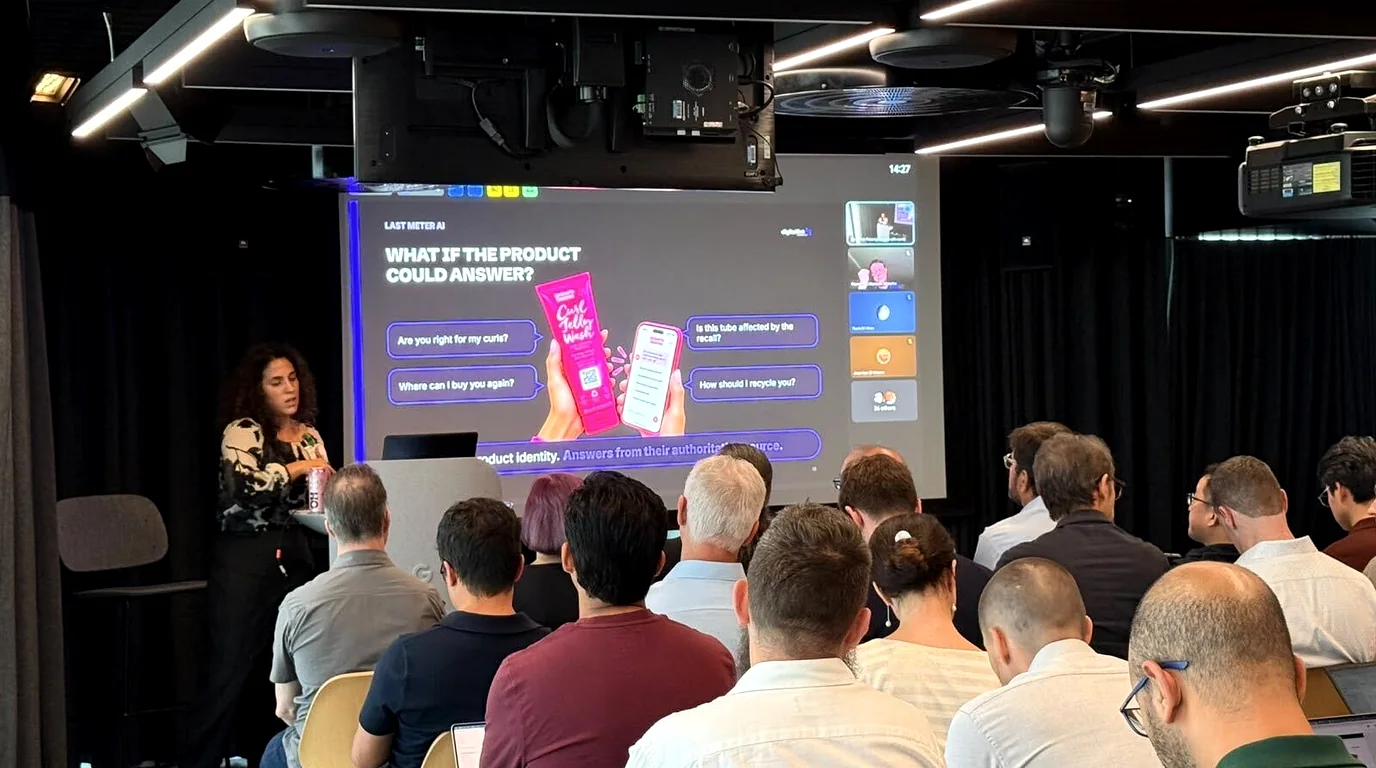
For agentic commerce, the order of operations matters: **first establish identity, then optimise the offer.** Price, availability and delivery are variables; product identity is the constraint. Protocols tell agents how to act. Identity tells them what they are acting on. The intelligence remains; the guess disappears.
And this is not a moonshot. Paula closed on a real deployment: a Dutch garden brand that turned every pack into a door to the Web, starting from a simple consumer use case on existing [product pages](/product/smart-product-pages/). In doing so, it laid foundations that are ready for sustainability requirements, the [EU Digital Product Passport](/guides/european-digital-product-passport-dpp/), regulatory information and AI agents. "We didn't want to wait until we understood every future use case," as the brand put it. Start simple. Build for what comes next.
## Product identity belongs on the open Web
If day one had a thread, it was openness. Billions of physical products are joining the Web, and the identities behind them should be **brand-controlled, standards-based and agent-independent**: readable by any agent, owned by no single platform. The future of commerce will not depend on AI that can buy. It will depend on AI that can buy the *right* product, and that future should not belong to whoever builds the biggest private catalogue.
Or, as the closing slide had it: *'Oops' belongs in the song. Product identity belongs on the open Web.*
## What's next
The workshop continues today with sessions on trust, payments, verifiable credentials and agent accountability. These themes sit directly downstream of the identity question: you can only trust, pay for and take responsibility for what you can precisely identify. Paula Rivero and Mauro Casula are in Zurich through the end of the workshop; if you are attending and want to talk product identity for agentic commerce, come find them.
For everyone else, this conversation does not end in Zurich. If your brand is thinking about how its products will be discovered, verified and repurchased in a world of [AI agents](/product/ai-for-packaging/), the groundwork starts with the identity you already own. Learn what [GS1 Digital Link](/gs1-digital-link/) unlocks, or [talk to our team](/pricing/#hs-chat-open).
---
## QR codes on medicine packaging: a guide to digital leaflets
URL: https://digital-link.com/news/qr-codes-on-medicine-packaging/
The electronic patient information leaflet is becoming mandatory. How QR codes on medicine packaging improve patient safety and medication adherence.
If you have ever unfolded a medicine leaflet the size of a road map, squinted at the tiny print, and thrown it away two minutes later, you already understand why the electronic patient information leaflet (ePI) exists. Instead of relying on a fragile piece of paper, patients scan a QR code on the medication packaging and instantly access the current, officially approved version of the leaflet on their phone.
What started as a pilot in a handful of markets is now becoming law. In June 2026, Argentina’s drug regulator ANMAT issued Disposición 2891/2026, requiring all medicinal products sold in the country, both prescription medication and over-the-counter drugs, to carry a QR code or Data Matrix linking to the current approved leaflet. Pharmaceutical companies have six months to generate the codes for their entire portfolio. Argentina joins a growing list of regulatory bodies, from the European Medicines Agency to authorities in Japan and Singapore, pushing the pharmaceutical industry toward digital leaflets.
In this guide, we look at what an electronic patient information leaflet is, why regulators are mandating QR codes on medicine packaging, and what pharmaceutical companies need to get the implementation right.
What is an electronic patient information leaflet?
An electronic patient information leaflet is the digital version of the paper insert that accompanies every medicine: indications, dosage, contraindications, side effects, storage conditions, and safety information. Instead of being printed and folded into the box, this essential information lives online, in a format approved and controlled by the relevant health authority.
The bridge between the physical product and the digital content is a two-dimensional barcode, usually a QR code, sometimes a Data Matrix, printed on the drug packaging. One quick scan with a smartphone camera takes the patient or healthcare provider straight to the leaflet. No app, no search, no outdated PDF: the scanned code always resolves to the version currently in force.
This matters more than it might seem. Safety information about specific drugs evolves constantly: new warnings, new interactions, updated dosing recommendations. With paper, packs printed months ago keep circulating with obsolete content until stock rotates out. With an ePI behind a QR code, the update is immediate for every unit already on pharmacy shelves.
Why regulators are mandating QR codes on medication
The paper leaflet has three structural problems that no amount of redesign can fix:
It goes out of date the moment it is printed. Regulatory bodies approve label changes continuously, but printed packs can stay in the pharmaceutical supply chain for a year or more.
It is hard to read. Tiny fonts, dense text, and technical language are a real barrier for older patients, people with visual impairments, and anyone with low health literacy.
It gets thrown away. Studies consistently show a large share of patients discard the insert on opening the box, exactly when they may need it for the next dose or weeks into treatment.
The electronic health record has digitized the clinical side of healthcare; the ePI does the same for the information patients actually hold in their hands. Argentina’s new rule is explicit about the goals: the code must give both patients and healthcare professionals access to authorized content only, never promotional material, and must follow international standards for interoperability and traceability used across healthcare systems and supply chains.
The European Union is on a parallel path. The EMA and national agencies have been running ePI pilots since 2021, and the EU pharmaceutical reform currently under negotiation opens the door for member states to allow electronic-only leaflets for certain medicinal products. Meanwhile, serialized Data Matrix codes have been mandatory on prescription packs in Europe since 2019 under the Falsified Medicines Directive, so the pharmaceutical industry already prints two-dimensional barcodes at scale. The ePI simply asks those codes to do more.
The benefits: from patient safety to supply chain control
Enhancing patient safety with always-current information
Patient safety is the top priority behind every one of these regulations. A QR code that resolves dynamically means a newly discovered interaction or contraindication reaches patients the same day it is approved, not after months of stock rotation. For medical professionals, easy access to the latest prescribing information at the point of care reduces medication errors and supports better patient outcomes.
Better medication adherence and patient education
Medication adherence is the silent failure point of healthcare: treatments only work if people take them correctly. Digital leaflets transform patient education by going beyond static text. Because the QR code links to digital content rather than a printed page, pharmaceutical companies can add multimedia resources: video tutorials showing how to use an inhaler or an auto-injector, visual aids explaining dosing schedules, audio versions for visually impaired users, and translations into multiple languages. Some implementations even provide reminders for the next dose. A leaflet that patients can actually read, with adjustable font size on their own screen, is a leaflet that gets used.
Fighting counterfeit drugs
Counterfeit drugs are a multi-billion-dollar problem and a direct threat to patients. QR code technology built on GS1 standards encodes the product’s GTIN, batch number, and expiry date, allowing pharmacies, distributors, and even consumers to verify authenticity with a simple scan. Combined with real time tracking across the pharmaceutical supply chain, serialized codes make it dramatically harder for falsified products to reach patients.
Operational and environmental gains
For pharmaceutical packaging teams, removing or shrinking the paper insert frees up space, simplifies artwork management, and cuts the cost of reprinting every time a leaflet changes. The reduction in paper, printing, and transport also supports sustainability targets, a point ANMAT’s industry stakeholders highlighted explicitly when the Argentine rule was announced.
What about data security and patient data?
A common concern: does scanning a code on medication packaging expose patient data? It shouldn’t, and with a properly designed system, it doesn’t. The ePI model directs patients to public, regulator-approved medication information; no personal health data is collected to read a leaflet. That said, data security still matters on the publisher’s side. Pharmaceutical companies need a QR platform with enterprise-grade security certifications, controlled user permissions, and audit trails, because the destination content is regulated: a hijacked or misdirected link on a medicine pack is a compliance incident, not just a marketing problem.
This is also why regulators prohibit redirecting these codes to promotional content. The QR code on a medicine box is infrastructure for safety information, and it must be managed with the same rigor as the leaflet text itself.
How pharmaceutical companies can implement ePI QR codes
Technology advances fast, but a compliant rollout follows a clear sequence:
Choose dynamic QR codes, not static ones. This is non-negotiable. A dynamic QR code keeps the printed code unchanged while letting you update the destination, which is exactly what “always link to the current approved leaflet” requires. A static code locked to one URL cannot meet the regulation.
Align with GS1 standards. Regulations like Argentina’s explicitly require interoperability with international identification standards. The GS1 Digital Link standard is the natural fit: it embeds the product’s GTIN (plus batch number and expiry where serialization applies) in a single web-enabled code that serves regulators, pharmacies, POS scanners, and consumers alike.
Build accessible, mobile-first leaflet pages. The destination should load instantly, support font scaling and screen readers, and present comprehensive information in a structure patients can navigate, not a scanned PDF of the paper insert.
Generate and manage codes at portfolio scale. A mid-size pharma company may need codes for hundreds of SKUs within a six-month deadline. Bulk generation via API, centralized workspaces, and role-based permissions stop the project from drowning in spreadsheets.
Track and audit. Scan analytics show which products, regions, and moments drive medication information lookups, valuable signals for pharmacovigilance teams and for improving the patient experience.
A simple scan, a critical role
The shift to the electronic patient information leaflet is one of those rare changes where compliance, patient outcomes, and operational efficiency all point the same way. Regulators get guaranteed delivery of up to date safety information. Patients get medication information they can actually read, in their language, with visual aids when words aren’t enough. Pharmaceutical companies get a direct, measurable channel to the people using their products, and an end to costly reprints.
Argentina has set a six-month clock, and other markets will follow. For the pharmaceutical industry, the question is no longer whether to put QR codes on medicine packaging, but whether the platform behind those codes can meet the bar regulators have set: dynamic, standards-based, secure, and always current.
Digital Link‘s QR codes are built for exactly this: standards-based codes you can generate in bulk from each product’s GTIN, resolve dynamically to the current approved leaflet, and manage with ISO-certified security and full scan analytics. Create your first GS1 Digital Link QR code free and see how easy digital transformation of your medication packaging can be.
If you have ever unfolded a medicine leaflet the size of a road map, squinted at the tiny print, and thrown it away two minutes later, you already understand why the electronic patient information leaflet (ePI) exists. Instead of relying on a fragile piece of paper, patients scan a QR code on the medication packaging and instantly access the current, officially approved version of the leaflet on their phone.
What started as a pilot in a handful of markets is now becoming law. In June 2026, Argentina’s drug regulator ANMAT issued Disposición 2891/2026, requiring all medicinal products sold in the country, both prescription medication and over-the-counter drugs, to carry a QR code or Data Matrix linking to the current approved leaflet. Pharmaceutical companies have six months to generate the codes for their entire portfolio. Argentina joins a growing list of regulatory bodies, from the European Medicines Agency to authorities in Japan and Singapore, pushing the pharmaceutical industry toward digital leaflets.
In this guide, we look at what an electronic patient information leaflet is, why regulators are mandating QR codes on medicine packaging, and what pharmaceutical companies need to get the implementation right.
What is an electronic patient information leaflet?
An electronic patient information leaflet is the digital version of the paper insert that accompanies every medicine: indications, dosage, contraindications, side effects, storage conditions, and safety information. Instead of being printed and folded into the box, this essential information lives online, in a format approved and controlled by the relevant health authority.
The bridge between the physical product and the digital content is a two-dimensional barcode, usually a QR code, sometimes a Data Matrix, printed on the drug packaging. One quick scan with a smartphone camera takes the patient or healthcare provider straight to the leaflet. No app, no search, no outdated PDF: the scanned code always resolves to the version currently in force.
This matters more than it might seem. Safety information about specific drugs evolves constantly: new warnings, new interactions, updated dosing recommendations. With paper, packs printed months ago keep circulating with obsolete content until stock rotates out. With an ePI behind a QR code, the update is immediate for every unit already on pharmacy shelves.
Why regulators are mandating QR codes on medication
The paper leaflet has three structural problems that no amount of redesign can fix:
It goes out of date the moment it is printed. Regulatory bodies approve label changes continuously, but printed packs can stay in the pharmaceutical supply chain for a year or more.
It is hard to read. Tiny fonts, dense text, and technical language are a real barrier for older patients, people with visual impairments, and anyone with low health literacy.
It gets thrown away. Studies consistently show a large share of patients discard the insert on opening the box, exactly when they may need it for the next dose or weeks into treatment.
The electronic health record has digitized the clinical side of healthcare; the ePI does the same for the information patients actually hold in their hands. Argentina’s new rule is explicit about the goals: the code must give both patients and healthcare professionals access to authorized content only, never promotional material, and must follow international standards for interoperability and traceability used across healthcare systems and supply chains.
The European Union is on a parallel path. The EMA and national agencies have been running ePI pilots since 2021, and the EU pharmaceutical reform currently under negotiation opens the door for member states to allow electronic-only leaflets for certain medicinal products. Meanwhile, serialized Data Matrix codes have been mandatory on prescription packs in Europe since 2019 under the Falsified Medicines Directive, so the pharmaceutical industry already prints two-dimensional barcodes at scale. The ePI simply asks those codes to do more.
The benefits: from patient safety to supply chain control
Enhancing patient safety with always-current information
Patient safety is the top priority behind every one of these regulations. A QR code that resolves dynamically means a newly discovered interaction or contraindication reaches patients the same day it is approved, not after months of stock rotation. For medical professionals, easy access to the latest prescribing information at the point of care reduces medication errors and supports better patient outcomes.
Better medication adherence and patient education
Medication adherence is the silent failure point of healthcare: treatments only work if people take them correctly. Digital leaflets transform patient education by going beyond static text. Because the QR code links to digital content rather than a printed page, pharmaceutical companies can add multimedia resources: video tutorials showing how to use an inhaler or an auto-injector, visual aids explaining dosing schedules, audio versions for visually impaired users, and translations into multiple languages. Some implementations even provide reminders for the next dose. A leaflet that patients can actually read, with adjustable font size on their own screen, is a leaflet that gets used.
Fighting counterfeit drugs
Counterfeit drugs are a multi-billion-dollar problem and a direct threat to patients. QR code technology built on GS1 standards encodes the product’s GTIN, batch number, and expiry date, allowing pharmacies, distributors, and even consumers to verify authenticity with a simple scan. Combined with real time tracking across the pharmaceutical supply chain, serialized codes make it dramatically harder for falsified products to reach patients.
Operational and environmental gains
For pharmaceutical packaging teams, removing or shrinking the paper insert frees up space, simplifies artwork management, and cuts the cost of reprinting every time a leaflet changes. The reduction in paper, printing, and transport also supports sustainability targets, a point ANMAT’s industry stakeholders highlighted explicitly when the Argentine rule was announced.
What about data security and patient data?
A common concern: does scanning a code on medication packaging expose patient data? It shouldn’t, and with a properly designed system, it doesn’t. The ePI model directs patients to public, regulator-approved medication information; no personal health data is collected to read a leaflet. That said, data security still matters on the publisher’s side. Pharmaceutical companies need a QR platform with enterprise-grade security certifications, controlled user permissions, and audit trails, because the destination content is regulated: a hijacked or misdirected link on a medicine pack is a compliance incident, not just a marketing problem.
This is also why regulators prohibit redirecting these codes to promotional content. The QR code on a medicine box is infrastructure for safety information, and it must be managed with the same rigor as the leaflet text itself.
How pharmaceutical companies can implement ePI QR codes
Technology advances fast, but a compliant rollout follows a clear sequence:
Choose dynamic QR codes, not static ones. This is non-negotiable. A dynamic QR code keeps the printed code unchanged while letting you update the destination, which is exactly what “always link to the current approved leaflet” requires. A static code locked to one URL cannot meet the regulation.
Align with GS1 standards. Regulations like Argentina’s explicitly require interoperability with international identification standards. The GS1 Digital Link standard is the natural fit: it embeds the product’s GTIN (plus batch number and expiry where serialization applies) in a single web-enabled code that serves regulators, pharmacies, POS scanners, and consumers alike.
Build accessible, mobile-first leaflet pages. The destination should load instantly, support font scaling and screen readers, and present comprehensive information in a structure patients can navigate, not a scanned PDF of the paper insert.
Generate and manage codes at portfolio scale. A mid-size pharma company may need codes for hundreds of SKUs within a six-month deadline. Bulk generation via API, centralized workspaces, and role-based permissions stop the project from drowning in spreadsheets.
Track and audit. Scan analytics show which products, regions, and moments drive medication information lookups, valuable signals for pharmacovigilance teams and for improving the patient experience.
A simple scan, a critical role
The shift to the electronic patient information leaflet is one of those rare changes where compliance, patient outcomes, and operational efficiency all point the same way. Regulators get guaranteed delivery of up to date safety information. Patients get medication information they can actually read, in their language, with visual aids when words aren’t enough. Pharmaceutical companies get a direct, measurable channel to the people using their products, and an end to costly reprints.
Argentina has set a six-month clock, and other markets will follow. For the pharmaceutical industry, the question is no longer whether to put QR codes on medicine packaging, but whether the platform behind those codes can meet the bar regulators have set: dynamic, standards-based, secure, and always current.
Digital Link’s QR codes are built for exactly this: standards-based codes you can generate in bulk from each product’s GTIN, resolve dynamically to the current approved leaflet, and manage with ISO-certified security and full scan analytics. Create your first GS1 Digital Link QR code free and see how easy digital transformation of your medication packaging can be.
All images and visual content in this article were created using RealityMAX.
---
## QR codes on packaging for loyalty: Boost engagement
URL: https://digital-link.com/news/qr-codes-on-packaging-for-loyalty/
QR codes on packaging for loyalty help brands drive retention, boost engagement, and deliver rewards, right from the product itself.
You’ve probably scanned a QR code on a coffee cup or cosmetics box before. Maybe it took you to a website or unlocked a discount. But more and more, these codes aren’t just shortcuts; they’re portals to customer loyalty programs built right into the packaging.
For brands trying to convert first-time buyers into repeat customers, QR codes on packaging for loyalty offer a scalable, smart way to engage.
The product itself becomes a loyalty trigger, making every scan a moment to connect, reward, and retain in a customer loyalty program, no app download or sign-up hassle needed.
More brands across beauty, beverage, and wellness sectors are embedding dynamic QR codes on packaging. These let customers instantly access loyalty points, special content, or exclusive deals in loyalty rewards programs, building brand stickiness from the shelf to the next sale.
How do QR codes improve loyalty programs?
Traditional loyalty programs come with friction. Think punch cards, receipts, or complicated app flows. QR code loyalty programs remove these hurdles, supporting better customer retention . One scan is all it takes to unlock value.
With QR codes, customers can instantly enroll, collect loyalty points, access personalized offers, or view product tutorials. There’s no friction: just scan and go, making it a strong form of digital engagement .
Dynamic QR codes take things further. The same code can behave differently depending on location, device, or customer status.
That means a sunscreen sold in Miami can link to beach-care tips, while the same product in Berlin shows winter skincare advice. It’s loyalty that adapts, strengthening customer relationships .
Digital Link enables this flexibility with GS1-compliant dynamic QR codes that can be updated anytime, making your loyalty program agile and relevant.
What’s the difference between static QR codes and dynamic ones?
Static QR codes are fixed. Once printed, they always point to the same destination. That might be fine for linking to a basic web page, but for loyalty programs, it’s a major limitation.
With static QR codes, you can’t update your offers, personalize experiences, or track detailed scan data. There’s no flexibility, and no way to test or improve your campaigns after the packaging is printed, impacting the customer experience .
Dynamic QR codes, like those powered by Digital Link, solve these problems.
You can change the destination at any time, localize content, and measure every scan. They’re essential for any loyalty strategy that aims to adapt and grow in ways that incentivize customers .
How do QR codes drive customer engagement?
Customer engagement is about creating meaningful, ongoing interactions, not just sales. QR codes help brands engage right where the product is: in the customer’s hands.
After scanning a code, a shopper might watch a quick tutorial, unlock a bonus tip, join a community, or get an instant offer. These small, helpful experiences build emotional connection.
What makes QR-driven engagement stand out is its adaptability.
Brands can swap out campaigns on the fly (say, adding a Valentine’s reward in February or launching a back-to-school promotion in August), all without touching the physical packaging.
With Digital Link, you can track these engagements in real time and see what’s working. Which scans drive follow-ups? Which offers get clicked? The insights guide smarter engagement next time.
How do QR codes help promote loyalty programs at scale?
Promoting a loyalty program can be tricky. Emails go unread. Ads get ignored. But packaging (your most guaranteed point of contact) offers a direct and powerful channel.
When you add a QR code to the packaging itself, the promotion becomes part of the unboxing or usage moment. You’re catching the customer at their most engaged.
Whether they’re trying on a new moisturizer or pouring cereal, they’re present, and a QR code offers instant access to join or interact with your loyalty program.
By regularly updating the scan destination, you can use the same code to run different seasonal or regional promotions. This keeps your program fresh and visible, without changing a thing on the shelf.
What makes packaging a smart channel for loyalty?
Unlike emails or ads, product packaging is guaranteed to reach the customer. People handle it. They read it. It’s part of their experience. That makes it the ideal launchpad for loyalty.
QR codes turn your packaging into a loyalty portal. A cereal box becomes a ticket to rewards. A shampoo bottle becomes an entry point for exclusive content. And because it’s all native to the product, customers are more likely to participate.
Some brands add QR codes under caps or inside boxes to reward post-purchase engagement. Others make the code part of their hero label, promoting loyalty upfront.
Either way, the result is the same: the moment of use becomes the moment of connection.
How can QR codes help increase customer lifetime value?
Customer lifetime value (CLV) is about maximizing the return from each relationship. QR codes help by keeping the customer close through repeat engagement.
Instead of chasing new customers with ads, brands can use QR codes to nurture existing ones. After each scan, they might show related products, upsell bundles, or offer thank-you discounts, all of which boost CLV.
Because QR scan behavior is trackable, you can see which customers are most engaged and build tailored loyalty journeys around them.
The more data you have, the better you can personalize the experience, and that leads to higher spend, more referrals, and better retention.
How do QR codes strengthen brand loyalty?
Brand loyalty isn’t just about getting someone to buy again. It’s about making them feel like part of your world. QR code loyalty programs are ideal for this.
A scan can unlock birthday gifts, insider news, or early access to launches. It can also guide users to stories about your sourcing, sustainability, or mission, content that strengthens trust and emotional affinity.
With Digital Link, every code can deliver a unique, branded experience, personalized to the customer’s profile or region.
And because the loyalty experience is tied directly to the product, it feels organic, not like an afterthought.
How can you integrate QR codes into your existing systems?
One reason QR codes on packaging work so well is their versatility. But to make them truly effective, they need to be integrated into your broader systems, like CRMs, ERPs, or loyalty platforms.
With the right setup, a scan can trigger more than a webpage visit. It can register a product, log a loyalty point, send an email confirmation, or feed directly into your analytics dashboard.
Digital Link makes this easy with API access and native integrations that let QR codes communicate across your tech stack.
This means less manual work, better data consistency, and smoother customer journeys, from scan to retention.
What are branded QR codes, and why do they matter?
Branded QR codes are visually aligned with your product and domain. They show your colors, logo, and even your own custom URL. Instead of a generic scan experience, the customer sees something familiar and trusted.
This matters more than you’d think. Customers are more likely to scan a QR code when it feels “official.” And when the page it leads to matches the packaging’s style and tone, it reinforces your brand identity.
Digital Link lets you create fully branded QR codes and landing pages, without code. It’s not just aesthetic. It’s strategic branding baked into the scan.
What does QR scan data reveal about consumer behavior?
Every time a customer scans a QR code, they tell you something. Not just that they were interested, but when, where, and in what context.
Brands can analyze scan data to understand consumer behavior in rich detail. Are people scanning in-store or at home? Do scans spike during certain seasons or promotions? What types of products generate the most post-purchase interaction?
These insights help fine-tune messaging, product timing, and campaign focus.
With Digital Link, you get real-time dashboards that track and visualize consumer behavior, giving you a direct lens into how people interact with your products in the real world.
How do QR codes help collect first-party customer data?
As third-party cookies disappear, brands are racing to build new ways to understand their customers. QR codes on packaging offer one of the most ethical and direct paths to first-party customer data.
When a user scans a code and enters an email, joins a loyalty program, or completes a short survey, that data comes straight from the source, with consent. It’s accurate, timely, and actionable.
Digital Link’s platform helps brands capture this information in compliance with privacy standards. You can customize forms, localize consent notices, and securely integrate with your CRM or CDP.
In a world where privacy matters more than ever, QR codes are a smart tool to build data and trust at the same time.
How can QR codes collect real customer feedback?
Feedback loops are essential for improving products and loyalty programs. QR codes make them effortless.
After scanning, a customer might be prompted to rate their experience, complete a one-question poll, or write a quick comment.
It feels low-pressure, and because it’s tied to the packaging, it happens in the right moment.
This feedback is valuable. You learn what’s working and what’s not, directly from the people using your products. It also shows customers you’re listening, which strengthens their trust.
With Digital Link, these micro-feedback forms can be localized, timed, or triggered based on behavior, giving you rich, real-world insights with minimal friction.
How do you choose the right QR code generator for loyalty programs?
Not every QR code generator is built for loyalty. If you’re using QR codes to power long-term engagement, you need a platform that supports dynamic content, branded experiences, and analytics.
Look for one that integrates with your CRM or loyalty backend. One that lets you localize content and track scan data in detail. And one that gives you full control over what happens after the scan.
Digital Link is purpose-built for this. It’s GS1-compliant, scalable, and customizable. You can create dynamic QR codes, design branded pages, and analyze performance, all in one place.
How do QR codes help with building brand loyalty long-term?
QR codes help you stay in touch. Not just with offers, but with presence. When customers scan and find something useful, delightful, or personal, they begin to associate your brand with value, not just transactions.
Over time, this creates emotional momentum. Repeat scans turn into repeat purchases. Helpful content becomes a habit. Loyalty becomes a relationship.
With Digital Link’s platform, your packaging isn’t just a container. It’s a channel. And when that channel speaks with consistency and care, you don’t just build loyalty; you build a brand people trust.
How does Digital Link make this easier?
Digital Link turns packaging into an always-on loyalty platform.
With GS1-compliant QR codes, drag-and-drop landing page creation, and real-time analytics, it gives you everything you need to run high-impact, data-driven loyalty programs.
You can update content on the fly, localize experiences by region, and connect your codes to any backend system, from ERP to CRM.
Whether you’re launching a product or scaling a global loyalty campaign, Digital Link makes it seamless.
---
## QR codes vs NFC tags: Which one is right for your packaging?
URL: https://digital-link.com/news/qr-codes-vs-nfc-tags/
Compare QR codes vs NFC tags to see which tech delivers better reach, engagement, and flexibility in your packaging strategy.
You’ve probably seen both: a scannable QR code on a food label, and maybe tapped your phone against a shelf display with NFC. But when it comes to smart packaging, where every product is a touchpoint, which one is better: QR codes or NFC tags?
QR codes vs NFC tags is a question that comes up often in packaging strategy meetings. Both technologies bridge physical products and the digital world, but they do so differently. The real answer? It depends on your audience, your product, and what kind of experience you want to deliver.
Let’s break it down clearly, without hype: just smart, practical differences that matter for your business.
How do QR codes work on packaging?
QR codes, including static QR code options, are two-dimensional barcodes that can be printed directly onto packaging. When scanned using a smartphone camera or QR code reader, they direct users to digital content: landing pages, video tutorials, loyalty programs, traceability data, or product authentication tools.
Dynamic QR codes (like those powered by Digital Link) are handy because they can be edited after printing. That means you can run seasonal campaigns, update instructions, or fix URLs without reprinting anything. QR code technology is cost-effective, user-friendly, and works across almost all mobile devices.
What about NFC tags? How do they compare?
NFC tags are small chips embedded in or applied to packaging. They use near-field communication (NFC technology), which is part of the broader radio frequency identification (RFID) systems, to transmit data when a user brings an NFC-enabled smartphone close to the tag, usually within a few centimeters.
Unlike QR codes, NFC tags don’t require visible printing. They can be hidden behind labels or integrated into materials. They offer a more seamless, high-end feel and are often used in premium packaging.
However, they also require NFC-enabled devices, which can be a limitation, especially in markets or age groups where NFC technology adoption is lower.
What are the pros and cons of QR codes vs NFC tags?
QR codes are incredibly accessible. They work with almost all smartphones via camera apps, don’t require special chips, and are typically free to create. Brands can use a reliable QR code generator to build and track campaigns.
NFC technology offers a more intuitive, tap-based experience. It’s excellent for contactless payment, access control, or anti-counterfeit applications. But it’s more expensive to implement and harder to scale for mass-market products.
In short, QR codes are versatile, visible, and low-cost. NFC tags are sleek and secure but hardware-dependent.
Can these technologies be used together on packaging?
Yes, and many brands do just that.
Using both QR codes and NFC on packaging allows for broader user interaction. QR codes reach everyone with a smartphone camera while also catering to NFC users. NFC offers added value to users with newer devices or premium expectations.
A cosmetics brand might use a visible QR code for tutorials and loyalty programs while embedding an NFC chip to verify authenticity or enable intelligent shelf detection.
How do QR codes compare to traditional barcodes?
Traditional barcodes (like UPCs or EANs) are designed for machines, not consumers. They carry limited, static information, usually just a product ID, meant for inventory systems and point-of-sale terminals.
Next-generation QR codes go much further. They store complex data and connect customers to dynamic digital content. They also comply with GS1 standards, meaning they can work in retail and supply chain systems just like a standard barcode.
In essence, QR codes do everything traditional barcodes can, plus everything traditional barcodes can’t.
What does each one reveal about product data?
QR codes excel at traceability and transparency. They’re the preferred tool for digital product passports, ingredient lists, sustainability data, etc.
NFC tags are stronger for physical interactions, such as event ticketing, contactless payments, or secure asset tracking. They’re used when the goal is to verify an item or trigger a specific action through direct contact.
QR codes offer a more straightforward and scalable path to sharing detailed product origin stories, compliance information, or customer feedback forms, highlighting the differences between QR codes and other technologies.
What do QR codes reveal about customer behavior?
Every scan is a signal. It tells you when and where a customer engaged, what product they interacted with, and what device they used. Over time, this paints a picture of how people interact with your packaging, not just once, but across the product lifecycle.
Digital Link captures these behavioral signals in real time, allowing you to adjust content, test new strategies, or trigger personalized flows. This kind of feedback loop helps brands optimize the whole post-purchase experience.
Which one wins for consumer engagement?
This is where QR codes pull ahead. The visibility of a printed QR code invites action. You can place it front-of-pack, include a CTA, and change the content dynamically. It encourages curiosity and rewards users with instant value.
Scanning QR codes also feels intuitive for most users: swipe-and-see behavior has become second nature.
NFC is more passive. It works well when the user knows what to expect (like tapping to pay), but it can go unnoticed without prompting. It’s great for discreet use cases, but not for discovery-driven engagement.
What about accessibility and device compatibility?
QR codes are universally compatible with modern smartphones. No special hardware. Just open the camera app and scan. That’s why they work for everything from contactless interactions to digital business cards.
NFC tags require a device equipped with NFC capabilities. Many Android phones have this by default, but iOS devices support it only in newer models. That means a segment of users may miss out unless you provide a fallback.
If your audience is broad or global, QR codes are the safer choice.
Can QR codes support mobile payments?
While QR codes are best known for driving engagement and transparency, they also support mobile payments in many regions. From WeChat Pay in Asia to digital wallets in Europe, QR-based payment flows are becoming increasingly familiar.
Adding a QR code that links directly to a secure checkout page can simplify conversion for brands selling DTC or in pop-up retail formats.
What does implementation look like for each?
Creating QR codes is fast, flexible, and cost-efficient. Using a QR code generator like Digital Link’s system, you can generate thousands, embed them into print-ready packaging files, and update them post-launch with dynamic destinations.
NFC implementation involves sourcing NFC chips, embedding or applying them to packaging, and testing for scan reliability across materials. It also adds cost per unit, so it’s typically used on higher-value products.
Both require thoughtful user journey design, considering the key differences, but QR codes get you to market faster.
Are there security or privacy concerns?
Like any connected technology, both QR codes and NFC tags can be misused if not appropriately managed.
Dynamic QR codes reduce risk by allowing updates to destination URLs. They also make it easier to manage data collection and ensure compliance with privacy regulations.
NFC tags are harder to tamper with physically, which helps in scenarios like access control or anti-counterfeit labeling. But they can still be cloned or exploited if not encrypted.
What about risks like data interception?
NFC tags can be vulnerable to data interception if not encrypted, mainly when used for sensitive interactions like authentication or payment. Because the tag transmits wirelessly, nearby devices can sometimes pick up or clone the signal.
QR codes, in contrast, require a visual scan. This makes them less susceptible to passive interception.
How can brands protect against data manipulation?
When you connect packaging to digital experiences, protecting the integrity of that data becomes essential. QR codes generated through Digital Link are tamper-resistant by design. Brands can control exactly where the code leads, what content is displayed, and how that content evolves over time.
Because dynamic QR codes allow centralized updates, you avoid the risks associated with hardcoded URLs or manual edits, which are two common sources of accidental or malicious data manipulation. The ability to audit and lock destinations helps safeguard your brand and customer experience at scale.
Furthermore, reliable platforms like Digital Link are ISO-certified for data security, implementing state-of-the-art protection solutions for users.
How do QR codes and NFC tags support omnichannel strategies?
Both formats help bridge offline products with online experiences. QR codes are especially useful in retail, allowing shoppers to scan for product reviews, restock alerts, social media pages, or AR previews.
NFC works well in loyalty cards, wearable packaging, or tap-to-unlock experiences. It’s elegant, fast, and physical, but it’s limited by hardware.
Combining both gives brands the flexibility to meet users where they are.
So, QR codes vs NFC tags: which one should you use?
Go with QR codes if you’re looking for broad compatibility, low cost, and fast deployment. NFC tags add value if you’re targeting high-end, tech-savvy users or need contactless verification, although they require specific hardware.
In many cases, you don’t have to choose. Use QR codes for reach and engagement. Layer NFC for added security or tactile experiences. The two can complement each other.
---
## September marketing with digital links to boost sales
URL: https://digital-link.com/news/september-marketing-with-digital-links/
Discover how September marketing with digital links helps brands drive more traffic, improve user engagement, and increase sales this fall season.
As the crisp air of September ushers in the fall season, it’s the perfect time to refresh your marketing strategies. For many brands, this month is not only the start of fall but also a reset point before the busy holiday season. September marketing with digital links gives marketers a practical way to merge seasonal themes, digital marketing updates, and new tools into campaigns that resonate with customers and drive more traffic.
From Labor Day promotions to Hispanic Heritage Month initiatives, September offers multiple opportunities to create campaigns that connect emotionally and deliver measurable results. When combined with platforms like Digital Link, digital marketing professionals can craft campaigns that integrate ads, social media, and search engines into one cohesive experience.
Why September marketing matters for brands
Every September, marketers see a spike in website traffic, fresh ad spending, and shifts in the social media landscape. The start of the school year, seasonal shopping, and fall promotions create a natural environment for digital marketing campaigns to thrive. Consumers actively search for promotions, new products, and inspiration, giving businesses a chance to reach both loyal customers and younger audiences.
Google often releases core updates around this time, influencing organic search results. Staying aware of google search console data and search quality updates helps marketers adjust strategies before significant change affects their rankings. September 2025 also coincides with ongoing google AI overviews, where artificial intelligence ranks content and reshapes how search results appear to users. For brands, this means optimizing web pages with digital links and user generated content is more critical than ever.
Seasonal strategies that drive engagement
September campaigns succeed when they combine relevance with creativity. Consumers notice when brands align with seasonal moments like Labor Day promotions, back-to-school sales, and fall launches. Digital links, including QR codes and smart URLs, act as connectors, guiding users from ads or social media to engaging landing pages.
Labor Day weekend promotions can link directly to flash sales pages.
Hispanic Heritage Month campaigns can highlight brand values, culture, and stories through scannable links on packaging or ads.
Fall campaigns can integrate shoppable videos or interactive features that lead directly to e-commerce pages.
By combining ads, social media campaigns, and digital links, marketers create experiences that feel seamless and memorable. This combination strengthens brand recall, drives user engagement, and ultimately boosts sales.
The role of digital links in modern marketing
Digital links are not just technical shortcuts. They are the bridges between ads, social media platforms, and websites. Whether embedded in video action campaigns, performance max campaigns, or tv ads, they ensure that consumers can instantly move from discovery to conversion.
For example, a YouTube creator can include a Digital Link QR in a video. Viewers scan the code, access a shoppable video, and complete a purchase without leaving the platform. This eliminates friction, increases user engagement, and provides advertisers with more control over campaign outcomes.
Marketers can also use digital links to track campaigns across multiple channels. Unlike parked domains or static links, they provide actionable insights into how campaigns perform, where traffic comes from, and which audiences engage most.
Optimizing campaigns for September 2025
September is a month of digital marketing updates. From google ads bidding strategies to new tools in the digital marketing world, advertisers need to adapt quickly. Below are key areas of focus:
1. Keep pace with google updates
Google is rolling out core updates and testing AI overviews in search. These changes influence how sites rank and how consumers find articles, products, and brands. By monitoring google search console, marketers can track drops or gains in organic search visibility and adjust campaigns accordingly.
2. Balance paid and organic
Ad spending continues to rise, but organic search remains vital for credibility and long-term growth. Smart brands use performance max campaigns and video action campaigns while still optimizing web pages for organic search results.
3. Experiment with new formats
Shoppable videos, interactive features, and social media campaigns targeting younger audiences are driving rapid growth in user engagement. Adding digital links ensures users don’t just watch but act: visiting your website, exploring promotions, or making a purchase.
Cross-channel integration: social media, ads, and beyond
September is also about meeting users where they are. Social media campaigns dominate the social media landscape, while tv ads and youtube videos continue to drive brand recall. By adding digital links to every campaign element, whether a Facebook post, an Instagram story, or a LinkedIn article, marketers create one consistent path for consumers.
For instance:
Social media posts can feature digital links leading directly to promotions.
Google ads can integrate smart links that measure user engagement in real-time.
TV ads can include a scannable QR for more traffic and measurable conversions.
This level of integration ensures that no matter where users interact with your brand, they experience continuity.
Tracking performance and generating insights
Analytics define successful campaigns. With digital links, every click or scan becomes data. Marketers can analyze website traffic, track which platforms drive the most conversions, and gather actionable insights.
This is especially important during September, when ad spending is high and competition is fierce. Understanding where more traffic comes from, whether google search results, youtube creators, or social media campaigns, helps advertisers refine their strategies.
Updates aim to give marketers more control over campaigns, and digital links provide exactly that: the ability to adapt quickly, measure success, and deliver quality experiences.
How brands can prepare for fall campaigns
September is just the beginning of the fall season. Brands that use this month to test new tools, experiment with campaigns, and refine their marketing strategies set themselves up for success in Q4.
Practical steps include:
Creating digital links for every major campaign.
Monitoring search results in google search console after each core update.
Testing interactive features in social media campaigns and ads.
Using data from digital links to uncover actionable insights and improve user engagement.
By doing this, marketers stay ahead of significant changes in the digital marketing world and build strong connections with customers.
What should marketers focus on this September?
The digital marketing environment is changing faster than ever. Between artificial intelligence reshaping search engines, new features in google ads, and the rise of shoppable videos, marketers have no shortage of opportunities.
The focus this September should be on combining creativity, tools, and data. September marketing with digital links is not just about connecting users to a page: it’s about creating quality experiences that increase brand recall, drive sales, and keep consumers coming back throughout the fall season.
---
## Smart christmas packaging experiences for brands
URL: https://digital-link.com/news/smart-christmas-packaging-experiences/
Discover how smart Christmas packaging experiences blend festive design with digital content to elevate gifting and strengthen brand loyalty.
Creating smart Christmas packaging experiences is quickly becoming one of the most powerful ways for brands to stand out during the holiday season. As customers navigate crowded stores, limited attention spans, and endless gifting choices, packaging is no longer just a decorative shell. It is a storytelling platform, a functional guide, and in many cases the entry point to a digital layer that makes each Christmas gift feel more personal and memorable. By combining festive packaging with connected QR technology and smart product pages powered by Digital Link, brands can deliver richer product journeys even before the wrapping paper comes off. The result is a new generation of holiday packaging experiences with more meaning, more value, and more reasons for customers to remember the brand long after the Christmas tree comes down.
Why are smart Christmas packaging experiences reshaping the holiday season?
Smart Christmas packaging experiences are gaining momentum because they speak to two powerful consumer expectations. First, people want the emotional impact of festive packaging, including bright colors, unique textures, kraft paper aesthetics, gold foil accents, recycled materials, and the sense of discovery that comes with unwrapping a gift. Second, people now expect easy access to information, guidance, transparency, and extra content behind the product. The holiday rush amplifies these needs. Shoppers want stress free decisions. Gift recipients want clarity about how to use or assemble items. Small business owners want packaging that carries their brand’s personality without blowing a tight budget. And consumers everywhere want holiday packaging that aligns with eco friendly materials, responsibly managed forests, and reduced environmental impact. When packaging combines holiday spirit with digital access, it solves all of these problems at once. A single scan can link to a festive message, care instructions, bonus content, or a Christmas-only digital experience. Instead of packaging being discarded, it becomes the start of a connection.
How does digital content elevate traditional Christmas packaging?
Holiday packaging has always relied on visual and tactile cues like kraft paper, recycled materials, red and white stripes, metallic accents, festive stickers, or tissue paper. These elements create festive flair and perceived value, but by themselves they can only go so far. Adding a scannable layer transforms plain kraft paper or simple gift boxes into smart Christmas packaging experiences with genuine utility. A QR on the back of a gift bag can reveal detailed product descriptions, care tips for fragile items, or assembly steps for very fragile items. A festive gift wrap pattern can contain a discreet code that unlocks a digital unboxing experience or a Merry Christmas note from the giver. Luxury brands can use the same QR to offer seasonal storytelling, archival product information, or custom printing options that enhance the recipient’s emotional engagement. By linking physical packaging to a smart product page built with Digital Link, brands gain the flexibility to update content at any moment during the Christmas season without reprinting. This is especially useful for limited editions, last minute changes, or holiday gifting bundles. Even better: the QR content can shift once the holiday season ends, ensuring packaging remains relevant for second life uses or year round utility.
What makes holiday packaging ideas truly memorable for customers?
The most memorable Christmas packaging ideas are those that blend festive designs with meaningful interaction. Beautiful gift boxes create delight, but interaction creates memory. When customers scan a code on the packaging, the brand gains a moment of undivided attention usually impossible during the holiday rush. This moment can be used to share a personal touch, a handwritten note digitized into the smart page, a festive message, or a short video that reflects the brand’s personality. It can also deliver more practical value, such as instructions for fragile items, recommended pairings for standard gifts, or suggestions for how to reuse elements of the packaging in eco friendly ways. By adding this tiny digital bridge, brands encourage word of mouth marketing because customers share the experience with friends or on social media. Smart Christmas packaging experiences do not replace traditional wrapping paper or classic festive spirit. They expand them. They help products stand out in store environments and encourage new customers to see the brand as creative, thoughtful, and innovative.
How can sustainable materials enhance connected holiday packaging?
Eco friendly materials are increasingly important during the Christmas season. The rise of fsc certified paper, soy based inks, recycled materials, and plain kraft paper signals a shift toward responsibly managed forests and reduced waste. Brands that embrace sustainable packaging already earn bonus points with environmentally conscious consumers, but when this commitment is combined with smart Christmas packaging experiences, the impact grows significantly. A scannable code can educate customers about the environmental impact of materials without crowding the physical packaging with text. It can explain why the brand selected soy based inks, how to recycle or repurpose each component, or how the product’s supply chain supports ethical practices. These details would never fit comfortably on a small gift bag or a narrow wrapping panel. Digital Link solves this constraint by turning one QR into a living space for transparency. Holiday packaging designs can therefore stay minimal, elegant, and festive, while customers who care deeply about sustainability have immediate access to everything they want to know. This approach keeps the packaging beautiful, maintains the festive spirit, and strengthens trust.
Where does brand storytelling fit into smart Christmas packaging experiences?
Storytelling has always been one of the strongest elements in Christmas packaging ideas. The season invites warmth, nostalgia, and emotional resonance. Packaging with custom designs, festive prints, bright colors, jewel tones, or unique textures already plays a role in this emotional storytelling. The next step is to let the packaging speak digitally. A code can take the customer to a short seasonal story from the brand, a behind the scenes video of how limited edition items were crafted, or a message from the small business owner who assembled each package by hand. For companies offering premium products, this is a fantastic way to highlight craftsmanship, quality materials, or the origins of signature ingredients. For gift packaging designed for children, the digital layer can offer interactive surprises or holiday themed animations. For wellness or beauty products, the smart page can include tips, safety guidance, or rituals tailored to holiday gifting. Every brand has its own strengths and voice. Smart Christmas packaging experiences allow that voice to shine without compromising the aesthetic simplicity of the physical design.
How does connected packaging support cost effective holiday strategies?
Seasonal packaging can be expensive to produce, especially when brands rely on custom printing or high end materials like metallic finishes, intricate gift boxes, or embossed festive colors. But many brands operate on a tight budget just as holiday demand rises. Adding a connected layer offers a cost effective solution because it reduces reliance on heavy print customization. Brands can keep the physical packaging simple with plain kraft, minimalistic patterns, or light festive stickers. The digital layer, however, can carry all the high value content that would normally require special printing. Customers perceive the experience as premium even though the physical materials remain cost efficient. A simple kraft bag with a small QR can feel more engaging than an expensive printed box without a digital touchpoint. The perceived value increases while costs remain manageable. This also helps with inventory flexibility during the holiday rush, since the same packaging can serve multiple products across the Christmas season when the digital content can be updated instantly to match each specific gift.
How can brands create personalized festive moments at scale?
Personalization is one of the most powerful elements of holiday gifting, but scaling it is a challenge. Handwritten notes take time. Customized printing can be slow. Changing packaging based on the recipient’s preferences is nearly impossible at retail scale. Smart Christmas packaging experiences offer a new path forward. A single code on wrapping paper or a gift tag can open a personalized digital message from the giver, uploaded just before handing over the gift. Brands can also encourage customers to personalize the experience by allowing them to record audio greetings, choose a festive background, or add their own holiday photos within the smart product page. This layer makes each gift feel unique even if the physical packaging is identical. For businesses shipping thousands of gifts, this solves the personalization problem elegantly. It also deepens the emotional value of the holiday gifting moment by blending digital intimacy with festive packaging designs.
How does Digital Link enable better holiday logistics and support?
Beyond aesthetics and storytelling, the holiday season brings logistical challenges. Fragile items need special handling. Customers want easy access to instructions. Retail staff must manage returns, questions, and standard gifts purchased in high volume. Digital Link improves this entire ecosystem. When customers scan the code on Christmas packaging, they can immediately access care instructions, warranty details, or troubleshooting steps. Clear instructions reduce pressure on customer support during the busiest time of the year. For in store sales, smart product pages allow retailers to answer questions without long queues. For e-commerce, the QR can be used to route customers to shipping updates or post purchase support. The connected packaging also helps brands collect insights about customer interactions. Without asking for personal data, they can understand what information customers seek most and which packaging ideas generate the strongest engagement. This intelligence becomes invaluable for planning next year’s holiday packaging designs.
What role will AI assistants play in next generation holiday packaging?
As the world moves toward more interactive packaging, AI will eventually become part of smart Christmas packaging experiences. The holiday season is full of little decisions: how to assemble a toy, which accessories match a gift, how to recycle packaging responsibly, or where to redeem seasonal offers. An AI assistant embedded into a smart page can guide users through these moments instantly. Digital Link has already introduced Cleo, an AI product assistant built for smart packaging and real time product interaction. While the main purpose of Cleo extends beyond Christmas packaging, the same idea applies during the holiday season. A code on festive packaging could unlock an AI guided experience that helps users understand the product, explore variations, or discover related items. This makes holiday gifting feel supported, interactive, and more intuitive. As AI becomes more mainstream, customers will expect these real time answers even during seasonal experiences.
How can smart packaging help small businesses stand out during the holidays?
Small business owners often rely on creativity and warmth to compete with larger brands during the holiday season. They use kraft paper, cinnamon sticks, twine, handwritten notes, or small festive stickers to add a personal touch. With smart Christmas packaging experiences, they can elevate these thoughtful details into meaningful interactions. A simple QR can tell the story of the maker. It can explain how each candle was poured, how each chocolate bar was crafted, or how each gift box supports local artisans. This combination of handmade charm and digital depth helps small businesses attract new customers and build loyalty effortlessly. It also encourages customers to share the experience on social media, which amplifies reach without additional advertising costs. Smart packaging is therefore not just a design element but a business advantage.
How do smart product pages enable safer and clearer Christmas gift experiences?
Many Christmas gifts include fragile items, electronics, toys, beauty products, or food items that require clear instructions. Packaging space is limited, especially on holiday-themed designs where most of the visual surface is reserved for festive prints and bright colors. A connected packaging experience removes this limitation. Instead of cluttering gift boxes or holiday bags with dense fine print, the QR simply links to essential product guidelines. Customers can quickly learn how to store items, how to assemble them, or how to avoid damaging delicate materials. Ensuring clarity is not only practical but also reinforces trust. Gifts received during the Christmas season often need to be used immediately. Quick access to information prevents frustration and improves the unboxing experience. This is especially valuable when the gift will be used by children or older adults who may need additional clarity but prefer not to navigate the packaging itself.
How do connected experiences improve post holiday brand retention?
Most holiday packaging is discarded within minutes of opening, but smart Christmas packaging experiences extend the relationship beyond the first impression. When customers scan the code, they may subscribe to updates, register their product, download manuals, or explore related items. The packaging no longer disappears into the recycling bin. It becomes the gateway to an ongoing relationship. For brands that want to retain attention after the Christmas season, this is an exceptional opportunity. The digital link can evolve in January, shifting from holiday content to evergreen information. Customers who enjoyed the festive interaction remain connected to the brand long after the decorations are gone.
What does the future of smart Christmas packaging experiences look like?
Looking ahead, smart Christmas packaging experiences will become standard rather than exceptional. More brands will use eco friendly options like recycled kraft, soy-based inks, and fsc certified paper combined with digital content. More customers will expect personalized interactions, digital gift messages, and transparent sustainability information. More retailers will integrate smart product pages into their in store displays, creating stress free decision making for shoppers. And more manufacturers will rely on connected packaging to explain materials, improve safety guidance, and minimize waste. The Christmas season will continue to celebrate festive spirit and gift giving, but packaging will evolve into something closer to a digital gateway. The shift will not diminish traditional elements like gift wrap, festive stickers, or red and white stripes. Instead, it will enhance them by adding meaning, clarity, and emotional value. Brands that embrace this shift today will be remembered tomorrow.
How can brands get started with smarter holiday packaging right now?
The good news is that brands do not need to overhaul their packaging strategy to begin offering smart Christmas packaging experiences. Even simple packaging ideas gain value when paired with a connected layer. A small code hidden beside a metallic accent, a discreet placement inside a gift bag, or a festive QR on a seasonal sleeve can support rich digital content without altering the visual design. Digital Link makes it easy to create smart product pages, update content effortlessly, and manage multiple holiday packaging variations with minimal effort. Brands can test the concept on a single product line during the Christmas season and scale it across their full catalog the following year. The key is to start small, stay authentic to the brand’s personality, and let the digital layer carry the weight of complexity. This keeps packaging elegant, cost effective, and ready to surprise customers when they least expect it.
---
## Smart packaging with next-generation QR codes
URL: https://digital-link.com/news/smart-packaging-with-next-generation-qr-codes/
Boost engagement and transparency with smart packaging with next-generation QR codes. Discover how Digital Link makes it easy.
You’ve seen QR codes on everything, from snack wrappers to shampoo bottles. But the technology and brands’ use of it have evolved.
Smart packaging with next-generation QR codes is a gateway to personalized experiences, transparent supply chains, and smarter product interactions, fostering consumer trust .
With GS1-compliant QR codes powered by Digital Link, your product packaging becomes connected, dynamic, and intelligent.
Whether a consumer scans for product details or a retailer verifies authenticity, these QR codes transform how brands communicate and build trust.
How is smart packaging technology changing the packaging industry?
Smart packaging technology is setting a new standard for the packaging industry. Traditional packaging told consumers what was inside. Smart packaging shows them.
From NFC and augmented reality to scannable 2D barcodes, brands are leveraging technologies that make packaging interactive.
This shift is being driven by a need for transparency, customer engagement, and supply chain visibility, especially in industries like cosmetics, food, and electronics.
With Digital Link, packaging isn’t locked in time. It evolves. With a single printed code, you can update promotions, localize content, and provide real-time tracking.
It’s a new era for packaging: flexible, informative, and consumer-first.
How are emerging technologies shaping smart packaging?
Smart packaging is evolving fast, thanks to a wave of emerging technologies that go beyond QR codes. Augmented reality (AR), NFC tags, digital watermarks, and IoT sensors are all pushing the boundaries of what packaging can do.
Brands are beginning to experiment with layered experiences, like combining QR codes with AR to offer virtual try-ons or product demos. Others use temperature-sensitive inks or sensor-triggered messaging to respond to environmental conditions.
The key is that next-generation QR codes can act as the unifying access point for these innovations.
A single QR code gives access to future technologies, allowing brands to stay current without changing the code itself.
What makes QR codes a core part of smart packaging?
QR codes have become the backbone of smart packaging because they’re familiar, scannable on any device, and easily updated when dynamic.
Unlike static codes, dynamic QR codes give brands full control over what consumers see without changing the packaging.
You can use QR codes to unlock immersive experiences, share recycling instructions, or activate loyalty experiences.
The best part? The experience adapts to the user. A customer in Berlin may see different content than one in São Paulo, all from the same physical product.
At scale, this makes QR codes not just useful, but strategic. They bridge the gap between the physical and digital worlds in a way no other label element can.
How does smart packaging enhance consumer engagement?
Modern consumers want more than just a transaction. They want information, relevance, and connection. Smart packaging delivers all three, right when and where it matters.
A QR code on packaging can trigger a product how-to, link to a community, or deliver an exclusive discount.
When powered by Digital Link, these experiences can be localized, personalized, and tracked. That means every scan is an opportunity to enhance consumer engagement and gather valuable first-party data.
Brands are building relationships, and smart packaging makes those relationships easier to start and scale.
How does smart packaging impact brand image?
Packaging is often the first physical touchpoint a customer has with a brand. When that packaging is interactive, up-to-date, and aligned with digital trends, it signals innovation, transparency, and care.
Next-generation QR codes help elevate your brand image by offering more than just functionality: they convey responsiveness and attention to the user experience.
Whether it’s instant access to product origin stories, safety certifications, or dynamic offers, customers see a brand that wants to communicate, not just sell.
Smart packaging becomes part of your branding toolkit. And because the experience continues after the scan, it reinforces the impression that your brand values clarity, relevance, and connection.
Why is connected packaging essential for today’s brands?
Connected packaging links the physical product to live, digital content.
It’s what allows a shampoo bottle to explain its ingredients, a soda can to show promotions, or a cosmetics brand to display its environmental impact and certifications.
This approach is essential in a world where consumers expect access to detailed information, want proof of authenticity, and care about brand values.
It drives supply chain transparency, and connected packaging is how brands stay relevant, informative, and trusted.
Connected packaging is a direct, powerful tool for companies looking to refine marketing strategies, understand consumer behavior, or launch personalised experiences, providing a competitive edge.
What’s the role of intelligent packaging in the supply chain?
Intelligent packaging improves customer experience and transforms logistics. With the right data, brands can better manage inventory, reduce waste, and trace products across the supply chain.
For example, a QR code can confirm whether a product has reached the store shelf or if it’s been tampered with.
It can provide insights into scan frequency by region or product line, helping brands align production with demand.
By combining real-time tracking and digital updates, smart packaging becomes a tool for marketing and operations, creating transparency from manufacturer to end user.
How do brands use smart packaging to promote loyalty programs?
Loyalty programs are most effective when they’re easy to join and engaging to use. Smart packaging achieves both.
A QR code printed on the product lets customers enroll instantly, track rewards, and access exclusive discounts without visiting a website or downloading an app. It provides real-time updates and creates a frictionless path from purchase to participation.
The result? Higher program engagement and stronger brand loyalty.
And with Digital Link’s analytics, brands can monitor performance in real time and refine offers based on actual scan behavior.
What does smart packaging reveal about consumer behavior?
Every scan tells a story. Smart packaging provides data that helps brands understand what consumers care about, when they engage, and how frequently they interact.
Are users scanning before buying or after opening the product? Are they looking for tutorials, certifications, or discounts?
These behavioral patterns help brands refine messaging, improve experiences, and even inform product development.
With smart packaging, you’re not guessing, you’re learning directly from your customers in real time.
How does smart packaging influence purchase decisions?
Smart packaging plays a critical role in the decision to buy. When customers can instantly access usage tips, customer reviews, or ethical sourcing info at the point of consideration, they’re more likely to convert.
QR codes lower the barrier to trust. They answer customers’ silent questions: Is this brand legit? Is this product right for me? Am I making a responsible choice?
This transparency can be the tipping point for high-involvement categories like skincare, supplements, or specialty foods.
How does smart packaging support sustainability and brand values?
More than ever, consumers expect brands to walk the talk. Smart packaging helps prove it.
QR codes can link to recycling instructions, explain the manufacturing process, or highlight the use of eco-friendly materials.
This gives consumers confidence that the brand aligns with their values.
It also allows companies to evolve their messaging without changing the physical packaging, which is essential for keeping up with sustainability certifications or shifting regulations.
What are the benefits of collecting first-party customer data through packaging?
First-party customer data is becoming essential for businesses as third-party cookies fade out. Smart packaging is a direct and privacy-respecting way to collect it.
Each time a consumer scans a code to access content, opt into a newsletter, or join a loyalty program, they’re giving you a real, consensual data point. And because it happens post-purchase, it reflects genuine interest, not just click curiosity.
This data can inform your marketing strategies, support personalization, and improve the overall customer experience. And unlike other data sources, it starts with real product interaction.
What industries are leading the shift to smart packaging?
Industries like food and beverage, cosmetics, pharmaceuticals, and electronics are early adopters of smart packaging.
They face high regulatory pressure, rapid innovation cycles, and consumer demand for transparency, all of which smart packaging helps solve.
Even traditional sectors like apparel and household goods are catching up, especially as connected packaging becomes more affordable and expected by customers.
How does smart packaging enhance physical retail environments?
Smart packaging doesn’t just live on the shelf; it transforms it. In physical retail environments, QR-enabled packaging gives shoppers access to information that may not fit on the label, right when they need it.
Imagine a customer browsing skincare. They scan a product to compare ingredients, watch a short how-to video, or check availability at another store. The result is a better-informed purchase and a richer customer journey without needing staff intervention.
For retailers, this also means fewer printed materials, easier promotion updates, and a richer in-store experience.
With Digital Link, brands and retailers can work together to make the physical shopping journey more dynamic, without adding clutter or friction.
How is Digital Link empowering brands to lead this transformation?
Digital Link helps businesses move beyond static labels, embracing smart packaging technology. With our next-generation QR code platform, companies can create intelligent, connected, and dynamic packaging in just a few clicks.
We offer tools for creating GS1-compliant QR codes, designing branded landing pages, localizing content automatically, and analyzing consumer interactions across the supply chain.
Whether you want to enhance consumer engagement, improve inventory management, or build brand trust, Digital Link provides the infrastructure to make your packaging smarter.
What’s next for the future of smart packaging?
The future of packaging is real-time, responsive, and relational.
As consumers demand more transparency and personalization, and as regulations evolve, smart packaging will become the norm, not the novelty.
Technologies like augmented reality, near field communication, and intelligent labeling will merge with QR platforms to create fully immersive experiences. The packaging won’t just inform, it will interact.
For brands, this is a chance to lead with transparency, build deeper connections, and turn packaging into a long-term engagement tool. With Digital Link, that future starts now.
---
## Structured data and the rise of AI packaging
URL: https://digital-link.com/news/structured-data-and-the-silent-revolution-behind-ai-packaging/
Explore structured data and the silent revolution behind AI packaging driving smarter, sustainable, and efficient solutions.
The invisible force driving the future of packaging
The packaging industry is experiencing a quiet transformation. Beneath the surface of visible innovation (AI design tools, digital twins, or interactive labels) lies something far more fundamental: structured data. Understanding the relationship between structured data and the silent revolution behind AI packaging is essential for any company seeking to thrive in a data-driven world. This article explores how structured information, machine learning, and artificial intelligence (AI) are reshaping packaging systems, unlocking efficiency, sustainability, and intelligence at every step of the value chain.
What is structured data and why does it matter in AI packaging?
Structured data refers to information that follows a precise, organized format, often stored in tables or databases. In packaging, structured data may include material properties, product identifiers, recycling instructions, or supply chain events. This information enables AI systems to understand, compare, and make predictions with remarkable accuracy.
How does structured data enable AI tools to work effectively?
AI tools rely on data that is consistent, complete, and categorized. While unstructured data like emails, images, or voice notes require interpretation, structured data gives AI a clear foundation for analysis. When packaging lines are digitally connected, AI models can detect inefficiencies, anticipate issues, and generate design recommendations in real time.
From static to dynamic: The shift in packaging intelligence
Traditional packaging is static. It communicates one message to everyone. AI packaging, powered by structured data, makes packaging dynamic, personalized, and responsive. When connected to systems like GS1 Digital Link, a product’s packaging becomes a live data interface that evolves as new information becomes available.
The silent revolution: How structured data redefines packaging systems
The term “silent revolution” captures what’s happening across the industry. While flashy AI tools attract attention, the real revolution occurs in the invisible layers of data infrastructure, the systems that make intelligence possible. Structured data quietly enables predictive models, cost savings, and material optimization.
How structured data transforms the supply chain
AI packaging depends on supply chain data that is accurate and up to date. From manufacturing to distribution, structured data allows companies to trace materials, track greenhouse gas emissions, and manage logistics more efficiently. This level of visibility enhances sustainability and reduces waste.
Why are AI models only as good as the data behind them?
AI models learn from patterns in data. When the underlying dataset is clean and well-organized, model capabilities improve dramatically. Poor data, by contrast, leads to errors and misinterpretations. That’s why a strong data foundation is the first step in successful AI packaging deployment.
What role does generative AI play in packaging innovation?
Generative AI can create new packaging ideas by learning from thousands of examples. It uses structured datasets (material characteristics, compliance rules, customer preferences) to propose creative yet feasible designs. These systems accelerate idea generation while ensuring regulatory and sustainability standards are respected.
AI-driven insights: from design to decision-making
When companies analyze large volumes of structured packaging data, they uncover actionable insights. AI-driven insights reveal cost inefficiencies, predict market trends, and identify materials that balance performance with environmental responsibility. In this way, data becomes not just informational, but transformational.
How can AI systems help reduce waste in packaging?
By analyzing data from production and logistics, AI identifies where waste occurs, whether in material cutting, ink usage, or distribution. With structured data, algorithms can recommend small adjustments that lead to significant reductions in energy consumption and resource waste, supporting sustainability goals.
The link between structured data and predictive maintenance
In packaging plants, AI systems can monitor sensors and production lines using structured machine data. This enables predictive maintenance, the ability to foresee when equipment will fail before it happens. The result is lower downtime, fewer costly repairs, and more consistent output quality.
How AI improves quality control through data patterns
Quality control has always relied on inspection. Now, AI models trained on structured production data can identify deviations that human eyes might miss. Machine learning algorithms compare current production data with historical records, ensuring every box, label, and container meets required standards.
Building a data infrastructure for long-term success
Structured data doesn’t appear by chance. Companies need to build a data infrastructure that supports AI development: standardized formats, centralized databases, and interoperable systems. A robust infrastructure ensures that AI applications remain scalable and reliable across global operations.
The cost of poor data: Learning from real-world examples
Businesses often underestimate the cost of disorganized data. Inconsistent naming conventions or missing product attributes can cascade into supply chain errors and compliance issues. Structured data eliminates such risks, leading to cost savings and better decision-making.
How structured data enhances collaboration between humans and AI
AI cannot replace human intuition, but it can amplify it. When structured data informs AI models, business leaders can focus on strategic thinking while algorithms handle repetitive analysis. This collaboration between humans and machines accelerates innovation.
How does structured data improve communication along the value chain?
Structured data ensures everyone (manufacturers, designers, retailers, and recyclers) works from the same accurate information. It enables seamless communication across the value chain, helping companies react faster to regulatory changes, supply disruptions, or customer feedback.
What are the competitive advantages of adopting AI packaging systems?
Companies that integrate AI packaging early enjoy a strong competitive advantage. They are better positioned to optimize processes, cut costs, and introduce innovations faster than competitors. Structured data turns everyday packaging operations into a source of competitive edge.
How AI tools reshape material innovation
By analyzing performance data from thousands of packaging materials, AI can identify opportunities for material innovation. Structured data allows these models to predict how new materials will behave under various conditions, leading to packaging that is lighter, stronger, and more sustainable.
Can structured data help reduce greenhouse gas emissions?
Yes. AI systems that process structured environmental data can recommend design changes that lower greenhouse gas emissions. For instance, algorithms might suggest packaging formats that improve shipping density, thus reducing transportation emissions.
AI adoption: From experimentation to integration
Early adopters of AI packaging often begin with pilot projects. As success becomes measurable (through cost savings, reduced waste, or improved customer satisfaction), companies expand their AI adoption. Structured data is the bridge from isolated experiments to organization-wide integration.
Why is data-driven decision-making essential for the next decade?
The next decade will belong to data-driven companies. As AI investments grow, organizations that manage structured data effectively will unlock new possibilities. Those that neglect data governance risk being left behind in the AI revolution.
What are the fundamental problems AI solves in packaging?
AI addresses fundamental problems: inefficiency, waste, and unpredictability. With structured data, these challenges become measurable and therefore solvable. AI systems translate raw information into actionable insights for better resource allocation and smarter packaging development.
The rise of agentic AI in packaging operations
A new frontier of agentic AI (autonomous AI agents) is emerging in manufacturing and packaging. These systems use structured data to take independent actions, adjusting machinery, monitoring supply levels, or optimizing output without direct human input.
How can companies ensure data quality and compatibility?
Companies must implement strict data governance practices. This includes defining data standards, auditing information sources, and ensuring compatibility across platforms. Structured data works best when consistency is maintained from design through delivery.
How AI tools improve idea generation in packaging design
AI models trained on historical design data can suggest thousands of variations based on size, material, and cost constraints. This idea generation process saves designers hours while providing inspiration grounded in data, not guesswork.
The economic impact of AI packaging solutions
AI-driven packaging creates value beyond efficiency. It attracts environmentally conscious customers, opens new revenue streams, and increases brand reputation. The potential value of structured data extends across the entire packaging ecosystem.
What is the relationship between structured data and cost savings?
Structured data allows precise cost analysis by correlating materials, production time, and logistics. AI systems then use these insights to automate purchasing decisions or adjust schedules, leading to significant cost savings across departments.
How do AI applications influence packaging scale and development?
AI applications enable packaging operations to scale efficiently. They support rapid prototyping, global standardization, and automated compliance checks. With structured data, packaging development can evolve continuously instead of relying on static cycles.
Can structured data improve packaging sustainability?
Absolutely. AI packaging relies on structured environmental data to evaluate every stage of the product lifecycle. From sourcing to disposal, this insight helps companies design packaging that meets both regulatory and consumer expectations for sustainability.
How AI connects technology and mechanical engineering in packaging
AI bridges the gap between mechanical engineering and data science. In packaging machinery, AI algorithms use structured operational data to control tension, temperature, or cutting precision, ensuring mechanical systems work in harmony with digital intelligence.
How to overcome barriers to AI development in packaging
The main barriers include data fragmentation, lack of training, and outdated systems. To overcome them, companies should invest in modern data infrastructure, workforce education, and cross-departmental alignment. These efforts turn AI from a project into a permanent business solution.
Why structured data supports both innovation and compliance
AI packaging must comply with safety and labeling regulations. Structured data ensures every element (from ingredients to recycling symbols) is accurate and accessible. This dual role of data supports both innovation and regulatory compliance.
How do business leaders view AI investments in packaging?
Business leaders increasingly recognize that AI investments are not optional but essential. By prioritizing structured data, they ensure that every AI deployment is measurable, reliable, and aligned with long-term corporate goals.
What does the future of structured data and AI packaging look like?
The future lies in smarter ecosystems where AI, structured data, and human expertise converge. Packaging will become more transparent, traceable, and adaptive, responding in real time to the world around it. Companies that invest in data and AI today will shape the technology industry of tomorrow.
Conclusion: Structured data as the quiet architect of progress
The true revolution in AI packaging is not loud. It’s silent, systematic, and data-driven. Structured data and the silent revolution behind AI packaging represent the foundation of a smarter, more sustainable, and more competitive industry. In a world where AI tools evolve daily, it’s structured data that ensures progress remains coherent, measurable, and meaningful.
---
## Sunrise 2027 explained and why 2026 is key to prepare
URL: https://digital-link.com/news/sunrise-2027-2/
Sunrise 2027 marks the shift to 2D barcodes at retail. Learn why 2026 is the last comfortable year to prepare supply chains and POS systems.
Sunrise 2027 is no longer a distant concept reserved for standards bodies and solution providers. It is a concrete global initiative that will reshape how products are identified, scanned, and managed across the supply chain. For brand owners, retailers, manufacturers, and technology teams, 2026 represents the last calm year to prepare for a transition that affects point of sale systems, packaging, inventory management, and consumer engagement all at once.
What is Sunrise 2027 and why is it a big deal for global trade?
GS1 Sunrise 2027 is the target date set by the global GS1 community for enabling 2D barcodes, such as QR codes and Data Matrix, at retail point of sale. The initiative encourages the transition from traditional one dimensional barcodes, like the EAN barcode or traditional UPC, to two dimensional codes capable of carrying more data in a single scan. This is a big deal because barcodes sit at the foundation of the world’s GDP. Almost every consumer product sold relies on a standard barcode for price lookup functionality, inventory updates, and product identification. Sunrise 2027 is an ambitious project precisely because it touches the global supply chain at its most critical point: scanning at checkout.
Why are traditional barcodes no longer enough?
Traditional barcodes were designed decades ago for a simpler world. One dimensional barcodes encode a Global Trade Item Number and little else. They work well for price lookup at the point of sale, but they cannot carry additional data such as expiration dates, batch numbers, sell by dates, or safety information. As supply chains become more complex and consumers expect instant access to detailed product information, this limitation creates friction. Manual record keeping, separate systems, and disconnected processes are often used to compensate. This reduces supply chain efficiency and increases the risk of errors during product recalls or compliance checks.
How do 2D barcodes change product identification?
Two dimensional barcodes, including QR codes and Data Matrix, introduce a shift from single purpose identification to rich, connected data carriers. With one code and a single scan, systems can access the GTIN alongside batch numbers, expiration dates, and additional product data. This means product identification is no longer just about knowing what the product is. It becomes about knowing its status, origin, and lifecycle in real time. For manufacturers and retailers, this enables better inventory management, improved traceability, and faster response to issues across the supply chain.
What role does GS1 Digital Link play in the transition?
GS1 Digital Link provides the framework that connects 2D barcodes to live product data on the web. Instead of encoding static information, Digital Link allows a single code to resolve to different types of information depending on context. At the point of sale, the code supports price lookup just like a standard barcode. Beyond checkout, the same code can provide consumers with nutritional information, safety information, user guides, or sustainability data. For businesses, it becomes a bridge between physical products and digital systems, enabling real time data access without changing the printed packaging.
Why does Sunrise 2027 matter for point of sale systems?
Point of sale systems are at the center of the Sunrise 2027 initiative. Retailers must ensure their POS systems can scan and interpret 2D barcodes while preserving existing price lookup functionality. This is not a simple hardware upgrade. POS software must be able to handle additional data, distinguish between consumer facing content and operational data, and integrate smoothly with inventory and backend systems. Starting early allows retailers to test, adapt, and avoid last minute disruptions that could impact store operations.
How does Sunrise 2027 improve supply chain efficiency?
The ability to encode and access more data at every scan point improves supply chain efficiency across the board. Expiration dates and batch numbers can be captured automatically, reducing manual processes and errors. Inventory levels become more accurate, and product recalls can be targeted instead of broad and costly. In a global supply chain, where products move across borders and systems, standardized 2D codes provide a common language. This improves coordination between manufacturers, distributors, and retailers while supporting compliance and traceability requirements.
What does this mean for consumer engagement and brands?
For consumers, Sunrise 2027 unlocks instant access to additional information using the smartphone camera they already carry. One scan can reveal detailed product information, nutritional data, safety instructions, or brand stories. For brands, this creates new opportunities for consumer engagement and brand loyalty without changing packaging for every campaign. The same code that serves operational needs can also deliver value to consumers, turning packaging into a connected touchpoint instead of a static label.
Why is 2026 the last comfortable year to prepare?
Large scale transitions in retail and supply chain technology rarely happen overnight. Hardware upgrades, system integrations, packaging changes, and staff training all take time. Waiting until 2027 approaches increases risk and limits flexibility. 2026 offers a window to start preparing in a controlled way. Brands can pilot 2D barcodes on selected products, retailers can upgrade scanning capabilities, and solution providers can align systems without pressure. This leads to a smoother transition and avoids rushed decisions that compromise long term capabilities.
How can businesses start preparing for Sunrise 2027 today?
Preparation starts with understanding current systems and identifying gaps. Assess whether existing POS systems support 2D scanning. Review how product data is managed and whether it can support real time access. Evaluate packaging workflows and how 2D codes can be integrated without disrupting operations. Working with experienced solution providers and aligning internal teams early helps reduce complexity. The goal is not just compliance, but building future ready capabilities that support efficiency, transparency, and connected packaging.
What will the transition to 2D barcodes look like in practice?
The transition will be gradual rather than abrupt. One dimensional barcodes and 2D codes will coexist during the transition period. Retailers and brands will progressively enable new capabilities while maintaining compatibility with existing systems. This smooth transition approach is central to the Sunrise 2027 initiative. It recognizes the scale of the change and prioritizes stability while encouraging innovation.
Is Sunrise 2027 only about compliance or about the future of retail?
Sunrise 2027 is often framed as a compliance milestone, but its implications go much further. It represents a shift in how data flows through the supply chain and how products communicate with systems and people. By embracing 2D barcodes and standards like Digital Link, businesses move toward a future where a single scan connects operations, compliance, and consumer engagement. Preparing early is not just about meeting a deadline. It is about unlocking new capabilities and staying competitive in a rapidly evolving retail landscape.
---
## Sunrise 2027: The shift from barcodes to QR codes
URL: https://digital-link.com/news/sunrise-2027/
Learn how Sunrise 2027 marks the transition from barcodes to QRs, enhancing product tracking, consumer engagement, and supply chain efficiency
The global retail and manufacturing industries are preparing for one of the most important transformations in decades: the transition from traditional barcodes to next-generation 2D barcodes. Known as Sunrise 2027, this milestone marks the deadline set by GS1 for businesses worldwide to begin using 2D barcodes at point of sale. But the transition is about more than replacing a symbol; it’s about unlocking a smarter, more connected product ecosystem where a single scan delivers significantly more data and unprecedented value.
What is Sunrise 2027?
Sunrise 2027 is the global initiative led by GS1 that calls on retailers and manufacturers to ensure point of sale systems can read 2D barcodes by the year 2027. Unlike traditional barcodes, which carry only a Global Trade Item Number (GTIN) for price lookup, 2D barcodes, including QR codes and Data Matrix codes, can encode much more information.
This means a single scan at the register, in a warehouse, or by a customer’s phone can reveal everything from expiration dates and batch numbers to product authentication, safety information, and promotional content. For supply chains and consumers alike, this is a huge leap forward.
Why the manufacturing industry can’t afford to wait
For manufacturers, the move to 2D barcodes offers a chance to streamline operations, improve quality control measures, and meet new regulatory compliance standards. With more countries adopting digital labeling requirements, especially in sectors like food, pharmaceuticals, and cosmetics, Sunrise 2027 isn’t just a suggestion; it’s a ticking clock.
The manufacturing floor is already seeing 2D barcodes integrated across production lines, helping track products with lot codes and expiration dates while enhancing inventory control in real-time. These codes ensure data integrity and traceability from production through to the point of care, reducing errors and increasing patient safety.
From supply chain efficiency to customer engagement
The beauty of the Sunrise 2027 initiative lies in its ability to connect internal efficiency with external engagement. On one hand, 2D barcodes improve supply chain management by enabling better tracking, faster recalls, and more precise logistics. On the other, they enhance consumer engagement by delivering branded product pages, usage instructions, nutritional information, or loyalty programs directly to a customer’s device.
This connection is only possible because QR codes and Data Matrix codes can hold significantly more data than linear barcodes, and link to additional resources in real time. It’s no longer just about tracking, but about telling a story at every touchpoint.
The power of a single scan
Imagine this: a shopper picks up a product in-store and scans its 2D barcode with their phone. Instantly, they see verified product details, allergen info, and promotional offers tailored to their location or loyalty status. At the same time, the retailer’s point of sale system scans the same code and retrieves the GTIN for pricing.
This is the vision of Sunrise 2027: a world where a single scan serves both backend logistics and frontend customer interaction without compromise. That’s why POS systems need to ensure compatibility now, not later.
QR codes, Data Matrix, and the flexibility of 2D formats
There’s no single 2D barcode to rule them all. QR codes are highly versatile and familiar to consumers, making them ideal for packaging and marketing. Data Matrix codes, on the other hand, are compact and durable, well-suited for industrial use and small labels, particularly in pharmaceuticals, electronics, and parts manufacturing.
Both formats offer built-in error correction, enabling fast and reliable scanning even when damaged or partially obscured. That’s critical in warehouse environments, on product packaging, or in rugged inventory management settings.
Key advantages of transitioning to 2D barcodes
Making the shift to 2D is not just a matter of compliance; it’s a strategic upgrade. Brands that embrace this change early will:
Enhance operational efficiency across logistics, warehousing, and fulfillment
Ensure regulatory compliance with evolving global labeling regulations
Improve product transparency and earn trust through better product data
Support augmented reality and dynamic content experiences
Enable real-time inventory control and reduce out-of-stock issues
Authenticate products and protect brand reputation through unique identifiers
How 2D barcodes impact global trade
For companies involved in international commerce, the move to 2D barcodes and the GS1 Digital Link standard can simplify cross-border operations. These barcodes carry detailed product data, which helps meet local regulatory requirements and ensures smoother customs processing.
This is especially valuable in sectors with strict quality control measures and safety standards. By embedding information like batch numbers, expiration dates, and lot codes, businesses can guarantee traceability and demonstrate accountability, a growing requirement in global supply chain agreements.
Building trust through product transparency
Today’s consumers demand more from brands. They want to know not just what a product is, but where it came from, how it was made, and how to use it responsibly. With 2D barcodes, brands can offer this product authenticity without cluttering the label.
Whether it’s safety information, sourcing certifications, or disposal instructions, 2D barcodes give packaging a digital dimension, one that builds trust and influences consumer behavior at the shelf.
The role of Digital Link in a smooth transition
Platforms like Digital Link exist to make the transition to 2D barcodes easier and more powerful. With built-in support for the GS1 Sunrise 2027 standard, Digital Link helps brands, retailers, and manufacturers create QR codes that integrate seamlessly into existing systems and workflows.
Users can generate smart codes in bulk, connect them to dynamic landing pages, track performance, and update destinations over time, all without changing the printed code. This flexibility is essential for a successful transition and to stay competitive in a fast-evolving marketplace.
Ensuring data capacity and future-proofing product labels
Linear barcodes were never designed to handle modern demands. They carry a single number, with no built-in intelligence. 2D barcodes, by contrast, offer the data capacity to carry the Global Trade Item Number and much more: from serial numbers and price lookup values to language-specific product information and usage videos.
This richness means that one label can serve multiple audiences, in multiple countries, with additional data accessible on demand. It also means fewer multiple barcodes on a package, reducing confusion and improving design flexibility.
Why now is the time to act
The timeline for Sunrise 2027 might seem generous, but the systems and processes required to support 2D barcodes take time to build and test. Retailers must update point of sale systems, manufacturers must adapt labeling lines, and brands must rethink how they deliver product details and storytelling through packaging.
Early adopters will not only avoid bottlenecks; they’ll also unlock opportunities to innovate, increase efficiency, and deliver richer customer interaction. Delaying this shift risks being left behind in both compliance and competitiveness.
From production lines to loyalty programs: real-world impact
2D barcodes are already proving their value in the real world. On production lines, they enable fast scanning and verification. In pharmacies, they help ensure correct medication administration. At checkout, they allow faster processing while linking to loyalty programs. And for logistics teams, they offer precise tracking that supports smarter inventory management.
This isn’t just a new symbol; it’s a new process. One that can transform the way data flows between systems, brands, partners, and people.
How to prepare for Sunrise 2027
To get ready for the transition:
Audit your current barcode usage across products and packaging
Identify where more data can improve operations or compliance
Choose a platform that supports the GS1 Digital Link standard
Update your point of sale and backend systems for 2D compatibility
Test your codes across all POS systems, warehouse scanners, and consumer apps
Most importantly, treat Sunrise 2027 as a chance to modernize, not just a deadline to meet. The brands that embrace this change fully will gain a long-term advantage.
Unlocking endless possibilities with next-gen barcodes
The promise of Sunrise 2027 is more than a technical upgrade. It’s about enabling global supply chain transparency, engaging consumers with rich content, improving patient safety, and driving efficiency from the warehouse to the checkout.
As businesses prepare for this transformation, those who embrace the power of 2D barcodes now will lead the charge toward a smarter, safer, more connected future.
The countdown has already begun. Will you be ready?
---
## Tech for Retail 2024: Trends and Insights from Paris - DL
URL: https://digital-link.com/news/tech-for-retail-paris/
Tech for Retail 2024 unveiled innovations like AI, AR, and 2D barcodes, driving sustainability and redefining customer experiences in retail.
Last week, the Digital Link team had the privilege of being on the ground in Paris for Tech for Retail 2024, one of the industry’s most forward-thinking events.
Surrounded by retail innovators, thought leaders, and technology pioneers, we had the opportunity to showcase how next-generation 2D barcodes are driving digital transformation in retail. From powering seamless shopper engagement to anticipating global shifts like the Digital Product Passport, we were thrilled to engage with an audience that is shaping the future of the industry.
The shift from traditional brick-and-mortar stores to online platforms is driving significant growth in online sales, transforming the retail landscape.
Here’s a look at the key trends and insights that defined the event and highlighted the transformative potential of technology in retail:
Introduction to retail technology
Retail technology, often referred to as retail tech, encompasses the digital software, platforms, and innovations that are revolutionizing the retail sector.
Over recent years, the retail industry has witnessed a significant technological transformation, fundamentally changing how businesses operate. From streamlining payments to leveraging generative AI, virtual reality (VR), and augmented reality (AR), retail technology is reshaping the entire commerce landscape.
Retailers are rapidly adopting these innovations to meet evolving consumer demands and enhance operational efficiency. As the retail sector continues to evolve, the integration of advanced digital tools is becoming indispensable for staying competitive and delivering exceptional customer experiences.
Pervasive AI across the retail ecosystem
Artificial intelligence (AI) was a dominant theme, underlining its integration into virtually every aspect of retail. From product R&D and supply chain optimization to marketing automation, customer experience personalization, and business intelligence, AI has moved from being a tool for select processes to an essential enabler across the entire value chain.
Retailers are leveraging AI to predict trends, reduce waste, optimize inventory, and even develop products tailored to customer demand. AI-powered marketing tools were particularly highlighted, showcasing their ability to analyze vast amounts of data to deliver hyper-personalized experiences at scale.
Additionally, AI is enhancing supply chains by improving efficiency and leveraging personalized data for customer recommendations.
The maturity of 3D and augmented reality for retail strategies
3D and augmented reality (AR) technologies have evolved from experimental tools to mature, scalable solutions. Retailers are now leveraging AR to enhance product visualization, offering immersive shopping experiences that allow customers to explore products in their homes before purchasing.
One of the standout trends was the integration of AR into e-commerce platforms, enabling shoppers to interact with 3D models of products in real time.
This is no longer limited to niche use cases; it’s becoming a core strategy for brands aiming to bridge the gap between physical and digital shopping experiences.
The circular economy as a driving force
Sustainability took center stage, with the circular economy emerging as a critical driver of innovation and consumer trust.
Retailers and brands showcased solutions designed to reduce waste, promote recycling, and offer new models like rental, resale, and subscription services.
The EU’s focus on the Digital Product Passport (DPP) was frequently mentioned as a key regulatory shift driving the adoption of circular practices.
Companies are now rethinking how they design, manufacture, and market their products to meet these new requirements and satisfy eco-conscious consumers.
Next-Generation 2D Barcodes as the future of retail connectivity
The move from traditional barcodes to next-generation 2D barcodes powered by GS1 standards was a major highlight. These advanced barcodes enable retailers to embed rich, dynamic data directly into product labels, transforming every item into a source of real-time, actionable insights.
Key benefits include:
Dual compatibility with POS systems and smartphones, allowing seamless use at checkout and post-purchase engagement.
Support for Digital Product Passports, offering transparency on product origin, materials, and recyclability.
Enhanced shopper engagement by providing instant access to personalized content, product details, and promotions.
This technology was framed as a pivotal tool for retailers preparing to navigate global regulatory changes while also enhancing customer satisfaction and operational efficiency.
Omnichannel retail and seamless experiences
Omnichannel strategies remain a priority, with a renewed focus on creating frictionless customer journeys.
Retailers are leveraging technology to integrate retail stores with digital channels, ensuring a seamless transition between online browsing, in-store experiences, and delivery options.
One standout innovation was the use of smart in-store technologies like interactive displays and AI-driven recommendation engines, which personalize the shopping experience in real time.
Customer satisfaction and experience
In the retail industry, customer satisfaction and experience are paramount. Retail technology plays a crucial role in enhancing these aspects by offering personalized experiences, streamlining checkout processes, and providing convenient payment methods.
A recent study revealed that 56% of customers expect all retail offers to be personalized. By leveraging customer data and advanced analytics, retailers can create unique customer profiles and power recommendation engines, potentially increasing revenue by up to 40%.
Additionally, artificial intelligence and machine learning enable retailers to analyze customer feedback in real-time, allowing for continuous improvement of customer experiences.
By prioritizing customer satisfaction through innovative retail technology, businesses can foster customer loyalty and drive long-term success.
Inventory management and supply chain
Effective inventory management and supply chain operations are critical to the success of any retail business.
Retail technology offers powerful tools to optimize these components, ensuring that retailers can meet customer demand efficiently.
Technologies such as RFID and QR codes enable precise tracking of inventory levels, reducing the risk of theft and stockouts.
Furthermore, data analytics and machine learning can predict demand patterns, allowing retailers to optimize inventory levels and reduce waste.
According to a study, AI-driven demand forecasting can reduce supply chain errors by 20-50% and minimize lost sales by 65%. By harnessing these advanced technologies, retailers can enhance their supply chain resilience and operational efficiency.
Payment methods and security
In today’s digital age, offering secure and convenient payment methods is essential for retail businesses.
Retail technology provides a range of solutions to meet these needs, from contactless payments to digital payment services. A study found that 84% of consumers are concerned about identity theft, highlighting the importance of secure payment options.
Retailers can utilize digital payment gateways like Stripe and PayPal to ensure secure transactions. Additionally, blockchain technology offers a robust solution for securing transactions and preventing fraud.
By adopting these advanced payment technologies, retailers can build trust with their customers and provide a seamless shopping experience.
Data-driven retail: The power of analytics
The emphasis on data-driven decision-making was stronger than ever. Retailers showcased how they are using advanced analytics platforms to extract meaningful insights from customer behavior, supply chain operations, and sales trends.
These insights are driving more agile decision-making, allowing retailers to respond to market changes faster and more effectively.
Future of the retail industry
The future of the retail industry is both exciting and rapidly evolving, with retail technology at the forefront of this transformation.
To stay relevant, brands must balance innovation with practicality, continuously modernizing their operations. Technologies like augmented reality (AR) are becoming mainstream, offering new ways to enhance customer experiences.
Emerging innovations such as voice commerce, generative AI, and sentiment analysis are set to revolutionize customer engagement and review management strategies. The future of retail will be defined by the brands that can effectively harness these technologies to create seamless, efficient, and personalized customer experiences.
As the industry continues to evolve, the integration of cutting-edge retail technology will be crucial for driving growth and maintaining a competitive edge.
Key takeaways for retailers
Tech for Retail 2024 made it clear that the retail industry is at a pivotal moment. The integration of advanced technologies like AI, AR, and next-generation barcodes is no longer optional. It’s essential for brands that want to stay competitive.
Moreover, aligning with sustainability goals and global regulations such as the Digital Product Passport is becoming a key differentiator for retailers looking to build trust with modern consumers.
As these trends continue to unfold, the challenge for retailers will be to adopt these technologies in a way that enhances both customer experience and operational efficiency.
Collaboration with technology providers, such as Digital Link, will be crucial for navigating this complex and exciting transformation.
Tech for Retail 2024 wasn’t just an event. It was a glimpse into the future of retail, where innovation, sustainability, and customer-centricity converge to shape the industry’s next chapter.
We’re proud to have been part of this incredible event and look forward to continuing our work in transforming the retail industry with cutting-edge technology like GS1-powered 2D barcodes.
Together, we can build smarter, more connected, and more sustainable retail ecosystems.
---
## ESPR working plan textiles: what it means for the industry
URL: https://digital-link.com/news/the-espr-working-plan-textiles/
How the ESPR working plan textiles will transform the EU market. Learn what textile brands need to know to comply and innovate.
The European Commission is pushing forward with its Ecodesign for Sustainable Products Regulation (ESPR), and textiles are a top priority in the first ESPR working plan textiles. In December 2022, the European Commission adopted the first ESPR working plan, which will guide new ecodesign requirements through 2024 and beyond. Currently, in mid-2025, key delegated acts for the textile sector are being drafted, with formal adoption expected between late 2025 and early 2026. For textile and footwear brands, this marks a major shift in how products will need to be designed, manufactured, and placed on the EU market. But it also brings opportunities for innovation and leadership.
What is the ESPR working plan for textiles?
The ESPR working plan textiles is part of a broader EU initiative to reduce the environmental footprint of products across the single market. The Ecodesign for Sustainable Products Regulation (ESPR) introduces new ecodesign requirements and sustainability standards that aim to foster a competitive circular economy.
The first ESPR working plan includes 30 product groups. Textiles and footwear are among the sectors with significant environmental impacts and a top priority for the European Commission. The goal is to provide legal certainty and clear rules for industries, enabling them to shift towards more sustainable production while eliminating negative environmental impacts.
Why are textiles a top priority in the first ESPR working plan?
The textile sector is one of the most environmentally impactful sectors in Europe. It contributes heavily to waste generation, greenhouse gas emissions, water use, and the release of microplastics. The sector also makes extensive use of energy intensive intermediate products and hazardous chemicals.
By targeting textiles and footwear early in the ESPR process, the European Commission aims to drive investment in innovative materials, recycled content, and circular economy principles. It also signals strong EU support for industries ready to align with the European Union’s clean industrial deal and sustainable future ambitions.
What changes will the ESPR bring for textile brands?
The ESPR working plan textiles introduces ambitious sustainability requirements and ecodesign rules that will soon become mandatory through future delegated acts. These include:
Minimum recycled content targets
Restrictions on hazardous chemicals
Rules on durability, reparability, and recyclability
Measures to eliminate microplastic pollution
Restrictions on destroying unsold consumer products
Requirements to reduce energy consumption
Together, these changes aim to foster innovation, improve environmental sustainability, and benefit consumers by delivering higher quality, longer-lasting sustainable products.
How will the digital product passport help?
A key tool of the ESPR will be the Digital Product Passport (DPP), a requirement for all priority products including textiles, footwear, electrical and electronic equipment, and energy related products.
For textile value chains, the digital product passport will ensure that information on recycled content, sustainability requirements, and the environmental impact of products is easily accessible across the EU single market. This will provide legal certainty, help eliminate negative environmental impacts, and foster transparency for brands and consumers alike.
Which industries should be prepared?
The ESPR working plan textiles affects many concerned industries, from textile brands and footwear brands to suppliers of energy intensive products, recycled materials, and innovative materials.
The plan also impacts related sectors such as electrical and electronic equipment, energy related products, and intermediate products used in textiles and apparel. In short, any industry with significant environmental impacts large or small must now align with the EU’s ecodesign requirements.
How will the ESPR influence global competitiveness?
One of the European Commission’s aims is to create internationally competitive, sustainable products that benefit consumers and the planet. The ESPR working plan textiles is designed to drive quality jobs, foster innovation, and make the EU market a leader in the competitive circular economy.
Brands and manufacturers that align early with ESPR requirements will gain a first-mover advantage, helping them to compete more effectively both inside the EU single market and globally.
What does this mean for the footwear industry?
Footwear production is explicitly included in the first ESPR working plan. This sector faces many of the same challenges as textiles: high energy consumption, use of non-sustainable materials, and complex sectors with large waste generation.
By adopting circular economy principles, using more sustainable materials, and improving recycled content calculations, footwear brands can reduce their carbon and environmental footprints. The ESPR working plan textiles gives the footwear industry a clear framework for transformation.
What happens next?
The ESPR working plan textiles is now being followed by the development of future delegated acts, which will turn the plan’s guidelines into binding EU legislation. These acts will provide concrete measures and timelines for achieving the ESPR’s sustainability goals.
Brands should prepare by mapping their environmental footprint, investing in sustainable materials, recycled content, and eco-innovation, and adopting tools like the digital product passport.
A sustainable future for the textile sector
The ESPR working plan textiles marks a bold step towards eliminating negative environmental impacts and fostering a sustainable future for the textile and footwear industries. It addresses the entire value chain, from design and sourcing to production, use, and end-of-life management.
For textile brands that embrace these changes, the opportunity is clear: to lead the way in creating sustainable products that meet growing consumer demand, comply with future EU legislation, and contribute to an environmentally impactful sector that drives positive change.
---
## The future of 2D barcodes: Key insights from Digital Link
URL: https://digital-link.com/news/the-future-of-2d-barcodes/
Explore the future of 2D barcodes with insights from Digital Link’s webinar. Learn how they enhance traceability, compliance, and engagement.
As the digital landscape evolves, Digital Link is leading the conversation on how 2D barcodes are transforming supply chains, inventory management, consumer engagement, and regulatory compliance.
On January 29, 2025, Digital Link hosted an exclusive webinar, “2025: A new era, how 2D barcodes are redefining business”, featuring industry experts from GS1 Ireland and Digital Link itself.
The session was led by Paula Rivero, CEO of Digital Link, alongside Maria Svejdar, Head of Retail at GS1 Ireland, and Stefanie Idrobo, Business Development Manager at Digital Link.
Together, they explored how 2D barcodes are shaping the future of retail, product authentication, and sustainability initiatives.
Making the transition to 2D barcodes effortless: Real-world success stories
One of the key messages from the webinar was that transitioning to 2D barcodes is far easier than many businesses expect.
A common misconception is that implementing next-generation QR codes requires significant technical overhauls or is only viable for large global corporations.
In reality, small and medium-sized businesses (SMBs) are already integrating Digital Link’s 2D QR codes seamlessly into their operations, enhancing efficiency, compliance, and consumer engagement without disrupting existing workflows.
To illustrate this point, the webinar featured real-life case studies across diverse industries, showcasing how businesses of all sizes are successfully adopting next-generation barcodes.
ALQVIMIA and The Nature of Things (cosmetics), NIFA (fish), METALUBE (lubricants), Charro (beer), and others were highlighted as examples of how SMBs are leveraging Digital Link’s technology to improve traceability, provide transparency, and boost customer engagement.
Each of these companies started with a simple, scalable approach, embedding 2D QR codes onto their packaging, allowing them to update product information dynamically, enhance consumer interaction, and meet evolving regulatory requirements without costly IT investments.
By focusing on SMBs rather than multinational corporations, the webinar reinforced an essential takeaway: “You can do this, too.”
No massive infrastructure changes are required, just a straightforward solution that integrates with existing operations and brings immediate benefits.
Whether it’s tracking sustainability efforts, streamlining product traceability, or engaging customers through interactive packaging, the transition to 2D barcodes is accessible, achievable, and already driving success for businesses worldwide.
Through these case studies, the message was clear: any company, regardless of size or industry, can harness the power of 2D barcodes to future-proof their operations and enhance consumer engagement.
Why 2D barcodes are a game changer for businesses and consumers
One of the key takeaways from the webinar was how 2D barcodes are a game changer in the industry, offering significantly more data compared to traditional UPC barcodes and one-dimensional barcodes. Their advantages include:
✔ Higher data capacity, allowing batch and lot numbers, regulatory information, and sustainability initiatives to be embedded in a single scan. ✔ Enhanced consumer experience, enabling shoppers to make informed decisions about product details, expiration dates, and ethical sourcing. ✔ Improved efficiency in retail, as C-store operators and major retailers upgrade their POS systems to support data matrix codes and QR codes.
As Paula Rivero emphasized in the webinar, the shift to 2D barcodes represents a new era in global trade and business efficiency.
The role of Digital Link in the transition to 2D barcodes
At Digital Link, we are committed to empowering businesses with innovative 2D barcode technology. Our goal is to help companies ensure compliance, enhance consumer engagement, and optimize operational efficiency.
With data matrix codes and QR codes becoming industry standards, our webinar reinforced why companies must embrace this future-proof technology. From supply chain operations to product authentication and point-of-care tracking, 2D barcodes are reshaping industries worldwide.
What businesses need to do to stay ahead
The future of 2D barcodes is here, and Digital Link is at the center of this transition. To stay ahead, businesses should:
🔹 Register on Digital Link to seamlessly generate and manage next-generation 2D barcodes. 🔹 Add products effortlessly by entering their GTINs or product identifiers, ensuring accurate traceability. 🔹 Embed detailed product information directly into scannable codes, enabling seamless regulatory compliance. 🔹 Engage consumers dynamically by linking QR codes to interactive experiences, sustainability insights, and digital loyalty programs.
As Paula Rivero, Maria Svejdar, and Stefanie Idrobo discussed in the webinar, this transition will define the next generation of retail, manufacturing, and product authentication.
Conclusion: Digital Link’s commitment to the future of 2D barcodes
Digital Link is driving the transition to 2D barcodes, ensuring that businesses can track products, streamline operations, and provide consumers with more transparency and data-driven insights.
📢 Want to learn more? If you missed our webinar, stay tuned for upcoming insights on 2D barcodes, regulatory compliance, and the future of product authentication.
📌 Join Digital Link in shaping the future of business. 🚀
---
## Unlocking the future of retail with next-gen barcodes and AI
URL: https://digital-link.com/news/the-future-of-retail-with-next-gen-barcodes-and-ai/
How GS1 Digital Link and conversational packaging are reshaping the shopper experience, driving the future of retail with next-gen barcodes and AI.
Retail is evolving faster than ever. Shoppers expect instant access to accurate information, personalized offers, and proof of a brand’s values, all at the shelf. At the same time, retailers need packaging that meets new compliance rules, simplifies operations, and creates stronger engagement.
That’s where GS1 Digital Link powered 2D barcodes come in. With a single code, retailers can meet compliance requirements, enable seamless POS integration, and open a direct digital channel to every shopper. Instead of static labels, packaging becomes dynamic, always up-to-date, and tailored to each market.
But the biggest shift is just beginning: conversational packaging.
Through Digital Link’s new AI-powered assistant, Cleo, products can now “speak” directly with consumers. Scan a next-gen barcode, and Cleo provides instant answers drawn from brand-approved information: how to use cream, the origin of a wine, or a product’s recycling instructions. The interaction is personalized, interactive, and always on-brand, helping retailers build trust and deepen shopper loyalty.
For retailers, the value goes beyond engagement. Every scan generates insights into shopper behavior: what questions are asked, which products get the most attention, and how customers interact post-purchase. This turns packaging into both a marketing channel and a data-driven decision tool.
Retail is no longer just about the shelf. It’s about conversations that continue long after checkout.
---
## Transforming Print and Packaging into a Digital Gateway
URL: https://digital-link.com/news/transforming-print-and-packaging-into-a-digital-gateway/
Digital Link explores how brands are transforming print and packaging into a digital gateway through smart QR and conversational AI, featuring Cleo.
On October 16, our team at Digital Link took part in the online session “Transforming Print and Packaging into a Digital Gateway”, where our CEO & Founder Paula Rivero and Business Developer Stefanie Idrobo, together with industry host Deborah Corn, explored the future of connected packaging, and introduced Cleo, our conversational AI for packaging.
During the session, Paula and Stefanie discussed how brands can evolve from static packaging to smart, dynamic and interactive experiences powered by Digital Link. They explained how QR codes are no longer simply access points to information, but fully conversational touchpoints that engage, guide and support consumers directly from the product.
From traditional print to #PrintSmart
The talk walked attendees through the foundations of intelligent QR-driven experiences, covering key differences between static and dynamic codes, and the advanced capabilities enabled by Digital Link, including:
Real-time content updates without reprinting
Batch- and expiry-level traceability
Product recall management and POS readability
Multi-language content for global engagement
With these capabilities, packaging evolves into a dynamic digital gateway, delivering relevance, transparency, and measurable engagement.
Meet Cleo: The AI that makes packaging speak
The highlight of the session was Cleo, our AI assistant designed specifically for print and packaging.
Cleo transforms packaging into a two-way conversational interface, allowing consumers to scan a QR code and ask questions about the product: from usage instructions and sustainability, to brand storytelling and inspiration.
Whether it’s a bottle recommending cocktails, a business card scheduling meetings, or a product answering questions, Cleo brings packaging to life in a completely new way.
“Let’s make print speak human.” This was the idea that guided the live demo and showcased how packaging can become interactive, personal and memorable.
Why the future of packaging is conversational
The presentation closed with real examples and insights into what conversational packaging means for brands:
Data-driven, measurable engagement
Personalized consumer journeys
Sustainable packaging without reprints
A frictionless path from print to conversion
As Paula and Stefanie demonstrated, alongside Deborah Corn, connected packaging is not about simply adding a QR code. It is about creating meaningful and dynamic interactions that bridge the physical and digital worlds.
Thank you for joining us
Thank you to everyone who attended and took part in the conversation. We are excited to continue leading the evolution of smart packaging, making every product not just printed, but intelligent, interactive and human-centered.
Want to discover how your brand can unlock this new era of packaging? 👉 Explore Cleo and conversational packaging!
---
## UPC vs QR code: Which is better for product packaging?
URL: https://digital-link.com/news/upc-vs-qr-code/
UPC vs QR code: Compare both and discover how GS1 QR codes offer better traceability, engagement, and smarter packaging.
The UPC code has been a reliable fixture in the retail world for decades. Since the 1970s, these black-and-white bars have helped streamline checkout, manage inventory, and reduce human error across countless point-of-sale systems. But we’ve entered a new era.
As mobile devices become universal and consumer expectations evolve, QR codes are stepping up with features the old guard can’t match.
So what’s the real difference in the debate of UPC vs QR code? Is one replacing the other? Let’s dig into the details and see how barcodes and QR codes compare, and which one brands should adopt moving forward.
What is a UPC code?
The Universal Product Code (UPC) is a type of one-dimensional barcode consisting of a 12-digit numeric code. It’s found on nearly every product label worldwide and is primarily used for retail checkout, inventory management, and supply chain efficiency. Vendors track products using this simple tool.
Each UPC code contains a unique identifier for a specific product, making it machine-readable by standard barcode scanners.
However, despite its widespread use, the UPC barcode has limitations. It encodes only a static number, meaning there is no room for dynamic content, additional product information, or digital experiences.
A quick history of the UPC
The UPC was born in the early 1970s, when George Laurer of IBM designed the system in response to a growing need for faster checkout processes. The first retail scan occurred in 1974 at a Marsh supermarket in Ohio (on a pack of Wrigley’s gum, no less). That iconic item now sits in the Smithsonian.
Why UPC barcodes became so important
Over time, UPC barcodes became the industry standard across North America. Internationally, they were joined by EAN codes (European Article Numbers), allowing global trade partners to speak the same language. Retailers embraced them because they simplified:
Check out at the point of sale
Inventory management systems
Tracking products through the supply chain
But today, their role is evolving.
The limits of UPC codes
While UPC labels are great at identifying products, they fall short in several key areas:
Static data only: The information encoded is fixed at the time of printing.
No engagement: There’s no ability to store web links, promotional material, or marketing campaign content.
No traceability features: You won’t find batch numbers, expiration dates, or serial numbers embedded in UPC barcodes.
That’s where two-dimensional barcodes, like QR codes, come into play.
What is a QR code?
A QR code (short for Quick Response code) is a two-dimensional barcode that can store vastly more data than traditional one-dimensional barcodes like the UPC.
These machine-readable barcodes are designed in a matrix format and can hold hundreds of characters, including URLs, alphanumeric strings, or encoded product details.
Using a smartphone camera or a QR code reader, they’re easily scannable from any angle, offering more data in a smaller footprint. Unlike UPC barcodes, QR codes enable:
Instant access to product pages or digital content
Batch tracking and expiry information
Custom links for region-specific data
Consumer engagement via video, social media links, or offers
The invention and reinvention of QR codes
Initially developed by Denso Wave in 1994 for tracking automotive parts, QR codes found new life with the rise of mobile devices in the 2000s.
But the real turning point came in 2009, when QR Code KIT, our sister company, introduced dynamic QR codes. A game-changer that allowed the information behind a code to be updated even after printing.
Dynamic QR codes made it possible to manage product data, change campaign messaging, and track analytics, all using the same code.
What is a GS1 QR code?
GS1 QR codes are built using the GS1 Digital Link standard. Instead of just storing a Global Trade Item Number (GTIN), these two-dimensional codes embed that GTIN into a URL structure, making them readable by barcode scanners and mobile devices.
With a single scan, the GS1 QR code can:
Direct consumers to digital product passports
Store information for inventory management systems
Serve product recalls or regulatory notices
Deliver region-specific marketing
All of this can be achieved using the same code, without needing multiple barcodes.
The power behind the scan: how the resolver works
A resolver is at the heart of a GS1 QR code: an innovative cloud-based system that recognizes the GTIN in the link and routes the user to the appropriate destination. Whether scanned at a warehouse or by an end consumer, the resolver tailors the response based on context, language, and device.
Even better? It works offline for industrial systems and online for consumer-facing experiences.
UPC and QR code: Key differences
Feature
UPC Code (1D)
GS1 QR Code (2D)
Data capacity
Up to 12 digits
Thousands of characters
Scan method
Barcode scanner only
Smartphone & scanner
Scannability
One-directional
Omnidirectional
Data type
Static only
Dynamic & static
Packaging
Requires multiple labels
Combines into one code
Engagement
None
Direct to product pages, social media links, or CTAs
Traceability
Limited
Includes batch numbers, expiration dates, and serial numbers
Use case
Point of sale
Marketing, compliance, supply chain, e-labels
Are UPC codes being replaced?
Yes and no. UPC barcodes are still valid, especially in North American retail systems. But we’re seeing a shift toward two-dimensional codes serving multiple purposes. Retailers, regulators, and consumers alike want more data, better engagement, and easier access.
Many brands are now adopting GS1 QR codes to power both inventory management and digital experiences from the same barcode label.
Why are brands making the switch?
A new generation of product labels is emerging: interactive, multilingual, and fully customizable. Brands are turning to Digital Link to:
Consolidate barcodes and QR codes into a single matrix barcode
Create high-resolution artwork for compliance
Run personalized marketing campaigns through product packaging
Track analytics and scan data from a single scan
With the help of a modern QR code generator like Digital Link, brands gain the power to update product information on the fly and store information in the cloud.
How QR codes transform consumer packaging
As packaging evolves beyond static branding and nutritional facts, it’s becoming a key channel for digital engagement. Today’s packaging must do more than look good on a shelf; it must interact, inform, and connect.
QR codes, especially GS1-compliant ones, are enabling exactly that.
With a single scan, brands can turn a product’s physical exterior into a digital gateway, linking to sustainability stories, product origins, social media campaigns, and more. This shift transforms packaging from a cost center into a dynamic, value-driving asset.
The ability to deliver region-specific content, update messaging post-production, and collect scan data also makes QR-enhanced packaging more strategic.
It aligns with rising expectations for transparency, accessibility, and personalized experiences, all directly through the packaging consumers already hold in their hands.
Modern label design for QR-enabled products
As brands adopt QR codes, they must also rethink their label design. A well-placed, clearly visible QR code is only effective if users are enticed to scan it, and the surrounding design reinforces trust and usability.
Modern label design now considers QR code visibility, white space for scanability, and cues like calls to action or visual framing. High resolution artwork and proper contrast are essential to avoid scanning errors. But more than that, designers must balance aesthetics with function, blending brand identity with digital utility.
A single label may now need to satisfy regulatory requirements, support marketing goals, and provide a seamless mobile experience.
With the right QR code generator, teams can easily create high-resolution artwork and integrate dynamic links without sacrificing visual appeal. The result is smarter packaging design that elevates the product and the experience.
How to upgrade from UPC to GS1 QR codes
If you’re ready to embrace the next generation of barcodes and elevate your product packaging, here’s where to start:
Evaluate your systems: Ensure your barcode scanner and inventory management tools can handle two-dimensional codes.
Register with GS1: You’ll need a GS1 company prefix to generate a global trade item number.
Choose a QR code generator: Use Digital Link to create smart GS1 QR codes that meet regulatory and marketing needs.
Update your packaging: Replace or complement existing UPC labels with modern two-dimensional codes.
Test & track: Scan barcodes in retail and industrial environments to validate the printing process, proper colors, and functionality.
The future of product labeling
The retail industry is at a turning point. Traditional barcodes like UPC codes served us well for decades, but they’re no longer enough.
With consumers demanding transparency, regulators requiring more product data, and marketers needing new ways to engage, the case for two dimensional QR codes is stronger than ever.
GS1 QR codes powered by Digital Link are more than just barcodes: they’re data hubs, marketing tools, and compliance solutions rolled into one.
In the end, the answer is clear: The GS1 QR code is not just a replacement. It’s an upgrade.
---
## Paula Rivero speaks at the W3C/GS1 workshop on e-commerce
URL: https://digital-link.com/news/w3c-gs1-workshop-on-e-commerce-ai-agents/
Digital Link CEO Paula Rivero speaks at the W3C/GS1 Workshop on E-commerce for Humans and AI Agents, 8–9 September 2026 in Zurich, on product identity.
**TL;DR**
- The W3C/GS1 Workshop on E-commerce for Humans and AI Agents brings W3C, GS1 and the companies building agentic commerce together in Zurich on 8–9 September 2026, hosted at Google's Zurich offices.
- The agenda covers the emerging agentic protocols, product discovery, connected packaging, trusted payments, and who is liable when an agent buys on your behalf.
- Digital Link CEO Paula Rivero speaks on 8 September at 14:20 CEST on product identity at the "last meter" of agentic commerce.
Digital Link CEO Paula Rivero will speak at the W3C/GS1 Workshop on E-commerce for Humans and AI Agents, taking place 8–9 September 2026 in Zurich. Jointly organised by the World Wide Web Consortium (W3C) and GS1, and hosted at Google's Zurich offices as a hybrid event, the workshop brings together the organisations shaping how people, and increasingly AI agents, will buy and sell on the Web.
## What is the W3C/GS1 Workshop on E-commerce for Humans and AI Agents?
The workshop is a two-day working session where retailers, brands, AI platform providers, payment networks and standards bodies examine how e-commerce content and infrastructure should evolve now that AI agents are becoming active participants in shopping. The programme spans the emerging agentic-commerce protocols (including MCP, UCP and ACP) alongside product discovery, connected packaging, trusted payments, verifiable credentials, and the question of liability when an agent transacts on a person's behalf.
Speakers and programme committee members include representatives of Google, OpenAI, Shopify and other companies building the agentic-commerce stack, together with the standards community of W3C and GS1. A question runs through the entire agenda: as commerce flows through AI intermediaries, how does the Web remain truly open, rather than fragmenting into closed or semi-closed ecosystems?

## Why this workshop matters now
AI agents can already search, compare, check out and pay. Retail is simultaneously undergoing its biggest identification change in fifty years, as linear barcodes evolve into [2D barcodes](/product/2d-barcodes/) that connect every physical product to the Web. These two shifts are converging fast, and the standards decisions made in rooms like this one will determine whether the resulting infrastructure is open, interoperable and brand-authoritative, or locked inside individual platforms.
For Digital Link, that conversation is home ground. It is where product identity, open Web architecture and the new agentic protocols meet.
## Paula Rivero on the "last meter" of agentic commerce
Paula Rivero takes the stage on Tuesday 8 September at 14:20 CEST with a session on open, brand-controlled infrastructure for what she calls the last meter of agentic commerce: the moment when an AI agent must identify the exact physical product a person means.
The session starts from a deceptively simple observation: an AI agent can execute a purchase flawlessly and still buy the wrong product if it cannot pin down the precise item behind a name or description. As retail migrates from linear to 2D barcodes, the [GS1 Digital Link](/gs1-digital-link/) standard creates a once-in-a-generation opportunity to give every physical product a canonical, brand-controlled Web identity that any agent can resolve without requiring bilateral integrations between every brand, retailer and AI platform.

> Agentic commerce is getting remarkably good at the transaction. The question we're bringing to Zurich is what happens one step earlier: how an agent knows, with certainty, which real-world product it is acting on. That answer should live on the open Web, controlled by the brand, readable by any agent, owned by no single platform.
The full session, titled "Oops! My Agent Bought It Again. Product identity at the last meter of agentic commerce," will be presented live in Zurich and streamed to remote participants.

## About GS1 Digital Link
GS1 Digital Link is an open GS1 standard that expresses a product's identity, the same GTIN carried by barcodes for fifty years, as a Web address. One identifier on the pack can connect people and machines to authoritative, brand-controlled information: product data, usage instructions, certifications, recycling guidance, recall status and more. It is the bridge between physical products and the open Web, and a foundational building block for commerce in which humans and AI agents interact with the same trusted identity.
## About Digital Link
Digital Link helps brands give every product a resolvable, standards-based Web identity built on GS1 Digital Link, from QR-powered consumer experiences on pack to the structured, machine-readable product information that search engines and [AI agents](/product/ai-for-packaging/) rely on.
## Event details
The W3C/GS1 Workshop on E-commerce for Humans and AI Agents takes place 8–9 September 2026, in Zurich and online. Paula Rivero speaks on 8 September at 14:20 CEST. The full programme is available on the [W3C website](https://www.w3.org/2026/ecommerce-agents). For interviews, meetings in Zurich during the workshop, or more information about product identity for agentic commerce, [contact the Digital Link team](/pricing/#hs-chat-open).
---
## What AI-powered packaging means for smarter designs
URL: https://digital-link.com/news/what-ai-powered-packaging-means/
Learn what AI-powered packaging means and how conversational packaging with Cleo drives sustainability and customer trust.
Understanding what AI-powered packaging means is no longer optional for companies in the packaging industry. Artificial intelligence is reshaping packaging design, packaging materials, and even how brands communicate with their customers. While much attention goes to sustainable packaging, machine learning models, and generative AI design tools, the most innovative development today is conversational packaging: the ability for packaging itself to “talk” back to customers.
With Digital Link’s Cleo, the first AI product assistant embedded directly into packaging, brands can now create packaging that not only reduces waste and enhances efficiency across the supply chain but also engages in real conversations with individual customers. It’s a shift from packaging as a passive container to packaging as an active medium for transparency, trust, and engagement.
What AI-powered packaging means in practice
AI packaging involves more than just optimizing materials. It represents a game changer in how companies create packaging solutions that integrate artificial intelligence (AI) into business processes.
AI algorithms can recommend more sustainable packaging materials, reducing plastic waste and lowering the carbon footprint.
Generative AI tools can generate designs with structural integrity, making packaging more efficient and reducing packaging waste.
Predictive maintenance powered by AI ensures that packaging lines avoid equipment failures and downtime.
Smart packaging adds a layer of interactivity, where QR codes and AI-driven communication improve customer satisfaction.
When we talk about AI-powered packaging, we’re referring to packaging that goes beyond physical protection. It is packaging that leverages data-driven insights, AI models, and emerging trends to reduce environmental impact, streamline the entire supply chain, and transform customer experience.
The rise of conversational packaging
Traditional AI packaging focuses on efficiency: lighter materials, reduced food waste, smarter logistics. But conversational packaging is about turning the package into a communication channel.
With Digital Link’s Cleo, scanning a QR code doesn’t just open a static landing page. Instead, it takes the customer to a Digital Product Passport (DPP) that is fully customizable and compliant with global standards. Inside this experience, a firefly bubble appears: Cleo.
Customers can ask Cleo anything about the product:
What packaging materials are used?
How should I recycle it?
What is its environmental impact?
Where was it produced, and under what conditions?
How does it reduce packaging waste or food waste?
Cleo answers instantly, powered by structured data already uploaded to Digital Link. This ensures accuracy, brand alignment, and a personal touch that generic chatbots cannot match.
In short, conversational packaging transforms AI packaging into a human-centered experience, where efficiency meets engagement.
AI-driven design and sustainable packaging materials
A big part of what AI-powered packaging means is using AI tools to design packaging with sustainability in mind. AI technologies can analyze the life cycle of different packaging materials, from raw extraction to disposal, ensuring companies choose more sustainable options.
Lightweight corrugated cardboard instead of heavy plastics.
Compostable films that preserve freshness while reducing food waste.
Plant-based packaging materials tested virtually for durability and structural integrity.
By integrating AI’s ability to run simulations and generate designs, companies can achieve more sustainable packaging without sacrificing protection or aesthetic appeal. This is where design elements meet environmental responsibility.
Virtual prototyping and predictive testing
AI-generated packaging prototypes allow companies to simulate stress conditions (drops, humidity, vibration) before producing physical samples. This improves efficiency, reduces repetitive tasks, and lowers both costs and packaging waste.
Generative AI can also create eye-catching packaging that balances brand identity with environmental goals. Instead of weeks of manual checks and physical iterations, brands now use AI models to accelerate design cycles.
Efficiency across the supply chain
The packaging industry is not only about creating packaging; it’s also about ensuring efficiency across the entire supply chain. AI-driven robots, machine learning, and predictive analytics are optimizing:
Warehouse operations and inventory levels, reducing downtime and order processing delays.
Inventory management to avoid overstocking or underproduction of packaging materials.
Quality control with AI-powered vision systems detecting defects in real time.
Logistics by right-sizing packages and reducing carbon footprint during shipping.
This is especially critical for small businesses and medium-sized enterprises that rely on efficient packaging to reduce costs and increase sales in competitive e-commerce markets.
Conversational packaging and customer experience
Where AI packaging truly shines is in the customer experience. Customers don’t just want sustainable packaging; they want transparency. They want to know how packaging reduces environmental impact, what sustainable options are available, and whether a brand’s claims are trustworthy.
This is where Cleo comes in. By embedding conversational packaging into every product, brands offer an interactive experience that increases customer satisfaction and builds loyalty. Cleo becomes part of the brand identity, answering questions in a voice that reflects company values.
For example, a customer scanning a cosmetic product’s QR code can ask Cleo about ingredients, recyclability, or carbon footprint. Instead of generic messaging, they receive tailored answers that strengthen trust. This is packaging design reimagined as dialogue.
Regulatory compliance and AI’s crucial role
Packaging solutions today must meet a wide variety of regulatory requirements: recyclability standards, labeling rules, and environmental disclosures. AI tools and conversational packaging simplify compliance by:
Automatically generating compliance-ready data.
Allowing updates without reprinting packaging, reducing waste.
Adapting packaging information for different markets and regions.
Cleo plays a crucial role here. By centralizing structured product data, companies can ensure regulatory accuracy while reducing costly errors. This positions conversational packaging as not just an innovation but a necessity for companies facing global regulations.
Benefits of conversational packaging for companies
By focusing on what AI-powered packaging means with Cleo, brands gain advantages far beyond traditional AI packaging:
Improved customer experience through real-time answers and personalized conversations.
Reduced packaging waste by eliminating extra printed inserts or duplicate labels.
Data-driven insights into consumer behavior, feeding back into packaging design.
Regulatory resilience, as information updates dynamically without costly redesigns.
Stronger brand trust through transparent, human-like communication.
These benefits show why conversational packaging is one of the key elements of AI packaging today.
Companies need to integrate structured data into their systems.
Small businesses may worry about costs, though the long-term savings outweigh them.
Consumer adoption requires education: customers need to learn that packaging can “talk.”
Still, the future of AI in packaging is clear: communication and transparency are becoming as important as sustainability and cost reduction.
The future of AI packaging and Cleo’s role
Looking ahead, AI-driven packaging will expand in innovative ways:
Generative AI will design packaging that is both aesthetic and environmentally optimized.
AI-driven robots will streamline packaging industry operations further, reducing downtime.
Conversational packaging will become a standard, with Cleo leading the way in helping companies integrate AI-powered communication into their packaging design.
Circular economy solutions will rely on smart packaging and AI tools to track reuse, recycling, and environmental conditions.
In this landscape, Digital Link’s Cleo isn’t just an add-on. It’s the clearest example of what AI-powered packaging means: efficiency, sustainability, and customer engagement all in one.
Conclusion
So, what AI-powered packaging means today is more than materials, algorithms, or efficiency gains. It is about making packaging a living part of the customer journey.
Artificial intelligence helps reduce plastic waste, improve efficiency, and enhance sustainability across the packaging industry. But with conversational packaging powered by Cleo, companies go further: they connect directly with customers, turning packaging into a channel for trust, transparency, and brand storytelling.
Digital Link is showing that the future of AI packaging is not just smarter; it’s more human.
---
## What are next-gen QR codes? A complete overview
URL: https://digital-link.com/news/what-are-next-gen-qr-codes/
Learn what are next-gen QR codes and how they help brands deliver smart packaging, real-time updates, and better customer experiences.
QR codes have come a long way from simple black-and-white links. If you’re wondering what are next-gen QR codes, they’re the smarter, more flexible evolution, connecting physical products to dynamic digital experiences that can adapt, update, and engage in real time.
Have you noticed QR codes getting smarter?
You’ve probably seen QR codes on packaging for years, simple squares that take you to a website. But lately, something’s changed.
Those little black-and-white QR codes are no longer just shortcuts. They’re smarter, faster, and far more powerful.
So, what are next-generation QR codes?
Next-gen QR codes go beyond linking to a static page. They’re dynamic, context-aware, and connected directly to a product’s unique identity through its GTIN (Global Trade Item Number).
When printed on packaging, they turn everyday products into interactive, trackable, and updatable tools for marketing, compliance, and customer service.
Let’s unpack how they work, and why so many industries are switching to them.
How are next-gen QR codes different from traditional QR codes?
From static redirects to live product portals
Traditional QR codes are simple. They hold a fixed URL; once printed, that information can’t change. If you need to update the content behind the QR code, you need to reprint the packaging itself.
Next-gen QR codes are built differently. They don’t just link to a page but to a product’s identity.
Because they’re powered by GTINs, the same codes used in retail and supply chain systems, they connect your packaging to a digital ecosystem.
From one printed QR code, you can update content at any time, adapt experiences by location or device, and serve different audiences with personalized content.
How does a next-gen QR code work?
The power behind the scan
The GTIN, a globally recognized product identifier, is at the core of a next-gen QR code. When you create QR codes using a compliant QR code generator, that GTIN is combined with a web-based structure called a digital link.
The result is a scannable code that links each product to a dynamic landing page.
When scanned, the QR code doesn’t just take someone to a generic URL.
A resolver system detects contextual signals, like the user’s location, language, or device, and routes them to the most relevant version of the product experience.
The brand can change this experience at any time without modifying the packaging. This means a single printed QR code can serve as a dynamic portal tailored to whoever is scanning it.
How is QR code technology evolving for packaging?
QR codes have come a long way since their invention by Denso Wave Incorporated in the 1990s.
Initially developed to track parts in manufacturing, today’s QR code technology is built for far more complex roles, especially on packaging.
The most significant shift is from static to dynamic. Modern QR codes are no longer locked to one destination.
They can deliver localized content, adapt based on who’s scanning, and even change behavior and adjust user interaction over time.
The next evolution is GTIN-powered QR codes: smart, standards-based codes that connect each product unit to a unique digital presence.
This new generation of QR code technology is also more robust. It works reliably across different printing materials, lighting conditions, and scanner types.
It integrates with mobile marketing campaigns, CRM, and compliance systems.
Thanks to resolver services, brands can control the experience across regions and channels without modifying the QR code itself.
For packaging teams, this evolution means they’re no longer printing a static marker. They’re enabling a digital gateway that gets smarter as their ecosystem grows.
What makes these QR codes ideal for product packaging?
Packaging that adapts after it’s printed
Packaging is the one touchpoint guaranteed to reach every customer.
By placing a unique QR code on your label, you’re not just offering a link, you’re extending the product experience.
With next-gen codes, your packaging can share detailed product information like ingredients or sourcing, show regional recycling guidelines, or even adapt its message depending on the season or location.
You don’t need to change the label each time. You change the content linked to the scan.
Because the QR code is dynamic, it turns packaging into a flexible communication channel, something that will work just as well six months from now as it does today.
What’s the role of GTINs in next-gen QR codes?
Connecting physical products to digital systems
GTINs aren’t new. They’re the same product codes used in retail systems around the world.
What’s new is how they’re being used.
In next-gen QR codes, GTINs become part of the digital link. This gives the product a digital identity that’s both human-readable and machine-actionable.
Consumers and retailers can scan the same QR code and get context-specific content.
A logistics team might see batch information, while a shopper receives a video about using the product.
That same link also powers traceability and authentication.
If there’s a product recall or counterfeit goods are an issue, the brand can update the destination instantly, ensuring accurate, real-time information gets into the right hands.
How do next-gen QR codes support dynamic packaging?
Stay agile without reprinting
Product information isn’t static. Ingredients change. Regulations evolve.
Campaigns start and end. With traditional packaging, that means delays, reprints, and waste.
Next-gen QR codes offer an alternative. Because the information lives online, brands can change it anytime.
You can launch a new promotion without touching the packaging, adjust recycling instructions based on region, or rotate seasonal content throughout the year.
This helps reduce packaging waste, keeps the information accurate, and gives your team flexibility. Packaging isn’t frozen in time. It becomes a living channel.
Can next-gen QR codes replace traditional barcodes?
A future built on compatibility
Right now, most packaging includes a traditional barcode for checkout and a next-gen QR code for digital engagement. But that might not be the case for long.
Because next-gen QR codes already carry GTINs, they can technically serve both purposes.
Many checkout systems are being updated to read them. Eventually, we may see unified code that handles point-of-sale, traceability, and marketing in one scan.
Even today, the benefit is clear. One QR code can simplify your label, reduce clutter, and do far more than a barcode ever could.
What industries are using next-gen QR codes?
QR codes on packaging across various industries
New QR codes are already being adopted in multiple sectors where packaging plays a key role.
In food and beverage
QR codes can link to live ingredient lists, allergens, sourcing stories, or regional recycling info.
In cosmetics
Cosmetics brands use them to show usage tips, ingredients, and certifications while keeping packaging design minimal.
In fashion and apparel
Next-gen QR codes enable transparency into origin, labor practices, and care instructions.
In electronics
They deliver manuals, setup videos, and warranty support, instantly accessible from the pack.
In pharmaceuticals
QR codes offer real-time safety info, dosage instructions, and support for serialization and anti-counterfeiting.
In agriculture and industrial tools
QR codes bring maintenance schedules, manuals, and supply chain info right to the product.
Across all these verticals, the pattern is clear: packaging is becoming the front door to a digital experience, and QR codes are the key to unlocking it.
What’s the difference between dynamic QR codes and next-gen QR codes?
Not all dynamics are created equal
It’s easy to confuse dynamic QR codes with next-gen ones. They both let you update content after the QR code is printed.
But here’s the difference: next-gen QR codes are built around GTINs and follow the Digital Link standard.
This means they’re not just editable but structured for traceability, localization, and integration with other systems.
A dynamic QR code might link to a new webpage. A next-gen QR code can adapt by location, serve different audiences, and remain part of the product’s digital record.
Put simply: dynamic means editable. Next-gen means connected, contextual, and scalable.
What makes a new QR code better than the old one?
There’s a clear line between old-school QR codes and today’s more innovative alternatives. The new QR code isn’t just a tool to redirect traffic.
It’s a fully adaptable, product-aware system that improves over time.
Legacy codes pointed to one fixed destination, maybe a homepage or a PDF. That was fine for simple use cases, but limiting.
The new QR code changes that by linking to a product’s GTIN, enabling real-time content updates, contextual delivery, and trackable user behavior.
The experience is no longer generic. A customer scanning a product in Tokyo can see a different version than someone scanning the same item in Toronto.
You can run A/B tests, change the destination based on time or device, and feed the data back into your marketing system.
For brands, the new QR code means more than just flexibility: it means control. Control over messaging, compliance, timing, localization, and data, delivered through one simple square on your packaging.
How do these QR codes support regulatory compliance?
Meeting legal requirements, market by market
Packaging laws are changing. In the EU, brands will soon need to include a Digital Product Passport. In the U.S., ingredient transparency is under increased scrutiny. And every region has different recycling rules.
Next-gen QR codes help you meet these requirements without making your packaging cluttered.
Instead of printing everything, you connect the QR code to a mobile landing page that changes by region. That page can include all the legally required information, plus any extras your customers expect.
And because you can update it any time, staying compliant doesn’t mean starting from scratch.
What’s the role of landing pages in the experience?
Where scans become stories
The landing page is what people see when they scan your QR code. And it’s where your product experience comes to life.
A good landing page is mobile-optimized, fast, and relevant. It might show a short how-to video, a list of ingredients, or a message from the brand.
You can add links to deeper product info, highlight certifications, or even guide users to exclusive offers.
The key is that it adapts. Someone in France might see recycling rules in French, while someone in the U.S. sees a usage guide in English.
With Digital Link, these landing pages are tied directly to the product’s GTIN, so the content is always accurate and appropriate.
How can I create a next-gen QR code?
Step-by-step without complexity
You don’t need to be a developer. With the right QR code generator, the process is straightforward.
Start by entering your GTIN, which links your product to the digital ecosystem. Then, use the platform’s editor to customize the product landing page, adding branding, content, and links.
Once everything’s in place, generate the QR code and export it for print.
After launch, you can log in anytime to update the content, track scans, or refine what users see. No need to regenerate the QR code or modify your packaging.
How do I make sure my QR code is scannable?
Real-world packaging requires real-world testing
Follow a few best practices to ensure that your next-gen QR code works reliably on packaging.
Print the code at a size that can be scanned easily, usually no smaller than 2 x 2 centimeters.
Use high contrast colors: dark code, light background.
Avoid placing the QR code on curved or shiny surfaces, and leave a bit of white space (called the quiet zone) around the QR code so that it’s easily detected.
Most importantly, test your printed codes using real devices under typical lighting conditions.
A well-structured digital experience will be useless if people can’t access it.
What’s next for next-gen QR codes?
From feature to foundation
Next-gen QR codes aren’t a trend. They’re quickly becoming the standard.
As brands seek more flexible, data-rich ways to communicate and comply, the code on the package becomes the access point to it all.
Expect to see more custom QR code designs that blend with brand aesthetics.
Codes will trigger contextual journeys, deliver localized offers, and update themselves in real time.
For mobile-first marketing and compliance, these QR codes are more than helpful; they’re essential.
And as checkout systems evolve, we may soon see the day when this single code replaces all others.
Ready to bring your packaging to life?
Next-gen QR codes don’t just connect people to information. They connect your product to its full potential.
Whether you’re focused on customer engagement, global compliance, or smarter supply chains, everything starts with the scan.
---
## What is conversational packaging and why it matters
URL: https://digital-link.com/news/what-is-conversational-packaging/
Discover what is conversational packaging, how QR codes and AI transform product messaging, and how it boosts loyalty and compliance.
In today’s crowded markets, every pack, label, and container fights for attention on the shelf. Brands not only need eye-catching packaging design, they also need packaging capable of delivering clarity, compliance, and meaningful dialogue. That’s where the concept of conversational packaging comes in. Far from being a futuristic idea, it is already here: packaging that can speak, respond, and guide customers through a simple QR code scan.
This article explores what is conversational packaging, how it works, the benefits it offers to both business and consumer, and why Digital Link’s Cleo AI assistant is a leading example of how technology is reshaping product messaging and packaging development.
What is conversational packaging?
Conversational packaging is a new approach to packaging design where a product is no longer a silent object but a responsive medium. By scanning a QR code on the label, a consumer can open a real-time dialogue with the brand. Instead of just reading health claims, usage instructions, or sustainability references, they can ask direct questions and receive brand-approved answers in different languages.
Digital Link’s Cleo makes this process possible. A customer who scans the packaging is not redirected to a generic landing page but to a smart product page capable of conversation. Cleo draws from structured product data, regulatory information, and brand expertise to convey accurate, relevant, and compliant messages. In the same way a customer service agent might respond to questions, the pack itself becomes a human-like assistant.
Why brands should create packaging that speaks
The benefits of conversational packaging extend beyond novelty. They directly impact brand loyalty, consumer trust, and communication clarity.
Trust through transparency: In industries such as food or pharma, customers expect clear health claims and verified answers about ingredients, allergens, and sustainability. Conversational packaging ensures every answer is consistent and compliant with regulatory requirements.
Reduced risk of non-compliance: By linking Cleo to official product data, brands can achieve packaging compliance and mitigate risks of incorrect claims or outdated labels.
Enhanced product messaging: Each interaction becomes a way to reinforce the brand story, present benefits, and highlight values such as sustainability or innovation.
Improved consumer service: Instead of contacting support, a person can simply scan and get answers about function, care, storage, or usage. This reduces costs while increasing satisfaction.
Examples of conversational packaging in action
To better describe the concept, imagine these instances:
Food packaging: A consumer scans a soup container and asks, “Does this contain allergens?” Cleo responds instantly, protecting the customer and enhancing confidence. The brand, in turn, maintains control over accurate communication.
Beauty products: A shopper scans a face cream and asks if it is safe during pregnancy. Cleo provides guidance, references sustainability aspects, and even suggests complementary products.
Fashion labels: Someone scanning a garment’s label can ask about washing instructions or fabric sustainability, helping reduce returns and strengthen brand loyalty.
Electronics packaging: A buyer scans the box of an appliance and receives clear setup steps, warranty details, and safety guidelines, reducing errors and costly support calls.
Each example shows how packaging is no longer just print on paper but a conversation channel where brands and customers exchange information.
How conversational packaging works
The process combines technology, structure, and design:
QR code integration: A GS1 Digital Link QR code is printed on the packaging.
Data preparation: The brand uploads product data, safety information, labels, and claims into the Digital Link system.
AI dialogue: Cleo transforms this structured knowledge into natural conversation.
Consumer access: The customer scans, asks, and receives an answer in their own language.
This creates a simple but powerful flow: packaging → scan → conversation → purchase decision.
Benefits for brands and customers
Conversational packaging helps brands realize multiple benefits at once:
Compliance readiness: Regulatory bodies demand accurate communication. Cleo ensures that what is displayed matches approved product information.
Consumer engagement: Each scan is a chance to engage, promote loyalty programs, or highlight sustainability features.
Knowledge insights: Brands can analyze what customers ask, gaining data-driven insights into consumer behavior and improving packaging design.
Cost savings: Automating repetitive questions reduces the burden on human teams while maintaining service quality.
Differentiation: On the shelf, packaging that speaks stands out and signals innovation.
For customers, the benefits are equally strong: access to clarity, trusted answers, and the ability to converse with a product in real time.
Challenges and considerations
Of course, creating conversational packaging requires careful planning:
Accuracy: Outdated or incomplete data weakens trust.
Regulation: Health claims and sensitive product information must follow strict legal standards.
Multilingual needs: Supporting different languages is essential in global markets.
Privacy: Collecting data about questions must respect GDPR and similar frameworks.
When these aspects are addressed, the packaging not only conveys messages but also protects the brand reputation.
How to integrate conversational packaging into your strategy
For businesses considering this concept, here is a practical approach:
Audit product data: Identify missing or inconsistent information.
Define use cases: Recognize the questions customers most often ask.
Design conversational flows: Plan responses that are direct, human, and helpful.
Test in context: Pilot with selected SKUs and gather consumer feedback.
Promote the feature: Communicate clearly on the pack: “Scan this QR code to ask me anything.”
With the right tools, brands can move from static labels to packaging that actively supports sales, builds loyalty, and communicates values.
The future of packaging as dialogue
Looking ahead, conversational packaging will continue to evolve:
Personalized experiences: Remembering past interactions to tailor advice.
Visual responses: Using AR or video to demonstrate functions.
Integration with loyalty programs: Rewarding engagement with instant offers.
Sustainability storytelling: Showing how a pack protects the planet and fits into circular economy practices.
These aspects reinforce the idea that packaging is not just about containing a product but about conveying a story and engaging in dialogue.
Conclusion
So, what is conversational packaging? It is packaging capable of answering, guiding, and creating meaningful exchanges between brands and consumers. By combining QR code technology, structured data, and AI tools like Cleo, brands can achieve packaging that not only complies with regulations but also enhances communication, maintains trust, and drives business benefits.
In the end, the key is to recognize packaging as more than print and display. It is a medium for conversation, a space where customers can access knowledge, ask questions, and receive clear, direct answers. For brands, this process enhances loyalty, protects reputation, and unlocks a future where every pack is part of the dialogue.
---
## Textile and footwear brands: the Digital Product Passport
URL: https://digital-link.com/news/what-textile-and-footwear-brands-need-to-know-about-the-digital-product-passport/
Learn what textile and footwear brands need to know about the Digital Product Passport, regulations, and how to ensure supply chain transparency.
What is the Digital Product Passport (DPP) and why does it matter?
The Digital Product Passport (DPP) is a comprehensive digital record that provides key information about a product’s lifecycle, from raw material sourcing to its environmental impact. For textile and footwear brands, implementing digital product passports is becoming essential to ensure supply chain transparency, regulatory compliance, and consumer trust.
One of the most effective ways to implement this system is by using Digital Link, a powerful platform that enables brands to manage supply chain transparency, product data, and compliance tracking in one place. Digital Link ensures seamless integration of QR codes, regulatory reporting, and consumer engagement tools, making it an ideal solution for apparel and footwear brands looking to future-proof their sustainability efforts.
As sustainability regulations tighten, the European Digital Product Passport initiative aims to standardize the way businesses manage and disclose product data. By leveraging a digital record, brands can provide detailed information on materials, manufacturing, and environmental footprint data, ensuring alignment with both regulatory expectations and consumer demand for transparency.
The fashion and textile industry is among the sectors most impacted by sustainability laws due to its historically complex supply chains and high environmental footprint. Companies must adapt to digital sustainability data platforms and product lifecycle management (PLM) systems to streamline reporting and maintain regulatory compliance.
Additionally, a well-implemented Digital Product Passport DPP allows brands to verify material origin, report on corporate social responsibility (CSR) efforts, and enhance consumer trust by providing traceability from raw material sourcing to the final product.
This shift is not just about compliance data but also about improving overall supply chain transparency, making apparel and footwear brands more competitive in a market increasingly driven by sustainable product regulation.
How does the Digital Product Passport impact textile and footwear brands?
The EU’s Digital Product Passport initiative is set to revolutionize the fashion and textile industry. It will require brands to report environmental footprint data and integrate sustainability information into an accessible digital format. Apparel and footwear companies must prepare to manage vast amounts of compliance data and ensure their products meet evolving health and safety regulations.
As brands face increasing scrutiny regarding their environmental footprint, supply chain transparency, and labor practices, the Digital Product Passport provides an essential solution for managing and sharing comprehensive product data. By integrating sustainability data platforms, companies can track and report manufacturing processes, measure environmental impact metrics, and disclose quality control documents to regulators, consumers, and other stakeholders.
With the EU’s Green Deal and Sustainable Products Regulation (SPR) shaping industry regulations, fashion brands and textile companies must integrate digital sustainability data solutions to stay compliant and competitive. Beyond compliance, embracing the Digital Product Passport also enhances brand reputation, as transparency and sustainability are becoming critical factors in consumer decision-making.
What are the key components of a Digital Product Passport?
A Digital Product Passport includes detailed information about a product’s:
Raw material sourcing
Manufacturing process
Supply chain management
Environmental data points
Health and safety compliance
Quality control documents
Product lifecycle management
These components ensure that textile and footwear brands can effectively monitor and report their environmental impact, improving their sustainability performance while ensuring compliance with evolving regulations.
By standardizing how apparel and footwear companies manage product data, DPPs make it easier for brands to demonstrate their commitment to sustainability. Companies can track measures of environmental impact metrics, maintain detailed information on material origins, and enhance consumer trust through verified sustainability claims. This structured data approach not only aids regulatory compliance but also helps brands align with international frameworks like the EU’s Corporate Sustainability Reporting Directive (CSRD).
What regulations are driving the adoption of Digital Product Passports?
The Sustainable Products Regulation (SPR), introduced by the European Parliamentary Research Service, mandates that apparel and footwear brands disclose manufacturing costs, report on corporate social responsibility reports, and perform comprehensive environmental LCAs.
The EU Ecodesign for Sustainable Products Regulation (ESPR) also requires businesses to include compliance data, track supply chain emissions, and document product durability, recyclability, and reusability. By aligning with these regulations, textile and footwear brands can reduce their environmental impact while ensuring product lifecycle transparency.
Furthermore, additional global initiatives, such as the U.S. SEC Climate Disclosure Rules and the OECD Due Diligence Guidance for Responsible Supply Chains, are increasing pressure on fashion and textile companies to enhance transparency and disclose environmental footprint data.
As these regulations evolve, companies must integrate technical explanatory documents, improve data collection methods, and use sustainability data platforms to maintain compliance across different jurisdictions.
How can textile and footwear brands build a robust data infrastructure?
To comply with the EU’s Digital Product Passport, companies must build a robust data infrastructure capable of:
Managing product data in a comprehensive solution
Verifying material origin
Reporting and publishing tools for sustainability efforts
Implementing data integration platforms for seamless data sharing
Ensuring chemical compliance data is accessible and accurate
Using enterprise resource planning (ERP) systems to manage product lifecycle management
A robust data infrastructure allows brands to track raw material sourcing, oversee manufacturing processes, and maintain compliance data effectively. Many companies are turning to sustainability data platforms to automate data collection, perform comprehensive environmental LCAs, and ensure regulatory compliance in real time.
Additionally, apparel and footwear brands must ensure that their digital product passport DPP is interoperable across multiple platforms. This includes aligning their product data with QR code tracking systems, digital sustainability data repositories, and technical explanatory documents required by regulators. By streamlining these elements, businesses can reduce administrative burdens, avoid compliance issues, and improve supply chain transparency.
With digital infrastructure in place, brands can gain actionable insights into their environmental footprint data, optimize resource efficiency, and improve their overall corporate social responsibility reports. A well-integrated data carrier strategy ensures that sustainability claims are not only verifiable but also accessible in a digital format that meets industry standards.
What data collection methods should brands use for Digital Product Passports?
Fashion brands must utilize data collection techniques that ensure accuracy and transparency, such as:
Enterprise Resource Planning (ERP) systems
Digital sustainability data platforms
QR codes and other data carriers
Technical explanatory documents for regulatory bodies
Blockchain-based tracking systems for verifying material origin
Cloud-based reporting and publishing tools to centralize data
By leveraging comprehensive solutions for data integration, textile and footwear companies can ensure that all the data required for environmental impact reporting is structured, traceable, and compliant with evolving regulations.
How does the Digital Product Passport enhance supply chain transparency?
By implementing digital product passports, companies can improve supply chain transparency by offering real-time visibility into each stage of production. Through detailed tracking mechanisms, brands can document raw material origins, monitor manufacturing processes, and assess distribution pathways.
Transparency benefits not only brands but also consumers and regulatory bodies. By integrating unique identifiers such as QR codes or RFID chips, companies can ensure that every stakeholder, from suppliers to end customers, can access relevant product lifecycle information.
Enhanced transparency also helps brands mitigate risks associated with unethical labor practices, counterfeit goods, and inaccurate sustainability claims. By ensuring accurate reporting and digital sustainability data, businesses can demonstrate a commitment to responsible sourcing and environmental compliance.
Moreover, fashion and textile brands that embrace transparency gain a competitive advantage by fostering trust. Today’s consumers increasingly seek brands that provide full disclosure regarding product data, including chemical compliance data, environmental impact metrics, and corporate social responsibility initiatives. Companies that prioritize supply chain transparency will stand out in an industry where accountability is becoming a key differentiator.
What role do 2D barcodes play in Digital Product Passports?
A 2D barcodes linked to a Digital Product Passport allows consumers, regulators, and stakeholders to access all relevant product data instantly. This digital fingerprint simplifies compliance and provides a seamless way to share all the data required for reporting.
One of the best solutions for implementing Digital Product Passports with 2D barcodes is Digital Link. Digital Link provides a GS1-compliant resolver that allows brands to store and manage product lifecycle data efficiently. Through custom domains, API integrations, and multilingual capabilities, Digital Link enhances supply chain transparency while ensuring regulatory compliance.
With Digital Link’s intuitive landing page builder, brands can present sustainability claims, quality control data, and traceability information in an easy-to-access format. This not only simplifies compliance but also improves consumer trust by offering verifiable insights into raw material sourcing, environmental impact, and product certifications.
For apparel and footwear brands, integrating Digital Link’s QR code technology ensures that their Digital Product Passport remains flexible, scalable, and future-proof, adapting to evolving sustainability standards and compliance frameworks.
How can brands measure and report environmental impact through DPPs?
Measuring environmental impact is a key requirement for compliance with sustainability regulations and consumer expectations. Brands must adopt standardized carbon management and reporting frameworks to ensure their Digital Product Passports contain accurate and up-to-date sustainability data.
To effectively track and disclose environmental impact, fashion and textile brands should:
Implement comprehensive carbon management solutions to calculate and mitigate emissions across the entire supply chain.
Use reporting and publishing tools to document sustainability efforts in a structured and compliant manner.
Leverage robust carbon management systems that provide verified data on greenhouse gas emissions and resource usage.
Provide environmental footprint data in an accessible format, ensuring transparency for consumers, regulators, and stakeholders.
Integrate life cycle assessments (LCAs) to measure the overall sustainability performance of their products, from material sourcing to end-of-life disposal.
Having a Digital Product Passport that includes real-time environmental impact metrics allows brands to make data-driven decisions to enhance transparency, comply with sustainable product regulations, and build a stronger reputation for corporate responsibility.
What are the benefits of Digital Product Passports for consumer trust?
The fashion industry can use DPPs to build consumer trust by providing transparency into product origins, sustainability claims, and corporate social responsibility reports. Consumers increasingly demand proof of ethical sourcing and environmental responsibility, and a Digital Product Passport offers an easy way to validate those claims.
By offering detailed product data, brands can differentiate themselves in a crowded market and align with evolving EU sustainability policies. Small and medium enterprises (SMEs) that adopt Digital Product Passports early will not only improve their regulatory compliance but also strengthen their competitive positioning in the EU market.
How do Digital Product Passports support compliance for textile companies?
Textile companies must prepare for upcoming regulatory compliance changes by ensuring their digital product passport DPP system is ready. Compliance involves more than just tracking product data: it requires verifying chemical compliance data, detailing crucial elements for sustainable production, and integrating quality control documents into a transparent and accessible system.
Additionally, Digital Product Passports ensure that textile companies can track and prove material origin, ensuring adherence to ethical and sustainable sourcing practices. By investing in data integration platforms, brands can streamline their sustainability reporting, reducing operational costs and avoiding penalties associated with non-compliance.
What challenges do apparel and footwear brands face in adopting Digital Product Passports?
While Digital Product Passports offer significant benefits, apparel and footwear brands may face challenges in the adoption process, such as:
Integrating digital record systems with existing product lifecycle management platforms, ensuring compatibility and seamless data exchange.
Ensuring data accuracy and consistency across multiple sustainability data platforms, which requires investment in robust verification processes.
Training staff to manage detailing crucial elements within the digital sustainability data framework, ensuring employees understand new compliance requirements.
Managing data security and privacy concerns, particularly when handling consumer-facing sustainability claims.
Aligning with international regulations, as brands operating in multiple regions need to comply with different sustainability frameworks beyond the EU’s Digital Product Passport initiative.
Overcoming these challenges requires clear data governance strategies, investment in automation tools, and collaboration with industry-standard platforms like Digital Link to ensure smooth implementation and ongoing management of Digital Product Passports.
How should textile and footwear brands prepare for the Digital Product Passport?
To successfully implement Digital Product Passports, brands need to be proactive in developing the right strategies and technological frameworks. Preparing for this transition involves the following key steps:
Invest in data integration platforms that streamline the collection and analysis of product data, ensuring consistency across the supply chain.
Develop a robust data infrastructure to handle vast amounts of environmental footprint data, compliance records, and consumer-facing product details.
Work with comprehensive solution providers that specialize in digital sustainability data platforms, enabling automated tracking and seamless compliance reporting.
Leverage sustainability data management systems to monitor and report key environmental impact metrics, improving transparency and corporate responsibility.
Train employees and partners on compliance requirements, ensuring all stakeholders understand how to use Digital Product Passports effectively.
By taking these proactive measures, footwear and textile brands operating in the EU market can align with sustainability standards, ensure compliance with upcoming regulations, and gain a competitive edge by enhancing supply chain transparency and consumer trust.
# Legal
---
## Legal Notice • Digital Link
URL: https://digital-link.com/legal-notice/
These conditions of use and Legal Notice, as well as the Privacy Policy and the Cookies Policy, govern the access and use of the website on
Posted: July 10, 2024
Legal notice and conditions of use of Digital-Link.com
LEGAL NOTICE
In compliance with current regulations, and for transparency, we provide you with the data of the owner of the website and responsible for it:
Name
Digital-Link, LLC
Address
885 3rd Avenue, 17th Floor, New York, NY 10022, US
These conditions of use and Legal Notice, as well as the Privacy Policy and the Cookies Policy, govern the access and use of the website on your part, as a user of it.
The fact of using the web supposes that you have read and accept this legal information. CONTENT OF THE WEB
The website hosted under the domain name www.digital-link.com constitutes a corporate website that offers information about the services and products offered by Digital-link, LLC, hereinafter DIGITAL-LINK, as an entity that allows you to easily register your products’ GTIN codes and generate related dynamic QR codes.
Thanks to DIGITAL-LINK you can create digital links which will be directed to a dynamic QR code linked to a URL where the information of the brand, company and product will appear. This is a clear evolution from the traditional bidimensional barcode.
USE OF THE WEB
As a user, you agree to make a correct and legal use of the content and accessible resources from this website, always respecting other users.
As a user, you renounce to use any resource or information contained in this website for purposes that are illicit, illegal or contrary to good faith and public order, as well as any means that may damage, disable or prevent the normal use of the resources and information contained on the web, or the systems of information, documents, files and all kinds of content stored on any company computer, any computer of its members or of any other user of the web. If you breach any of these obligations, you must be liable for all caused damages.
DIGITAL-LINK reserves the right to stop providing the service to remove illegal content, without prejudice to liability for damages that may arise. Such suspension or withdrawal will not give the right to any compensation.
CONTENTS AND SERVICES LINKED THROUGH THE WEB
The links contained in this website may lead you to content or websites managed by third parties, for which we have no responsibility, therefore, DIGITAL-LINK is not responsible for the state or the contents of said websites nor does it imply that it recommends or approves their contents. In any case, access to these websites implies that you must submit to their own legal policies, without any responsibility on the part of DIGITAL-LINK.
INTELLECTUAL AND INDUSTRIAL PROPERTY RIGHTS
All materials and information on the DIGITAL-LINK website are subject to current regulations on Intellectual and / or Industrial Property. Digital-link, LLC is the owner of the industrial and intellectual property rights of the web, as well as the content it houses. Therefore, the use of the contents of the web for different purposes that the ones explained in the Terms and Conditions is not allowed without the express and written authorization of the entity. Any other use of the website or its contents must have a particular purpose and an authorization.
The elements such as logos or images that appear on the website, different to the DIGITAL-LINK ones, belong to their respective owners so they will be responsible for any possible dispute that might arise regarding them.
If you have any questions regarding the ownership of any of the content or services that are offered through the web, do not hesitate to contact us to help you.
DISCLAIMER OF LIABILITY
DIGITAL-LINK will ensure, to the extent of its own technical and human resources, the correct operation of the web, as well as the fact its content is correct and truthful.
However, DIGITAL-LINK cannot guarantee the absence of viruses or other harmful elements, introduced by third parties, which could cause damage or alterations in the computer system, in the documents electronic files or in your files when you visit the website as a user.
Therefore, DIGITAL-LINK is not responsible for:
Damages derived from the misuse of the website or its contents by users, or of any action carried out on the basis of the information that appears on the web.
Errors or omissions that may appear in the contents of the web.
Loss or damage caused to software and computer equipment of users or third parties by the breach of these conditions of use by you, as a user, or due to failures or disconnections in the telecommunications networks that produce the suspension, cancellation or interruption of the web service before or during the provision of the same.
It is your responsibility, as a user, to have the appropriate tools for detection and disinfection of harmful computer programs.
UPDATE OF THESE CONDITIONS
DIGITAL-LINK informs you that these conditions of use, the rest of the legal texts and in general, any element that is part of the design and configuration of the web, may be modified by changing this form and the update date that appears in the header of the legal information.
The new effects produced by the modification will be binding once it is published on the web. Therefore, it is important that you accept the link to the conditions applicable to the web in each moment.
APPLICABLE LEGISLATION AND JURISDICTION
These Legal Notice will be governed by and construed in accordance with the laws of the State of Delaware, United States. Any dispute related to the DIGITAL LINK website will be resolved under the jurisdiction of the courts of the State of Delaware, United States.
---
## Terms and Conditions • Digital Link
URL: https://digital-link.com/terms-and-conditions/
By accessing DIGITAL-LINK.COM or using its Services, you agree to the following Terms and Conditions. If you do not agree, you must not access or use
By accessing DIGITAL-LINK.COM or using its Services, you agree to the following Terms and Conditions. If you do not agree, you must not access or use DIGITAL-LINK.COM. If you use DIGITAL-LINK.COM on behalf of a company or other legal entity, you represent that you have authority to bind that entity to these Terms and Conditions.
## 1. ABOUT DIGITAL-LINK.COM
DIGITAL-LINK.COM is an online platform where you can register the GTIN codes of your products and generate dynamic QR codes related to them.
Thanks to DIGITAL-LINK.COM, you can create “digital links” that will be associated with a dynamic QR code linked to a URL displaying information about your brand, company, and product, as well as any other data you decide to include. This represents a clear evolution from the traditional two-dimensional barcode.
DIGITAL-LINK.COM is operated by Digital-link, LLC, as detailed in our Legal Notice.
## 2. DEFINITIONS
For the purposes of these Terms and Conditions, the following definitions apply.
By “DIGITAL-LINK”, “DIGITAL-LINK.COM” or the “Services”, we mean the online platform that we operate, including:
(a) our website at https://digital-link.com and any other DIGITAL-LINK-branded sites (including subdomains, localized or mobile versions, and widgets);
(b) any web or mobile applications, dashboards, APIs, tools, or features we provide; and
(c) any related hosting, support, maintenance, updates, or other services we make available now or in the future.
By “we”, “us” or “our”, we mean Digital-link, LLC.
By “you” or “user”, we mean the individual or legal entity accessing or using the Services.
By “Content”, we mean any data, information, text, images, files, links, product information, or other material that you (or your authorized users) upload, publish, manage, or make available through the Services, including through any Digital Links or QR codes.
By “GTIN”, we mean the Global Trade Item Number (also known as the Global Commercial Article Number).
By “Digital Link”, we mean a link (URL) created or managed through the Services that may be associated with a dynamic QR code and used to display or redirect to Content.
## 3. PRIVACY
Your privacy is important to us. As part of providing the Services, Digital-link, LLC and its service providers may collect, store, use, and otherwise process personal data in accordance with applicable data protection laws and our Privacy Policy.
Our Privacy Policy explains what information we collect, how and why we use it, how we share it, and the rights and choices available to you. We encourage you to read it carefully so you can make informed decisions.
By accessing or using DIGITAL-LINK.COM, you agree to the collection and processing of your data as described in our Privacy Policy. We will only share personal data with third parties where this is necessary to provide the Services, to operate and secure the Services (including through vendors and service providers), or where required by law. Because we operate from the United States, your personal data may be transferred to and processed in the United States and other countries as described in our Privacy Policy.
In operating, securing, supporting, and improving the Services, we may use automated tools and technologies, including artificial intelligence (AI) and machine learning systems. Any processing of personal data using such tools will be carried out in accordance with our Privacy Policy and applicable law.
## 4. ACCESS
By accessing DIGITAL-LINK.COM or using the Services, you represent and agree that you are the legal age of majority in your country of residence and that you have the legal capacity to enter into these Terms.
If you are not the legal age of majority in your country of residence, but you are at least 14 years old, or such higher age as required by applicable law (a “Minor”), you may access and use the Services only with the consent and supervision of your parent or legal guardian. Your parent or legal guardian is responsible for your use of the Services and agrees to be bound by these Terms on your behalf.
If you are under 14 years old, or under the minimum age required in your jurisdiction, you may not access or use DIGITAL-LINK.COM or submit any data or information through the Services, and you must leave the website immediately.
If you access or use the Services on behalf of a company or other legal entity, you represent and warrant that you are the legal age of majority in your country of residence and that you have authority to bind that entity to these Terms.
## 5. REGISTRATION
DIGITAL-LINK.COM requires user registration to access certain features of the Services. Registration can be completed by filling out the form available on our website (and through any other sign-up methods we may make available from time to time).
In order to properly provide the Services, we need you, as a user, to provide real, accurate and reliable data and information. Therefore, by registering, you agree to comply with the following commitments regarding registration and maintaining the security of your account:
You will not provide false personal or business information to DIGITAL-LINK.COM, nor will you create an account for a third party or for the company you work for, without proper authorization.
You will keep your contact information accurate and up-to-date.
You will not share your password, allow any third party to access your account, or take any action that may compromise the security of your account.
If we disable your account, you will not create another account without our express consent.
When selecting a username or account identifier, we reserve the right to remove it or require you to change it if we deem it inappropriate, misleading, or reasonably necessary to protect the Services or third parties.
DIGITAL-LINK.COM may request additional information to verify your identity and/or the company you represent, and to verify the legitimacy of the GTINs registered or managed through the Services, as a measure to prevent fraud, phishing, misuse of GTINs and other unlawful or harmful activity. This may include requesting business or tax identification information (such as VAT/TAX ID or similar identifiers, depending on your jurisdiction). Any such information will be processed in accordance with our Privacy Policy.
If you wish to transfer your account to a third party or authorize third parties to use your account, you must request our prior approval and follow the process we indicate. To do so, please contact us at support@digital-link.com.
## 6. BILLING, PAYMENT, AND SUBSCRIPTIONS
Certain features of DIGITAL-LINK.COM are offered on a paid basis (“Paid Services”). The applicable plans, features, limits, and pricing for the Paid Services are described on DIGITAL-LINK.COM and may be updated from time to time.
In some cases, special commercial conditions (including pricing, scope, limits, billing frequency, or other terms) may be agreed between you and Digital-link, LLC and documented in a written agreement or other document signed by both parties.
When you purchase or subscribe to Paid Services, you agree to pay the fees for the plan you select (monthly, yearly, or as otherwise stated at checkout or on the website) using a credit card or any other payment method we make available. You authorize us (and our payment processors) to charge your selected payment method for applicable fees, taxes, and any other amounts you authorize, and to store your payment method details as needed to process recurring payments. Subscriptions renew automatically unless canceled. If a charge is declined or cannot be processed, you authorize us (and our payment processors) to retry the charge using the same payment method or any updated payment method you provide.
If we are unable to collect payment after reasonable retry attempts, we may suspend or downgrade your access to the Paid Services and/or deactivate certain features or Digital Links/QR codes, to the extent permitted by law.
You can cancel your subscription at any time through your account settings (Billing section) or as otherwise described on the website. Unless required by law, cancellation takes effect at the end of the current paid period, and fees already paid are non-refundable.
If your plan includes usage limits (for example, limits tied to features, capacity, volumes, or similar), and you exceed those limits, you agree that additional charges may apply as indicated on the website, at checkout, in-product, or in a signed agreement.
## Refunds and right of withdrawal (EU consumers)
Except where required by applicable law, fees are non-refundable once charged. However, subject to the terms below, we may offer a commercial refund policy as described in this section.
If you are a resident of the European Union and acting as a consumer, you may have a legal right to withdraw from a contract for paid digital services within 14 calendar days from the date of purchase, without giving any reason, in accordance with applicable law. If you request that we begin providing the digital service during the withdrawal period, you acknowledge that you may lose your right of withdrawal once the service has been fully performed, and/or that we may be entitled to charge an amount proportional to the services provided up to the time you inform us of your decision to withdraw, as permitted by applicable law. Nothing in these Terms is intended to exclude or limit any mandatory consumer rights that apply under the laws of your country of residence.
Outside the EU consumer withdrawal framework (or where the withdrawal right does not apply), we may consider refund requests submitted within seven (7) calendar days of the relevant charge, unless a different policy is stated on the website or in a signed agreement. After that period, refunds will generally not be provided. Any costs or fees arising from or related to a refund (including payment processor fees, chargeback costs, or bank fees) may be borne by the user requesting the refund to the extent permitted by applicable law.
We reserve the right to decline refund requests for recurring payments that are not accompanied by a cancellation request, or in other cases depending on the circumstances (for example, suspected fraud, abuse, or violation of these Terms), to the extent permitted by law.
White Label Terms: If you use DIGITAL-LINK.COM under a “White Label” model, specific terms and conditions apply. These White Label terms are not included in these general Terms and are available upon request. They will be provided to interested parties by contacting us at support@digital-link.com.
## 7. CONTENT AND INFORMATION
DIGITAL-LINK.COM enables you to create and manage Digital Links and dynamic QR codes that can display or redirect to information, data and other content. Any Content that is linked to, displayed through, or made available via your Digital Links or QR codes is owned by you (or by the applicable rights holder) and remains your responsibility at all times. If any Content belongs to a third party, you are solely responsible for obtaining all rights, licenses and permissions necessary to use and share that Content through the Services, and for ensuring that your use of the Content complies with applicable law.
You understand and agree that Digital-link, LLC does not review, endorse, or control the Content linked to your Digital Links or QR codes, and we are not responsible for the accuracy, legality, quality, or reliability of such Content.
To operate the Services, you grant Digital-link, LLC a worldwide, non-exclusive, transferable, sublicensable, royalty-free license to host, store, reproduce, process, adapt, display, and make your Content available to the extent necessary to provide, secure, maintain, and improve the Services and to display such Content to users who access your Digital Links or QR codes. This license continues until you delete the relevant Content or your account, except that (i) Content may remain in backup copies for a reasonable period of time and (ii) the license may continue where the Content has been shared with third parties and they have not deleted it.
In addition, as a user, you must comply with the following limitations on the Content you may link to your Digital Links or QR codes:
You will not use your Digital Links or QR codes to upload, store, publish, or link to Content that is or may be illegal, misleading, deceptive, malicious, discriminatory, pornographic, threatening, that incites violence, contains nudity or violence, or may generate hatred, harassment, intimidation or violence against a person or collective.
You will not use your Digital Links or QR codes to harm a third party.
You will not use your Digital Links or QR codes to link or redirect to websites, applications or services that promote or facilitate illegal activities, distribute malware or other harmful code, or otherwise violate these Terms and Conditions.
You will not use your Digital Links or QR codes to send or publish unauthorized commercial communications (such as spam or phishing).
You will not use your Digital Links or QR codes to spread viruses or other malicious code or to use automated means to collect personal or sensitive data from third parties.
By using the Services, you agree not to use them to post, transmit, distribute or store any Content that infringes the rights of third parties, including but not limited to intellectual property rights, privacy rights, publicity rights, personal data or other sensitive information. Examples of conduct that is expressly prohibited include, but are not limited to:
Posting Content that infringes the copyrights, trademarks, patents, trade secrets or any other intellectual property rights of third parties.
Posting Content that contains personal information of third parties, such as names, addresses, phone numbers, email addresses, or any other information that can identify an individual without their consent.
Posting Content that promotes or encourages discrimination, hatred, violence or any other inappropriate or illegal conduct.
We reserve the right, at our sole discretion, to remove, disable, block, suspend, or restrict any Content, Digital Link, or QR code, and/or to suspend or terminate accounts, where we reasonably believe that the Content or use of the Services violates these Terms, infringes third-party rights, is unlawful, or may harm Digital-link, LLC, other users, or third parties. In such cases, you acknowledge that you may not be entitled to any refund, to the extent permitted by law.
If you use your Digital Links or QR codes to collect personal data or other information from end users, you are responsible for providing any required notices and obtaining any legally required consents, and you must clearly disclose that you (and not Digital-link, LLC) are collecting such data. You must also make available a privacy policy describing what information you collect and how you use and process it. Under no circumstances may you use the Services to publish or expose sensitive personal data, identification documents, or financial information.
By purchasing or subscribing to the Services offered by DIGITAL-LINK.COM, you, as a user, hereby authorize Digital-link, LLC to use and display your logo or brand, including that of the company you represent, on our website, marketing materials, and social media platforms. This usage is purely representative and does not imply any formal association between the two entities. However, you can revoke this authorization at any time by providing an explicit statement to the contrary, which can be communicated through any available contact channels.
The Services may include features that use automated tools, including artificial intelligence. Some features of the website and the Services (for example, recommendations, analytics, insights or responses provided by chatbots, virtual assistants or other automated tools) may be generated using AI or other automated systems. These outputs are provided for convenience only, may not always be accurate, complete or up-to-date, and do not constitute legal, financial or other professional advice. You remain solely responsible for reviewing and verifying any such outputs before relying on them or using them in connection with your QR codes, your content or your business. Where we use your content or related data to train or improve our AI models or other automated systems, we will do so in accordance with our Privacy Policy and applicable law.
## 8. DIGITAL-LINK.COM WEBSITE SECURITY
At DIGITAL-LINK.COM, security is one of our primary concerns. We are committed to protecting our users’ information and maintaining the integrity, availability, and proper functioning of the website and the Services.
To ensure security and the proper operation of DIGITAL-LINK.COM, we reserve the right to take reasonable measures to prevent, detect, limit, or stop any behavior that we consider inappropriate, unlawful, abusive, or harmful. In particular, it is strictly forbidden to:
Use the website or the Services to spread viruses, malware, or other malicious code.
Send, post, or facilitate unauthorized commercial communications (such as spam or phishing).
Harvest user content or information, or access DIGITAL-LINK.COM using automated means (such as bots, robots, spiders, scrapers, or similar tools) without our prior authorization.
Attempt to probe, scan, test, or breach the security of any system or network, including through attempted unauthorized access, password mining, or similar activities.
Attempt to access restricted areas, accounts, or private information without proper authorization.
Engage in activities that interfere with, disrupt, or negatively affect the normal operation of the website or the Services, including taking any action that could disable, overburden, or impair DIGITAL-LINK.COM (such as a denial-of-service attack).
Use the website or the Services for illegal purposes, or in a way that infringes or violates the rights of third parties.
Use our copyrights, trademarks, logos, trade dress, or any confusingly similar marks, without our prior written permission.
We may suspend, restrict, or terminate your access to the website or the Services, and/or take other appropriate action, if we reasonably believe you have violated this section or otherwise compromised (or attempted to compromise) the security or integrity of DIGITAL-LINK.COM. We reserve the right to take legal action against any user who violates this security clause or any other part of these Terms and Conditions, to the extent permitted by applicable law.
## 9. INTELLECTUAL PROPERTY AND THIRD-PARTY RIGHTS
Except for the limited rights expressly granted to you under these Terms, Digital-link, LLC (and its licensors, if any) owns and reserves all right, title and interest in and to DIGITAL-LINK.COM and the Services, including all software, technology, templates, designs, interfaces, know-how, trademarks, logos, trade names, and other intellectual property and proprietary rights.
You may not use, copy, modify, distribute, sell, lease, sublicense, reverse engineer, or create derivative works of any part of the Services except to the extent expressly permitted by these Terms or by applicable law.
DIGITAL-LINK.COM fully respects the rights of third parties, and we expect users to do the same. You must not use the Services in a manner that infringes or violates any third-party rights or applicable law, including intellectual property rights, privacy rights, publicity rights, consumer protection rules, or data protection laws. We reserve the right, at our sole discretion, to remove, disable or restrict any Content, Digital Link or QR code if we reasonably believe it infringes third-party rights, violates these Terms or applicable law, or may harm Digital-link, LLC, other users, or third parties. Content and acceptable-use restrictions are further described in Section 7.
If you believe that your intellectual property rights are being infringed through DIGITAL-LINK.COM, please contact us at legals@digital-link.com with sufficient information to identify the allegedly infringing material and your rights. If we remove or restrict Content based on an alleged infringement and you believe we made an error, you may appeal by contacting us at legals@digital-link.com. Repeated infringement may result in the suspension or termination of your account, to the extent permitted by applicable law.
## 10. DIGITAL-LINK.COM WEBSITE OPERATION
At DIGITAL-LINK.COM, we work continuously to keep our website and Services in optimal working condition, secure, and up-to-date.
However, to the maximum extent permitted by applicable law, DIGITAL-LINK.COM and the Services are provided on an “as is” and “as available” basis. We do not make, and expressly disclaim, any representations, warranties or guarantees of any kind, whether express, implied or statutory, including without limitation any implied warranties of merchantability, fitness for a particular purpose, title, non-infringement, or that the website or the Services will meet your requirements or expectations. We do not guarantee that DIGITAL-LINK.COM or the Services (including any recommendations, analytics, insights, or other outputs generated by automated tools) will always be available, secure, uninterrupted, or error-free, or that any defects or errors will be corrected.
DIGITAL-LINK.COM enables you to create Digital Links and QR codes that may display or redirect to Content, including Content hosted by you or by third parties. We do not control, endorse, or assume responsibility for any third-party websites, applications, services, or content that you (or your end users) access through a Digital Link or QR code. Without limiting the foregoing, we do not guarantee scan volumes, scan counts, availability, redirect functionality, or uninterrupted operation of any Digital Link or QR code, including where performance is affected by third-party networks, devices, browsers, hosting providers, or other external factors.
To the maximum extent permitted by applicable law, in no event shall Digital-link, LLC, or any of its affiliates, directors, officers, employees, contractors, agents or service providers be liable for any indirect, incidental, consequential, special, punitive or exemplary damages, or for any loss of profit, revenue, business, contracts, data, goodwill or anticipated savings, arising out of or in connection with DIGITAL-LINK.COM, the Services or these Terms and Conditions, whether based on contract, tort (including negligence), strict liability or otherwise, even if we have been advised of the possibility of such damages.
To the maximum extent permitted by applicable law, our total aggregate liability arising out of or relating to the website, the Services and these Terms and Conditions shall in no event exceed, in the aggregate for all claims, the greater of (i) the total amount of fees actually paid by you to us for the Paid Services during the twelve (12) months immediately preceding the event giving rise to the claim, or (ii) USD 100. Nothing in these Terms and Conditions is intended to exclude or limit any liability which cannot be excluded or limited under applicable law, or any mandatory consumer rights that may apply under the laws of your country of residence.
Without limiting the foregoing, we will not be liable for any failure or delay in the performance of our obligations under these Terms and Conditions to the extent caused by circumstances beyond our reasonable control, including but not limited to acts of God, natural disasters, war, terrorism, civil or military disturbances, strikes or other labor disputes, failures or interruptions of internet, telecommunications or hosting services, power failures, or acts or omissions of third-party service providers.
If DIGITAL-LINK.COM is unable to adequately provide the Services for a certain period of time due solely to a technical problem attributable to Digital-link, LLC and this materially affects a paying user, we may, at our sole discretion, offer a service credit or other non-monetary compensation proportionate to the duration of the interruption. Any such compensation, if offered, will not be monetary and may consist of extending the subscription renewal date for a period determined by us in our reasonable discretion. To the maximum extent permitted by applicable law, this will be the user’s sole and exclusive remedy for such service interruption.
## 11. BREACH
Any dispute or claim that arises between you, as a user, and DIGITAL-LINK.COM or Digital-link, LLC, related to the Services provided or in connection with these Terms and Conditions, will be resolved exclusively by the state or federal courts located in the State of Delaware, United States. You agree to submit to the personal jurisdiction and venue of such courts for any claim or cause of action arising out of or relating to these Terms and Conditions or your use of DIGITAL-LINK.COM and/or the Services.
The laws of the State of Delaware, United States govern these Terms and Conditions and will also govern any dispute that may arise between you and Digital-link, LLC, without regard to any conflict-of-laws rules that would result in the application of the laws of another jurisdiction.
Any material breach of these Terms and Conditions, including without limitation the non-payment or repeated non-payment of applicable fees, may result in the suspension or termination of your account, the downgrade of your account to any free plan (if applicable) and/or the deactivation of some or all of your Digital Links and/or QR codes, without liability on our part and without prejudice to any other rights or remedies available to us.
For avoidance of doubt, subscription, billing, cancellation and refund matters (including EU consumer withdrawal rights, where applicable) are governed by Section 6.
## 12. INDEMNIFICATION
To the maximum extent permitted by applicable law, you agree to indemnify, defend and hold harmless Digital-link, LLC and its affiliates, and each of their respective directors, officers, employees, contractors, agents and service providers (collectively, the “Indemnified Parties”) from and against any and all claims, demands, actions, proceedings, investigations, damages, losses, liabilities, penalties, costs and expenses (including reasonable legal fees and costs) arising out of or relating to: (i) your access to or use of DIGITAL-LINK.COM and/or the Services; (ii) your Content, and any Digital Links and/or QR codes created, managed, displayed or distributed by you through the Services (including any websites, products, services, or third-party content linked through them); (iii) your breach of these Terms and Conditions; or (iv) your violation of applicable law or the rights of any third party (including intellectual property, privacy, publicity, consumer protection, or data protection rights).
If a third party brings a claim or demand against an Indemnified Party that arises from or relates to any of the matters described above, you agree that the Indemnified Party may notify you of the claim and you will promptly assume the defense. Notwithstanding the foregoing, the Indemnified Party may, at its option, assume control of the defense and settlement of the claim, in which case you agree to cooperate reasonably with the defense and to provide such assistance and information as may be requested. You may not settle any claim in a manner that imposes any liability, obligation, restriction, admission, or ongoing duty on any Indemnified Party without our prior written consent.
This Section 12 will survive the termination or expiration of these Terms and Conditions.
## 13. NON-U.S. USERS
We strive to provide the Services with consistent standards for users worldwide and to comply with applicable U.S. law and, where relevant, the GDPR and other data protection laws.
If you access or use DIGITAL-LINK.COM from outside the United States, you understand and acknowledge that the personal data you provide to us (or that we collect in connection with the Services) may be transferred to and processed in the United States and other countries where we or our service providers operate. By agreeing to these Terms and Conditions and using the Services, you consent to such transfers and processing in accordance with our Privacy Policy. Further information about international data transfers and any safeguards we apply is provided in our Privacy Policy.
We are committed to ensuring that any transfer of personal data is carried out in accordance with applicable laws and regulations, and we will implement appropriate technical and organizational measures to protect the security and confidentiality of your data.
Nothing in these Terms and Conditions, including the choice of Delaware law and the jurisdiction of the courts of Delaware, is intended to exclude or limit any mandatory consumer protection rights that may apply to you under the laws of your country of residence.
If you have any questions or concerns regarding international data transfers, please review our Privacy Policy.
## 14. APPLICATION OF THESE TERMS AND CONDITIONS
Acceptance of these Terms and Conditions constitutes a binding agreement between DIGITAL-LINK.COM (operated by Digital-link, LLC) and the user, and these Terms apply whenever you access or use the website or the Services.
These Terms and Conditions, together with our Legal Notice, Privacy Policy and Cookie Policy, govern your access to and use of DIGITAL-LINK.COM and the Services and, unless you and we have executed a separate written agreement or other document signed by both parties that expressly states it supersedes or supplements these Terms and Conditions, constitute the entire agreement between you and Digital-link, LLC in relation to such access and use.
To the extent permitted by law, in the event of any inconsistency or conflict between these Terms and Conditions and any terms or conditions contained in or referenced by any purchase order, procurement portal, vendor onboarding document, or any other document issued by you, these Terms and Conditions shall prevail and control, unless we expressly agree otherwise in a separate written document signed by both parties that clearly identifies the provisions being amended or superseded.
We reserve the right to modify or update these Terms and Conditions at any time. Changes will be effective from the time they are posted on DIGITAL-LINK.COM and will apply going forward. It is your responsibility to review these Terms regularly. If you continue to use the website or the Services after changes are posted, you will be deemed to have accepted the updated Terms.
If any provision of these Terms and Conditions is declared unenforceable, such provision shall be severed or limited to the minimum extent necessary, without affecting the validity of the remaining provisions.
Failure to exercise any right or provision of these Terms and Conditions shall not constitute a waiver of such right or provision.
Any amendment or waiver of these Terms and Conditions must be in writing and signed by us.
You will not transfer any of your rights or obligations under these Terms and Conditions to any third party without our prior written consent.
You agree to comply with all applicable export control, trade and economic sanctions laws and regulations, including those of the United States. You represent and warrant that you are not located in, and will not use the Services from, any country or territory subject to comprehensive U.S. sanctions, and that you are not listed on, or owned or controlled by any person listed on, any U.S. or other applicable sanctions or restricted party list.
You also agree not to use the Services in any way that would cause us to violate any applicable anti-bribery or anti-corruption laws (including, where applicable, the U.S. Foreign Corrupt Practices Act, and other similar anti-bribery laws), and you will not offer, promise, authorize or make any improper payment or transfer of anything of value to any government official or other person in connection with your use of the Services.
We reserve the right to freely assign or transfer any of our rights and obligations under these Terms and Conditions, whether in the context of a merger, acquisition, sale of assets, business reorganization, legal requirement or otherwise.
This agreement has an indefinite duration, unless otherwise stated on the website or in a separate written document signed by both parties. You may terminate the agreement at any time by closing your account and/or canceling your subscriptions in accordance with these Terms and Conditions.
We may suspend or terminate this agreement, your account and/or any access to the Services (in whole or in part) with immediate effect if: (i) you fail to pay any applicable fees when due and do not remedy such failure within a reasonable time; (ii) you materially breach these Terms and Conditions (including, without limitation, the content and security rules set out in these Terms) or we reasonably believe that your use of the Services may be unlawful, fraudulent or harmful to us, other users or third parties; (iii) we are required to do so by law, court order or request of a competent authority; or (iv) we decide to discontinue the website or the Services, in which case we will provide you with reasonable prior notice where practicable.
Upon termination of this agreement for any reason, your right to access and use the Services will cease, your account may be closed or limited, and some or all of your Digital Links and/or QR codes may stop working. We have no obligation to maintain, store or return any Content, data or information associated with your account after termination, except as required by applicable law or as described in our Privacy Policy. Termination shall not affect any rights, obligations or liabilities that accrued prior to the date of termination, including your payment obligations and our rights to claim damages or seek indemnification.
If you have any questions about these Terms and Conditions or about the Services, please consult our Legal Notice and Privacy Policy, or contact us at support@digital-link.com.
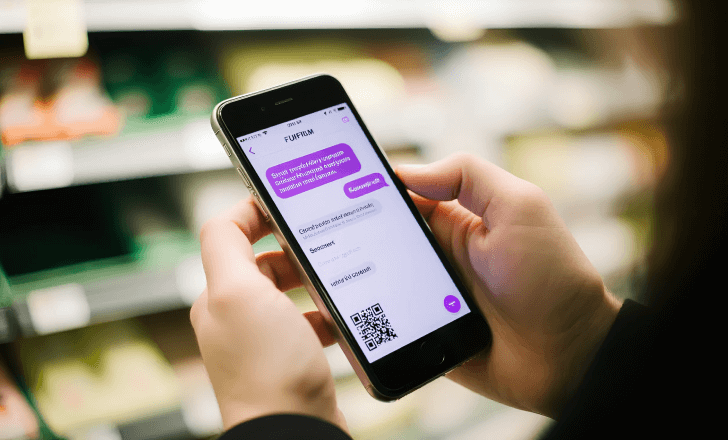



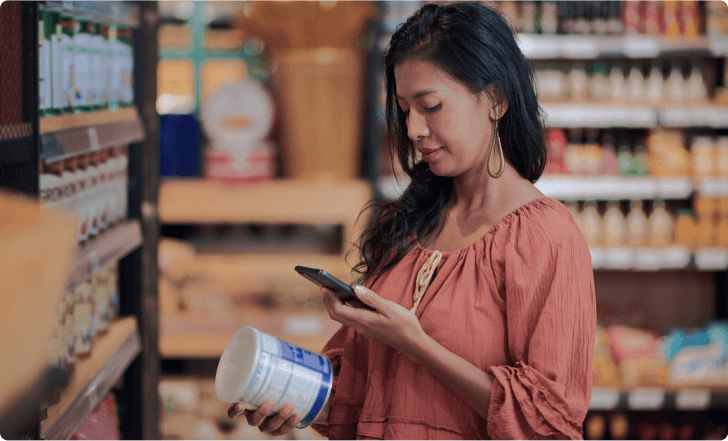

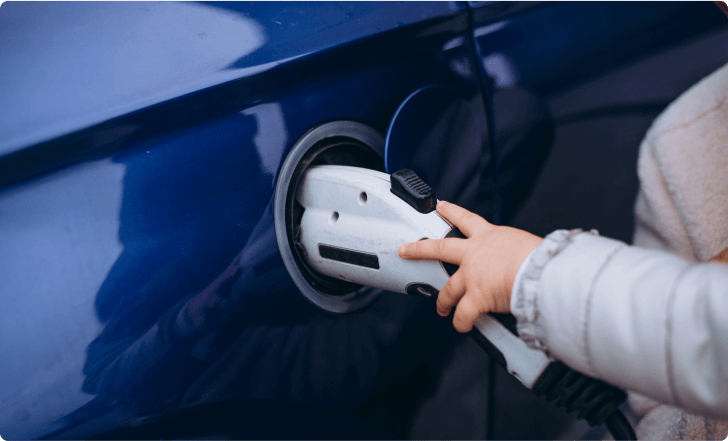
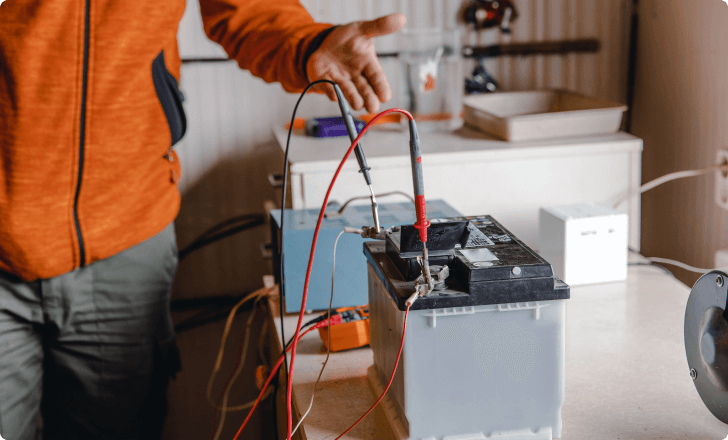
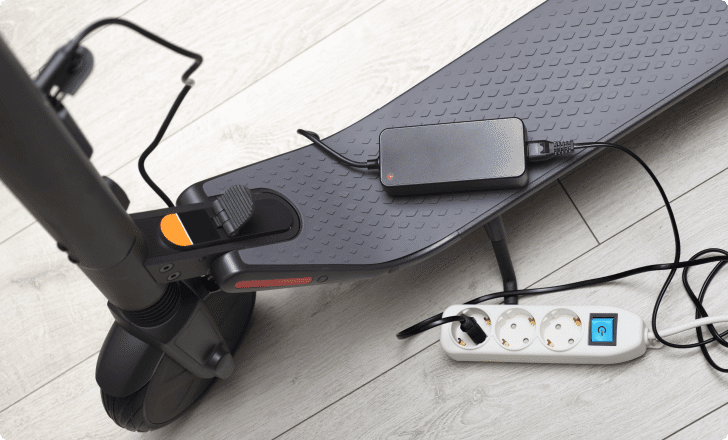

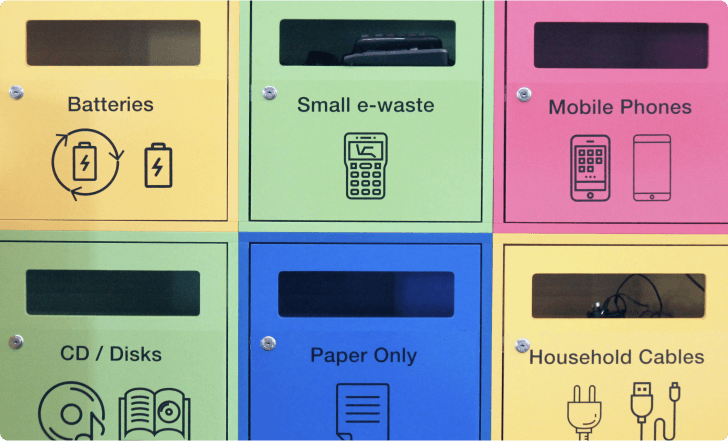

 ## Do the CEN standards tell me what data my product needs?
No. The CEN standards are horizontal, so they define how a passport works, not which data your product must carry. What a specific product has to disclose comes from its own sector rules, the delegated acts under the ESPR for product groups like textiles, batteries and electronics, not from EN 18216 to 18223.
## Do the CEN standards tell me what data my product needs?
No. The CEN standards are horizontal, so they define how a passport works, not which data your product must carry. What a specific product has to disclose comes from its own sector rules, the delegated acts under the ESPR for product groups like textiles, batteries and electronics, not from EN 18216 to 18223.
 This split is deliberate and useful. It means the framework is stable while the product requirements grow, so a system built to the standards today keeps working as new sectors are added. Our guides on the [product passport for textiles](/guides/product-passport-for-textiles/) and the [battery passport](/guides/battery-passport/) cover the sector data that sits on top of this framework.
## Why do the CEN standards matter for a brand?
The CEN standards matter because they turn the Digital Product Passport from a policy idea into something you can actually buy, build and trust. Before them, every vendor could interpret the rules differently. Now there is one shared definition of a compliant passport, which protects a brand in three ways.
- Presumption of conformity. Building to the harmonised standards is the recognised route to showing your passport meets the regulation, which reduces legal risk.
- No lock in. Because identifiers, carriers and interfaces are standardised, a passport is portable. You are not trapped in one vendor's private format.
- Future proofing. The framework is fixed while sector data expands, so the system you set up now does not need rebuilding each time a new rule arrives.
For a brand choosing how to comply, the practical takeaway is to pick tools that follow this family of standards rather than a private scheme. Our guide on [how to create a Digital Product Passport](/guides/how-to-create-a-digital-product-passport/) walks through the setup, and the [European DPP registry](/guides/european-dpp-registry/) guide covers where the identifiers are registered.
## How does GS1 Digital Link fit the CEN standards?
GS1 Digital Link fits directly into the identifier and data carrier layers of the CEN standards, EN 18219 and EN 18220. A GS1 Digital Link QR code is a standardised, globally unique way to name a product and carry the link to its passport, which is exactly what those two standards ask for.
That alignment is the point. Because the same GS1 Digital Link code is both a retail barcode and a passport carrier, a brand can meet the identifier and carrier requirements of the standards with one code on the pack, then let the passport data behind it grow as sector rules arrive. The code stays the same while the system around it fills in.
## Frequently asked questions
### How many CEN DPP standards are there?
Six core standards are published, numbered across the EN 18216 to 18223 range: EN 18216, EN 18219, EN 18220, EN 18221, EN 18222 and EN 18223. Two further standards on security and data authentication are being finalised.
### When were the CEN DPP standards published?
The six core standards were published on 27 May 2026 and cited as harmonised standards in the Official Journal of the European Union on 15 July 2026.
### Are the CEN standards mandatory?
The standards themselves are voluntary, but building to them gives a presumption of conformity with the Digital Product Passport requirements of the ESPR, which makes them the recognised way to show a passport is compliant.
### Do the CEN standards replace my sector's rules?
No. They define the shared framework for how a passport works. The data your specific product must carry still comes from the delegated act for your product group under the ESPR.
---
## Conversational packaging: Smart AI labels explained
URL: https://digital-link.com/guides/conversational-packaging/
Conversational packaging transforms labels into AI-powered channels for communication, sales, and customer engagement. Discover how it works.
This split is deliberate and useful. It means the framework is stable while the product requirements grow, so a system built to the standards today keeps working as new sectors are added. Our guides on the [product passport for textiles](/guides/product-passport-for-textiles/) and the [battery passport](/guides/battery-passport/) cover the sector data that sits on top of this framework.
## Why do the CEN standards matter for a brand?
The CEN standards matter because they turn the Digital Product Passport from a policy idea into something you can actually buy, build and trust. Before them, every vendor could interpret the rules differently. Now there is one shared definition of a compliant passport, which protects a brand in three ways.
- Presumption of conformity. Building to the harmonised standards is the recognised route to showing your passport meets the regulation, which reduces legal risk.
- No lock in. Because identifiers, carriers and interfaces are standardised, a passport is portable. You are not trapped in one vendor's private format.
- Future proofing. The framework is fixed while sector data expands, so the system you set up now does not need rebuilding each time a new rule arrives.
For a brand choosing how to comply, the practical takeaway is to pick tools that follow this family of standards rather than a private scheme. Our guide on [how to create a Digital Product Passport](/guides/how-to-create-a-digital-product-passport/) walks through the setup, and the [European DPP registry](/guides/european-dpp-registry/) guide covers where the identifiers are registered.
## How does GS1 Digital Link fit the CEN standards?
GS1 Digital Link fits directly into the identifier and data carrier layers of the CEN standards, EN 18219 and EN 18220. A GS1 Digital Link QR code is a standardised, globally unique way to name a product and carry the link to its passport, which is exactly what those two standards ask for.
That alignment is the point. Because the same GS1 Digital Link code is both a retail barcode and a passport carrier, a brand can meet the identifier and carrier requirements of the standards with one code on the pack, then let the passport data behind it grow as sector rules arrive. The code stays the same while the system around it fills in.
## Frequently asked questions
### How many CEN DPP standards are there?
Six core standards are published, numbered across the EN 18216 to 18223 range: EN 18216, EN 18219, EN 18220, EN 18221, EN 18222 and EN 18223. Two further standards on security and data authentication are being finalised.
### When were the CEN DPP standards published?
The six core standards were published on 27 May 2026 and cited as harmonised standards in the Official Journal of the European Union on 15 July 2026.
### Are the CEN standards mandatory?
The standards themselves are voluntary, but building to them gives a presumption of conformity with the Digital Product Passport requirements of the ESPR, which makes them the recognised way to show a passport is compliant.
### Do the CEN standards replace my sector's rules?
No. They define the shared framework for how a passport works. The data your specific product must carry still comes from the delegated act for your product group under the ESPR.
---
## Conversational packaging: Smart AI labels explained
URL: https://digital-link.com/guides/conversational-packaging/
Conversational packaging transforms labels into AI-powered channels for communication, sales, and customer engagement. Discover how it works.


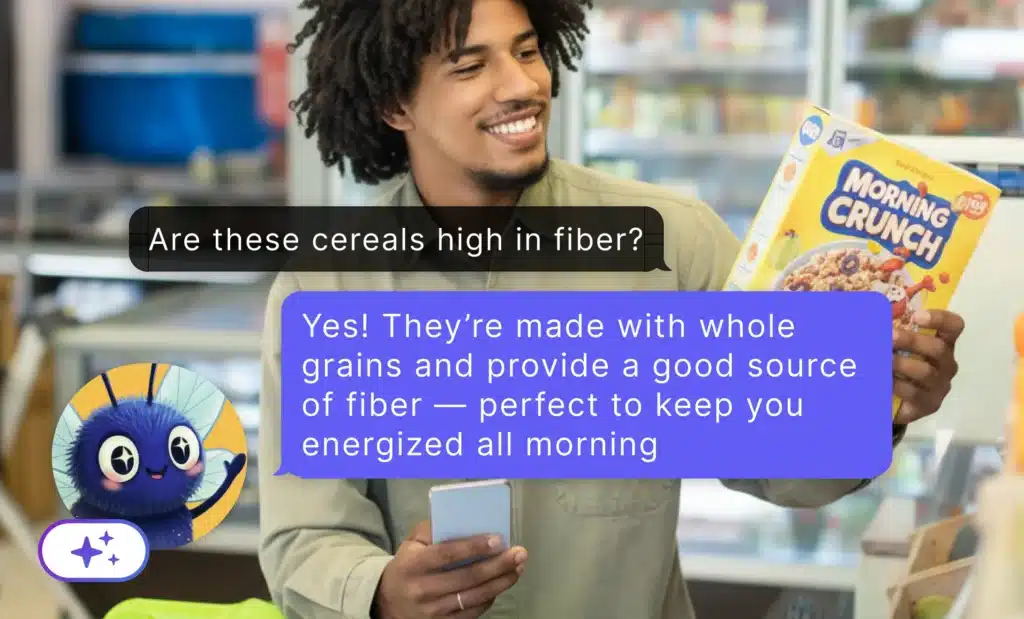
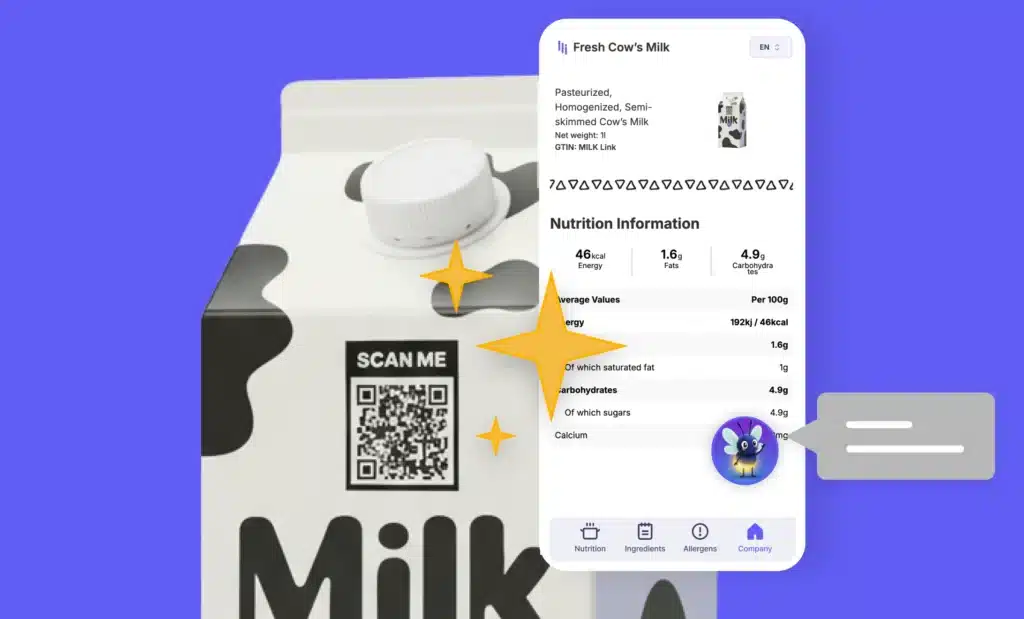

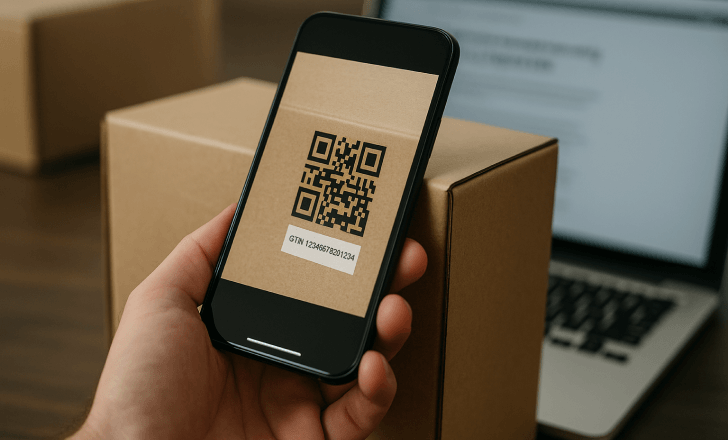
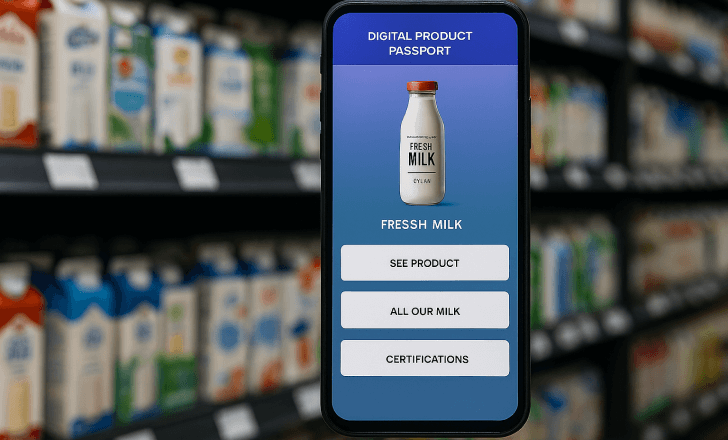
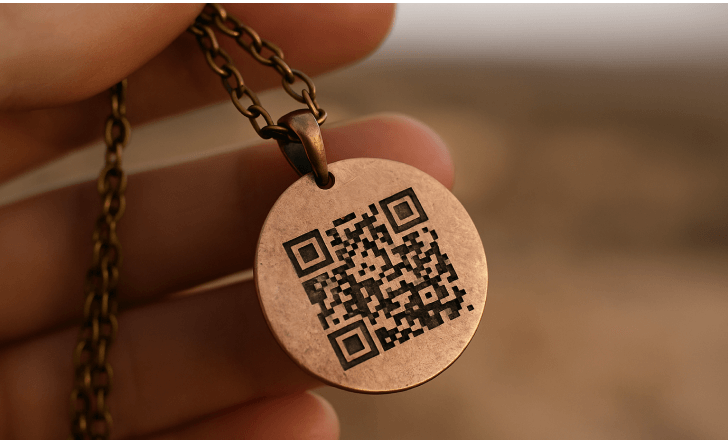

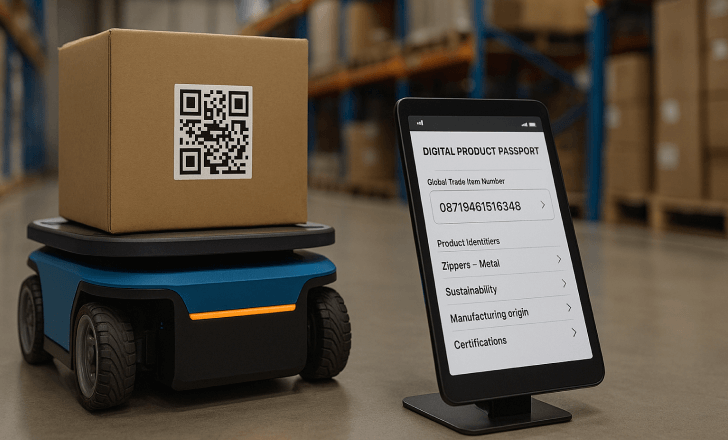


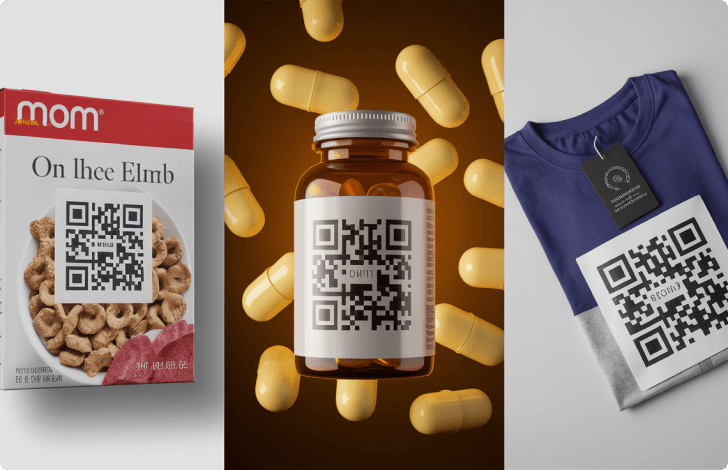






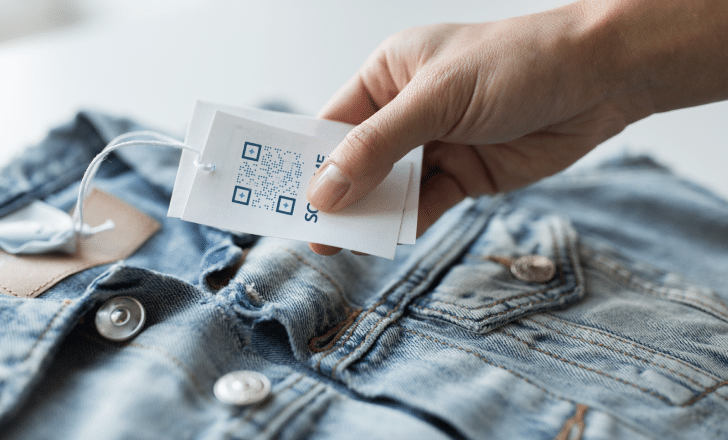




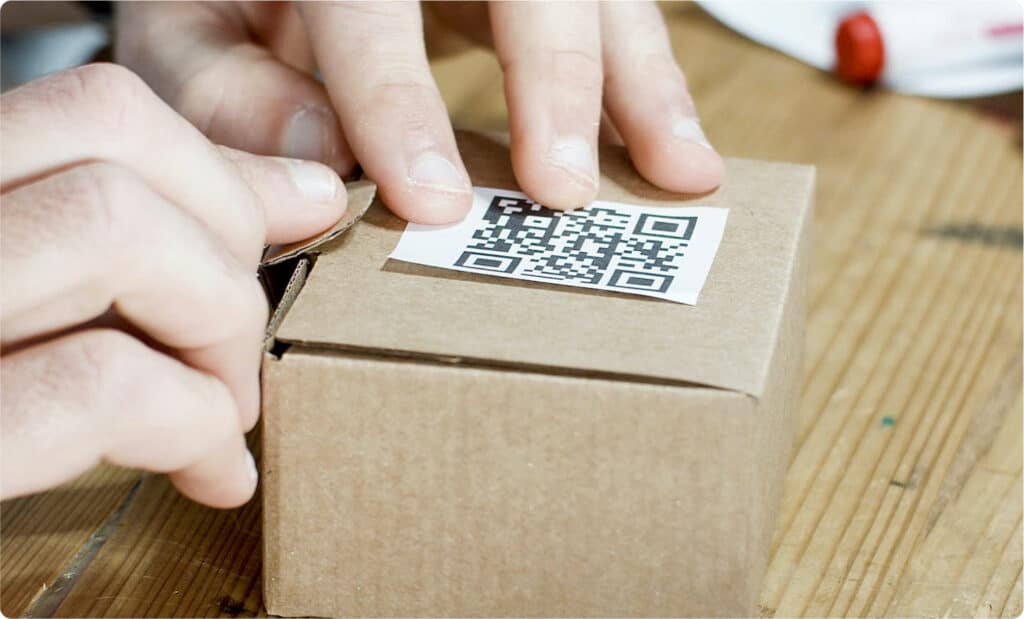

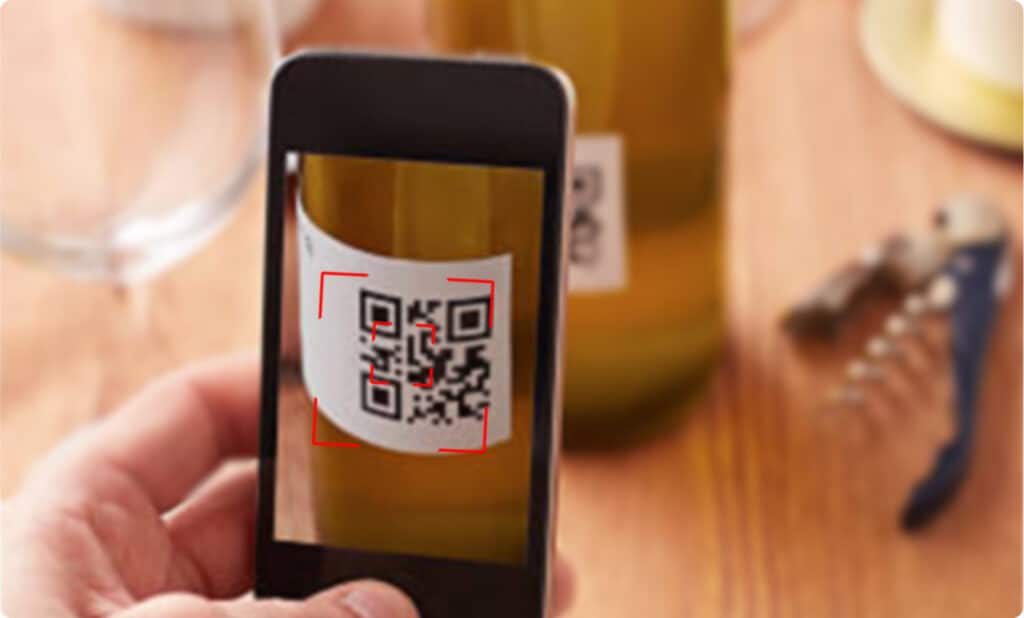
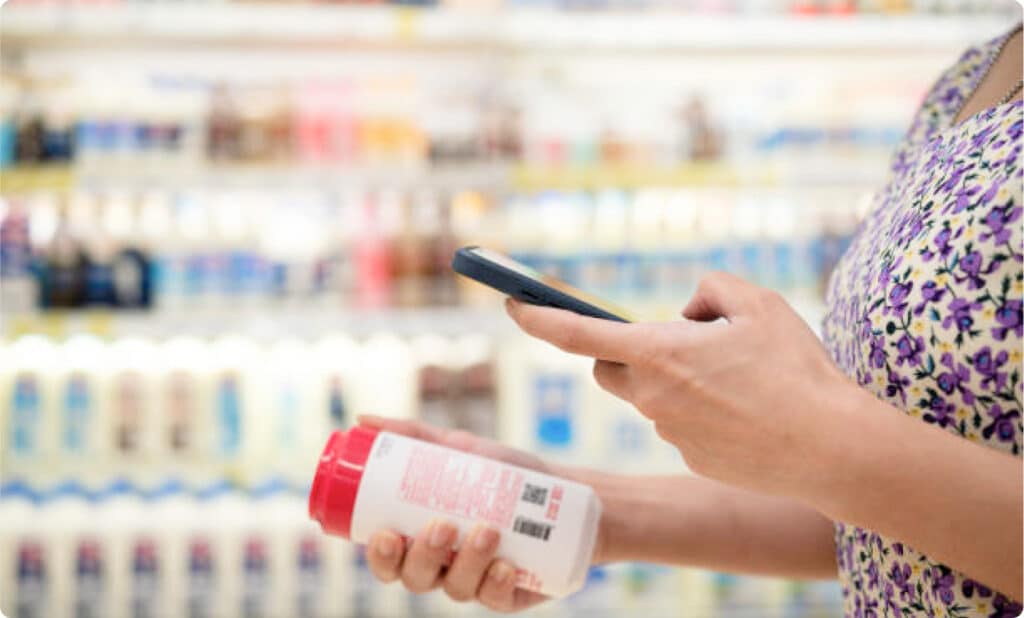
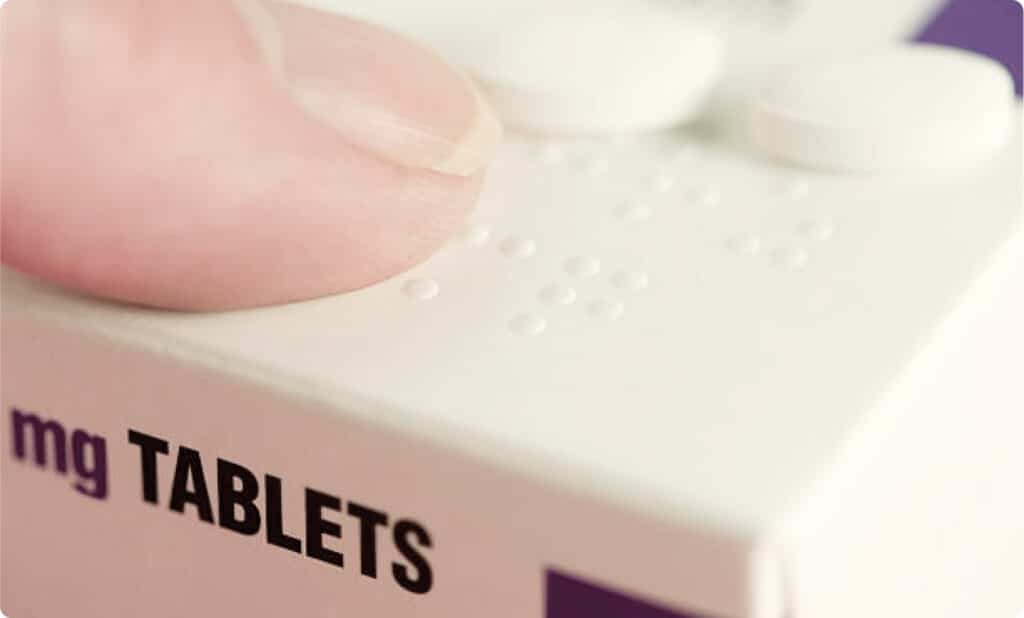

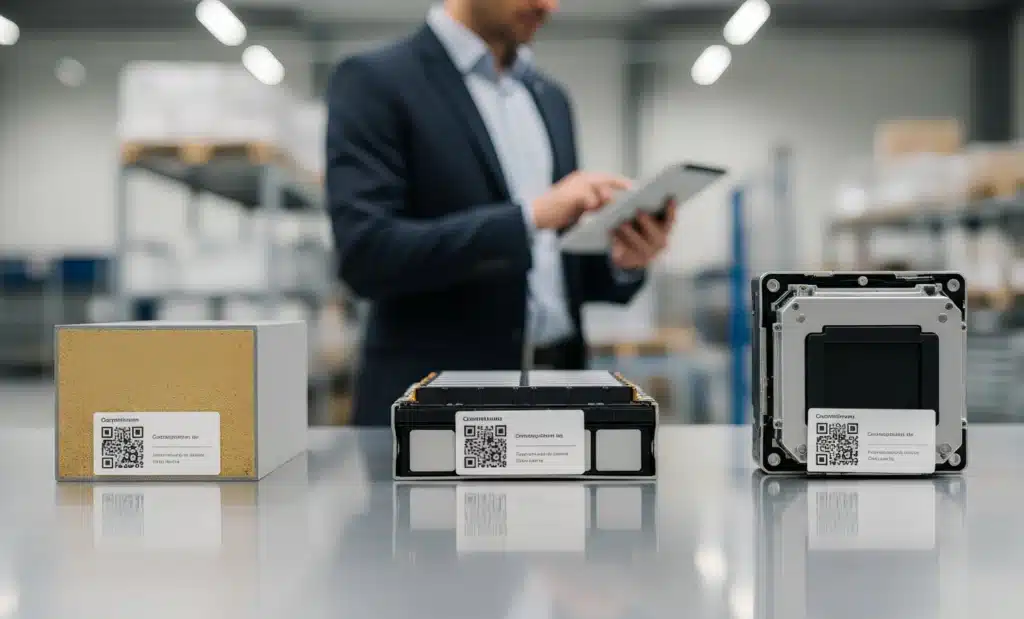




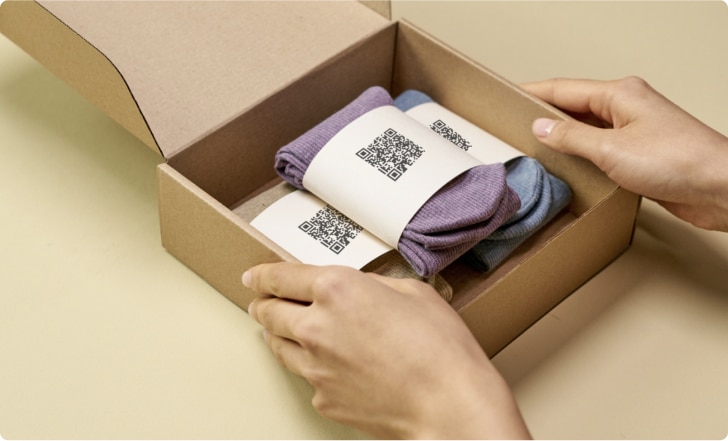



 The identifiers the registry resolves are expected to follow [established standards](/guides/cen-dpp-standards/). [GS1 Digital Link](/guides/gs1-digital-link-basics/) is a relevant and widely used standard for web resolvable product identifiers and can support DPP readiness. That matters for preparation, and we come back to it below.
## What is the registry not?
Most confusion around the registry comes from assuming it is a giant database of product data. It is not. Clearing up the misconceptions early saves compliance teams real time:
- It is not a central database holding all product data. The model is federated: data stays with manufacturers and their providers.
- It is not a system you upload passport contents to. You register the data the applicable legislation requires, such as identifiers and links to the hosted passport.
- It is not a mandate that starts registration on 19 July 2026 for all products. Registration duties arrive sector by sector through delegated acts.
- It is not the consumer facing passport page. What a shopper sees after scanning lives on the passport itself, not in the registry.
If a briefing or a sales pitch contradicts any of these points, ask for the legal source. Article 13 of the ESPR is short and unambiguous on the registry's function.
## What is the legal basis for the registry?
Article 13 of the Ecodesign for Sustainable Products Regulation, [Regulation (EU) 2024/1781](https://eur-lex.europa.eu/legal-content/EN/TXT/?uri=CELEX:32024R1781), in force since 18 July 2024, requires the European Commission to set up a digital registry for Digital Product Passports by 19 July 2026. The obligation sits with the Commission. Manufacturers are not addressed by that date.
The implementing acts defining the registry's technical specifications are still pending adoption as of mid 2026. This is normal sequencing in EU law: the framework regulation sets the deadline and the function, and implementing acts fill in the technical detail. The registry has to be operational before the first delegated acts imposing DPP requirements take effect, which is precisely why the Commission's deadline lands ahead of any sector obligation.
The European Commission has also published its first official [FAQ on the Digital Product Passport](https://single-market-economy.ec.europa.eu/single-market/digital-product-passport_en) under the ESPR, currently the most reliable public reference on how the Commission itself interprets the registry's role.
## Who does the 19 July 2026 deadline actually affect?
The 19 July 2026 deadline affects the European Commission, which must deliver the registry infrastructure by that date. For almost everyone else it changes nothing on that day. What it does is start the clock for the sectors that follow.
Battery manufacturers are first in line. LMT batteries, industrial batteries over 2 kWh, and EV batteries must carry a battery passport from 18 February 2027 under Article 77 of the EU Battery Regulation, [Regulation (EU) 2023/1542](https://eur-lex.europa.eu/legal-content/EN/TXT/?uri=CELEX:32023R1542). They will be the first category to use the registry at scale, and their preparation is already underway. Not all batteries are covered: ordinary portable batteries may carry QR and information obligations under the Battery Regulation, but the full [battery passport](/guides/battery-passport/) under Article 77 applies only to EV, LMT, and industrial batteries over 2 kWh.
Iron and steel come next as a prioritised sector. The ESPR Working Plan for 2025 to 2030, adopted on 16 April 2025, includes iron and steel as an intermediate product group, with preparatory work underway in 2026. Textiles are another prioritised sector, with preparatory work pointing to the 2027 to 2028 window. In both cases, binding obligations depend on future delegated acts and their application dates.
For every other category, the registry becoming operational is background news. There is no immediate duty. The practical task is watching the delegated act calendar for your sector, because that calendar, not 19 July, defines your real deadline.
## How does the registry work in practice?
When a scan happens, or when a market surveillance authority queries a product, the registry resolves the product identifier to the location where the passport is hosted. The contents are then served from the manufacturer's or provider's platform, with access tiers separating what a consumer sees, what an economic operator sees, and what a regulator sees.
The identifiers the registry resolves are expected to follow [established standards](/guides/cen-dpp-standards/). [GS1 Digital Link](/guides/gs1-digital-link-basics/) is a relevant and widely used standard for web resolvable product identifiers and can support DPP readiness. That matters for preparation, and we come back to it below.
## What is the registry not?
Most confusion around the registry comes from assuming it is a giant database of product data. It is not. Clearing up the misconceptions early saves compliance teams real time:
- It is not a central database holding all product data. The model is federated: data stays with manufacturers and their providers.
- It is not a system you upload passport contents to. You register the data the applicable legislation requires, such as identifiers and links to the hosted passport.
- It is not a mandate that starts registration on 19 July 2026 for all products. Registration duties arrive sector by sector through delegated acts.
- It is not the consumer facing passport page. What a shopper sees after scanning lives on the passport itself, not in the registry.
If a briefing or a sales pitch contradicts any of these points, ask for the legal source. Article 13 of the ESPR is short and unambiguous on the registry's function.
## What is the legal basis for the registry?
Article 13 of the Ecodesign for Sustainable Products Regulation, [Regulation (EU) 2024/1781](https://eur-lex.europa.eu/legal-content/EN/TXT/?uri=CELEX:32024R1781), in force since 18 July 2024, requires the European Commission to set up a digital registry for Digital Product Passports by 19 July 2026. The obligation sits with the Commission. Manufacturers are not addressed by that date.
The implementing acts defining the registry's technical specifications are still pending adoption as of mid 2026. This is normal sequencing in EU law: the framework regulation sets the deadline and the function, and implementing acts fill in the technical detail. The registry has to be operational before the first delegated acts imposing DPP requirements take effect, which is precisely why the Commission's deadline lands ahead of any sector obligation.
The European Commission has also published its first official [FAQ on the Digital Product Passport](https://single-market-economy.ec.europa.eu/single-market/digital-product-passport_en) under the ESPR, currently the most reliable public reference on how the Commission itself interprets the registry's role.
## Who does the 19 July 2026 deadline actually affect?
The 19 July 2026 deadline affects the European Commission, which must deliver the registry infrastructure by that date. For almost everyone else it changes nothing on that day. What it does is start the clock for the sectors that follow.
Battery manufacturers are first in line. LMT batteries, industrial batteries over 2 kWh, and EV batteries must carry a battery passport from 18 February 2027 under Article 77 of the EU Battery Regulation, [Regulation (EU) 2023/1542](https://eur-lex.europa.eu/legal-content/EN/TXT/?uri=CELEX:32023R1542). They will be the first category to use the registry at scale, and their preparation is already underway. Not all batteries are covered: ordinary portable batteries may carry QR and information obligations under the Battery Regulation, but the full [battery passport](/guides/battery-passport/) under Article 77 applies only to EV, LMT, and industrial batteries over 2 kWh.
Iron and steel come next as a prioritised sector. The ESPR Working Plan for 2025 to 2030, adopted on 16 April 2025, includes iron and steel as an intermediate product group, with preparatory work underway in 2026. Textiles are another prioritised sector, with preparatory work pointing to the 2027 to 2028 window. In both cases, binding obligations depend on future delegated acts and their application dates.
For every other category, the registry becoming operational is background news. There is no immediate duty. The practical task is watching the delegated act calendar for your sector, because that calendar, not 19 July, defines your real deadline.
## How does the registry work in practice?
When a scan happens, or when a market surveillance authority queries a product, the registry resolves the product identifier to the location where the passport is hosted. The contents are then served from the manufacturer's or provider's platform, with access tiers separating what a consumer sees, what an economic operator sees, and what a regulator sees.
 Registration itself is expected to happen largely through the manufacturer's DPP platform rather than by hand. The economic operator submits the unique product identifier, the URL where the passport is hosted, its own operator identifier, and the identifier of a backup provider. The registry returns a unique registration identifier confirming the entry.
The cleanest way to hold the distinction in mind:
| | Registry | Digital Product Passport |
|---|---|---|
| Role | Phone book | The conversation |
| Holds | Key registration data, identifiers and references | The full product data |
| Operated by | European Commission | Manufacturer or its DPP provider |
That separation is the whole design. The Commission indexes; industry hosts.
## When does each product category need a DPP?
There is no single DPP deadline. Each sector gets its own date through a delegated act or, in the case of batteries, through its own regulation. The current public picture:
- Batteries (LMT, industrial over 2 kWh, EV): mandatory from 18 February 2027 under Regulation (EU) 2023/1542, Article 77.
- Iron and steel: prioritised sector under the ESPR Working Plan, with preparatory work in 2026 and a planning horizon around 2027.
- Textiles: prioritised sector, planning horizon 2027 to 2028.
- Tyres and aluminium: prioritised sectors, planning horizon 2027 to 2028.
- Furniture and mattresses: planning horizon 2028 to 2030 and beyond. Electronics remain an area to monitor under future ESPR developments, with no confirmed mandatory DPP deadline as a general category.
Beyond batteries, these are planning horizons, not confirmed legal deadlines. Binding obligations depend on future delegated acts and their application dates, so treat the calendar as preparatory guidance and verify it against the Official Journal when your sector's act publishes. Separately, other sector specific EU rules already include DPP obligations or DPP related regimes, including construction products, toys, and detergents and surfactants, each with its own timeline.
## Which other EU rules land in the same window?
Two separate obligations arrive in the same news cycle and are easy to confuse with the registry setup. Neither is a consequence of the registry becoming operational.
- The destruction ban on unsold apparel, clothing accessories and footwear applies to large companies from 19 July 2026, the same day as the registry setup deadline, but under a different ESPR provision with different obligations.
- The Right to Repair Directive, [Directive (EU) 2024/1799](https://eur-lex.europa.eu/legal-content/EN/TXT/?uri=CELEX:32024L1799), follows its own legal basis: member states must transpose and apply its rules by 31 July 2026, twelve days after the registry setup date.
If a headline this July mentions all three, remember they share a date range, not a mechanism.
## How can manufacturers prepare in 2026?
Preparation in 2026 is about data, not registration. Start by confirming whether your product category is in scope for a near term delegated act. If you make batteries or steel, your timeline is real. If you make furniture, you have years.
Then audit your identifiers. GS1 Digital Link is a relevant and widely used standard for web resolvable product identifiers and can support DPP readiness, so your GTINs need to be accurate, unique and consistently applied across your catalogue. Identifier hygiene is the single most transferable investment you can make now, because it pays off regardless of when your delegated act lands. Our guide on [how to create a Digital Product Passport](/guides/how-to-create-a-digital-product-passport/) covers the practical setup.
Choose a DPP platform that supports GS1 Digital Link and can integrate with the central registry once the implementing acts publish. Digital Link is one of the platforms built around this federated model: manufacturers keep control of their DPP data, the platform resolves identifiers under the GS1 Digital Link standard, and registry integration will be added when the implementing acts define the technical interface. Companies should also monitor the final registry rules on operator verification and access credentials, as these may affect onboarding.
One thing not to do: rush to register something on 19 July if your category is not yet in scope. There is nothing to register yet, and no advantage in trying.
## What could still change?
The implementing acts defining the registry's technical specifications are pending adoption as of mid 2026, and the Commission's timeline for implementing acts has slipped before. The registry setup deadline itself remains on track as of July 2026, with no publicly announced delay, but the technical detail may arrive close to or after the date itself.
Some delegated acts, notably textiles and iron and steel, may adjust their timelines during drafting. None of this changes the architecture described here: a federated index holding registration data, identifiers and references, with the full product data held by industry. The reliable places to follow developments are the [Official Journal of the EU](https://eur-lex.europa.eu/oj/direct-access.html), the Commission's ESPR pages, and the [Commission's DPP FAQ](https://single-market-economy.ec.europa.eu/single-market/digital-product-passport_en). If a date in this article changes, one of those three will say so first.
## Frequently asked questions
### Does 19 July 2026 mean I have to register my products?
No. The 19 July 2026 deadline in Article 13 of the ESPR obliges the European Commission to have the registry infrastructure set up. Registration duties for manufacturers begin later, sector by sector, when the relevant delegated act or regulation applies. For most products, no registration duty exists yet.
### Where does the DPP data actually live?
On the platform chosen by the manufacturer or its DPP service provider. The registry does not store the full passport data; it holds key registration data, unique identifiers and links or references required by the applicable legislation. This federated design keeps product data under the control of the economic operator, not the Commission.
### Which sector is affected first by the registry?
Batteries. LMT batteries, industrial batteries over 2 kWh, and EV batteries must carry a battery passport from 18 February 2027 under Article 77 of Regulation (EU) 2023/1542. They will be the first category registering identifiers at scale.
### What is the legal basis for the central DPP registry?
Article 13 of the Ecodesign for Sustainable Products Regulation, Regulation (EU) 2024/1781, in force since 18 July 2024. It mandates the Commission to establish the registry by 19 July 2026, with technical specifications defined through implementing acts.
### Do small businesses need to register their products?
Only when their product category falls under a delegated act that imposes DPP requirements, and from the date that act applies. Any SME specific measures will depend on the relevant sectoral act, so the answer depends on sector and timing rather than company size alone.
### How does GS1 Digital Link relate to the registry?
GS1 Digital Link is a relevant and widely used standard for web resolvable product identifiers and can support DPP readiness. It encodes a product's GTIN and related identifiers into a web resolvable link, which is what lets a scan resolve to the hosted passport. Platforms that implement the GS1 Digital Link standard are structurally aligned with how the registry is designed to work.
---
## GS1 digital link basics • Digital Link
URL: https://digital-link.com/guides/gs1-digital-link-basics/
What a GS1 digital link is, how it works and why to adopt it: the basics of moving from old barcodes to digital link QR codes, answered.
Registration itself is expected to happen largely through the manufacturer's DPP platform rather than by hand. The economic operator submits the unique product identifier, the URL where the passport is hosted, its own operator identifier, and the identifier of a backup provider. The registry returns a unique registration identifier confirming the entry.
The cleanest way to hold the distinction in mind:
| | Registry | Digital Product Passport |
|---|---|---|
| Role | Phone book | The conversation |
| Holds | Key registration data, identifiers and references | The full product data |
| Operated by | European Commission | Manufacturer or its DPP provider |
That separation is the whole design. The Commission indexes; industry hosts.
## When does each product category need a DPP?
There is no single DPP deadline. Each sector gets its own date through a delegated act or, in the case of batteries, through its own regulation. The current public picture:
- Batteries (LMT, industrial over 2 kWh, EV): mandatory from 18 February 2027 under Regulation (EU) 2023/1542, Article 77.
- Iron and steel: prioritised sector under the ESPR Working Plan, with preparatory work in 2026 and a planning horizon around 2027.
- Textiles: prioritised sector, planning horizon 2027 to 2028.
- Tyres and aluminium: prioritised sectors, planning horizon 2027 to 2028.
- Furniture and mattresses: planning horizon 2028 to 2030 and beyond. Electronics remain an area to monitor under future ESPR developments, with no confirmed mandatory DPP deadline as a general category.
Beyond batteries, these are planning horizons, not confirmed legal deadlines. Binding obligations depend on future delegated acts and their application dates, so treat the calendar as preparatory guidance and verify it against the Official Journal when your sector's act publishes. Separately, other sector specific EU rules already include DPP obligations or DPP related regimes, including construction products, toys, and detergents and surfactants, each with its own timeline.
## Which other EU rules land in the same window?
Two separate obligations arrive in the same news cycle and are easy to confuse with the registry setup. Neither is a consequence of the registry becoming operational.
- The destruction ban on unsold apparel, clothing accessories and footwear applies to large companies from 19 July 2026, the same day as the registry setup deadline, but under a different ESPR provision with different obligations.
- The Right to Repair Directive, [Directive (EU) 2024/1799](https://eur-lex.europa.eu/legal-content/EN/TXT/?uri=CELEX:32024L1799), follows its own legal basis: member states must transpose and apply its rules by 31 July 2026, twelve days after the registry setup date.
If a headline this July mentions all three, remember they share a date range, not a mechanism.
## How can manufacturers prepare in 2026?
Preparation in 2026 is about data, not registration. Start by confirming whether your product category is in scope for a near term delegated act. If you make batteries or steel, your timeline is real. If you make furniture, you have years.
Then audit your identifiers. GS1 Digital Link is a relevant and widely used standard for web resolvable product identifiers and can support DPP readiness, so your GTINs need to be accurate, unique and consistently applied across your catalogue. Identifier hygiene is the single most transferable investment you can make now, because it pays off regardless of when your delegated act lands. Our guide on [how to create a Digital Product Passport](/guides/how-to-create-a-digital-product-passport/) covers the practical setup.
Choose a DPP platform that supports GS1 Digital Link and can integrate with the central registry once the implementing acts publish. Digital Link is one of the platforms built around this federated model: manufacturers keep control of their DPP data, the platform resolves identifiers under the GS1 Digital Link standard, and registry integration will be added when the implementing acts define the technical interface. Companies should also monitor the final registry rules on operator verification and access credentials, as these may affect onboarding.
One thing not to do: rush to register something on 19 July if your category is not yet in scope. There is nothing to register yet, and no advantage in trying.
## What could still change?
The implementing acts defining the registry's technical specifications are pending adoption as of mid 2026, and the Commission's timeline for implementing acts has slipped before. The registry setup deadline itself remains on track as of July 2026, with no publicly announced delay, but the technical detail may arrive close to or after the date itself.
Some delegated acts, notably textiles and iron and steel, may adjust their timelines during drafting. None of this changes the architecture described here: a federated index holding registration data, identifiers and references, with the full product data held by industry. The reliable places to follow developments are the [Official Journal of the EU](https://eur-lex.europa.eu/oj/direct-access.html), the Commission's ESPR pages, and the [Commission's DPP FAQ](https://single-market-economy.ec.europa.eu/single-market/digital-product-passport_en). If a date in this article changes, one of those three will say so first.
## Frequently asked questions
### Does 19 July 2026 mean I have to register my products?
No. The 19 July 2026 deadline in Article 13 of the ESPR obliges the European Commission to have the registry infrastructure set up. Registration duties for manufacturers begin later, sector by sector, when the relevant delegated act or regulation applies. For most products, no registration duty exists yet.
### Where does the DPP data actually live?
On the platform chosen by the manufacturer or its DPP service provider. The registry does not store the full passport data; it holds key registration data, unique identifiers and links or references required by the applicable legislation. This federated design keeps product data under the control of the economic operator, not the Commission.
### Which sector is affected first by the registry?
Batteries. LMT batteries, industrial batteries over 2 kWh, and EV batteries must carry a battery passport from 18 February 2027 under Article 77 of Regulation (EU) 2023/1542. They will be the first category registering identifiers at scale.
### What is the legal basis for the central DPP registry?
Article 13 of the Ecodesign for Sustainable Products Regulation, Regulation (EU) 2024/1781, in force since 18 July 2024. It mandates the Commission to establish the registry by 19 July 2026, with technical specifications defined through implementing acts.
### Do small businesses need to register their products?
Only when their product category falls under a delegated act that imposes DPP requirements, and from the date that act applies. Any SME specific measures will depend on the relevant sectoral act, so the answer depends on sector and timing rather than company size alone.
### How does GS1 Digital Link relate to the registry?
GS1 Digital Link is a relevant and widely used standard for web resolvable product identifiers and can support DPP readiness. It encodes a product's GTIN and related identifiers into a web resolvable link, which is what lets a scan resolve to the hosted passport. Platforms that implement the GS1 Digital Link standard are structurally aligned with how the registry is designed to work.
---
## GS1 digital link basics • Digital Link
URL: https://digital-link.com/guides/gs1-digital-link-basics/
What a GS1 digital link is, how it works and why to adopt it: the basics of moving from old barcodes to digital link QR codes, answered.
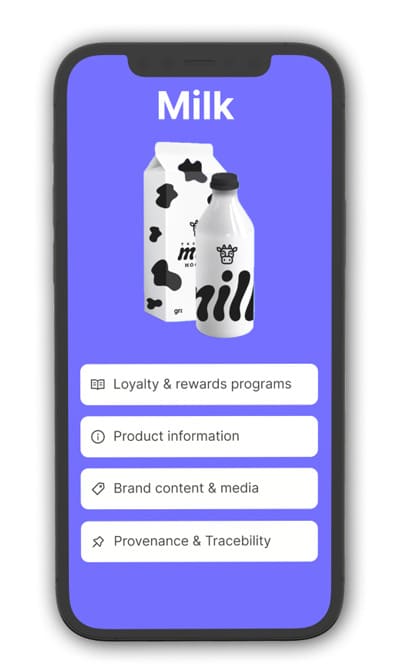

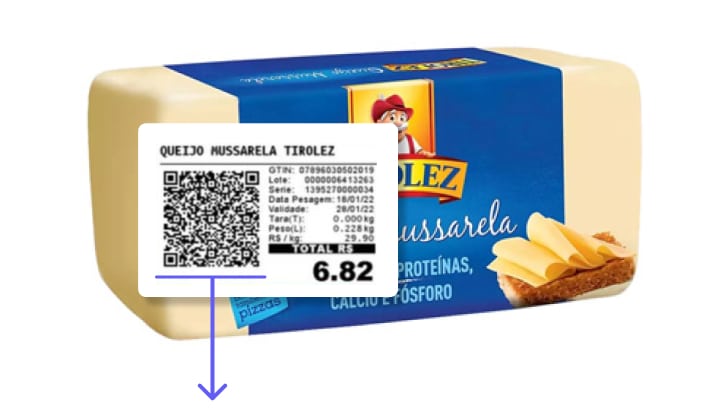
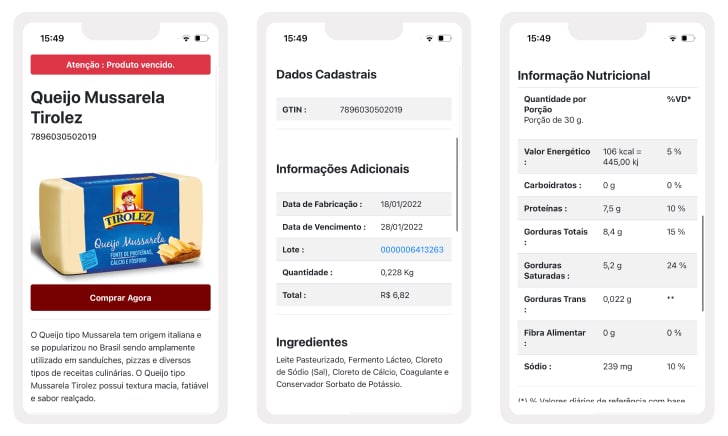
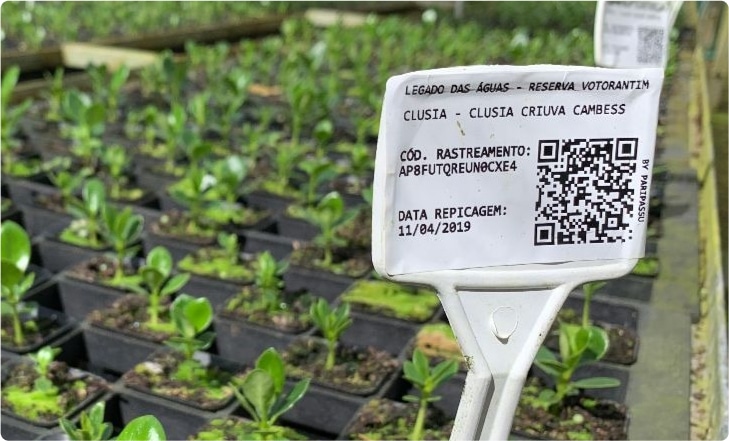

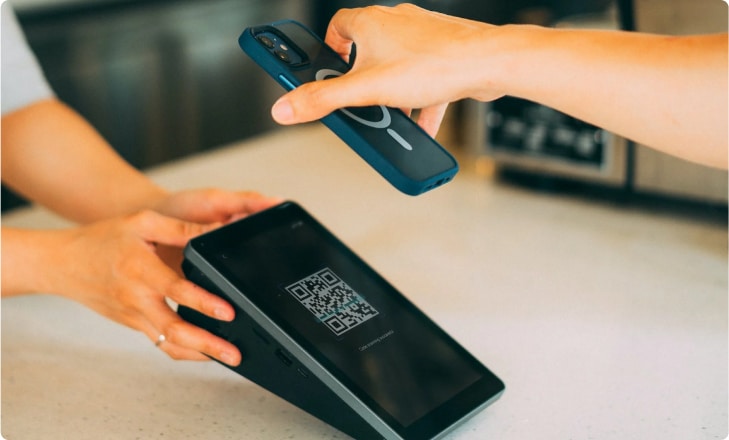




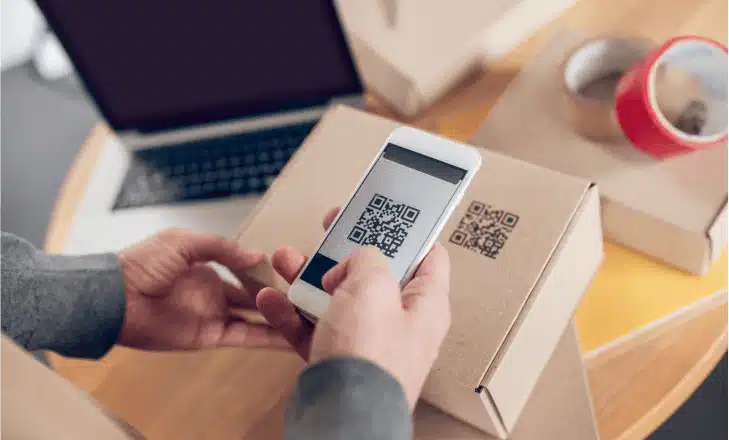
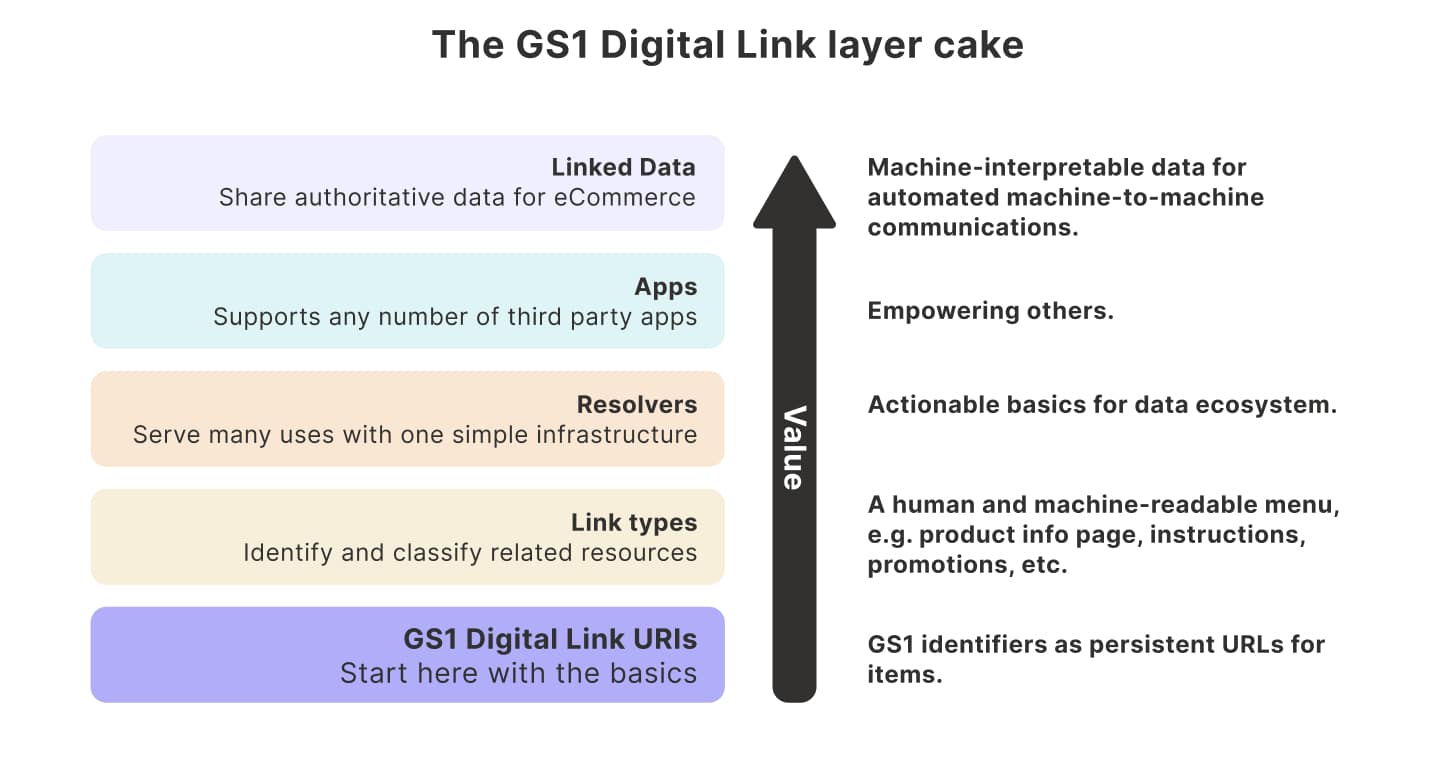
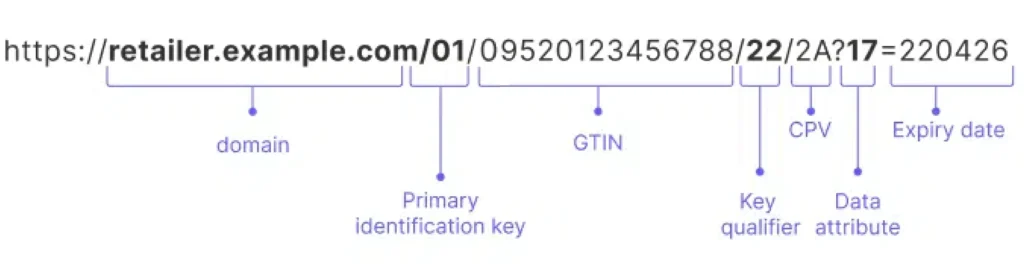
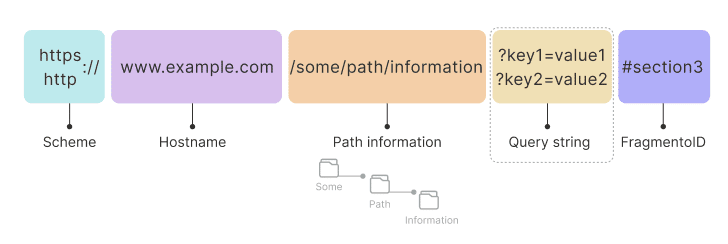
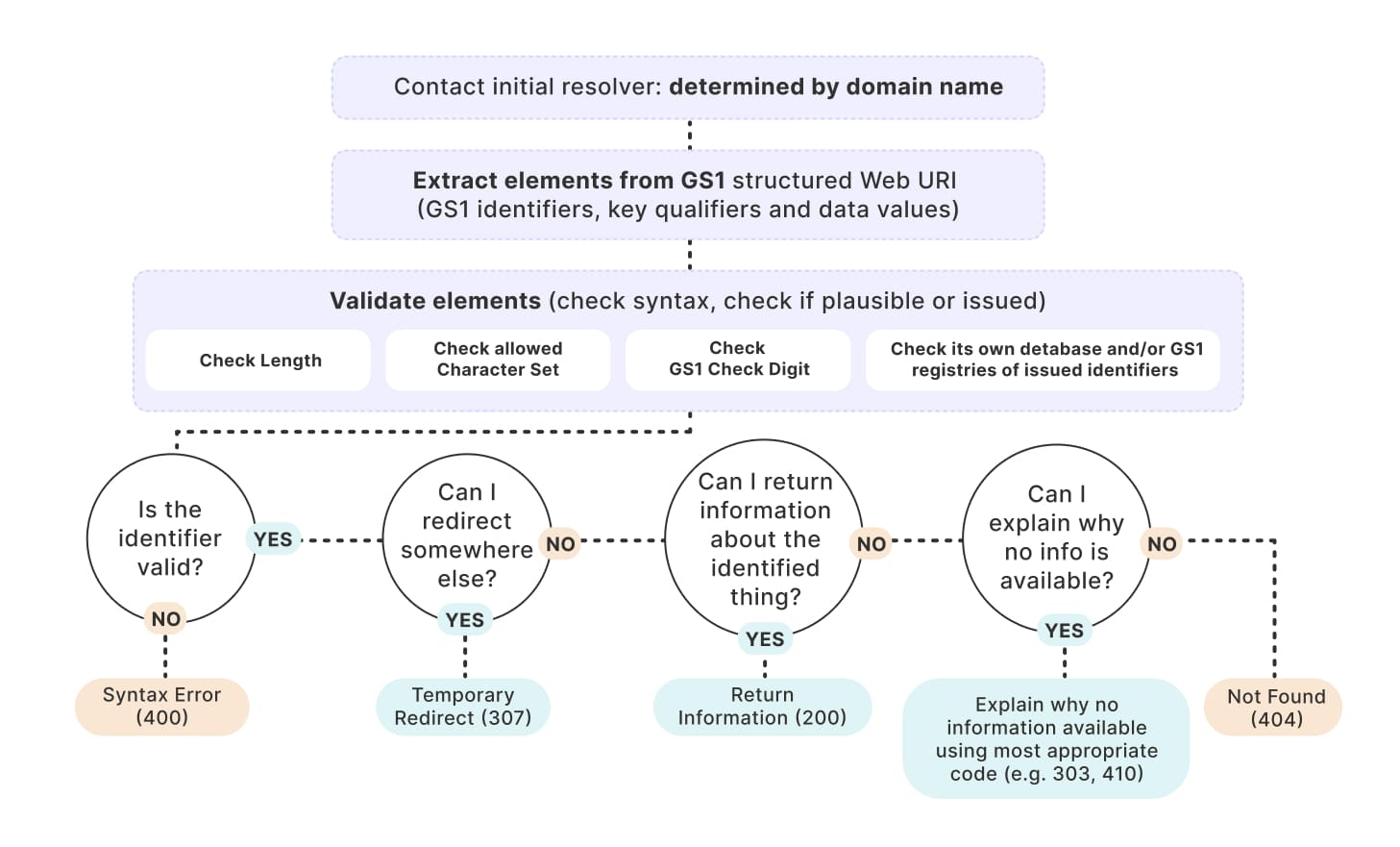
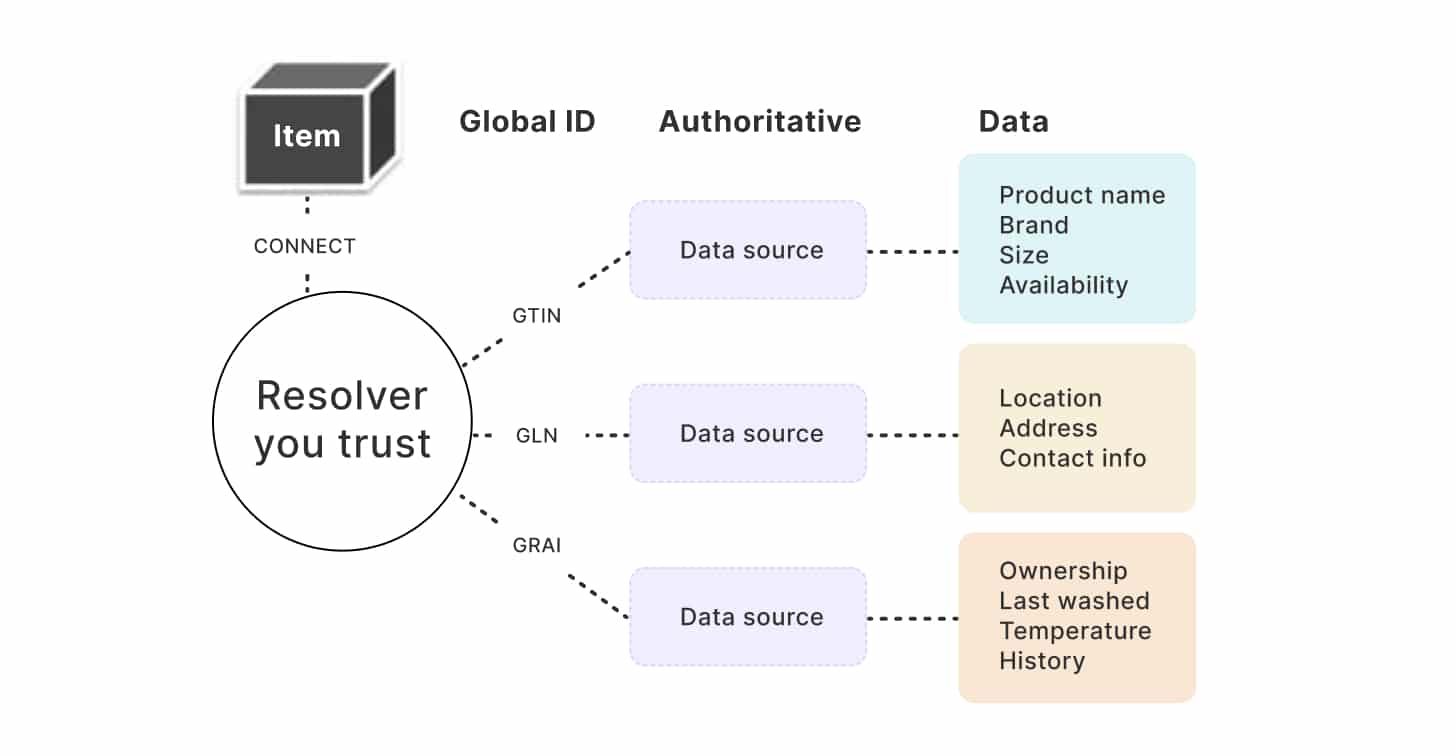
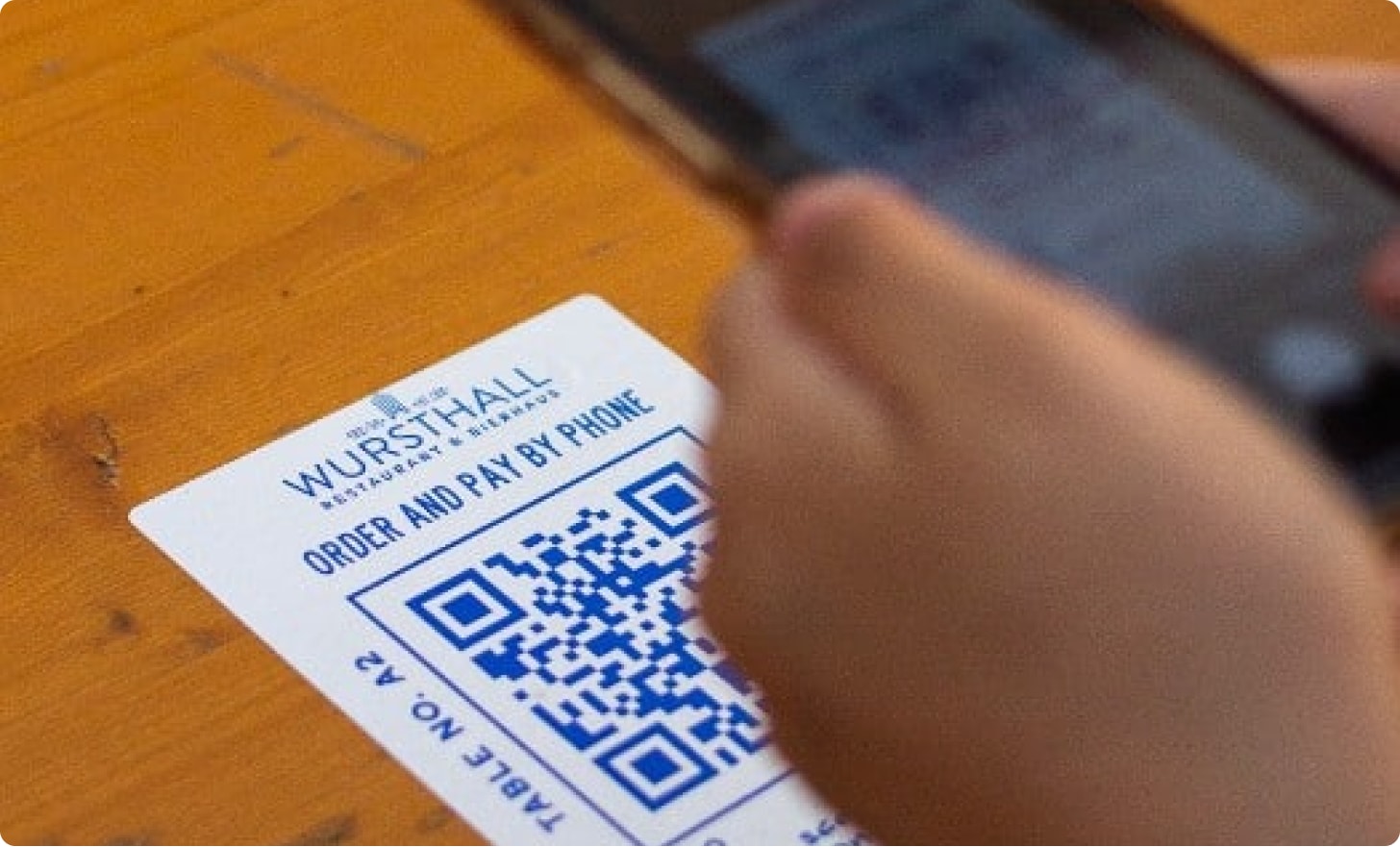
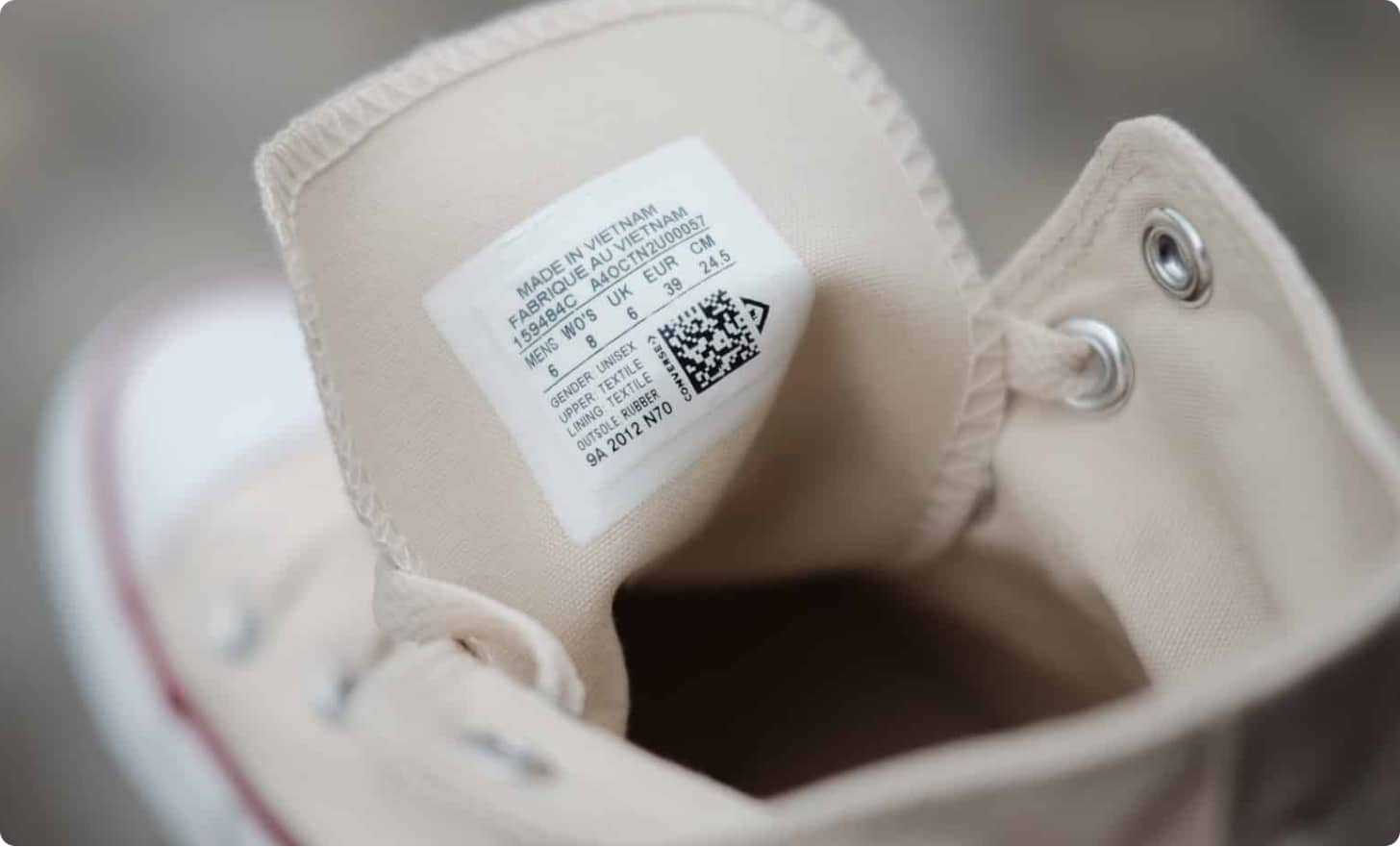
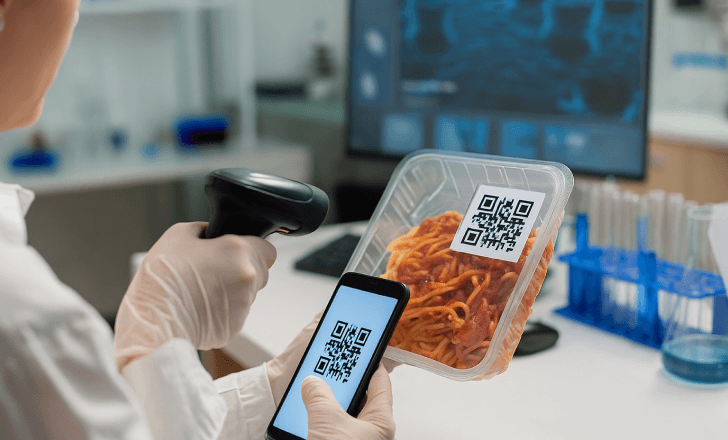
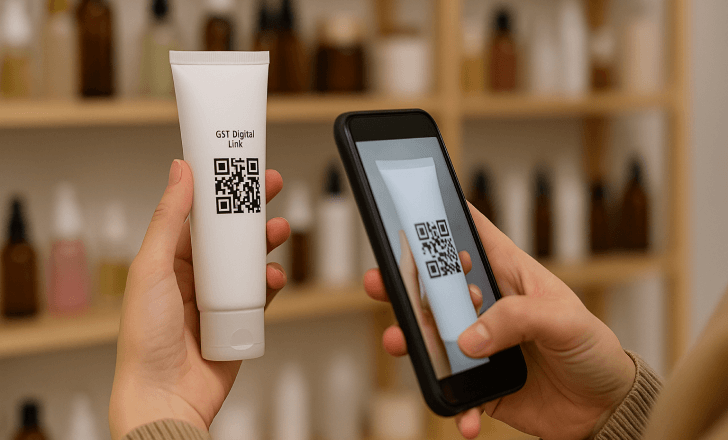
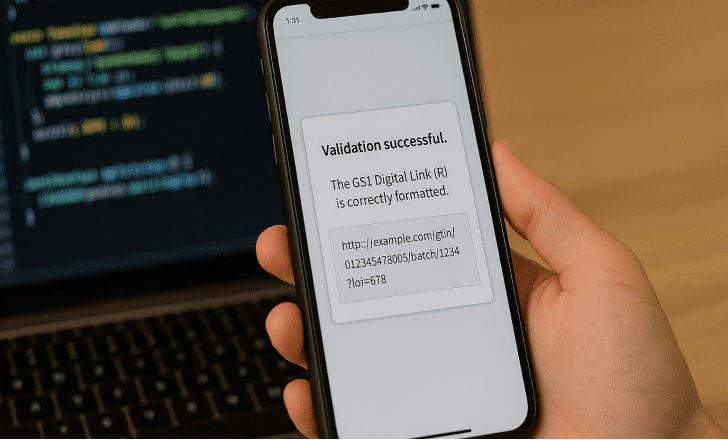

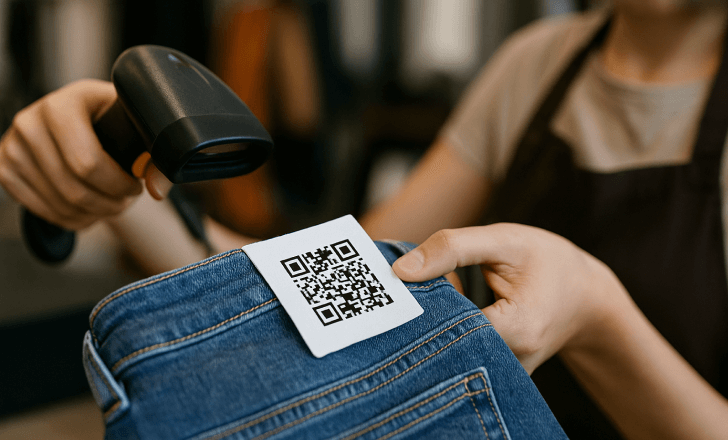
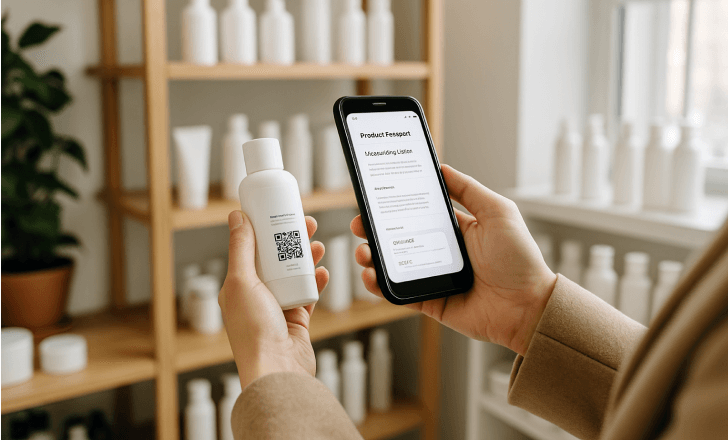
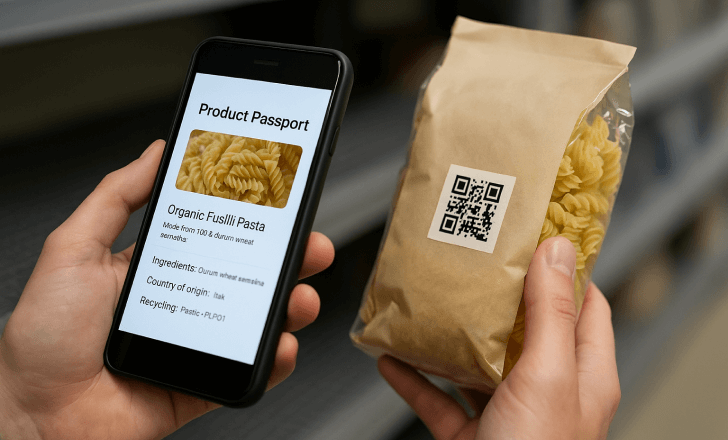
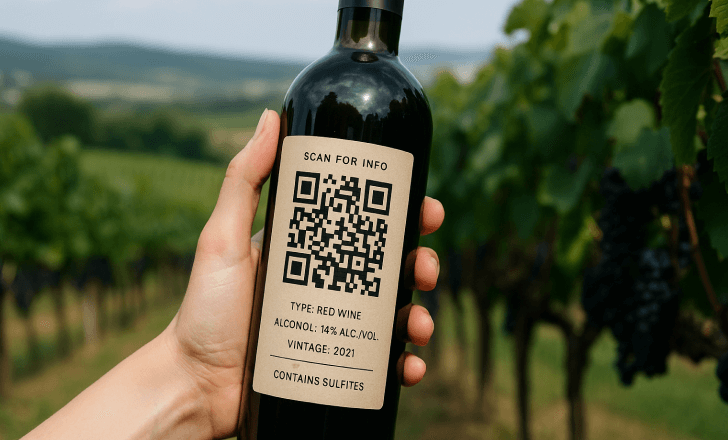
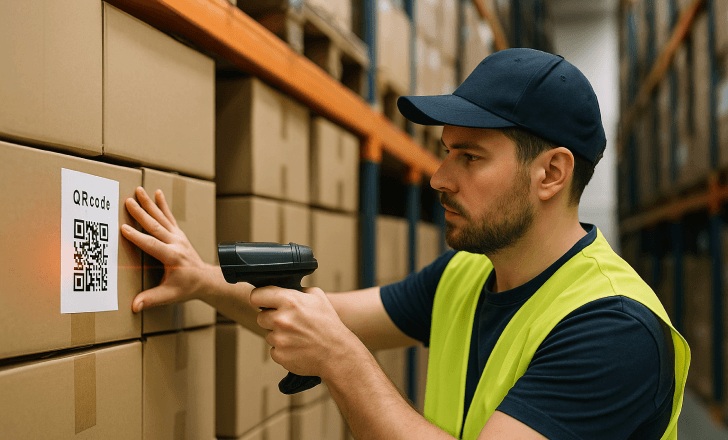
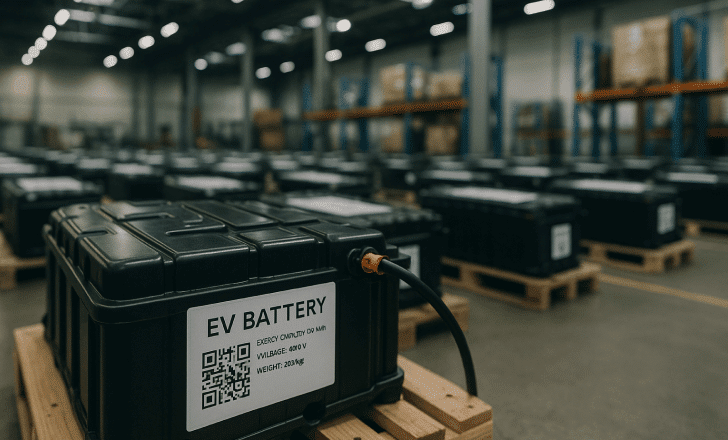
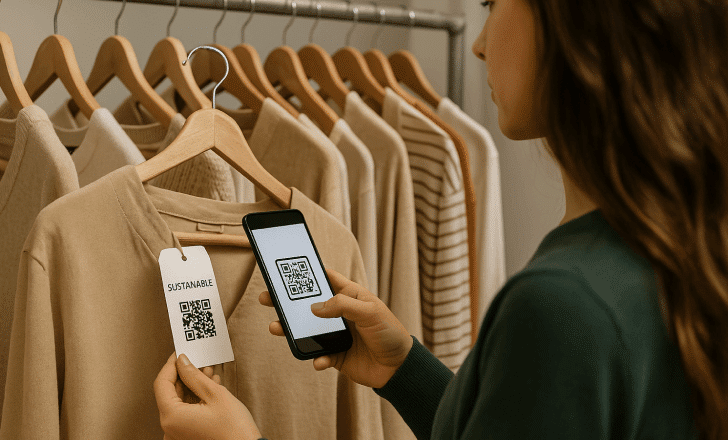
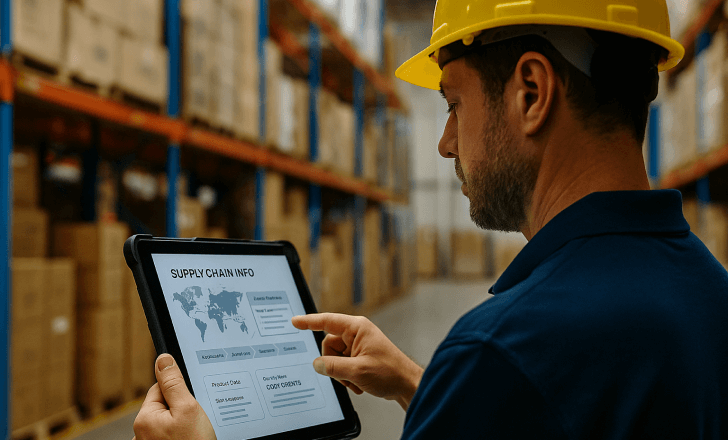





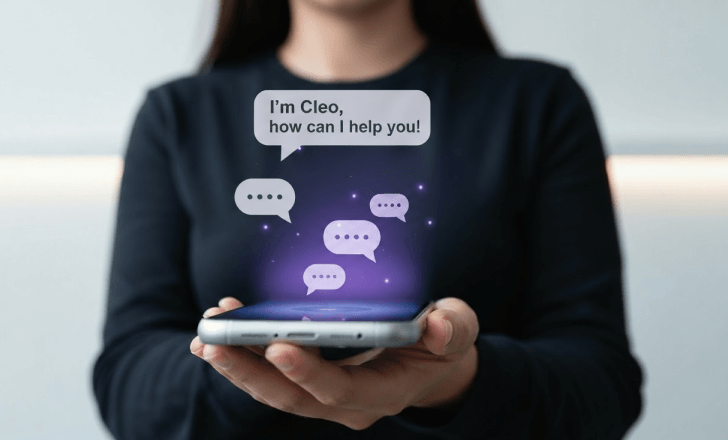
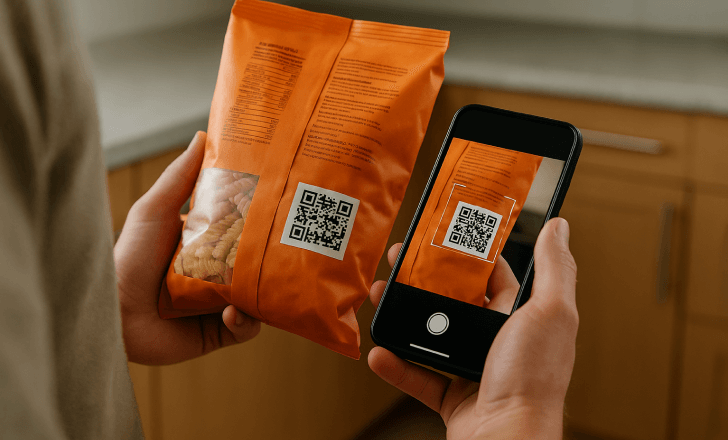
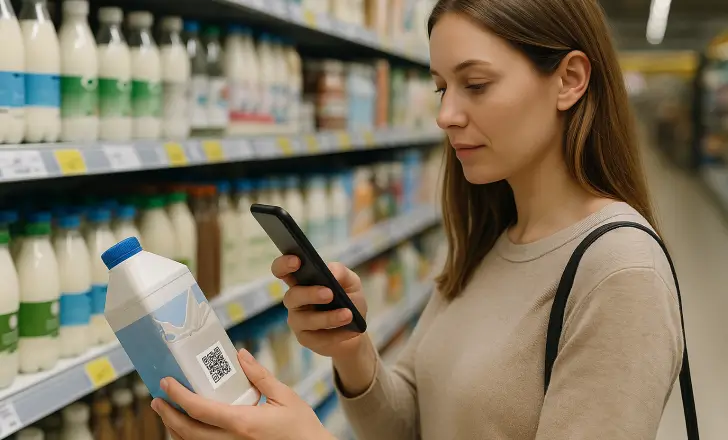
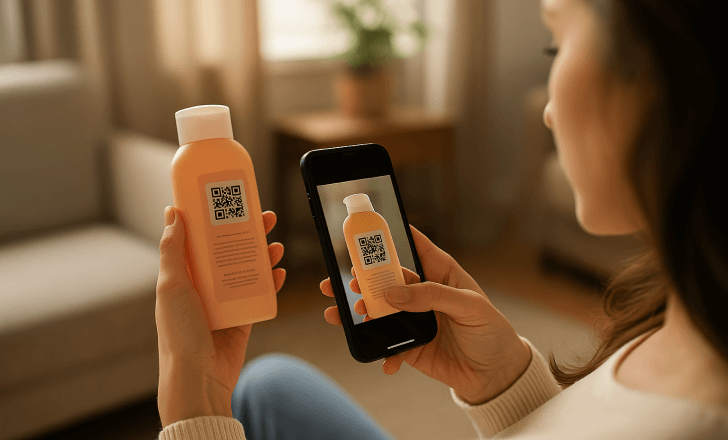
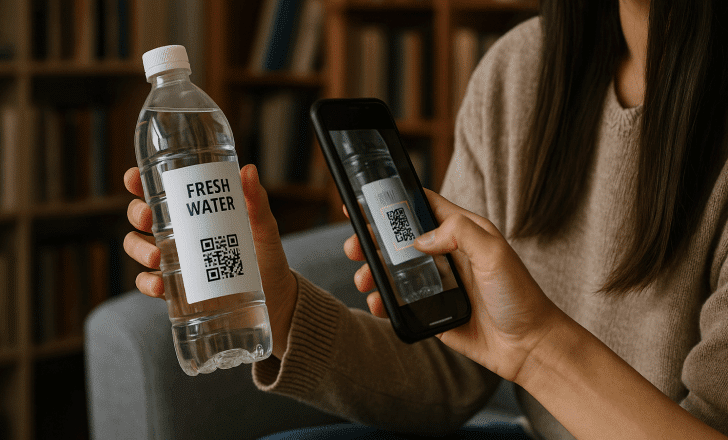
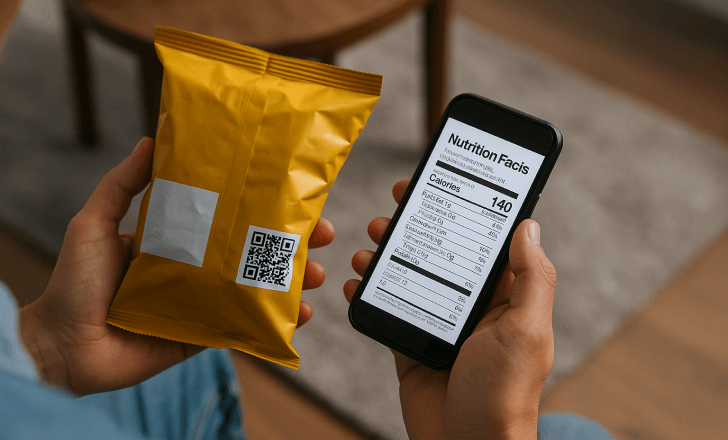
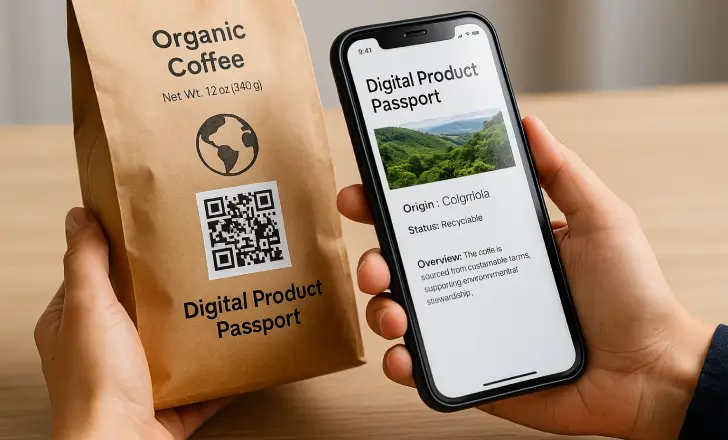
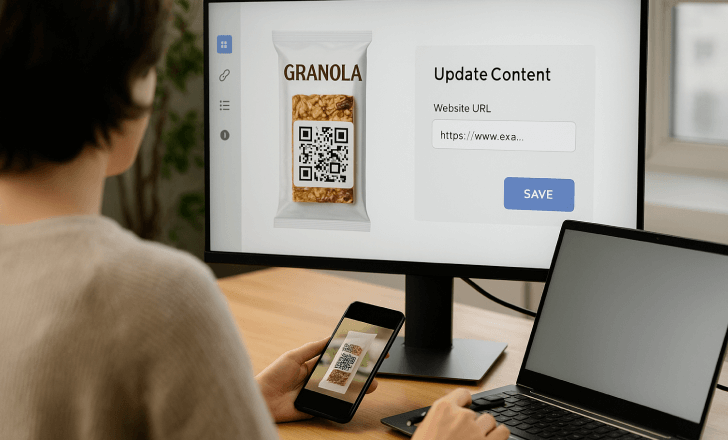
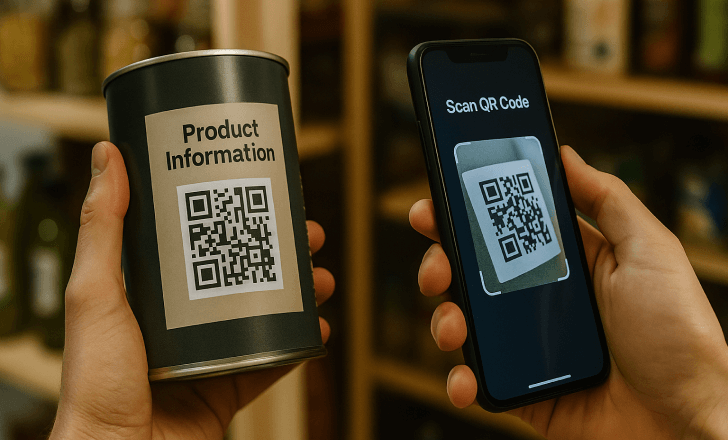
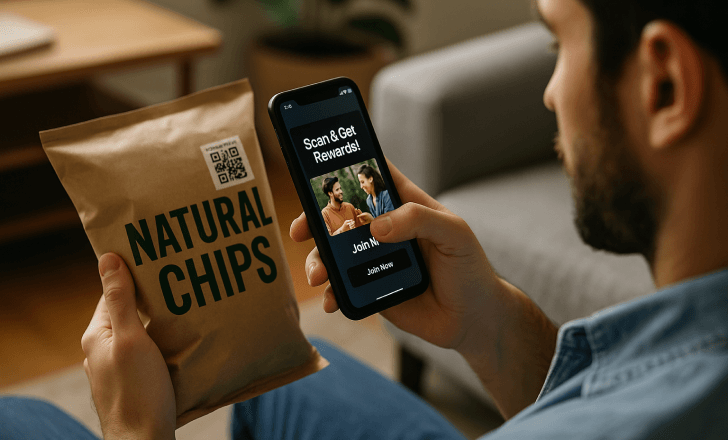
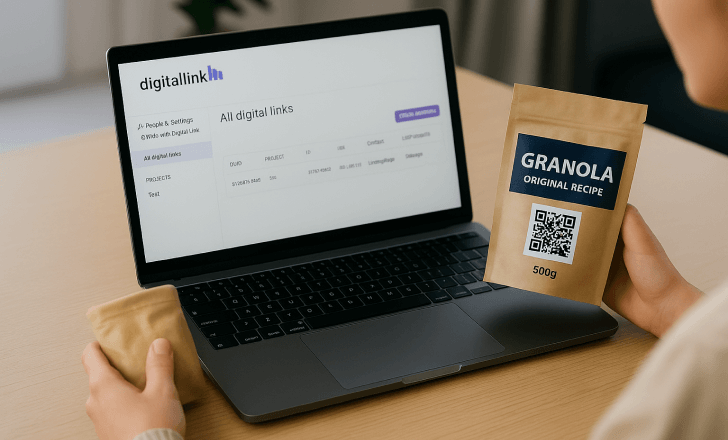





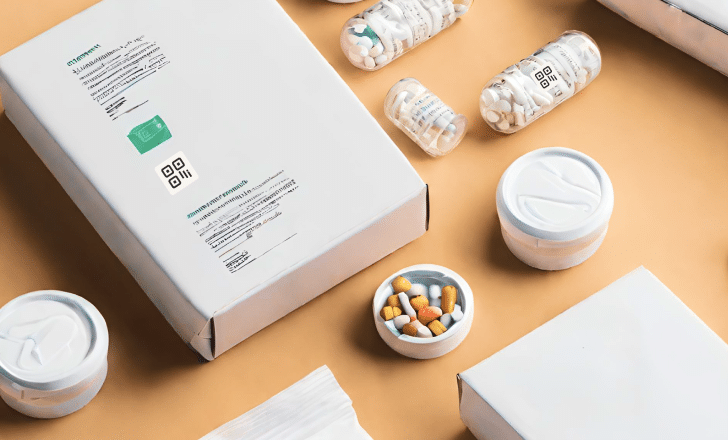

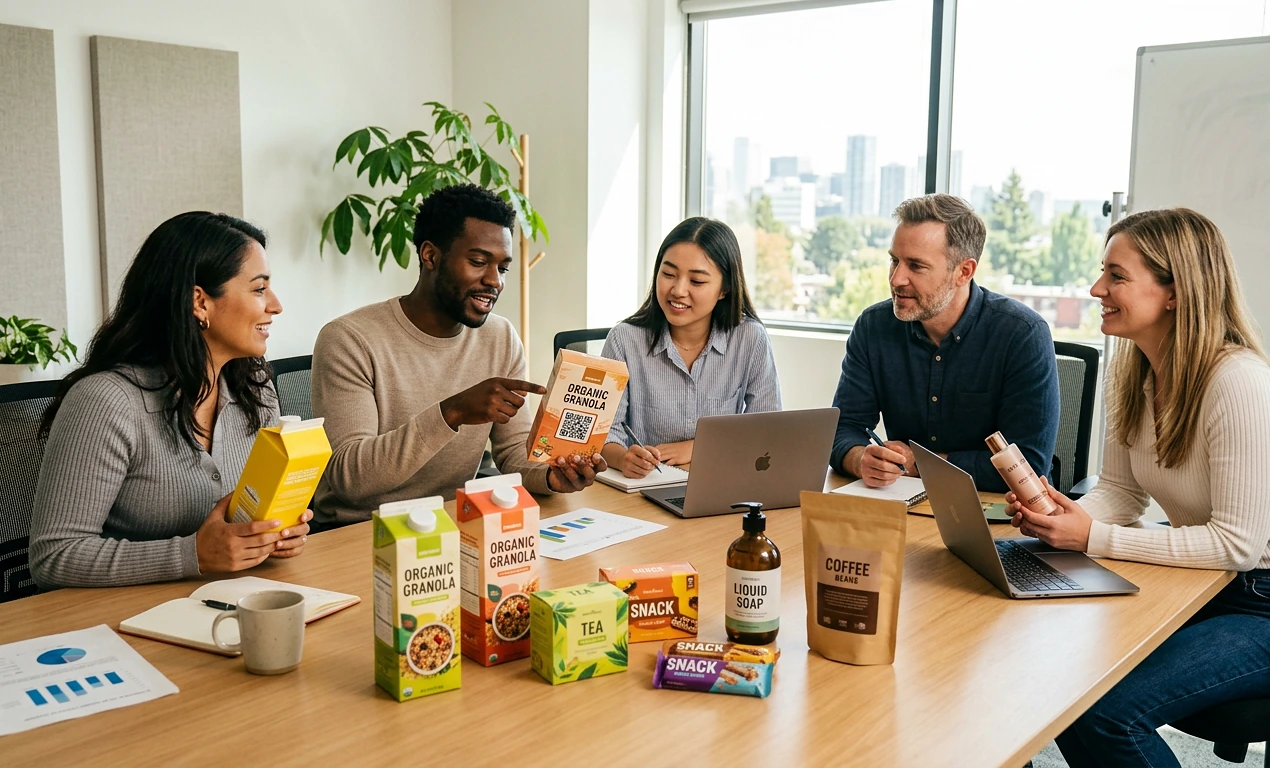





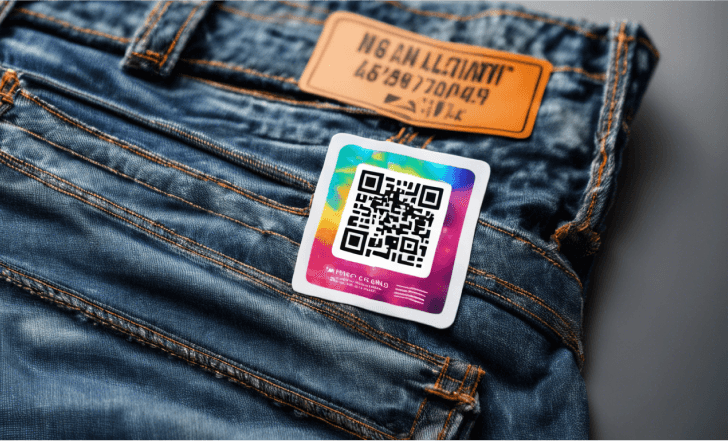









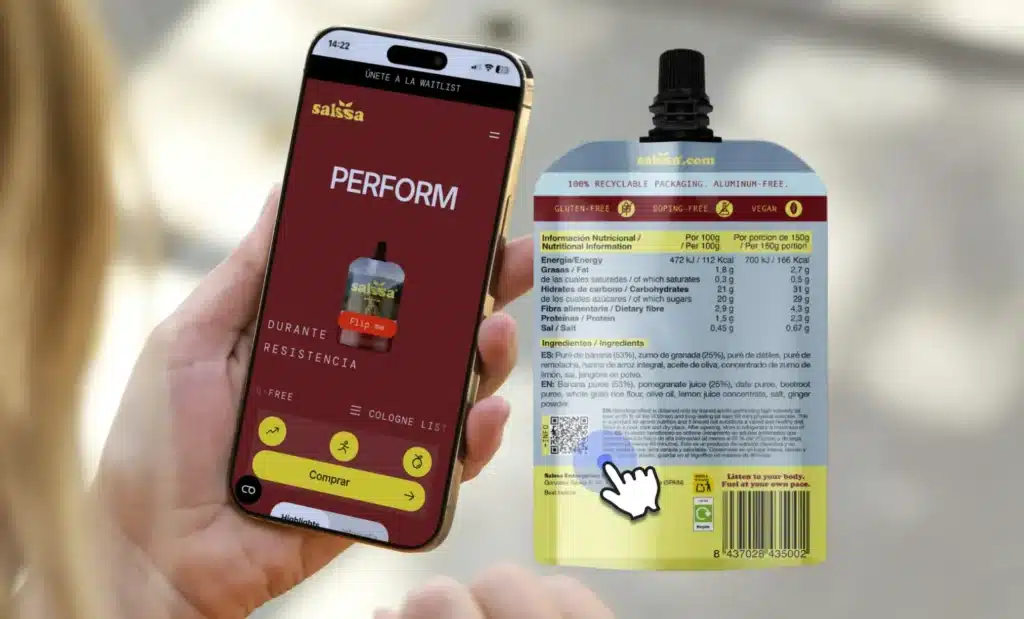
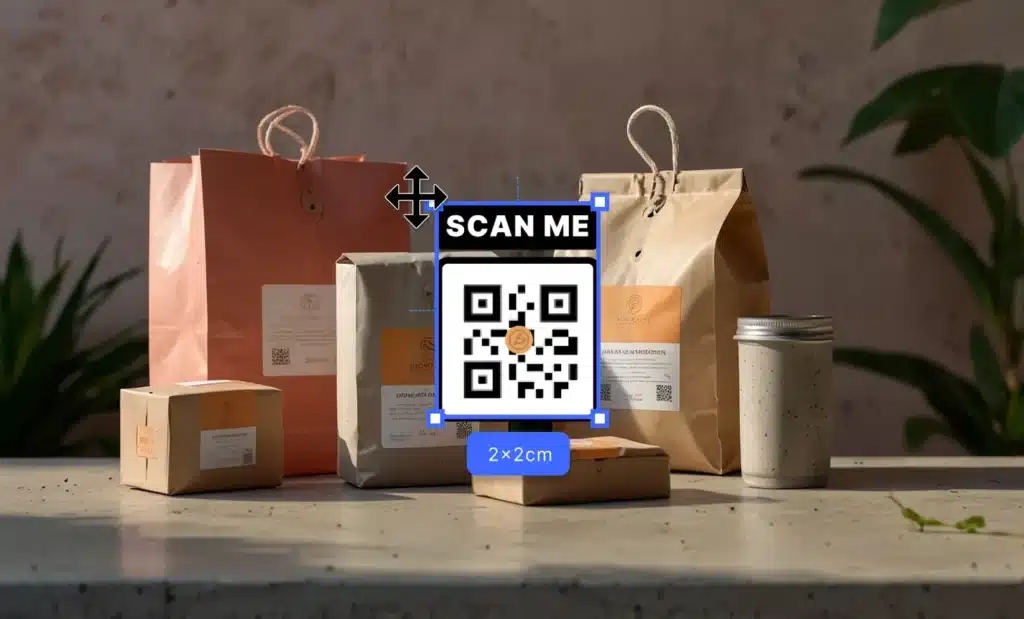
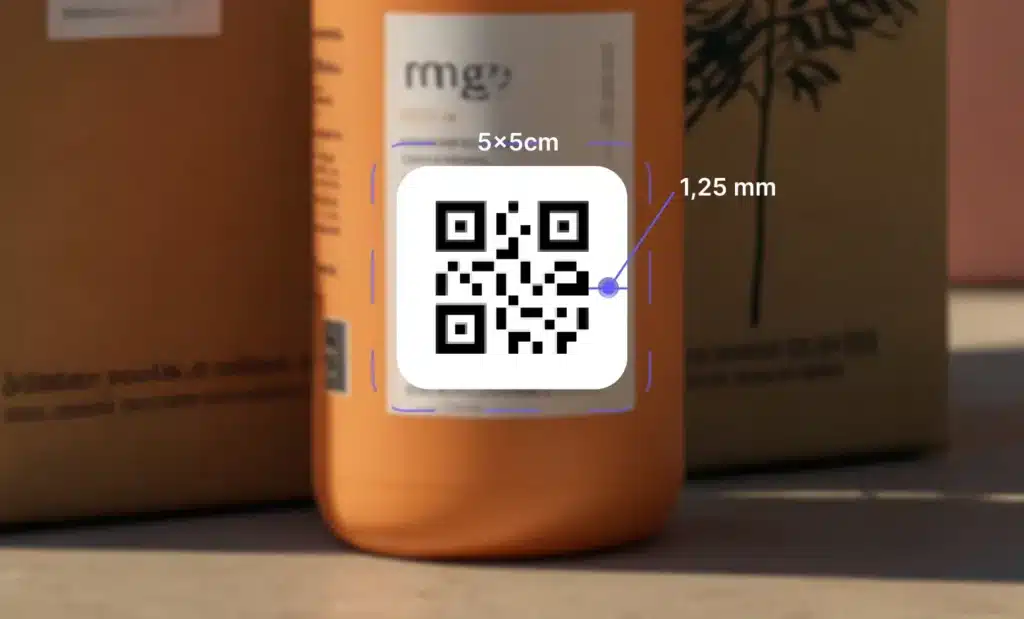
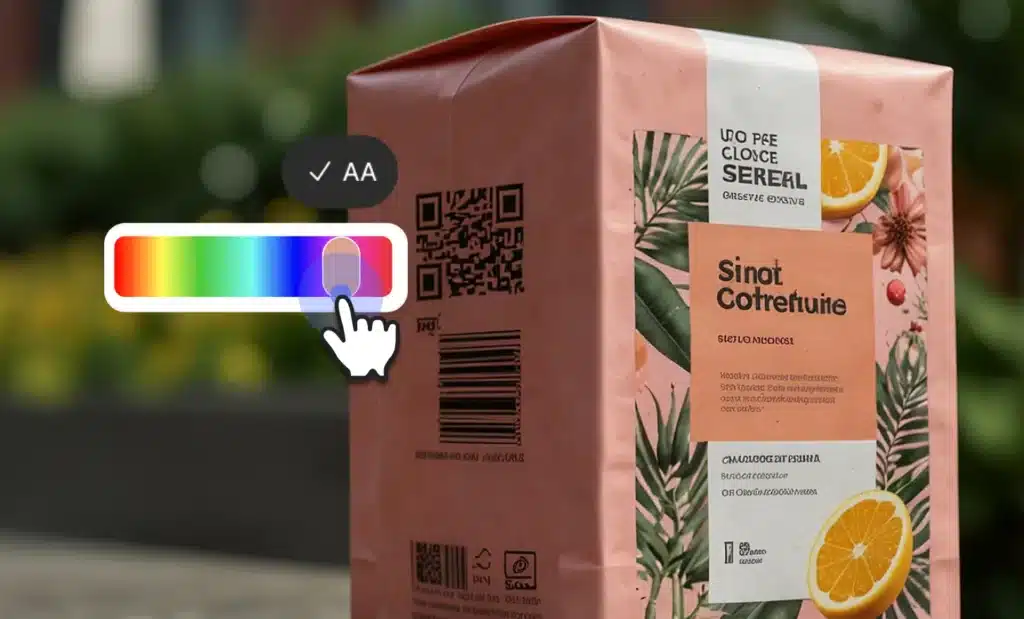
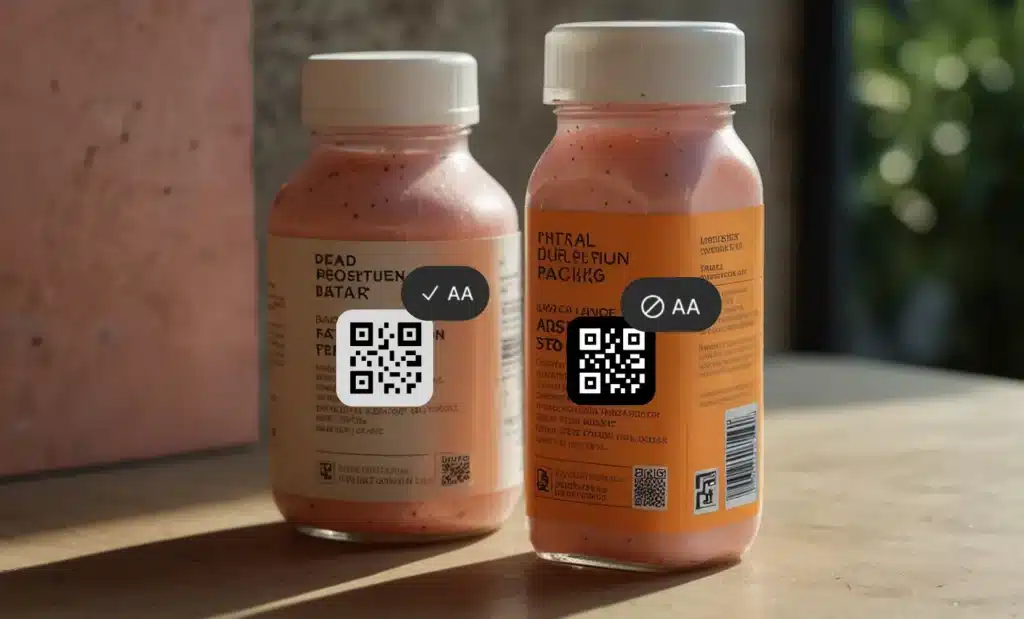
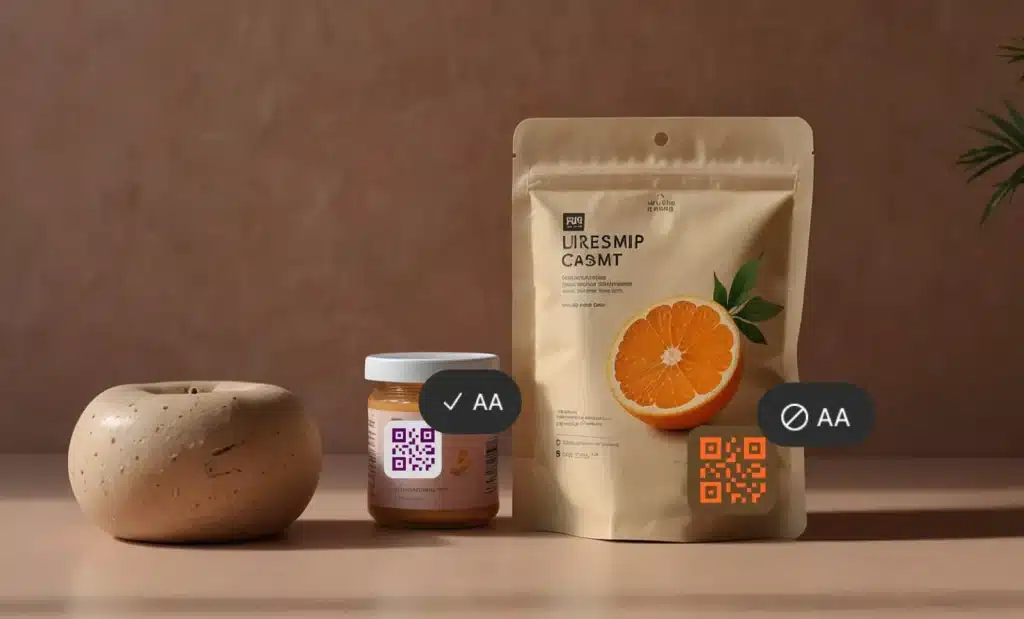
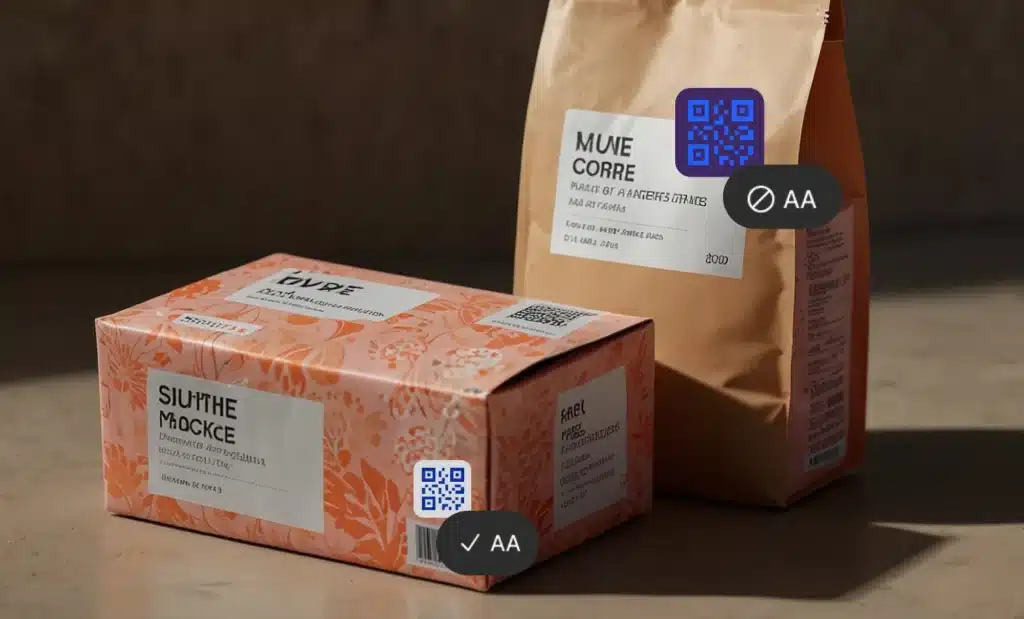
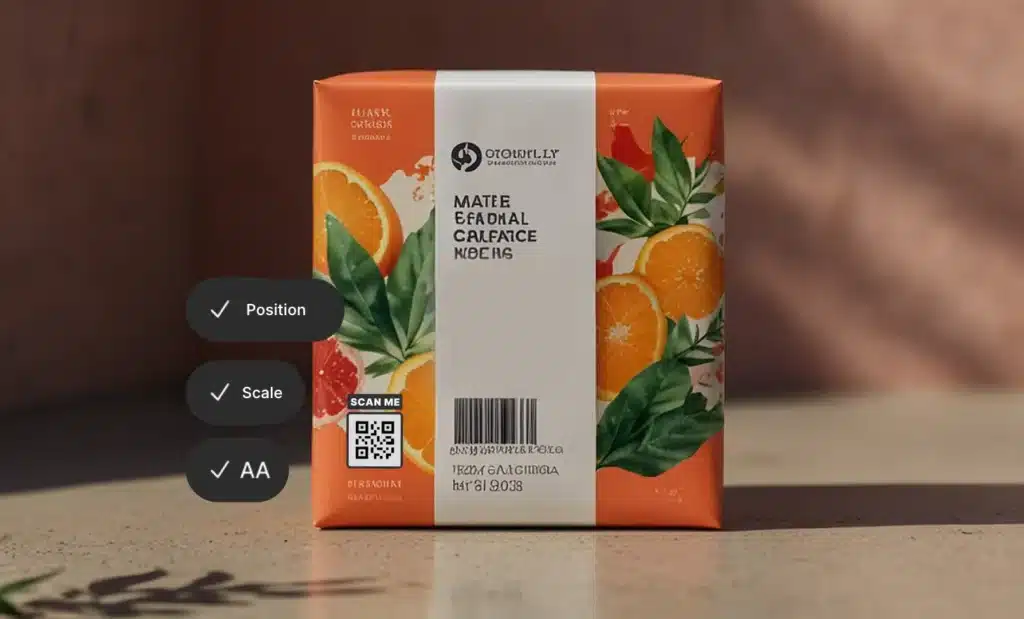
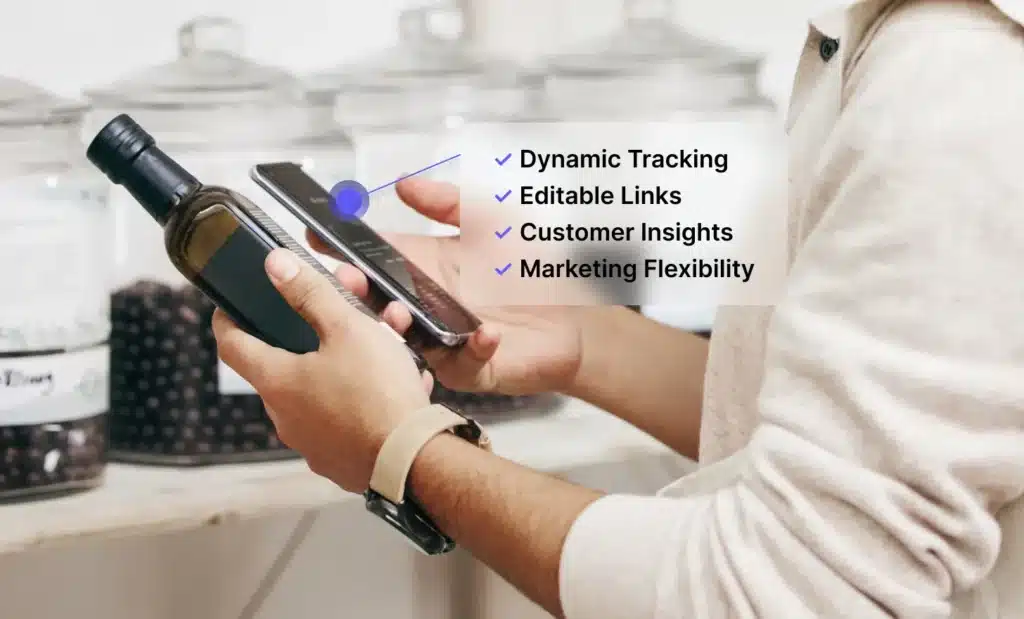
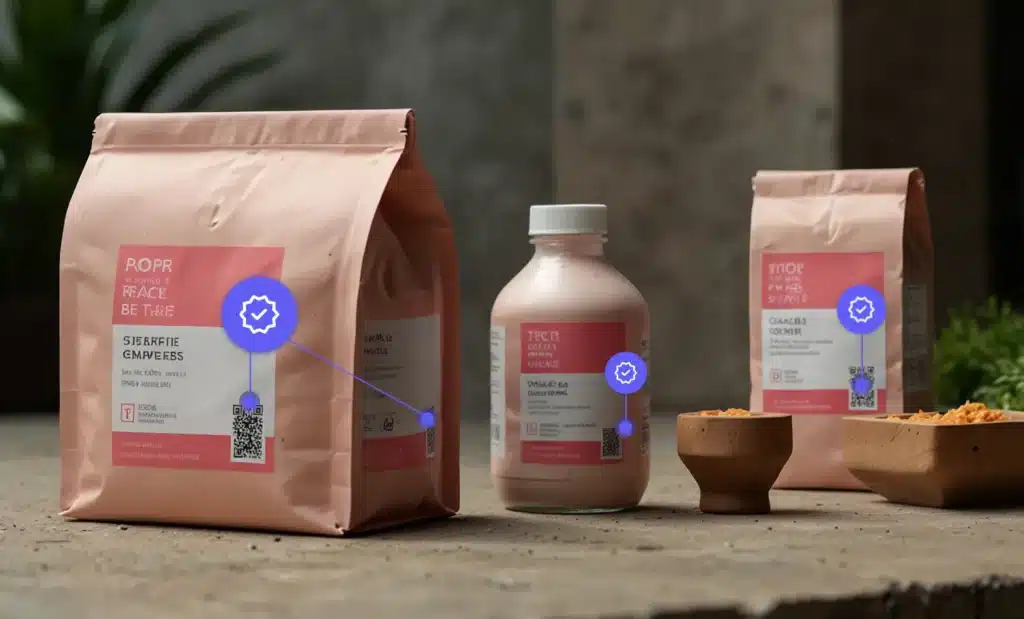
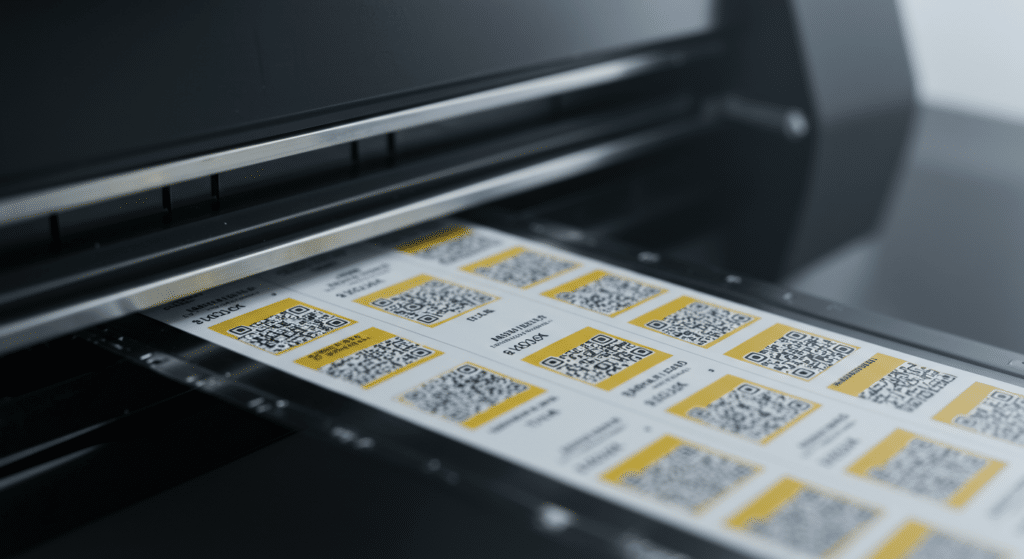
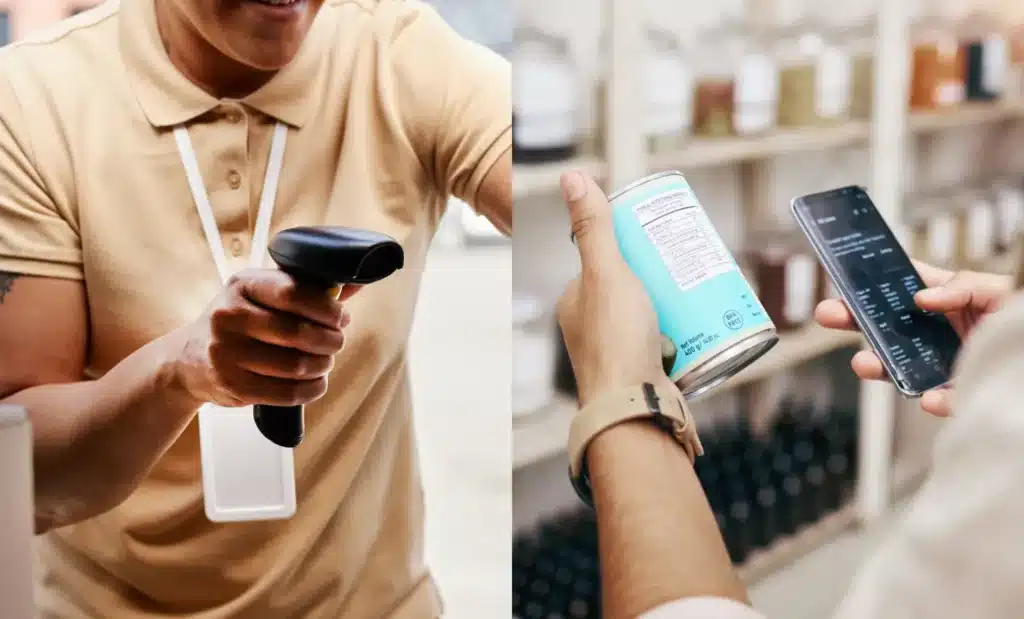
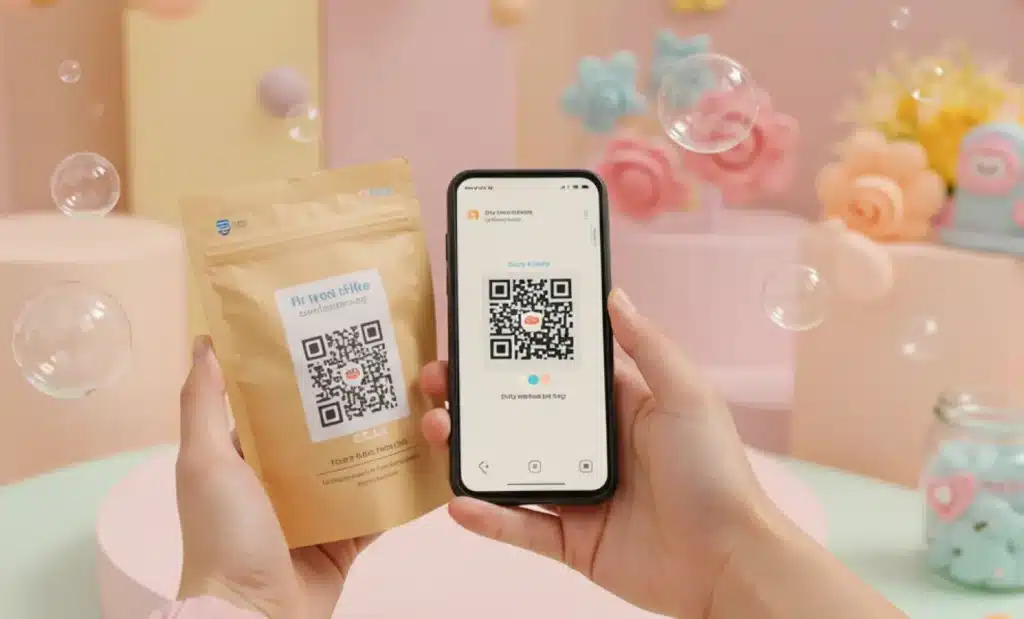
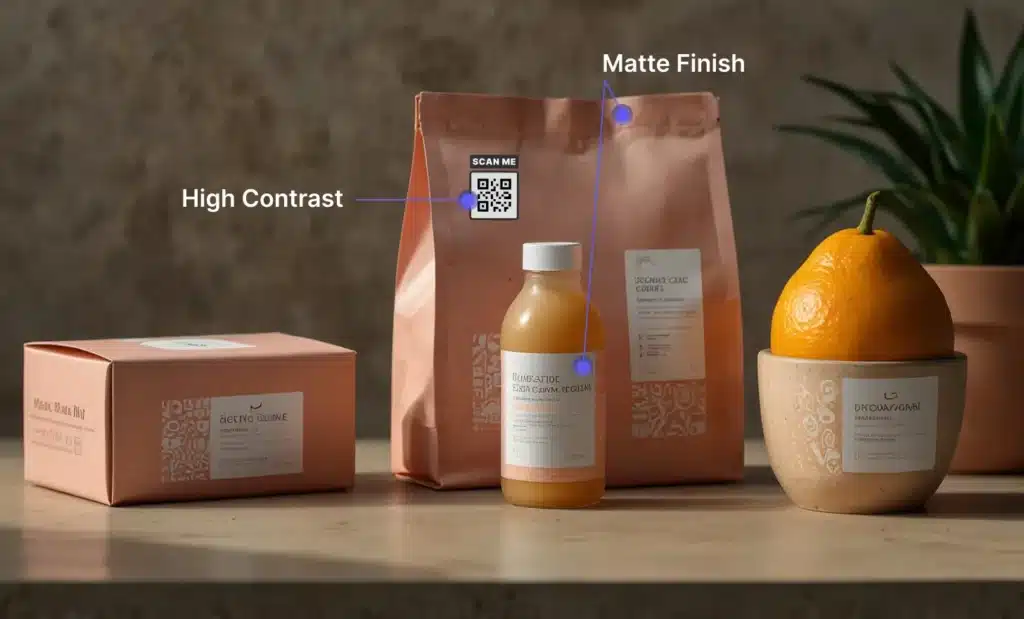

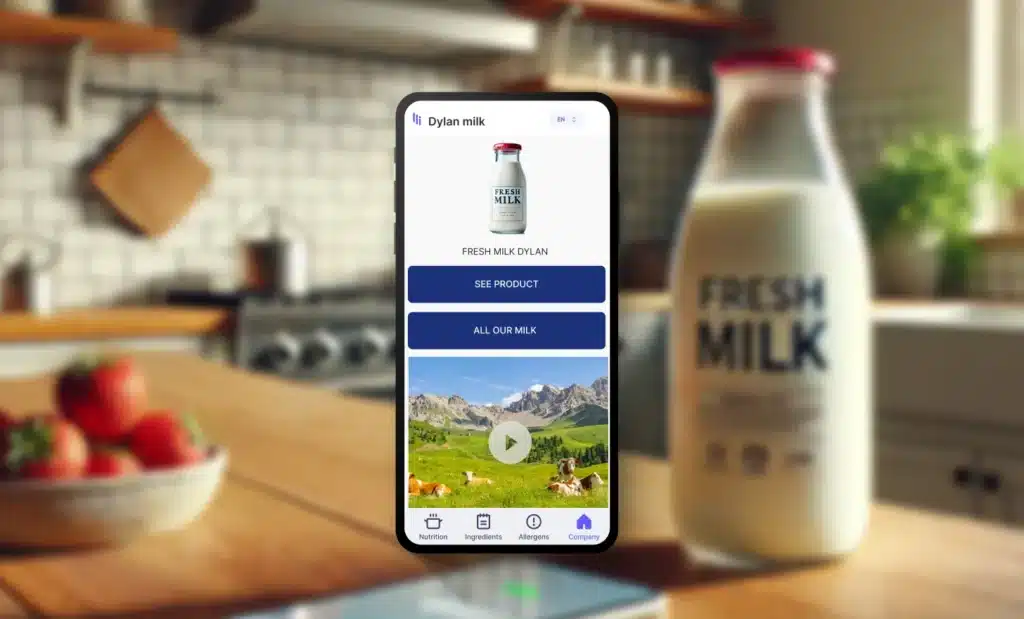
 ## When should you use a QR code or a Data Matrix?
Use a QR code when a person will scan it and when you want the code to do more than compliance: consumer packaging, marketing, product passports, authenticity checks. Use a Data Matrix when the item is tiny or the scan is industrial: a medicine blister, a surgical instrument, a small electronic component, or a part marked directly onto metal.
- QR code: consumer goods, food and drink, cosmetics, anything where a shopper scans with a phone and you want engagement on top of identification.
- GS1 DataMatrix: pharmaceuticals and medical devices, small or curved surfaces, and regulated data that has to fit where a QR code physically will not.
For most brands preparing for retail's move to 2D and for the [European Digital Product Passport](/guides/european-digital-product-passport-dpp/), the answer is a QR code, because it is the one a customer can actually scan. For the full map of GS1 code formats beyond these two, see our guide on [GS1 barcode formats](/news/gs1-barcode-formats/).
## Why is retail moving to 2D barcodes at all?
Retail is moving to 2D because a single 2D code can do at the till what the linear barcode does, and carry a web link, batch, expiry and compliance data on top. This is the transition the industry calls Sunrise 2027: checkouts worldwide becoming able to read 2D codes by the end of 2027, so one code can serve the checkout and the consumer at once.
## When should you use a QR code or a Data Matrix?
Use a QR code when a person will scan it and when you want the code to do more than compliance: consumer packaging, marketing, product passports, authenticity checks. Use a Data Matrix when the item is tiny or the scan is industrial: a medicine blister, a surgical instrument, a small electronic component, or a part marked directly onto metal.
- QR code: consumer goods, food and drink, cosmetics, anything where a shopper scans with a phone and you want engagement on top of identification.
- GS1 DataMatrix: pharmaceuticals and medical devices, small or curved surfaces, and regulated data that has to fit where a QR code physically will not.
For most brands preparing for retail's move to 2D and for the [European Digital Product Passport](/guides/european-digital-product-passport-dpp/), the answer is a QR code, because it is the one a customer can actually scan. For the full map of GS1 code formats beyond these two, see our guide on [GS1 barcode formats](/news/gs1-barcode-formats/).
## Why is retail moving to 2D barcodes at all?
Retail is moving to 2D because a single 2D code can do at the till what the linear barcode does, and carry a web link, batch, expiry and compliance data on top. This is the transition the industry calls Sunrise 2027: checkouts worldwide becoming able to read 2D codes by the end of 2027, so one code can serve the checkout and the consumer at once.
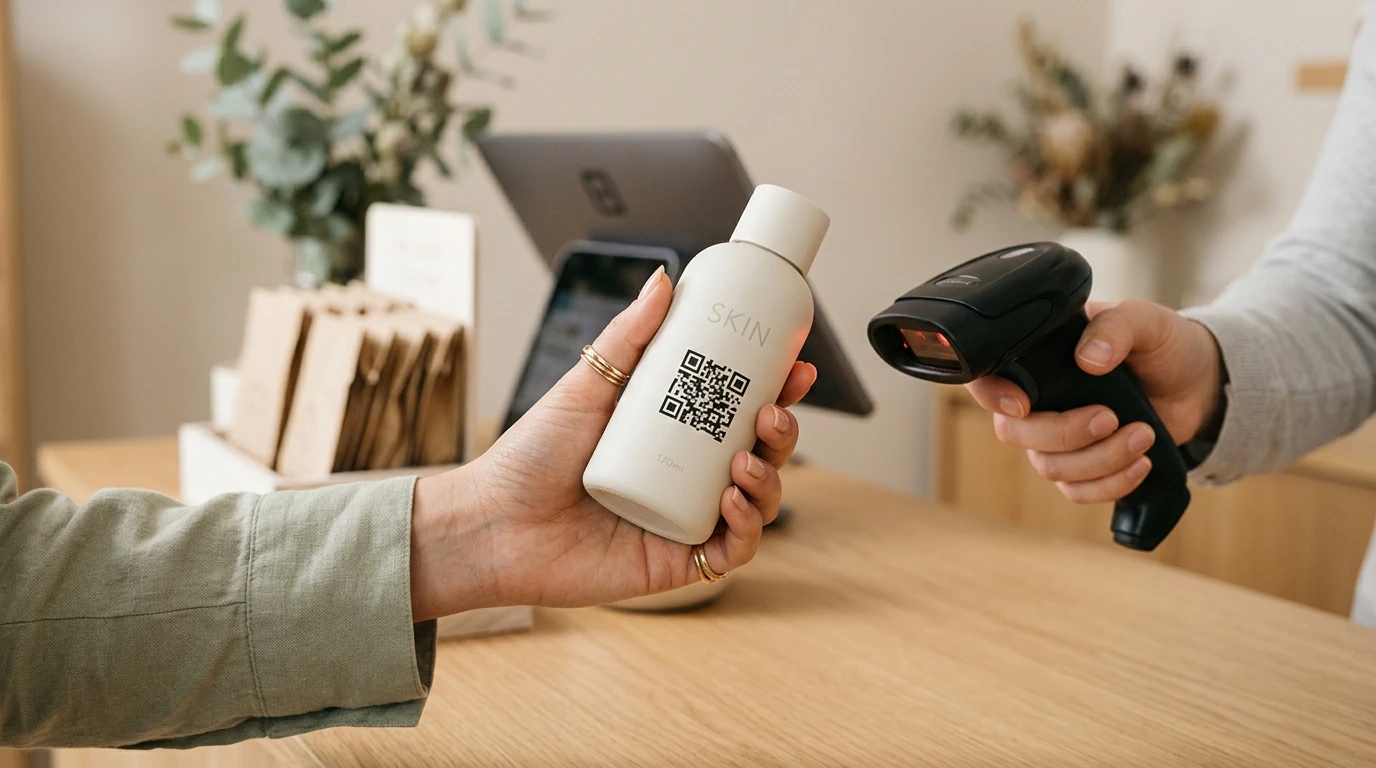 A [GS1 Digital Link](/guides/gs1-digital-link-basics/) QR code is what makes that dual role work. The same code rings up a sale like a barcode and, scanned by a phone, opens a product page, a passport or an authenticity check. That is why the consumer-facing side of the 2D transition is overwhelmingly QR, with Data Matrix staying in the places a phone was never going to scan.
## Frequently asked questions
### Is a 2D barcode the same as a QR code?
Not quite. "2D barcode" is the umbrella term for codes that store data in a grid; a QR code is one type of 2D barcode, and a Data Matrix is another. Every QR code is a 2D barcode, but not every 2D barcode is a QR code.
### Can a phone scan a Data Matrix code?
Modern phone cameras can read many Data Matrix codes, but Data Matrix is optimised for industrial imagers and very small surfaces, while QR codes are designed for effortless phone scanning. If the audience is consumers, a QR code is the safer choice.
### Which 2D barcode does GS1 recommend for retail?
For consumer retail and the shift to 2D at the point of sale, the consumer-facing code is a QR code carrying a GS1 Digital Link. GS1 DataMatrix remains common for healthcare and small regulated items.
### Is a linear barcode a 2D barcode?
No. A linear, or 1D, barcode such as UPC or EAN stores data in the widths of parallel lines. A 2D barcode stores data across a two-dimensional grid, which is why it holds much more.
---
## QR codes on cosmetics packaging: Engage, comply, convert
URL: https://digital-link.com/guides/qr-codes-on-cosmetics-packaging/
See how QR codes on cosmetics packaging drive engagement, meet compliance, and connect beauty shoppers to personalized digital experiences.
A [GS1 Digital Link](/guides/gs1-digital-link-basics/) QR code is what makes that dual role work. The same code rings up a sale like a barcode and, scanned by a phone, opens a product page, a passport or an authenticity check. That is why the consumer-facing side of the 2D transition is overwhelmingly QR, with Data Matrix staying in the places a phone was never going to scan.
## Frequently asked questions
### Is a 2D barcode the same as a QR code?
Not quite. "2D barcode" is the umbrella term for codes that store data in a grid; a QR code is one type of 2D barcode, and a Data Matrix is another. Every QR code is a 2D barcode, but not every 2D barcode is a QR code.
### Can a phone scan a Data Matrix code?
Modern phone cameras can read many Data Matrix codes, but Data Matrix is optimised for industrial imagers and very small surfaces, while QR codes are designed for effortless phone scanning. If the audience is consumers, a QR code is the safer choice.
### Which 2D barcode does GS1 recommend for retail?
For consumer retail and the shift to 2D at the point of sale, the consumer-facing code is a QR code carrying a GS1 Digital Link. GS1 DataMatrix remains common for healthcare and small regulated items.
### Is a linear barcode a 2D barcode?
No. A linear, or 1D, barcode such as UPC or EAN stores data in the widths of parallel lines. A 2D barcode stores data across a two-dimensional grid, which is why it holds much more.
---
## QR codes on cosmetics packaging: Engage, comply, convert
URL: https://digital-link.com/guides/qr-codes-on-cosmetics-packaging/
See how QR codes on cosmetics packaging drive engagement, meet compliance, and connect beauty shoppers to personalized digital experiences.
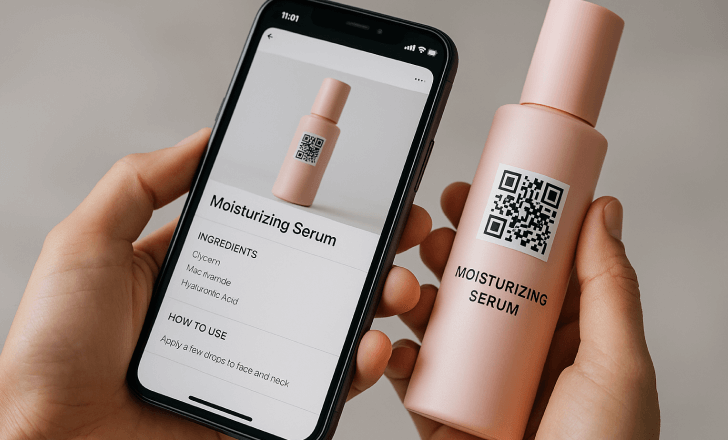
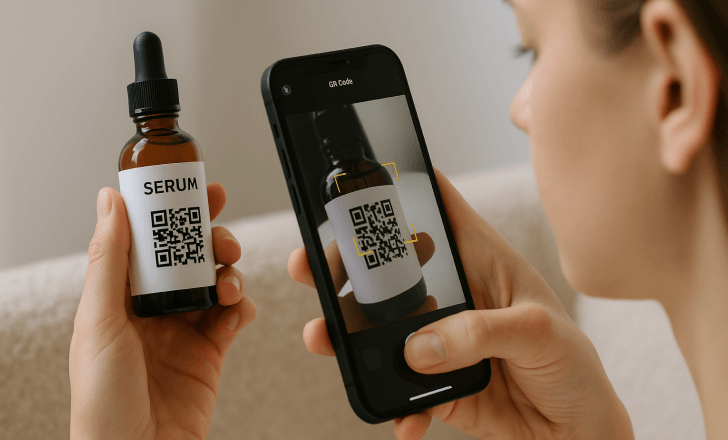
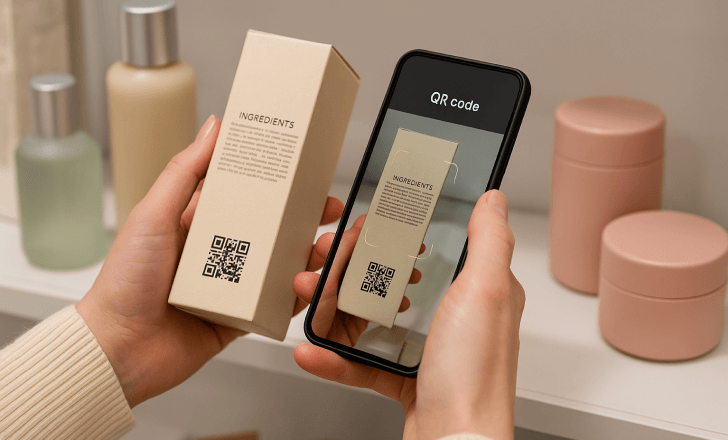
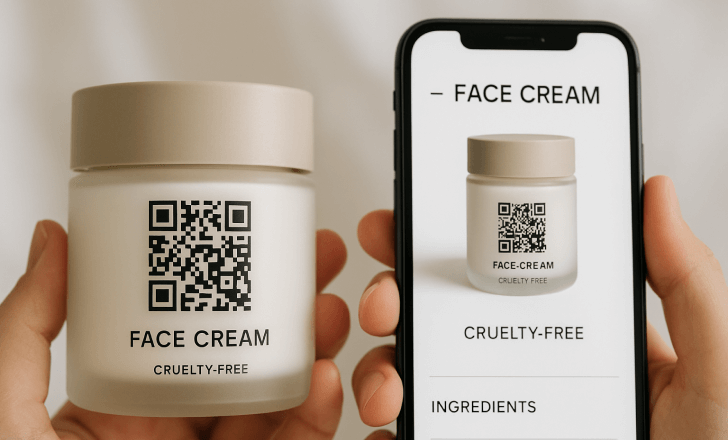
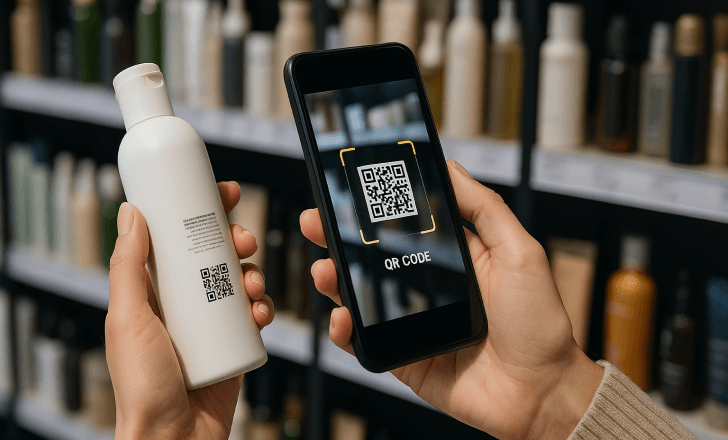
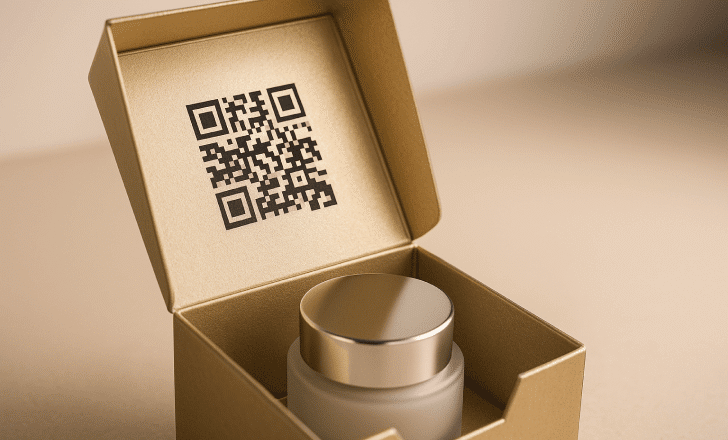
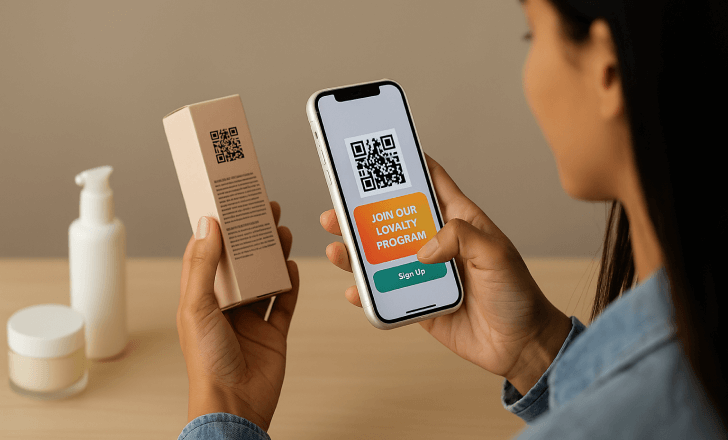
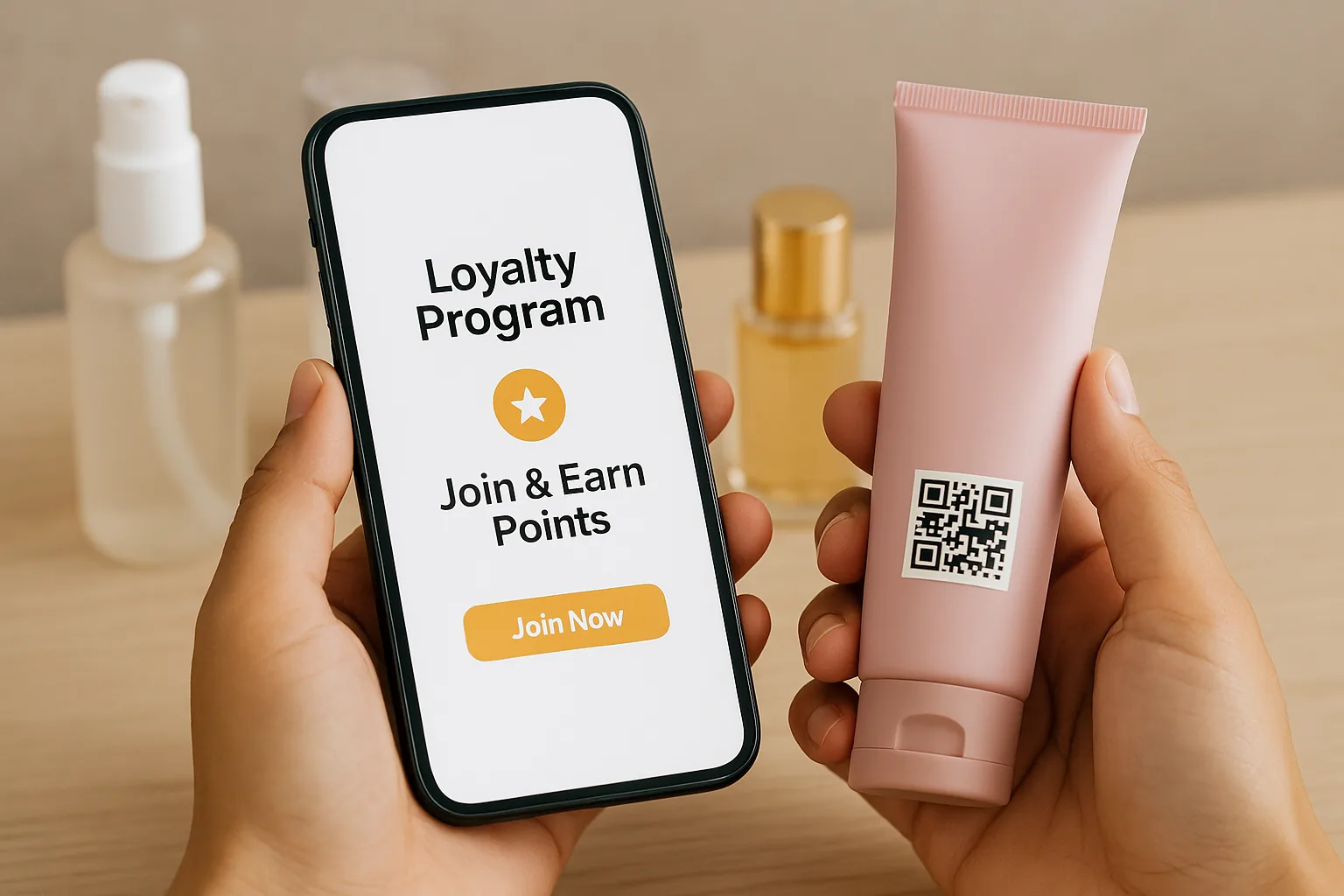
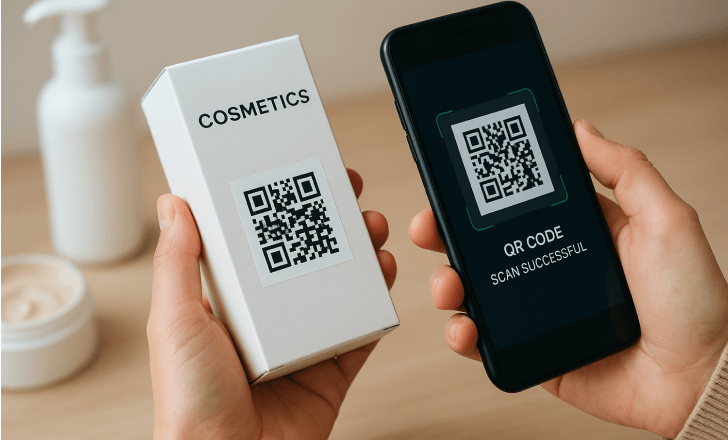
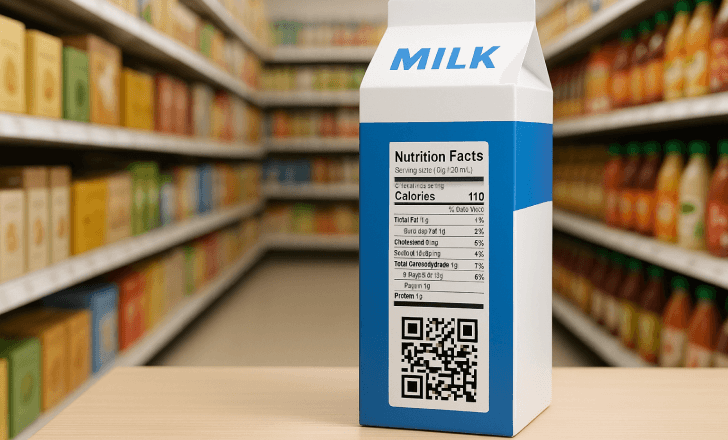
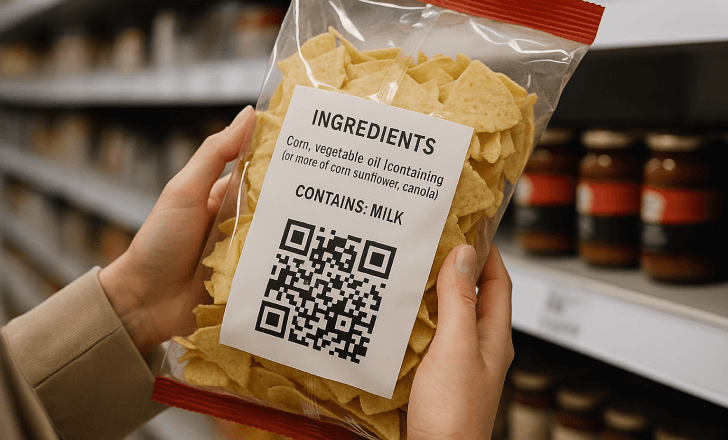
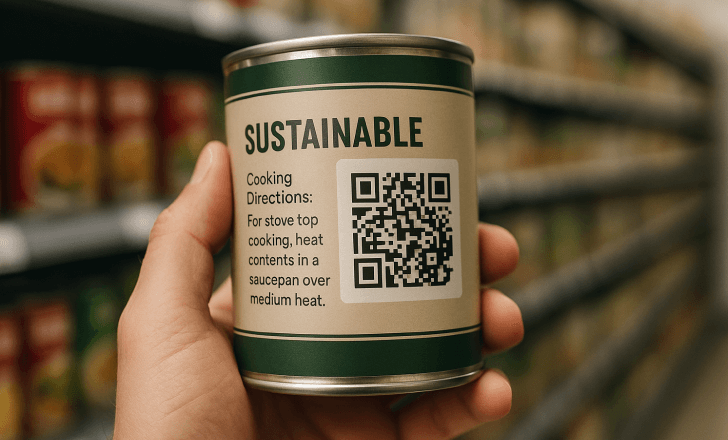
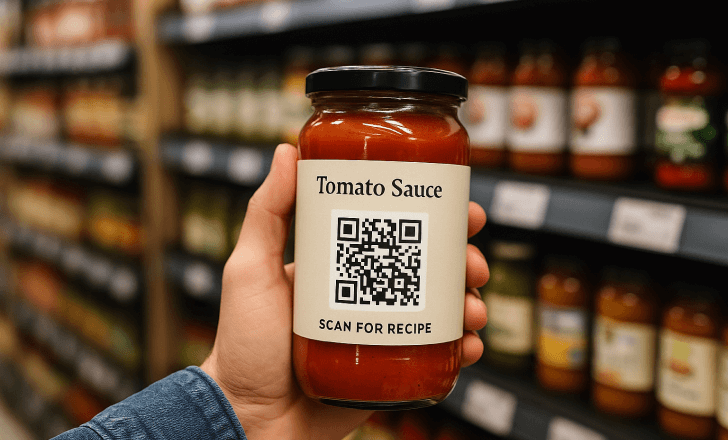
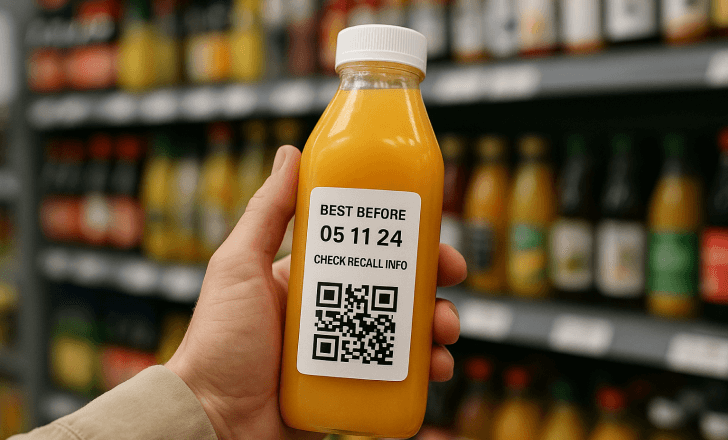
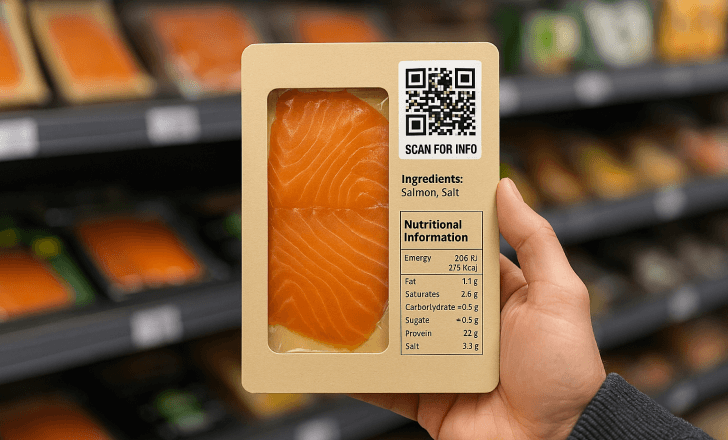
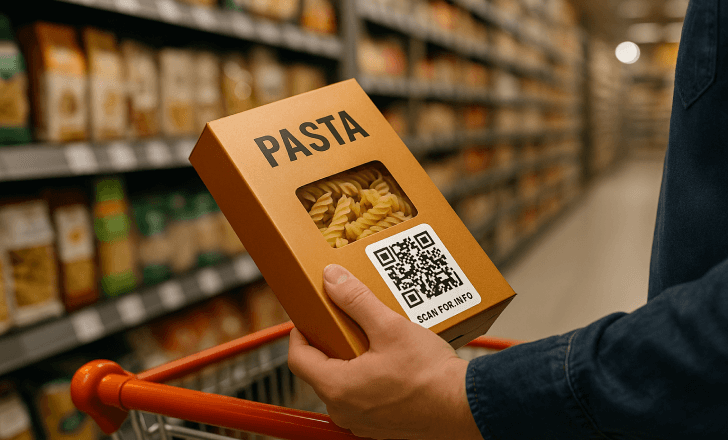
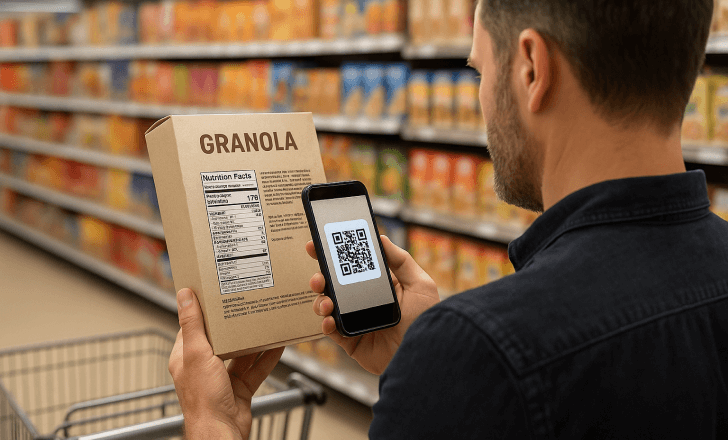
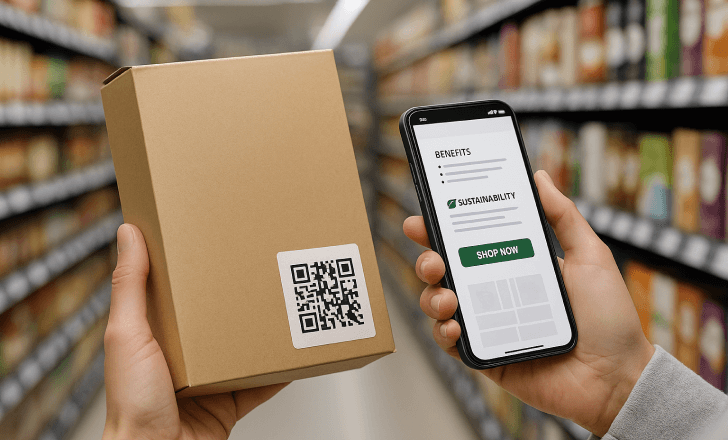
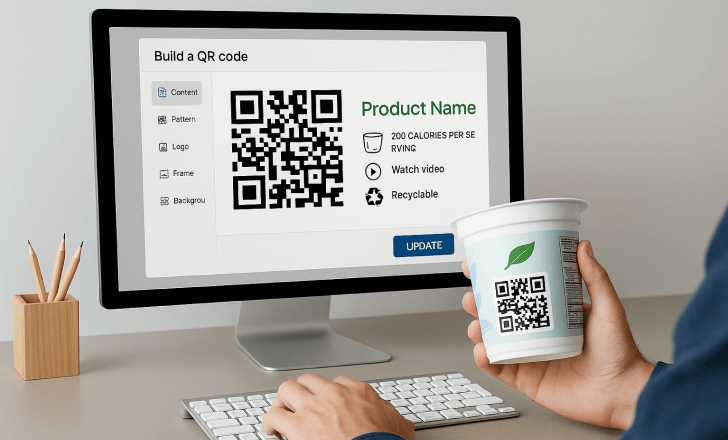
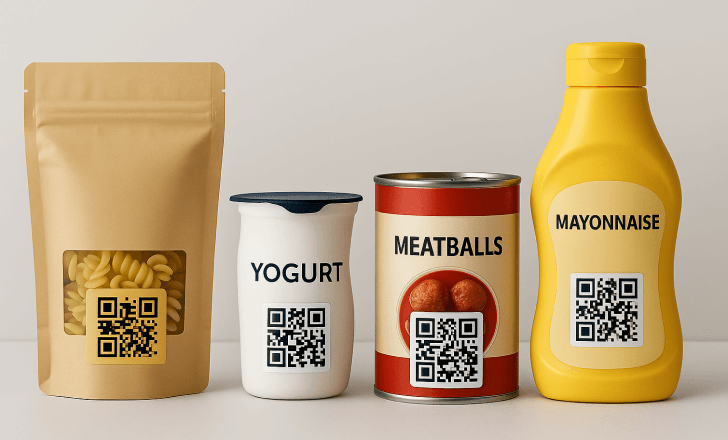
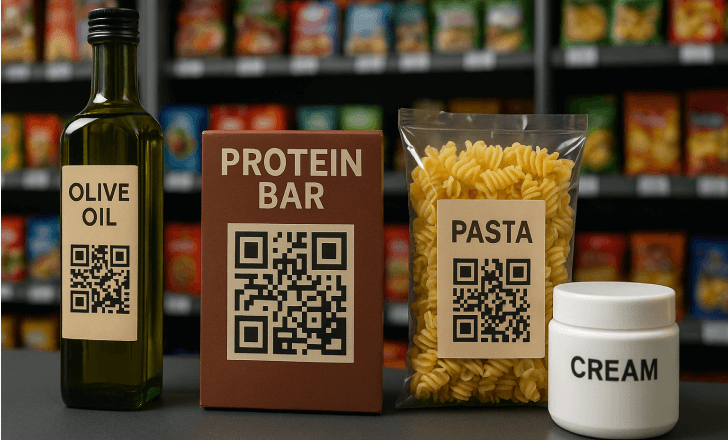
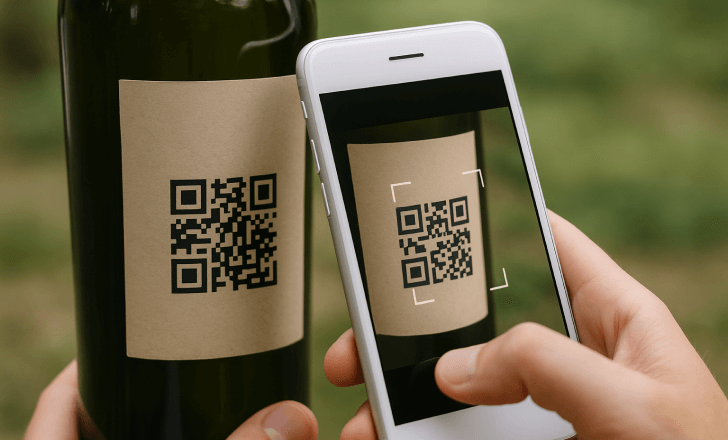

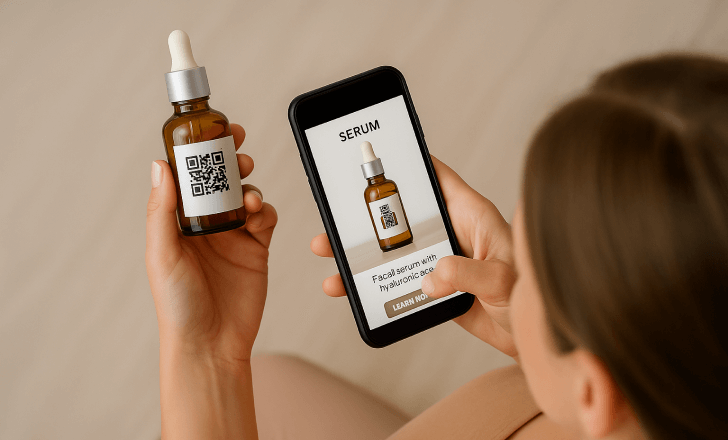
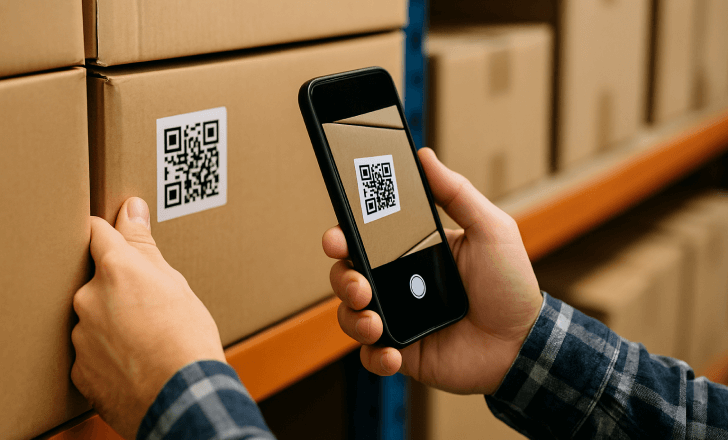





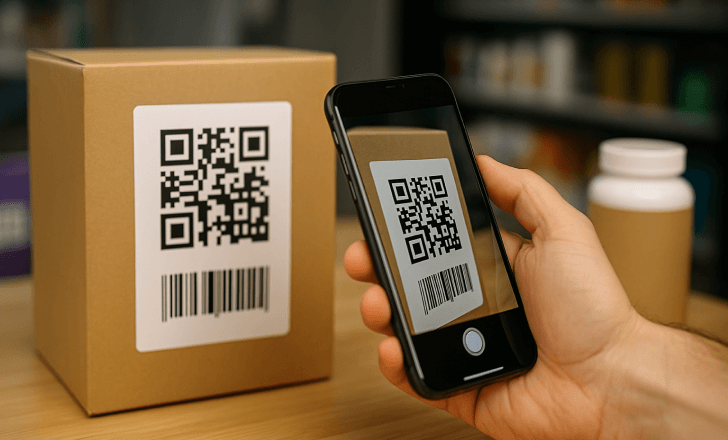
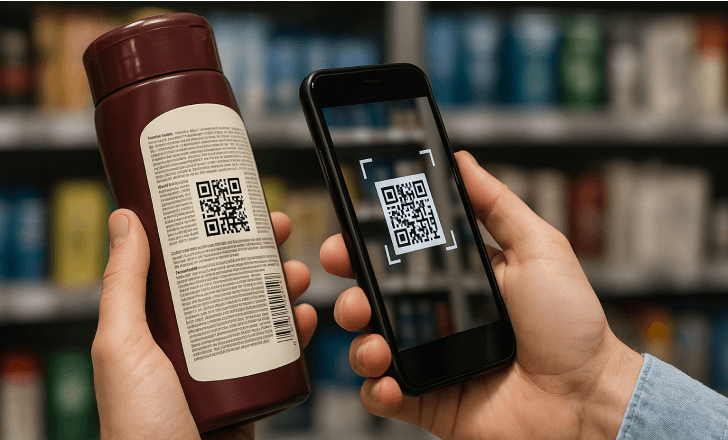
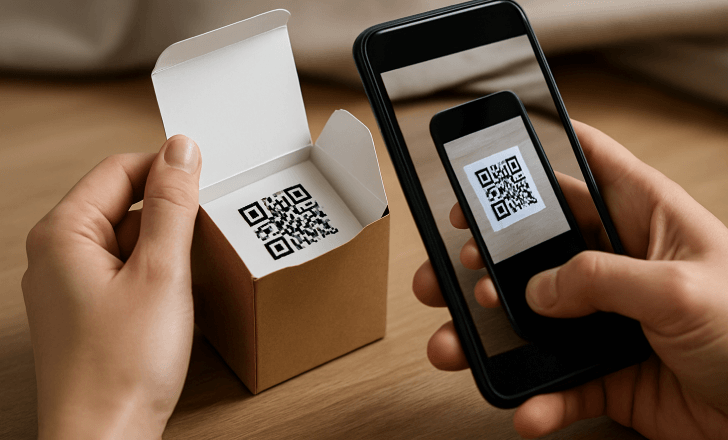
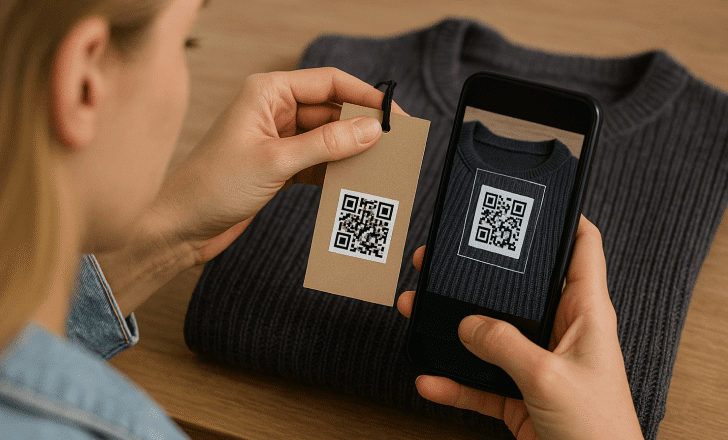
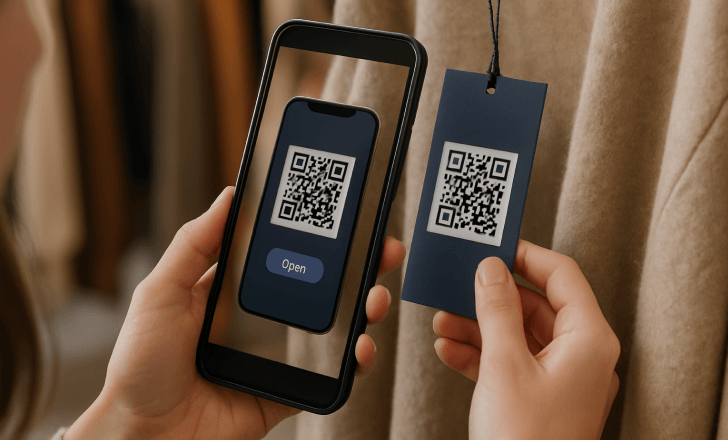
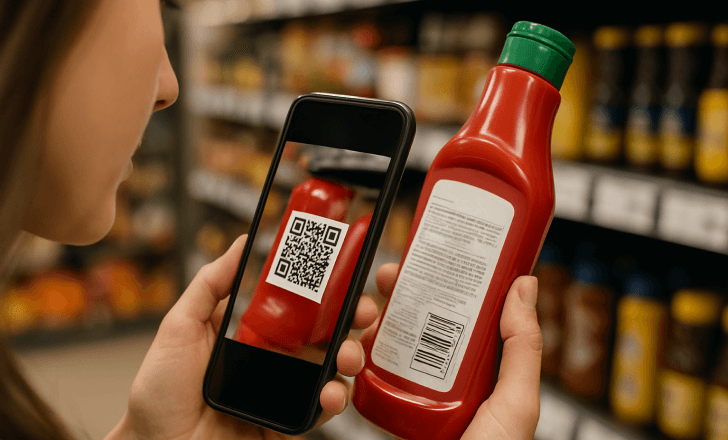
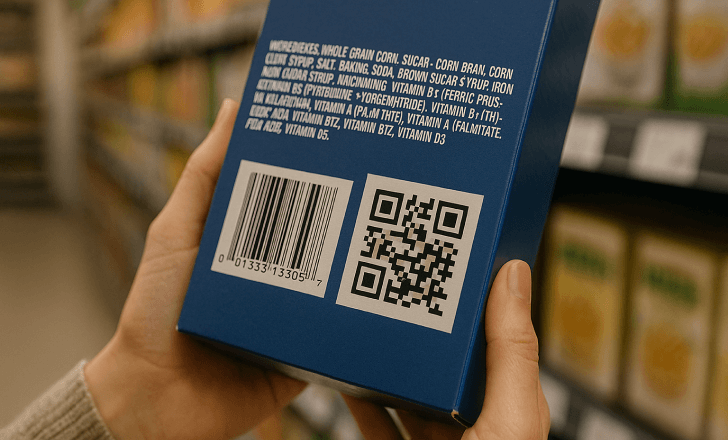
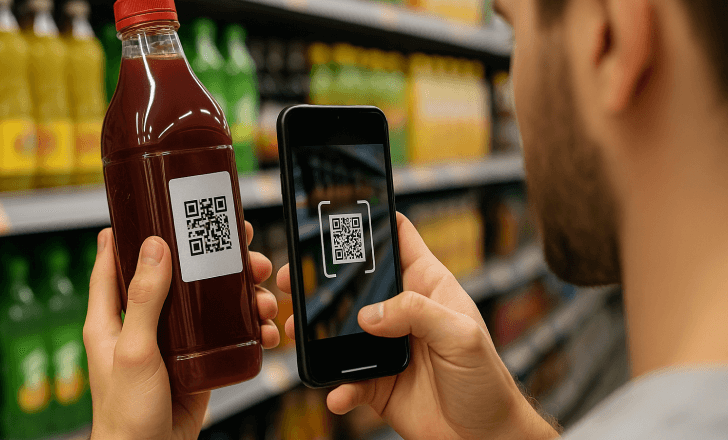
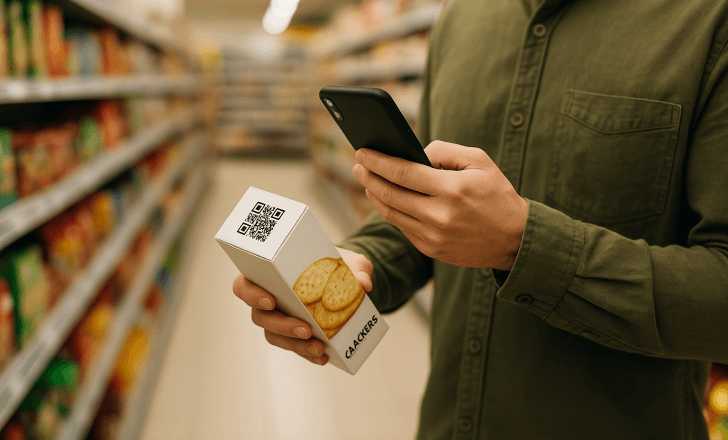
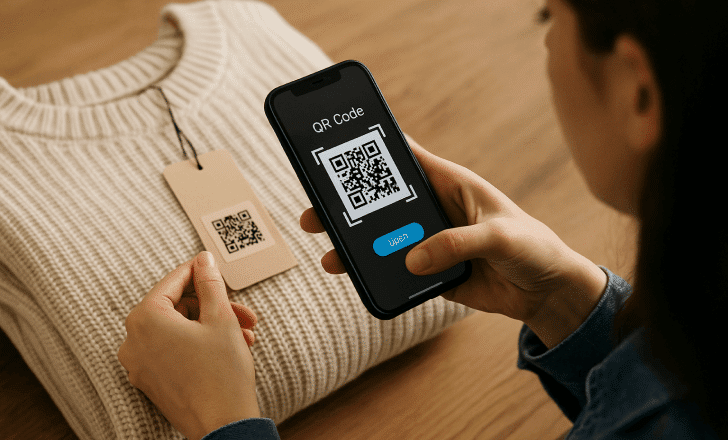
 ### How It Works
Conversational Packaging uses a **Digital Link QR code** embedded on your product label. When scanned, consumers can:
- Ask questions about the product directly to **Cleo**.
- Receive clear, accurate, and brand-approved answers in real time.
- Access detailed information such as usage instructions, sustainability data, or safety notes.
Behind every response is the verified information you upload to your **Digital Link dashboard,** ensuring consistency, compliance, and control over your product’s digital voice.
### Key Benefits
#### ✅ Enhance Transparency
Empower consumers with instant, reliable answers about ingredients, materials, and care instructions, all verified by your brand.
#### ⚙️ Increase Efficiency
Reduce repetitive customer inquiries and lower support costs by automating responses to common questions through Cleo.
#### 🌍 Future-Proof Your Packaging
Stay ahead of global transparency requirements and digital product passport standards while turning compliance into engagement.
#### 💬 Strengthen Customer Relationships
Every interaction becomes a learning opportunity, helping you better understand your audience and refine your communication strategy.
### Industry Applications
Conversational Packaging can be implemented across multiple sectors:
- **Food & Beverage:** Display allergen warnings or ingredient origins.
- **Cosmetics:** Explain safe usage or sustainability claims.
- **Fashion:** Provide washing instructions or material traceability.
- **Consumer Goods:** Offer warranty, assembly, or recycling information.
### Getting Started
You don’t need to redesign your packaging. Simply integrate the **Digital Link QR code** and connect your verified data, Cleo does the rest.
📩 **Interested?**
Contact us via [chat](#hs-chat-open) or [email](mailto:support@digital-link.com). Our support team will be happy to guide you through setup and best practices.
---
## How to add links to a digital link
URL: https://digital-link.com/help-center/how-to-add-links-to-a-digital-link/
Add multiple links to your digital link
When a digital link is created, a second landing page (linkset) is created which you can use to display other links like GS1 compliant ones.
From your dashboard, click the digital link's **three-dot menu** and click **Link setup**.
### How It Works
Conversational Packaging uses a **Digital Link QR code** embedded on your product label. When scanned, consumers can:
- Ask questions about the product directly to **Cleo**.
- Receive clear, accurate, and brand-approved answers in real time.
- Access detailed information such as usage instructions, sustainability data, or safety notes.
Behind every response is the verified information you upload to your **Digital Link dashboard,** ensuring consistency, compliance, and control over your product’s digital voice.
### Key Benefits
#### ✅ Enhance Transparency
Empower consumers with instant, reliable answers about ingredients, materials, and care instructions, all verified by your brand.
#### ⚙️ Increase Efficiency
Reduce repetitive customer inquiries and lower support costs by automating responses to common questions through Cleo.
#### 🌍 Future-Proof Your Packaging
Stay ahead of global transparency requirements and digital product passport standards while turning compliance into engagement.
#### 💬 Strengthen Customer Relationships
Every interaction becomes a learning opportunity, helping you better understand your audience and refine your communication strategy.
### Industry Applications
Conversational Packaging can be implemented across multiple sectors:
- **Food & Beverage:** Display allergen warnings or ingredient origins.
- **Cosmetics:** Explain safe usage or sustainability claims.
- **Fashion:** Provide washing instructions or material traceability.
- **Consumer Goods:** Offer warranty, assembly, or recycling information.
### Getting Started
You don’t need to redesign your packaging. Simply integrate the **Digital Link QR code** and connect your verified data, Cleo does the rest.
📩 **Interested?**
Contact us via [chat](#hs-chat-open) or [email](mailto:support@digital-link.com). Our support team will be happy to guide you through setup and best practices.
---
## How to add links to a digital link
URL: https://digital-link.com/help-center/how-to-add-links-to-a-digital-link/
Add multiple links to your digital link
When a digital link is created, a second landing page (linkset) is created which you can use to display other links like GS1 compliant ones.
From your dashboard, click the digital link's **three-dot menu** and click **Link setup**.
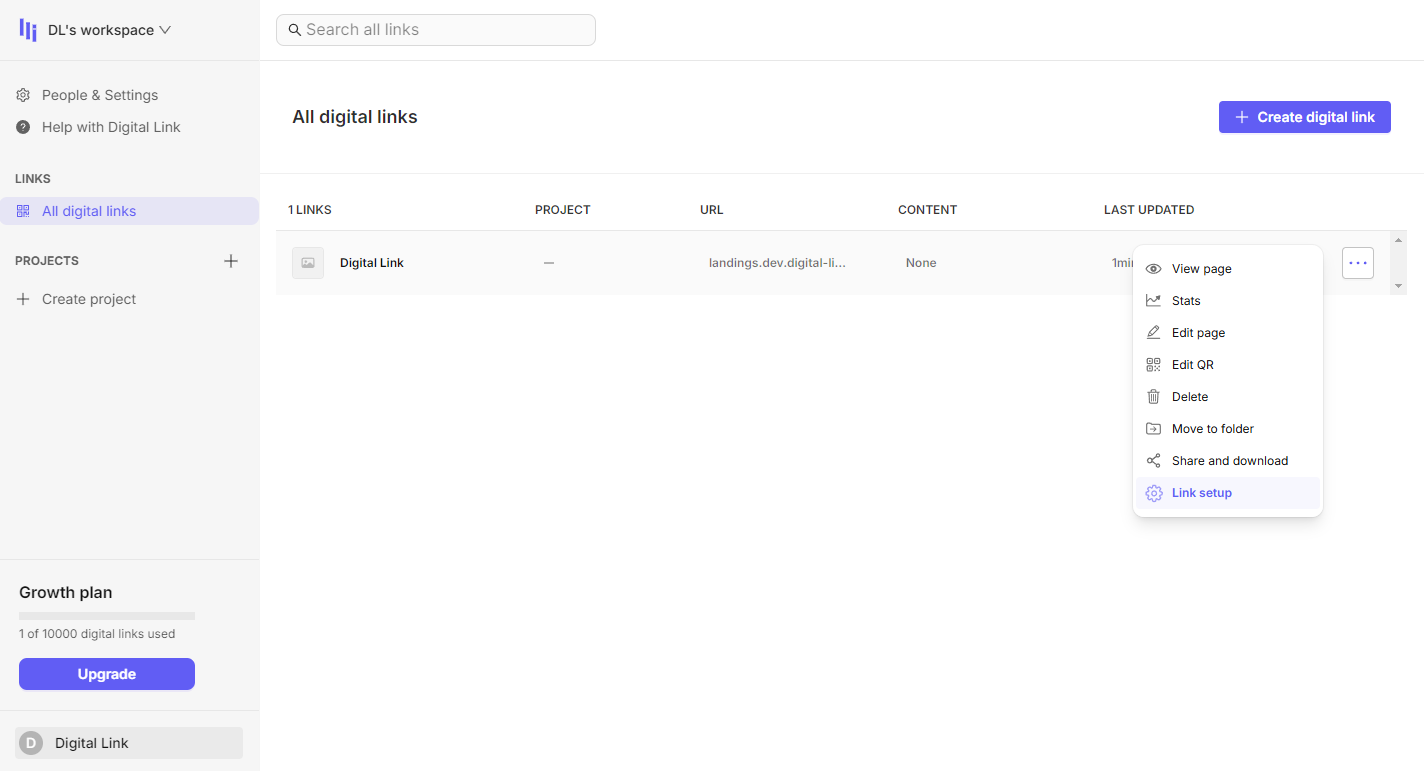 Click **Add link**, enter the corresponding information and click **Add**.
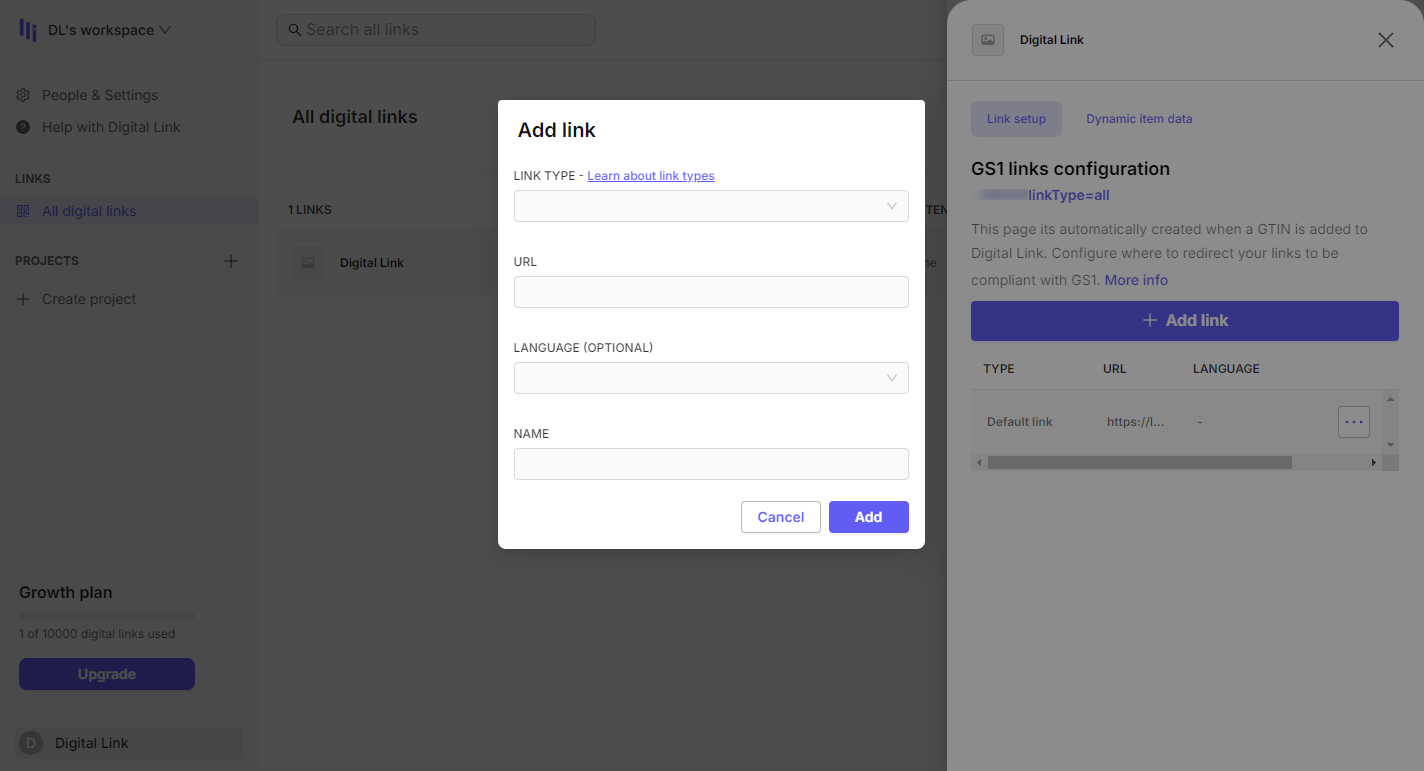 If you want to edit or delete a link, click its **three-dot menu** and click **Edit** or **Delete** respectively. To access a digital link's linkset, click the **link** under "GS1 links configuration". Here is an example of a a digital link's linkset:
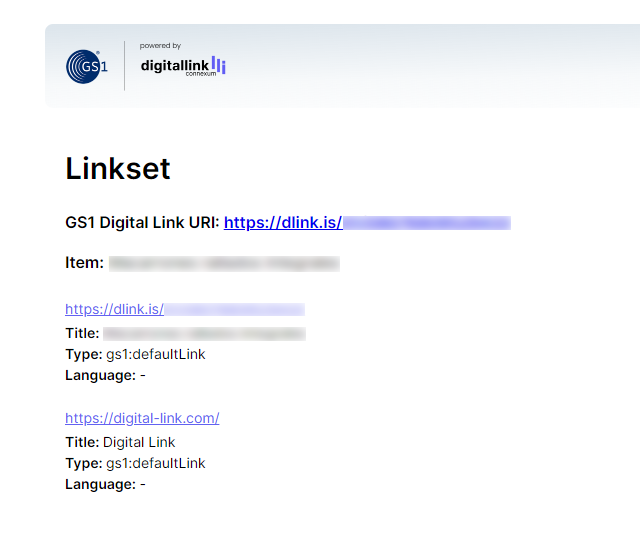 ---
## How to bulk create digital links
URL: https://digital-link.com/help-center/how-to-bulk-create-digital-links/
Create multiple digital links via a CSV file
If you need to create multiple Digital Links at once, the **Bulk Create** option allows you to generate them quickly using a CSV file. Follow the steps below to create your Digital Links in bulk.
From the main dashboard, click on **Create a Digital Link**.
---
## How to bulk create digital links
URL: https://digital-link.com/help-center/how-to-bulk-create-digital-links/
Create multiple digital links via a CSV file
If you need to create multiple Digital Links at once, the **Bulk Create** option allows you to generate them quickly using a CSV file. Follow the steps below to create your Digital Links in bulk.
From the main dashboard, click on **Create a Digital Link**.
 On the Digital Link creation screen, click **Create in bulk**. This option is designed for generating multiple Digital Links at the same time.
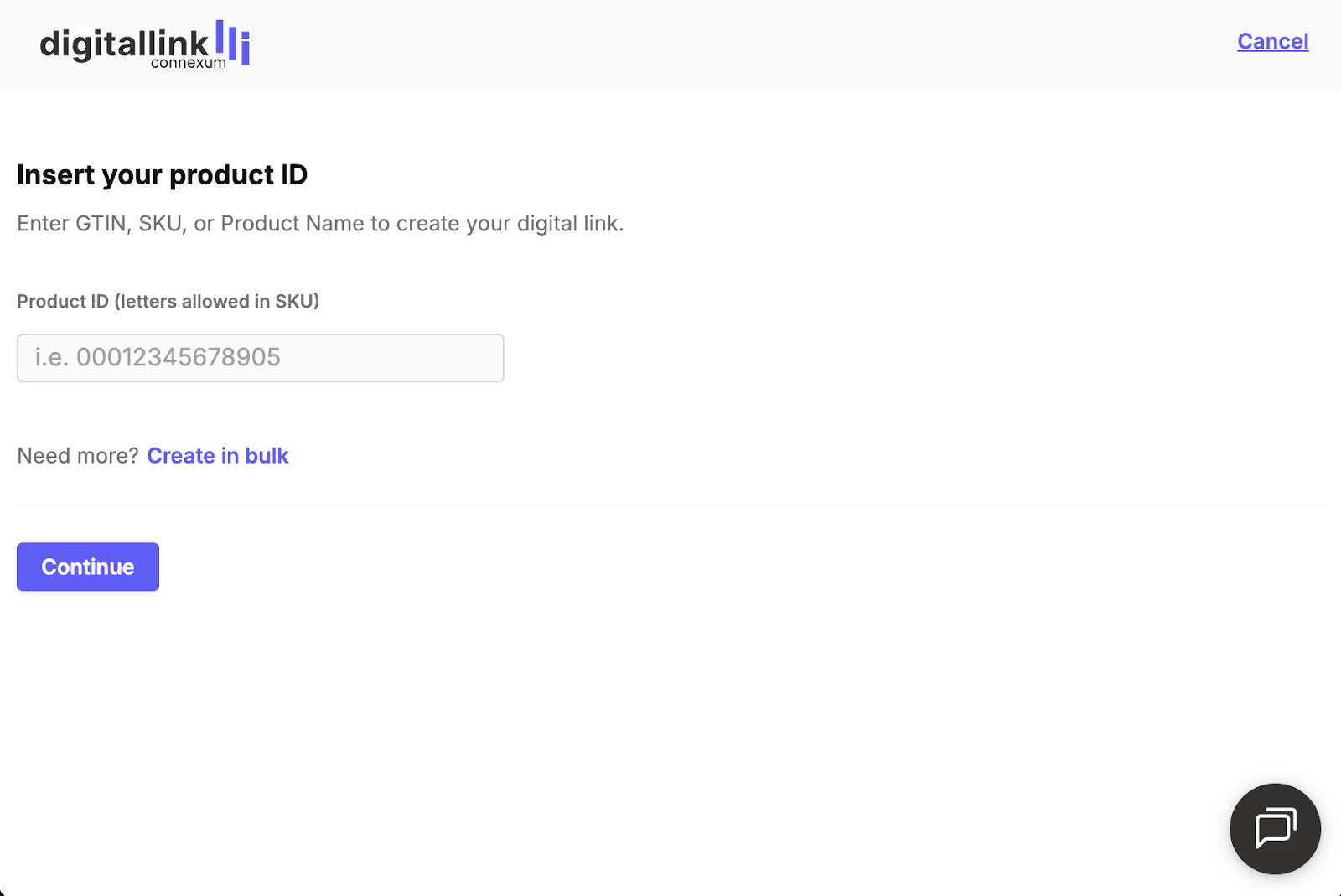 Download the provided CSV template. This file will be used to enter all the product information required to generate your Digital Links. Complete the CSV file with your product data, making sure all required fields are filled in correctly. Once ready, upload the completed CSV file to the platform.
Select the subdomain you want to use for your Digital Links.
- You can use a custom subdomain if you have already set one up, or
- Use the complimentary **dlink.is** subdomain.
Select the project where the Digital Links will be created.
Note: The project must be created beforehand in order to appear in the list.
Download the provided CSV template. This file will be used to enter all the product information required to generate your Digital Links. Complete the CSV file with your product data, making sure all required fields are filled in correctly. Once ready, upload the completed CSV file to the platform.
Select the subdomain you want to use for your Digital Links.
- You can use a custom subdomain if you have already set one up, or
- Use the complimentary **dlink.is** subdomain.
Select the project where the Digital Links will be created.
Note: The project must be created beforehand in order to appear in the list.
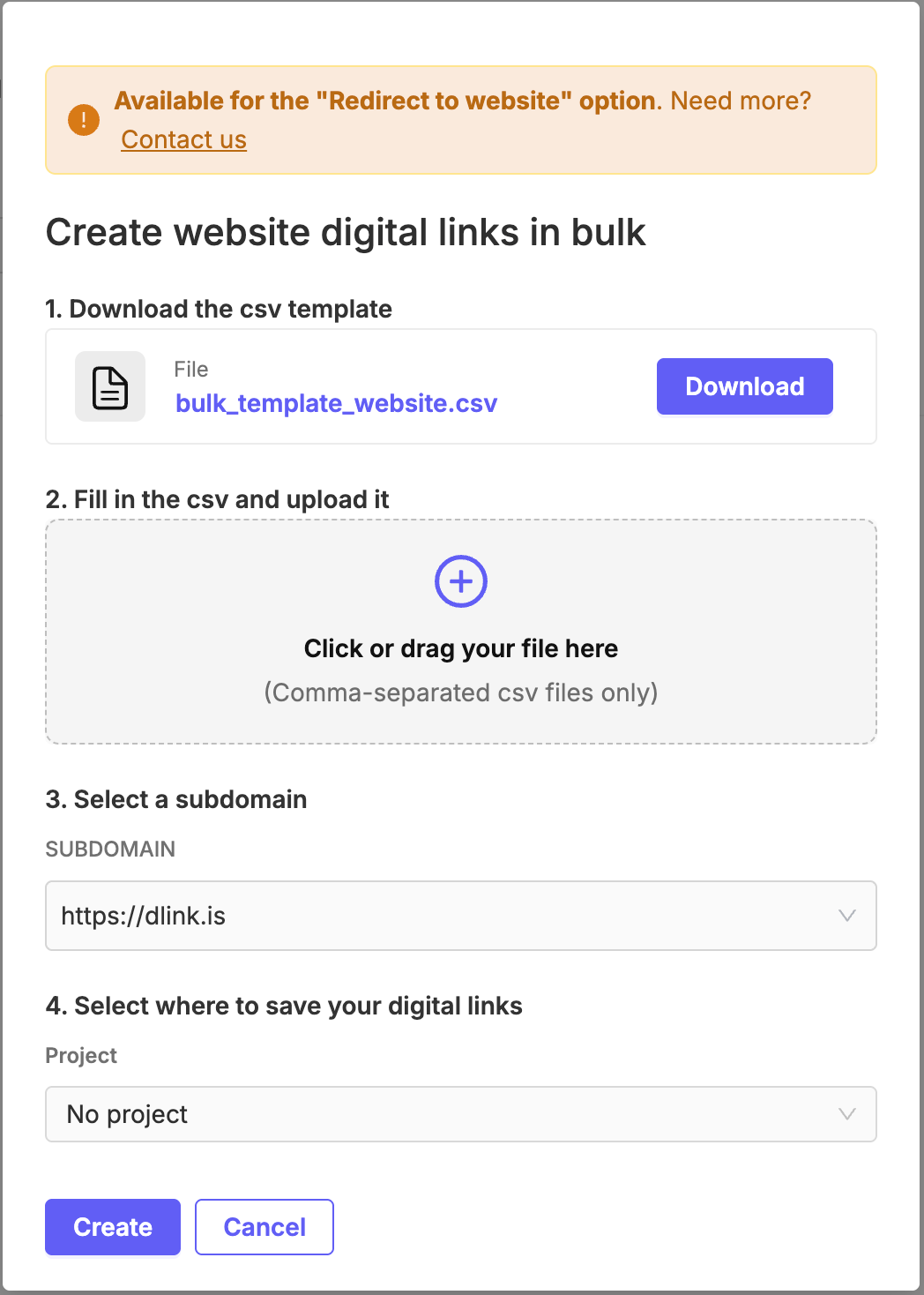 Once the process is complete, you will receive an email containing a **ZIP file with all your generated QR codes**.
---
## How to change my billing details
URL: https://digital-link.com/help-center/how-to-change-my-billing-details/
Learn how to update your billing details from the Settings section of your dashboard.
From your dashboard, click **Settings** in the sidebar, click **Billing** and click **Edit** in the "Billing details" section. Any changes made to your billing details will be reflected in future invoices.
Once the process is complete, you will receive an email containing a **ZIP file with all your generated QR codes**.
---
## How to change my billing details
URL: https://digital-link.com/help-center/how-to-change-my-billing-details/
Learn how to update your billing details from the Settings section of your dashboard.
From your dashboard, click **Settings** in the sidebar, click **Billing** and click **Edit** in the "Billing details" section. Any changes made to your billing details will be reflected in future invoices.
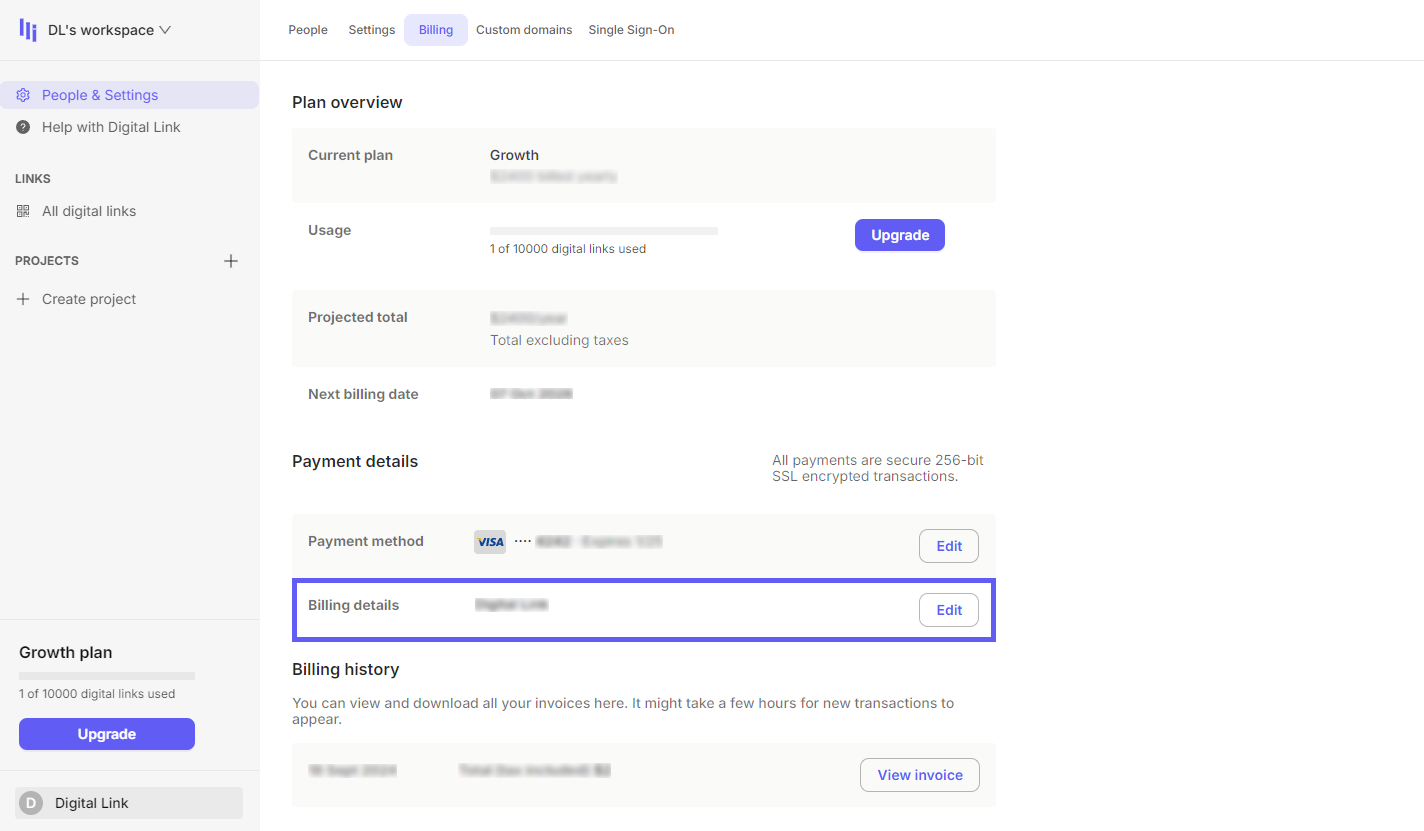 ---
## How to change my payment method
URL: https://digital-link.com/help-center/how-to-change-my-payment-method/
Update the payment method on your account from your billing settings
From your dashboard, click **Settings** in the sidebar, click **Billing** and click **Edit** in the "Payment method" section.
---
## How to change my payment method
URL: https://digital-link.com/help-center/how-to-change-my-payment-method/
Update the payment method on your account from your billing settings
From your dashboard, click **Settings** in the sidebar, click **Billing** and click **Edit** in the "Payment method" section.
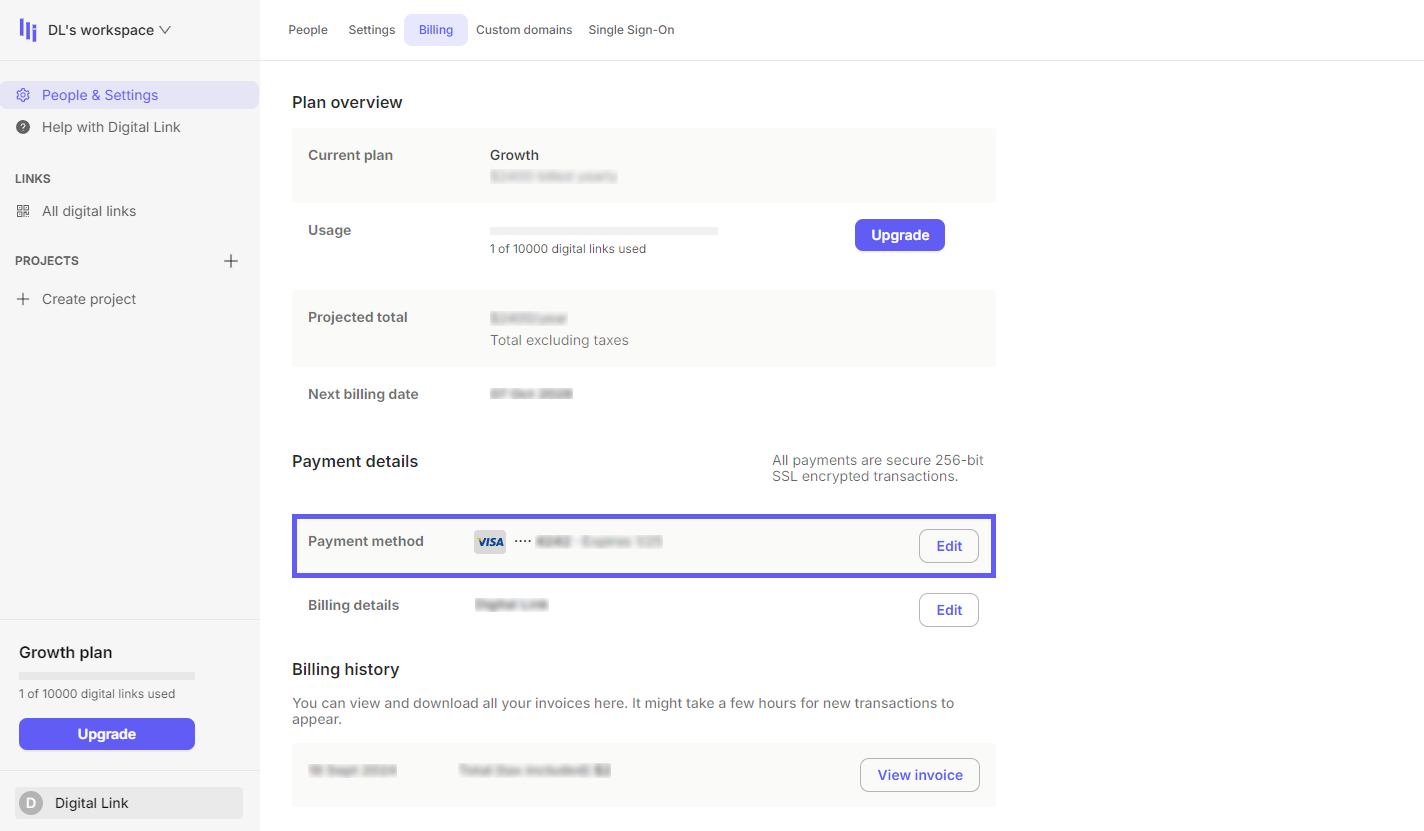 ---
## How to create a digital link to go to a website
URL: https://digital-link.com/help-center/how-to-create-a-digital-link-to-go-to-a-website/
Link your digital link to your website or any URL
From your dashboard, click **Create digital link**.
---
## How to create a digital link to go to a website
URL: https://digital-link.com/help-center/how-to-create-a-digital-link-to-go-to-a-website/
Link your digital link to your website or any URL
From your dashboard, click **Create digital link**.
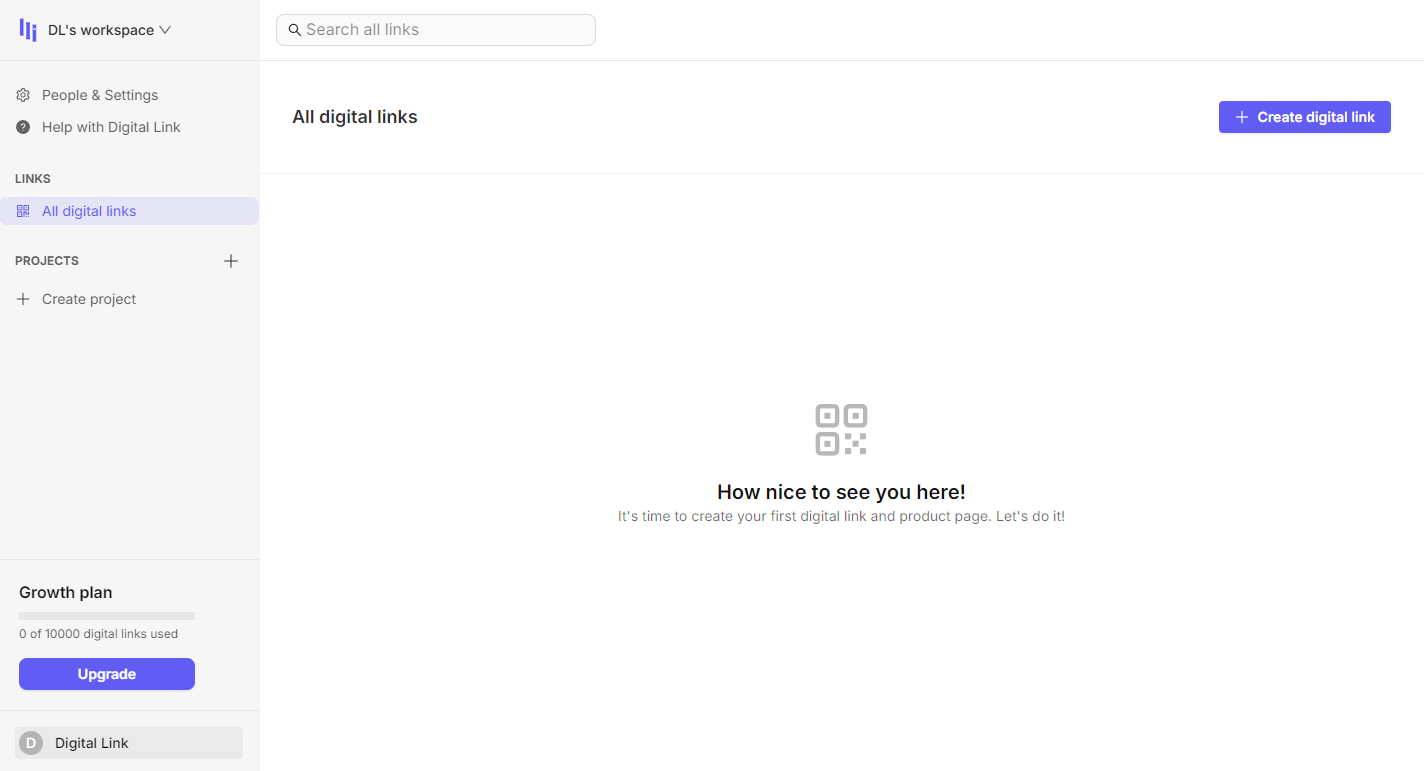 Enter the GTIN of your product and click **Continue**.
 You can customize and download your digital link QR/Barcode during this step or after editing its content. If you want to proceed, click **Continue** at the bottom.
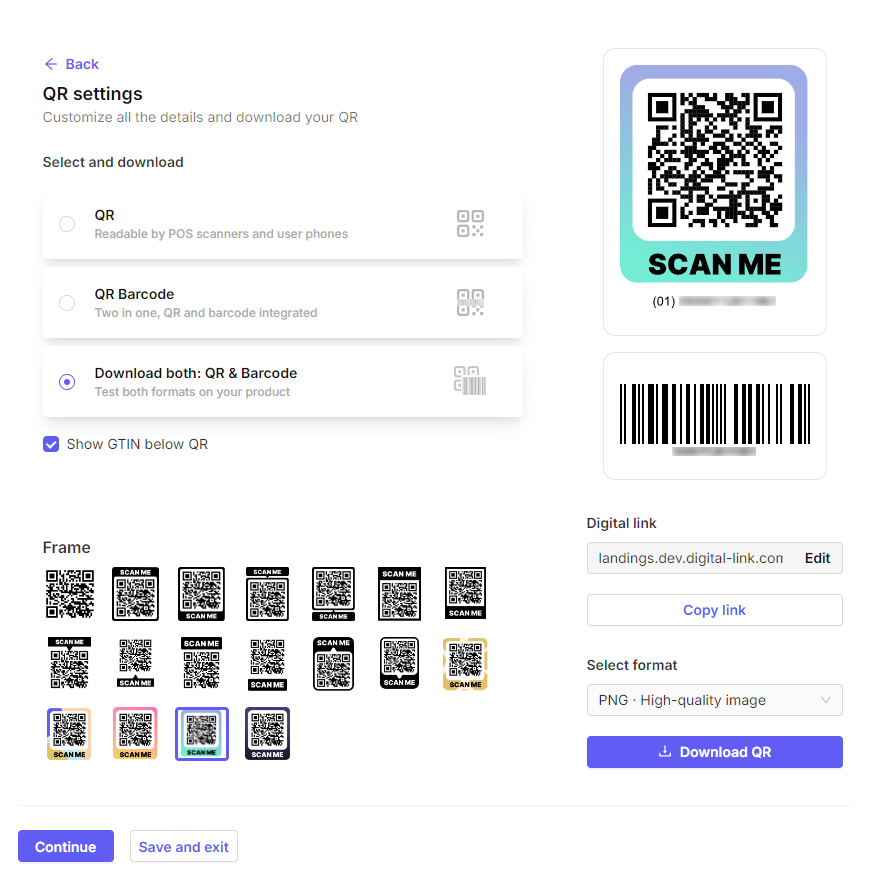 Select **Redirect to website** and click **Continue**.
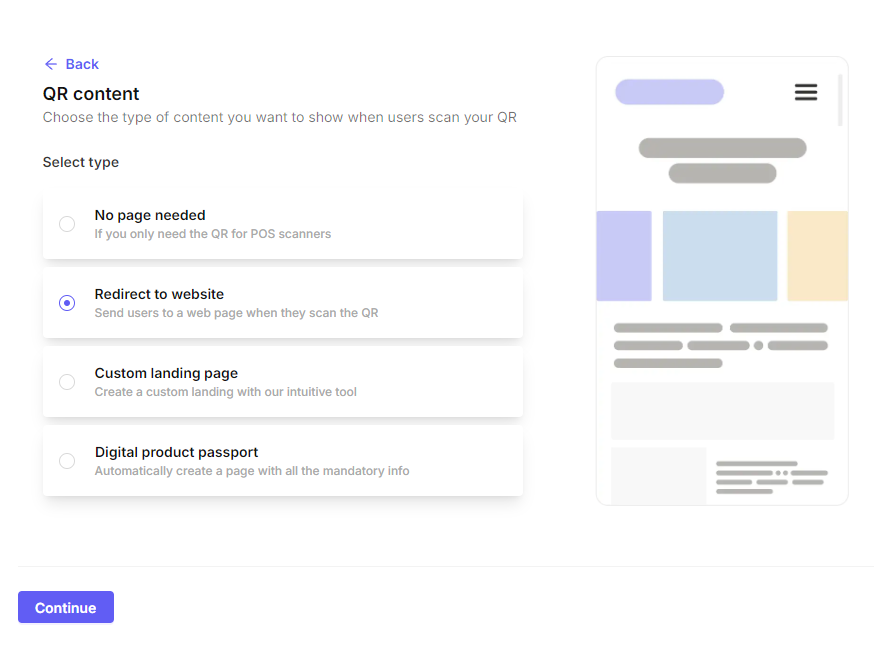 Enter your URL and click **Finish**.
 ---
## How to create a digital link to show a custom landing page
URL: https://digital-link.com/help-center/how-to-create-a-digital-link-to-show-a-custom-landing-page/
Link your digital link to a fully customized page
From your dashboard, click **Create digital link**.
---
## How to create a digital link to show a custom landing page
URL: https://digital-link.com/help-center/how-to-create-a-digital-link-to-show-a-custom-landing-page/
Link your digital link to a fully customized page
From your dashboard, click **Create digital link**.
 Enter the GTIN of your product and click **Continue**.
 You can customize and download your digital link QR/Barcode during this step or after editing its content. If you want to proceed, click **Continue** at the bottom.
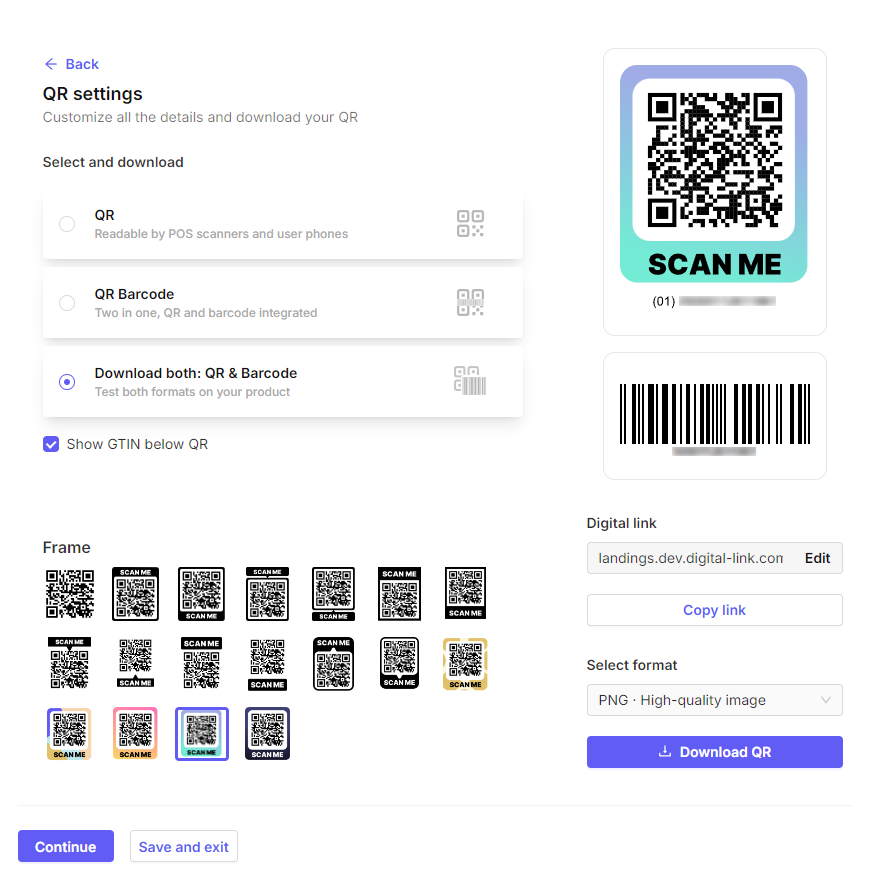 Select **Custom landing page** and click **Continue**.
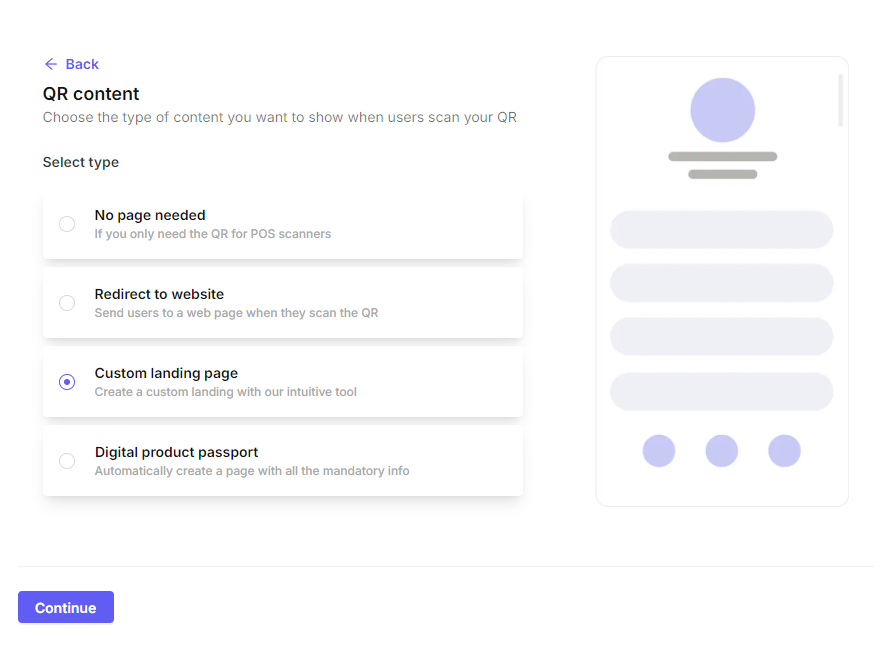 You can add texts, link and file buttons, images, embedded contents, YouTube videos and social media profiles. You can also add use the **Carbon footprint component** to show specific information about your product.
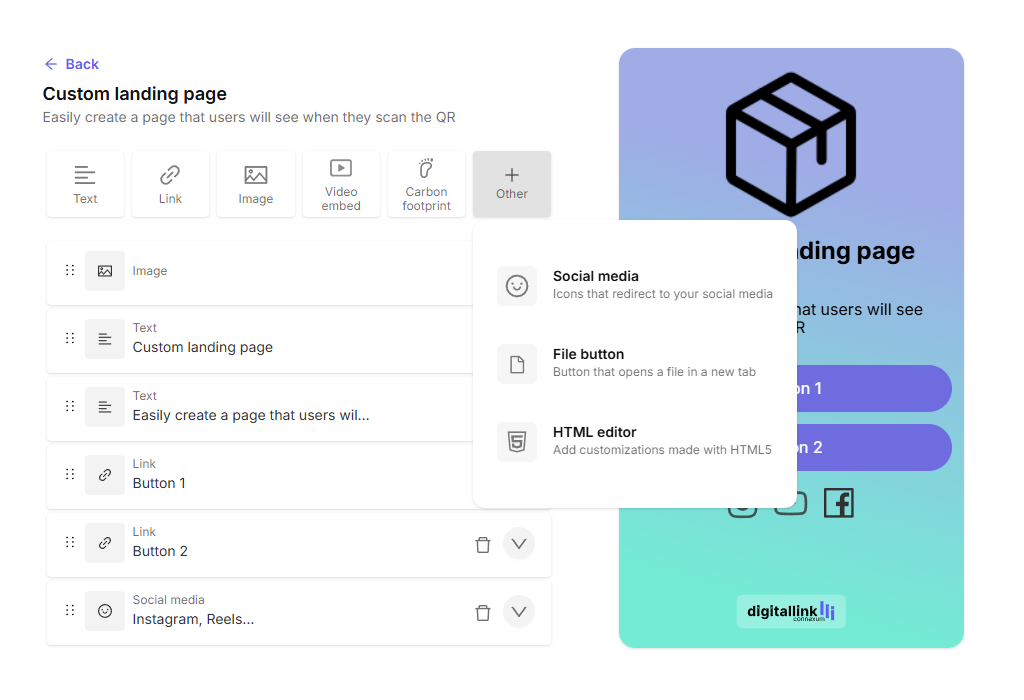 You can also customize the look of your landing page by selecting a template or creating your own. When ready, click **Finish**.
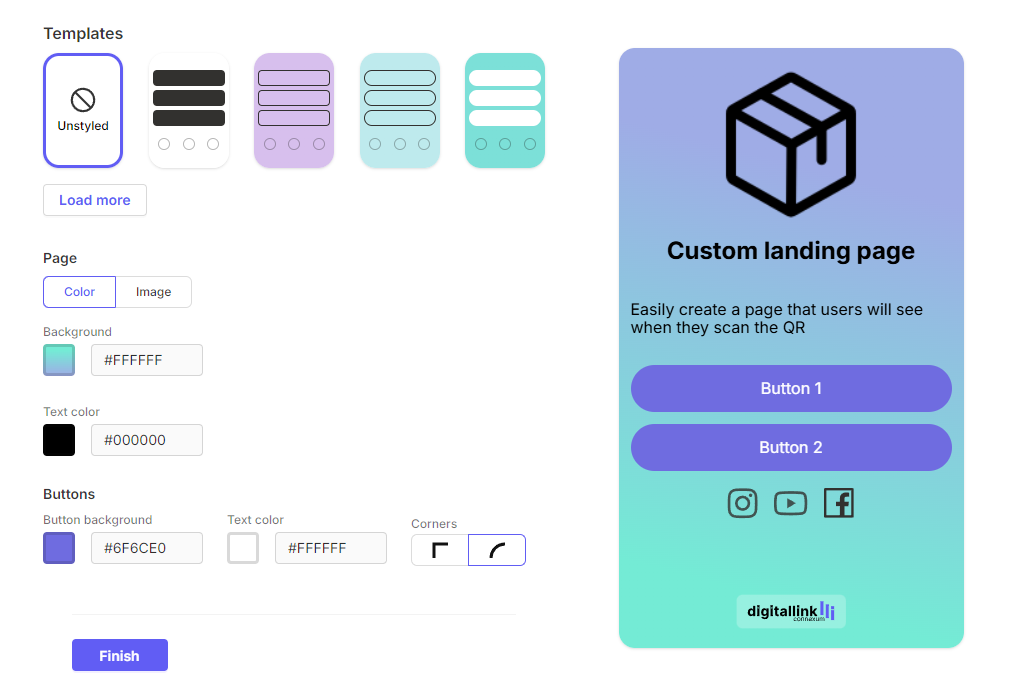 ---
## Create a digital link to a product information page
URL: https://digital-link.com/help-center/how-to-create-a-digital-link-to-show-a-product-information-page/
Link your digital link to a digital product passport that displays your product's information page
From your dashboard, click **Create digital link**.
---
## Create a digital link to a product information page
URL: https://digital-link.com/help-center/how-to-create-a-digital-link-to-show-a-product-information-page/
Link your digital link to a digital product passport that displays your product's information page
From your dashboard, click **Create digital link**.
 Enter the GTIN of your product and click **Continue**.
 You can customize and download your digital link QR/Barcode during this step or after editing its content. If you want to proceed, click **Continue** at the bottom.
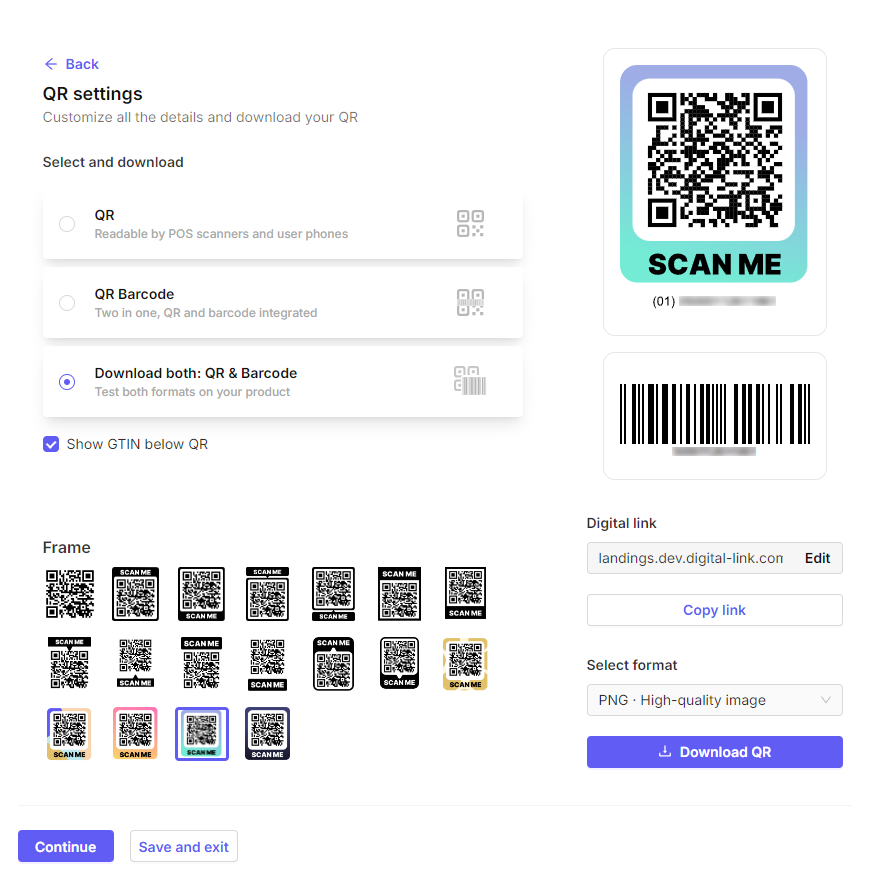 Select **Digital product passport** and click **Continue**.
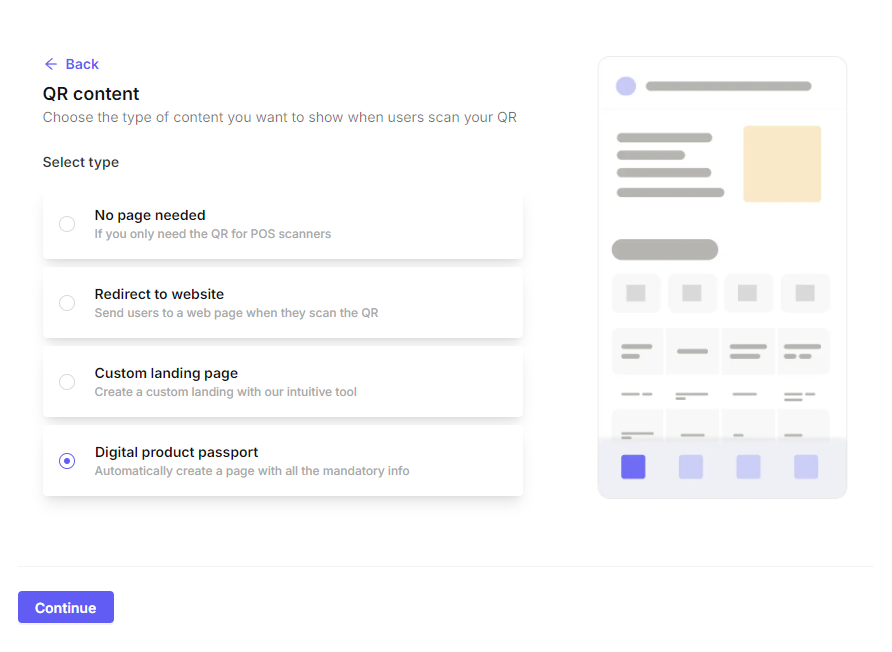 You can check your product's information in the preview. If it is not correct, click **Update**. You will be able to upload a file for us to add the correct information. Aside from showing the product's nutrition facts, ingredients and allergens, you can also create a company page by clicking **Landing page**.
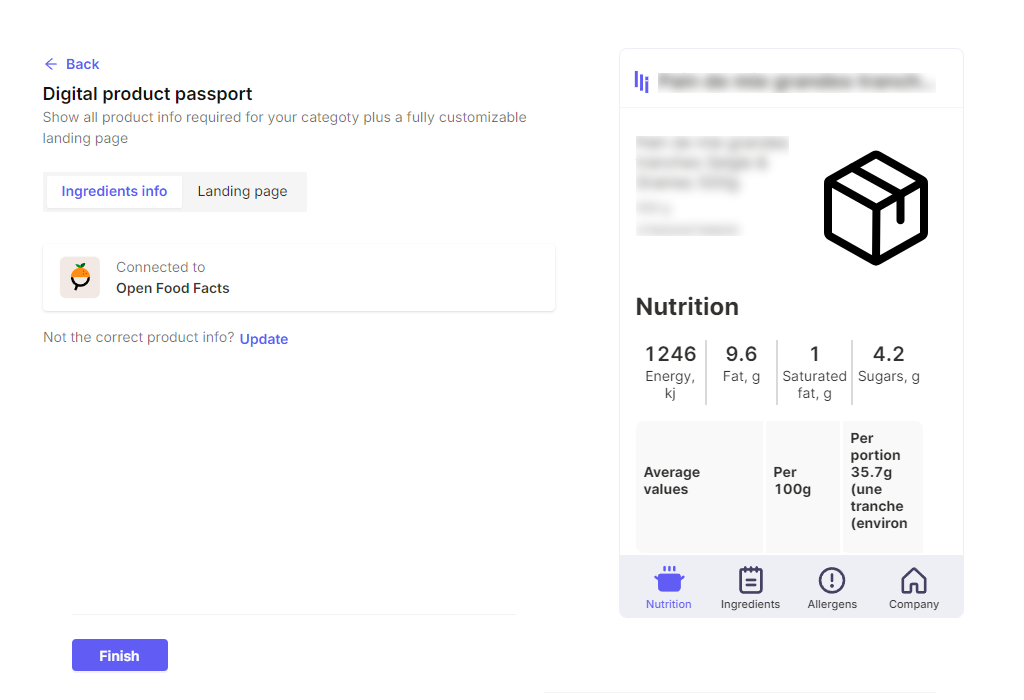 You can add texts, link and file buttons, images, embedded contents, YouTube videos and social media profiles. You can also add use the **Carbon footprint component** to show specific information about your product. If you want to customize the look of your company page, click **Edit** under "Styles". When ready, click **Finish**.
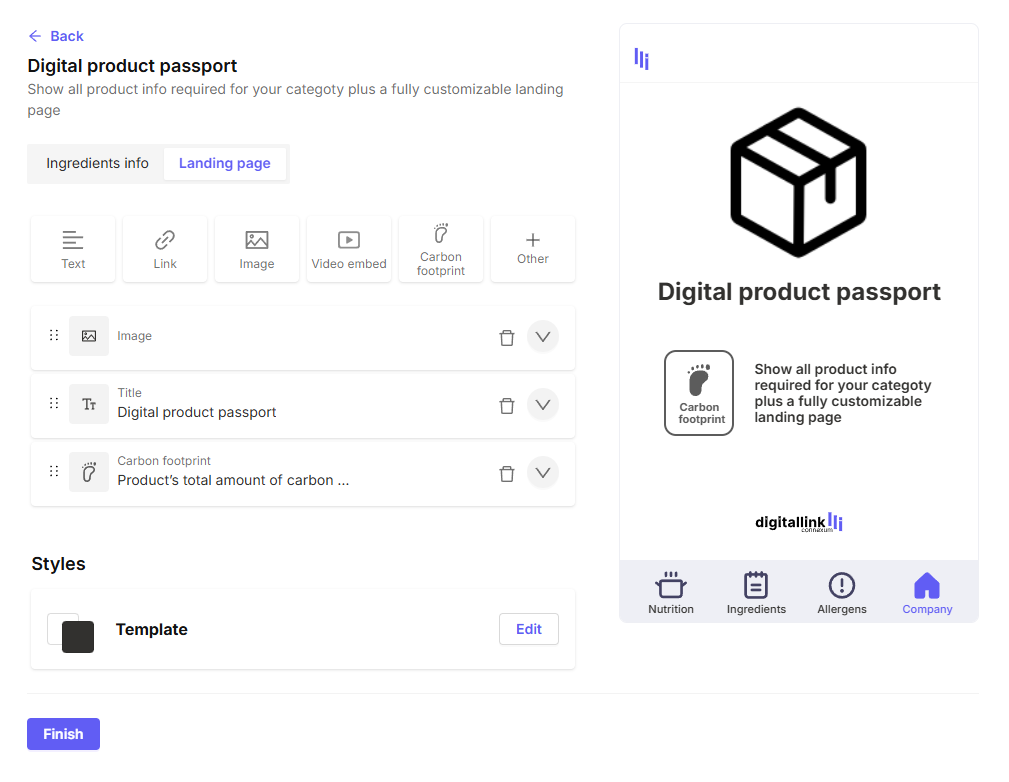 ---
## How to create variants of a digital link
URL: https://digital-link.com/help-center/how-to-create-variants-of-a-digital-link/
Add dynamic data to your digital links
If you have a digital link to show your product information, you can create variants of it by adding dynamic data such as batch or lot number, expiration date, serial number, net weight, country of origin, packaging date, and consumer product variant information.
From your dashboard, click the digital link's **three-dot menu** and click **Link setup**.
---
## How to create variants of a digital link
URL: https://digital-link.com/help-center/how-to-create-variants-of-a-digital-link/
Add dynamic data to your digital links
If you have a digital link to show your product information, you can create variants of it by adding dynamic data such as batch or lot number, expiration date, serial number, net weight, country of origin, packaging date, and consumer product variant information.
From your dashboard, click the digital link's **three-dot menu** and click **Link setup**.
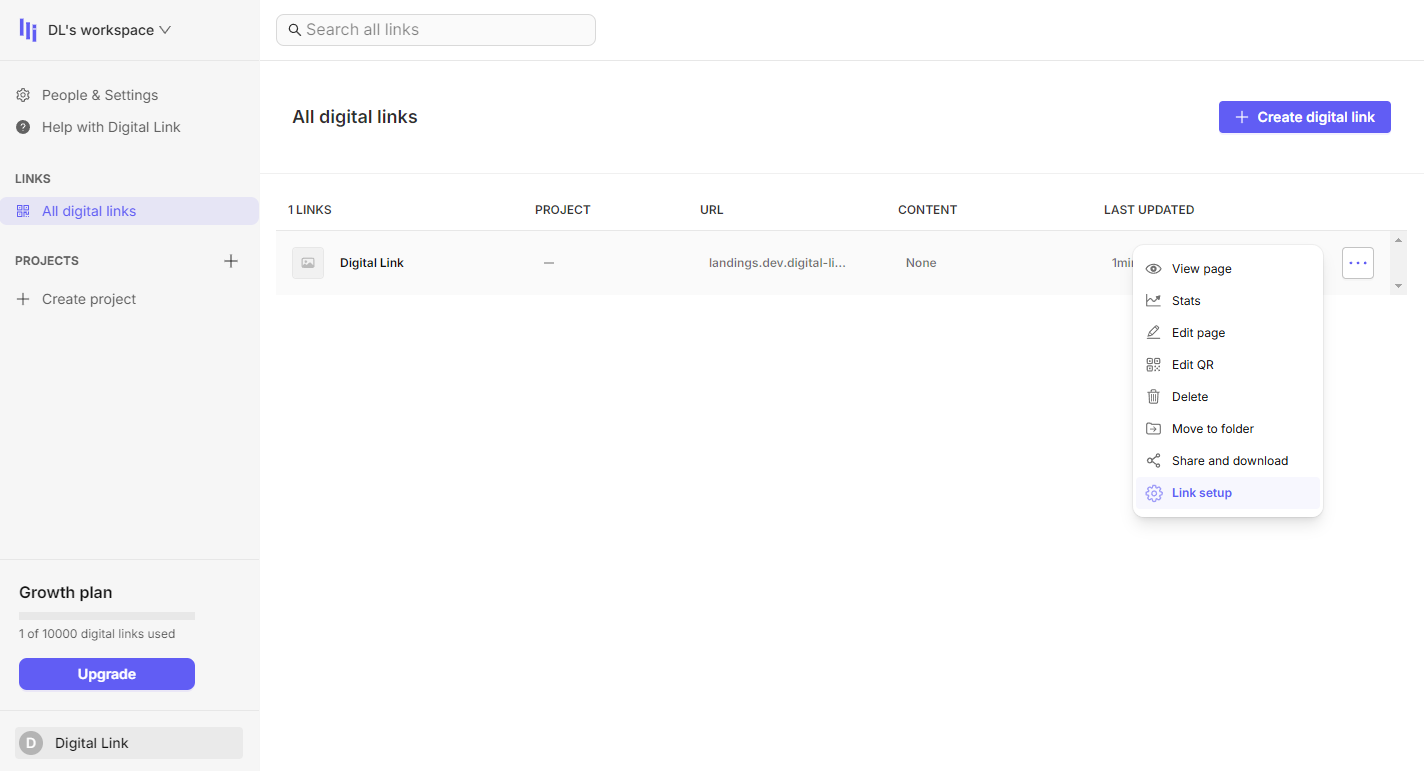 Click **Dynamic item data**, click **Add data**, enter the corresponding information and click **Add**.
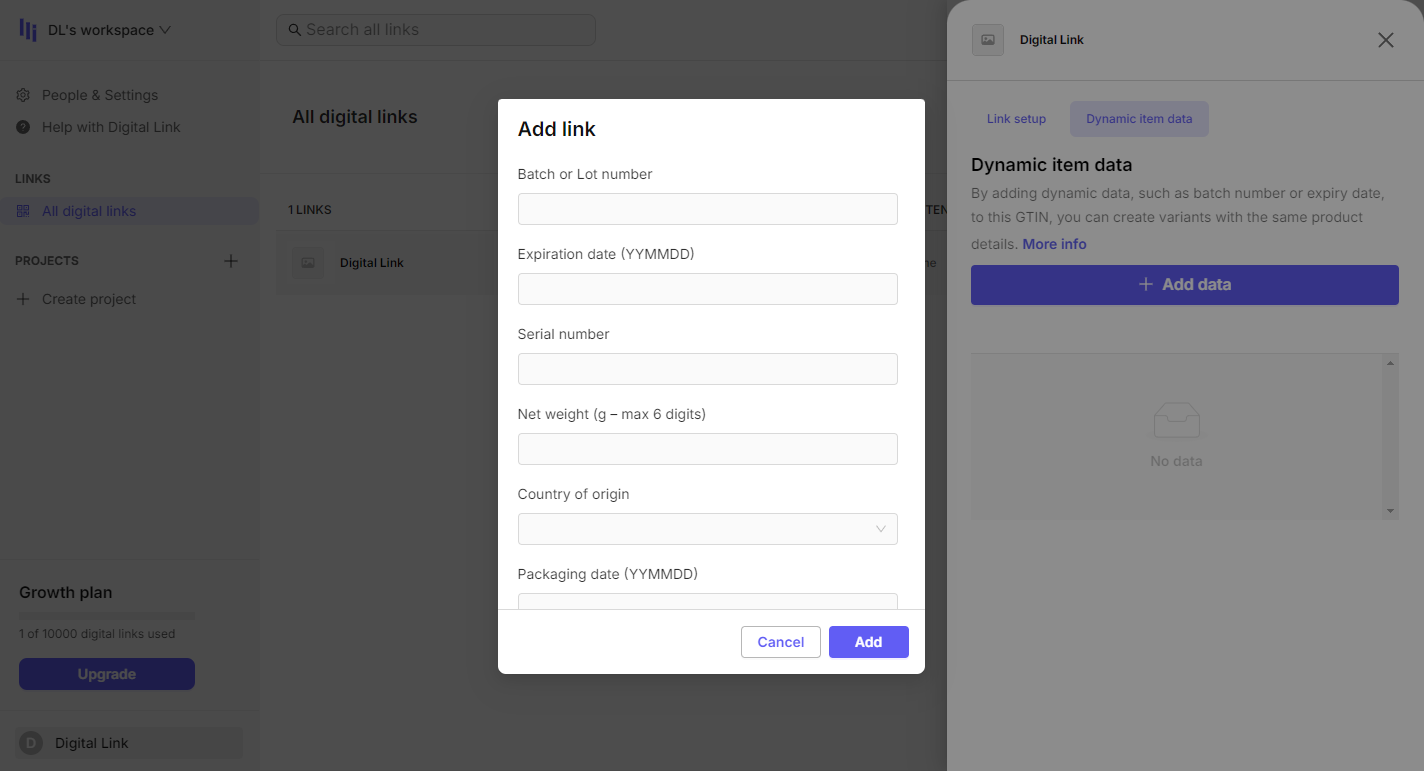 After that, you can view, edit, delete, share and even [set up its own linkset](/help-center/how-to-add-links-to-a-digital-link/) by clicking the variant's **three-dot menu**.
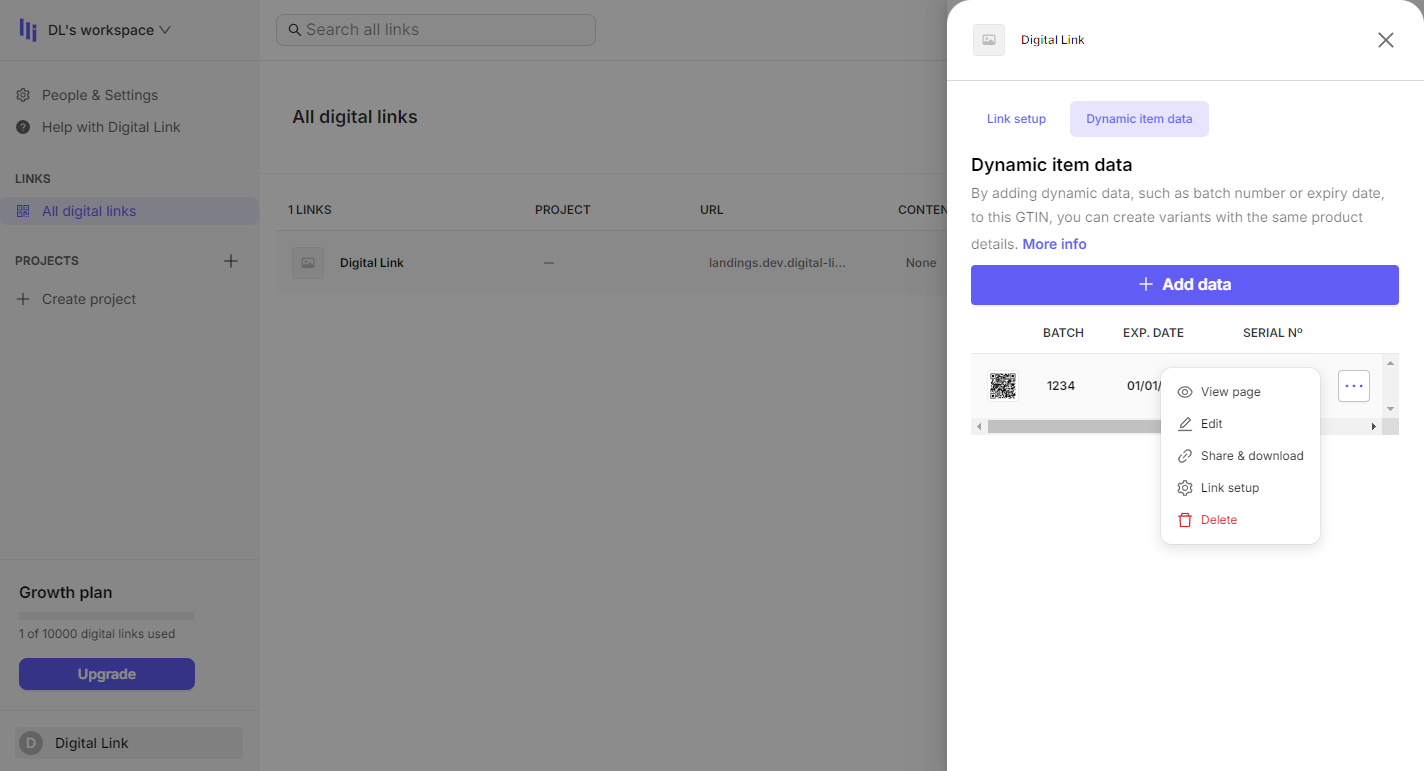 ---
## How to delete a digital link
URL: https://digital-link.com/help-center/how-to-delete-a-digital-link/
Erase a digital link with all its product information
From your dashboard, click the digital link's **three-dot menu** and click **Delete**.
---
## How to delete a digital link
URL: https://digital-link.com/help-center/how-to-delete-a-digital-link/
Erase a digital link with all its product information
From your dashboard, click the digital link's **three-dot menu** and click **Delete**.
 ---
## How to download my invoices
URL: https://digital-link.com/help-center/how-to-download-my-invoices/
Find and download your invoices from the Billing section of your dashboard settings.
From your dashboard, click **Settings** in the sidebar, click **Billing** and click **View invoice** in the "Billing history" section.
---
## How to download my invoices
URL: https://digital-link.com/help-center/how-to-download-my-invoices/
Find and download your invoices from the Billing section of your dashboard settings.
From your dashboard, click **Settings** in the sidebar, click **Billing** and click **View invoice** in the "Billing history" section.
 If you cannot see your invoices, click either **Add a billing address** in the "Billing history" section or **Add** in the "Billing details" section.
 ---
## How to edit the content of a digital link
URL: https://digital-link.com/help-center/how-to-edit-the-content-of-a-digital-link/
Update or change the content (URL, custom page or digital product passport) of your digital links
From your dashboard, click the digital link's **three-dot menu** and click **Edit page**.
---
## How to edit the content of a digital link
URL: https://digital-link.com/help-center/how-to-edit-the-content-of-a-digital-link/
Update or change the content (URL, custom page or digital product passport) of your digital links
From your dashboard, click the digital link's **three-dot menu** and click **Edit page**.
 ---
## How to edit the QR/Barcode of a digital link
URL: https://digital-link.com/help-center/how-to-edit-the-qr-barcode-of-a-digital-link/
Customize your digital link QR/Barcode
From your dashboard, click the digital link's **three-dot menu** and click **Edit QR**.
---
## How to edit the QR/Barcode of a digital link
URL: https://digital-link.com/help-center/how-to-edit-the-qr-barcode-of-a-digital-link/
Customize your digital link QR/Barcode
From your dashboard, click the digital link's **three-dot menu** and click **Edit QR**.
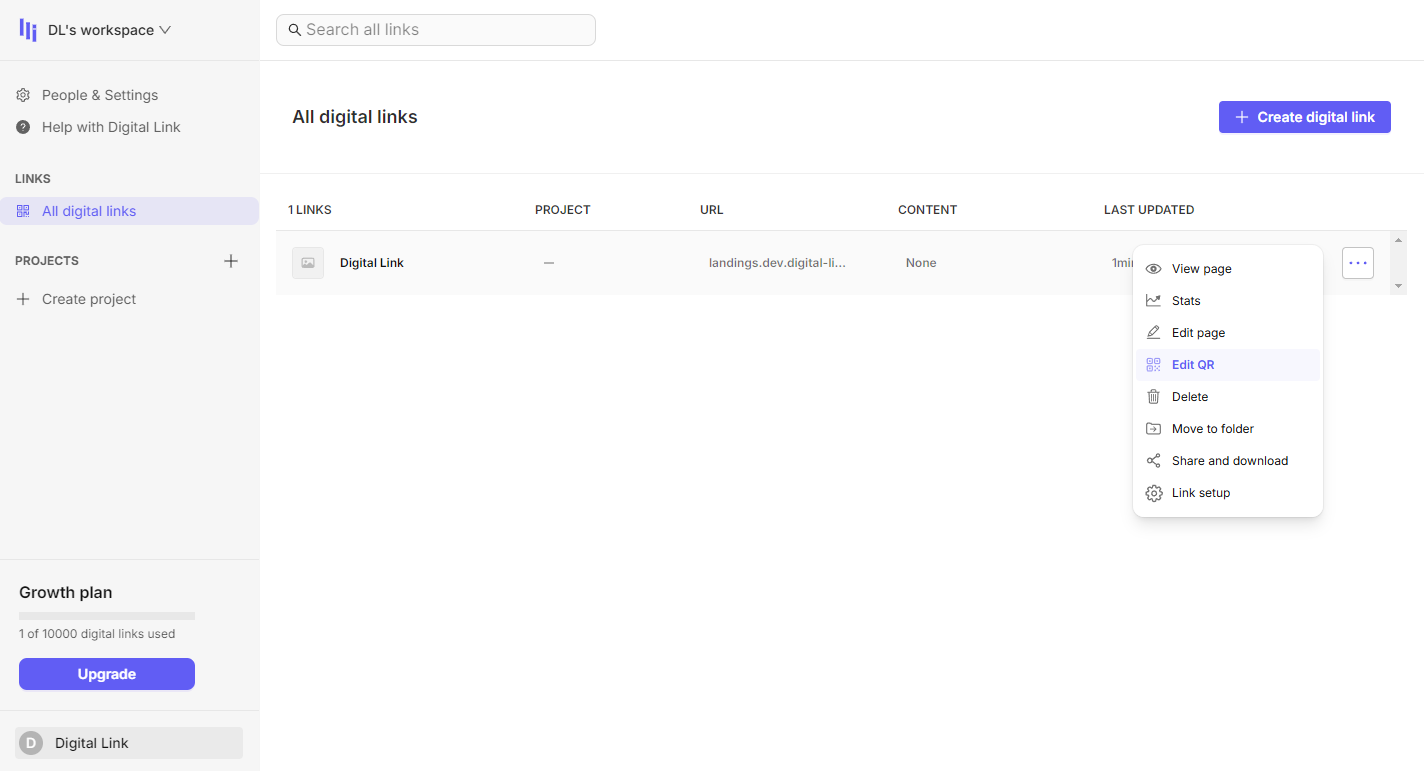 ---
## How to invite team members
URL: https://digital-link.com/help-center/how-to-invite-team-members/
Add people to your workspace to manage digital links together.
If you have a **Lite**, **Essential** or **Growth plan**, you can invite team members to your workspace. Check our [pricing plans](/pricing/) to know how many you can add per plan.
From your dashboard, click **Settings** in the sidebar, click **People** and click **Invite members**.
---
## How to invite team members
URL: https://digital-link.com/help-center/how-to-invite-team-members/
Add people to your workspace to manage digital links together.
If you have a **Lite**, **Essential** or **Growth plan**, you can invite team members to your workspace. Check our [pricing plans](/pricing/) to know how many you can add per plan.
From your dashboard, click **Settings** in the sidebar, click **People** and click **Invite members**.
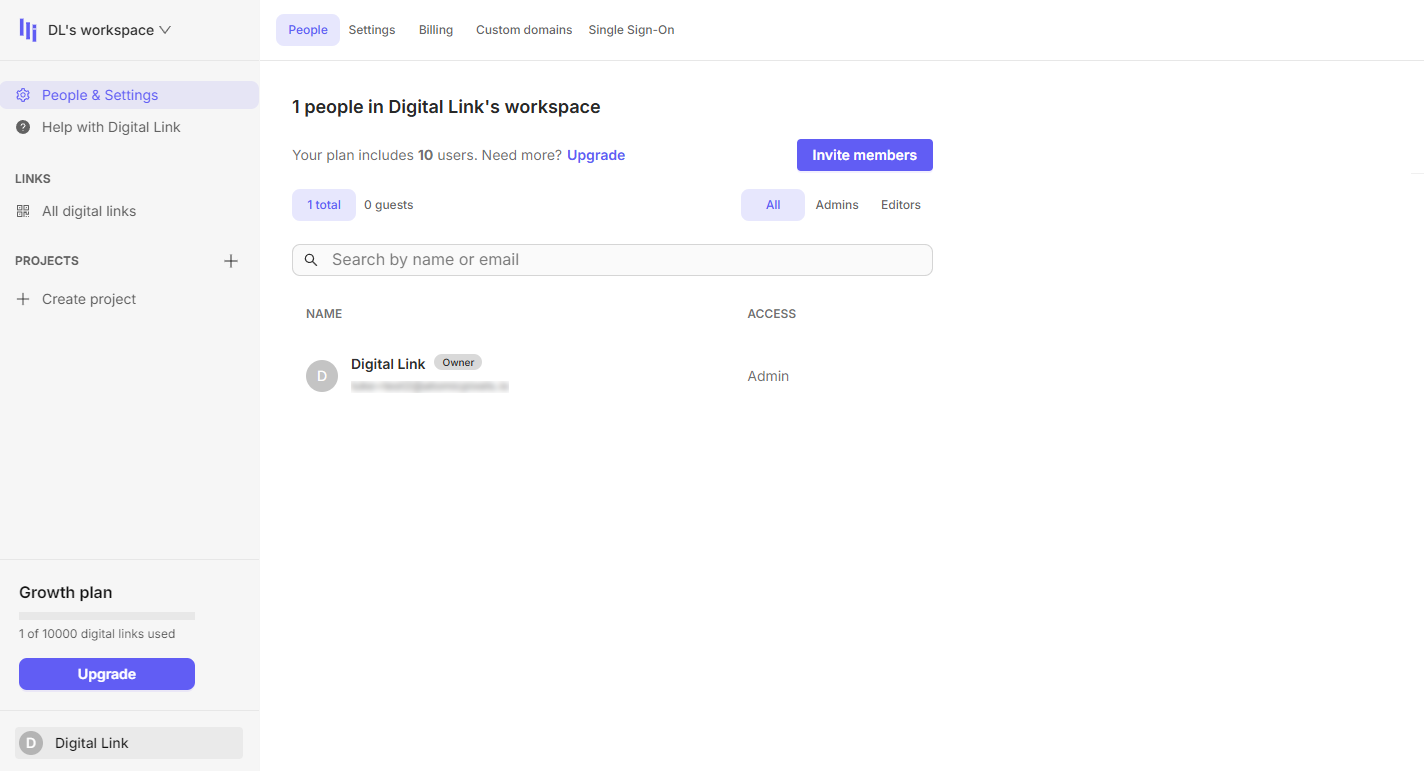 Enter the email address of the user you would like to invite and click **Add**. The user will receive an email to sign up or log in to access to your workspace.
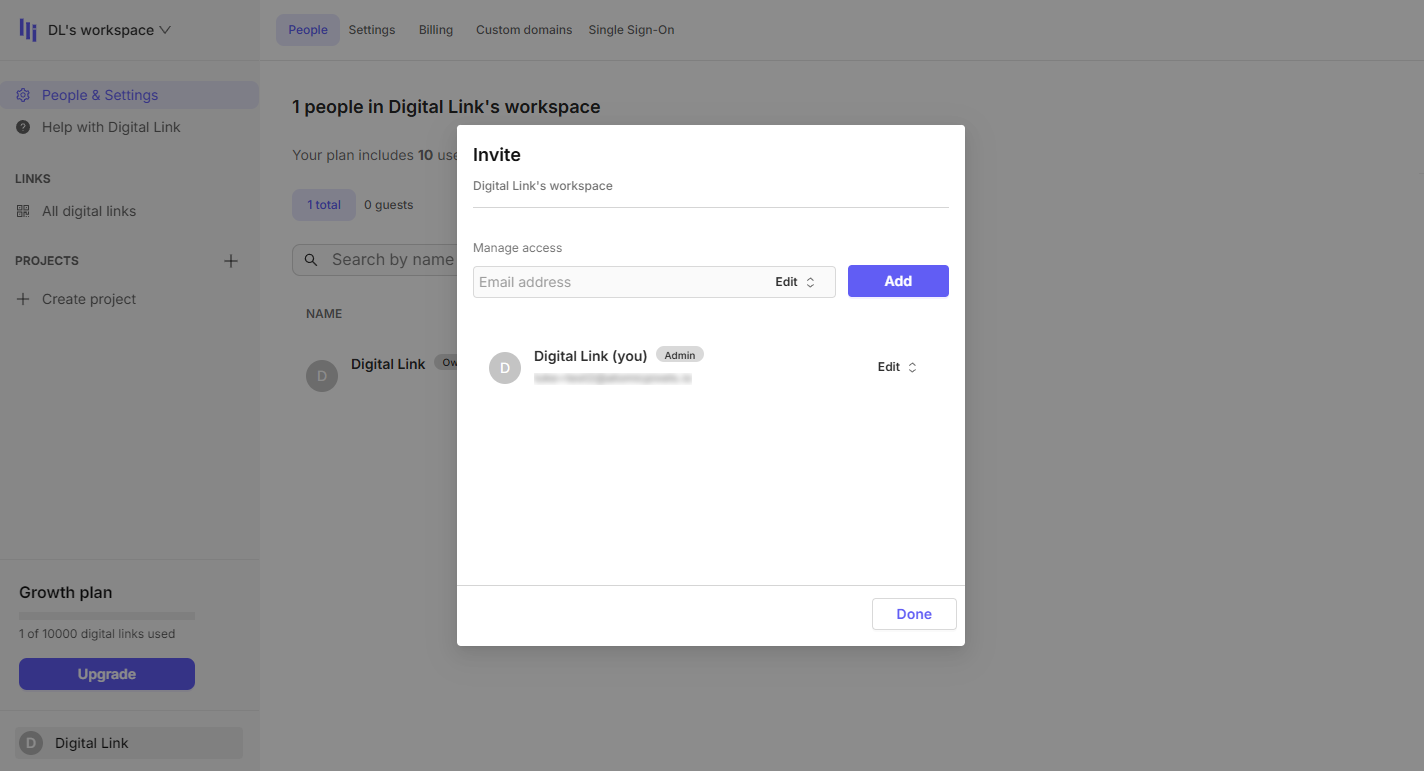 All users are given Editor access by default which means they can edit and manage digital links in the shared workspace only. If you want to change their roles to Admins in order to access billing information as well, or remove them from the workspace, click the user's **three-dot menu** and click the **Admin checkbox** or **Remove from workspace** respectively.
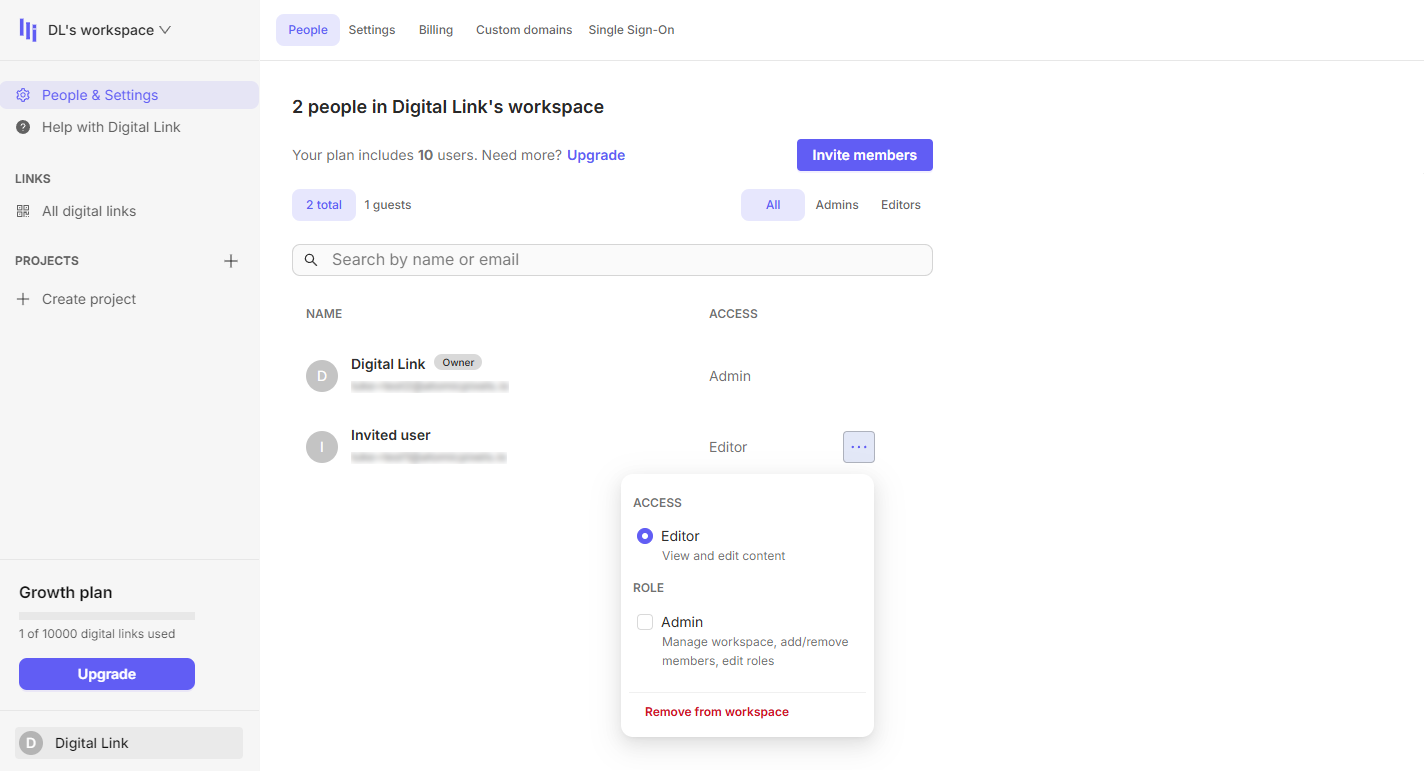 As for invited users, once they sign up or log in via the email they received, they can switch to the shared workspace by clicking the **down arrow** in the top-left corner of the dashboard and selecting the corresponding workspace.
 ---
## How to organize digital links
URL: https://digital-link.com/help-center/how-to-organize-digital-links/
Create projects/folders to organize your digital links.
If you want to create a project, click **Create project** in the sidebar of your dashboard (or the **plus icon** if you have already created a project), name it and click **Create**.
---
## How to organize digital links
URL: https://digital-link.com/help-center/how-to-organize-digital-links/
Create projects/folders to organize your digital links.
If you want to create a project, click **Create project** in the sidebar of your dashboard (or the **plus icon** if you have already created a project), name it and click **Create**.
 If you want to move a digital link to a project, click its **three-dot menu**, click **Move to folder**, select the project where the scene will be moved to and click **Move**.
 If you want to rename or delete a project, click it in the sidebar of your dashboard, click its **three-dot menu** and click **Rename** or **Delete** respectively.
 ---
## How to set up SSO (Single Sign-On)
URL: https://digital-link.com/help-center/how-to-set-up-sso-single-sign-on/
Improve login security for your company and employees.
You can provide an extra security measure, allowing all users in your organization to log into their accounts using unique credentials.
If you want to know how to use this feature, contact us via [chat](#hs-chat-open) or [email](mailto:support@digital-link.com).
---
## How to share and download a digital link
URL: https://digital-link.com/help-center/how-to-share-and-download-a-digital-link/
Share your digital link's URL or download its QR/Barcode.
From your dashboard, click the digital link's **three-dot menu** and click **Share and download**.
---
## How to set up SSO (Single Sign-On)
URL: https://digital-link.com/help-center/how-to-set-up-sso-single-sign-on/
Improve login security for your company and employees.
You can provide an extra security measure, allowing all users in your organization to log into their accounts using unique credentials.
If you want to know how to use this feature, contact us via [chat](#hs-chat-open) or [email](mailto:support@digital-link.com).
---
## How to share and download a digital link
URL: https://digital-link.com/help-center/how-to-share-and-download-a-digital-link/
Share your digital link's URL or download its QR/Barcode.
From your dashboard, click the digital link's **three-dot menu** and click **Share and download**.
 If you want to share your digital link's URL, click **Copy link**. If you want to download its QR/Barcode, select the file format (PNG, PDF, SVG) and click **Download QR**.
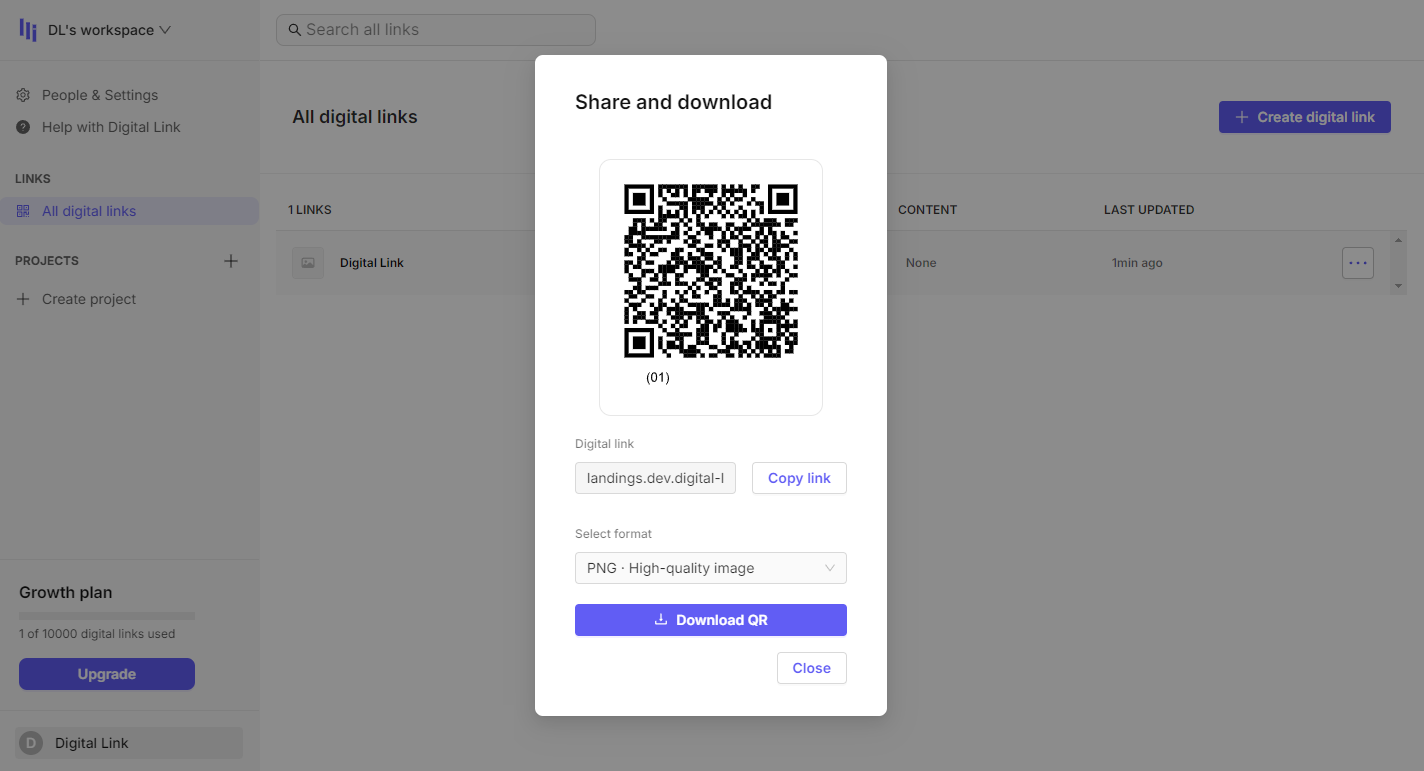 ---
## How to use HTML to customize a landing page
URL: https://digital-link.com/help-center/how-to-use-html-to-customize-a-landing-page/
Use HTML to add dividers, call-to-actions and more to your digital link
You can fully customize your landing page by using the **HTML editor**.
Add one to your landing page.
---
## How to use HTML to customize a landing page
URL: https://digital-link.com/help-center/how-to-use-html-to-customize-a-landing-page/
Use HTML to add dividers, call-to-actions and more to your digital link
You can fully customize your landing page by using the **HTML editor**.
Add one to your landing page.
 Click its **three-dot menu** and click the ** icon** to switch to HTML view.
 Here are some examples of what you can add:
#### Dividers
You can add lines or dividers between pieces of content.
Add the following string:
```html
Here are some examples of what you can add:
#### Dividers
You can add lines or dividers between pieces of content.
Add the following string:
```html
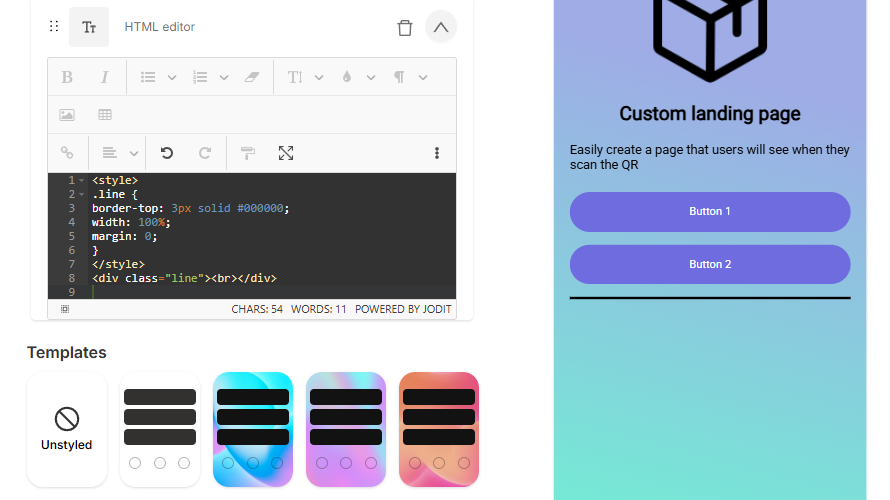 #### Call phone number link
You can create a link to allow users to initiate a phone call directly from their devices.
Add a "href" attribute with the target phone number to the prompt (Call us) that will open the phone app. For example:
```html
#### Call phone number link
You can create a link to allow users to initiate a phone call directly from their devices.
Add a "href" attribute with the target phone number to the prompt (Call us) that will open the phone app. For example:
```html
 ---
## How to view the content of a digital link
URL: https://digital-link.com/help-center/how-to-view-the-content-of-a-digital-link/
View the content (custom page or digital product passport) of your digital link
From your dashboard, click the digital link's **three-dot menu** and click **View page**. The content will be displayed in a new tab.
---
## How to view the content of a digital link
URL: https://digital-link.com/help-center/how-to-view-the-content-of-a-digital-link/
View the content (custom page or digital product passport) of your digital link
From your dashboard, click the digital link's **three-dot menu** and click **View page**. The content will be displayed in a new tab.
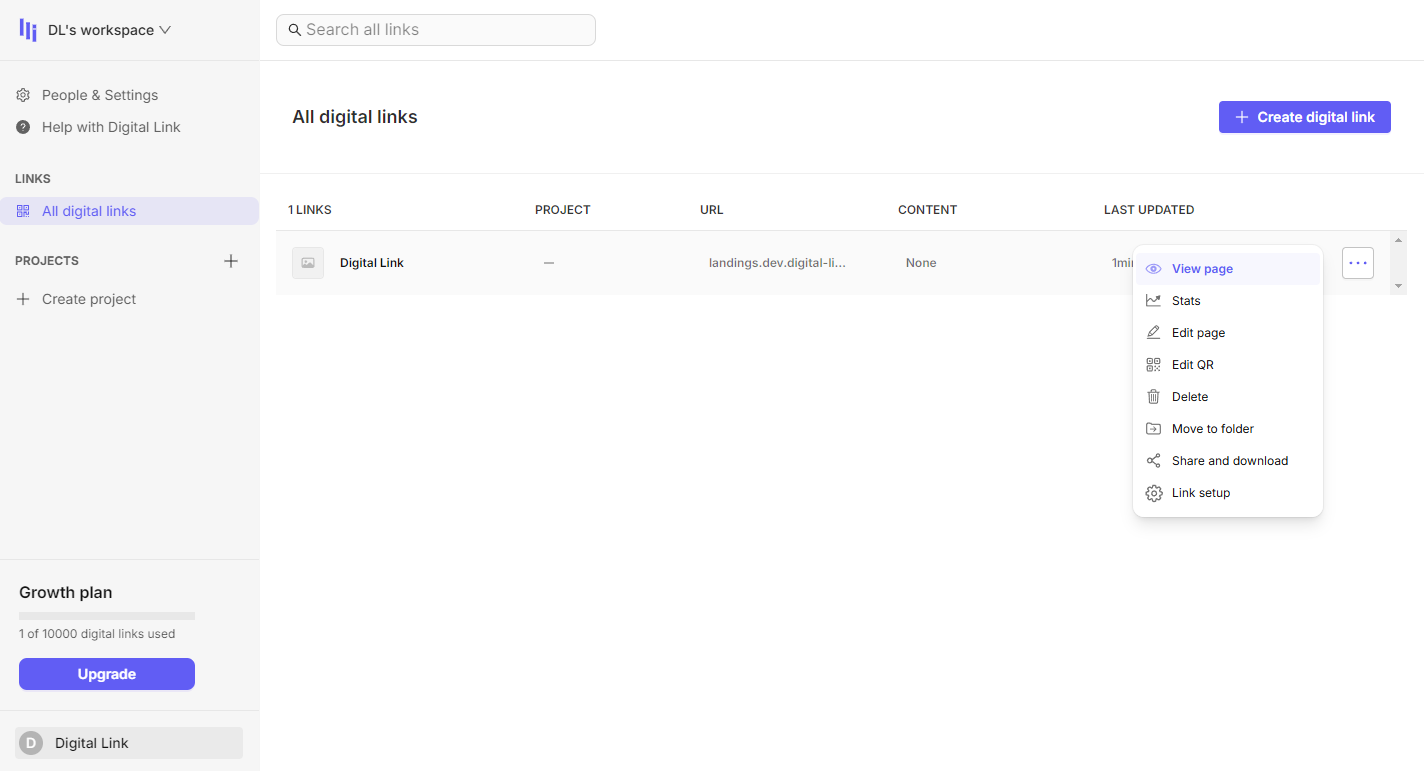 ---
## How to view the statistics of a digital link
URL: https://digital-link.com/help-center/how-to-view-the-statistics-of-a-digital-link/
View and download the stats of your digital link
From your dashboard, click the digital link's **three-dot menu** and click **Stats**.
---
## How to view the statistics of a digital link
URL: https://digital-link.com/help-center/how-to-view-the-statistics-of-a-digital-link/
View and download the stats of your digital link
From your dashboard, click the digital link's **three-dot menu** and click **Stats**.
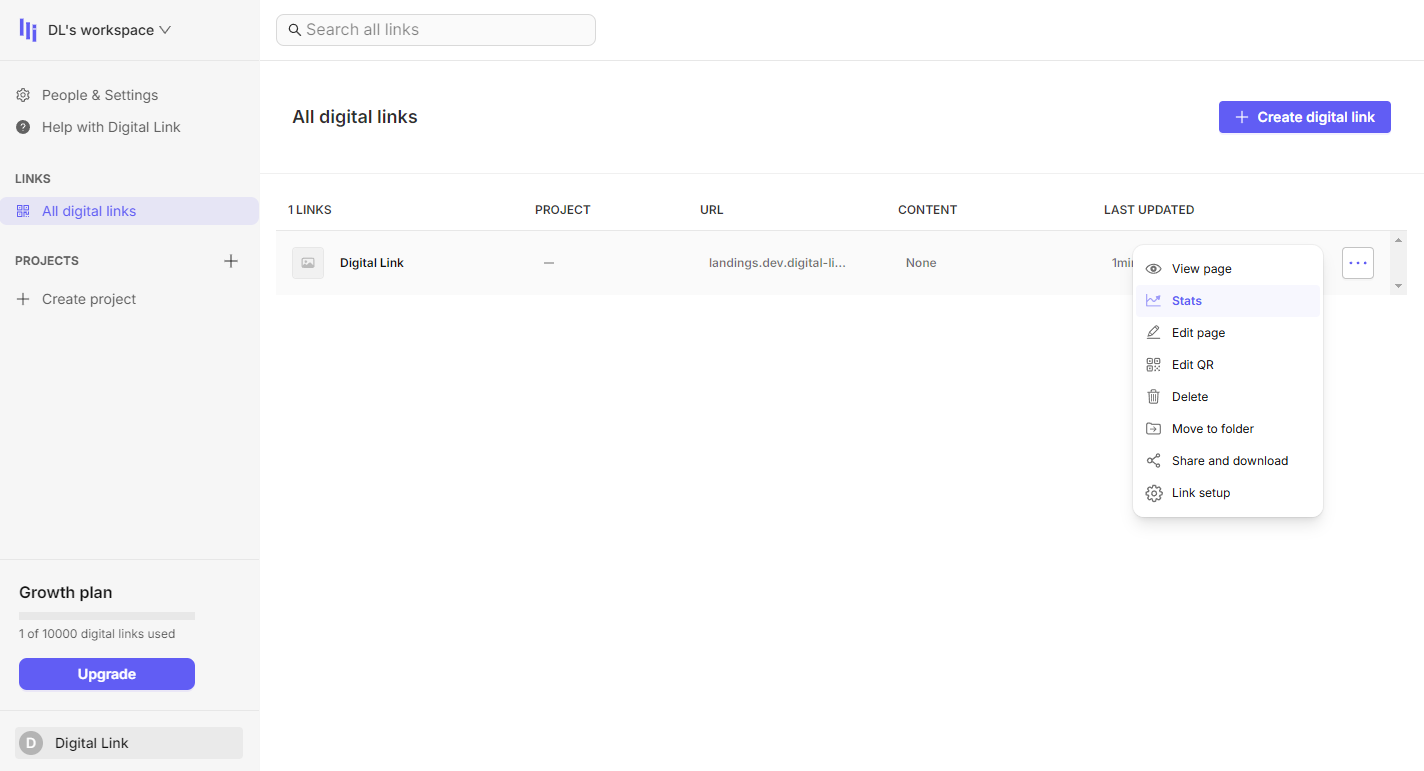 The statistical data is comprised of scans made to the digital link's QR Code and clicks made to its short URL and its linkset. The report shows the number of unique and recurrent visits, operating systems, countries and cities. You can download it as a PDF or XLS file by clicking **Download**.
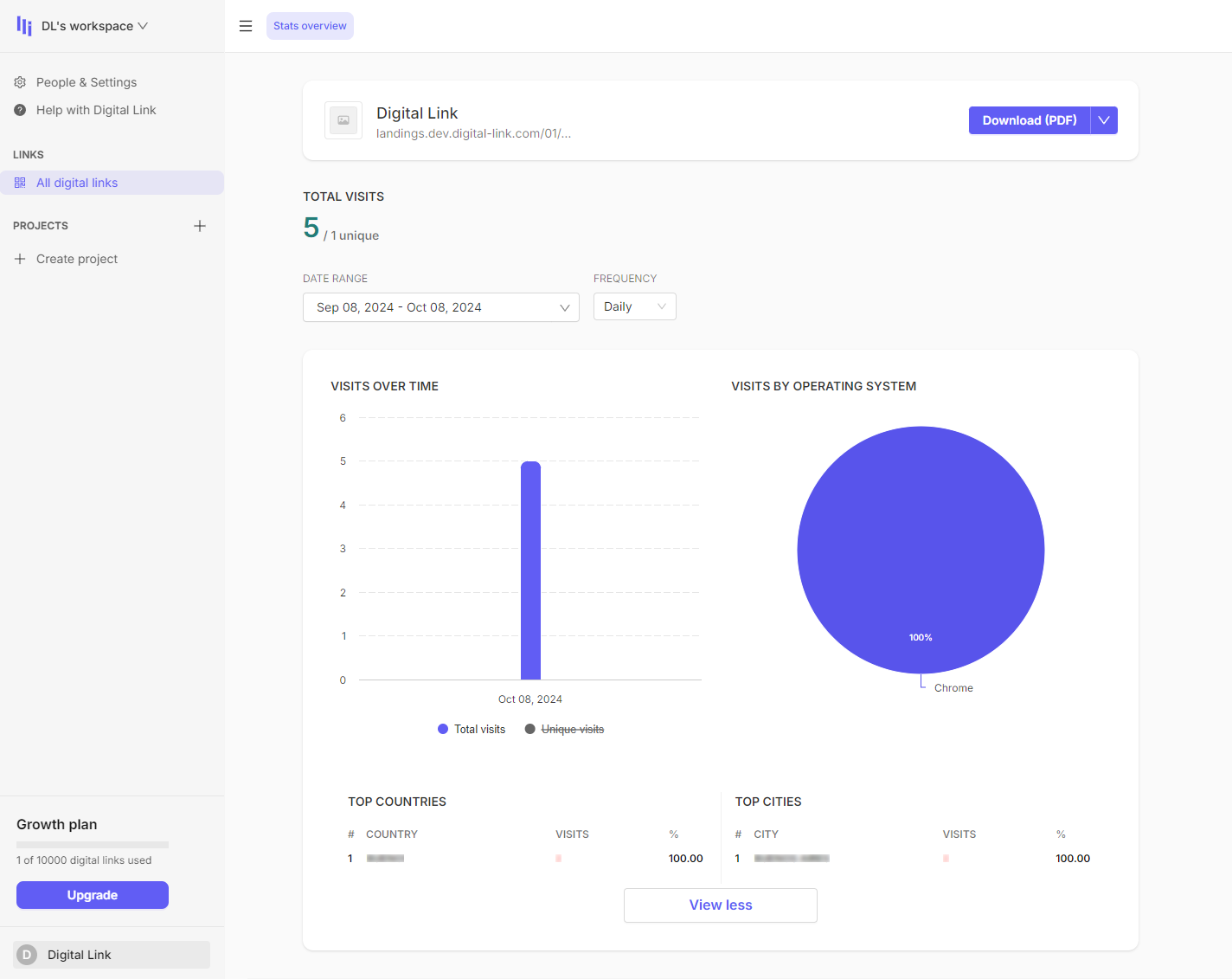 ---
## What are Child QR Codes?
URL: https://digital-link.com/help-center/what-are-child-qr-codes/
Child QR Codes are variants of digital links which include dynamic data such as batch number or expiry date.
Child QR Codes are variants of digital links which include dynamic data such as batch number or expiry date.
If you want to create one, see [how to create variants of a digital link](/help-center/how-to-create-variants-of-a-digital-link/).
---
## What are QR Codes?
URL: https://digital-link.com/help-center/what-are-qr-codes/
QR Codes are physical links to digital contents.
QR Codes are physical links to digital contents.
Static QR Codes encode the content directly, meaning that it cannot be updated or changed.
Dynamic QR Codes encode a unique short URL which works as a link to the content. You can update or change their type of content as many times as you want without having to reprint them. They also include statistical data.
---
## What can I add to my page?
URL: https://digital-link.com/help-center/what-can-i-add-to-my-page/
The elements you can add to your page: text, link buttons, images, embedded content, YouTube videos and social profiles.
We offer different elements that you can add to your page like texts, link buttons, images, embedded contents, YouTube videos and social media profiles. More elements are coming soon!
---
## What is the GS1 Digital Link?
URL: https://digital-link.com/help-center/what-is-the-gs1-digital-link/
In short, GS1 Digital Link takes a barcode and turns it into a web address.
In short, GS1 Digital Link takes a barcode and turns it into a web address. This way, the information and additional data about the object become part of the wider Internet, allowing consumers, retailers, brand owners, and all others involved in the supply chain to access a wide range of updatable product information. It's like the Internet of Things, minus the embedded sensors and microchips.
The digital link is then encoded in a 2D barcode, such as a QR Code, that works as a data carrier and can be added to the product or printed on its pack. Once scanned, the digital link QR Code will redirect users to a web resource in order to access the product information.
The most interesting thing is if a POS scanner is used to scan the digital link QR Code at a store's checkout, the code will behave like any other barcode, supplying info about the price, SKUs, etc. But if the same code on the product packaging is scanned by consumers' mobile devices, it will redirect to relevant content or to a brand-owned web page.
Of course, FDA-approved nutrition facts and EU Digital Product Passports are the first landing page options that come to mind. But, in addition to that, products might connect to a landing page for a promotional campaign, drive online shopping, prompt the download of mobile apps, show a how-to video, or provide a list of web links to multiple resources and platforms, including social media accounts.
It's every marketer and all operations managers' wildest dreams realized by an optimized solution, bundling consumer information, brand loyalty, and supply chain efficiency.
There will be no need to have both a traditional barcode and a QR Code (and maybe also an RFID label) on a water bottle or a smartphone box to provide different levels of information anymore. It's one code to rule them all.
A single code that conveys standard product identifiers (like the GTIN) and, at the same time, enables a radically enhanced consumer experience. That's GS1 Digital Link in a nutshell.
# White papers
---
## Conversational packaging: Let print do the talking
URL: https://digital-link.com/white-papers/conversational-packaging-let-print-do-the-talking/
Download this white paper and see how your packaging can respond to every scan automatically, intelligently, and on brand.
**White paper**
### Conversational packaging: Let print do the talking
Consumers today expect brands to speak their language, literally. In this paper, you’ll learn how conversational packaging combines 2D barcodes with artificial intelligence to make every scan a meaningful exchange.
**White paper**
### This white paper explores:
**Free white paper**
### Get your copy
Download this white paper and see how your packaging can respond to every scan automatically, intelligently, and on brand.
---
## Digital transformation in consumer goods: a CPG guide
URL: https://digital-link.com/white-papers/digital-transformation-in-consumer-goods/
Stay competitive in an evolving market with connected packaging.
**White paper**
### Digital transformation in consumer goods: What every CPG brand needs to know
Stay competitive in an evolving market with connected packaging. The consumer goods industry is rapidly shifting toward digital-first strategies, and connected packaging is leading the way.
**White paper**
### This white paper examines:
**Free white paper**
### Get your copy
Download this white paper and explore the next generation of consumer engagement strategies.
---
## GS1 Digital Link QR code 101: a beginner's guide
URL: https://digital-link.com/white-papers/gs1-digital-link-qr-code-101/
Understand the fundamentals of GS1 Digital Link and how it’s shaping the future of product identification.
**White paper**
### GS1 Digital Link QR code 101: A beginner's guide to next-gen barcodes
Understand the fundamentals of GS1 Digital Link and how it’s shaping the future of product identification. The GS1 Digital Link standard is revolutionizing how brands connect physical products to the digital world. By embedding enriched data into a single scannable QR code, this next-generation barcode enables compliance, transparency, and seamless consumer experiences, all while working with existing systems like POS scanners and smartphones.
**White paper**
### This white paper explores:
**Free white paper**
### Get your copy
Download this white paper and start your journey into smarter, more connected product identification.
---
## How to anticipate the Digital Product Passport revolution
URL: https://digital-link.com/white-papers/how-to-anticipate-the-digital-product-passport-revolution/
Navigate regulatory changes with confidence and transparency.
**White paper**
### How to anticipate the Digital Product Passport revolution
Navigate regulatory changes with confidence and transparency. The EU Digital Product Passport is set to revolutionize compliance and traceability requirements, but what does this mean for your brand?
**White paper**
### This white paper provides actionable insights into:
**Free white paper**
### Get your copy
Download this guide to stay ahead of the curve and ensure your brand is ready for the future.
---
## Smarter, safer baby products: compliance and engagement
URL: https://digital-link.com/white-papers/safer-baby-products/
How next-generation QR codes help nursery brands comply with new regulations and meet modern parents’ expectations with safer baby products.
**White paper**
### Smarter, safer baby products: easier compliance, better engagement
Make baby products safer, smarter, and more trusted with one scan. As global safety standards evolve, nursery brands must find new ways to keep parents informed and compliant across markets. This white paper reveals how 2D barcodes powered by GS1 Digital Link are transforming product labeling for the next generation.
**White paper**
### This white paper explores:
**Free white paper**
### Get your copy
Download the white paper and see how your products can connect, protect, and inform, instantly.
---
## Superproducts and QR codes: smart product connectivity
URL: https://digital-link.com/white-papers/superproducts/
Discover how Digital Link QR Codes are transforming global trade, compliance, and customer engagement into smart, connected Superproducts.
**White paper**
### Superproducts & Digital Link QR codes: The future of smart product connectivity
The Digital Link revolution is here! Learn how Superproducts, enhanced by augmented QR codes, are redefining product transparency, supply chain management, and customer interactions. In this white paper, we explore how companies can leverage Digital Link QR codes to stay ahead in the new era of smart packaging and compliance.
**White paper**
### This white paper explores:
**Free white paper**
### Get your copy
Download this white paper and discover how to future-proof your products with the next generation of product identification and connectivity.
---
## The new era of packaging: smart labels & 2D barcodes
URL: https://digital-link.com/white-papers/the-new-era-of-packaging/
Discover how smart labels and 2D barcodes are transforming packaging into digital experiences. Step into the new era of packaging!
**White paper**
### The new era of packaging starts with a scan
Packaging is turning into a dynamic interface between brands and consumers. In this white paper, we explore how smart packaging powered by 2D barcodes is reshaping product communication, engagement, and compliance across industries.
**White paper**
### This white paper explores:
**Free white paper**
### Get your copy
Download the white paper and discover how smart packaging can engage, comply, and adapt, at every stage.
---
## Turning packaging into a marketing channel with 2D barcodes
URL: https://digital-link.com/white-papers/turning-packaging-into-a-marketing-channel/
Unlock the potential of your packaging to engage and connect with consumers.
**White paper**
### Turning packaging into a marketing channel with 2D barcodes
Unlock the potential of your packaging to engage and connect with consumers. Your packaging is no longer just a container: it’s your brand’s best opportunity to make a lasting impression. Learn how 2D barcodes powered by GS1 standards are transforming packaging into a dynamic marketing channel.
**White paper**
### This white paper explores
**Free white paper**
### Get your copy
Download this white paper and discover how to turn your product into a direct-to-consumer engagement tool.
# Success stories
---
## ALQVIMIA boosts branding and transparency with Digital Link
URL: https://digital-link.com/success-stories/digital-link-for-alqvimia/
ALQVIMIA partnered with Digital Link to implement GS1-compliant QR codes, enhancing transparency, identity, and supporting sustainability goals.
---
## What are Child QR Codes?
URL: https://digital-link.com/help-center/what-are-child-qr-codes/
Child QR Codes are variants of digital links which include dynamic data such as batch number or expiry date.
Child QR Codes are variants of digital links which include dynamic data such as batch number or expiry date.
If you want to create one, see [how to create variants of a digital link](/help-center/how-to-create-variants-of-a-digital-link/).
---
## What are QR Codes?
URL: https://digital-link.com/help-center/what-are-qr-codes/
QR Codes are physical links to digital contents.
QR Codes are physical links to digital contents.
Static QR Codes encode the content directly, meaning that it cannot be updated or changed.
Dynamic QR Codes encode a unique short URL which works as a link to the content. You can update or change their type of content as many times as you want without having to reprint them. They also include statistical data.
---
## What can I add to my page?
URL: https://digital-link.com/help-center/what-can-i-add-to-my-page/
The elements you can add to your page: text, link buttons, images, embedded content, YouTube videos and social profiles.
We offer different elements that you can add to your page like texts, link buttons, images, embedded contents, YouTube videos and social media profiles. More elements are coming soon!
---
## What is the GS1 Digital Link?
URL: https://digital-link.com/help-center/what-is-the-gs1-digital-link/
In short, GS1 Digital Link takes a barcode and turns it into a web address.
In short, GS1 Digital Link takes a barcode and turns it into a web address. This way, the information and additional data about the object become part of the wider Internet, allowing consumers, retailers, brand owners, and all others involved in the supply chain to access a wide range of updatable product information. It's like the Internet of Things, minus the embedded sensors and microchips.
The digital link is then encoded in a 2D barcode, such as a QR Code, that works as a data carrier and can be added to the product or printed on its pack. Once scanned, the digital link QR Code will redirect users to a web resource in order to access the product information.
The most interesting thing is if a POS scanner is used to scan the digital link QR Code at a store's checkout, the code will behave like any other barcode, supplying info about the price, SKUs, etc. But if the same code on the product packaging is scanned by consumers' mobile devices, it will redirect to relevant content or to a brand-owned web page.
Of course, FDA-approved nutrition facts and EU Digital Product Passports are the first landing page options that come to mind. But, in addition to that, products might connect to a landing page for a promotional campaign, drive online shopping, prompt the download of mobile apps, show a how-to video, or provide a list of web links to multiple resources and platforms, including social media accounts.
It's every marketer and all operations managers' wildest dreams realized by an optimized solution, bundling consumer information, brand loyalty, and supply chain efficiency.
There will be no need to have both a traditional barcode and a QR Code (and maybe also an RFID label) on a water bottle or a smartphone box to provide different levels of information anymore. It's one code to rule them all.
A single code that conveys standard product identifiers (like the GTIN) and, at the same time, enables a radically enhanced consumer experience. That's GS1 Digital Link in a nutshell.
# White papers
---
## Conversational packaging: Let print do the talking
URL: https://digital-link.com/white-papers/conversational-packaging-let-print-do-the-talking/
Download this white paper and see how your packaging can respond to every scan automatically, intelligently, and on brand.
**White paper**
### Conversational packaging: Let print do the talking
Consumers today expect brands to speak their language, literally. In this paper, you’ll learn how conversational packaging combines 2D barcodes with artificial intelligence to make every scan a meaningful exchange.
**White paper**
### This white paper explores:
**Free white paper**
### Get your copy
Download this white paper and see how your packaging can respond to every scan automatically, intelligently, and on brand.
---
## Digital transformation in consumer goods: a CPG guide
URL: https://digital-link.com/white-papers/digital-transformation-in-consumer-goods/
Stay competitive in an evolving market with connected packaging.
**White paper**
### Digital transformation in consumer goods: What every CPG brand needs to know
Stay competitive in an evolving market with connected packaging. The consumer goods industry is rapidly shifting toward digital-first strategies, and connected packaging is leading the way.
**White paper**
### This white paper examines:
**Free white paper**
### Get your copy
Download this white paper and explore the next generation of consumer engagement strategies.
---
## GS1 Digital Link QR code 101: a beginner's guide
URL: https://digital-link.com/white-papers/gs1-digital-link-qr-code-101/
Understand the fundamentals of GS1 Digital Link and how it’s shaping the future of product identification.
**White paper**
### GS1 Digital Link QR code 101: A beginner's guide to next-gen barcodes
Understand the fundamentals of GS1 Digital Link and how it’s shaping the future of product identification. The GS1 Digital Link standard is revolutionizing how brands connect physical products to the digital world. By embedding enriched data into a single scannable QR code, this next-generation barcode enables compliance, transparency, and seamless consumer experiences, all while working with existing systems like POS scanners and smartphones.
**White paper**
### This white paper explores:
**Free white paper**
### Get your copy
Download this white paper and start your journey into smarter, more connected product identification.
---
## How to anticipate the Digital Product Passport revolution
URL: https://digital-link.com/white-papers/how-to-anticipate-the-digital-product-passport-revolution/
Navigate regulatory changes with confidence and transparency.
**White paper**
### How to anticipate the Digital Product Passport revolution
Navigate regulatory changes with confidence and transparency. The EU Digital Product Passport is set to revolutionize compliance and traceability requirements, but what does this mean for your brand?
**White paper**
### This white paper provides actionable insights into:
**Free white paper**
### Get your copy
Download this guide to stay ahead of the curve and ensure your brand is ready for the future.
---
## Smarter, safer baby products: compliance and engagement
URL: https://digital-link.com/white-papers/safer-baby-products/
How next-generation QR codes help nursery brands comply with new regulations and meet modern parents’ expectations with safer baby products.
**White paper**
### Smarter, safer baby products: easier compliance, better engagement
Make baby products safer, smarter, and more trusted with one scan. As global safety standards evolve, nursery brands must find new ways to keep parents informed and compliant across markets. This white paper reveals how 2D barcodes powered by GS1 Digital Link are transforming product labeling for the next generation.
**White paper**
### This white paper explores:
**Free white paper**
### Get your copy
Download the white paper and see how your products can connect, protect, and inform, instantly.
---
## Superproducts and QR codes: smart product connectivity
URL: https://digital-link.com/white-papers/superproducts/
Discover how Digital Link QR Codes are transforming global trade, compliance, and customer engagement into smart, connected Superproducts.
**White paper**
### Superproducts & Digital Link QR codes: The future of smart product connectivity
The Digital Link revolution is here! Learn how Superproducts, enhanced by augmented QR codes, are redefining product transparency, supply chain management, and customer interactions. In this white paper, we explore how companies can leverage Digital Link QR codes to stay ahead in the new era of smart packaging and compliance.
**White paper**
### This white paper explores:
**Free white paper**
### Get your copy
Download this white paper and discover how to future-proof your products with the next generation of product identification and connectivity.
---
## The new era of packaging: smart labels & 2D barcodes
URL: https://digital-link.com/white-papers/the-new-era-of-packaging/
Discover how smart labels and 2D barcodes are transforming packaging into digital experiences. Step into the new era of packaging!
**White paper**
### The new era of packaging starts with a scan
Packaging is turning into a dynamic interface between brands and consumers. In this white paper, we explore how smart packaging powered by 2D barcodes is reshaping product communication, engagement, and compliance across industries.
**White paper**
### This white paper explores:
**Free white paper**
### Get your copy
Download the white paper and discover how smart packaging can engage, comply, and adapt, at every stage.
---
## Turning packaging into a marketing channel with 2D barcodes
URL: https://digital-link.com/white-papers/turning-packaging-into-a-marketing-channel/
Unlock the potential of your packaging to engage and connect with consumers.
**White paper**
### Turning packaging into a marketing channel with 2D barcodes
Unlock the potential of your packaging to engage and connect with consumers. Your packaging is no longer just a container: it’s your brand’s best opportunity to make a lasting impression. Learn how 2D barcodes powered by GS1 standards are transforming packaging into a dynamic marketing channel.
**White paper**
### This white paper explores
**Free white paper**
### Get your copy
Download this white paper and discover how to turn your product into a direct-to-consumer engagement tool.
# Success stories
---
## ALQVIMIA boosts branding and transparency with Digital Link
URL: https://digital-link.com/success-stories/digital-link-for-alqvimia/
ALQVIMIA partnered with Digital Link to implement GS1-compliant QR codes, enhancing transparency, identity, and supporting sustainability goals.